Address
Zhengzhou, Henan, China
Work Hours
Monday to Friday: 7AM - 7PM
Weekend: 10AM - 5PM
Address
Zhengzhou, Henan, China
Work Hours
Monday to Friday: 7AM - 7PM
Weekend: 10AM - 5PM

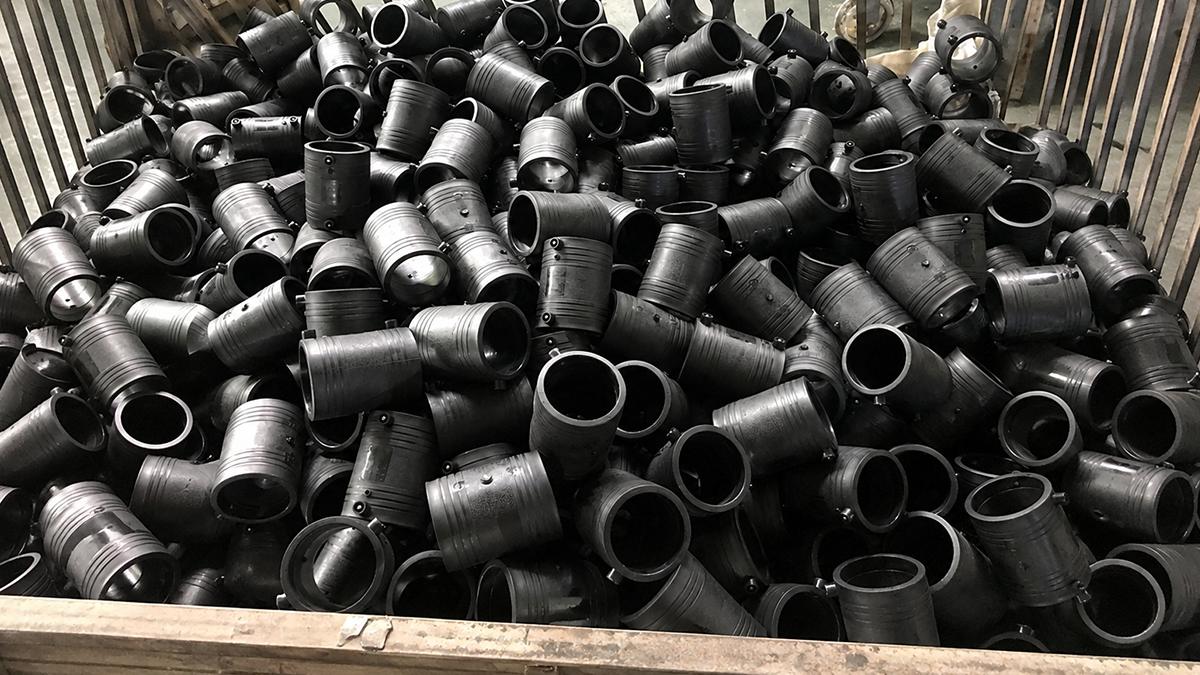
HDPE Pipe Fittings Supplier for Poland helps buyers compare EN-compliant products, verify quality documents, understand export requirements, and choose the right supplier for water, gas, and industrial projects in Poland.
A top-tier HDPE pipe fittings supplier for Poland doesn’t just ship individual parts. They deliver a complete, export-ready piping system built specifically for European infrastructure. Instead of piecing together components from multiple vendors, procurement teams rely on qualified manufacturers to provide an integrated ecosystem. This ensures leak-free, long-term performance across municipal water grids, industrial processing plants, and agricultural networks.
The core product lineup typically covers standard HDPE pipes ranging from DN16 all the way to massive DN3000 sizes. You will also find Double-Wall Corrugated (DWC) pipes featuring SN4 or SN8 ring stiffness for heavy-duty drainage, PPR pipes (PN10–PN25) built for temperature-sensitive hot and cold water flows, and Modified Polypropylene (MPP) pipes (DN100–355mm) designed to shield underground cables.
To bridge these networks seamlessly, a capable manufacturer produces a massive selection of fittings. This includes butt fusion, electrofusion, socket fusion, and PP compression variants, alongside custom-fabricated segments tailored for large-diameter municipal layouts. Beyond the physical polymers, a supplier prepared for the European Economic Area (EEA) brings something equally important to the table: the required butt fusion machine, fully compliant CE-marked documentation, and specialized export packaging that eliminates friction during customs clearance.
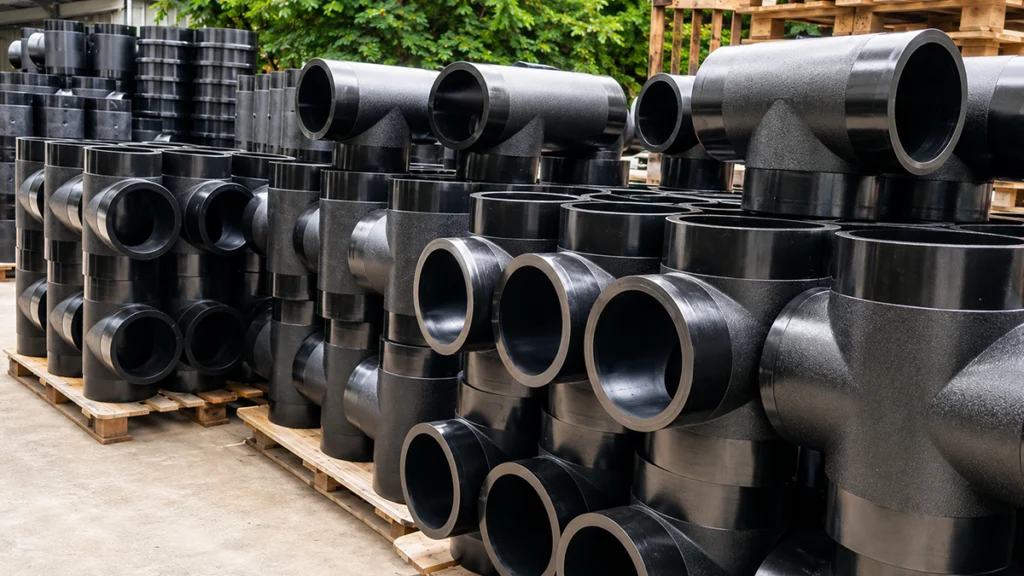
Navigating Polish infrastructure projects means you cannot cut corners on European regulations. Meeting localized standards is a strict legal mandate, not just a best practice. Procurement managers carry the responsibility of verifying that every imported material aligns perfectly with the PN-EN (Polska Norma – European Norm) frameworks.
For water supply, pressurized sewerage, and drainage applications, the non-negotiable baseline is PN-EN 12201 (EN 12201). If the project involves gaseous fuel distribution, the system must strictly adhere to PN-EN 1555 (EN 1555). Global benchmarks like ISO 4427 (for water) and ISO 4437 (for gas) heavily influence the core material properties, allowable dimensional tolerances, and rigorous performance testing protocols. On top of these technical specs, any product slated for permanent installation on Polish soil legally requires CE Marking under the Construction Products Regulation (CPR EU No. 305/2011).
Here is a breakdown of the critical parameters required for EN-compliant HDPE fittings:
| Parameter | Specification / Standard Requirement |
|---|---|
| Material Grade | PE80 (MRS 8MPa) or PE100 (MRS 10MPa) |
| Standard Dimensional Ratio | SDR11 (PN16) through SDR41 |
| Water Systems Standard | PN-EN 12201 / ISO 4427 |
| Gas Systems Standard | PN-EN 1555 / ISO 4437 |
| Mandatory EU Compliance | CE Marking (CPR EU No. 305/2011) |
Picking the right fitting type comes down to the specific application, the system’s pressure demands, and the realities of the installation environment. Contractors across Poland generally lean on five main categories of HDPE pipe fittings to get the job done.
Electrofusion Fittings
This category covers couplers, 90° elbows, equal tees, and tapping tees. They stand out because they feature built-in heating coils and scanable barcodes. The barcode feeds automated welding parameters directly into the machine, virtually eliminating human error on the job site. Because they offer such high reliability, electrofusion fittings are the go-to choice for volatile gas distribution lines and tricky, tight-trench water system repairs.
Butt Fusion Fittings
Consisting of spigots, reducers, and stub ends, butt fusion fittings are joined by pressing the heated ends of the HDPE pipe and the fitting against a PTFE-coated plate, then fusing them together under pressure. Success here demands an exact match of the pipe’s wall thickness and its SDR rating.
PP Compression Fittings
These mechanical alternatives tighten using a nut and an internal elastomeric gasket. You will usually see them on smaller diameters (under 110mm). They are incredibly popular for agricultural irrigation, temporary water setups, and rural networks where hauling heavy, specialized welding equipment just isn’t practical.
Flange Adapters
Hybrid networks rely on flange adapters. They act as the transition point, allowing modern high-density polyethylene networks to securely connect with legacy steel or PVC pipes. They are also heavily used to tie into mechanical valves and municipal pumping stations.
Fabricated Segments
When dealing with massive municipal infrastructure where standard molded fittings are either structurally impossible or too expensive, custom fabricated segments step in. Factories custom-weld these from heavy pipe sections to hit exact angles and create complex junctions.
| Fitting Type | Primary Application | Connection Method |
|---|---|---|
| Electrofusion | Gas lines, tight trench repairs | Automated barcode-driven heating coils |
| Butt Fusion | Municipal water, long straight runs | Hot plate fusion (matching SDR required) |
| PP Compression | Agriculture, temporary water lines | Mechanical nut and gasket |
| Flange Adapters | Hybrid systems, valve connections | Bolted mechanical flange |
| Fabricated Segments | Large diameter infrastructure (DN500+) | Custom factory butt welding |
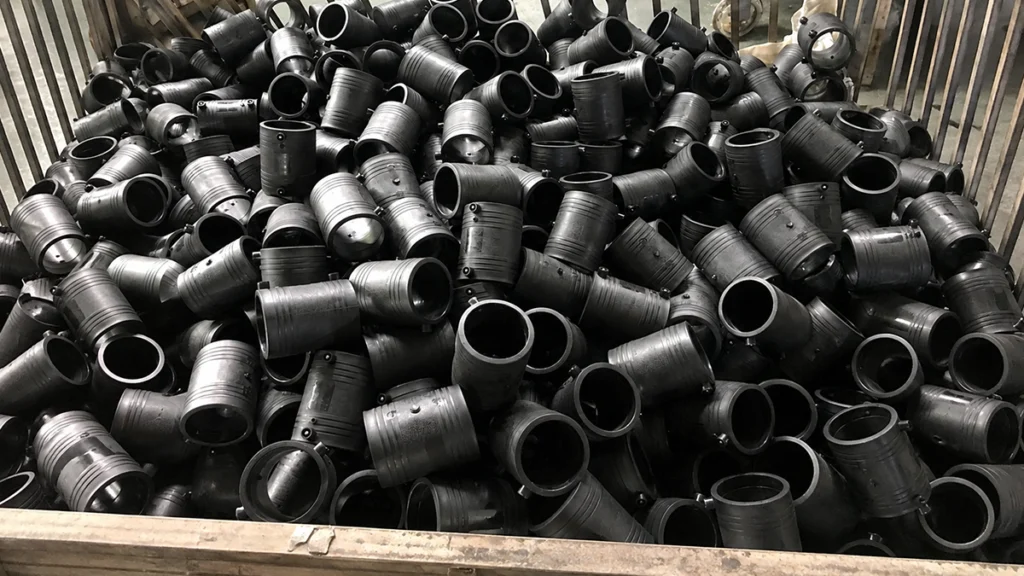
Visual inspections don’t mean much when evaluating polymer piping systems. True quality control relies on aggressive, standardized laboratory testing. A trustworthy HDPE pipe fittings supplier for Poland maintains rigorous in-house lab protocols to prove material integrity and guarantee decades of performance.
Everything starts with raw material traceability. EN-compliant pressure systems require fittings manufactured from 100% virgin PE100 or PE80 resin, sourced from top-tier petrochemical giants like Borouge or Sinopec. Slipping recycled plastics into the mix destroys the pressure rating and is strictly banned. Reputable suppliers willingly hand over Material Safety Data Sheets (MSDS) and batch certificates for every single production run.
Physical testing has to match ISO standards perfectly. The Hydrostatic Pressure Test (ISO 9080 / EN 921) forces the polymer to prove it can survive a 50-year lifespan. For example, PE100 pipes have to hold up against ≥12.4MPa at 20°C for half a century without bowing or deforming. Oxidation Induction Time (OIT) testing measures the polymer’s resistance to aging, requiring it to clock ≥ 20 minutes at 210°C before oxidative degradation kicks in.
Labs also test Carbon Black Content (ISO 6964) to ensure the HDPE pipe can survive heavy UV exposure during above-ground storage. Meanwhile, Tensile Strength (ISO 13953) tests literally try to rip welded joints apart at high speeds. The goal? Proving the weld is physically stronger than the HDPE pipe wall itself. Lastly, digital calipers confirm dimensional accuracy so that SDR/PN correlations (like SDR11 equaling PN16) are spot-on, ensuring butt fusion joints line up perfectly in the trench.
HDPE piping has become the backbone of Poland’s aggressive push to modernize its public utilities and industrial sectors. Thanks to their flexibility, intense chemical resistance, and guaranteed 50-year lifecycle, these polymers are the default material across several demanding verticals.
In Municipal Infrastructure, HDPE systems form the critical arteries of clean drinking water networks, stormwater management grids, and wastewater treatment facilities. Because these HDPE pipes can be installed using trenchless technology, they are perfectly suited for upgrading aging utilities buried beneath Poland’s historic, densely populated cities.
For Gas Distribution, safety is the only metric that matters. Underground gas transport requires electrofusion fittings. The resulting joints are entirely leak-free and highly resistant to seismic shifts, making them indispensable for volatile fuel networks.
In Agriculture, farmers deploy HDPE and DWC pipes to move heavy loads like slurry (liquid waste) and silage (fermented feed). You’ll also spot them running the micro-irrigation systems inside commercial greenhouses and managing massive field drainage projects.
Finally, in Industrial & Commercial environments, these fittings take a beating. Their high resistance to abrasion and harsh chemicals makes them the prime choice for chemical processing plants, aggressive mining operations, and the massive cooling circuits required by modern data centers.
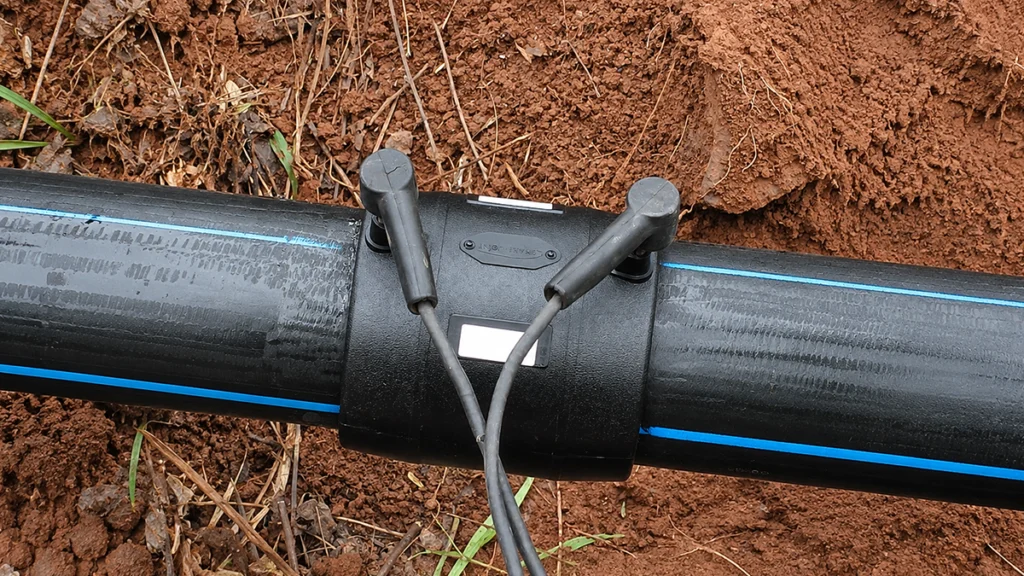
Finding a solid manufacturing partner means looking hard at their actual enterprise capabilities, their quality control frameworks, and how well they support you technically. Polish buyers can avoid massive procurement headaches by using a strict evaluation process.
Production Capacity
Factory scale dictates whether a supplier can actually hit your project deadlines. You want enterprise-level output. For context, industry leaders like JINQUAN run 200-acre facilities packed with over 40 high-speed extrusion lines and 60 injection molding machines, pushing out more than 100,000 tons annually.
System Compatibility
Don’t mix and match. A dependable supplier manufactures both the HDPE pipes and the fittings. Sourcing everything from a single factory locks in dimensional uniformity and perfect welding compatibility, which stops mismatched tolerance issues from ruining your installation.
Certifications
If they can’t prove it on paper, walk away. The supplier must hold active ISO 9001 (Quality Management) and ISO 14001 (Environmental Management) certificates. On the product side, demand CE marking and independent testing reports from heavyweights like Intertek or SGS.
Customization Capabilities
City grids are rarely laid out in perfect straight lines. Your manufacturer needs the engineering muscle to fabricate custom fittings for highly complex layouts. The piping system should adapt to the terrain, not the other way around.
Moving industrial materials into the European Union demands flawless customs and compliance paperwork. A single missing document can leave your containers sitting impounded at ports like Gdynia or Gdańsk, racking up massive demurrage fees.
Before anything ships, the Polish buyer needs an active Economic Operators Registration and Identification (EORI) number. On the flip side, the supplier has to deliver a pristine document packet: Commercial Invoice, Packing List, Bill of Lading, and the all-important Declaration of Conformity (DoC) that validates CE compliance. A supplier truly ready for the EU market will also hand over a technical User Manual translated into Polish.
Chemical safety compliance is just as strict. Products must clear REACH and RoHS directives regarding hazardous substances. From a physical logistics standpoint, smart suppliers use “nested” packaging. By telescoping smaller HDPE pipes and fittings inside larger ones, they maximize the usable space inside the shipping container, which drastically drives down your ocean freight cost per cubic meter (CBM).
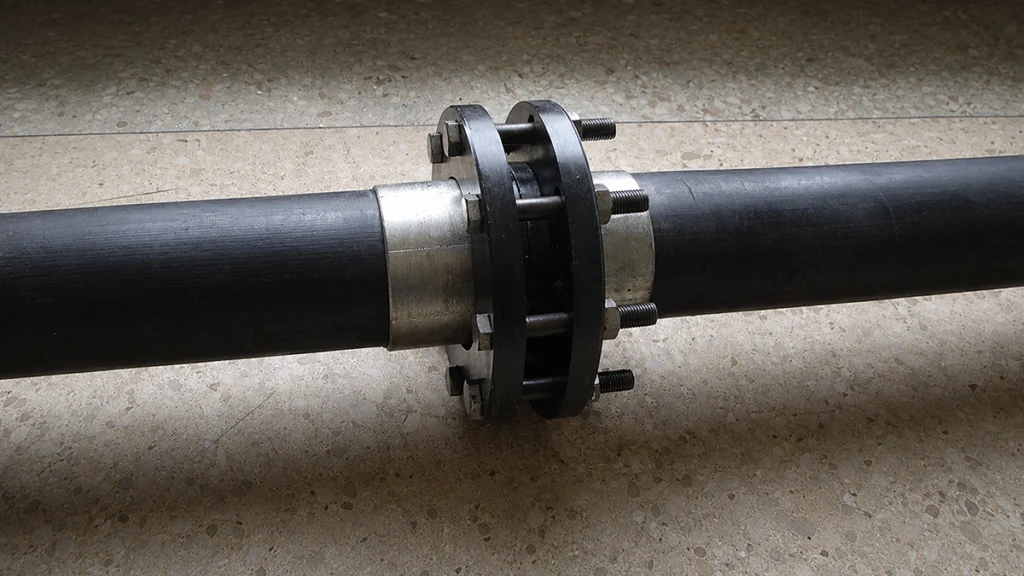
Figuring out the real price of HDPE pipe fittings for a Polish import project requires looking way past the initial factory quote. You have to calculate the total landed cost.
Buying direct from a Chinese manufacturer usually nets a 20% to 40% discount compared to buying from a regional European wholesaler. But you have to do the math on the variables: FOB Factory Price + Ocean Freight + Import Duties (which swing from 0–12% depending on your exact HS code) + Customs Brokerage Fees + Inland Delivery to the Polish job site. That inland trucking leg alone can spike your base price by 15–35% depending on how far you are from the port.
When it comes to Minimum Order Quantities (MOQ), standard wholesale deals usually kick off at one 20-foot container (FCL). That translates to roughly $10,000–$15,000 in mixed fittings, which is the threshold needed to trigger deep factory discounts. For lead times, build a buffer: expect 7–15 days for actual factory production, followed by 30–40 days of ocean transit before the vessel hits a Polish port.
| Cost Driver | Typical Parameters | Impact on Final Cost |
|---|---|---|
| Factory Price | 20-40% below EU wholesalers | High upfront savings |
| Ocean Freight | Varies by container type | Reduced via nested packaging |
| Import Duties | 0-12% (HS Code dependent) | Mandatory EU tariff |
| MOQ | 20ft FCL ($10k-$15k) | Unlocks maximum volume discount |
| Lead Time | 7-15 days prod + 30-40 days transit | Requires advance project planning |
Messing up international HDPE pipe procurement doesn’t just hurt the budget; it can cause catastrophic system blowouts down the line. Keep an eye out for these common traps.
The Incoterms Risk Gap
A lot of buyers blindly choose FOB (Free On Board) or CIF (Cost, Insurance, and Freight) for container shipments. However, the International Chamber of Commerce explicitly recommends FCA, CPT, or CIP for containerized freight. Sticking with FOB leaves a massive insurance risk gap while your container sits at the origin terminal waiting to be loaded onto the ship.
SDR Mismatch
Buying fittings with a different Standard Dimension Ratio (SDR) than your HDPE pipe is an engineering disaster. If you try to weld an SDR17 fitting onto an SDR11 pipe, you instantly create a weak point in the pressure system that will almost certainly rupture under stress.
Shipping “Air”
If you don’t consolidate your freight, fail to nest your HDPE pipes, or ship Less than Container Load (LCL) when you should be shipping Full Container Load (FCL), you end up paying premium ocean freight rates to ship empty space.
Ignoring Destination Conformity
If your shipment arrives in Poland without verified CE marks or a valid Declaration of Conformity, customs will legally reject it. Your goods will be impounded, and your project timeline will be destroyed.
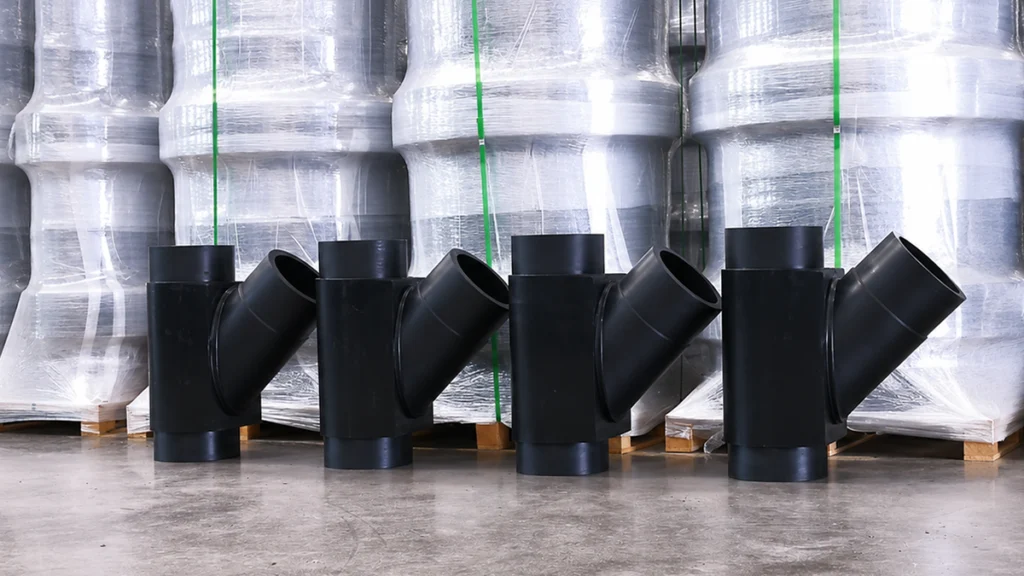
Stop wasting days going back and forth over email. If you want a fast, highly accurate quotation, send a structured Request for Quotation (RFQ) right out of the gate. Giving the factory engineering team exact technical parameters lets them calculate precise material weights, map out production schedules, and build a container loading plan immediately.
The RFQ Checklist:
1. Standard: Name the exact norm you need (e.g., PN-EN 12201 for water or PN-EN 1555 for gas).
2. Material Grade: State your resin demands clearly (e.g., 100% Virgin PE100).
3. Specifications: List the Outer Diameter (OD in mm) and the SDR/PN rating (e.g., DN315, SDR11, PN16).
4. Fitting Type & Connection: Break down the specific components (e.g., Electrofusion 90° Elbow, Butt Fusion Stub End).
5. Volume: Give the exact piece count or your target container size (20ft / 40HQ).
6. Logistics: State your preferred Incoterm (e.g., CIF Gdańsk) and your absolute drop-dead delivery date.
7. Compliance: Ask for the CE certification, DoC, and SGS test reports in your very first message.
PN-EN 12201 serves as the mandatory rulebook for water supply and pressurized drainage in Poland, while PN-EN 1555 dictates the rules for gaseous fuel systems. Global benchmarks like ISO 4427 and ISO 4437 also control material properties and dimensional tolerances. Finally, any permanent installation inside the European Economic Area requires CE Marking (under CPR EU No. 305/2011) to remain legally compliant.
A supplier that actually understands the EU market will hand over a CE Declaration of Conformity (DoC), REACH and RoHS compliance paperwork, and independent test reports from trusted agencies like Intertek or SGS without hesitation. They should also provide Polish-language user manuals and show a track record of handling EU customs protocols, including EORI documentation and space-saving nested packaging.
To get a precise quote on the first try, list your required standard (like PN-EN 12201), the exact material grade (such as 100% virgin PE100), the outer diameter in millimeters, and the SDR/PN rating. You also need to detail the exact types of fittings, the total piece count or container size, your preferred Incoterms for delivery, and the specific compliance documents your project requires.
They both create permanent, leak-proof joints, but they handle different challenges. Butt fusion fittings are highly cost-effective and perfect for long, straight municipal water lines where the pipe wall thickness and SDR match perfectly. Electrofusion fittings, which use integrated heating coils, are legally mandated for gas networks and are the superior choice for tight-trench repairs where automated welding ensures maximum safety.
To get your shipment into Poland safely, you need a Commercial Invoice, a highly detailed Packing List, and a Bill of Lading. To clear customs and legally install the products, you must present a Declaration of Conformity (DoC) validating the CE mark, REACH/RoHS declarations, and raw material batch certificates. Additionally, the Polish importer must hold a valid EORI number.
For standard molded fittings, factories generally require a minimum order of one 20-foot container to offer their best pricing, with production taking about 7 to 15 days. However, if you need custom-fabricated segments for massive municipal projects, the MOQ is usually lower, but the lead time increases. Plan for an extra 7 to 14 days to accommodate the custom engineering, specialized welding, and specific pressure testing required.
The biggest engineering risk is an SDR mismatch between your HDPE pipes and fittings, which will eventually cause a pressure blowout. The biggest legal risk is buying non-compliant materials without CE marks, guaranteeing customs will impound your shipment. Financially, the major risks include paying to ship empty space because you didn’t nest your products, or using risky Incoterms like FOB that leave you uninsured during terminal handling.
Sourcing the right HDPE pipe fittings for projects in Poland requires careful attention to material quality, technical specifications, applicable standards, and logistics. Buyers should confirm the required PE grade, SDR or pressure rating, fitting type, connection method, and relevant project documentation before placing an order.
For EU-bound projects, procurement teams should also verify the applicable compliance requirements, test reports, and supporting documentation for the specific product and application. Butt fusion and electrofusion fittings should be selected according to pipeline design, operating conditions, installation environment, and project specifications.
Beyond unit price, buyers should compare total landed cost, packaging efficiency, freight, lead time, supplier production capability, and after-sales support. A detailed RFQ and thorough supplier evaluation can help reduce procurement risk and improve the reliability of HDPE piping projects in Poland.