Address
Zhengzhou, Henan, China
Work Hours
Monday to Friday: 7AM - 7PM
Weekend: 10AM - 5PM
Address
Zhengzhou, Henan, China
Work Hours
Monday to Friday: 7AM - 7PM
Weekend: 10AM - 5PM

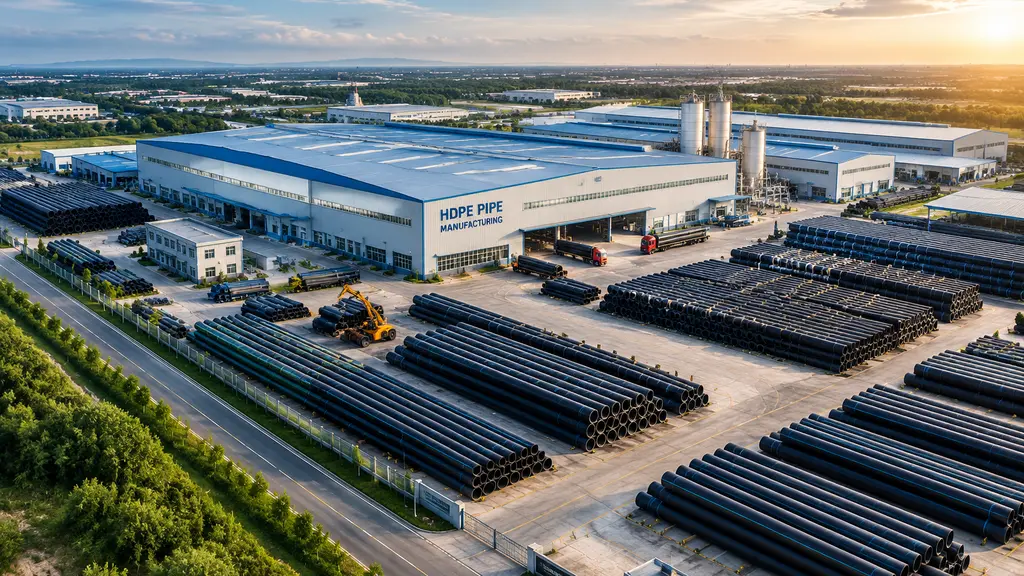
This guide reviews the top 10 HDPE pipe manufacturers worldwide and gives B2B buyers a practical framework to compare certifications, PE100 quality, MOQ, lead time, and pricing—so you can confidently source reliable HDPE pipes for water, gas, mining, and global pipeline projects.
Transforming raw polyethylene resin into resilient, continuous piping systems is a highly technical discipline. HDPE pipe manufacturers rely on advanced extrusion technology to achieve this. They meticulously regulate resin compounding, extrusion heat, and cooling cycles. Why? Because maintaining razor-thin tolerances for wall thickness and outer diameters during massive production runs is non-negotiable.
This level of factory floor precision directly impacts the pipe’s Minimum Required Strength (MRS) and its ability to resist slow crack growth (SCG). Top-tier facilities guarantee their output aligns with rigorous global benchmarks, including ISO 4427 and AWWA C906. Ultimately, teaming up with a thoroughly vetted manufacturer is your best defense against catastrophic pipeline blowouts, joint leaks, or severe pressure drops in critical municipal and industrial builds.
Sitting at an estimated valuation of USD 25.76 billion in 2026, the global high-density polyethylene pipe market shows no signs of cooling down. Industry forecasts project this figure will climb between $36.26 and 37.93 billion by 2034, riding a steady compound annual growth rate (CAGR) of 5.0% to 5.4%. What is driving this surge? A massive, worldwide initiative to swap out decaying metal infrastructure and drastically expand modern water networks.
Identifying a world-class supplier means analyzing their production bandwidth, international footprint, and strict adherence to quality certifications. Here is a closer look at the heavyweights currently defining the global pipeline landscape.
1. Advanced Drainage Systems, Inc. (USA)
A dominant force in the North American corrugated HDPE sector. They heavily target stormwater management and complex drainage networks for large-scale civil engineering works.
2. JM Eagle Inc. (USA)
Recognized as North America’s largest plastic pipe producer. They bring extensive AWWA and ASTM certifications to the table, specializing in robust high-pressure water and gas distribution lines.
3. China Lesso Group (China)
Asia’s manufacturing powerhouse. Operating on a highly efficient vertically integrated model, they produce everything from the base resin compounds to the final fittings, supplying municipal markets worldwide.
4. WL Plastics Corp. (USA)
An industry heavyweight focused on high-performance PE4710 pressure pipes. Their products are a staple across North American mining operations, industrial plants, and municipal grids.
5. Uponor Corporation (Finland)
This European stalwart champions municipal infrastructure and advanced plumbing solutions. They are widely respected for their uncompromising adherence to EN standards and innovative trenchless installation technologies.
6. Georg Fischer AG (Switzerland)
Engineers of premium industrial piping systems. They specialize in high-end electrofusion fittings designed specifically for the rigorous demands of chemical processing and water treatment facilities.
7. Wavin B.V. (Netherlands)
Leveraging a massive international footprint, Wavin delivers holistic water management systems. Their portfolio emphasizes climate-resilient infrastructure and sustainable piping alternatives.
8. Chevron Phillips Chemical (USA)
A rare dual-threat in the industry. They operate as a primary resin producer while simultaneously manufacturing high-grade HDPE pipes through their dedicated Performance Pipe division.
9. Pipelife International (Austria)
A European manufacturing titan dedicated to bespoke infrastructure systems. They excel in large-diameter extrusion and navigating the complexities of highly regulated municipal contracts.
10. JINQUAN Plastic Industry Co., Ltd. (China)
Setting the standard for factory-direct exports, JINQUAN operates a sprawling 200-acre facility capable of churning out over 100,000 tons annually. They manufacture everything from DN16 to massive DN3000 pipes, alongside DWC variants and fittings. Backed by ISO 4427, CE, and SGS certifications, they offer unparalleled scalability for global EPC contractors.
| Manufacturer | HQ Location | Primary Specialty | Key Target Markets |
|---|---|---|---|
| Advanced Drainage Systems | USA | Corrugated drainage pipes | North America |
| JM Eagle | USA | Water and gas pressure pipes | North America |
| China Lesso | China | Vertically integrated infrastructure | Asia, Global |
| WL Plastics | USA | PE4710 pressure pipes | North America |
| Uponor | Finland | Municipal and plumbing systems | Europe, North America |
| Georg Fischer | Switzerland | Premium industrial piping | Europe, Global |
| Wavin | Netherlands | Water management solutions | Europe, Latin America |
| Chevron Phillips | USA | Resin and Performance Pipe | North America |
| Pipelife | Austria | Custom infrastructure | Europe |
| JINQUAN | China | DN16-DN3000, factory-direct export | Asia, MEA, South America |
Procurement teams must carefully match the physical characteristics of the polyethylene resin to the actual field demands of the pipeline. Sourcing an inadequate grade is a fast track to premature pressure failures.
| PE Grade | Minimum Required Strength (MRS) | Pressure Rating Benchmark | Typical Applications |
|---|---|---|---|
| PE80 | 8.0 MPa | Lower pressure thresholds | Gas distribution, low-pressure rural water systems |
| PE100 | 10.0 MPa | 10 bar at 20°C for 50 years | High-pressure municipal water mains, industrial fluids |
| PE4710 | 1600 psi (HDB) | Higher safe working stress | US municipal networks, heavy-duty mining (AWWA standard) |
Beyond selecting the correct resin grade, buyers need to double-check the Standard Dimension Ratio (SDR). This metric represents the ratio between the pipe’s outer diameter and its wall thickness. A lower SDR translates to a thicker wall, which inherently handles higher pressure capabilities. Take SDR 11, for instance—it aligns with a PN16 rating (1.6 MPa / 232 psi). Conversely, an SDR 17 pipe maxes out at PN10 (1.0 MPa / 145 psi). Always demand hard documentation proving the manufacturer complies with governing standards like ISO 4427 (Global Water), EN 12201 (Europe), or AWWA C906 (US).
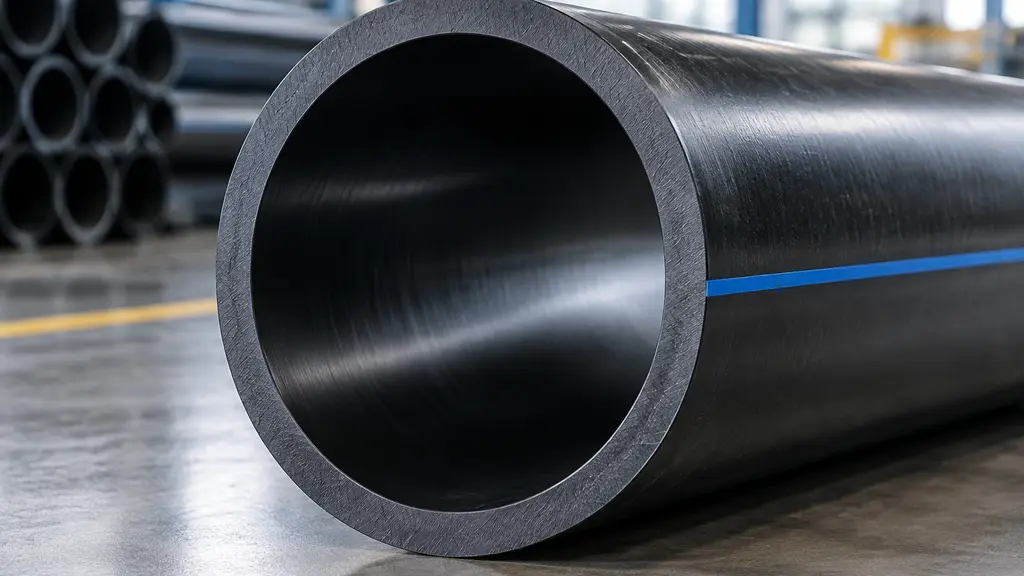
City networks typically rely on medium-diameter pressure pipes, usually falling between DN110mm and DN630mm. To guarantee a 50-year operational lifespan, these setups require premium PE100 grade resin and absolute compliance with ISO 4427.
Recommendation: Target HDPE pipe manufacturers that boast high-volume extrusion lines and a strong portfolio of verified municipal references.
Transporting volatile gases means navigating strict safety mandates. This requires PE80 or PE100 pipes, easily identified by their standard yellow striping. The non-negotiable metrics here? Zero-leakage fusion capabilities and supreme resistance to rapid crack propagation.
Recommendation: Prioritize suppliers equipped to run aggressive, in-house hydrostatic and crack propagation tests.
Moving abrasive slurry demands massive pipes (DN630mm up to DN3000mm) featuring exceptionally thick walls (low SDR). These robust profiles are necessary to survive aggressive internal wear and heavy external impacts.
Recommendation: Align with large-diameter specialists who operate the heavy-duty extrusion machinery required to push these massive profiles.
Shielding underground electrical and fiber-optic grids requires specialized conduits. Think Modified Polypropylene (MPP) pipes (DN100mm-355mm) or Double-Wall Corrugated (DWC) pipes boasting SN4 or SN8 ring stiffness.
Recommendation: Look for facilities housing dedicated corrugated extrusion lines and on-site SN ring stiffness testing laboratories.
Deploy this comprehensive audit checklist to thoroughly vet potential HDPE pipe suppliers before you ever sign a purchase order.
1. Resin Quality: Demand the exclusive use of 100% virgin PE100 or PE4710 resin. Immediately disqualify any vendor blending recycled fillers into pressure-rated pipes.
2. Certifications: Secure proof of active ISO 4427, CE, and ISO 9001 certifications, backed by recent SGS (or equivalent) third-party audit reports.
3. Production Capacity: Evaluate their true annual output (look for 100,000+ tons/year) to ensure they can actually deliver on aggressive project timelines.
4. Dimensional Accuracy: Confirm they monitor SDR and wall thickness tolerances in real-time using inline ultrasonic scanning.
5. In-House Testing: Verify that the factory laboratory executes Hydrostatic Strength, Melt Flow Rate (MFR), and Oxidation Induction Time (OIT) tests on a daily basis.
6. Comprehensive Fittings: Ensure they supply fully compatible butt fusion, electrofusion, and compression fittings to lock in joint integrity.
7. Customization: Check their flexibility regarding custom lengths (6m, 12m, or continuous coils for DN20-90) and specific color striping requirements.
8. Factory Scale: Look at the physical size of the operation (e.g., a 200-acre footprint). Scale is a strong indicator of both financial stability and sustained production muscle.
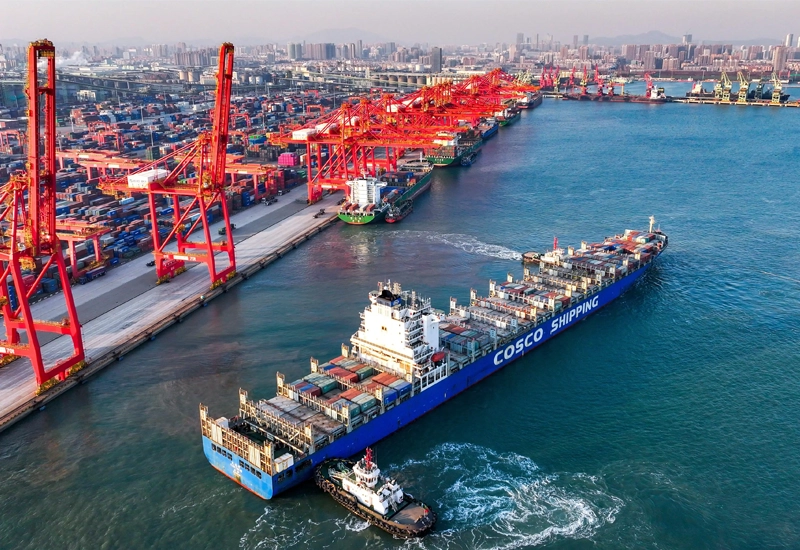
9. Export Logistics: Dig into their history with international freight. You want a partner skilled in export packaging, container space optimization, and flawless customs paperwork.
10. Equipment Support: Find out if they bundle compatible pipe welding machinery and offer technical installation support for your ground crews.
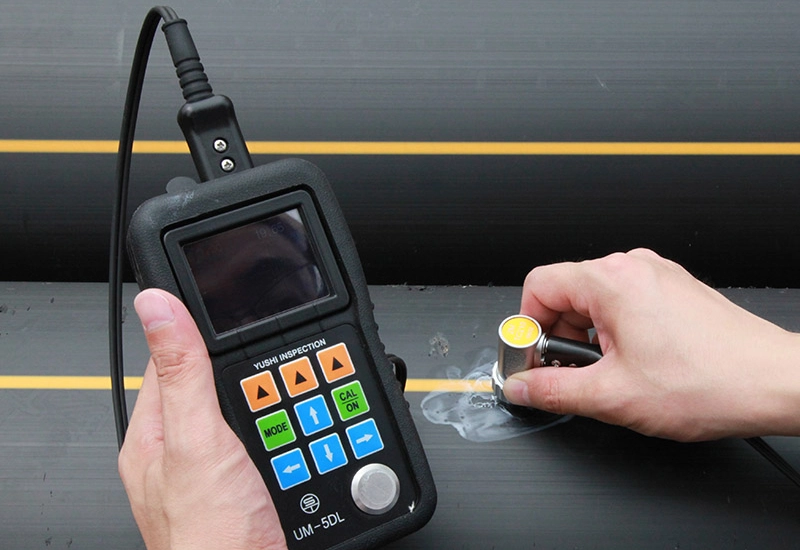
Polyethylene pricing is inextricably linked to the fluctuations of global resin indices. Looking at benchmarks for 2025 and 2026, HDPE resin costs hover between USD 1,143 and 1,227/MT in the US market, while Chinese markets see rates from USD 1,036 to 1,074/MT.
Disclaimer: The USD/meter estimates below reflect standard PE100 pipes and remain subject to raw material market volatility.
| Pipe Diameter & Class | Indicative Price per Meter (USD) |
|---|---|
| DN50 (SDR11 / PN16) | $1.20 – $1.80 |
| DN110 (SDR17 / PN10) | $3.00 – $4.00 |
| DN160 (SDR11 / PN16) | $5.50 – $7.00 |
| DN315 (SDR26 / PN6) | $14.00 – $18.00 |
Securing bulk engineering orders—typically anything over 1,000 meters—often unlocks volume discounts of 12% to 15% off retail rates. Lead times, however, swing wildly depending on your chosen region. Elite Chinese manufacturers leverage their massive scale to hit rapid 7-to-15-day turnarounds for standard specs. In contrast, backlogged Western suppliers frequently push lead times out to 30, 45, or even 60 days.
A single procurement misstep in the pipeline sector can trigger devastating project delays and massive budget blowouts. Sidestep these critical hazards during your vendor selection process:
Mitigation Tip: Always mandate certified proof of virgin resin sourcing before production begins.
Mitigation Tip: Explicitly state the governing dimensional standard in your initial RFQ.
Mitigation Tip: Always consult ISO temperature derating charts if your operating environment exceeds 20°C.
Mitigation Tip: Source your pipes, fittings, and welding equipment from a single, vertically integrated manufacturer.
Mitigation Tip: Strictly cross-reference the proposed SDR against the maximum working pressure of your specific project.
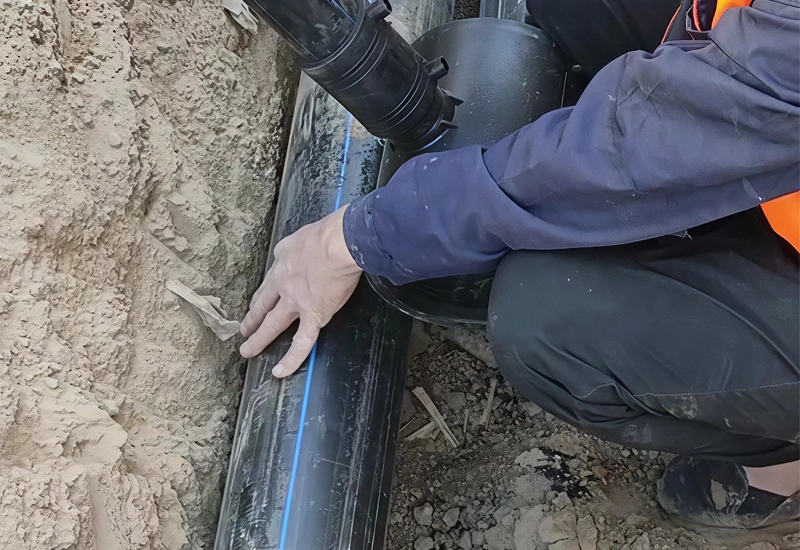
International procurement requires a careful balancing act between unit cost, delivery speed, and strict regulatory compliance.
| Region | Pricing & Cost Structure | Quality & Certifications | Best-Fit Project Scenarios |
|---|---|---|---|
| China | 30% to 50% lower cost. Massive scale ensures fast lead times (7-15 days). | ISO 4427, CE, SGS. High customization and virgin resin use among top-tier factories. | Large-scale infrastructure, municipal water, mining, and cost-sensitive global EPC projects. |
| Europe | Premium pricing. Longer lead times depending on domestic demand. | EN 12201. Focus on specialized, high-end products like PE100-RC (crack resistant). | Highly regulated Western municipal markets and complex trenchless installations. |
| Turkey | Mid-tier pricing. Balances logistics costs with manufacturing output. | Regional certifications. Strong export logistics for neighboring continents. | Projects located in the Middle East and North Africa requiring a regional supply hub. |
Building a bulletproof pipeline supply chain demands a highly systematic approach to vetting vendors. Once you are ready to pull the trigger, execute this three-step workflow to guarantee both technical compliance and commercial success:
Step 1: Define Exact Specs
Put your requirements in writing. Detail the exact Outer Diameter (DN/OD), Standard Dimension Ratio (SDR), Pressure Nominal (PN), PE grade (PE80/PE100), and the specific governing standard (like ISO 4427). Ambiguity leads to quoting disasters.
Step 2: Request Verification
Force shortlisted vendors to prove their claims. Ask for their ISO 9001 certificate, comprehensive ISO 4427 product test reports, and undeniable proof of virgin resin sourcing. A legitimate factory will hand these over without hesitation.
Step 3: Secure a Landed Quote
Demand a tailored quote that factors in volume discounts, exact manufacturing lead times, and clear shipping terms (such as FOB or CIF). This gives you the true total cost of ownership, rather than a misleading factory-gate price.
By fiercely protecting your specifications and thoroughly auditing factory credentials, you can confidently partner with an HDPE pipe manufacturer capable of delivering premium materials on time and strictly on budget.
Who is the largest HDPE pipe manufacturer in the world?
JM Eagle and Advanced Drainage Systems control the lion’s share of North American volume, but China Lesso Group is widely acknowledged as the largest producer in Asia. For massive single-site production and global export power, top-tier Chinese entities like JINQUAN run sprawling 200-acre facilities that push out well over 100,000 tons every year.
Which country produces the best quality HDPE pipes?
Quality isn’t dictated by borders; it’s dictated by strict adherence to international standards. European factories are highly regarded for specialized PE100-RC (crack-resistant) pipes. Meanwhile, elite Chinese manufacturers produce world-class, ISO 4427-certified PE100 pipes using 100% premium virgin resin, hitting the perfect sweet spot between elite quality and aggressive cost efficiency.
How do I verify if an HDPE pipe manufacturer is genuine and certified?
Start by requesting their ISO 9001, ISO 4427, and CE certificates. Then, independently verify those documents directly with the issuing authorities (such as SGS or TUV). Furthermore, demand recent third-party lab results for Hydrostatic Strength and Oxidation Induction Time (OIT), and insist on a comprehensive virtual or in-person factory audit.
What is the average price of HDPE pipes per meter in 2026?
Pricing shifts constantly alongside global resin indices. As a general 2026 baseline, standard PE100 SDR11 (PN16) piping runs approximately USD 1.20 to 1.80 per meter for DN50, USD 5.50 to 7.00 for DN160, and USD 14.00 to 18.00 for DN315. Keep in mind that bulk engineering orders routinely trigger volume discounts of 12% to 15%.
What is the difference between PE100 and PE4710 HDPE pipes?
PE100 represents the international ISO standard, indicating a Minimum Required Strength of 10.0 MPa. PE4710 is the North American equivalent (governed by AWWA/ASTM), featuring a Hydrostatic Design Basis of 1600 psi. Both are elite, high-performance resins, though PE4710 permits slightly higher safe working stress allowances within US municipal engineering designs.
What is the typical MOQ and lead time for HDPE pipe export orders?
To make international freight economically viable, export MOQs usually begin at one 20-foot container, though commercial engineering projects demand vastly more. The best Chinese manufacturers can turn around standard specifications in a rapid 7 to 15 days, while Western suppliers often need 30 to 45 days to clear their backlog.
Are Chinese HDPE pipe manufacturers reliable for large infrastructure projects?
Absolutely. The leading Chinese manufacturers are incredibly reliable partners for global infrastructure builds. These mega-factories use 100% virgin resin, rigorously maintain ISO 4427 certifications, and operate highly advanced ultrasonic extrusion lines. This makes them the go-to suppliers for massive water and mining operations around the world.
What certifications should an HDPE pipe manufacturer have for water and gas applications?
For potable water networks, suppliers must carry ISO 4427, EN 12201, or AWWA C906, plus relevant local health clearances like WRAS or NSF. Gas distribution requires a different benchmark entirely—ISO 4437 or EN 1555 is absolutely mandatory to guarantee resistance to rapid crack propagation and enforce strict leak prevention protocols.
Procuring pipeline materials from the global market demands aggressive technical scrutiny and sharp commercial diligence. The long-term survival of municipal water grids, high-pressure gas networks, and abrasive mining operations rests squarely on your manufacturer’s extrusion precision, resin purity, and dimensional exactness. When you meticulously align your project’s SDR and pressure demands with a factory’s verified output capabilities, you effectively neutralize installation risks and block premature pipeline failures. Prioritize partners who bring transparent testing protocols, undeniable ISO certifications, and battle-tested export logistics to the table. Doing so guarantees your infrastructure builds finish on schedule, stay under budget, and perform flawlessly for decades to come.