Address
Zhengzhou, Henan, China
Work Hours
Monday to Friday: 7AM - 7PM
Weekend: 10AM - 5PM
Address
Zhengzhou, Henan, China
Work Hours
Monday to Friday: 7AM - 7PM
Weekend: 10AM - 5PM

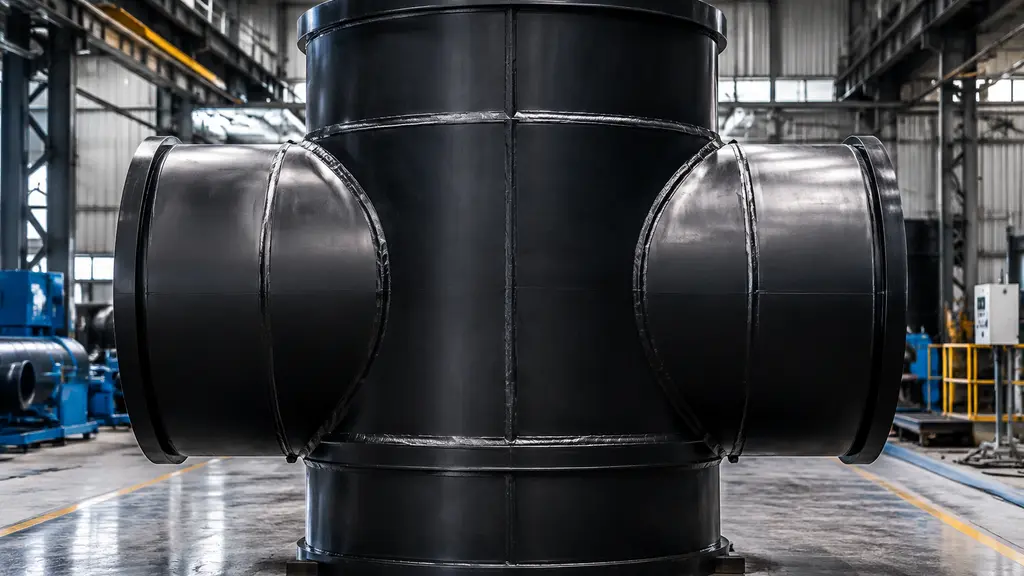
Fabricated HDPE fittings for large pipeline projects help buyers and engineers evaluate custom elbows, tees, reducers, fabrication methods, specs, pricing, and supplier selection for water, mining, and industrial systems.
Fabricated HDPE fittings serve as custom-built piping components, engineered by cutting and butt-fusion welding sections of high-density polyethylene (HDPE) pipe to form precise geometric shapes. While standard injection-molded fittings generally hit their manufacturing limit around DN500 to DN630, custom fabrication becomes an absolute necessity for large-diameter lines spanning DN110 up to DN2000 (4 to 80 inches).
Project engineers rely on these components to route massive industrial transmission mains or weave through complex underground infrastructure where standard angles simply won’t work. Manufactured under rigorous standards like ASTM F2206, fabricated HDPE fittings give teams exact directional control. At the same time, they preserve the leak-proof, corrosion-resistant integrity expected from a continuous polyethylene system.
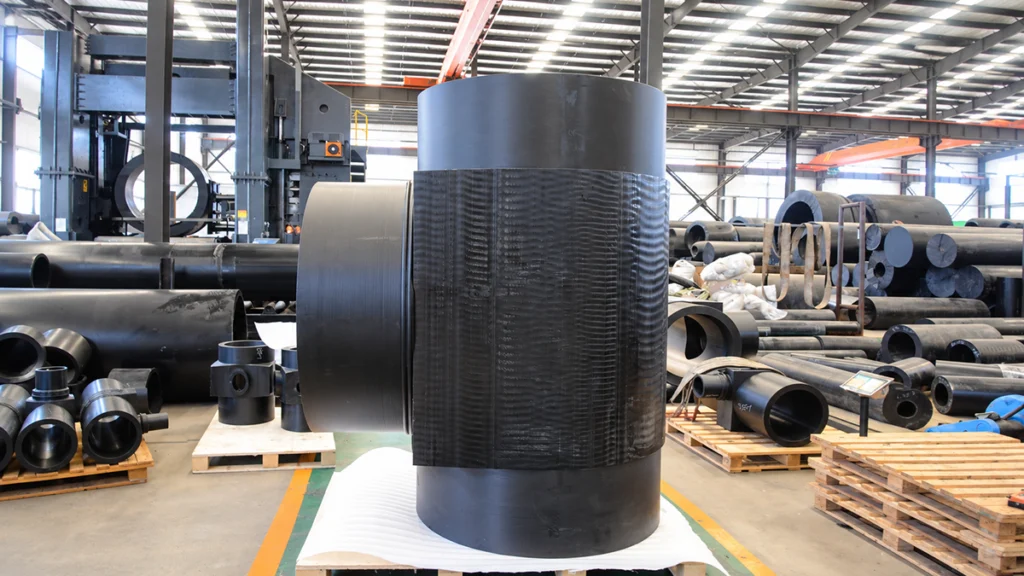
Off-the-shelf molded fittings frequently fall short when faced with the sheer scale, heavy wall thicknesses, or highly specific routing demands of major pipeline installations. Once pipe diameters push past 630mm, trying to mold a HDPE pipe fitting typically results in severe warping because the massive volume of plastic cools unevenly. Custom fabrication completely bypasses this physical hurdle. It also delivers the highly specific angles that standard molds just can’t match.
The table below contrasts fabricated HDPE fittings against standard molded components and field-modified alternatives:
| Feature | Fabricated HDPE Fittings | Standard Molded Fittings | Field-Modified Alternatives |
|---|---|---|---|
| Diameter Range | DN110 to DN2000 | DN16 to DN630 | Variable |
| Angle Customization | Unlimited custom angles | Fixed standard angles (45°, 90°) | Highly restricted |
| Wall Thickness | Supports extreme thickness (SDR 7.4) | Limited by cooling/warping risks | Dependent on available pipe |
| Quality Assurance | Factory tested, data-logged welds | Factory batch tested | High risk, limited QA |
| Primary Use Case | Large-diameter transmission lines | Standard distribution networks | Emergency temporary repairs |
Because the fabrication process is inherently flexible, manufacturers can craft highly specialized geometries tailored to complex networks. Typical custom configurations feature butt fusion elbows cut to exact angles, such as 11.25°, 22.5°, 30°, 45°, 60°, 75°, and 90°.
Fabrication goes well beyond basic directional shifts, fully supporting intricate branch connections and pipeline transitions. You will often see equal and reduced tees, lateral (45° wye) tees designed for directional flow optimization, and bulky cross tees. Engineers manage pipe size transitions using concentric and eccentric reducers. Meanwhile, heavy-duty flange adapters handle the mechanical connections tying the HDPE system into steel pipelines or system valves.
Producing these large diameter HDPE fittings requires a highly controlled workflow dictated by ASTM F2620 standards for heat fusion joining. The cycle starts with the selection of premium PE100 pipe segments, which operators cut to precise angles using heavy-duty industrial band saws.
Next, technicians face and plane the cut ends to guarantee perfectly flush mating surfaces. They apply Teflon-coated heating plates—strictly calibrated between 400°F and 450°F—to melt the plastic faces. Hydraulic butt fusion machine then drives the segments together under carefully calculated pressure to form the butt-fusion weld. During the critical cooling phase, the joint must remain absolutely immobile to prevent structural flaws.
Quality control remains a non-negotiable part of the operation. Technicians serialize and heat-stamp every fabricated HDPE fitting to ensure complete traceability. Advanced data loggers capture the exact temperature, pressure, and duration of every single weld. Finally, inspectors visually confirm the presence of a uniform, 360-degree double-roll bead, which verifies that the joint meets all structural integrity demands.
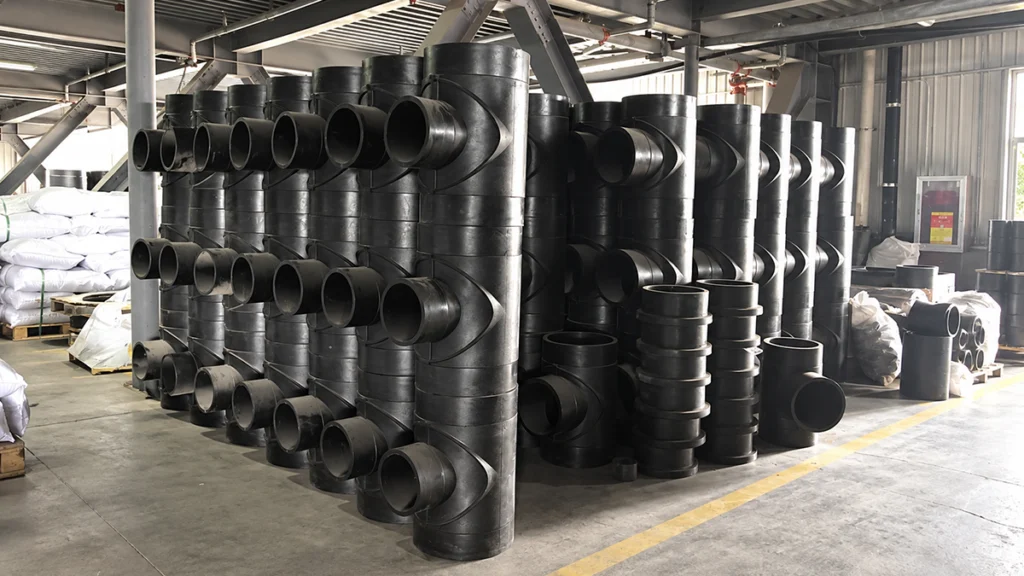
Heavy-duty industrial and municipal projects rely on fabricated HDPE fittings when off-the-shelf piping simply cannot handle the structural or geometric constraints of the site.
In the municipal water sector, contractors utilize these HDPE pipe fittings for massive transmission mains and distribution networks—especially when fixed angles clash with existing buried utilities. Mining operations depend heavily on them for aggressive slurry lines. These tough applications demand exceptionally thick-walled components (like SDR 7.4 or SDR 9) to combat severe internal abrasion and elevated operating pressures. Meanwhile, the industrial and energy sectors deploy custom HDPE pipe fittings for demanding tasks ranging from deep-sea dredging and high-head hydro-power penstocks to major gas distribution networks.
System designers must strictly adhere to pressure and temperature derating principles when specifying fabricated HDPE fittings. Because mitre welds sit at an angle to the fluid flow, these joints inherently carry a lower pressure rating than the continuous base pipe. Engineers must apply a derating factor of 0.5 to 0.8x. To maintain the overall system pressure, a common engineering rule of thumb is to specify fabricated fittings with a Dimension Ratio (DR) one step lower—meaning a thicker wall—than the main pipeline. For instance, if you are running an SDR 11 pipe system, you should install SDR 9 fabricated fittings.
Temperature shifts also heavily influence structural integrity. Nominal pressure (PN) ratings are only valid up to 20°C (68°F). If the internal fluid temperatures climb to 40°C (104°F), designers must apply a 0.74 derating factor to the maximum allowable system pressure.
| Technical Parameter | Specification Standard |
|---|---|
| Diameter Range | DN110 to DN2000 (4 inch to 80 inch) |
| Standard Material | PE100 (PE80 drastically reduces PN rating) |
| Pressure Ratings (PE100) | SDR 7.4 (PN25), SDR 9 (PN20), SDR 11 (PN16), SDR 17 (PN10) |
| Pressure Derating Factor | 0.5 to 0.8x (applied to mitre welds) |
| Temperature Derating Factor | 0.74x (for fluids at 40°C / 104°F) |
| Manufacturing Standards | ASTM F2206, ISO 4427, EN 12201, AWWA C906 |
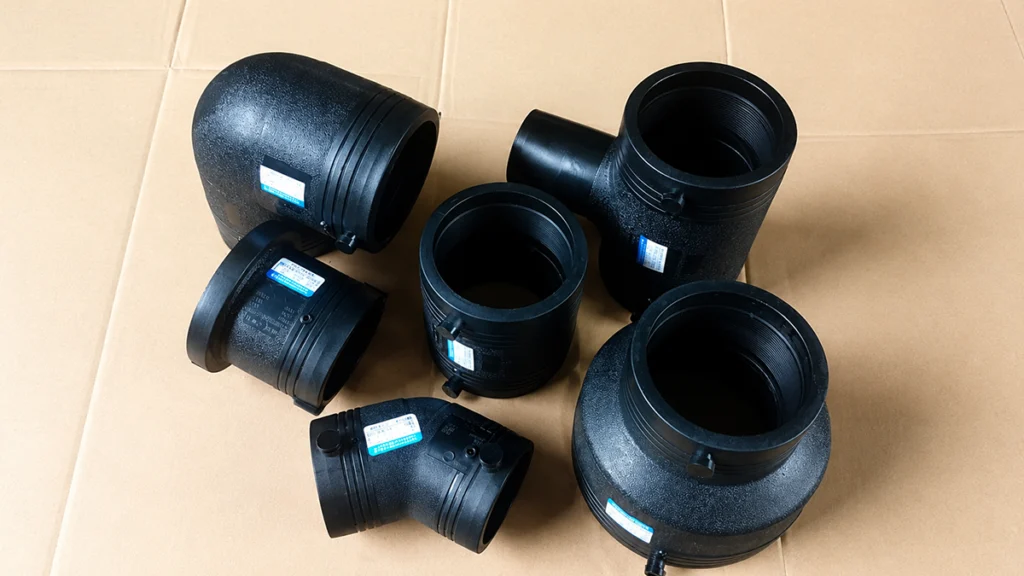
Choosing the right manufacturing partner for large-diameter fittings means taking a hard look at their factory scale, quality control infrastructure, and direct-manufacturing capabilities. A capable fabricated HDPE fittings supplier needs heavy-duty machinery to physically maneuver and weld massive pipes up to DN2000. They must also house the specialized testing equipment required to validate high-pressure joints.
Seek out a manufacturer with a proven track record and a strict commitment to international standards. Baseline reliability starts with facilities operating under ISO 9001 (Quality Management), ISO 14001 (Environmental), and ISO 45001 (Health & Safety) certifications. Partnering directly with a factory that boasts massive production capacity—like a 200-acre plant churning out over 100,000 tons a year—cuts out middleman markups. More importantly, it gives you direct oversight of the vital QA documentation needed for strict municipal and industrial approvals.
Material volume and complex logistics heavily dictate the final cost of custom fabricated HDPE fittings. When you specify thicker walls to offset pressure derating (dropping to a lower SDR), material costs can easily jump by 20% to 50%. Upgrading a large diameter HDPE fitting from SDR 17 to SDR 11, for example, drastically raises the per-unit price simply because of the extra resin weight.
Logistics also eat up a significant chunk of overall project budgets. Hauling large-diameter fabricated HDPE fittings requires immense cargo space. Complex shapes, like bulky cross tees or sweeping 90-degree elbows, consume massive amounts of room on a flatbed. Depending on the routing and distance, transportation fees can make up 15% to 30% of your total costs. Furthermore, while standard stock pipe might carry minimum order quantities (MOQs) of 500 to 1,000 meters, custom fabrication MOQs are usually negotiated directly based on your specific project scope. Keep in mind that lead times will stretch depending on the geometric complexity of the parts and the rigorousness of the required QA testing.
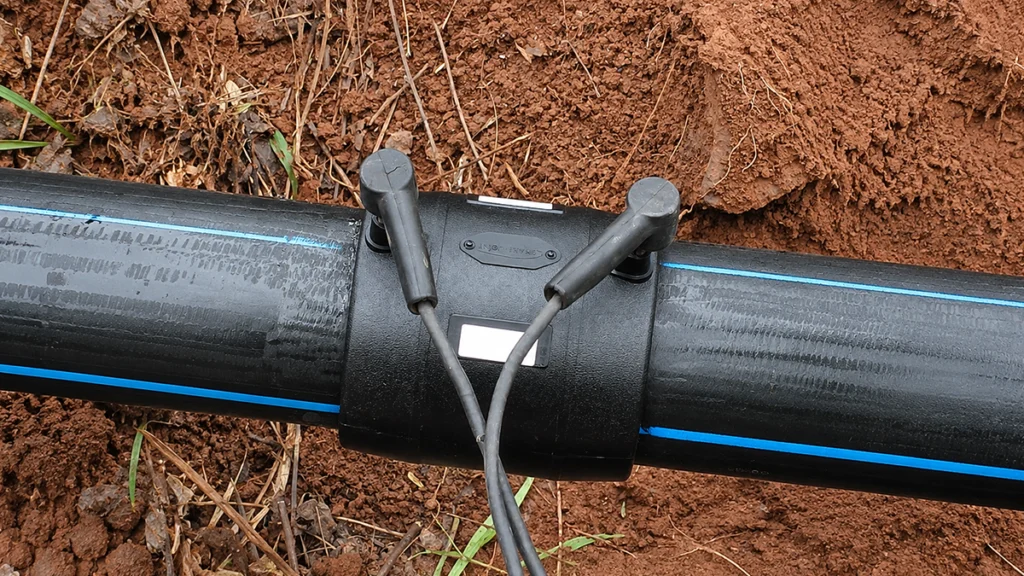
When fabricated fittings fail in the field, material defects are rarely the culprit. Instead, failures almost always trace back to specification errors or sloppy fusion execution. The most dangerous engineering oversight is failing to apply the pressure derating factor for fabricated joints. Overlooking this detail invites catastrophic blowouts the moment the system experiences a pressure surge.
Operator errors during the welding phase introduce massive project risks. If a technician fails to properly clean the pipe ends, lingering dirt or moisture will destroy the molecular bond of the weld. Rushing the process by skipping the facing and planing step—or misaligning the pipes during clamping—creates uneven pressure distribution across the joint. Temperature control is equally critical. An overheated plate burns and degrades the polyethylene, whereas an underheated plate stops the material from fusing correctly. Finally, if the joint moves even slightly during the cooling phase, the developing polymer chains will fracture, ruining the structural integrity of the HDPE pipe fitting.
To lock in accurate pricing and realistic lead times, procurement teams must supply manufacturers with highly precise technical data. Vague requests inevitably lead to mismatched SDR ratings and drastically increase the risk of system failures down the line.
A complete RFQ for fabricated HDPE fittings must include the following details:
1. The exact Pipe Outside Diameter (OD) alongside the required SDR or PN rating.
2. Specific geometric configurations and exact angles (for example, a 45° lateral tee or an eccentric reducer).
3. The system’s standard operating pressure, anticipated surge limits, and maximum fluid temperatures so engineers can calculate the correct derating factors.
4. The specific fluid type running through the system, whether that is standard municipal water, a highly abrasive mining slurry, or aggressive industrial chemicals.
5. Comprehensive CAD drawings that clearly outline fit-critical dimensions, acceptable tolerances, and all mating parts.
These components shine in large-diameter pipeline projects where standard molded fittings simply aren’t an option. You will find them playing essential roles in municipal water transmission mains, aggressive mining slurry pipelines, deep-sea dredging tasks, and industrial chemical lines. Custom fabrication gives engineers the freedom to bypass underground obstacles, navigate complex routes, and manage fluid flow changes with high efficiency.
Factory injection-molded fittings usually max out at DN630 and only come in fixed, standard angles. Fabricated HDPE fittings, however, are custom-built by cutting and butt-fusion welding sections of continuous HDPE pipe. This unique approach unlocks unlimited geometric configurations and easily accommodates massive diameters up to DN2000—sizes that are physically impossible to injection-mold.
Yes, they can, provided they are engineered correctly. Fabricated HDPE fittings utilize mitre welds positioned at an angle to the fluid flow, meaning they require a pressure derating factor of 0.5 to 0.8x. To safely manage high-pressure environments, engineers compensate for this reduction by specifying fittings with a thicker wall (a lower SDR rating) than the surrounding pipeline.
Buyers need to supply the exact outside diameter (OD), the required SDR or PN rating, and the specific geometric configuration, including precise angles. For a truly accurate quote, manufacturers also require the maximum operating pressure, surge limits, fluid type and temperature, as well as detailed CAD drawings that highlight fit-critical dimensions.
Production timelines fluctuate depending on order volume, material availability, and the geometric complexity of the parts. Even if the standard pipe segments are sitting in stock, the manual processes of cutting, facing, welding, cooling, and executing QA tests take dedicated time. Naturally, complex assemblies like massive cross tees will demand longer lead times than a standard segmented elbow.
Municipal water and wastewater sectors lean heavily on them for massive transmission mains. The mining sector requires thick-walled versions to handle highly abrasive slurry lines. You will also see them deployed across the energy sector for hydro-power penstocks, in marine environments for dredging, and throughout industrial plants for gas and chemical distribution.
Quality control starts right at the welding machine. Technicians use data loggers to capture the exact time, temperature, and pressure parameters of every single joint. Once the part cools, inspectors visually check for a uniform, 360-degree double-roll bead. To guarantee full traceability back to the exact operator and machine, premium fittings are always serialized and heat-stamped.
The final price heavily depends on material volume and shipping logistics. When you require thicker walls (a lower SDR) for high-pressure systems, the extra resin weight can bump material costs up by 20% to 50%. On top of that, the bulky, awkward geometries of these HDPE pipe fittings consume a lot of cargo space. Consequently, transportation can easily make up 15% to 30% of your total landed cost.
Custom fabricated HDPE fittings play an important role in large-diameter pipeline projects where standard molded fittings cannot meet specific size, angle, or layout requirements. For reliable long-term performance, buyers should carefully evaluate pipe diameter, SDR, pressure rating, material grade, welding quality, and applicable standards before ordering.
For large projects, logistics, production capacity, quality control, and supplier experience can also significantly affect total project cost and delivery time. Working with an experienced HDPE fittings manufacturer can help ensure that custom elbows, tees, reducers, and other fabricated components meet both technical and project-specific requirements.
If you are planning a large pipeline project, prepare your required diameter, SDR, pressure rating, fitting type, quantity, and project standard before requesting a quotation.