1. PPR pipe fittings are high temperature resistant and suitable for hot water systems, and can withstand temperatures up to 95°C (203°F).
2. PPR fittings are corrosion resistant and have excellent resistance to chemicals, preventing rust and scale buildup.
3. PPR fittings have an expected service life of more than 60 years under normal conditions and when properly installed.
4. PPR pipe fittings form leak-free joints after fusion welding, which prevents leaks and maintains the safety of PPR pipe use.
5. Pipe PPR fittings have low thermal conductivity, reducing heat loss in hot water systems and preventing condensation in cold water.
PPR Fittings Application
1. PPR pipe fittings are ideal for connecting residential and commercial water supply pipes due to their high temperature and pressure resistance.
2. Due to their excellent thermal properties, PPR Fittings can be used for central heating, floor heating and radiator connections.
3. PPR pipe fittings are suitable for low pressure compressed air applications in workshops or factories.
4. PPR pipe fittings are sanitary, non-toxic and safe for use in clean water treatment systems.
5. PPR pipe and fittings are resistant to chlorine and other pool chemicals and are suitable for swimming pool and spa facilities.
Specification & Dimension
Generic PPR Pipe Fittings
Specification
Material
Color
Elbow
L20~L110
PPR
Green / White
Direct
S20~S110
PPR
Green / White
Equal Tee
T20~T110
PPR
Green / White
45° Elbow
L20×45°~L63×45°
PPR
Green / White
End Cap-1
D20~D63
PPR
Green / White
Reducer
S25×20~S110×90
PPR
Green / White
Reducing Tee
T25×20~110×90
PPR
Green / White
Reducing Elbow
L25×20~L32×25
PPR
Green / White
Bridge Bend
20~32
PPR
Green / White
Cross Tee
20~32
PPR
Green / White
Union Fitting
20~63
PPR
Green / White
Split Flange
φ40~φ110
PPR
Green / White
One-Piece Flange
φ20~φ32
PPR
Green / White
Hex Plug
1/2″m~1″m
PPR
Green / White
Wing Plug
1/2″m & 3/4″m
PPR
Green / White
End Cap-2
1/2″m & 3/4″m
PPR
Green / White
Pipe Clip-1
20~32
PPR
Green / White
Pipe Clip-2
20~32
PPR
Green / White
Other: Customization sizes
Quality Ensurance
Quality Inspection Process
Environmentally friendly raw materials are recyclable
Material chemical composition analysis and physical property test
Each process must be inspected and qualified before continuing
Thickness and weight test of each product
Each pipe is not put into storage until after final inspection.
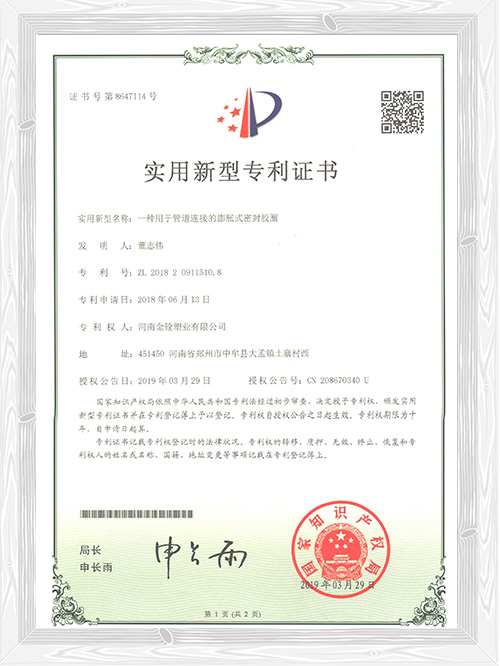
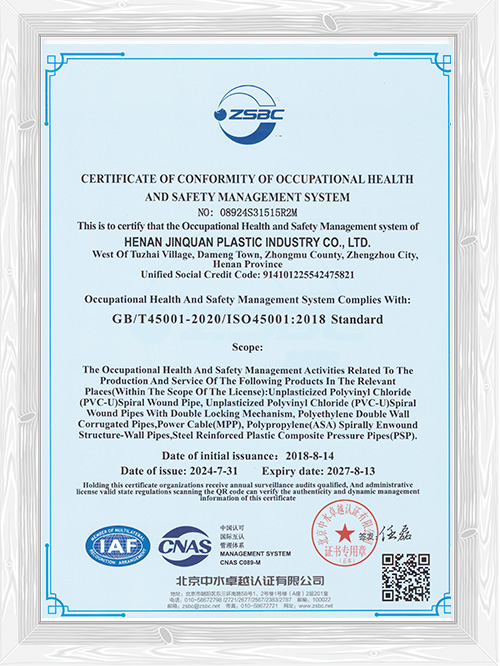
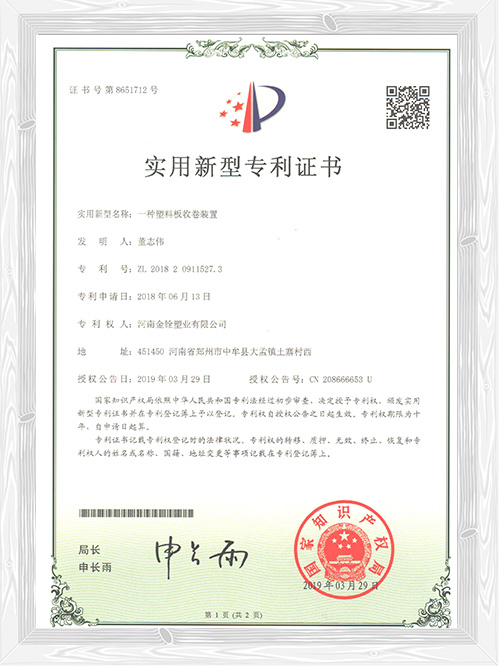
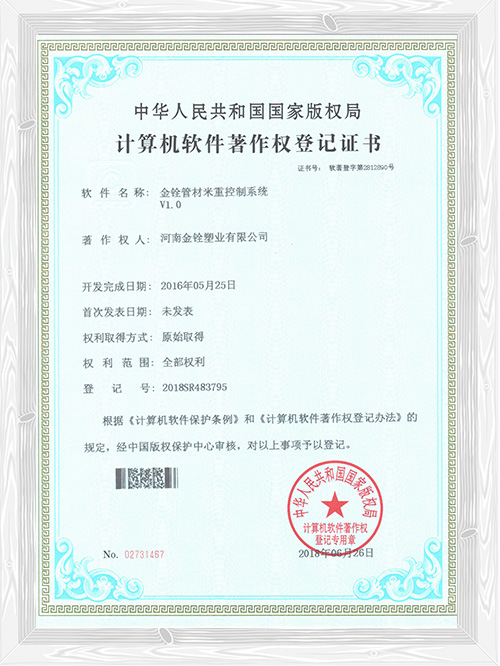
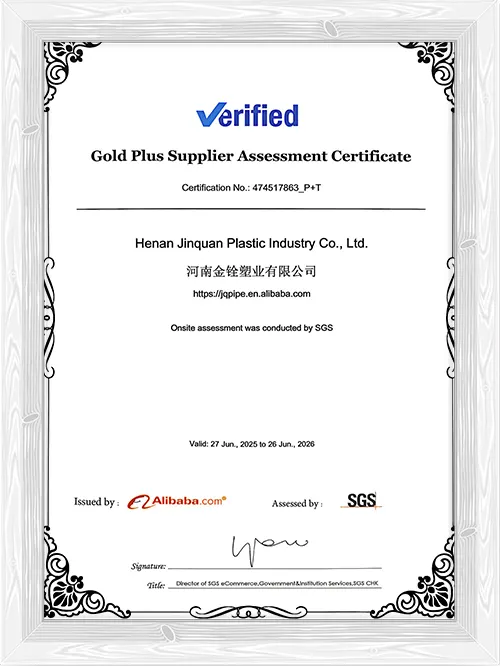
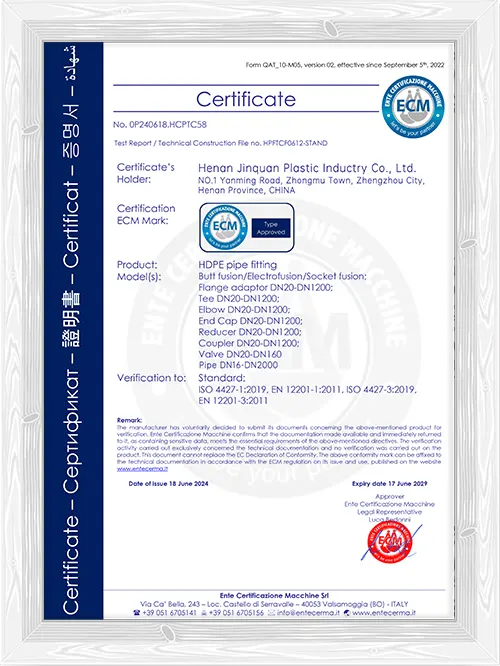
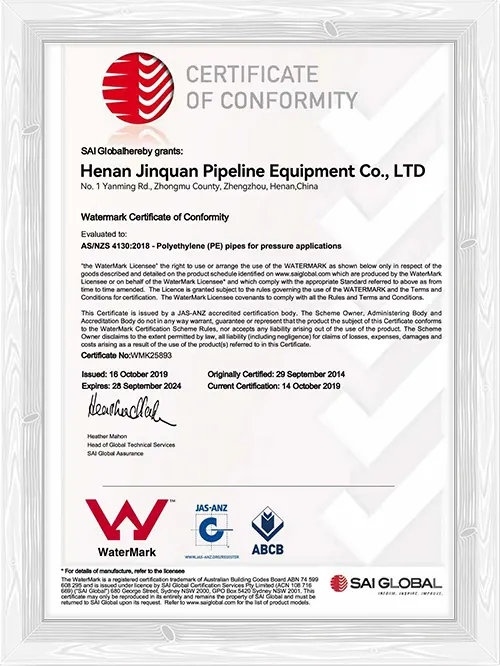
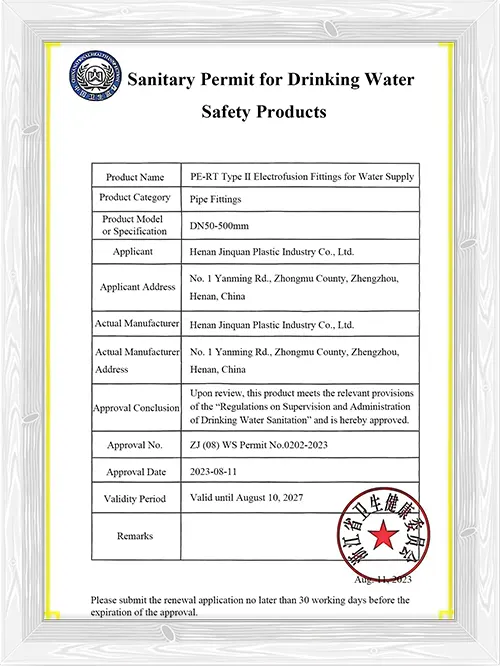
Certificate Showcase
PPR Fittings Advantages
1. Safe for Drinking Water Use
Jinquan PPR pipes are non-toxic and do not release harmful substances. They won’t react with waterborne ions or building chemicals, and there’s no galvanic corrosion when connected to metal components—ensuring safe, clean water transport.
2. Corrosion & Rust Resistance
Unlike traditional metal pipes, PPR pipes are completely resistant to rust, scaling, and corrosion—even in high-acid, high-alkali, or chloride-rich environments—making them perfect for long-term water systems.
3. Near-Zero Leakage with Heat Fusion Joints
PPR pipes use homogenous hot-melt connections, creating a single seamless system. The result? An ultra-reliable joint with virtually zero risk of leakage—cutting down on future maintenance and water loss.
4. Lightweight and Labor-Friendly
Being significantly lighter than metal pipes, Jinquan PPR pipes are easier to handle and install, reducing construction time and labor intensity while improving overall jobsite efficiency.
5. High Temperature Resistance
Designed for hot water systems, PPR pipes withstand temperatures up to 95°C (203°F) without deforming or weakening, making them ideal for domestic hot water and heating applications.
6. Low Thermal Conductivity = Energy Savings
With a thermal conductivity of only 0.23–0.24 W/(m·K), PPR pipes help retain heat in hot water systems and reduce heat gain in cold water lines—translating to lower energy bills and consistent water temperatures.
7. Smooth Inner Walls, Anti-Scaling Design
The inner surface of Jinquan PPR pipes is ultra-smooth, reducing friction and preventing mineral buildup. Water flows more efficiently, and the risk of blockages or pressure loss is significantly minimized.
8. Maintenance-Free Longevity
Resistant to corrosion, scale, and wear, PPR piping systems often last 50+ years with little to no maintenance. That means lower operating costs and fewer headaches over the long term.
9. Versatile Applications
Jinquan PPR systems are used across residential, commercial, and industrial projects—for plumbing, HVAC, chemical transport, and even agricultural irrigation thanks to their strength and weather resistance.
10. Cost-Effective and Long-Term Value
Compared to copper or metal alternatives, PPR pipes offer a lower initial investment and significantly reduced long-term costs due to durability and minimal maintenance needs.
11. Environmentally Friendly
Made from recyclable materials, PPR pipes support sustainable building practices. Their insulating properties also reduce energy consumption, aligning with green building standards.
12. Quick & Reliable Installation
PPR pipes are joined via heat-fusion, forming strong, permanent seals. This simple method reduces labor time and eliminates the need for sealants or adhesives—streamlining your installation process.