Address
Zhengzhou, Henan, China
Work Hours
Monday to Friday: 7AM - 7PM
Weekend: 10AM - 5PM
Address
Zhengzhou, Henan, China
Work Hours
Monday to Friday: 7AM - 7PM
Weekend: 10AM - 5PM

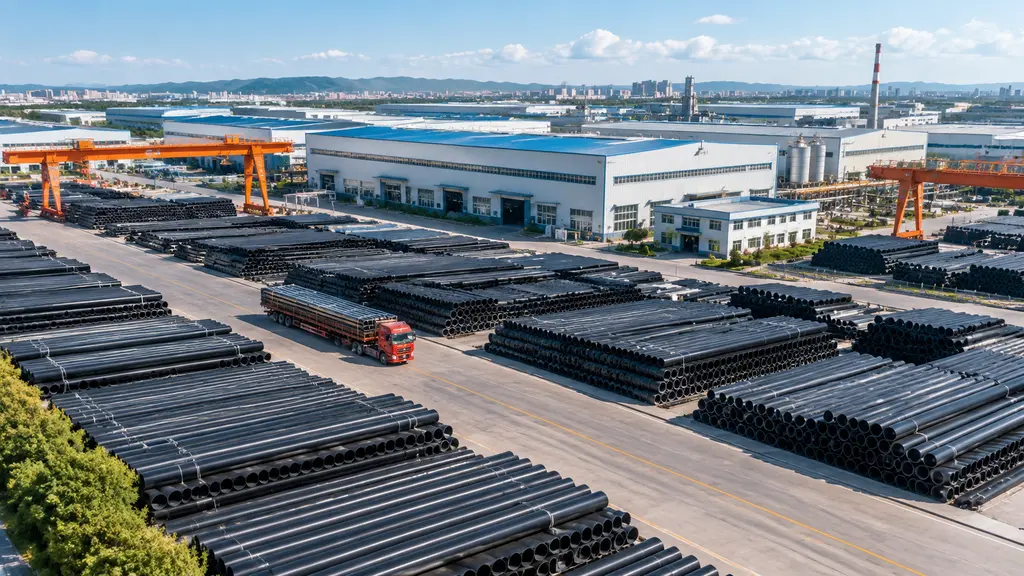
This guide explains how an HDPE pipe factory in China plans production capacity, controls PE100 quality, meets ISO 4427 and EN 12201 standards, and handles export packing, lead time, MOQ, and logistics, helping buyers shortlist reliable suppliers.
At its core, an HDPE pipe factory is a specialized manufacturing plant. It extrudes high-density polyethylene resin to create both pressure and non-pressure piping. You will find these HDPE pipes used everywhere—from municipal water and gas networks to mining operations and industrial drainage. By leveraging advanced extrusion lines, these facilities melt raw polymer pellets and shape them into continuous, highly durable pipes with incredibly strict dimensional tolerances.
Large-scale facilities like JINQUAN don’t just make one type of product. They operate across multiple categories to cover a wide spectrum of infrastructure demands:
Material grade dictates performance in pressure applications. Today, modern infrastructure leans heavily on PE100, largely leaving the older PE80 standard behind.
PE80 vs. PE100 Material Comparison
| Feature | PE80 | PE100 |
|---|---|---|
| Minimum Required Strength (MRS) | 8.0 MPa | 10.0 MPa |
| Typical Application | Lower-pressure, small-diameter, or legacy gas/water systems | Modern municipal water, high-pressure gas, large-diameter industrial |
| Pressure Capability | Baseline | ~25% higher pressure at the same wall thickness |
| Design Advantage | Highly flexible for tight coiling | Allows thinner walls, lighter weight, and higher internal flow capacity |
Why look to China? It comes down to massive economies of scale, a highly developed petrochemical supply chain, and cutting-edge extrusion technology. As the world’s top producer and consumer of PE pipe, China shipped out $319 million worth of rigid PE pipe in 2024 alone.
That sheer volume breeds a fiercely competitive environment, which naturally drives up manufacturing efficiency. Chinese factories sit right next to major petrochemical hubs, aggressively cutting down raw material logistics costs. On top of that, the heavy concentration of extrusion machinery builders within the country means top-tier pipe factories are constantly upgrading their lines to push faster speeds and hit tighter tolerances.
Still, sourcing from China isn’t a magic bullet for every single project. Procurement teams have to balance the hard cost benefits against logistical realities.
China Sourcing vs. Local Sourcing
The heart of HDPE pipe production is continuous extrusion. Virgin bimodal PE100 resin gets melted, pushed through a precise die, vacuum-calibrated for exact sizing, and finally cooled. If you want a pipeline that lasts decades, maintaining absolute control over these parameters isn’t just important—it’s mandatory.
The production floor follows a strict, highly automated sequence:
1. Resin Drying and Blending: Raw PE pellets and carbon black masterbatch go through a drying phase to strip out moisture. They are then mixed to guarantee uniform UV resistance across the final product.
2. Extrusion: This blend drops into the extruder barrel. Inside, heavy rotating screws melt the polymer, keeping the temperature tightly controlled between 200°C and 240°C.
3. Die Forming: The molten plastic pushes through an annular die head, taking on its initial tubular shape.
4. Vacuum Sizing/Calibration: Still hot, the pipe enters a vacuum calibration tank. The vacuum pulls the material tight against a sizing sleeve, locking in the exact Outside Diameter (OD).
5. Cooling Tanks: The pipe travels through a series of chilled water spray tanks. This rapid cooling solidifies the polymer structure and sets the dimensions permanently.
6. Haul-off: Heavy-duty caterpillar tracks grip the cooled pipe, pulling it down the line at a steady speed that perfectly matches the extruder’s output.
7. Marking/Printing: An inkjet or laser printer stamps the pipe with its standard, diameter, pressure rating, and vital traceability codes.
8. Cutting or Coiling: Planetary saws slice the pipe into straight lengths (usually 5.8m or 11.8m to fit shipping containers), while automated coilers spool up the smaller diameters.
9. Final Inspection: Before anything moves to the storage yard, quality control teams verify the dimensions, visual appearance, and mechanical properties.
Make no mistake: the integrity of this entire process relies entirely on the raw material. Pressure-rated pipes require 100% virgin, bimodal PE100 compound. Slipping recycled or regrind material into the mix destroys long-term hydrostatic strength, burns through essential antioxidants, and ruins the pipe’s Slow Crack Growth (SCG) resistance. In the field, that leads directly to premature, catastrophic failure.
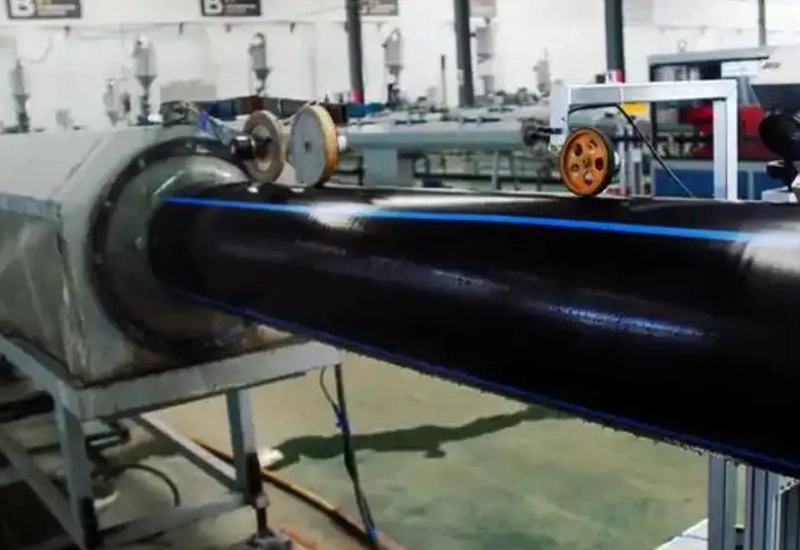
You measure an HDPE pipe manufacturer’s production capacity in three ways: annual tonnage, meters produced per month, and the specific diameter limits of their extrusion lines. Procurement teams need these exact numbers to accurately gauge if a supplier can hit tight project delivery deadlines.
A tier-one facility like JINQUAN runs a massive 200-acre manufacturing complex capable of pushing out over 100,000 tons every year. That capacity is spread across [number of lines] specialized extrusion setups. This distribution is necessary because different pipe diameters demand completely different line speeds, cooling times, and haul-off mechanics.
Illustrative Production Capacity by Diameter Range
| Equipment Type | Diameter Range | Typical Output Format | Production Speed / Characteristics |
|---|---|---|---|
| High-Speed Coiling Lines | DN20 – DN110 | 50m – 100m Coils | High velocity, rapid cooling, automated spooling for continuous lengths. |
| Standard Extrusion Lines | DN125 – DN630 | 5.8m or 11.8m Straight Lengths | Medium speed, balanced output for standard municipal and commercial water networks. |
| Large Diameter Lines | DN710 – DN1600+ (Up to DN3000) | 5.8m or 11.8m Straight Lengths | Low speed, high-tonnage output requiring extended cooling tanks and heavy haul-off machinery. |
Smart buyers match their project volume directly to a factory’s specific line availability. A manufacturer might brag about massive total tonnage, but if they only have one DN1200 line running, their capacity for that specific large diameter is severely bottlenecked. For major infrastructure builds, negotiate phased delivery schedules early on. This keeps the factory’s output rate perfectly synced with your on-site installation timeline.
Procurement engineers have a crucial job before signing off on an order. They must verify outside diameter (OD) systems, confirm pressure ratings (SDR/PN), and cross-check regional standards to guarantee compatibility with local infrastructure. While an ISO 4427 HDPE pipe manufacturer in China defaults to metric dimensions, capable factories can easily swap out tooling to match global dimensional systems.
The relationship between Standard Dimension Ratio (SDR) and Nominal Pressure (PN) forms the absolute foundation of pipe specification. SDR is simply the ratio of the pipe’s outside diameter to its wall thickness. The lower the SDR number, the thicker the wall—and the higher the pressure rating.
SDR vs. PN Rating for PE100 (Water at 20°C)
| SDR (Standard Dimension Ratio) | PN (Nominal Pressure) | Maximum Operating Pressure |
|---|---|---|
| SDR 11 | PN 16 | 16 bar / 1.6 MPa |
| SDR 13.6 | PN 12.5 | 12.5 bar / 1.25 MPa |
| SDR 17 | PN 10 | 10 bar / 1.0 MPa |
| SDR 21 | PN 8 | 8 bar / 0.8 MPa |
| SDR 26 | PN 6 | 6 bar / 0.6 MPa |
Global buyers also need to make sure their orders align perfectly with regional standards.
International HDPE Pipe Standards
| Standard | Region / Application | Measurement System |
|---|---|---|
| ISO 4427 | International / Water Supply | Metric OD, SDR, PN |
| EN 12201 | Europe / Water Supply | Metric OD, SDR, PN (Harmonized with ISO) |
| ASTM F714 / AWWA C906 | North America / Municipal & Industrial | IPS/DIPS OD, DR, psi |
| AS/NZS 4130 | Australia & New Zealand / PE Pipes | Metric OD, SDR, PN |
| GB/T 13663 | China / Water Supply | Metric OD, SDR, PN |
Major factories will naturally hold systemic certifications like ISO 9001, ISO 14001, CE, and SGS. However, potable water health certifications (like WRAS in the UK or NSF/ANSI 61 in the US) are highly localized. Never assume a factory holds these globally; you must verify health certifications on a strict, case-by-case basis.
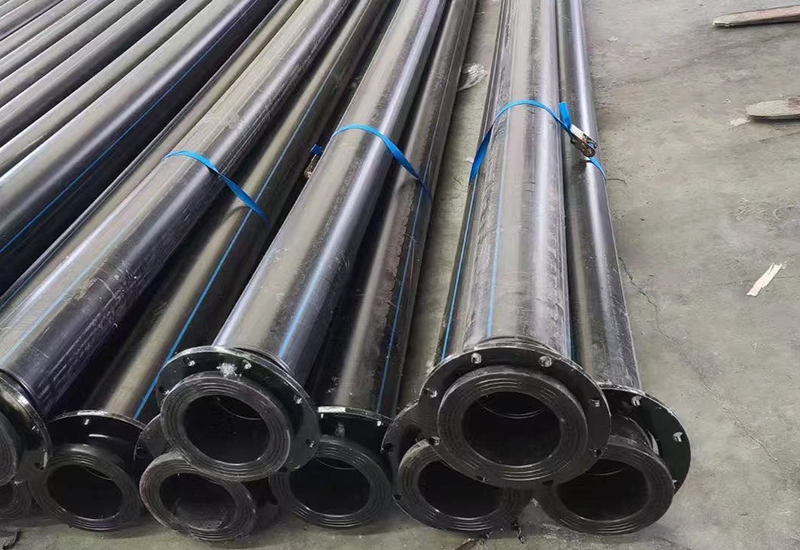
A truly professional ISO 4427 HDPE pipe manufacturer operating in China doesn’t just make pipe—they test it relentlessly. They run in-house laboratories equipped to handle mechanical, thermal, and dimensional testing on both the raw resin and the final product. This continuous testing is the only way to guarantee an HDPE pipeline will actually survive its 50-to-100-year design life.
To validate that quality, buyers should demand specific testing protocols before a single container is loaded.
Essential QC Testing Checklist:
Always request a comprehensive Mill Test Report (MTR) for every production batch. If you are managing a massive project, take it a step further. Hire a third-party inspection agency (like SGS or Bureau Veritas) to physically witness the hydrostatic testing and container loading. It provides an independent, bulletproof guarantee of compliance.
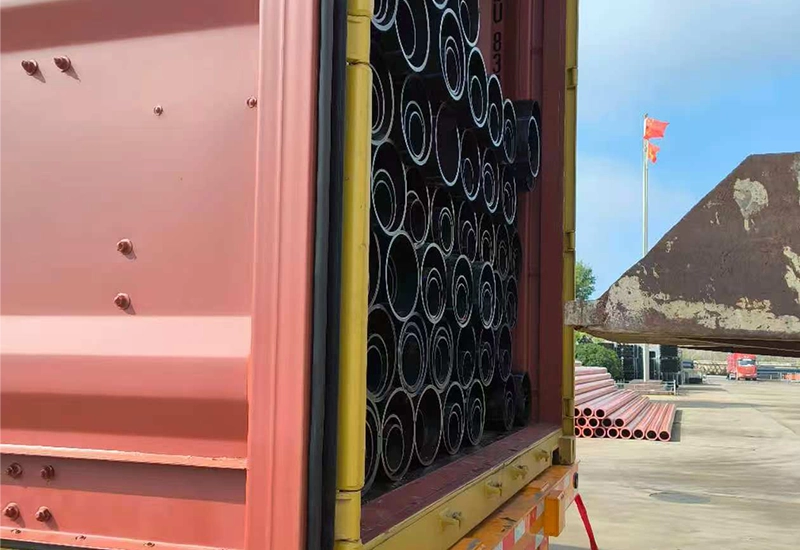
Shipping air is expensive. Effective HDPE pipe export packing solves this by nesting smaller pipes inside larger ones and cutting straight lengths to perfectly match standard sea containers. Polyethylene is relatively lightweight. Because of this, shipping containers max out their geometric volume long before hitting any weight limits.
Small diameters (usually up to DN110 or DN125) are strapped tightly into coils, making them easy to roll right into standard containers. Medium and large diamete HDPE pipes, however, are extruded in straight lengths explicitly cut for ocean freight: 5.8 meters to slide perfectly into a 20-foot General Purpose (20GP) container, and 11.8 meters for a 40-foot High Cube (40HQ) container.
To slash freight costs per meter, factories use a technique called “nesting”—sliding a smaller pipe (like a DN110) directly inside a larger one (like a DN160). Once you factor in the dunnage, strapping, and the clearance needed for forklift forks, practical loading efficiency usually lands between 55% and 70% of the container’s theoretical maximum space.
Illustrative Container Loading Reference
| Pipe Format | Container Type | Max Pipe Length | Loading Method / Efficiency |
|---|---|---|---|
| Coils (≤ DN110) | 20GP or 40HQ | 50m – 100m | Stacked horizontally or vertically. High volume utilization. |
| Straight (Medium) | 20GP | 5.8 meters | Nested where possible. End-loaded via specialized forklifts. |
| Straight (Large) | 40HQ | 11.8 meters | Nested where possible. End-loaded. |
| Oversized (≥ DN1200) | Open Top / Flat Rack / Break Bulk | Custom | Loaded via crane. High freight cost relative to material value. |
*Note: Actual loading capacity depends heavily on the SDR (wall thickness) and specific nesting configurations.
On the logistics side, you need crystal-clear commercial terms. Factories usually operate under EXW, FOB, CFR, CIF, or DAP Incoterms. Standard payment terms are Telegraphic Transfer (T/T), though Letter of Credit (L/C) is standard for massive project sums. To breeze through customs, ensure the factory provides a pristine Commercial Invoice, Packing List, Bill of Lading (B/L), Certificate of Origin (including Form E or Form A for tariff reductions if applicable), and your Mill Test Reports.
HDPE water pipe factory pricing rides the waves of global petrochemical markets. Why? Because raw resin accounts for the overwhelming majority of total manufacturing costs. If a supplier offers you a fixed, long-term price without any raw material escalation clauses, tread carefully.
Breaking down the cost structure gives buyers serious negotiation leverage.
HDPE Pipe Cost Breakdown:
Minimum Order Quantities (MOQ) aren’t arbitrary; they are dictated by production efficiency and shipping logic. An HDPE pipe factory MOQ usually starts at one 20GP container simply to ensure the cargo arrives safely. Alternatively, factories might set a per-size minimum (like 100-500 meters, depending on the diameter) to justify the costly downtime required to swap out extruder die heads. If you stick to standard stock sizes, you’ll find much more flexibility on MOQs.
Lead times are mostly a function of order scale. For standard sizes and common SDRs, expect a turnaround of 7 to 15 days. Custom standards, extremely large diameters, or massive bulk orders naturally require a wider production window. If you need private labeling, an OEM HDPE pipe manufacturer can easily roll custom inkjet printing, colored striping, and specific coil lengths right into that standard lead time.
Navigating the Chinese supplier landscape takes work. You have massive, highly automated industrial complexes on one end, and small trading companies acting as middlemen on the other. Finding a reliable HDPE pipe factory means digging into their production scale, in-house lab equipment, export history, and the specific brands of virgin resin they run.
To filter out unreliable suppliers and identify true tier-one manufacturers, procurement teams should stick to a rigid evaluation framework.
Supplier Evaluation Checklist:
Factory vs. Trading Company Comparison
| Feature | Direct Factory (e.g., JINQUAN) | Trading Company |
|---|---|---|
| Production Capacity | High (100K+ tons/year) | None (relies on partner factories) |
| Price per Ton | Lower (~$1,100-$1,300) | Higher (~$1,200-$1,500 due to markup) |
| Quality Control | In-house laboratory testing | Relies on third-party or factory QC |
| Lead Time | Faster (7-15 days direct control) | Variable (depends on factory allocation) |
| Best For | Large projects, wholesale imports | Consolidating small, mixed-product orders |
Avoiding amateur sourcing mistakes will save your project. Too many buyers chase the absolute lowest price, only to end up with PE100 pipes extruded from recycled resin. Others fail to enforce strict SDR wall thickness tolerances, skip the pre-shipment inspection, or accidentally order the wrong regional standard (like buying a GB/T standard pipe when the local municipality strictly mandates EN 12201).
Context matters. If a municipal water project buyer needs a 50-kilometer DN400 pipeline with strict ISO 4427 compliance, 100% virgin PE100, and mandatory SGS inspection, they absolutely need a direct tier-one factory. On the flip side, a small regional hardware distributor who just needs three pallets of mixed DN20 pipes and a handful of fittings might find a trading company’s consolidation services much more practical, even with the higher unit cost.
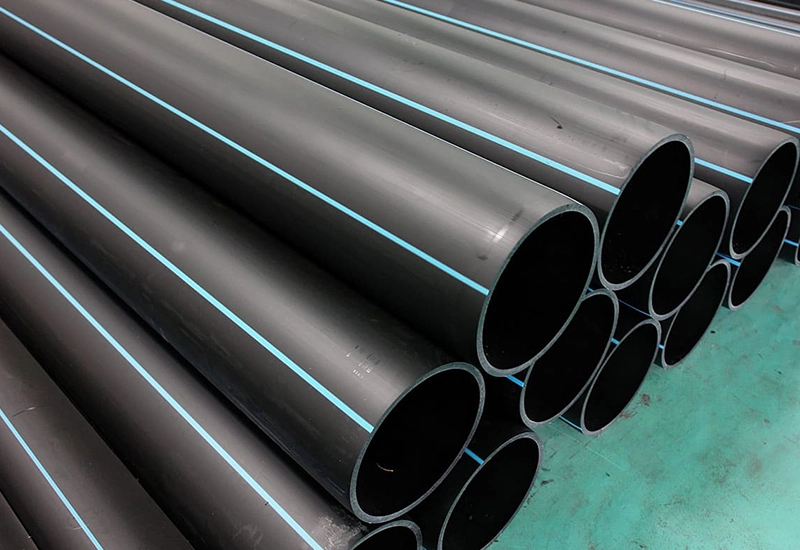
Nailing your procurement strategy means aligning your project’s technical needs and timeline with the proven capabilities of a qualified PE100 pipe supplier. Get the planning right, and you avoid massive delays while ensuring long-term HDPE pipeline integrity.
Key Takeaways for Buyers:
To get a fast, accurate quotation, give the supplier the complete technical picture right out of the gate.
Inquiry Preparation Checklist:
1. Diameter System: Specify Metric (mm) or IPS/DIPS (inches).
2. Pressure Rating: State the exact SDR or PN rating required.
3. Standard: e.g., ISO 4427, EN 12201, ASTM F714.
4. Application: Is this for potable water, gas, mining slurry, or drainage?
5. Volume: Provide the exact quantity needed per size.
6. Format: Specify coil lengths (for smaller diameters) or straight lengths (5.8m/11.8m).
7. Logistics: Name your destination seaport for accurate CIF/CFR pricing.
8. Compliance: List any specific required certificates or mandatory third-party testing.
Q1: How much does HDPE pipe cost per meter from China?
Pricing per meter shifts constantly based on global petrochemical resin markets, the specific pipe diameter, and the required SDR (wall thickness). Since raw resin makes up 70-80% of the total manufacturing cost, factories almost always price their products by weight—usually hovering between $1,100 and $1,300 per ton for virgin PE100—rather than offering a flat rate per meter.
Q2: What is the maximum diameter an HDPE pipe factory can produce?
Top-tier HDPE pipe factories in China possess the machinery to extrude massive diameters reaching up to DN3000 (3,000mm). That said, anything over DN1200 is highly specialized work that requires low-speed, high-tonnage extrusion lines. Keep in mind that shipping pipes larger than DN1200 internationally usually forces you into expensive open-top or break-bulk shipping arrangements.
Q3: Is PE100 better than PE80 for water supply pipelines?
Absolutely. PE100 is the superior choice for modern water networks. It boasts a Minimum Required Strength (MRS) of 10.0 MPa, easily beating PE80’s 8.0 MPa. This strength upgrade allows PE100 pipes to handle roughly 25% more internal pressure at the exact same wall thickness, resulting in lighter pipes and improved flow capacities.
Q4: How long do HDPE pipes last in underground applications?
When extruded from 100% virgin PE100 resin and installed by the book, HDPE pipes carry a design life ranging from 50 to 100 years in underground water and gas networks. They are naturally resistant to corrosion, chemical breakdown, and biological growth, making them incredibly durable once buried.
Q5: Can a Chinese HDPE pipe factory produce pipes to ASTM or AS/NZS standards?
Yes. Well-equipped Chinese factories can easily manufacture pipes compliant with ASTM F714 (North America) or AS/NZS 4130 (Australasia). To do this, the production team swaps out their extrusion die heads and vacuum calibration sleeves to perfectly match the specific outside diameter and wall thickness metrics dictated by those regional standards.
Q6: How do I verify that an HDPE pipe supplier uses virgin resin?
The best method is to request an Oxidation Induction Time (OIT) test, which needs to clock in at over 20 minutes at 200°C. You should also verify the Density and Melt Flow Rate (MFR) figures on the Mill Test Report. For ultimate peace of mind, hire a third-party inspector like SGS to physically verify the raw material bags on the factory floor.
Q7: What payment terms do HDPE pipe exporters usually accept?
The vast majority of HDPE pipe exporters work via Telegraphic Transfer (T/T). The standard structure is a 30% deposit to kick off production, followed by a 70% balance payment against the copy of the Bill of Lading. If you are handling large municipal or government contracts, irrevocable Letters of Credit (L/C) at sight are also widely accepted.
Q8: Can small HDPE pipe orders be combined with fittings in one container?
Yes, factories do this all the time. Consolidating HDPE pipes, butt fusion fittings, and electrofusion fittings into a single container is a highly efficient logistics strategy. Workers pack the smaller fittings into the empty voids around—or even inside—the nested straight pipes, maximizing your container volume and driving down overall shipping costs.
Securing infrastructure materials from a Chinese HDPE pipe factory delivers undeniable advantages in cost, scale, and technology. But that success hinges entirely on strict technical validation. Buyers must insist on virgin PE100 resin, confirm exact SDR requirements, and ensure the factory’s actual line capacity aligns with their project deadlines. By enforcing rigorous quality control checks, strategically nesting pipes to optimize container space, and utilizing independent pre-shipment inspections, procurement teams can confidently source highly durable pipeline systems that meet strict global engineering standards while protecting the bottom line.