Address
Zhengzhou, Henan, China
Work Hours
Monday to Friday: 7AM - 7PM
Weekend: 10AM - 5PM
Address
Zhengzhou, Henan, China
Work Hours
Monday to Friday: 7AM - 7PM
Weekend: 10AM - 5PM

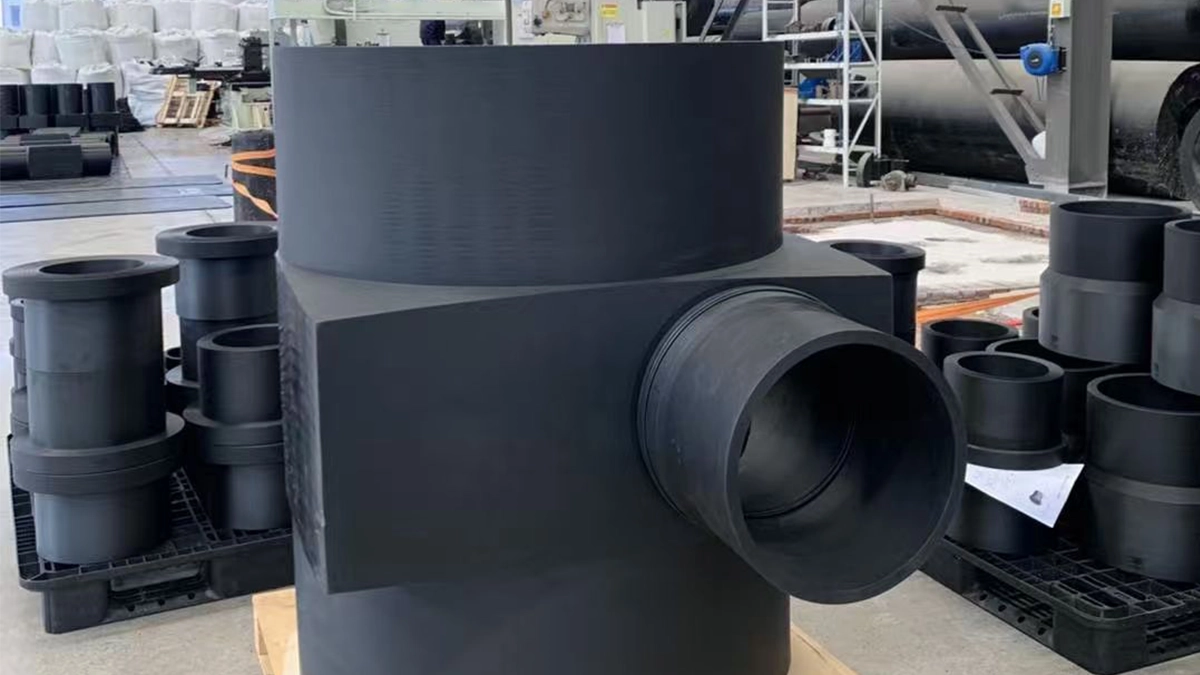
This guide reviews the top 10 HDPE electrofusion fittings manufacturers for gas pipeline and infrastructure projects, covering certifications, product range, pricing, MOQ, lead time, and a practical buyer checklist to help B2B procurement teams choose the right supplier.
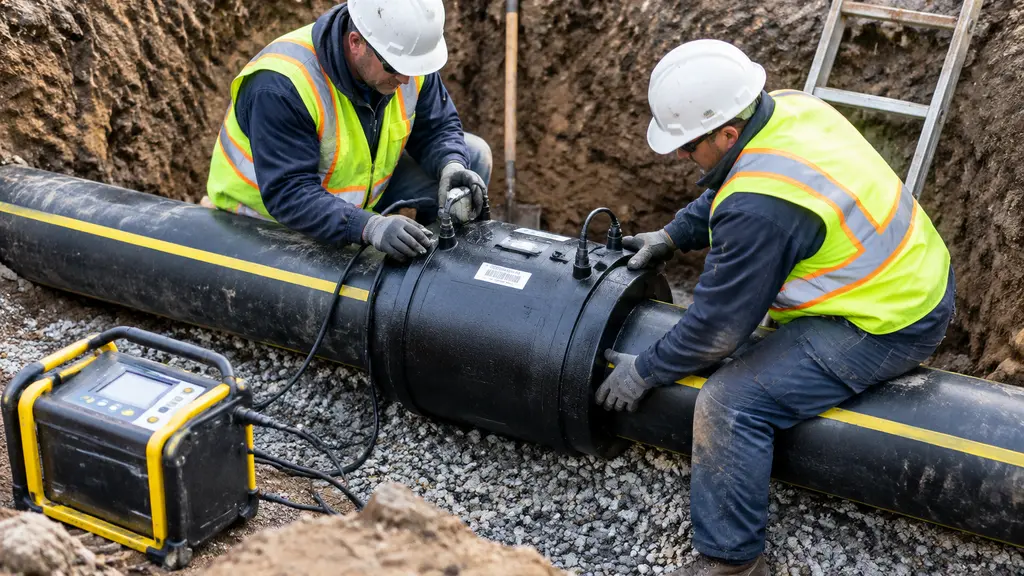
High-density polyethylene (HDPE) electrofusion fittings aren’t just standard pipeline connectors. They are highly specialized joints containing an embedded resistance-wire heating coil. When an external control box energizes this coil, the fitting and the pipe melt together. The result? A monolithic, leak-proof seal.
Unlike fabricated alternatives, molded HDPE electrofusion fittings maintain their full marked pressure rating without any need for derating. Modern gas and water infrastructure projects demand absolute pipeline integrity, making these components a mandatory requirement. Butt fusion demands perfectly matched wall thicknesses. Electrofusion, on the other hand, easily forgives minor Standard Dimension Ratio (SDR) variations between connected segments.
Space constraints also dictate their use. Trenchless installations, congested municipal trenches, tight pipeline repairs, and complex system tie-ins often lack the physical room required for bulky butt fusion machines. HDPE electrofusion fittings slide right in. Furthermore, specialized EF tapping saddles let crews execute branch connections directly onto live, pressurized gas or water mains. You don’t even have to shut down the distribution system.
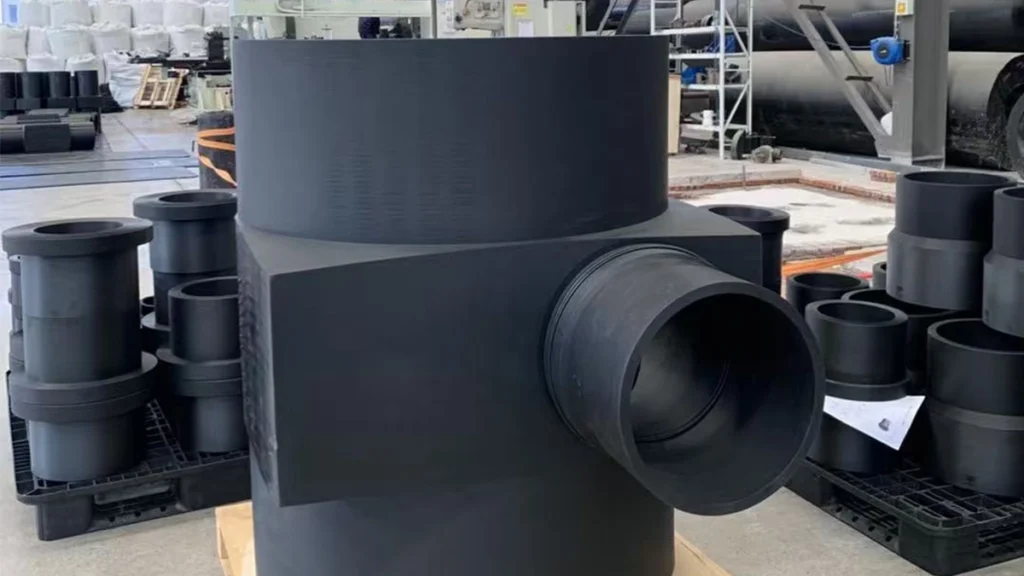
Finding a reliable supplier demands rigorous technical scrutiny. B2B procurement teams must hold manufacturers to a set of uncompromising criteria:
The global electrofusion landscape generally splits into two camps. European innovators dominate the premium utility space, while massive Chinese producers control the high-volume OEM and export markets.
1. Aliaxis (FRIATEC)
2. Georg Fischer (GF)
3. Plasson
4. Wavin (Orbia)
5. Radius Systems
6. Polypipe
7. Agru
8. JM Eagle
9. Cangzhou Mingzhu
10. JINQUAN
| Manufacturer | Country | Key Certifications | Size Range | Main Applications | Best For |
|---|---|---|---|---|---|
| Aliaxis (FRIATEC) | Germany | ISO 4437, EN 1555 | DN20 – DN1200 | Gas & Water | Premium gas networks |
| Georg Fischer (GF) | Switzerland | ISO 4427, ISO 4437 | DN20 – DN1200 | Gas, Water, Industrial | High-budget utility projects |
| Plasson | Israel | ISO 4427, CE, WRAS | DN20 – DN900 | Water & Gas | Global wholesale distribution |
| JQ Pipe | China | ISO 4427, CE, ISO 9001 | DN16 – DN2200 | Water, Gas, Mining | OEM buyers & rapid EPC supply |
| JM Eagle | USA | AWWA C906, ASTM | DN20 – DN1600 | Water Infrastructure | North American municipal bids |
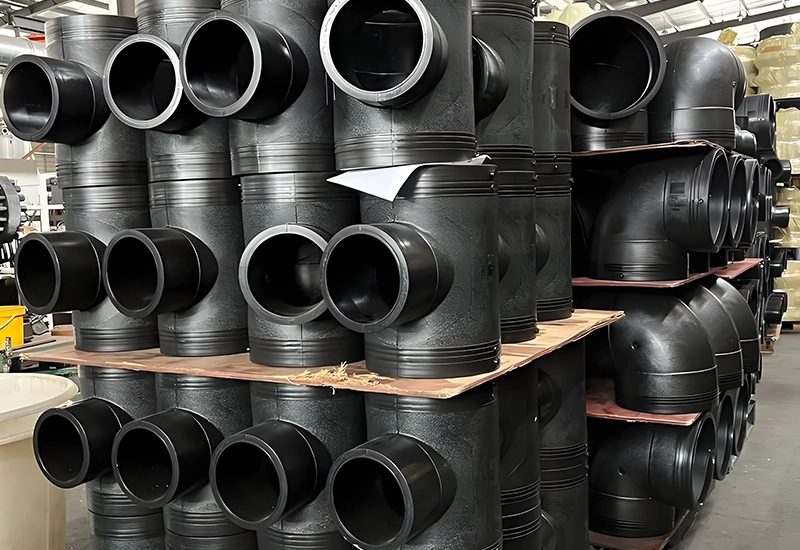
Elite manufacturers offer an extensive array of configurations to navigate difficult pipeline routing. Standardized on premium PE100 resin, these components are built to handle intense internal pressures and maintain absolute structural integrity throughout a 50-year design lifespan.
| Fitting Type | Size Range | SDR Class | Pressure Rating (PE100) | Applicable Standards |
|---|---|---|---|---|
| Couplers / Sockets | DN20 – DN1200 | SDR11 & SDR17 | PN16 (Water) / 10 bar (Gas) | ISO 4427-3, ISO 4437 |
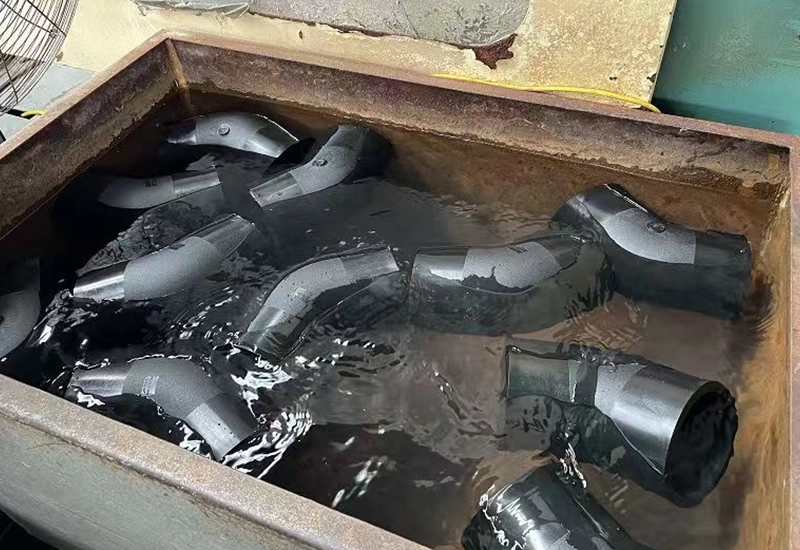
| 45° / 90° Elbows | DN20 – DN630 | SDR11 | PN16 (Water) / 10 bar (Gas) | EN 12201-3, EN 1555 |
| Equal / Reducing Tees | DN20 – DN630 | SDR11 | PN16 (Water) / 10 bar (Gas) | ASTM F1055, ISO 4427-3 |
| Tapping Saddles | DN40 – DN315 | SDR11 | PN16 (Water) / 10 bar (Gas) | ISO 4437, AWWA C906 |
| Flange Adapters | DN50 – DN1200 | SDR11 & SDR17 | PN10 – PN16 | ISO 4427-3, EN 12201-3 |
These fittings serve as the critical backbone for today’s pressurized pipeline networks. Because they forge joints fundamentally stronger than the pipe itself, they are irreplaceable in high-stakes environments.
Take urban gas distribution, for instance. Public safety relies entirely on leak-free integrity. Electrofusion completely dominates this sector, making up roughly 65% of all connections in municipal gas lines. By removing human error from the equation, automated welding guarantees a flawless seal for volatile natural gas.
Let’s talk numbers. Procurement managers need to anticipate that electrofusion fittings carry a noticeable price premium—usually 2 to 5 times higher than standard butt fusion alternatives. This cost stems directly from the embedded copper heating coils, the sophisticated injection molding required, and the rigorous laboratory testing mandated for ISO 13950 barcode certification.
Indicative Factory-Direct Pricing (USD)
*(Note: Actual pricing fluctuates based on global PE100 resin costs, specific SDR ratings, and total order volume.)*
Minimum Order Quantity (MOQ)
For OEM production and B2B wholesale, factories typically enforce MOQs of 500 to 2,000 units for smaller diameters (DN20-DN110). Alternatively, they might set a baseline order value of roughly $3,000. Top-tier suppliers like JINQUAN routinely offer flexible MOQs for initial qualification runs, allowing buyers to secure physical samples for rigorous in-house laboratory testing.
Production and Lead Times
Expect an industry average of 10 to 20 days to manufacture and pack a standard 40ft container of EF fittings. Massive-scale Chinese manufacturers, however, hold a distinct edge here. Facilities like JINQUAN—fueled by extensive raw material stockpiles and a 100,000+ ton annual capacity—consistently turn orders around in just 7 to 15 days. For EPC contractors fighting tight project schedules, this speed is invaluable.
Pinpointing the ideal sourcing region comes down to your project budget, brand specifications, and delivery timeline. B2B buyers have to weigh the premium R&D pedigree of European brands against the massive scale and cost-efficiency of Chinese production.
| Region | Strengths | Trade-offs | Best Use Case |
|---|---|---|---|
| Europe (e.g., GF, Aliaxis) | Unmatched R&D, premium brand reputation, strict utility compliance, open-wire innovations. | Highest unit cost, longer shipping lead times for overseas buyers, rigid pricing. | High-budget municipal gas networks specifying European brands. |
| China (e.g., JINQUAN) | 30-50% cost reduction, massive production scale, rapid 7-15 day lead times, full OEM customization. | Requires strict factory auditing to ensure 100% virgin resin and ISO/ASTM compliance. | Wholesale distributors, EPC contractors, and OEM brand owners. |
| Local Manufacturers | Fast delivery for small batches, no import tariffs, localized customer support. | Higher unit prices, limited size ranges (often capping at DN315), lower overall capacity. | Emergency repairs, small-scale local projects, and top-up orders. |
Buying from unverified suppliers is a massive gamble that can trigger catastrophic pipeline failures. B2B buyers need to actively hunt down and mitigate these hidden risks during procurement:
1. Risk: The factory cuts corners using mixed or recycled PE resin, causing the joint to fail under pressure.
Mitigation: Insist on material traceability certificates. You need hard proof that they are using 100% virgin PE100 or PE4710 resin from respected petrochemical brands.
2. Risk: Non-compliant, poorly printed, or inaccurate barcodes.
Mitigation: Scan physical samples yourself using an ISO 13950 compliant reader. If trench operators have to manually input fusion times, the risk of human error—and subsequent joint failure—skyrockets.
3. Risk: Misaligned or exposed copper heating coils that trigger short circuits during welding.
Mitigation: Conduct a thorough factory audit. Confirm they deploy automated coil embedding technology alongside routine X-ray inspections to catch defects.
4. Risk: SDR mismatch failures in high-pressure lines.
Mitigation: EF fittings are great at bridging physical wall thickness gaps to achieve a solid fuse. Even so, always verify that the fitting’s SDR rating meets or exceeds the pipeline system’s maximum operating pressure.
Protect your project investments and guarantee pipeline integrity by running potential suppliers through this copy-ready qualification checklist.
Pre-Contact Verification:
Factory Audit:
Sample Evaluation:
Your position in the supply chain and the technical parameters of your project will dictate your ideal supplier.
Who are the largest HDPE electrofusion fittings manufacturers in the world?
European giants like GF, Aliaxis and Plasson command the premium utility sector globally. JM Eagle dominates the North American landscape. On the other side of the globe, massive Chinese producers like JINQUAN and Cangzhou Mingzhu drive high-volume export and OEM manufacturing for international infrastructure.
What certifications should an HDPE electrofusion fittings supplier have for gas pipelines?
Natural gas applications require a manufacturer to hold EN 1555 and ISO 4437 certifications. Their quality management workflows must align with ISO 9001. Furthermore, every fitting needs an ISO 13950 compliant barcode to guarantee precise, automated welding via electrofusion machines.
What is the typical price range of HDPE electrofusion fittings in 2026?
Costs vary heavily based on fitting type and diameter. As a baseline, factory-direct pricing hovers around $1–$3 for a 20mm coupler, $15–$50 for a 110mm coupler, and $80–$300 for a 200mm coupler. Because of the embedded heating coils, expect to pay 2 to 5 times more for electrofusion fittings compared to standard butt fusion joints.
What is the minimum order quantity (MOQ) for OEM electrofusion fittings?
Large-scale factories usually set an MOQ between 500 and 2,000 pieces for smaller diameter parts, or they require a minimum order value of approximately $3,000. Top-tier manufacturers, however, frequently offer flexible MOQs for initial qualification runs. This allows B2B buyers to rigorously test samples before signing off on bulk OEM production.
Are Chinese HDPE electrofusion fittings manufacturers reliable for gas projects?
Absolutely, provided you audit them heavily. The best Chinese manufacturers run sprawling, highly automated facilities producing fittings that strictly adhere to ASTM F1055 and ISO 4437. You just need to verify they process 100% virgin PE100 resin, utilize accurate ISO 13950 barcodes, and operate on-site burst testing labs.
What is the difference between electrofusion and butt fusion fittings?
Butt fusion involves pressing pipe ends directly against a heated metal plate to melt them, then forcing them together. Electrofusion relies on a specialized fitting containing an embedded copper heating coil. A control box energizes this coil, simultaneously melting the fitting’s interior and the pipe’s exterior to fuse them into a single piece.
How long do HDPE electrofusion fittings last in underground gas networks?
When produced from 100% virgin PE100 resin and installed strictly according to ISO standards, these fittings boast a minimum design life of 50 years underground. They offer exceptional resistance to ground movement, soil chemicals, and corrosion.
How can I verify the quality of electrofusion fittings before shipment?
Start by demanding comprehensive material certificates to prove the use of virgin resin. Next, request in-house lab reports detailing sustained pressure and burst pressure test results. Finally, secure physical samples to execute a live test weld. This confirms dimensional accuracy and proves the barcode scans flawlessly.
Sourcing reliable HDPE electrofusion fittings is a high-stakes decision. It directly dictates the safety, financial success, and longevity of critical gas and water infrastructure. Procurement teams have to prioritize suppliers processing 100% virgin PE100 resin, strictly adhering to ISO 4427 and ISO 4437 standards, and utilizing automated ISO 13950 barcode traceability. European brands certainly deliver premium R&D for well-funded utilities. However, elite Chinese manufacturers offer a fiercely competitive alternative—delivering massive scale, rapid lead times, and 30-50% cost reductions without compromising on compliance. By executing rigorous factory audits, validating on-site testing capacities, and subjecting physical samples to real-world tests, B2B buyers can confidently secure high-performance fittings guaranteed to deliver a 50-year, leak-free lifespan.