Address
Zhengzhou, Henan, China
Work Hours
Monday to Friday: 7AM - 7PM
Weekend: 10AM - 5PM
Address
Zhengzhou, Henan, China
Work Hours
Monday to Friday: 7AM - 7PM
Weekend: 10AM - 5PM

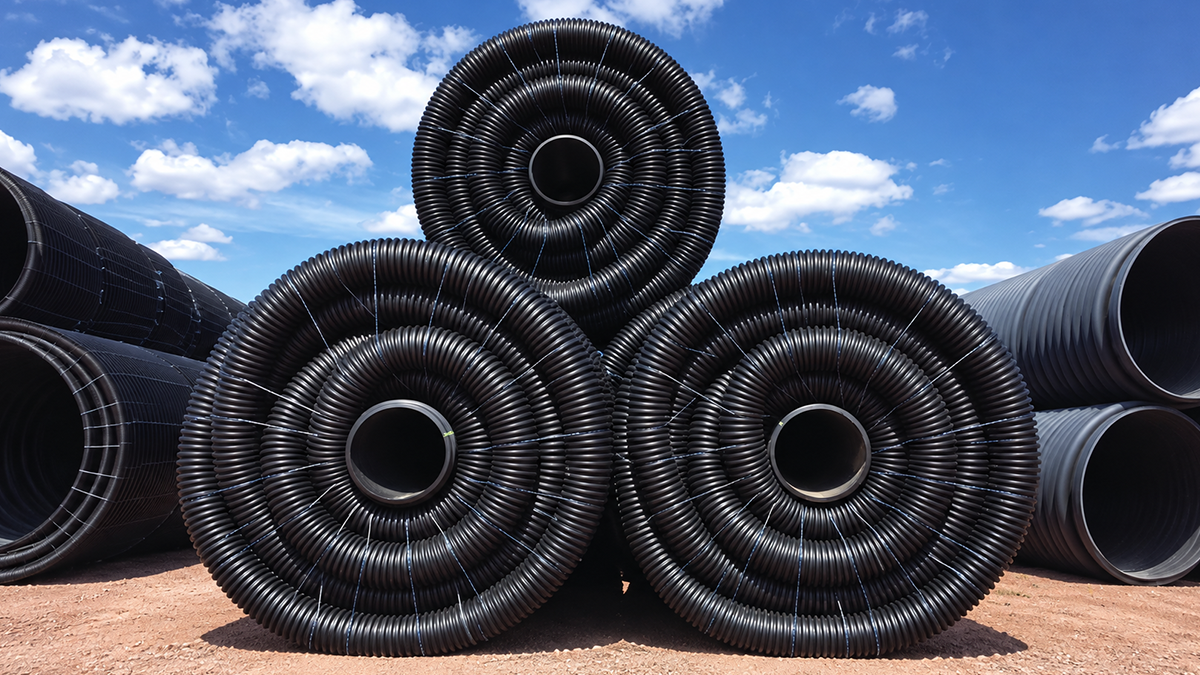
This guide reviews the top 10 HDPE single wall corrugated pipe manufacturers for cable protection, comparing certifications, specifications, pricing, MOQ, and lead time, helping B2B buyers, distributors, and project engineers shortlist reliable suppliers and avoid costly procurement mistakes in 2026.
Crafted from High-Density Polyethylene (HDPE), a single wall corrugated pipe serves as a lightweight yet remarkably flexible conduit. Its distinct design—featuring a uniform corrugated profile across both interior and exterior surfaces—delivers essential mechanical defense for underground cabling. At the same time, this structure permits the tight bending radii needed when navigating complicated routing layouts.
The inherent material characteristics of this conduit align perfectly with rigorous industrial demands. With a density ranging from 0.941 to 0.965 g/cm³, a tensile strength between 20 and 30 MPa, and a Shore Hardness (D) of 60 to 70, the physical metrics speak for themselves. This specific combination guarantees the HDPE pipe endures harsh environmental stresses while staying pliable enough to facilitate swift, hassle-free installations.
For procurement teams, grasping the difference between single wall and double wall corrugated (DWC) variants is crucial. Because single wall pipes are corrugated inside and out, they remain highly flexible and budget-friendly. You will typically see them deployed in shallow-burial trenches devoid of heavy traffic loads. They deliver a standard operational life of 10 to 25 years, stretching up to a half-century if extruded from pure virgin resin. DWC pipes, on the other hand, pair a corrugated exterior—yielding robust structural ring stiffness (SN4/SN8)—with a smooth interior to minimize friction during cable pulls. Engineers specify DWC for severe compression environments like roadway crossings, where they can easily last 50 to 100 years.
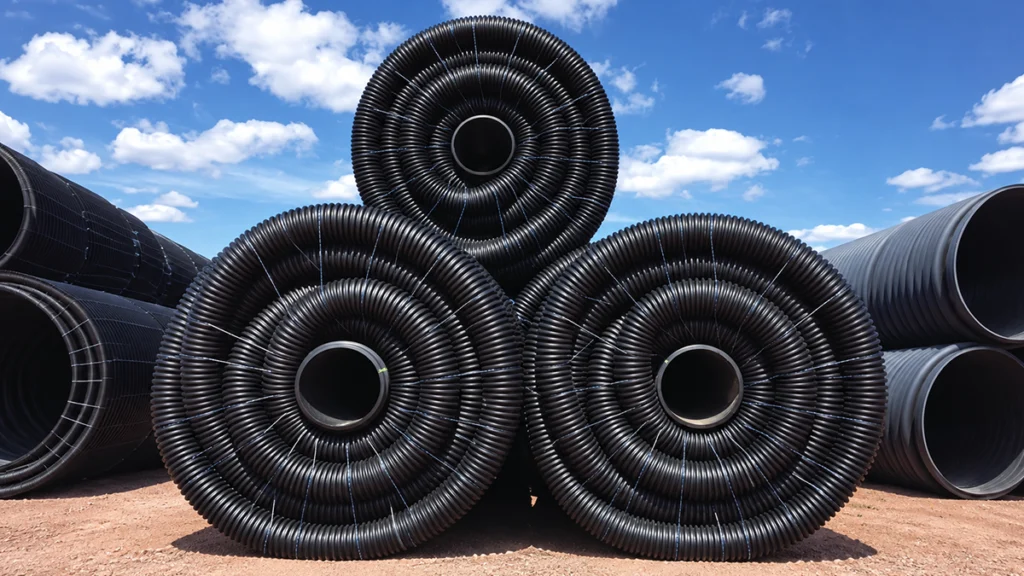
Securing dependable cable protection means scrutinizing everything from resin purity and load limits to UV resilience and global standards compliance. Long-term underground performance hinges on these factors. B2B purchasers need to evaluate potential manufacturing partners strictly against several technical benchmarks:
Massive extrusion capacity, uncompromising virgin resin policies, and rigorous international certifications define the heavyweights of the global cable protection market. Moving into 2026, the following ten manufacturers currently dominate the B2B supply chain.
1. JINQUAN (JQ PIPE) – China
Operating since 1998, JINQUAN runs a sprawling 200-acre complex capable of outputting over 100,000 tons annually. They excel at delivering custom OEM solutions and factory-direct pricing for both MPP and HDPE cable protection. Backed by ISO 9001 and CE certifications, JINQUAN remains a dominant force for massive international EPC contracts.
2. Advanced Drainage Systems (ADS) – USA
A staple of the North American market since 1966, ADS commands heavy-duty highway pipe production. Their manufacturing footprint aligns perfectly with rigorous AASHTO M252 standards.
3. Jain Irrigation Systems Ltd. – India
With roots tracing back to 1963, this supplier leverages an enormous domestic presence to provide a sweeping portfolio of HDPE piping tailored to diverse infrastructure sectors.
4. Pacific Corrugated Pipe Company – USA
Recognized primarily for their StormTite® line, Pacific Corrugated focuses heavily on Type C (single wall) conduits spanning 3 to 24 inches in diameter.
5. Tianjin Jingtong Pipeline Technology – China
This export-driven manufacturer has built a strong reputation around specialized silicon-coated HDPE pipes and fiber optic ducts engineered specifically for telecommunications.
6. Supreme Industries Ltd. – India
A trailblazer in India’s plastics sector since 1942, Supreme Industries delivers expansive power and telecom cable protection lines supported by a formidable regional distribution web.
7. Lane Enterprises – USA
Marketing under the HD100 banner, Lane Enterprises commits entirely to 100% virgin resin. Their products target infrastructure builds demanding a century-long design life.
8. Apollo Pipes Ltd. – India
Established in 1986, Apollo Pipes utilizes impressive production volumes and a vast distribution network to push massive quantities of conduit throughout South Asia.
9. Sekisui Chemical – Japan
Sekisui leads the pack in premium research, formulating high-tech, chemical-resistant, and UV-stabilized conduits meant for highly specialized industrial plants.
10. Uponor – Finland
A recognized global infrastructure giant, Uponor stands out for highly energy-efficient production techniques and deep penetration into the premium European market.
| Manufacturer | Country | Year Founded | Key Strengths / Certifications | Target Buyers |
|---|---|---|---|---|
| JINQUAN (JQ PIPE) | China | 2010 | 100K+ tons/yr, ISO 9001, CE, Factory-direct pricing | EPC Contractors, Wholesalers |
| ADS | USA | 1966 | AASHTO M252 compliant, Highway pipes | NA Municipalities, Contractors |
| Jain Irrigation | India | 1963 | Massive domestic footprint | Regional Distributors |
| Pacific Corrugated | USA | N/A | StormTite® brand, 3″-24″ Type C pipes | Stormwater/Telecom Contractors |
| Tianjin Jingtong | China | N/A | Export-focused, Silicon-coated ducts | Telecom Wholesalers |
| Supreme Industries | India | 1942 | Extensive telecom/power lines | Asian Infrastructure Projects |
| Lane Enterprises | USA | N/A | HD100 brand, 100-year design life focus | Long-term Infrastructure |
| Apollo Pipes | India | 1986 | High capacity, strong distribution | Regional Contractors |
| Sekisui Chemical | Japan | N/A | High-tech UV/chemical-resistant formulas | Industrial Plant Engineers |
| Uponor | Finland | N/A | Energy-efficient manufacturing | European Municipalities |
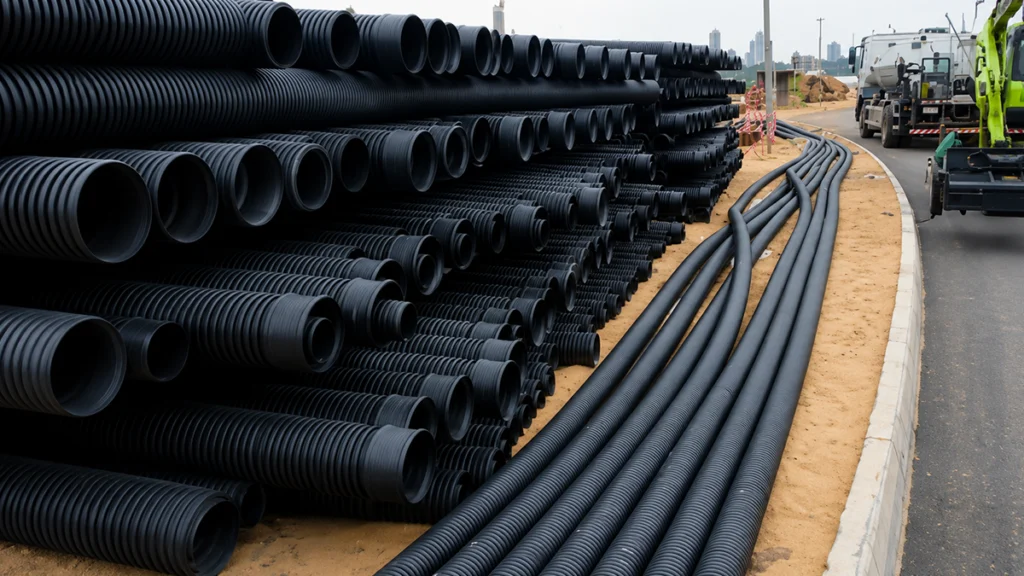
Never issue a purchase order without first validating material grades, pressure classes, and precise dimensional tolerances. The conduit must seamlessly align with the project’s engineering specs. Getting these parameters wrong often results in catastrophic conduit collapse under heavy soil loads or severe cable damage during the pulling phase.
| Specification Parameter | Typical Range / Options | Engineering Context |
|---|---|---|
| Diameter Range (OD/ID) | 50mm – 250mm (Metric) / 3" – 15" (Imperial) | Dictates cable bundle capacity; ID must be ≥ 1.5x cable diameter. |
| Wall Thickness | 3.0mm – 20.0mm | Varies by diameter and required SN stiffness classification. |
| Color Coding | Black, Orange, Grey | Black (Power/UV resistant), Orange (Telecom/Fiber), Grey (General). |
| Temperature Range | -40°C to +60°C | Capable of withstanding short-term operational spikes up to 90°C. |
| Joint Performance | Soil-tight or Water-tight | Meets ASTM D3212 using cleated bells, split couplers, or snap couplers. |
Engineers deploy HDPE single wall corrugated pipes across a massive range of infrastructure layouts. These conduits primarily serve underground telecommunications, electrical, and drainage networks where chemical resilience and high flexibility are absolute necessities.
Sourcing bulk conduit straight from Chinese factories unlocks massive cost savings. Moving through 2026, FOB HDPE corrugated pipe price spans from $0.20 up to $5.60 per meter. These figures fluctuate based on global PE resin indices and exact diameter requirements. Pinning down these baseline metrics is the first step toward accurate project budgeting.
| Pipe Diameter | Estimated FOB Price Range | Standard MOQ | Typical Lead Time |
|---|---|---|---|
| 50mm – 63mm | $0.20 – $0.35 per meter | 500 – 1,000 meters | 7 to 15 working days |
| 110mm | $0.80 – $1.50 per meter | 500 – 1,000 meters | 7 to 15 working days |
| 200mm | $2.50 – $5.60 per meter | 500 – 1,000 meters | 7 to 15 working days |
| Custom Specs | Varies by requirement | 1x20ft Container | 20 to 25 working days |
*Note: Requesting non-standard wall thicknesses, custom colors, or ordering during peak export windows will generally push lead times closer to 25 days and trigger container-volume MOQ requirements.*
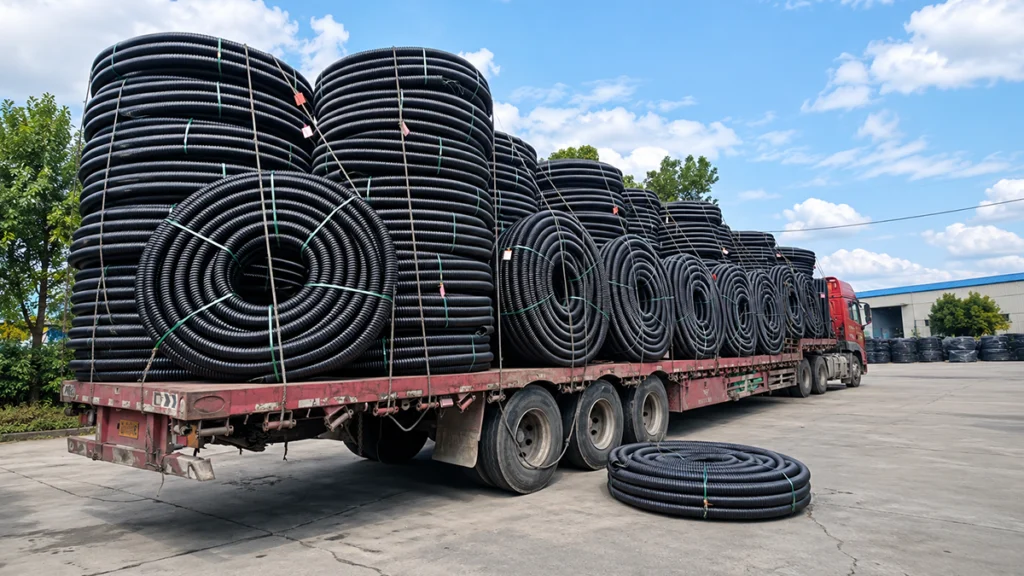
Properly vetting a conduit manufacturer demands a rigorous audit of their production capacity, raw material supply chains, and internal quality control measures. Procurement teams should run through this five-step checklist during both the RFQ stage and the final pre-shipment inspection:
1. Material Declaration: Insist on documented evidence proving the use of virgin PE80 or PE100 resin rather than recycled alternatives. Always check the material data sheet for the Minimum Required Strength (MRS) rating.
2. Factory Capacity: Look closely at the facility’s annual tonnage and number of high-speed extrusion lines. Aligning with a high-output partner like JINQUAN—capable of producing over 100,000 tons a year—prevents frustrating bottlenecks when peak season hits.
3. Dimensional Tolerances: To ensure uniform performance in the field, cross-reference the corrugation pitch consistency, wall thickness, and Outer Diameter (OD) against IEC 61386 standards.
4. Testing Capabilities: Confirm the HDPE corrugated pipe supplier runs an active in-house laboratory. They need the equipment to perform Melt Flow Rate (MFR) analyses, Impact Resistance checks, and Ring Stiffness (SN) testing.
5. Jointing Solutions: Verify that the factory supplies perfectly matched elastomeric sealing rings, split couplers, and snap couplers that align with ASTM F477 specifications.
Sourcing mistakes in the cable protection space frequently trigger disastrous infrastructure failures. Crushed conduits, overheating power lines, and rodent infestations are very real threats. Dodging these common pitfalls is vital for protecting the long-term integrity of your build.
Landing the most favorable commercial terms comes down to smart procurement tactics. You need to consolidate your orders and rethink your shipping logistics to pack containers efficiently and drive down freight costs per meter.
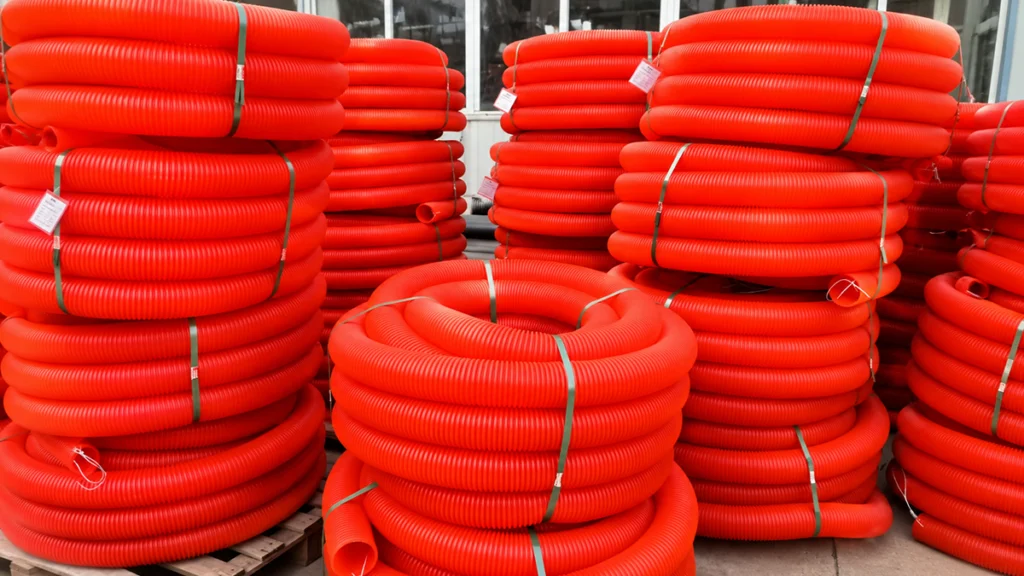
Order consolidation works wonders. When you source your corrugated pipes, butt fusion machines, and compatible couplers from one massive supplier like JINQUAN, you unlock aggressive volume discounts. Beyond that, optimizing how the product ships is a game-changer. Thanks to the extreme flexibility of single wall conduit, factories can coil it in massive 100-meter lengths rather than chopping it into rigid 6-meter sticks. Shipping tightly wound coils dramatically improves container space utilization, which slashes international shipping fees.
Case Example: Consider an EPC contractor who recently slashed their unit costs by 18% while shaving a full week off their lead times. They pulled this off by standardizing their entire telecom layout to only two pipe sizes (110mm and 160mm). From there, they ordered full 40HQ containers of coiled conduit straight from a Chinese facility, effectively eliminating the heavy markups charged by local distributors.
Finding the ideal supplier ultimately boils down to your required lead times, technical constraints, and overall project scale. Matching your purchasing strategy to your specific operational profile guarantees maximum cost-effectiveness.
If you operate as a smaller contractor needing limited volumes, buying from a local distributor makes the most sense. It allows you to sidestep the steep Minimum Order Quantities (MOQs) and complicated freight logistics tied to overseas factory orders.
Conversely, municipal contractors, wholesale importers, and massive EPC firms should look directly to high-output Chinese manufacturers like JINQUAN. Cutting out the middleman secures factory-direct FOB pricing (ranging from $0.20 to $5.60 per meter). It also unlocks custom color-coding options and guarantees rapid 7 to 15-day turnarounds on bulk container shipments.
JINQUAN (JQ PIPE) stands as one of China’s most prominent producers, running a massive 200-acre site that yields over 100,000 tons annually. Tianjin Jingtong Pipeline Technology is another major player, leaning heavily into optical fiber ducts and telecom solutions for the export arena.
Direct-from-factory FOB pricing generally sits between $0.20 and $0.35 per meter for 50mm profiles, $0.80 to $1.50 for the 110mm range, and $2.50 to $5.60 for heavy 200mm diameters. Keep in mind that these numbers shift alongside global PE resin market trends and total order volumes.
Absolutely. It excels at protecting underground cables in non-traffic zones and shallow trenches. Its inherent flexibility lets installation crews weave it around obstacles effortlessly. However, if the project crosses beneath a highway or endures heavy surface loads, you must upgrade to Double Wall Corrugated (DWC) piping to prevent structural crushing.
A trustworthy supplier will carry ISO 14001 for environmental management and ISO 9001 for quality control. On the product side, look for CE marking, SGS testing validations, and strict compliance with EN 61386 or IEC 61386 frameworks for cable management.
When buying factory-direct, expect a standard Minimum Order Quantity (MOQ) of 500 to 1,000 meters for conventional orange or black conduits. Should your project demand non-standard colors or custom wall thicknesses, that MOQ will almost certainly jump to a full 1x20ft shipping container.
Standard production runs usually clear the floor in 7 to 15 working days. If you require custom OEM features, specific color matching, or happen to order during a peak export rush, expect staging and production to stretch between 20 and 25 working days.
Single wall pipes feature corrugation on both the interior and exterior, resulting in a highly flexible, cost-conscious product. Double wall corrugated (DWC) pipes possess a corrugated outer shell for superior crush resistance (SN4/SN8) paired with a smooth inner lining that drastically reduces friction during heavy cable pulls.
Start by auditing the manufacturer’s Material Declaration to ensure they utilize 100% virgin PE80 or PE100 resin. Next, demand in-house laboratory reports detailing Impact Resistance, Ring Stiffness (SN), and dimensional tolerance verifications that align with IEC 61386 standards.
Sourcing the right conduit plays a decisive role in the safety and long-term viability of subterranean telecom and electrical grids. Procurement teams have to prioritize suppliers extruding 100% virgin PE80 or PE100 resin; anything less compromises chemical and rodent resistance. It is equally important to partner with factories that rigorously follow AASHTO M252 and IEC 61386 frameworks. Vetting a manufacturer’s dimensional tolerances, internal lab testing, and overall production output drastically lowers the risk of catastrophic infrastructure failure down the road. Ultimately, by standardizing product specs and refining shipping strategies with high-volume producers, buyers can lock in premium materials without breaking their project budgets.