Address
Zhengzhou, Henan, China
Work Hours
Monday to Friday: 7AM - 7PM
Weekend: 10AM - 5PM
Address
Zhengzhou, Henan, China
Work Hours
Monday to Friday: 7AM - 7PM
Weekend: 10AM - 5PM


Driven by the accelerated pace of global infrastructure development and urbanization, the plastic pipe industry, as a key support for infrastructure construction, is gradually replacing traditional metal pipes. High-density polyethylene (HDPE) pipe, with its superior performance, plays an increasingly important role in modern piping systems. It demonstrates great potential for sustainable development and energy conservation and consumption reduction, and is widely used in water supply, drainage, gas, agricultural irrigation, and industrial applications. This article comprehensively outlines HDPE pipe types, performance characteristics, connection methods, and key maintenance guidelines, aiming to provide a systematic reference for project designers, construction companies, and engineers.
HDPE pipe is a plastic pipe made from high-density polyethylene. High-density polyethylene is a clean, non-polar thermoplastic resin. Its molecular structure gives HDPE plastic pipe excellent corrosion resistance and physical and mechanical properties, making it stand out among many piping materials.
HDPE water pipes not only have good economic efficiency, but also have a series of other advantages that enable them to remain stable in complex geological environments and promote the smooth operation of the pipeline system.
In addition to the aforementioned characteristics of HDPE water pipe, HDPE fusion pipe is increasingly popular in modern infrastructure due to its unique combination of properties. First, the high strength and durability of HDPE fusion pipe enable it to withstand high pressures, external impacts, and changes in complex environments. Second, HDPE plastic pipes are naturally resistant to chemicals such as acids, alkalis, and salts, and their stable molecular structure avoids the electrochemical corrosion problems associated with traditional metal pipes. Furthermore, the flexible design allows HDPE pipes to withstand up to 5% longitudinal deformation without breaking, and their smooth interior enhances water delivery efficiency.
HDPE fusion pipes achieve zero leakage through hot-melt connections, with joint strength exceeding that of the pipe itself. They are widely applicable and meet diverse needs. Their smooth interior reduces accumulation, and their flexible structure adapts to frost heave and settlement, minimizing pipe burst repairs and reducing maintenance costs. Furthermore, the recyclability of polyethylene aligns with the principles of green and sustainable development.
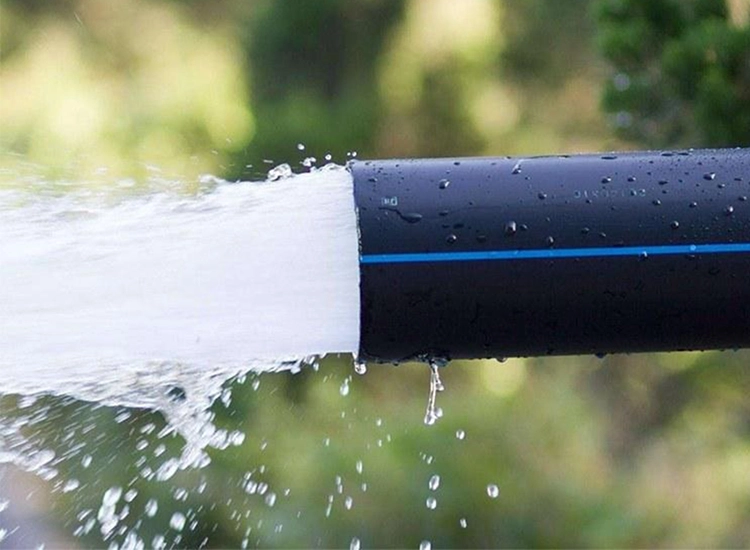
HDPE pipes have different standards and classifications. Based on their intended use, they can be categorized as water pipes, drainage pipes, gas pipes, power pipes, industrial pipes, and irrigation pipes. Based on their material grade, they can be divided into PE80 pipe, PE100 pipe, and PE4710 pipe. Different countries have different standards and specifications.
Internationally, PE pipe is primarily classified into three grades: PE80, PE100, and PE4710. PE80 pipe, with a medium-strength pressure rating, is more suitable for medium-pressure systems and is commonly used in low- and medium-pressure water supply, irrigation, and drainage systems. PE100 pipe, with its more compact molecular structure, offers greater pressure resistance and durability, making it widely used in municipal water supply construction, gas transmission, and large-scale infrastructure projects. PE4710 pipe represents the highest grade of PE pipe, offering excellent creep resistance and stress cracking resistance. It is designed for applications requiring high pressure, high strength, and the highest demands on pipe system safety and reliability.
Based on density, PE pipe can be categorized into LDPE, MDPE, and HDPE. Low-density polyethylene pipe typically has a density between 0.910–0.940 g/cm³. Its looser molecular structure allows for greater flexibility, but its strength and hardness are relatively weak, making it suitable for non-pressure or low-pressure applications. Medium-density polyethylene (MDPE), typically with a density between 0.926 and 0.940 g/cm³, exhibits good stress crack resistance and is widely used in the gas industry. High-density polyethylene (HDPE), with a density between 0.941 and 0.960 g/cm³ or higher, offers a compact molecular structure, high strength, and rigidity, allowing it to withstand higher pressures, making it the mainstream choice in most applications.
HDPE pipe specifications typically include parameters such as Standard Dimension Ratio (SDR), Nominal Pressure (PN), wall thickness, and Nominal Outside Diameter (DN/OD).
SDR is a key indicator of HDPE pipe’s strength and pressure resistance. The lower the SDR value, the thicker the pipe wall and the higher its pressure-bearing capacity.
PN refers to the maximum operating pressure that HDPE pipe can safely convey at 20°C water temperature, measured in MPa/Bar.
Wall thickness determines the pipe’s pressure-bearing capacity; thicker wall thickness indicates greater strength and pressure resistance.
The outer diameter of a pipe is typically measured in millimeters and inches. HDPE pipe ranges from 16mm to 3000mm (5/8 inch to 118 inches). When referring to HDPE pipe dimensions, diameters, or sizes, these terms refer to the outer diameter of the HDPE pipe.
International standards are generally ISO 4427 and EN 12201. ASTM standards are commonly used in the US market. ASTM D3035, ASTM D3350, ASTM F714, and ASTM D2513 together constitute the reference standards for HDPE pipe quality and performance, ensuring that HDPE pipe can meet the safety standards of drinking water, gas transportation, and other industries. Compliance with the corresponding ASTM standards is key to ensuring product quality and project safety.
There are many ways to connect HDPE pipes. Using different connection methods for different construction environments and applications can ensure the sealing and reliability of the PE pipe system and improve the stability and durability of the pipe system operation.
HDPE pipe fittings come in a wide variety, including elbows, tees, reducers, plugs, flanges, and crosses in various angles. These are used to divert, divert, transition, connect, and seal pipes, each with its own unique functionality. For specific functions or extra-large diameter HDPE pipes, prefabrication is possible, such as wye fittings, cross reducers, and long reducer versions. These products meet customer customization requirements, offer flexibility, and are adaptable to complex engineering environments.
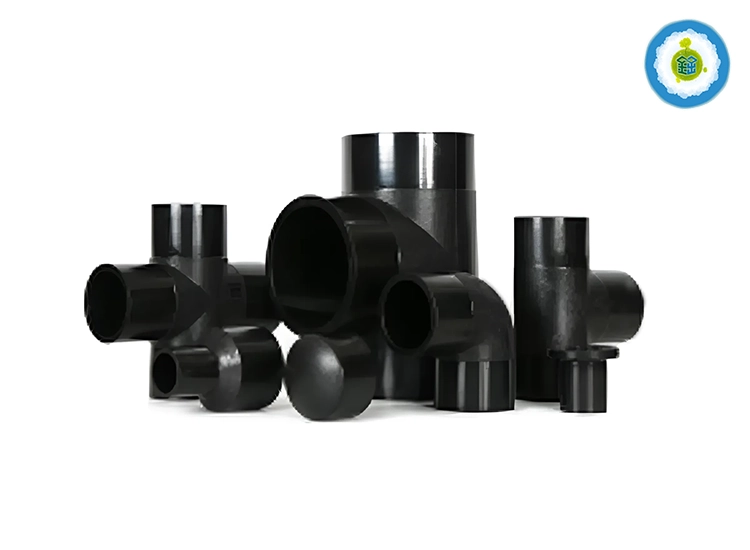
The reason why HDPE pipes are widely used in various projects is due to their reliable connection technology. The connection methods of HDPE pipes are as follows:
During the installation of HDPE pipe, specialized installation equipment is required to ensure connection reliability and construction efficiency. Butt fusion welding requires specialized butt fusion welding machines, which are available in manual, semi-automatic, and automatic hydraulic sizes to suit different project requirements and pipe diameters. Dedicated electric-melt welding machines are also available, offering a high degree of automation. Pressure testing tools are used to verify that the piping system can safely withstand the design pressure after installation, ensuring there are no leaks. HDPE pipe cutting tools are used for precise cutting of PE pipes, offering fast cutting speeds and smooth, vertical cuts, ensuring high-quality connections.
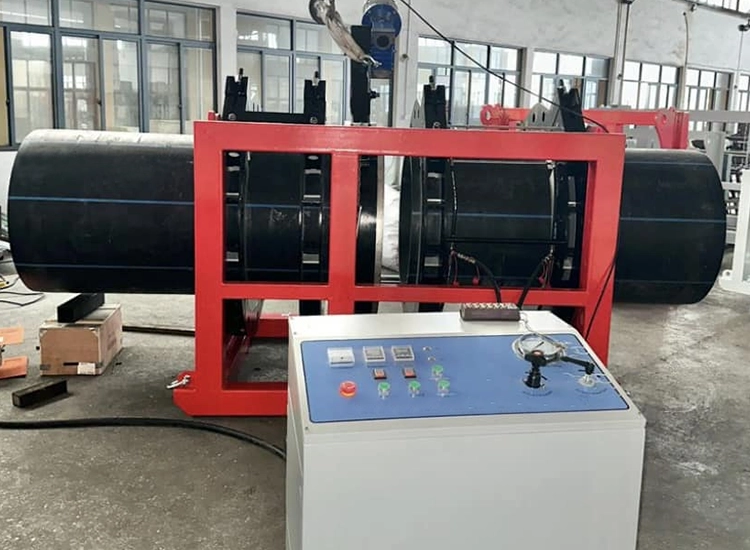
HDPE pipes are widely used in various fields due to their excellent corrosion resistance, impact resistance, flexibility and long service life, providing reliable transportation systems for different projects.
HDPE water pipe is the preferred pipe material for urban and rural water supply systems. Its non-toxic and odorless properties ensure the purity of water quality and can be used for drinking water supply. Its corrosion resistance ensures that the pipe will not rust or scale. Its excellent pressure resistance and flexibility ensure the long-term safety and stability of the water supply system.
The smooth inner wall of HDPE drainage pipe is not prone to scaling, maintaining a high flow rate and reducing the risk of clogging. Furthermore, HDPE sewer pipe’s excellent corrosion resistance can withstand various acids and alkalis in sewage. Whether it is urban underground drainage networks or the discharge of industrial wastewater, HDPE drainage pipe is widely used.
HDPE irrigation pipe is widely used in agricultural irrigation and sprinkler systems due to its lightweight and easy installation advantages. HDPE perforated pipe can also be used for drip irrigation. Its UV and weather resistance allow the pipe to be used in outdoor environments for a long time and can be used in rainwater collection and drainage systems.
HDPE gas pipe is an ideal material for natural gas and liquefied petroleum gas (LPG) transportation. Its high toughness, resistance to stress cracking and good sealing properties ensure extremely high safety of gas transportation.
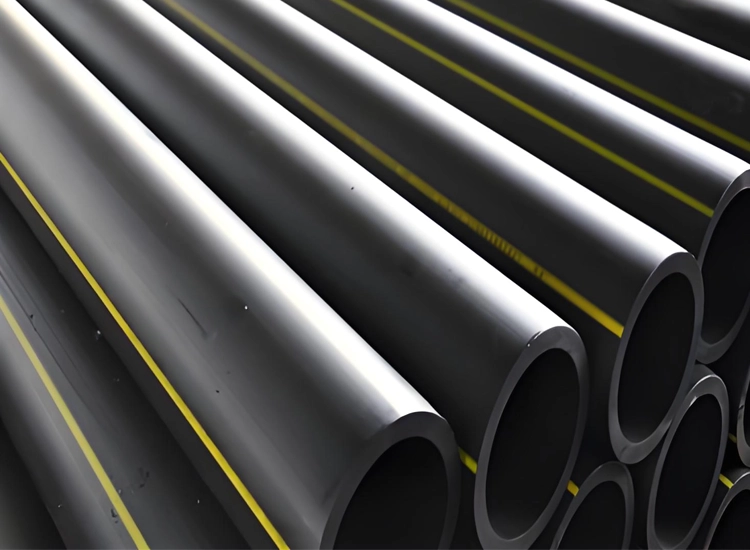
HDPE pipes are commonly used in industry to transport corrosive chemicals, abrasive slurries, and as cooling water circulation pipes. Their wear resistance allows them to effectively resist the abrasion of solid particles in slurries, while their chemical inertness ensures they will not react when transporting strong acids and alkalis.
HDPE electrical pipe, due to its excellent insulation and impact resistance, is used as a protective casing for underground power cables and fiber optic cables. It effectively protects cables from damage by corrosive substances in the soil, moisture, and external shock, ensuring the stable operation of power and communication lines.
In marine engineering, HDPE pipes are used to protect submarine cables and oil and gas pipelines due to their high strength, light weight, corrosion resistance and buoyancy, or as mud discharge pipes in dredging projects, and can withstand seawater erosion and wave impact.
In the contemporary field of pipeline engineering, material selection directly impacts the safety and economic efficiency of the system. The following systematically compares the differences between HDPE pipe and other pipe materials from multiple perspectives for your reference.
| Comparison Item | HDPE Pipe | PVC Pipe |
|---|---|---|
| Raw Material | high-density polyethylene | polyvinyl chloride,often with stabilizers and plasticizers |
| Application | water supply, gas, sewer, agricultural irrigation | Drainage, sewer, electrical conduit, low-pressure water supply |
| Material Properties | high flexibility, low-temp resistance, stress crack resistance, lightweight, non-toxic | Good rigidity, fire-retardant, low cost, high strength |
| Joining Methods | butt fusion welding, electrofusion, socket fusion, PP compression fittings. | solvent cement (glue), flanged connection, socket connection |
| Temperature Range | -40°C to 60°C | 0°C to 60°C |
| Impact Resistance | excellent, high toughness absorbs impact and vibration | become brittle in cold temperatures |
| Overall Cost | medium, with very low long-term maintenance costs | low, but replacement and repair costs may be higher |
| Comparison Item | HDPE Pipe | PPR Pipe |
|---|---|---|
| Raw Material | high-density polyethylene | random copolymer polypropylene |
| Application | outdoor, buried pipes, water supply, gas | indoor hot and cold water pipes, HVAC systems |
| Material Properties | high flexibility, low-temp resistance, stress crack resistance, lightweight, non-toxic | good heat resistance, smooth inner wall, easy to fuse |
| Joining Methods | butt fusion welding, electrofusion, socket fusion, PP compression fittings. | socket fusion |
| Temperature Range | -40°C to 60°C | 0°C to 95°C |
| Large-Diameter Use | Superior, easy to manufacture and join large-diameter pipes | large-diameter joining is more difficult and costly |
| Overall Cost | Medium, ideal for large-scale infrastructure | Medium, ideal for building interiors |
| Comparison Item | HDPE Pipe | Steel Pipe |
|---|---|---|
| Raw Material | high-density polyethylene | Iron-carbon alloy (carbon steel), iron-chromium-nickel alloy (stainless steel) |
| Application | water supply, gas, sewer, industrial fluids | industrial fluids, high-pressure lines, structural applications |
| Material Properties | corrosion-resistant, lightweight, high toughness, non-toxic | high strength, high pressure and temperature resistance, high impact resistance |
| Joining Methods | butt fusion welding, electrofusion, socket fusion, PP compression fittings. | welding, threaded connections, flanged connections |
| Temperature Range | -40°C to 60°C | -20°C to 400°C+ |
| Corrosion Resistance | excellent, no coating or liner needed | poor, requires internal and external protection |
| Overall Cost | medium, but with low long-term maintenance costs | high, due to high initial material and installation costs |
By comparing with PVC, PPR and steel pipes, HDPE pipes have obvious advantages in flexibility, corrosion resistance, wear resistance and service life. From the overall performance point of view, PE pipes show higher safety, reliability and economy.
When purchasing HDPE pipe, you should not only consider its excellent performance and wide range of applications, but also pay attention to the price and manufacturer’s reliability. The final price of HDPE plastic pipe is affected by many factors, and choosing a trustworthy supplier is key to ensuring the long-term stability of the project and long-term return on investment.
Many factors influence the price of HDPE pipe:
Additionally, the quantity of pipe required for a project and the use of functional additives such as UV resistant additives can affect the price of HDPE pipe. Choosing to work with trusted HDPE Pipe Manufacturers will also affect the procurement cost.
Choosing a reliable HDPE pipe manufacturer is crucial for ensuring project quality and safety. First, high-quality HDPE pipe suppliers typically have comprehensive quality certification systems and production processes, strictly adhering to international standards. Second, the manufacturer’s production technology and capabilities are crucial. Large-scale HDPE pipe factories often have strong supply capacity, ensuring consistent quality and fast delivery. Third, the manufacturer should offer diverse and flexible customization options to meet the specific needs of the client’s project. Finally, a reliable HDPE pipe manufacturer will provide after-sales service and technical support to help resolve installation, welding, and maintenance issues.
Searching for “HDPE pipe suppliers near me” may yield results that are close in proximity, but they may not fully meet the project requirements. Choosing JINQUAN, while somewhat distant, guarantees that it will meet the specific needs of the project.
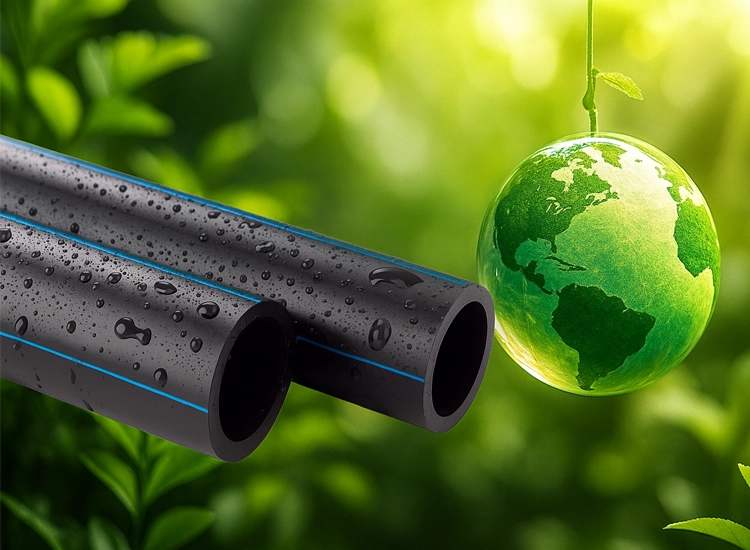
HDPE is a recyclable thermoplastic. Discarded HDPE pipes can be reprocessed and reused, reducing resource waste and promoting the green and sustainable development of the plastic pipe industry. Unlike metal pipes, HDPE pipes do not require anti-corrosion coatings during production and use, eliminating potential environmental pollution. The energy consumption of HDPE pipe production is significantly lower than that of steel or cast iron pipes of the same specifications, helping to reduce carbon emissions.
The non-toxic nature of HDPE pipe ensures its safety in drinking water transportation, preventing the release of harmful substances that contaminate water quality, thereby safeguarding ecological health and public safety. Furthermore, HDPE pipe’s service life of over 50 years and robust connections reduce the frequency of replacement and maintenance, and its use of trenchless technology minimizes damage to ecosystems. HDPE water pipes meet environmental standards, making them an ideal choice for promoting green infrastructure and sustainable urban development.
The above content has introduced HDPE pipes from all aspects. The following are answers to some FAQs that may be encountered in actual applications.
SDR, short for Standard Dimension Ratio, is the ratio of a pipe’s outer diameter to its wall thickness. It’s a crucial indicator for measuring wall thickness and pressure-bearing capacity. A smaller SDR value indicates a thicker pipe wall and greater pressure-bearing capacity. A larger SDR value indicates a thinner pipe wall, making it suitable for low-pressure or non-pressure transmission systems. For example, an SDR11 pipe can withstand higher pressures than an SDR17 pipe. SDR is a crucial parameter when selecting HDPE pipe and must be selected based on the specific operating pressure of the project.
The pressure of HDPE pipe is determined by the material grade and SDR value, which is expressed as PN, and generally ranges from PN4 to PN20. For example, PE100 pipe with SDR11 can reach PN16 (1.6 MPa), while PE80 pipe with SDR11 can usually only reach PN12.5 (1.25 MPa).
In many application, HDPE pipe can be an ideal alternative to steel pipe and PVC pipe, but the ultimate choice depends on the specific application environment. HDPE plastic pipe is widely used in municipal water supply, gas transmission, drainage and sewage treatment, agricultural irrigation, and cable protection. However, in some applications where extremely high rigidity or high-temperature resistance are required, steel pipe or special PVC pipe still has an irreplaceable role.
High-density polyethylene pipes are very suitable for underground laying. Their flexibility and impact resistance can adapt to soil settlement and external loads; their corrosion resistance makes them unaffected by chemicals in the soil; and their firm, leak-free connections can ensure the long-term smooth operation of HDPE water pipes buried underground.
High-density polyethylene pipes are very suitable for underground laying. Their flexibility and impact resistance can adapt to soil settlement and external loads; their corrosion resistance makes them unaffected by chemicals in the soil; and their firm, leak-free connections can ensure the long-term smooth operation of HDPE water pipes buried underground.
Fill out the form and our team will contact you shortly.