Address
Zhengzhou, Henan, China
Work Hours
Monday to Friday: 7AM - 7PM
Weekend: 10AM - 5PM
Address
Zhengzhou, Henan, China
Work Hours
Monday to Friday: 7AM - 7PM
Weekend: 10AM - 5PM


In modern infrastructure development, pipelines serve as the backbone for transporting water, natural gas, sewage, and industrial fluids. The selection of pipeline materials directly impacts the performance and lifespan of infrastructure systems. For a long time, steel pipes have been the preferred choice for industrial and municipal water supply and drainage applications due to their high strength and pressure-bearing capacity. However, with evolving environmental and global climate challenges, demands for environmental protection and sustainable development are intensifying. HDPE pipes are gradually replacing steel pipes. High-density polyethylene pipes are emerging as a more competitive choice across numerous sectors due to their unique flexibility, corrosion resistance, high water flow efficiency, durability, and ease of installation.
This passage provides a detailed analysis comparing HDPE vs. steel pipes from multiple perspectives. It explores the advantages of HDPE pipes and the limitations of steel pipes, along with future development trends, offering a comprehensive analysis to help readers better understand and select future piping solutions.
To gain a deeper understanding of the differences between HDPE pipes and steel pipes, it is essential to first grasp the fundamental nature and definitions of these two pipe materials. Although both are capable of conveying fluids, they exhibit significant variations in their physical properties, chemical characteristics, and manufacturing processes.
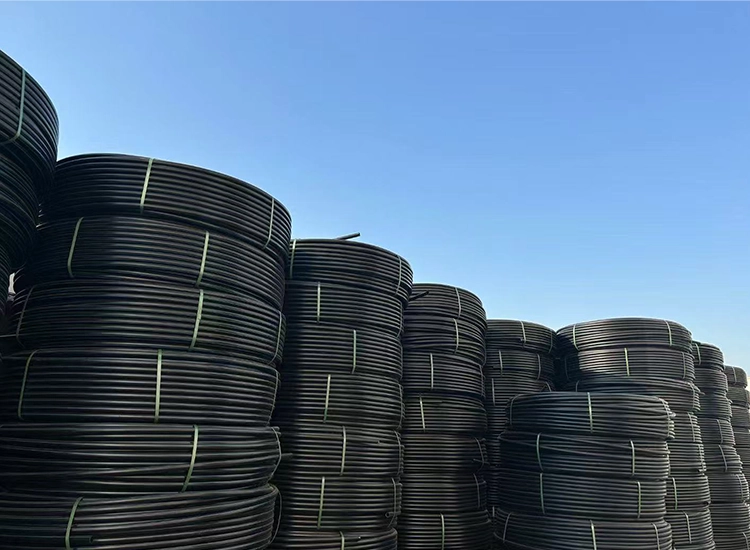
HDPE pipe, or high-density polyethylene pipe, is a flexible conduit made from thermoplastic material. It is manufactured by heating and melting HDPE resin pellets through an extrusion process. PE100 pipe features high strength, corrosion resistance, excellent flexibility, a long service life, and environmental friendliness. It is widely used in municipal water supply, agricultural irrigation, drainage, and industrial fluid transportation applications.
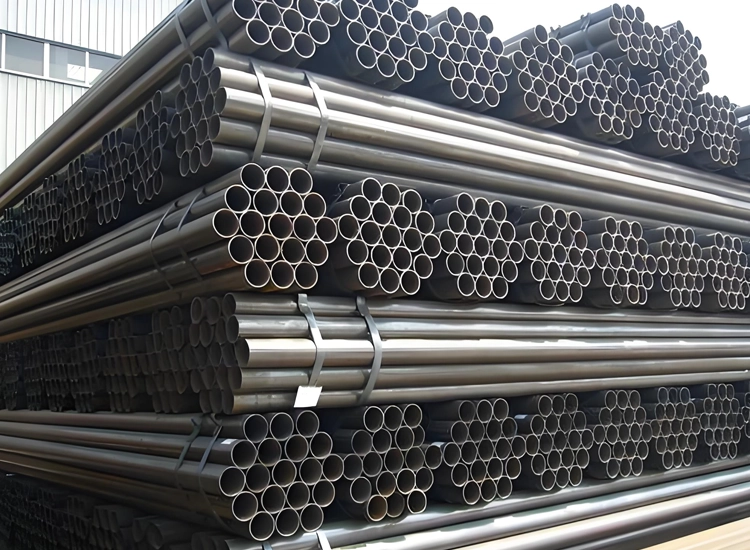
Steel pipes is rigid conduit made from steel, typically carbon steel or alloy steel, and are categorized into two main types: seamless steel pipes and welded pipes. Seamless steel pipes are formed by piercing solid steel billets, resulting in no welded seams. This construction provides exceptional strength and pressure resistance. Welded pipes, on the other hand, are manufactured by rolling and welding steel plates or strips, making them relatively cost-effective. Steel metal pipes offer high strength and can withstand extreme temperatures and pressures, making them vital for transporting water, oil, and natural gas. However, they are susceptible to corrosion and rust, necessitating regular anti-corrosion treatment and maintenance.
The differences between HDPE and steel pipes manifest in numerous aspects, extending beyond physical properties to encompass cost, environmental impact, and other factors. Below, we analyze their specific distinctions across seven key dimensions, aiming to assist you in making a more informed choice.
| Comparison Item | HDPE Pipe | Steel Pipe |
|---|---|---|
| Raw Material | high-density polyethylene | Iron-carbon alloy (carbon steel), iron-chromium-nickel alloy (stainless steel) |
| Application | water supply, gas, sewer, industrial fluids | industrial fluids, high-pressure lines, structural applications |
| Material Properties | corrosion-resistant, lightweight, high toughness, non-toxic | high strength, high pressure and temperature resistance, high impact resistance |
| Joining Methods | butt fusion welding, electrofusion, socket fusion, PP compression fittings. | welding, threaded connections, flanged connections |
| Temperature Range | -40°C to 60°C | -20°C to 400°C+ |
| Corrosion Resistance | excellent, no coating or liner needed | poor, requires internal and external protection |
| Overall Cost | medium, but with low long-term maintenance costs | high, due to high initial material and installation costs |
In terms of durability and service life, PE pipes offer exceptional flexibility and impact resistance. Even in regions prone to seismic activity or geological subsidence, they effectively absorb ground stresses without fracturing. Capable of long-term use across diverse soil and environmental conditions, PE100 pipes can achieve a service life exceeding 50 years under normal operating conditions. While steel metal pipes boast high strength and pressure resistance, they are susceptible to corrosion. Without appropriate anti-corrosion coatings, they will rust and fracture over time, particularly in humid and chemically corrosive environments.
Corrosion resistance is the core competitive advantage of HDPE piping. High-density polyethylene is an inert material that exhibits excellent resistance to acids, alkalis, and most chemical media, without undergoing corrosion or leaching metal ions. HDPE water pipes do not rust or scale, can be buried underground without suffering soil erosion, and are an ideal choice for conveying tap water, sewage, and industrial wastewater. Steel pipes are highly susceptible to rusting in humid environments. Long-term use requires additional internal and external anti-corrosion treatments, increasing costs and maintenance complexity. Once the anti-corrosion coating is damaged, the integrity of the pipeline is compromised. HDPE plastic pipes demonstrate superior corrosion resistance compared to pipe steel.
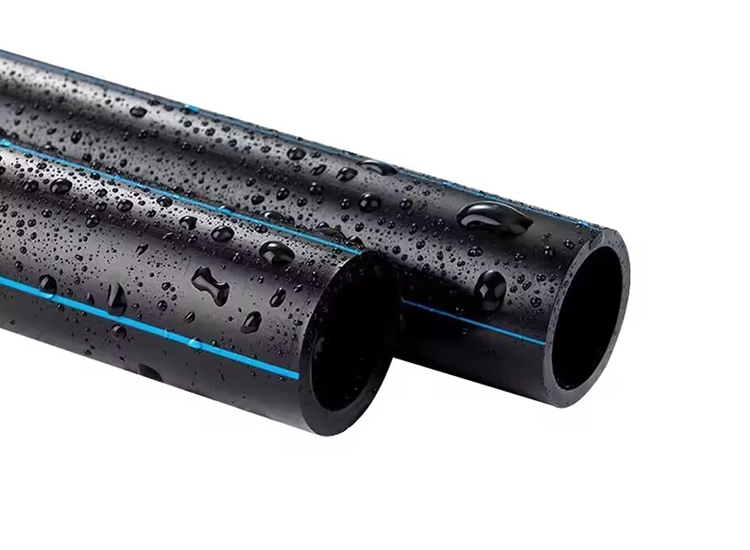
HDPE plastic pipes have a lower density than steel pipes, weighing only one-eighth as much as steel pipes of the same size, which reduces transportation and installation difficulties. PE pipes can be connected using fusion welding machines, achieving high joint strength to form a leak-free and robust piping system. Steel metal pipes, being heavy, require large lifting equipment for installation. Their connections are typically made through welding or flange joints, making installation more challenging than for PE pipes. Consequently, labor and equipment costs are higher than for HDPE water pipes.
In terms of pressure resistance and strength, steel pipes outperform PE pipes. They exhibit superior compressive and tensile strength, making them highly competitive in high-pressure transmission systems and large-diameter industrial pipelines. Steel pipes can easily withstand internal high pressures and external loads while also resisting mechanical impacts. HDPE plastic pipes, however, are better suited for medium-to-low pressure applications. Although technological advancements have enhanced their pressure resistance, their overall pressure capacity and strength remain inferior to steel metal pipes.
Cost is a significant consideration. For equivalent specifications, PE pipes typically offer more competitive pricing than steel pipes. PE pipes are lightweight, easy to install, and cost-effective. Their simple and versatile connection methods reduce labor and equipment costs during construction. Additionally, the corrosion resistance of HDPE water pipes lowers long-term maintenance expenses. Pipe steel require regular anti-corrosion treatments and repairs throughout their service life. These anti-corrosion treatments, specialized fittings, and more complex installation processes collectively increase the overall cost of steel pipe projects. From a long-term cost perspective, PE pipes offer greater cost-effectiveness than steel pipes.
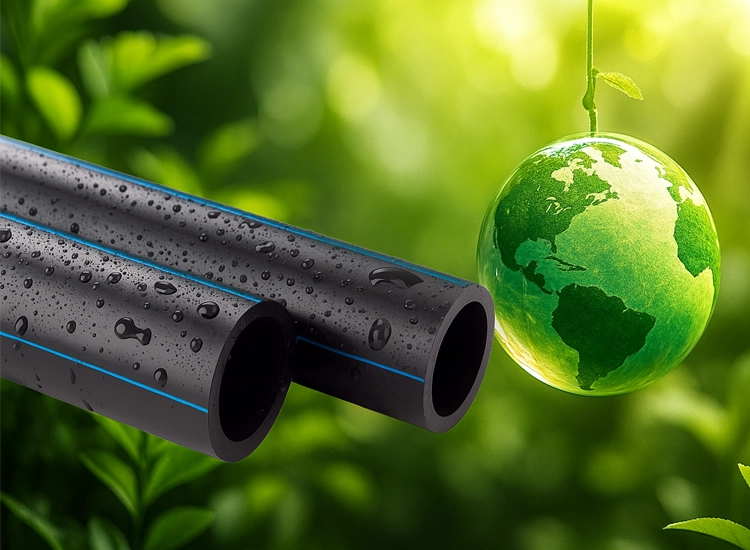
From an environmental impact perspective, PE water pipes align more closely with sustainable development principles. High-density polyethylene material requires lower energy consumption during production and generates fewer carbon emissions than steel metal pipes. Additionally, PE pipes are 100% recyclable, allowing discarded PE plastic pipes to be reprocessed and reused, thereby minimizing environmental impact. HDPE water pipes are non-toxic and odorless, making them suitable for conveying drinking water without leaching harmful substances during transport. Steel pipe production consumes significant energy and generates high carbon emissions. Furthermore, corrosion during use causes protective coatings to peel off, contaminating soil and water resources.
In modern infrastructure development, steel metal pipes are widely utilized in long-distance oil and gas transportation, high-pressure industrial pipelines, and other applications due to their high strength and pressure resistance. Meanwhile, HDPE plastic pipes are extensively employed in municipal water supply and sewage treatment, gas transmission, agricultural irrigation, and trenchless construction projects, leveraging their corrosion resistance, lightweight nature, and flexibility.
After conducting comprehensive comparative analyses, while steel pipes remain indispensable in high-pressure or industrial transportation applications, high-density polyethylene (HDPE) pipes are increasingly emerging as the preferred choice for future pipeline solutions. Whether in urban water supply, sewage disposal, agricultural irrigation, or natural gas transmission, HDPE pipes offer distinct advantages including corrosion resistance, flexibility, installation versatility, and environmental sustainability. With their outstanding overall performance and environmental benefits, HDPE water pipes align with modern infrastructure development principles.
The strength and pressure resistance of steel pipes make them irreplaceable, yet their limitations cannot be overlooked. The most significant constraint of steel metal pipes lies in their extreme susceptibility to environmental corrosion. Particularly in humid conditions or soils and water containing acids, alkalis, or salts, surface rusting occurs, leading to pipeline damage. Consequently, regular coating or anti-corrosion protection is required during the service life of pipe steel, increasing long-term maintenance costs. Steel pipes are heavy, necessitating substantial mechanical equipment for transportation and installation, which poses significant construction challenges. Furthermore, their manufacturing process consumes high energy and generates substantial carbon emissions, conflicting with sustainable development principles.
Today, the concept of sustainable development has taken root in people’s minds, and the piping industry must also adapt to the times by transitioning toward green development. Future pipeline solutions will no longer focus solely on strength and rigidity, but increasingly emphasize lifecycle costs and environmental impact to build an efficient, safe, and sustainable pipeline industry. HDPE pipes perfectly align with these emerging demands through their exceptional corrosion resistance, lightweight properties, and long-term durability. Not only do they significantly reduce installation and maintenance costs, but their leak-free fusion welding technology also effectively protects valuable resources and the environment.
PE pipe can replace steel metal pipe in most applications, but it remains irreplaceable in applications demanding extremely high pressure-bearing capacity. A diverse range of pipe types—including HDPE pipe, DWC pipe, MPP pipe, Krah pipe, PPR pipe, and PVC pipe—collectively form a comprehensive and multifaceted piping market, shaping a more efficient, safer, and sustainable global infrastructure network.
A systematic comparison of HDPE and steel pipes reveals that both offer distinct advantages in modern infrastructure construction. However, when evaluating overall performance, HDPE pipes demonstrate superiority over steel metal pipes. Future pipeline solutions will not be determined by the absolute dominance of any single material, but rather by selecting the optimal choice based on specific project requirements. JINQUAN provides a diverse range of plastic pipes and fittings globally, delivering customized solutions tailored to various project needs.
Fill out the form and our team will contact you shortly.