Address
Zhengzhou, Henan, China
Work Hours
Monday to Friday: 7AM - 7PM
Weekend: 10AM - 5PM
Address
Zhengzhou, Henan, China
Work Hours
Monday to Friday: 7AM - 7PM
Weekend: 10AM - 5PM

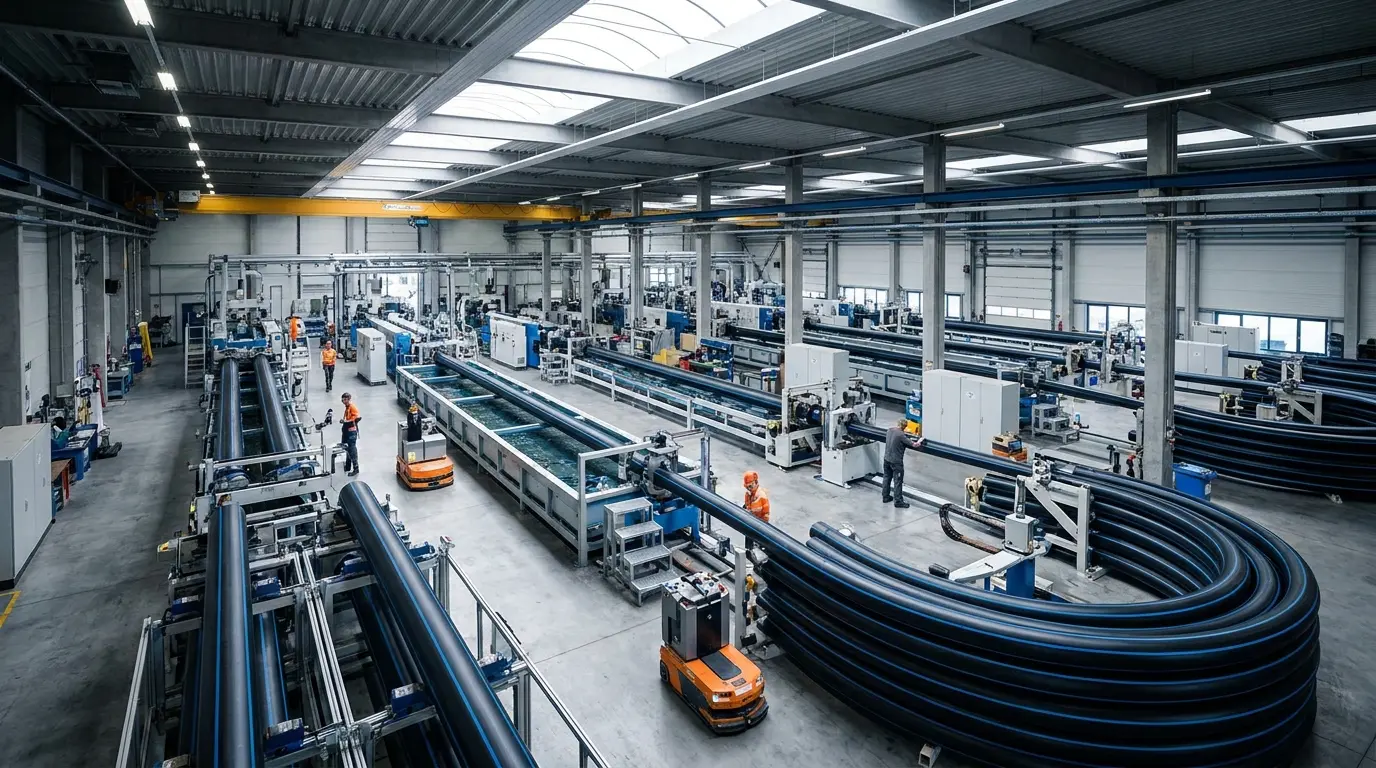
This guide explains how to choose a reliable HDPE Pipe Manufacturer for bulk orders and infrastructure projects, covering certifications, production capacity, technical specs, MOQ, lead time, factory audits, and common sourcing mistakes to help B2B buyers reduce risk and secure dependable long-term supply.
Finding a trustworthy HDPE pipe manufacturer boils down to a few non-negotiable factors: unwavering product quality, rigorous compliance with global health and dimensional benchmarks like ISO 4427 and NSF 61, serious production muscle, and crystal-clear commercial agreements. The best HDPE pipe suppliers run state-of-the-art extrusion lines capable of locking in precise dimensional tolerances and structural integrity for every single batch.
If you’re vetting a partner for massive bulk orders, demand the following traits:
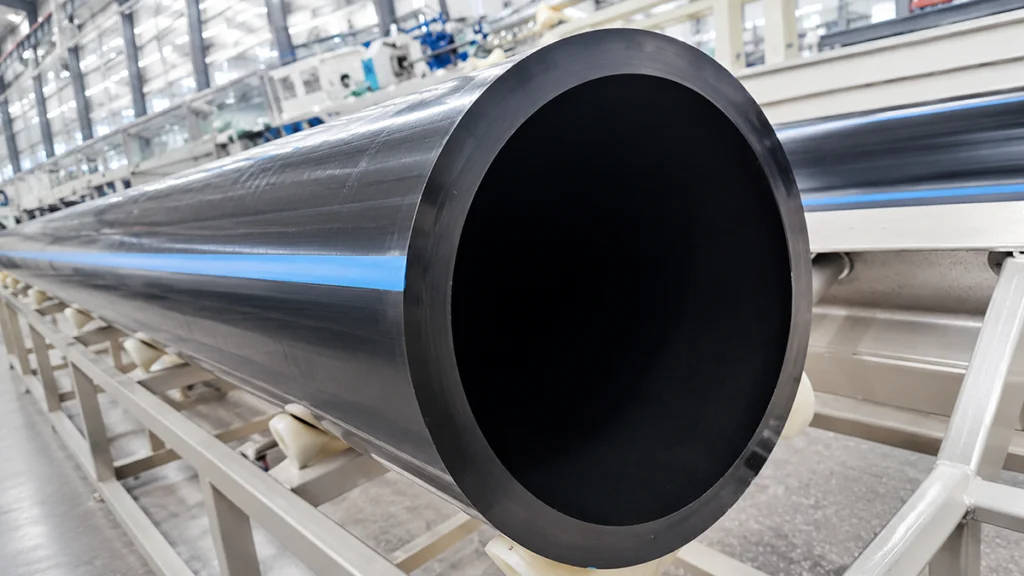
Partnering with a subpar HDPE pipe supplier on massive infrastructure builds injects systemic risks directly into your pipeline. The fallout from poor material choices, heavy reliance on recycled plastics, or sloppy extrusion temperatures often triggers what engineers call a ‘parrot’s beak failure.’ This specific, catastrophic rupture plagues pressurized municipal water networks built with inferior materials.
Picture a city sewer main replacement using pipes from an unvetted factory. The wall thickness varies wildly. When crews attempt butt fusion welding on-site, the joints simply won’t align properly. Fast forward a few months, and those inevitable leaks force you into expensive open-cut excavations or complicated pipe bursting remediation. Project timelines shatter; budgets bleed out. On the flip side, locking down a heavily vetted reliable HDPE pipe manufacturer guarantees you get pure, virgin PE100 or PE80 resin. That translates to a solid 50- to 100-year design life, effectively wiping out long-term operational headaches for major EPC contractors.
Checking international credentials is the only way to prove a pipe actually meets your project’s strict chemical and mechanical demands. The table below breaks down the essential standards any top-tier HDPE pipe supplier needs to carry.
| Certification | Governing Body / Region | Applicable Pipe Use |
|---|---|---|
| ISO 4427 | International | Plastics piping systems for water supply |
| EN 12201 | Europe | Plastics piping systems for water supply |
| NSF 61 | North America | Potable water health effects and safety |
| WRAS | United Kingdom | Potable water system material approval |
| DVGW | Germany | Gas and water applications |
Beyond the product itself, elite factories hold facility-wide credentials. Operations like JINQUAN back up their work with ISO 9001 (quality management) and ISO 14001 (environmental standards), alongside CE marking for the European market and independent SGS export verification.
Looking closely at a HDPE pipe supplier’s factory floor tells you whether they can actually hit your deadlines without cutting corners. A proper audit of their infrastructure needs to cover a few specific bases:
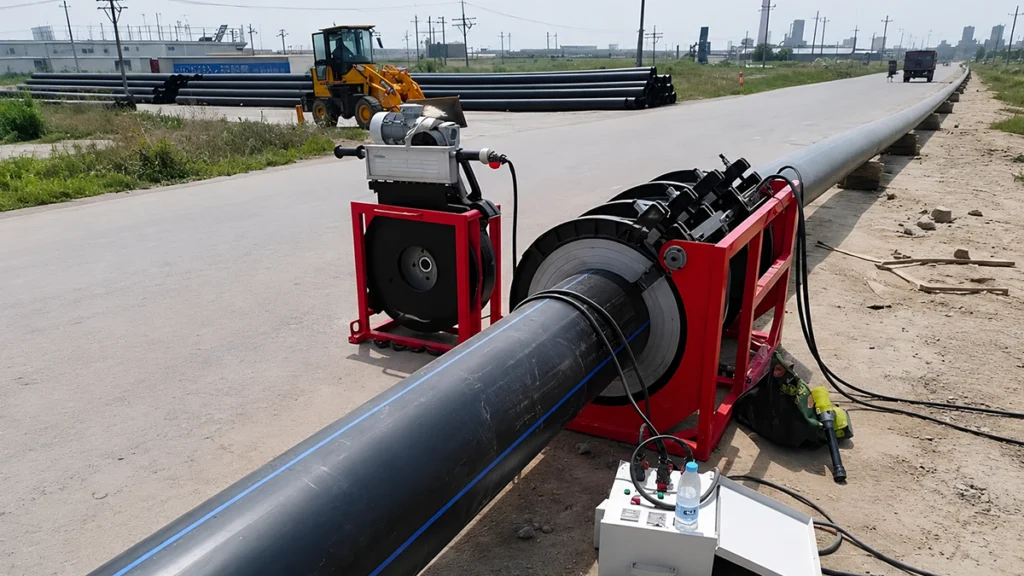
Grasping standard dimension ratios and pressure classifications allows you to accurately compare bids from different HDPE pipe manufacturers. The Standard Dimension Ratio (SDR) simply measures the pipe’s outside diameter against its minimum wall thickness. When the SDR drops, the wall gets thicker, pushing the overall pressure rating (PN) higher. Keep in mind that tweaking the SDR changes the inside diameter and wall thickness, but the outside diameter stays locked in place. This ensures the pipe will always mate perfectly with standard fittings.
Indicative Technical Specifications (4-Inch / DN110 HDPE Pipe)
| SDR (Standard Dimension Ratio) | Pressure Rating for PE100 (PN) | Approx. PSI Rating | Min Wall Thickness for 4″ DIPS Pipe |
|---|---|---|---|
| SDR 11 | PN16 | 232 psi | 0.436 inches |
| SDR 13.6 | PN12.5 | 181 psi | 0.353 inches |
| SDR 17 | PN10 | 145 psi | 0.282 inches |
| SDR 21 | PN8 | 116 psi | 0.229 inches |
| SDR 26 | PN6.3 | 91 psi | 0.185 inches |
Hammering out commercial terms for a massive order means understanding both the raw materials market and the realities of international freight. Baseline pricing in the global HDPE market swings directly with petrochemical costs. Just as a rough benchmark, you can expect a DN110 SDR11 pipe to run anywhere from $1.99 to $3.25 per meter, largely dictated by your total volume. If you’re working in imperial units, a standard 4-inch pipe usually sits between $3 and $5 per foot.
Before signing anything, pin down the exact Minimum Order Quantity (MOQ) and the production lead times. Major players like JINQUAN generally provide flexible MOQs alongside fast 7- to 15-day turnarounds for standard specs.
You also need to lock down shipping Incoterms early so everyone knows exactly who carries the risk and the bill at each stage:
| Incoterm | Seller Responsibility | Buyer Responsibility |
|---|---|---|
| FOB (Free on Board) | Costs and risks until goods are loaded onto the vessel at the port of shipment. | Freight charges, insurance, and risks during transit. |
| CIF (Cost, Insurance, Freight) | Freight and minimum insurance costs to the destination port. | Import duties, unloading, and inland transport at destination. |
Running a deep-dive factory audit isn’t optional for serious procurement teams. Bring this 10-point checklist to evaluate your next overseas HDPE pipe supplier:
1. Check the exact scope and current validity of their ISO 9001 Quality Management certificate.
2. Walk the raw material storage bays. Look for absolute segregation between virgin resin and regrind.
3. Evaluate the extrusion lines for automation, paying special attention to real-time ultrasonic thickness monitors.
4. Pull the hydrostatic pressure testing logs to see how historical batches performed.
5. Demand the calibration records for their Melt Flow Index (MFI) testers.
6. Look at where they keep finished goods. Long-term inventory needs indoor storage or robust UV protection.
7. Read the traceability codes on the HDPE pipes themselves. They must display the SDR, PN, material grade, and production date.
8. Measure the outside diameter (OD) and wall thickness right there on the factory floor to verify accuracy.
9. Observe facility cleanliness, worker safety protocols, and general environmental compliance (ISO 14001).
10. Audit third-party lab reports that prove compliance with CE, SGS, or NSF standards.
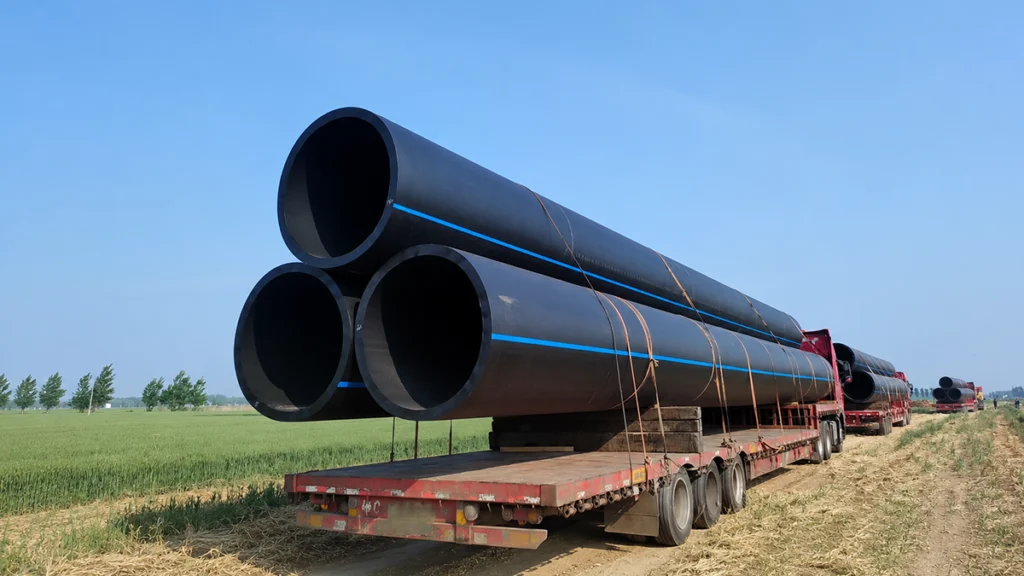
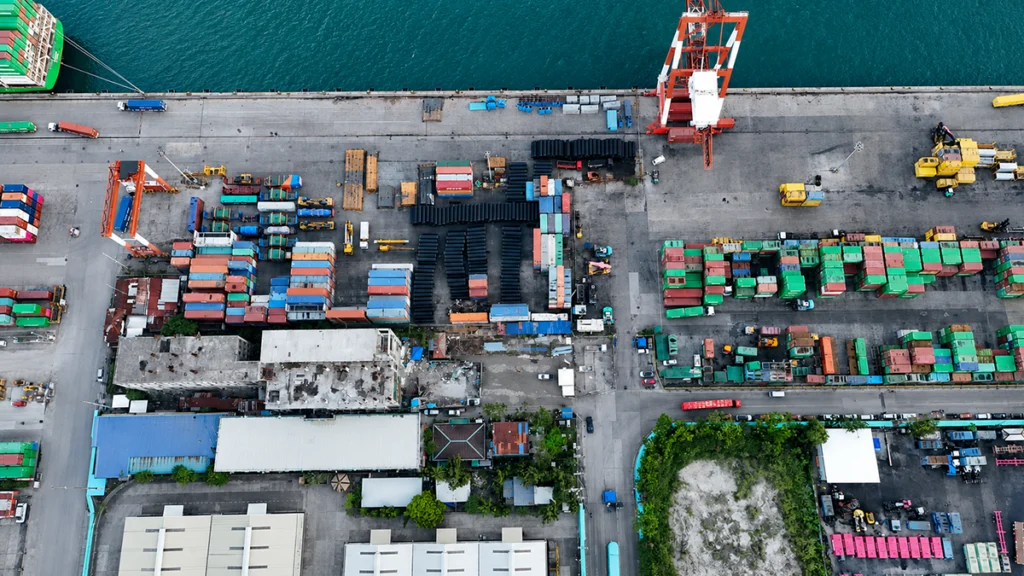
Pushing massive volumes of infrastructure materials across international borders demands a tight logistics machine. A capable HDPE pipe supplier handles the export HDPE pipeline through a very specific sequence:
1. Packaging: Heavy-duty, export-grade strapping secures large HDPE pipe bundles. Smaller diameters are tightly coiled so nothing shifts inside the container.
2. Containerization: Crews load the goods into 20ft or 40ft containers. If you’re shipping standard 12-meter lengths, they require 40ft High Cube (HQ) or open-top units.
3. Inland Transport: Flatbeds haul the loaded containers straight from the factory floor to the departure port.
4. Customs Clearance: The HDPE pipe supplier generates all export paperwork, including the Packing List, Commercial Invoice, Certificate of Origin, and Bill of Lading.
5. Ocean Freight: The shipment crosses the water based on whatever FOB or CIF terms you negotiated.
6. After-Sales Support: Once the PE pipes arrive, the reliable HDPE pipe manufacturer steps up with technical welding specs (electrofusion or butt fusion) and a clear process for handling transit damage claims.
Sourcing HDPE pipeline materials is full of blind spots. Dodge these typical blunders to keep your budget intact and your infrastructure structurally sound.
1. Chasing the lowest price.
*Consequence:* You end up with weak HDPE pipes extruded from recycled plastics, offering zero guarantees on tensile strength.
*Corrective Action:* Insist on 100% virgin PE80 or PE100 resin. Back it up by demanding MFI test reports.
2. Skipping the certification check.
*Consequence:* Your potable water network fails local safety inspections before it even goes live.
*Corrective Action:* Match their paperwork to your local laws—whether that means WRAS, DVGW, or NSF 61.
3. Misunderstanding SDR and PN ratings.
*Consequence:* A sudden water hammer event hits, and the HDPE pipeline bursts because it couldn’t handle the operational pressure.
*Corrective Action:* Align the PE pipe’s SDR exactly with the network’s peak working pressure, factoring in expected surges.
4. Using the wrong fusion methods.
*Consequence:* Joints fail, leaks spring up, and the entire system depressurizes once activated.
*Corrective Action:* Force the HDPE pipe manufacturer to hand over precise electrofusion and butt fusion parameters before installation begins.
5. Forgetting the local climate.
*Consequence:* Drastic temperature swings cause thermal expansion, warping the line over the years.
*Corrective Action:* Build temperature derating coefficients into your initial engineering specs.
Locking in the ideal partner takes a ruthless filtering process. Run your candidates through this five-step gauntlet:
1. Weed out anyone who can’t manufacture your exact pressure class and diameter range (like PE100 or DN16–DN3000).
2. Cross-reference their international certifications (WRAS, NSF, CE, ISO) against your project’s legal requirements.
3. Order physical samples. Test them yourself for material purity, surface finish, and dimensional accuracy.
4. Run a strict factory audit—either in-person or virtually—using a comprehensive QMS checklist.
5. Stack their CIF and FOB quotes side-by-side, ensuring their lead times are actually grounded in reality (7 to 15 days is the sweet spot).
Making the final call comes down to transparency. Prioritize reliable HDPE pipe manufacturers who actually own their extrusion floors, refuse to use anything but virgin resin, and openly share their batch testing data. Teaming up with a heavy hitter like JINQUAN secures the raw production capacity and certified quality you need, all while keeping costs manageable with factory-direct pricing for your major infrastructure builds.
Q1: What certifications should a reliable HDPE pipe manufacturer have?
At a bare minimum, they need ISO 9001 (quality management) and ISO 4427 (water supply piping). From there, it depends on geography. You’ll want CE marking for European jobs, NSF 61 for North American drinking water, WRAS for the UK, and DVGW if you’re tackling German water and gas networks.
Q2: What is the typical MOQ for bulk HDPE pipe orders?
Minimum Order Quantities usually revolve around shipping container math. Most HDPE pipe suppliers ask for at least one 20ft container to make ocean freight cost-effective and keep the packaging secure. That said, larger factories often flex their MOQs to fit the specific phases of your project.
Q3: How long does it take a manufacturer to produce and ship HDPE pipes for an infrastructure project?
A highly capable factory can usually knock out a standard bulk order in 7 to 15 days. Ocean freight is the real variable. Depending on the destination port, transit takes anywhere from 15 days regionally to 45 days for massive cross-continental hauls. Factor in another 3 to 5 days for customs clearance.
Q4: Is PE100 always better than PE80 for large-scale water or gas projects?
PE100 is the go-to for heavy-duty projects because its higher density delivers superior long-term hydrostatic strength. Because it’s stronger, PE100 pipes hit high pressure ratings with thinner walls, which cuts material costs and boosts internal flow. Still, PE80 is perfectly fine for smaller diameter gas lines or lower-pressure systems.
Q5: How can I verify if an HDPE pipe manufacturer is genuine and not a trader?
Ask for a live video tour of the factory floor. If they can’t show you active extrusion lines and massive inventory stacks, walk away. You should also check their business license for manufacturing permissions, read the fine print on their ISO 9001 scope, and pull third-party SGS reports to confirm their physical address.
Q6: What is the difference between FOB and CIF pricing for HDPE pipes?
Under FOB (Free on Board), the HDPE pipe manufacturer pays for everything up until the PE pipes are loaded onto the ship at their port. After that, freight and insurance are on you. With CIF (Cost, Insurance, Freight), the HDPE pipe supplier bakes the cost of ocean freight and basic transit insurance into the final price, covering the journey right up to your destination port.
Q7: How do I conduct a factory audit for an overseas HDPE pipe supplier?
Hire a third-party agency like SGS, or force the HDPE pipe supplier to host a highly detailed virtual tour. Look closely at their raw material silos to confirm they use virgin resin. Check the automation on their extrusion lines, read the hydrostatic testing logs, and make sure their lab actually uses calibrated dimensional tools and MFI testers.
Q8: What documents should I request before placing a bulk HDPE pipe order?
Don’t send a dime until you have their ISO 9001 certificate, proof of ISO 4427 compliance, and raw material data sheets confirming virgin PE100 or PE80 resin. You also need a hard technical spec sheet detailing wall thickness, SDR, and pressure ratings, along with a proforma invoice that spells out every single commercial term.
Pulling off a massive infrastructure build rests entirely on the shoulders of your HDPE pipeline supplier. When procurement teams prioritize factories running pure, virgin PE100 or PE80 resin under strict ISO 9001 and ISO 4427 controls, they instantly strip away the massive liabilities attached to cheap materials. Digging into a manufacturer’s actual capacity—analyzing their monthly output, extrusion hardware, and internal testing labs—proves whether they can actually hit your deadlines. Ultimately, if you master SDR and PN ratings, run aggressive factory audits, and lock down airtight CIF or FOB logistics, you protect the project’s bottom line. The result is a robust HDPE pipeline network engineered to perform flawlessly for decades.