Address
Zhengzhou, Henan, China
Work Hours
Monday to Friday: 7AM - 7PM
Weekend: 10AM - 5PM
Address
Zhengzhou, Henan, China
Work Hours
Monday to Friday: 7AM - 7PM
Weekend: 10AM - 5PM

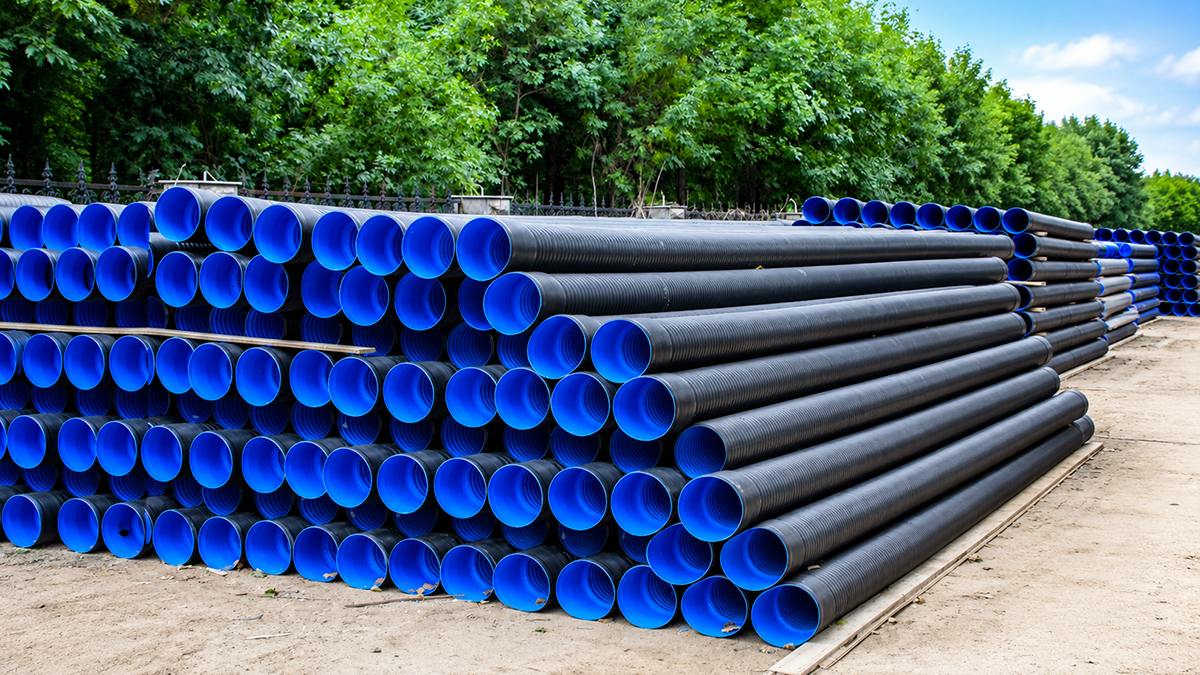
Single Wall vs Double Wall Corrugated Pipe comparison covering applications, strength, flow performance, installation needs, and cost factors to help buyers choose the right pipe for drainage and infrastructure projects.
At a glance, the main difference between single wall and double wall corrugated pipe comes down to structural design and hydraulic performance. Single wall pipes feature corrugations on both the inside and outside. This makes them incredibly flexible and budget-friendly, though they do suffer from internal flow friction. Double wall corrugated pipe (DWC), on the other hand, pairs a ribbed outer layer for structural stiffness with a smooth inner liner. That smooth interior maximizes water flow while keeping debris from building up.
For B2B buyers and civil engineers, picking the right option means finding the sweet spot between budget constraints, load-bearing needs, and flow capacity.
| Feature | Single Wall Corrugated Pipe | Double Wall Corrugated Pipe | Best Fit |
|---|---|---|---|
| Structure | Corrugated interior and exterior | Corrugated exterior, smooth interior | – |
| Hydraulic Efficiency | Lower (Manning’s *n* = 0.020) | High (Manning’s *n* = 0.010 to 0.012) | DWC for high-volume flow |
| Ring Stiffness | Low (Flexible) | High (SN4 / SN8 ratings) | DWC for traffic loads |
| Lifespan | 10 to 25 years | 50+ years | DWC for permanent infrastructure |
| Primary Material | HDPE | HDPE (PE80 / PE100) | – |
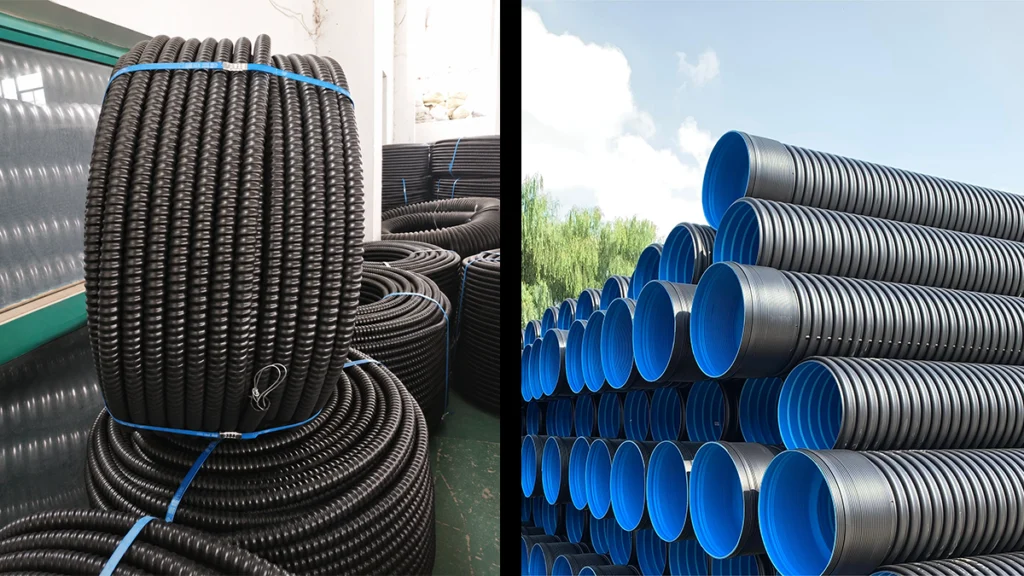
Think of single wall corrugated pipe as a lightweight, highly flexible drainage conduit. Its defining physical trait? Annular corrugations running along both the interior and exterior surfaces. Manufacturers primarily extrude these pipes from High-Density Polyethylene (HDPE). They engineer them specifically for projects where rapid, low-cost installation and flexibility trump heavy load-bearing requirements.
You’ll typically find this pipe in smaller diameters, usually spanning 3 to 15 inches (75mm to 375mm), and it routinely meets industry benchmarks like ASTM F667 for gravity-flow land drainage. The biggest perk here is extreme flexibility. Installation crews can easily weave the pipe around obstacles, snake it through uneven terrain, and lay it into complex trench layouts without needing angled fittings or dead-on alignment. It works beautifully for temporary site dewatering, agricultural sub-drainage, and low-impact environmental water management.
Double wall corrugated pipe—often just called DWC pipe—is a more advanced drainage solution. It marries a rugged corrugated exterior with a completely smooth interior wall. That ribbed outer profile delivers outstanding ring stiffness and structural integrity. Meanwhile, the slick inner liner practically eliminates friction, setting the stage for maximum hydraulic output.
Industry standards categorize DWC pipes by their ring stiffness classes. You’ll typically see SN4 (4 kN/m²) for light-to-medium loads and SN8 (8 kN/m²) for heavy vehicular traffic. They also come in much larger diameters, generally running from 100mm all the way up to 1500mm (4″ to 60″). JINQUAN supplies these DWC pipes in standard sizes ranging from DN110 to DN800, relying exclusively on high-grade virgin PE80 and PE100 resins.
Compliant with strict specifications like AASHTO M252 / M294, ASTM F2306, and IS 16098, the DWC design uses material brilliantly. In fact, it cuts raw material usage by 30% to 50% compared to solid-wall plastic pipes that offer the exact same ring stiffness. That translates to a phenomenal strength-to-weight ratio for heavy civil engineering works.
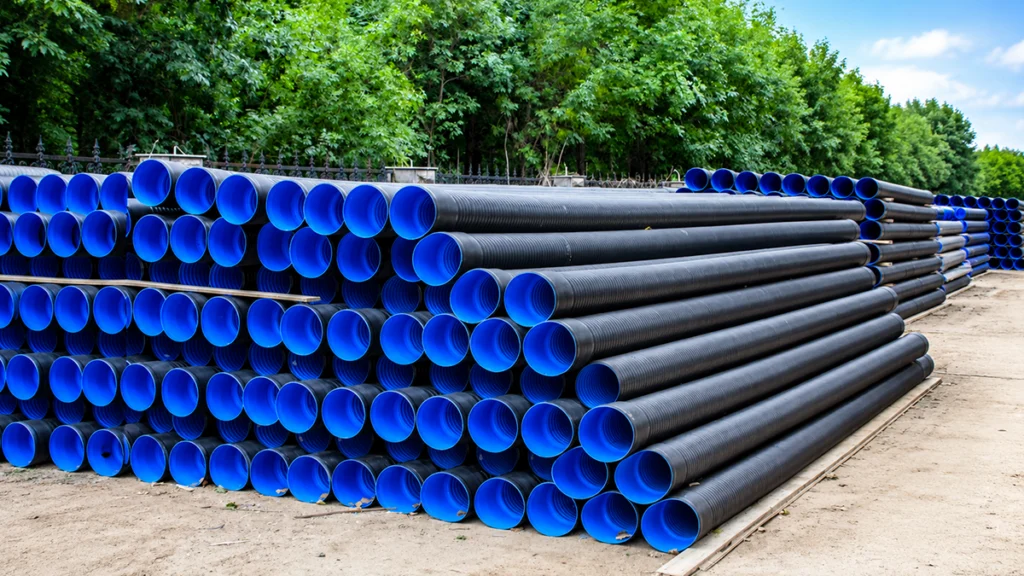
Pairing the right HDPE pipe structure with your specific application is the easiest way to prevent budget overruns and catastrophic system failures. Ultimately, deciding between single and double wall designs hinges on three things: surface loads, required flow volumes, and how permanent the installation needs to be.
| Application Scenario | Recommended Pipe Type | Engineering Justification |
|---|---|---|
| Agricultural Field Drainage | Single Wall (Perforated) | High flexibility allows easy trench routing; low surface loads from farming equipment. |
| Residential Landscape Drainage | Single Wall | Cost-effective for routing downspout run-offs and building shallow French drains. |
| Municipal Stormwater Systems | Double Wall | Smooth interior handles high-volume storm surges; structural integrity prevents collapse. |
| Highway Edge Drains & Culverts | Double Wall | SN8 stiffness rating safely supports H-20 and HS-25 heavy traffic loads. |
| Industrial Plant Drainage | Double Wall | High chemical resistance of HDPE combined with a 50+ year design life for permanent infrastructure. |
| Underground Cable Protection | Double Wall | Provides high crush resistance and a smooth interior for pulling heavy utility cables. |
A drainage project’s long-term success lives and dies by the operational performance of the HDPE pipe you choose. Here is how single and double wall options stack up in the field.
Strength and Load Capacity
When engineered to SN8 standards and properly backfilled, double wall corrugated pipe easily handles heavy vehicular loads. Its dual-wall construction does an incredible job of distributing dynamic surface pressure. Single wall pipe lacks that rigid inner support layer. Because of this, heavy soil weight or traffic pressure will quickly crush or deflect it.
Flow Capacity
Hydraulic efficiency separates the two drastically. Thanks to its smooth interior, DWC pipe boasts a Manning’s *n* roughness coefficient of 0.012. Single wall pipe, burdened by internal corrugations, generates massive friction and sits at a Manning’s *n* of 0.020. What does that mean in practice? A 12-inch DWC pipe moves the same volume of water as a 15-inch single wall pipe. Engineers can specify smaller diameters and narrower trenches without giving up an ounce of flow.
Installation and Burial Depth
Corrugated pipes lean heavily on soil-structure interaction. If you are laying DWC pipe (4″ to 48″ in diameter) under traffic zones, you need at least 12 inches (0.3m) of cover over the pipe crown. Jump to a 60-inch pipe, and that requirement becomes 24 inches (0.6m). However, when crews compact Class 1 or Class 2 structural backfill to 90%-95% standard Proctor density, DWC can safely reach burial depths exceeding 20 feet.
Durability
DWC drastically outperforms single wall pipe when it comes to resisting root intrusion and joint separation. Double wall systems utilize robust bell and spigot joints fitted with elastomeric gaskets. These create watertight seals that practically guarantee a 50+ year lifespan.
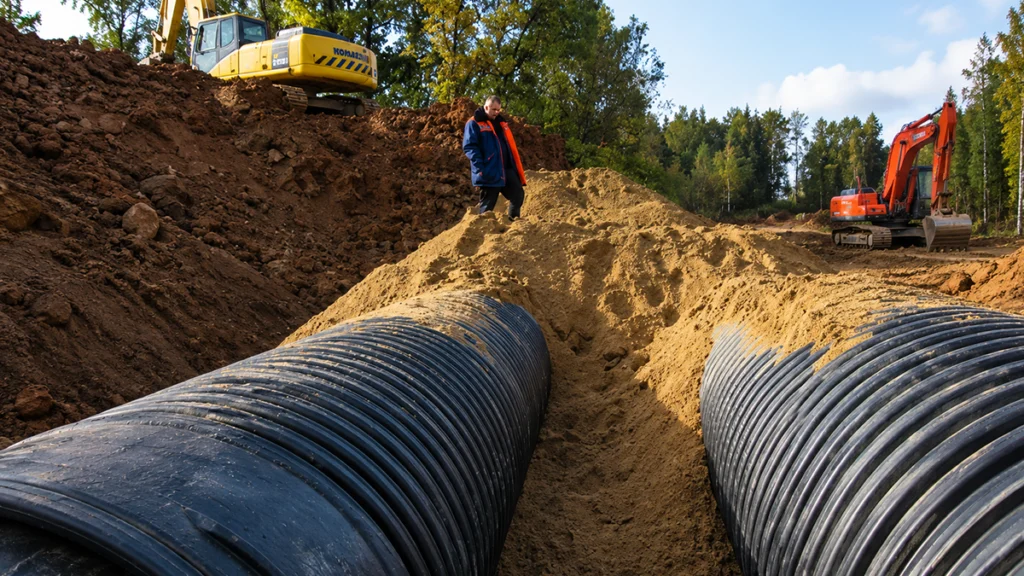
Smart procurement teams know better than to just look at the initial price per meter. Evaluating the financial impact of a drainage system means analyzing the total installed cost.
Material Cost
On a strict per-meter basis, single wall corrugated pipe wins the budget battle. The single-layer extrusion process uses less raw material and relies on simpler manufacturing equipment. For low-budget landscaping or agricultural jobs, it is exceptionally economical.
Double Wall Cost Premium
Expect a higher upfront price tag for double wall corrugated pipe. The secondary inner liner and heavier overall weight drive up the initial cost. Yet, when you stack DWC against traditional heavyweights like corrugated metal pipe (CMP) or reinforced concrete pipe (RCP), it remains significantly cheaper to buy, ship, and install.
Total Installation Cost Factors
B2B buyers need to nail down exact project parameters before requesting a quote. Guessing on specs usually leads to expensive procurement errors.
| Specification Parameter | Options to Define | Impact on Project |
|---|---|---|
| Diameter Sizing | Nominal Diameter (DN), Outside (OD), Inside (ID) | Determines hydraulic flow capacity and trench width. |
| Ring Stiffness | SN4 (4 kN/m²) vs. SN8 (8 kN/m²) | SN8 is mandatory for heavy traffic and deep burial loads. |
| Wall Structure | Single Wall (Type C) vs. Double Wall (Type S) | Dictates flexibility, flow friction, and load capacity. |
| Perforation Type | Solid Wall vs. Perforated / Slotted | Solid for transport; perforated for soil collection/leaching. |
| Connection Method | Bell & Spigot (Watertight) vs. Snap Couplers (Soil-tight) | Determines joint integrity against root intrusion and leaks. |
| Material Grade | Virgin PE80 / PE100 vs. Recycled Resin | Virgin resin is required for certified municipal infrastructure. |
Selecting the ideal pipe demands a careful, systematic look at your hydraulic demands and site conditions. Run through this buyer checklist to lock in your requirements:
1. Load Condition: Look closely at surface activity. Are you installing the pipe under a commercial parking lot or a busy highway? You absolutely need DWC SN8. If it’s going under a quiet garden or an agricultural field, single wall gets the job done.
2. Flow Volume: Use Manning’s equation to calculate the exact diameter you need. Remember to factor in the sluggish friction of single wall (0.020) against the smooth, rapid efficiency of DWC (0.012).
3. Burial Depth: Verify that your chosen pipe handles both the minimum cover limits (12-24 inches for traffic zones) and the maximum depth thresholds dictated by local soil density and your compaction equipment.
4. Supplier Capability: Make sure your manufacturer can actually hit your project’s Minimum Order Quantities (MOQs) and quality standards. JINQUAN operates a massive 200-acre facility equipped with over 40 high-speed extrusion lines. This setup ensures rapid scaling and strict ISO 9001 quality control for major municipal orders.
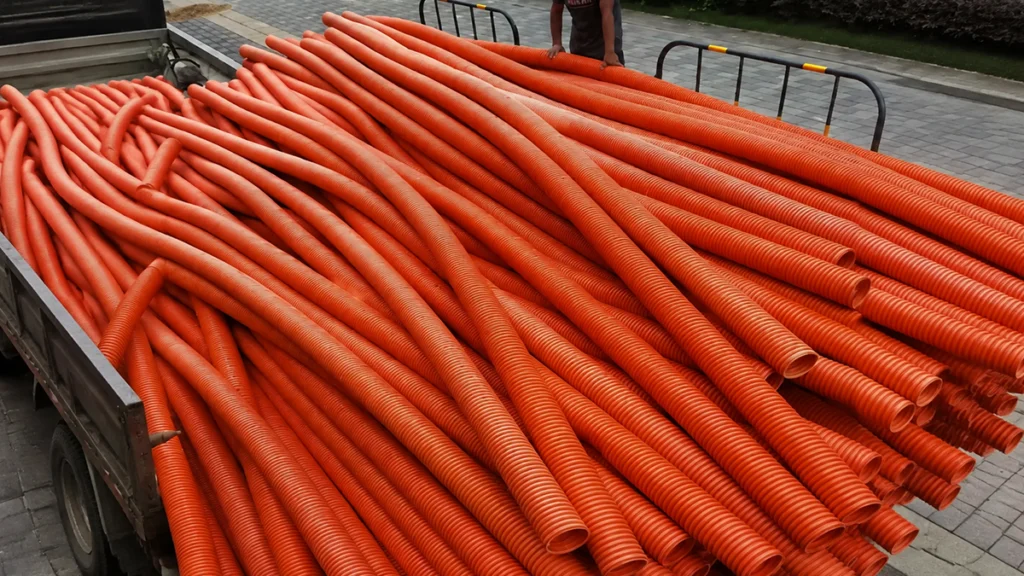
A single misstep during procurement or installation can trigger rapid system failure. When that happens, you are looking at expensive excavation and full replacement.
True value isn’t just a low price tag; it’s aligning the pipe’s physical capabilities directly with the demands of your project.
For highly complex routing environments, low-load areas, and tight budgets, single wall corrugated pipe brings unbeatable value. Projects like temporary site dewatering, residential landscaping, and agricultural drainage lean heavily on its low initial cost per meter and extreme flexibility.
However, for industrial, municipal, and commercial projects, double wall corrugated pipe stands as the undisputed champion of value. Yes, you will pay more upfront for materials and installation. But that initial premium vanishes when you factor in a 50+ year lifespan, massive hydraulic flow rates, and unyielding structural integrity under heavy traffic. If you are building permanent infrastructure, DWC is by far the most reliable, cost-effective option over the entire lifecycle of the project.
Absolutely. Double wall corrugated pipe utilizes a structured outer wall designed for high ring stiffness—usually rated at SN4 or SN8. This rigid build allows it to shrug off deep soil pressure and heavy vehicular traffic as long as it’s properly backfilled. Single wall pipe completely lacks this dual-layer reinforcement, making it a prime candidate for crushing under heavy loads. Keep single wall restricted to shallow-burial, light-duty applications rather than heavy commercial infrastructure.
Double wall corrugated pipe takes the crown for stormwater management. Its completely smooth inner liner yields a highly efficient Manning’s roughness coefficient of 0.010 to 0.012. This allows massive volumes of water to rush through rapidly without catching debris. By contrast, single wall pipe has a ribbed interior that generates friction, slowing the water and trapping sediment. If you are dealing with highway, industrial, or municipal stormwater systems that demand maximum hydraulic capacity and long-term reliability, double wall is the industry standard.
Manufacturing double wall corrugated pipe requires a more complex co-extrusion process to simultaneously form the corrugated outer shell and the smooth inner liner. This secondary layer consumes more raw material, increasing both the production cost and the overall weight. Even so, it is still drastically more cost-effective than traditional corrugated metal or reinforced concrete pipes. You easily recoup that initial price premium through reduced maintenance, incredible structural integrity, and a 50-year design life.
No. You should never install single wall corrugated pipe under driveways, roads, or any surface experiencing heavy vehicular traffic. It simply doesn’t have the structural ring stiffness required to handle dynamic loads, making it highly vulnerable to severe deflection or outright crushing. For any traffic-bearing application, engineers explicitly specify double wall corrugated pipe with an SN8 ring stiffness rating, buried under at least 12 inches of soil cover with proper structural backfill.
Your total installation cost hinges largely on backfill requirements and trench preparation. Double wall corrugated pipe needs wider trenches filled with specific structural backfill—like gravel or crushed stone—compacted to a 90 percent standard Proctor density. Beyond that, costs fluctuate based on logistics, local labor rates, required fittings, stiffness class, and pipe diameter. Getting the installation right is non-negotiable, as the pipe needs that soil-structure interaction to maintain its load-bearing strength.
Pinning down the right diameter means calculating your anticipated flow volume while factoring in interior pipe friction. Double wall corrugated pipe delivers higher hydraulic efficiency thanks to its smooth interior. To put it in perspective, a 12-inch double wall pipe moves the exact same volume of water as a 15-inch single wall pipe. Engineers rely on Manning’s equation to find the precise diameter required, factoring in the necessary gravity-flow slope, rainfall intensity, and the total drainage area.
When extruded from premium high-density polyethylene and installed by the book, double wall corrugated pipe carries a design life that easily surpasses 50 years. It fights off biological degradation, abrasion, and chemical corrosion brilliantly. Single wall corrugated pipe typically offers a shorter lifespan, hovering around 10 to 25 years. This duration depends heavily on applied surface loads, UV exposure, and surrounding soil conditions. Sticking to virgin PE80 or PE100 resins guarantees maximum durability regardless of the pipe type you choose.
Your choice here depends entirely on what you want the water to do. Perforated corrugated pipe is covered in small holes or slots. It is engineered to either allow water to leach out into the surrounding earth or to collect subsurface groundwater, making it perfect for French drains and agricultural fields. Non-perforated (or solid wall) corrugated pipe is completely sealed. You use it strictly to transport water from point A to point B without losing a drop, much like municipal stormwater routing.
Choosing between single wall and double wall corrugated pipe boils down to a strict evaluation of your hydraulic requirements, load conditions, and overall project demands. Single wall corrugated pipe steps up as a highly flexible, budget-friendly routing option for agricultural usage and low-load landscape drainage. Meanwhile, double wall corrugated pipe brings the high-volume flow capacity and unyielding structural ring stiffness required for heavy-duty highway, industrial, and municipal infrastructure. By locking down exact specifications—like material grade, SN rating, and diameter—B2B buyers can confidently secure a durable, highly efficient drainage solution tailored to their site conditions, minimizing lifecycle costs and guaranteeing long-term performance.