Address
Zhengzhou, Henan, China
Work Hours
Monday to Friday: 7AM - 7PM
Weekend: 10AM - 5PM
Address
Zhengzhou, Henan, China
Work Hours
Monday to Friday: 7AM - 7PM
Weekend: 10AM - 5PM

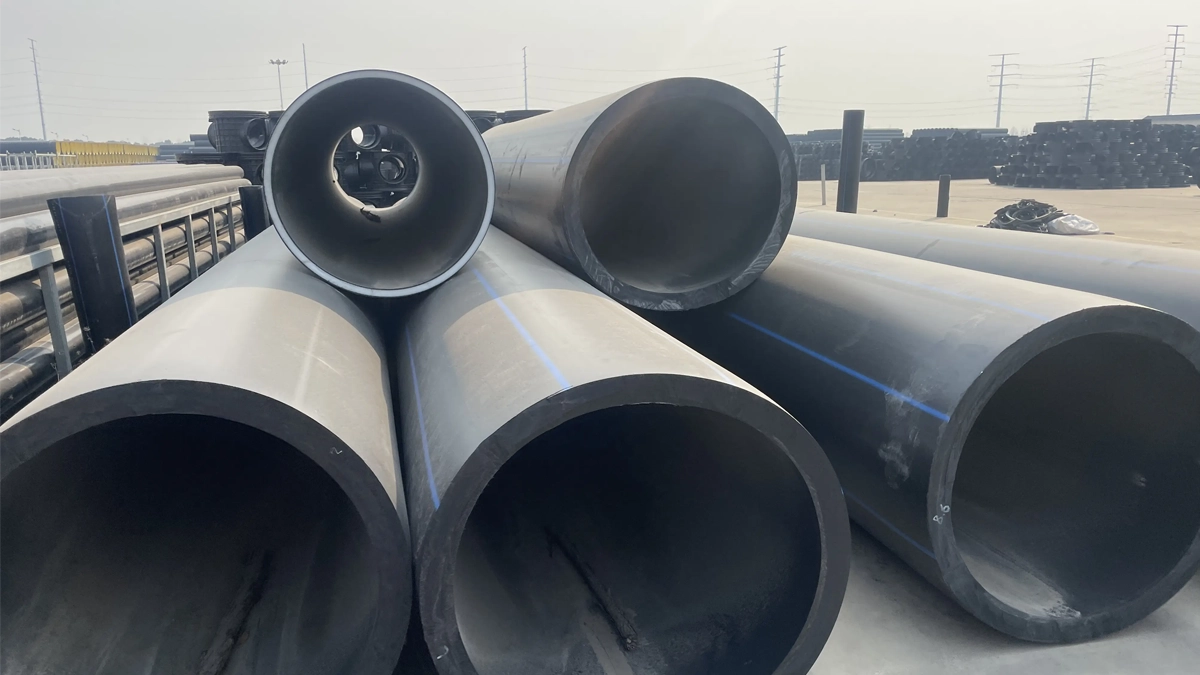
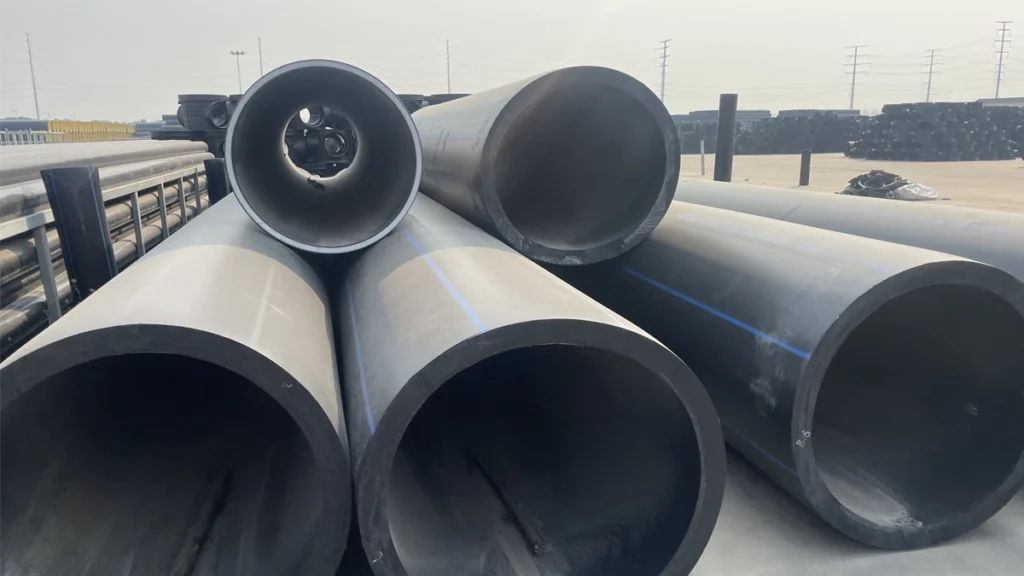
Aging infrastructure is failing us. With water loss rates frequently topping 20% due to corroded joints and cracked concrete, the engineering world is turning to large diameter HDPE pipe applications as the definitive solution. The data is clear: High-Density Polyethylene (HDPE) has become the material of choice for new large-scale transmission lines, driven by its zero-leakage fusion technology and a service life that easily exceeds 50 years.
This guide moves beyond the basics to explore the engineering superiority of PE100 material science over traditional substrates. We will examine critical use cases—from deep marine outfalls to abrasive mining slurries—and break down the essential SDR pressure ratings you need to know. You will also discover how to slash logistics costs through nested loading techniques and how to rigorously vet suppliers against ISO 4427 standards. By the end, you will have the technical criteria to specify the correct wall thickness and the confidence to secure factory-direct pricing from certified manufacturers like JINQUAN.
—
Moving from rigid materials to flexible thermoplastics in large-bore infrastructure isn’t just a trend; it is a calculated engineering evolution. For diameters exceeding DN630mm, the physical properties of PE100 offer resilience against environmental stressors that typically cause catastrophic failure in rigid pipes.
The core advantage of modern HDPE lies in the molecular architecture of PE100 resins. With a density between 0.955 g/cm³ and 0.960 g/cm³, PE100 delivers a Minimum Required Strength (MRS) of 10 MPa, a significant leap over the older PE80 generation.
When stacked against traditional materials like concrete or Ductile Iron (DI), HDPE wins on chemical inertness. Concrete is notorious for crumbling under sulfide attacks (crown corrosion) in sewage lines, while ductile iron demands expensive internal cement linings and external polyethylene sleeving just to survive corrosive soils.
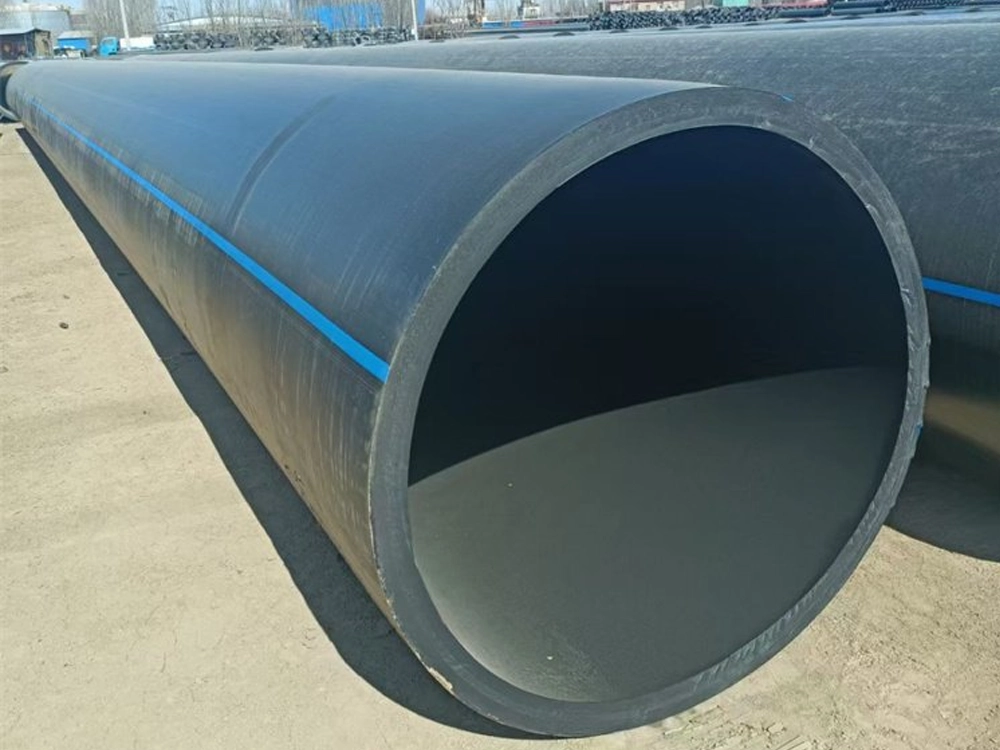
JINQUAN manufactures large diameter pipes using 100% virgin PE100 raw material. This creates a monolithic, fused system. Unlike the bell-and-spigot joints in DI pipes—which rely on rubber gaskets that eventually degrade—HDPE butt fusion joints are as strong as the pipe itself. The result is a leak-free system that stops groundwater infiltration and prevents the exfiltration of transported fluids, ensuring strict environmental compliance.
In large-volume water transmission, friction is the enemy of efficiency. The internal surface of JINQUAN’s HDPE pipes is glass-smooth, with a Hazen-Williams C-factor of 150–155. In comparison, new ductile iron pipes typically start at C=140, but the value can decrease to 120 or lower over time due to tuberculation and scale buildup. Concrete is even rougher, typically ranging from 100 to 120.
For a DN1000mm transmission main, this difference hits the bottom line. A higher C-factor means pumps use less energy to move the same volume of water. Over a 20-year operational window, the energy savings from HDPE often recoup the initial procurement costs. Plus, because HDPE doesn’t corrode, this hydraulic capacity remains constant, giving municipal engineers predictable flow rates for decades.
Civil engineers in seismically active zones prioritize ductility. Rigid pipes are brittle; when the ground shifts, they crack, or their joints pull apart. HDPE is viscoelastic, with an elongation at break exceeding 350%. It doesn’t fight the ground movement; it moves with it.
Post-earthquake studies consistently show that while rigid utility pipelines suffer extensive damage, HDPE networks remain largely intact. The pipe accommodates settling and liquefaction by bending rather than breaking. For large diameter installations, this flexibility also eliminates the need for expensive thrust blocks at every turn, as the fused joints are fully restrained and self-anchoring.
—
As urbanization accelerates, municipalities are upgrading their networks to keep pace. JINQUAN supplies the large bore pipes that serve as the backbone for these critical life-support systems.
Delivering safe drinking water requires piping that adheres to strict hygiene standards. JINQUAN’s large diameter HDPE pipes fully comply with ISO 4427 and EN 12201 for potable water supply. The material is non-toxic, prevents microbial growth, and leaves the water’s taste and odor unaltered.
Pressure ratings are the primary concern for main supply lines. We manufacture pipes ranging from PN6 (0.6 MPa) for gravity flow up to PN25 (2.5 MPa) for high-pressure pumping stations. A typical DN800mm SDR17 pipe is rated for PN10, offering an ideal balance of wall thickness and pressure capacity for urban distribution rings. The fusion-welded joints ensure that treated water actually reaches the tap rather than leaking into the ground.
Sanitation infrastructure is a chemically aggressive environment. Sewage generates Hydrogen Sulfide (H2S) gas, which condenses into sulfuric acid on the pipe’s crown. This acid eats away at concrete, leading to structural collapse—a phenomenon known as Microbiologically Induced Corrosion (MIC).
HDPE is immune to H2S and sulfuric acid attacks across the entire pH spectrum of sewage (resisting pH 1 to 14). For large diameter drainage, JINQUAN offers both solid wall and structured wall options. The smooth interior maintains self-cleaning velocities even at low flows, preventing the sediment buildup that clogs storm drains.
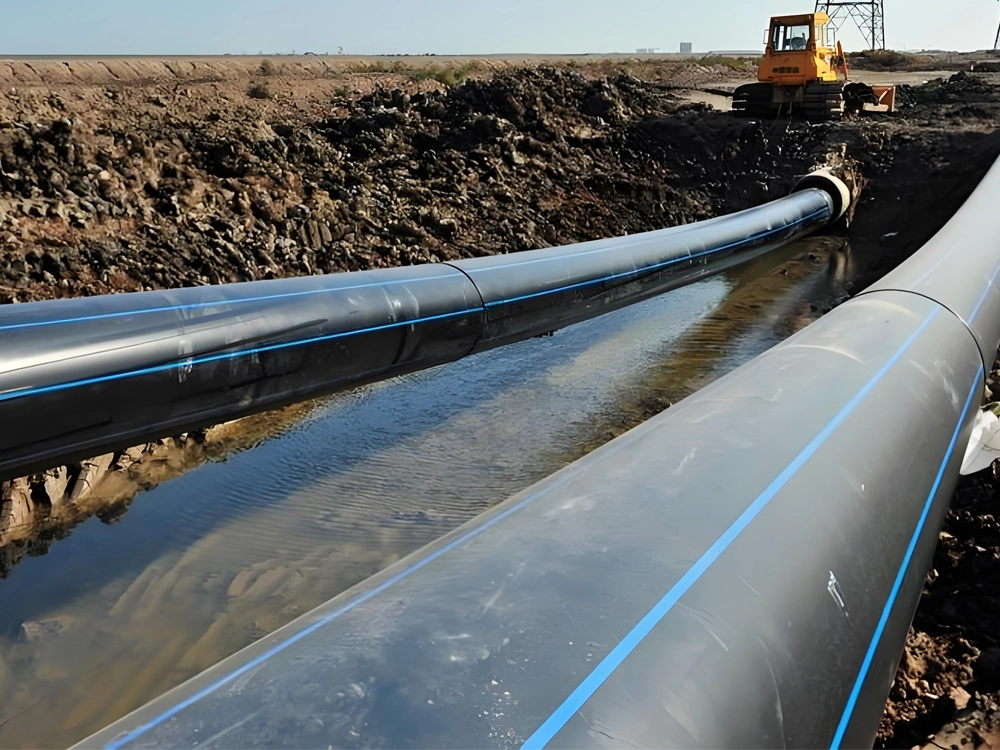
Ripping up a dense city center to install a DN1000mm pipe causes massive traffic chaos and incurs high restoration costs. Horizontal Directional Drilling (HDD) is the smart alternative, and HDPE is the only material up to the task.
The high tensile strength of butt-fused HDPE allows contractors to pull continuous strings of pipe—often hundreds of meters long—through a pre-drilled underground bore. The pipe’s flexibility allows it to navigate the curvature of the drill path. JINQUAN pipes are engineered to withstand the significant pull-forces exerted during HDD installation without compromising long-term hoop strength.
—
Beyond municipal water, large diameter HDPE pipes are the standard for punishing industrial environments and complex marine projects.
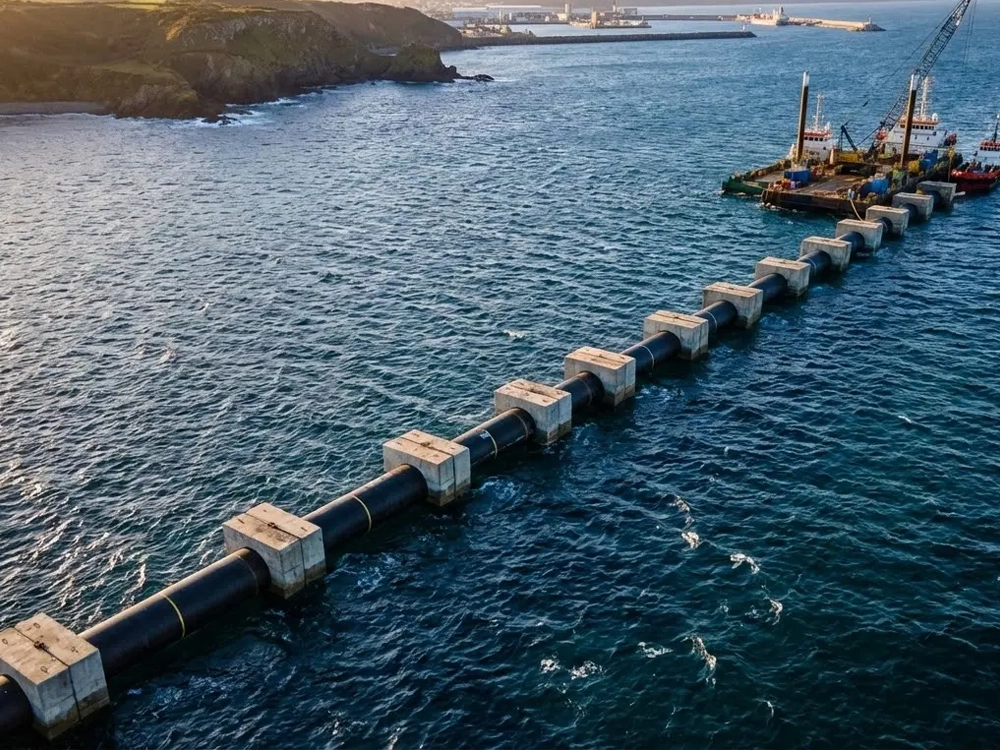
Desalination plants and wastewater facilities rely on massive intake and outfall pipelines extending kilometers offshore. HDPE is the material of choice because it naturally resists saltwater corrosion and biological fouling. Unlike steel, it needs no cathodic protection or specialized coatings.
However, physics dictates that HDPE floats (density ~0.955 g/cm³ vs seawater ~1.025 g/cm³). To settle the pipe on the seabed, concrete ballast weights are attached at calculated intervals. JINQUAN provides technical support for these marine projects, supplying pipes up to DN1600mm that can be floated out in long strings, flooded, and sunk in a controlled “float and sink” operation.
Mining operations move abrasive slurries—mixtures of water, crushed ore, sand, or tailings—over vast distances. Steel pipes in these applications suffer from rapid internal wear, forcing frequent rotation or replacement.
HDPE offers superior abrasion resistance. In Taber abrasion tests, PE100 wears at a rate 1/3 to 1/6 that of steel. The material’s elasticity allows it to absorb the kinetic energy of impacting particles rather than eroding. For high-wear mining applications, JINQUAN recommends lower SDR ratings (thicker walls, e.g., SDR11 or SDR9) to maximize service life under high-velocity transport conditions.
Power plants and chemical processing facilities use large diameter headers for cooling water loops. These systems often handle elevated temperatures. While standard PE100 handles continuous operation up to 40°C without significant pressure derating, it can withstand intermittent spikes up to 60°C or 80°C.
Engineers must apply pressure reduction factors (derating) when operating at higher temperatures. For instance, the allowable operating pressure at 40°C is lower than at 20°C. JINQUAN engineers assist clients in selecting the appropriate SDR to ensure the pipe maintains its safety factor under specific thermal loads, preventing creep rupture over the plant’s lifespan.
—
Selecting the right pipe is about understanding the interplay between diameter, wall thickness, and pressure rating.
The Standard Dimension Ratio (SDR) is simply the ratio of the pipe’s Nominal Outside Diameter (DN) to its Nominal Wall Thickness (en). The formula is SDR = DN / en. It’s an inverse relationship: a lower SDR number means a thicker wall and a higher pressure rating.
JINQUAN manufactures to both ISO and ASTM standards to satisfy global project requirements.
For a DN1000mm pipe:
Choosing the correct standard is vital to ensure compatibility with your fittings and valves.
A pipeline is only as strong as its weakest joint.
1. Butt Fusion: The industry standard. Pipe ends are planed, heated against a plate until a specific bead forms, and then pressed together hydraulically. Critical parameters include heat soak time, interfacial pressure, and cooling time.
2. Electrofusion: Typically used for repairs or tie-ins where butt fusion equipment won’t fit. Large electrofusion couplers (up to DN1200) require meticulous surface scraping to ensure a solid weld.
3. Flange Connections: To connect HDPE to valves, pumps, or steel pipes, a stub end (flange adapter) is fused to the pipe and backed by a metal ring.
—
Procuring large diameter pipe involves more than just looking at the price per meter. Total Cost of Ownership (TCO) and logistics strategy play huge roles in project viability.
While HDPE material might have a higher upfront sticker price than some concrete options, the installed cost is often lower.
Freight is a major cost driver for large pipes. Shipping “air” in a container is a waste of money. JINQUAN utilizes “nested” or “telescopic” loading to solve this.
We place a DN630 pipe inside a DN800 PE pipe, which is then slid inside a DN1000 pipe (clearance permitting). This allows us to fit 3 or 4 different diameters into a single 40ft High Cube container. This technique can boost loaded volume by 30-50%, significantly diluting the freight cost per meter. We provide detailed loading plans to help importers maximize their shipping value.
To ensure you receive project-ready materials, use this checklist when vetting suppliers:
—
At JINQUAN Plastic Industry, massive production capacity meets precision engineering.
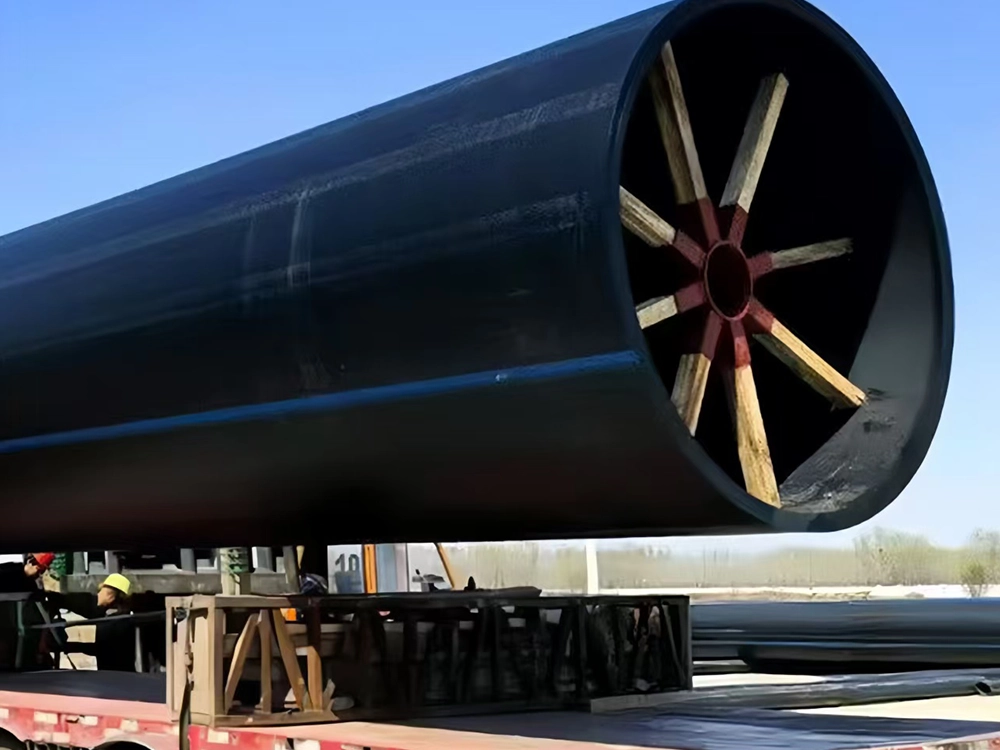
Manufacturing DN1200mm+ pipe requires sophisticated machinery to ensure uniform wall thickness and concentricity. JINQUAN utilizes advanced extrusion lines, similar to Battenfeld-Cincinnati technology, featuring gravimetric dosing systems. This ensures the polymer melt is distributed evenly, preventing “thin spots” that could fail under pressure. Our cooling tanks are extra-long to ensure the thick walls of large pipes cool gradually, preventing internal stress buildup.
Quality is verified, not assumed. Our on-site CNAS-level laboratory performs critical batch testing:
JINQUAN holds ISO 9001, ISO 14001, and CE certifications. We are a verified supplier for major water boards and mining consortiums across Southeast Asia, the Middle East, Africa, and South America. Our factory location and logistics team allow us to coordinate complex bulk cargo shipments or containerized deliveries to any major port globally.
—
Q1: What is the maximum diameter of HDPE pipe JINQUAN can manufacture?
JINQUAN manufactures HDPE pipes up to DN3000mm. However, our most commonly exported large diameters for standard container shipping range from DN630mm to DN1200mm. For sizes exceeding DN1200mm, we typically utilize Bulk Break cargo shipping or specialized open-top containers.
Q2: How do you transport DN1200mm pipes in standard shipping containers?
DN1200mm PE water pipes are slightly too large for standard containers. They are usually cut to 5.8m or 11.8m lengths and shipped via Bulk Cargo or Open Top containers. For diameters DN1000mm and smaller, we use 40ft High Cube containers and employ nested loading (placing smaller pipes inside) to optimize freight costs.
Q3: Can large diameter HDPE pipes be exposed to direct sunlight?
Yes. JINQUAN pipes are manufactured with 2.0% to 2.5% finely dispersed Carbon Black. This acts as a powerful UV stabilizer, protecting the polymer chain from degradation. Our black PE100 pipes can be stored or installed above ground in direct sunlight for decades without losing mechanical properties.
Q4: What is the difference between PE80 and PE100 for large pipes?
PE100 is a higher-grade resin with superior density and a higher Minimum Required Strength (MRS 10.0 MPa) compared to PE80 (MRS 8.0 MPa). For large diameter pipes, PE100 allows for thinner walls to achieve the same pressure rating. This results in a lighter pipe with a larger internal flow bore and lower material cost.
Q5: How do you join large diameter HDPE pipes to existing concrete or steel pipelines?
The most common method uses a Flange Adapter (stub end) fused to the HDPE pipe, fitted with a metal backing ring. This flange is then bolted to the flange of the steel or concrete pipe valve. Mechanical couplings specifically designed for large diameter HDPE are also available for restraint connections.
—
Large diameter HDPE pipe has redefined the standards for municipal, industrial, and marine infrastructure. Its combination of hydraulic efficiency (C=150), seismic flexibility, and absolute corrosion resistance makes it the superior choice over legacy materials like concrete and ductile iron. Whether you are designing a cross-country water transmission main, a marine outfall, or a mining slurry line, the success of your project hinges on selecting the right SDR and a manufacturer capable of delivering consistent quality.
At JINQUAN, we don’t just sell pipes; we provide engineered solutions. With over 15 years of experience, 40+ extrusion lines, and a track record of supplying projects in 50+ countries, we are your trusted partner for large-bore piping.
Contact JINQUAN Plastic Industry today for a competitive quote on Large Diameter HDPE Pipes. Ask our team about our project-specific SDR customization and cost-saving nested shipping solutions.