Address
Zhengzhou, Henan, China
Work Hours
Monday to Friday: 7AM - 7PM
Weekend: 10AM - 5PM
Address
Zhengzhou, Henan, China
Work Hours
Monday to Friday: 7AM - 7PM
Weekend: 10AM - 5PM

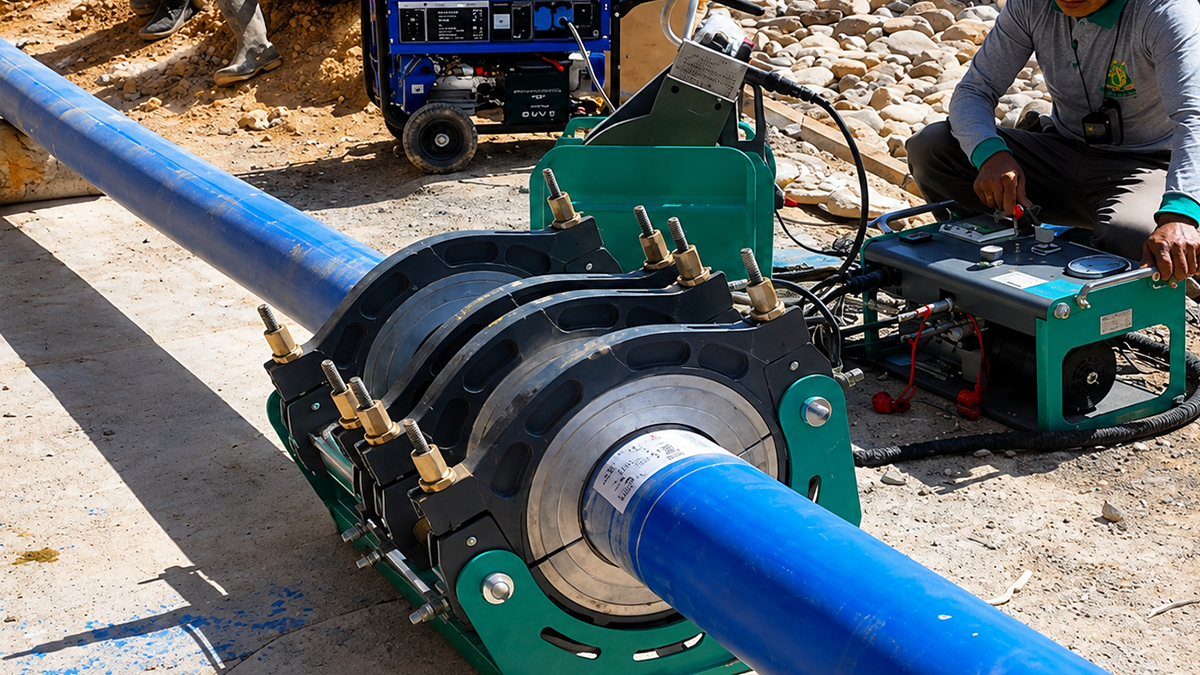
Butt fusion fittings for HDPE pipe are the go-to jointing solution for high-pressure water, gas, mining, and industrial networks. This guide explains the main fitting types, PE100/SDR specifications, application scenarios, installation procedure, and buyer checkpoints to help engineers and procurement teams specify and source with confidence.
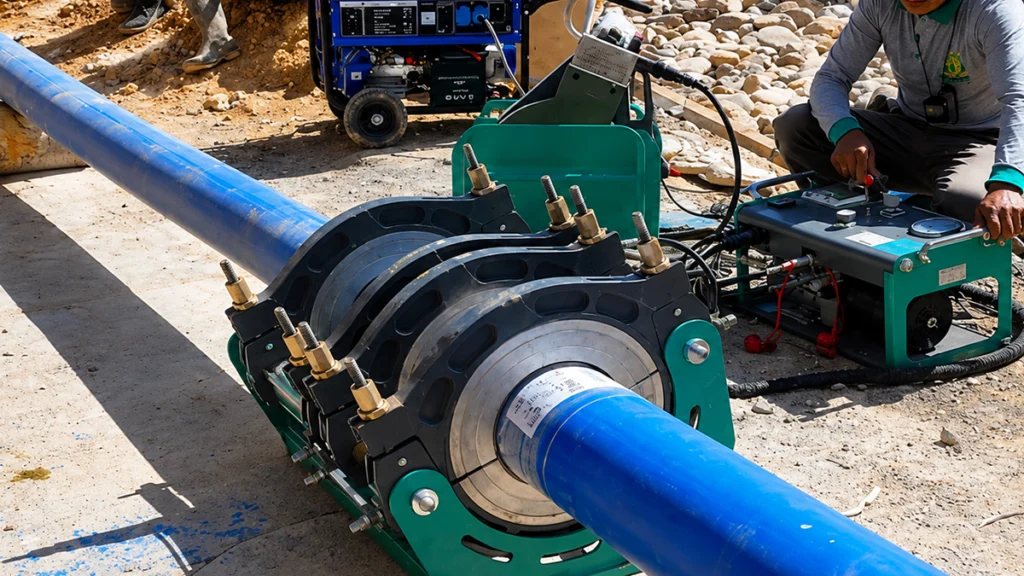
Butt Fusion HDPE Pipe Fittings serve as specialized thermoplastic connectors that join high-density polyethylene (HDPE) pipelines via thermofusion. Operators melt the squared-off ends of both the pipe and the fitting, then press them together to form a permanent, monolithic joint. We typically see this method applied to pipes with an outside diameter (OD) of 90mm or larger. During heating, the polyethylene’s molecular structure shifts from crystalline to amorphous. Applying precise pressure to these melted ends forces the long-chain molecules to mix and entangle. The result? A seamless, incredibly durable connection.
The biggest draw of butt fusion fittings for HDPE pipe is their capacity to build a leak-proof, monolithic system. In fact, a properly fused joint ends up just as strong as the pipe itself—sometimes even stronger. Under standard design conditions, these connections deliver a reliable 50 to 100-year service life.
Opting for HDPE butt fusion fittings effectively wipes out the steepest lifecycle costs linked to legacy materials like steel or PVC. Take a municipal water main project, for instance. Relying on mechanical joints or steel fittings practically guarantees future headaches from electrochemical corrosion, rust, or solvent degradation. Because HDPE remains chemically inert, a fully butt-fused network needs zero cathodic protection or internal linings. This preserves the material’s integrity while slashing long-term maintenance budgets.
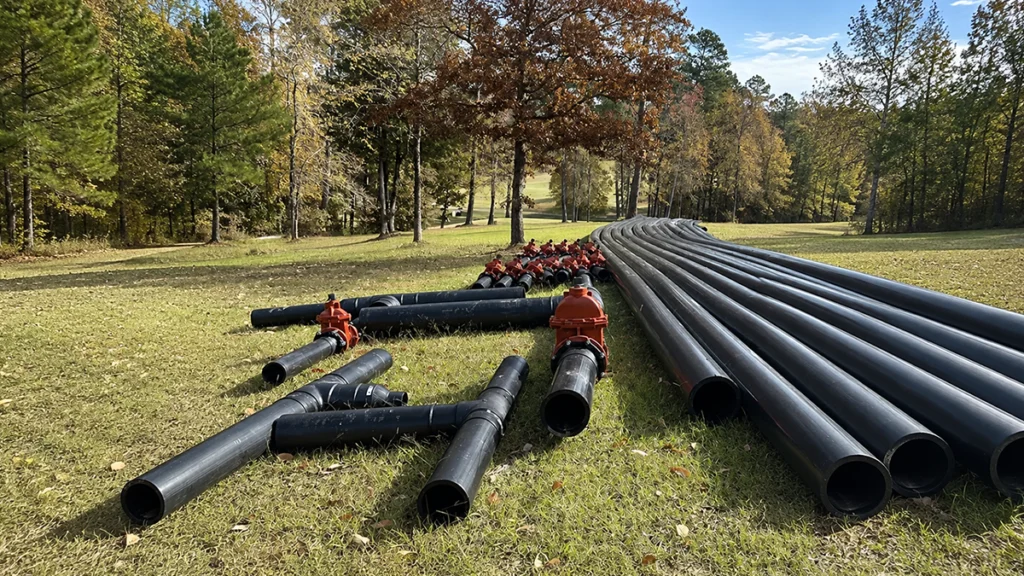
Nailing down the right fitting configuration is crucial for optimizing fluid dynamics and finalizing your pipeline layout. Industrial and municipal projects rely heavily on the following core types of HDPE butt fusion fittings:
Manufacturers mold butt fusion fittings from high-density polyethylene resin, usually graded as PE100 or PE80. A pipe’s Standard Dimension Ratio (SDR) defines its wall thickness, which ties directly to its Nominal Pressure (PN) class.
| Resin Grade | SDR Rating | PN Pressure Class (at 20°C) | Applicable Global Standards |
|---|---|---|---|
| PE100 | SDR 7.4 | PN 20 (20 bar) | ISO 4427 (Water) |
| PE100 | SDR 9 | PN 16 (16 bar) | EN 12201 (Water) |
| PE100 | SDR 11 | PN 16 (16 bar) | ISO 4437 (Gas) |
| PE100 | SDR 13.6 | PN 12.5 (12.5 bar) | ASTM F714 |
| PE100 | SDR 17 | PN 10 (10 bar) | AWWA C906 |
| PE100 | SDR 21 | PN 8 (8 bar) | GB/T 13663 |
| PE100 | SDR 26 | PN 6 (6 bar) | DIN 8077/8078 |
Procurement teams must watch dimensional standards closely. Metric (ISO/EN) pipes and IPS/DIPS (ASTM) pipes carry entirely different outside diameters. You cannot take a 110mm metric pipe and butt-fuse it to a 4-inch IPS pipe (114.3mm). They simply will not align.
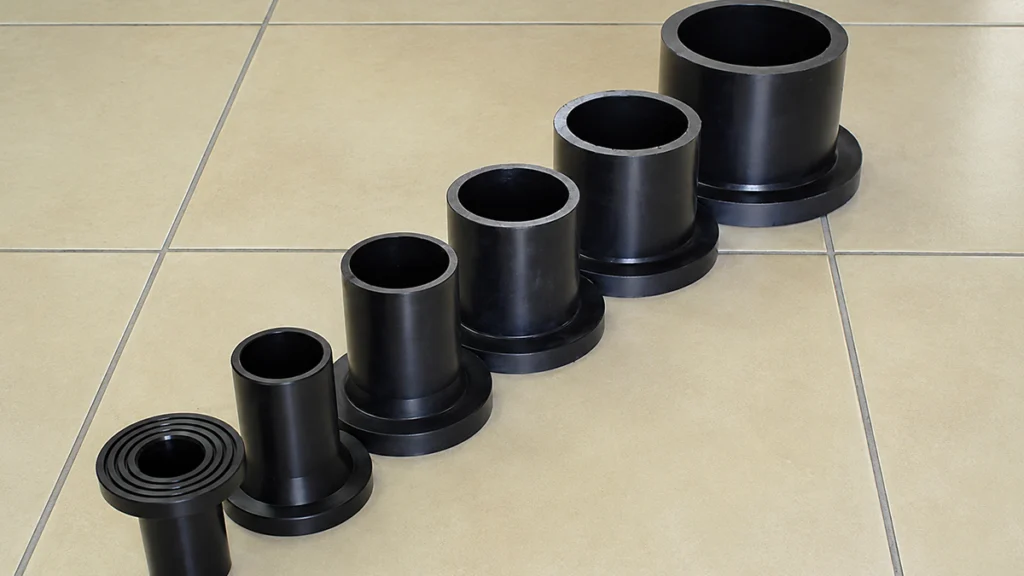
Butt fusion fittings for HDPE pipe bring massive versatility to the table, easily adapting to tough environments. You can quickly identify industry-specific applications by looking at the distinct color stripes running along the pipes and fittings:
Pinning down the ideal connection method ultimately depends on your site conditions, budget, and overall project scale.
| Feature | Butt Fusion | Electrofusion | Mechanical Fittings |
|---|---|---|---|
| Cost per Joint | Lowest (fitting itself is economical) | Highest (2 to 5 times more) | Moderate |
| Diameter Range | 90mm to 3000mm+ | 20mm to 1200mm | 20mm to 110mm (typically) |
| Installation Speed | Slower setup, fast execution | Faster individual joint time | Very fast, no power needed |
| Skill/Equipment | High skill, heavy machinery | Moderate skill, portable welder | Low skill, hand tools |
| Best Use Scenarios | Large trunk lines, open-trench runs | Tight spaces, repairs, mixed SDRs | Temporary lines, small diameters |
When tackling massive municipal or industrial jobs with long, straight open-trench runs, butt fusion HDPE pipe fittings prove to be the most structurally sound and cost-effective option. On the flip side, electrofusion shines during tight mechanical room repairs or when connecting pipes with slightly different wall thicknesses, even though the components cost more. Reserve mechanical fittings for temporary setups where long-term leak prevention doesn’t top your priority list.
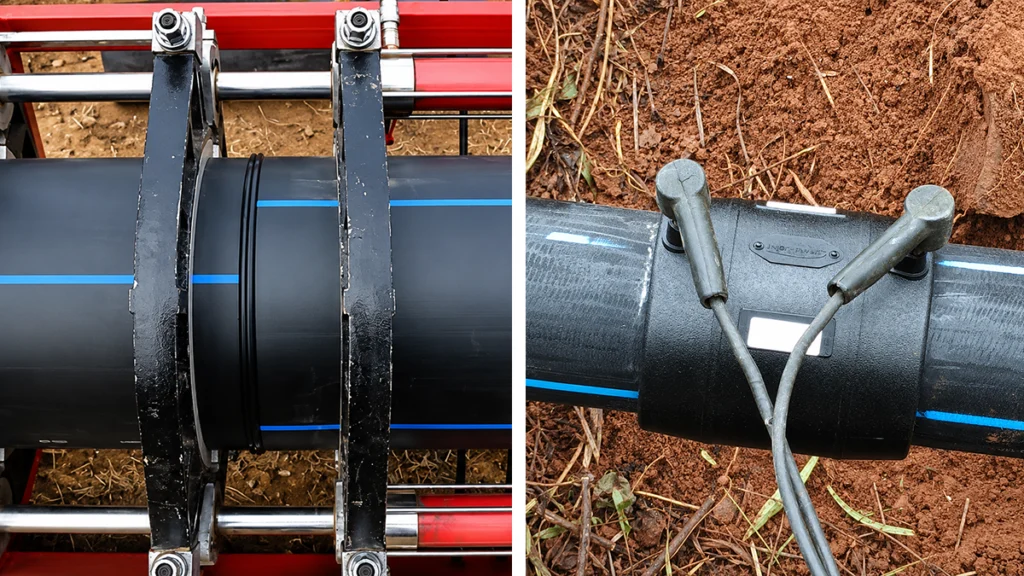
Flawless execution during the installation phase is the only way to guarantee a truly monolithic joint.
1. Clean: Wipe the pipe and fitting ends with a clean, lint-free cloth and 90%+ isopropyl alcohol to strip away dirt, grease, and residual moisture.
2. Face: Insert the facer tool to shave down the pipe ends. Stop when they are perfectly square and you see continuous ribbons of plastic peeling off both sides.
3. Align: Bring the ends together under minimal pressure. Check for high-low misalignment, adjusting the clamps until the outside diameters sit flush against each other.
4. Melt: Insert the heater plate. For PE100, the generic heater surface temperature should sit between 200–232°C (400–450°F). Let the material melt until the correct bead size forms against the plate.
5. Join: Pull the heater plate out quickly and press the melted ends together. The standard fusion interface pressure ranges from 60–90 psi (4.14–6.21 bar).
6. Cool: Hold that pressure steady for at least 11 minutes per inch of pipe wall thickness. Afterward, avoid rough handling for another 30 minutes to lock in the structural integrity.
Common Defects to Avoid:
Sourcing reliable HDPE butt fusion fittings demands strict supplier vetting. To ensure compliance with global standards, procurement teams should verify the following certifications and factory tests:
Partnering with a factory-direct manufacturer ensures tight batch consistency. JINQUAN, for instance, runs a 200-acre facility capable of churning out over 100,000 tons annually. This massive scale guarantees strict traceability and uncompromising quality control on every single fitting that leaves the floor.
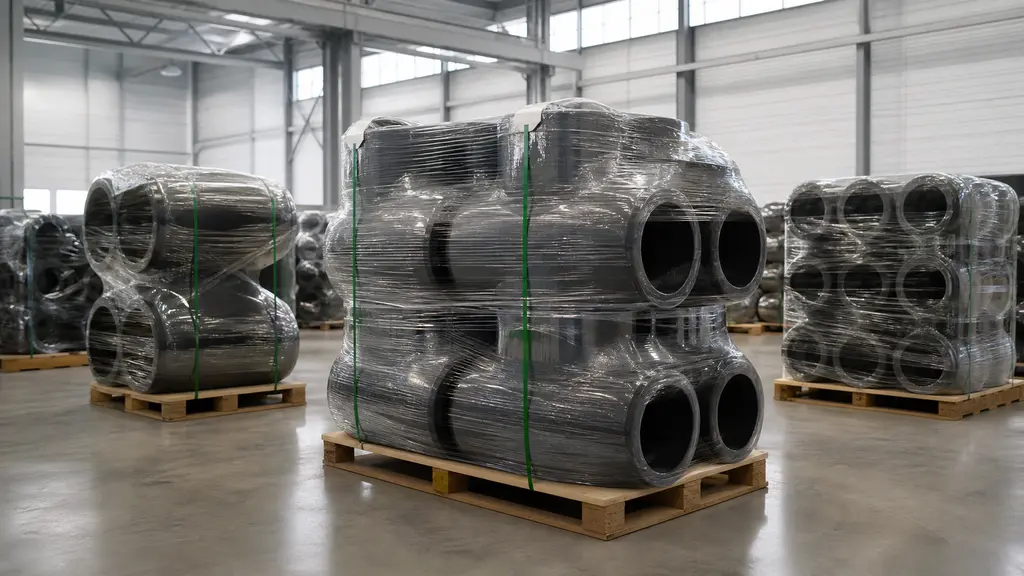
Procurement managers sourcing wholesale butt fusion fittings need to juggle a few key logistical and financial variables.
Keep your project timeline on track by dodging these frequent sourcing and installation blunders:
Pre-Purchase Buyer Checklist:
The pressure rating depends entirely on the resin grade and the Standard Dimension Ratio (SDR). Taking PE100 material at 20°C as a baseline, an SDR 11 fitting handles PN 16 (16 bar or 232 psi). Step down to an SDR 17 fitting, and the rating drops to PN 10 (10 bar or 145 psi). You must always match the fitting’s pressure rating to your overall pipeline specifications.
Operators join butt fusion fittings by melting the flat ends of the pipe and fitting against a hot plate before pressing them together. Electrofusion fittings, on the other hand, feature embedded copper heating coils. Applying an electrical current melts the inside of the fitting and the outside of the pipe simultaneously. Butt fusion remains the most economical route for long, straight runs, whereas electrofusion works best for tight-space repairs.
Technically yes, but industry experts highly discourage it if the gap exceeds one standard Dimension Ratio. Fusing SDR 9 to SDR 11 is usually fine, but jumping from SDR 9 to SDR 17 is asking for trouble. The resulting joint inherits the lower pressure rating of the thinner-walled pipe, creating an immediate weak point.
When working with standard PE100 high-density polyethylene, the generic heater plate surface temperature needs to sit between 200°C and 232°C (400°F to 450°F). Keeping this temperature uniform across the plate is absolutely critical. It ensures the plastic melts thoroughly without degrading the underlying polymer chains.
A fused joint must cool under pressure for at least 11 minutes per inch of pipe wall thickness. Once you remove the machine clamps, let the joint rest without any rough handling for another 30 minutes. Never initiate pressure testing until the joint has cooled completely to ambient temperature.
These fittings must meet stringent international standards dictated by their end-use application. The heavy hitters include ISO 4427 and EN 12201 for potable water, ISO 4437 and EN 1555 for natural gas, and AWWA C906 or ASTM F714 for North American industrial and municipal systems.
Standard manufacturing typically covers pipe diameters from 90mm OD up to 1200mm OD. However, engineers can order specialized fabricated fittings for massive infrastructure projects that reach up to 3000mm in diameter. Installing these oversized fittings requires heavy-duty hydraulic fusion machines.
Look for a factory-direct facility boasting verified ISO 9001 and ISO 14001 certifications. A trustworthy supplier will offer full product traceability, supply MFI and hydrostatic batch test reports, and possess the scale to meet tight lead times and MOQs. Checking their compliance with SGS and CE standards is also a smart move.
Getting the specifications right for HDPE butt fusion fittings is essential for reliable municipal, agricultural, and industrial pipeline projects. Proper material selection, SDR matching, pressure rating, dimensional accuracy, and compliance with standards such as ASTM F714 or ISO 4427 all contribute to long-term system performance.
During installation, correct heating, joining, alignment, and cooling procedures help reduce common fusion defects and improve joint consistency. Working with an experienced manufacturer also helps ensure stable product quality, reliable supply, and technical support for tees, elbows, reducers, and other HDPE fittings.