Address
Zhengzhou, Henan, China
Work Hours
Monday to Friday: 7AM - 7PM
Weekend: 10AM - 5PM
Address
Zhengzhou, Henan, China
Work Hours
Monday to Friday: 7AM - 7PM
Weekend: 10AM - 5PM

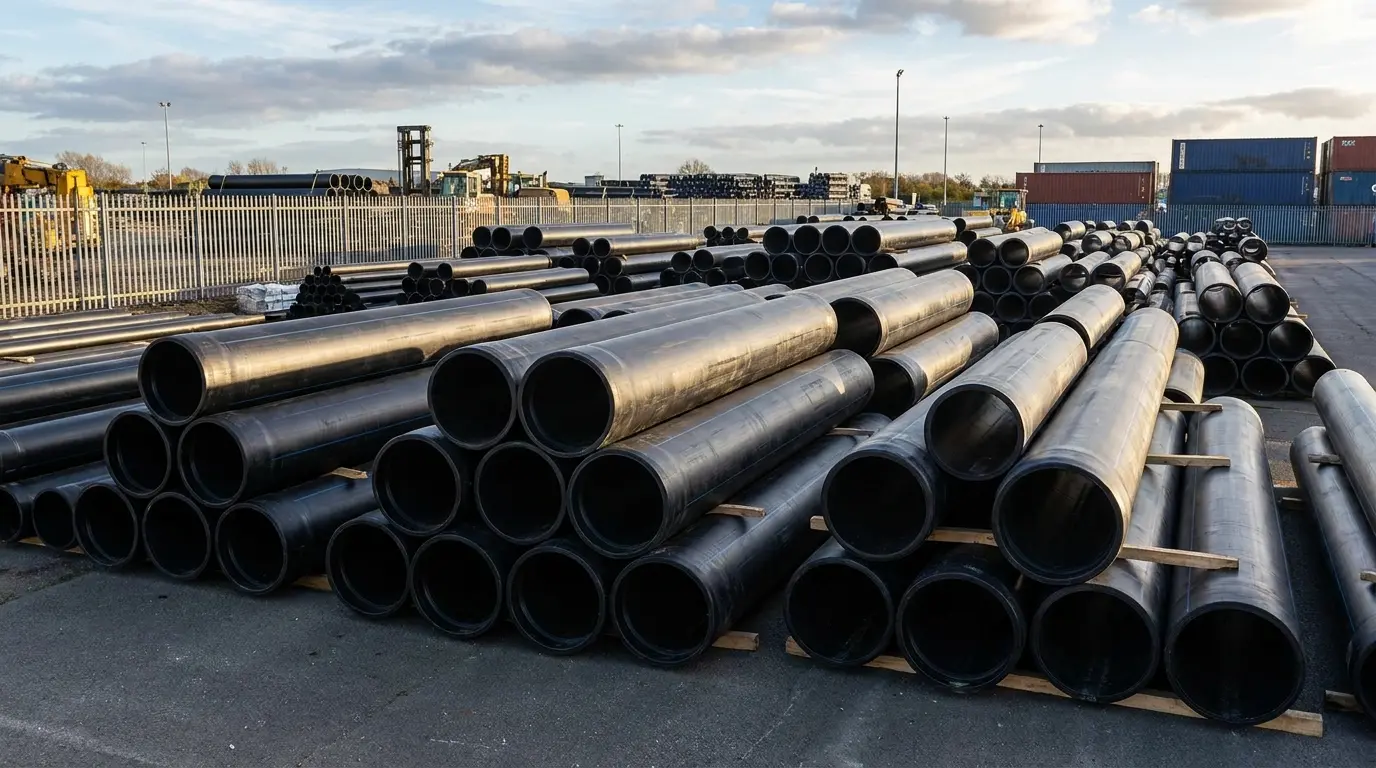
HDPE Pipe for Sewerage and Drainage helps buyers compare pipe types, specifications, installation factors, costs, and supplier criteria for reliable underground sewer and drainage projects.
HDPE Pipe for Sewerage and Drainage stands out as a flexible, incredibly resilient thermoplastic piping system built specifically for moving fluids underground. Sewerage networks process sanitary waste and harsh industrial effluents. Because of this, they require completely leak-proof joints that stop dangerous hydrogen sulfide (H2S) gas from escaping. Drainage lines, on the other hand, tackle stormwater and surface runoff. They rely on massive flow capacities and the structural grit to withstand heavy soil loads. You will find these HDPE pipes manufactured from premium PE80 and PE100 virgin resins, with diameters spanning a massive range from DN16 all the way up to DN3000mm. Ultimately, they deliver the structural and hydraulic dependability that large-scale municipal and industrial infrastructure demands.
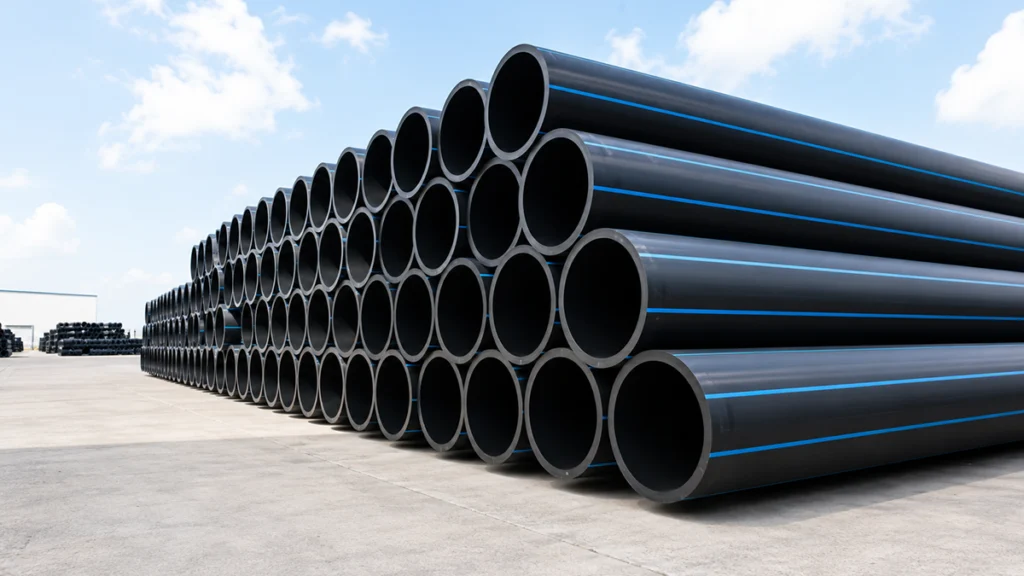
Buried polyethylene pipelines face a brutal environment. They must endure shifting soils, relentless traffic loads, and highly corrosive fluids. High-Density Polyethylene (HDPE) steps up to these challenges effortlessly, offering engineers a suite of unique performance advantages.
Picking the correct HDPE pipe structure means finding the sweet spot between project budget and mechanical capability. Underground sewerage and drainage projects typically rely on three main configurations:
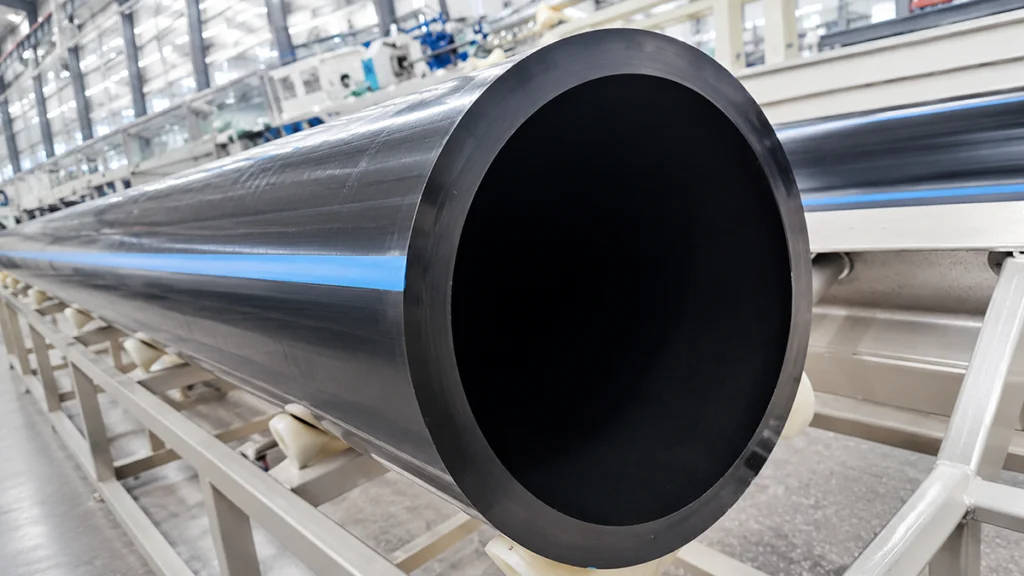
Procurement teams and site engineers have to nail down exact technical parameters. This guarantees the HDPE pipe for sewerage and drainage can actually handle the specific flow and load demands of the site.
| Specification Category | Parameter Details | Application Notes |
|---|---|---|
| Diameter Range | DN16 to DN3000mm (Outside Diameter) | Always match the internal diameter (ID) to your target flow capacity calculations. |
| Material Grade | PE100 (High density/strength), PE80 | PE100 remains the go-to choice for high-pressure force mains. |
| Ring Stiffness (Gravity) | SN4 (4 kN/m²), SN8 (8 kN/m²), SN16 (16 kN/m²) | SN4 handles light traffic. Use SN8 for deep burials or heavy traffic, and SN16 for extreme loads. |
| Pressure Rating (Pressure) | SDR11 (PN16), SDR13.6 (PN12.5), SDR17 (PN10) | Strictly required for force mains; completely irrelevant for gravity-fed drainage. |
| Governing Standards | ISO 4427, EN 12201, ASTM F714, ASTM D3350 | Demand that your supplier provides recent batch testing against these specific codes. |
| Jointing Methods | Butt fusion, electrofusion, mechanical, elastomeric gasket | Use fusion for solid walls. Opt for elastomeric bell/spigot joints on DWC pipes. |
No two underground environments are identical, meaning your HDPE pipe structure and stiffness ratings must adapt accordingly. Over-engineer it, and your budget balloons. Under-engineer it, and you risk a catastrophic collapse.
When pitting HDPE against traditional piping materials, engineers have to weigh installation speed, joint reliability, and long-term durability.
| Feature | HDPE Pipe | Concrete Pipe (RCP) | PVC Pipe | Steel Pipe |
|---|---|---|---|---|
| Corrosion Resistance | 100% immune to H2S gas and harsh soil chemicals. | Highly vulnerable to H2S crown corrosion. | Offers high resistance. | Prone to rust, scaling, and internal tuberculation. |
| Flexibility & Surge | Highly flexible. Absorbs water hammer surges up to 200 psi above its rating. | Completely rigid. Cracks easily under ground settlement. | Stiffer. Can turn brittle in freezing weather. | Rigid. Handles high pressure well but lacks flex. |
| Weight & Install Speed | Very lightweight. Installs up to twice as fast as concrete alternatives. | Massively heavy. Requires expensive lifting cranes and equipment. | Lightweight and easy to maneuver. | Heavy. Racks up high transport and handling costs. |
| Joint Performance | Seamless heat fusion (zero leaks) or tight-fitting gaskets. | Notorious for degradation, root intrusion, and eventual leaks. | Gasketed or solvent cement. Vulnerable to point-loading leaks. | Welded or flanged. Extremely secure but highly labor-intensive. |
| Best Fit Scenario | Municipal sewers, force mains, stormwater, and dynamic soils. | Large diameter gravity mains placed in non-corrosive zones. | Small to medium gravity drains located in stable soils. | Extreme high-pressure, above-ground industrial applications. |
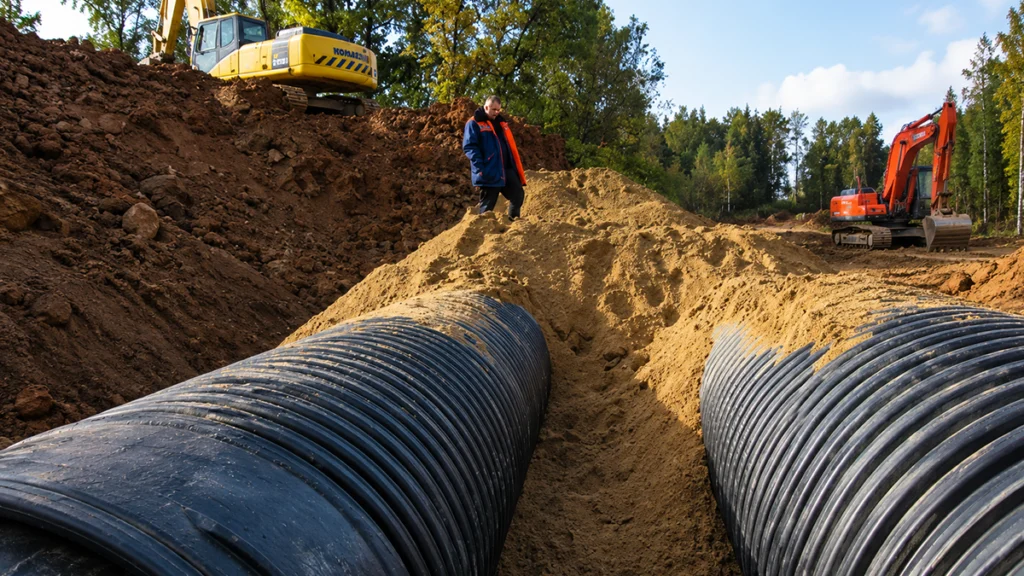
Because HDPE relies on flexibility, its survival underground depends directly on how the HDPE pipe interacts with the surrounding soil. Installation crews must follow strict procedures, heavily guided by ASTM D2321 (Standard Practice for Underground Installation of Thermoplastic polyethylene Pipe for Sewers).
1. Trench Excavation: Dig the trench wide enough. Your crew needs ample room to safely drop in and thoroughly compact backfill material right around the haunches (the critical lower half) of the HDPE pipe.
2. Trench Bedding: Lay the sewerage pipe on top of Class I or Class II granular material. You must compact this bedding to ensure uniform longitudinal support. Skip this, and you invite sagging and dangerous stress concentrations.
3. Laying and Jointing: Solid wall drainage pipes demand precise, calibrated heat fusion (via butt fusion or electrofusion machines) to forge seamless connections. DWC pipes, however, use simple push-on bell and spigot joints fitted with elastomeric rubber gaskets. Always verify alignment before making the joint.
4. Backfill and Compaction: Make no mistake—this is the most critical phase. Crews must place backfill in controlled lifts, compacting each layer to 90-95% Standard Proctor Density. This intense compaction forms a structural soil envelope. The soil actually shares the surface load with the HDPE pipe for sewerage and drainage , actively preventing deflection and deformation.
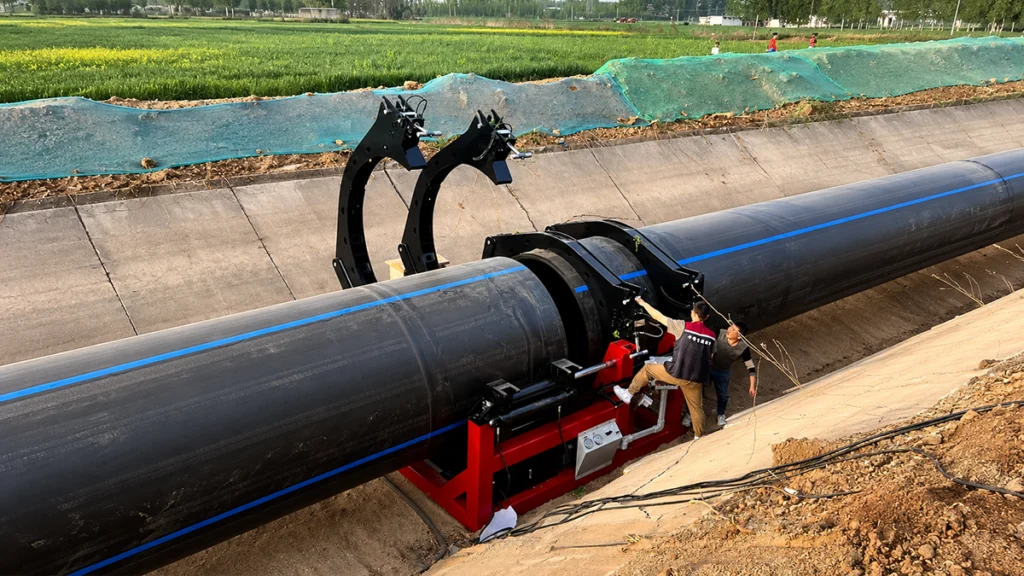
Smart procurement managers know that evaluating HDPE pipe pricing requires looking past the simple per-meter sticker price. Several moving parts dictate the final project cost.
Choosing the right supplier for a municipal drainage project removes the threat of costly delays and premature HDPE pipe failure. Procurement teams should draw a hard line and mandate the following criteria:
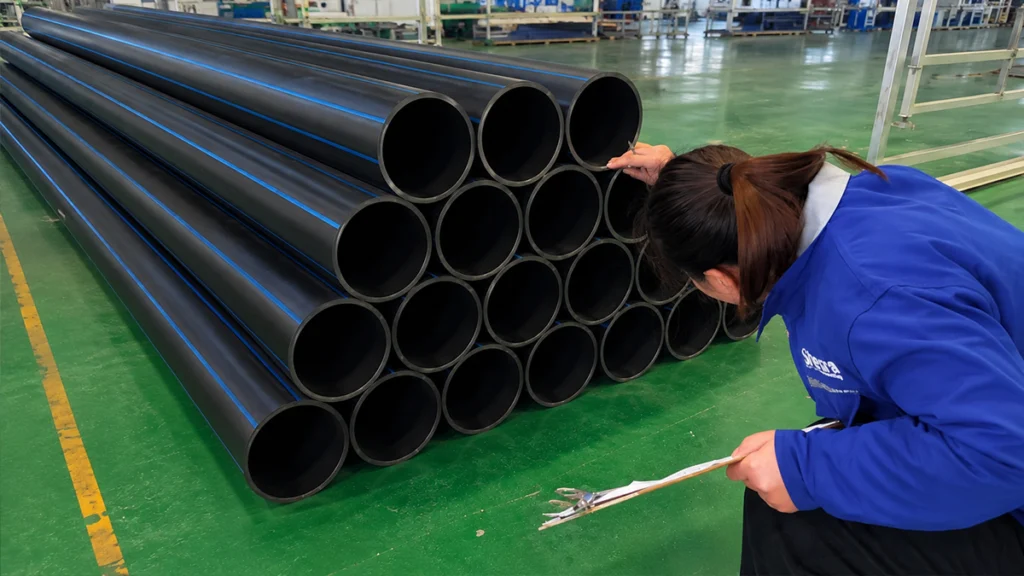
Before signing off on those final procurement documents, run through this checklist. It ensures every technical and commercial detail perfectly aligns with your underground project’s reality:
1. Identify Flow Type: Is this a gravity flow system (specify DWC/Structured-wall) or a pressurized force main (specify Solid wall)?
2. Determine Sizing: Crunch the numbers for the required Inside Diameter (ID) or Outside Diameter (OD) using target flow volumes and HDPE’s ultra-efficient Manning’s $n$ of 0.009.
3. Specify Load Rating: Pin down the right SN rating (SN4/SN8/SN16) for gravity lines, or the correct SDR/PN rating for pressure lines. Base this strictly on burial depth, soil type, and expected traffic weights.
4. Verify Standards: Write it into the contract—mandate absolute compliance with ISO 4427, EN 12201, or ASTM F714.
5. Plan Installation: Lock in the jointing method (butt fusion vs. gasketed) and legally bind the installation contractor to follow ASTM D2321 backfill and compaction standards.
6. Supplier Verification: Collect those ISO certificates, demand comprehensive QC test reports, and secure a unified quote covering HDPE pipes,HDPE fittings, and freight logistics.
Q1: Is HDPE pipe suitable for underground sewerage systems?
Absolutely. HDPE represents one of the most reliable choices for underground sewerage. When heat-fused, it creates a 100% leak-proof system that shuts down both groundwater infiltration and sewage exfiltration. Better yet, it is entirely immune to the hydrogen sulfide (H2S) gas that aggressively eats away at traditional concrete sewer lines, easily securing a 50 to 100-year service life.
Q2: What SN rating is needed for buried HDPE drainage pipe?
Your SN (Nominal Stiffness) rating hinges on how deep the polyethylene pipe goes and what drives over it. SN4 (4 kN/m²) works perfectly for standard burials facing light surface traffic. Step up to SN8 (8 kN/m²) for municipal projects dealing with deep trenches and heavy vehicular loads. Reserve SN16 for the most extreme load conditions.
Q3: What is the difference between solid wall and corrugated HDPE sewer pipe?
Solid wall HDPE is a dense, single-layer drainage pipe built to hold back intense internal pressure, making it the definitive choice for sewer force mains. Corrugated HDPE (DWC), on the other hand, uses a ribbed outer wall to fight off heavy soil loads (ring stiffness) while keeping a smooth inner wall for water flow. This makes DWC the most cost-effective solution for gravity drainage.
Q4: How long does HDPE pipe last in sewerage and drainage applications?
If you specify it correctly and follow strict installation standards like ASTM D2321, buried HDPE pipe delivers an engineered design life of 50 to 100 years. Its natural resistance to chemical corrosion, heavy abrasion, and biological buildup plays a massive role in that longevity.
Q5: Is HDPE better than PVC for underground drainage projects?
In dynamic underground environments, HDPE generally takes the lead. It possesses incredible flexibility, allowing it to absorb seismic activity and ground shifts without snapping. PVC pipe is much stiffer and prone to turning brittle in freezing temperatures. Plus, HDPE’s heat-fused joints provide vastly superior long-term leak protection compared to the gasketed or solvent-welded joints found on PVC.
Q6: What factors affect the price of HDPE pipe for sewerage projects?
Pricing fluctuates based on raw material grade (PE100 versus PE80),HDPE pipe diameter, wall thickness (SDR), or stiffness rating (SN). Global petrochemical resin costs also play a major role. Beyond the HEPD pipe for sewerage and drainage itself, your final cost will depend on order volume, factory production capacity, necessary fittings, and export freight logistics.
Q7: How should HDPE drainage pipe be installed underground?
Contractors must follow ASTM D2321. The trench requires a stable, heavily compacted granular bedding (Class I or II). Because HDPE flexes, crews must place side-fill and backfill in controlled lifts, compacting them to 90-95% Standard Proctor Density. This creates a rigid structural soil envelope that physically stops the HDPE pipe from deflecting under pressure.
Q8: What should buyers check before choosing an HDPE pipe supplier?
Always verify production capacity first—look for output exceeding 100,000 tons annually to guarantee your project will not face delays. Insist on ISO 9001 and ISO 14001 certifications. Finally, demand batch testing reports for Melt Flow Rate and ring stiffness, and confirm the supplier can deliver a complete ecosystem of HDPE pipes, fittings, and welding machines.
Getting the right HDPE pipe for an underground project boils down to a strict evaluation of fluid dynamics, soil mechanics, and structural load demands. By tapping into the unique strengths of high-density polyethylene—specifically its absolute immunity to H2S corrosion, brilliant hydraulic efficiency, and seamless joint integrity—cities and industrial plants can easily secure an infrastructure lifespan of 50 to 100 years. True success on the job site relies on matching the right HDPE pipe structure (Solid wall versus DWC) to the application and nailing down the exact load parameters (SDR or SN ratings). Just as importantly, it requires strict adherence to ASTM D2321 installation protocols and partnering with a manufacturer that actually has the industrial scale to deliver certified, consistent quality.