Address
Zhengzhou, Henan, China
Work Hours
Monday to Friday: 7AM - 7PM
Weekend: 10AM - 5PM
Address
Zhengzhou, Henan, China
Work Hours
Monday to Friday: 7AM - 7PM
Weekend: 10AM - 5PM

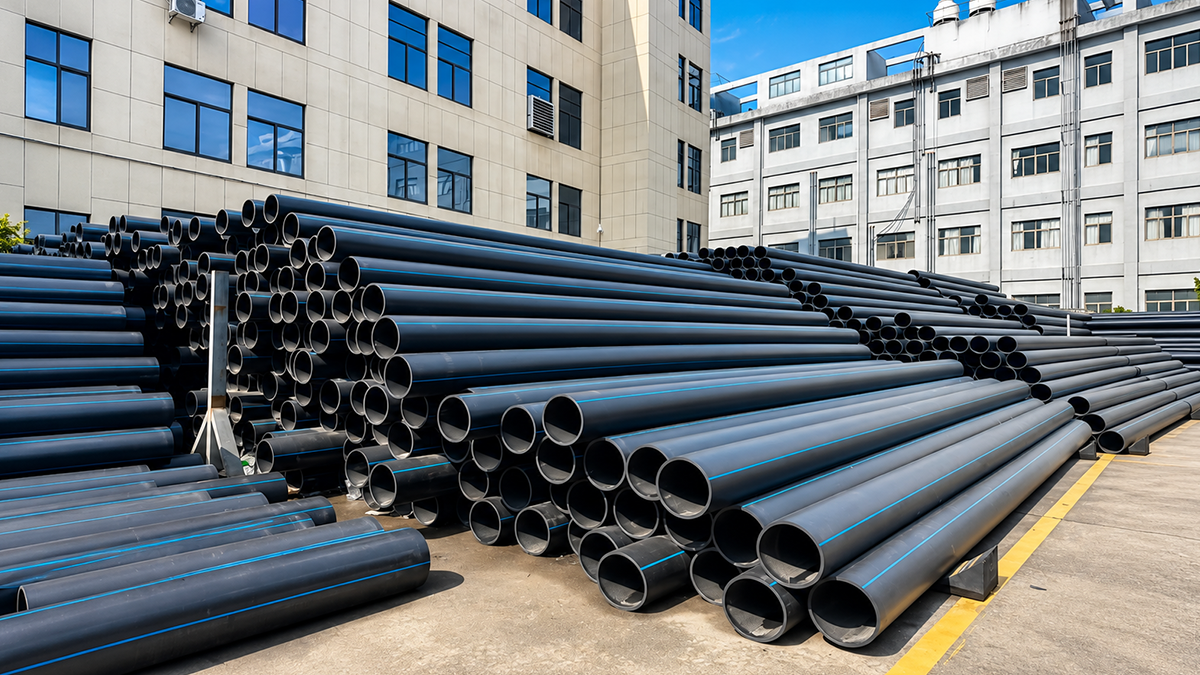
HDPE Pipe Manufacturer in China guide for buyers comparing suppliers, specifications, pricing factors, quality standards, and export support to choose reliable pipes for B2B projects.
Sourcing industrial piping demands a partner who can consistently deliver top-tier quality at scale, strictly adhering to international standards. JQ PIPE stands out as a dependable manufacturer of high-density polyethylene pipelines in China, serving sectors like municipal water supply, agricultural irrigation, industrial drainage, and major infrastructure development.
Our operations span a sprawling 200-acre facility, pushing out over 100,000 tons of product annually. Because we run a factory-direct model, buyers avoid unnecessary trading markups. At the same time, this setup allows us to maintain tight control over every phase of production. International clients gain access to tailored specifications, full OEM/ODM capabilities, and a complete lineup of fabricated fittings. Built for global trade, we ensure safe transit through export-grade packaging, streamlined shipping logistics, and strict sample availability so you can verify quality before mass production begins.
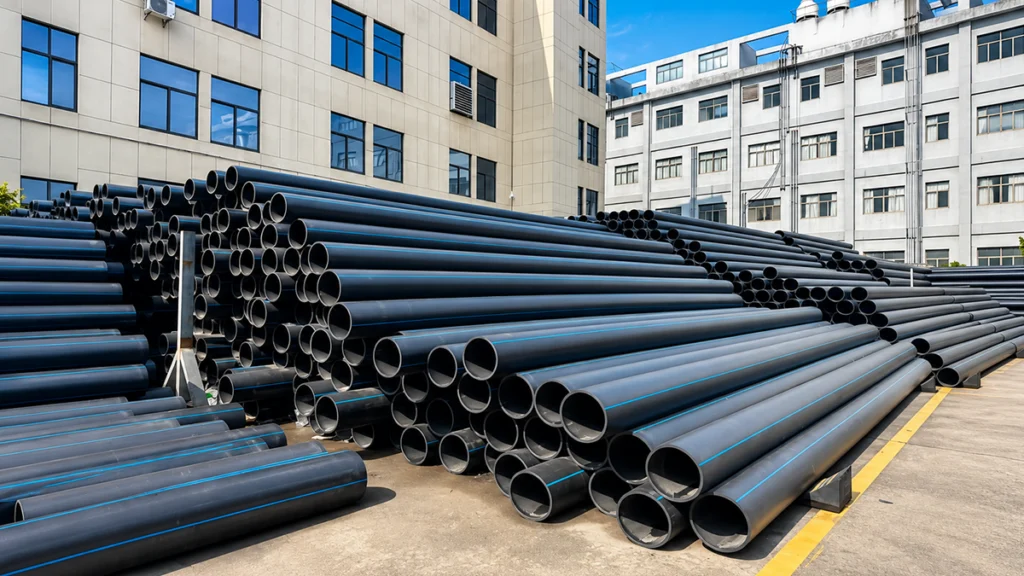
Civil and industrial engineers heavily rely on High-Density Polyethylene (HDPE)—a rugged yet flexible thermoplastic polymer. Thanks to an outstanding strength-to-density ratio, these HDPE pipes easily outperform conventional metal or concrete alternatives.
Weight plays a huge role in this shift. HDPE is roughly one-eighth the weight of standard steel. That drastic reduction cuts down on heavy lifting equipment, simplifies transport logistics, and slashes installation expenses. When operated under normal conditions, these HDPE pipelines provide a maintenance-free lifespan exceeding half a century. They do not rust. They resist harsh chemicals. Furthermore, the thermal fusion jointing process creates a leak-proof, continuous monolithic system.
Global demand reflects these benefits. Valued at USD 24.44 billion in 2025, the worldwide HDPE pipe market expects to hit USD 37.93 billion by 2034. This steady 5.0% CAGR stems directly from massive investments in agricultural infrastructure and municipal water modernization.
Securing the right China-based supplier means finding a manufacturer equipped with a broad, application-focused product lineup. JQ PIPE produces multiple distinct systems built to handle diverse environmental conditions and pressure loads.
Procurement teams need to lock down precise engineering metrics prior to placing a polyethylene pipeline order. Guessing or miscalculating dimensions and pressure ratings is a fast track to catastrophic system failure.
| Parameter | Meaning | Why It Matters | Buyer Action |
|---|---|---|---|
| Diameter (DN/OD) | Nominal Diameter / Outside Diameter (DN16 to DN3000). | Dictates the exact volumetric flow capacity of the system. | Align the OD perfectly with the project's hydraulic flow demands. |
| Material Grade | PE80 vs. PE100. PE100 features a higher density and an 8MPa design stress at 20°C. | PE100 withstands greater pressure using thinner walls. PE80 works best for low-pressure agricultural irrigation. | Request PE100 for municipal gas/water networks; select PE80 for general farming use. |
| SDR | Standard Dimension Ratio (Outside Diameter ÷ Wall Thickness). | A lower SDR translates to a thicker wall, yielding stronger pressure resistance. | Specify SDR11 for high-pressure needs (PN16) and SDR17 for standard applications (PN10). |
| PN Rating | Nominal Pressure (e.g., PN10, PN16, PN25). | Represents the absolute maximum continuous working pressure in bars. | Verify that the PN rating comfortably exceeds your system's peak operating pressure. |
| Standards | ISO 4427, EN 12201, ASTM F714, GB/T13663. | Ensures the material complies with strict global quality and safety benchmarks. | Always demand factory test reports and compliance certificates matching your required standard. |
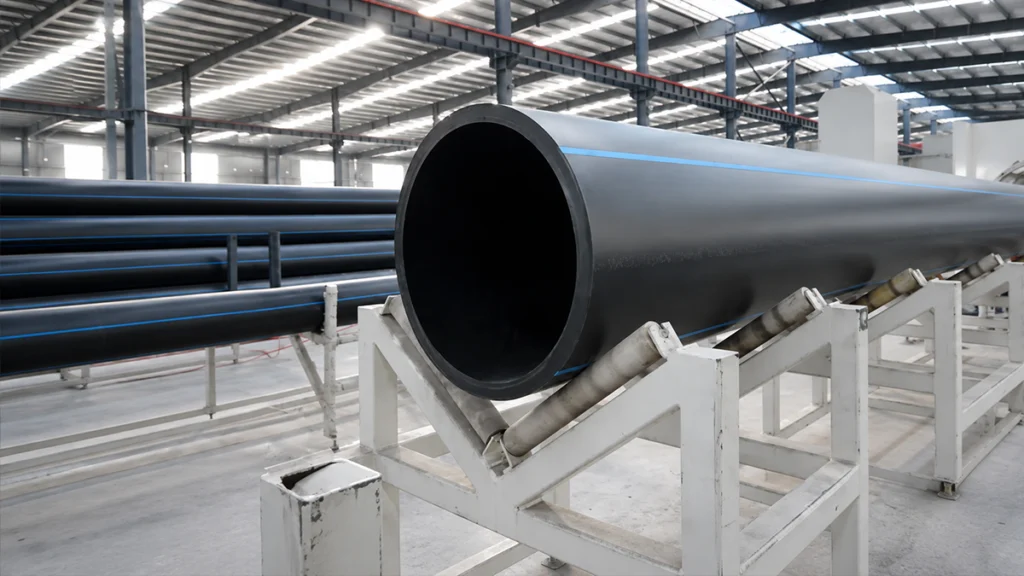
An HDPE pipe’s structural integrity hinges entirely on strict quality control and exact manufacturing protocols. Any dependable Chinese factory handling custom specifications will strictly adhere to a step-by-step extrusion methodology.
1. Raw Material Preparation & Drying: We start with 100% virgin polyethylene resin pellets, drying them thoroughly to extract moisture. This prevents structural voids or weak spots in the final product.
2. Plasticization & Extrusion: The dried resin melts inside an advanced extruder. Controlling the temperature precisely is non-negotiable here; it prevents material degradation and guarantees a perfectly uniform melt.
3. Vacuum Cooling and Sizing: The hot, molten plastic passes through a sizing die straight into a vacuum cooling tank. This rapid cooling locks the HDPE into its precise final dimensions and completely stops warping.
4. Marking and Printing: Automated inkjet systems run along the HDPE pipe, stamping the brand, production date, SDR, PN rating, and manufacturing standard to ensure full traceability.
5. Pipe Cutting: The continuous line is then sliced into standard shipping lengths (typically 5.8m or 11.8m to fit shipping containers) or wound into coils for smaller diameters.
Validating performance requires intense testing. The Hydrostatic Pressure Test (EN 921 / ISO 1167) checks if the HDPE pipe can withstand extreme water pressure without rupturing. Meanwhile, the Melt Flow Rate (MFR) Test verifies the consistency of the resin. Finally, ESCR & SCG (Environmental Stress Crack Resistance and Slow Crack Growth) evaluations ensure the HDPE pipe will survive long-term ground shifting and sudden pressure spikes.
Highly versatile, HDPE pipes are engineered to tackle unique infrastructure hurdles across a wide spectrum of industries.
In Municipal Water Supply, these HDPE pipes are rapidly replacing deteriorating PVC and steel networks. By pairing the high pressure tolerance of PE100 resin with leak-proof thermal fused joints, municipalities can effectively eliminate the massive water loss typically caused by failing mechanical connections.
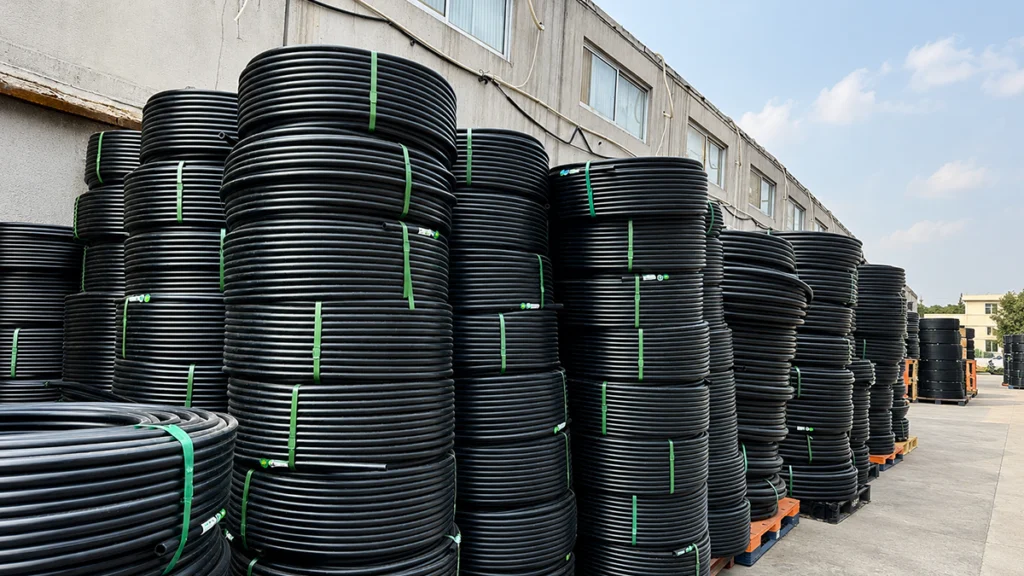
For Irrigation & Agriculture, manufacturers often provide smaller diameter HDPE pipes spooled into massive continuous coils reaching up to 2,000 feet. Fewer joints mean faster installation times, ensuring seamless water distribution across sprawling agricultural fields.
When it comes to Drainage & Sewage, Double-Wall Corrugated (DWC) pipes (rated SN4 or SN8) deliver the high ring stiffness needed to bear heavy soil loads. Simultaneously, HDPE’s inherent corrosion resistance easily shrugs off harsh wastewater chemicals and destructive hydrogen sulfide gas.
In Industrial & Mining sectors, abrasion resistance is paramount. HDPE stands out as the ultimate conduit for transporting highly corrosive industrial fluids, mine tailings, and abrasive slurries.
Figuring out how to select the right supplier in China means cutting through the marketing fluff and examining hard, verifiable industrial capabilities. Procurement teams need to scrutinize supply chain transparency, certification authenticity, and sheer production volume.
Start by verifying capacity. Seek out high-volume producers who process north of 100,000 tons every year. This guarantees the facility can absorb massive infrastructure orders without triggering project delays. Next, audit their certifications. A legitimate supplier will hold CE, SGS, and ISO 9001 (Quality Management) credentials, alongside product-specific compliance like ASTM F714 or ISO 4427. Crucially, they must possess the in-house testing equipment required to generate batch-specific MFR and hydrostatic test reports.
| Criteria | Factory Direct Manufacturer (e.g., JQ PIPE) | Trading Company | Local Distributor |
|---|---|---|---|
| Pricing | Lowest (Zero middleman markups) | Medium (Sourcing markup applied) | Highest (Bakes in import and warehousing costs) |
| Customization | Full (Color, Length, SDR, Diameter) | Restricted by their factory ties | None (Strictly off-the-shelf stock) |
| Traceability | High (Direct access to factory test data) | Low (Frequently hides the actual producer) | Medium (Reliant on the importer's paperwork) |
| Lead Time | 7-15 days for fresh production | 15-30 days (Factory sourcing delays) | Immediate (Assuming stock is available) |
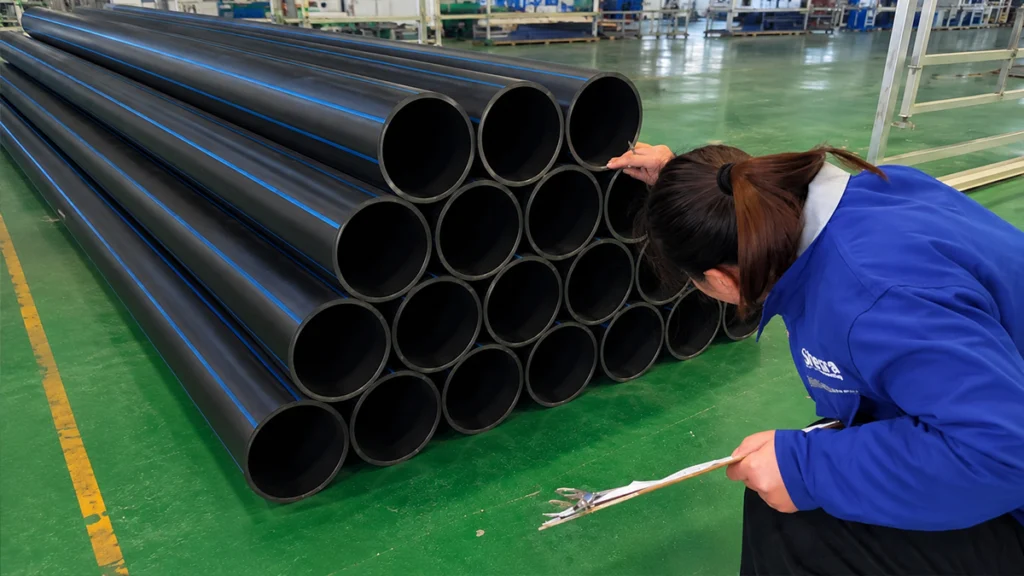
Grasping MOQ and pricing structures from a Chinese factory involves a close look at raw material markets and shipping logistics. Prices are never static. They shift alongside the global market cost of 100% virgin polyethylene resin.
Your final quote heavily depends on the specific PE grade (PE80 or PE100) and the targeted SDR/PN rating. Dropping the SDR gives you a thicker wall. That requires more resin per meter, which inevitably drives up the unit cost. Naturally, bulk order volumes will help compress that final price point.
Typical production lead times hover between 7 and 15 days. As a general rule of thumb, processing and loading a 20ft container takes roughly 10 to 15 days, whereas a 40ft container requires 25 to 30 days. Minimum Order Quantities (MOQ) usually remain flexible depending on the scope of your project, and trustworthy factories will gladly supply samples for pre-order validation.
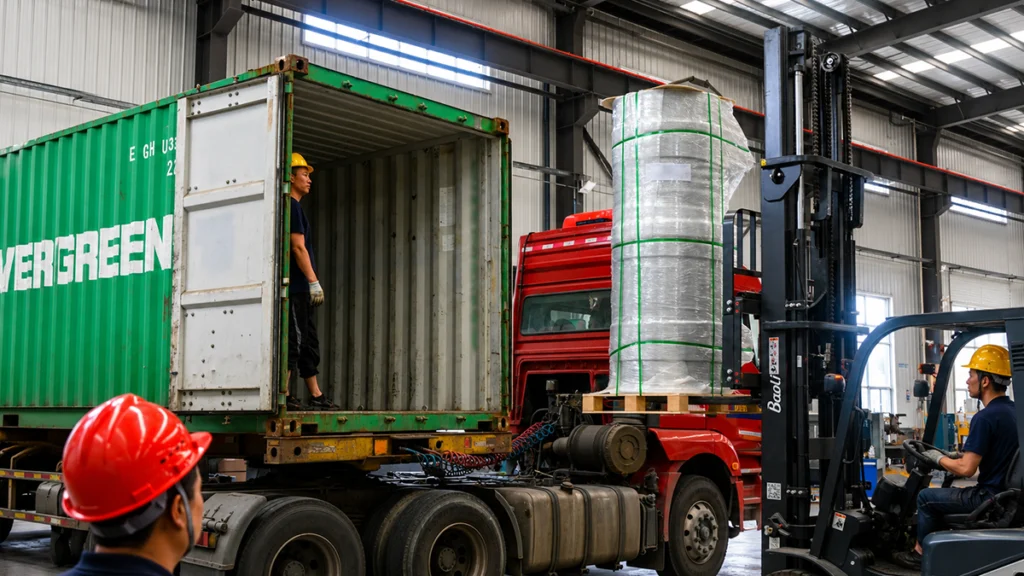
Exporting these materials demands smart container optimization. To maximize space and reduce freight costs, smaller HDPE pipes are nested inside larger ones. Specialized export packaging is then applied to prevent any structural deformation during the long sea voyage.
Sourcing errors in the HDPE pipeline sector don’t just cause delays; they trigger catastrophic infrastructure failures. Buyers have to stay hyper-vigilant against a few frequent pitfalls.
The absolute most dangerous error is mismatching the SDR and PN ratings. Trying to cut costs by deploying a high-SDR (thin-walled) pipe in a high-pressure municipal grid is a guaranteed recipe for burst HDPE pipelines. Adulterated material is another massive red flag. Snagging the cheapest pipe available usually means the manufacturer cut corners using recycled plastics rather than 100% virgin PE100 resin. That completely destroys the polythylene pipe’s structural integrity and erases its 50-year lifespan.
Additionally, buyers often ignore welding compatibility. Sourcing fittings and HDPE pipes with mismatched Melt Flow Rates (MFR) creates weak thermal fusion joints that will eventually leak. Finally, never skip the paperwork. Failing to secure ISO 4427 compliance certificates and factory hydrostatic test reports prior to shipping leaves you entirely liable for unverified, potentially faulty materials.
Pulling off a flawless HDPE pipeline project demands perfect harmony between installation equipment, fittings, and the core materials. JQ PIPE delivers a true end-to-end solution. We supply pressure pipes spanning DN16 to DN3000, pair them with exact-match butt fusion and electrofusion fittings, and even provide the required welding machinery. Sourcing everything under one roof entirely eliminates the risk of component incompatibility.
Running a sprawling 200-acre plant with an annual capacity topping 100,000 tons means we deliver on both speed and scale, maintaining standard lead times of just 7 to 15 days. By merging factory-direct pricing with rigorous hydrostatic quality control, tailored specification support, and export-ready packaging, JQ PIPE dramatically lowers the procurement risks for engineering contractors worldwide.
Q1: How do I verify if an HDPE pipe manufacturer in China is reliable?
Look closely at their equipment footprint, factory dimensions, and actual production capacity. A trustworthy manufacturer won’t hesitate to hand over CE, ISO 4427, and ISO 9001 certifications. You should also insist on seeing batch-specific Melt Flow Rate (MFR) and hydrostatic pressure test results. Top-tier factory-direct suppliers will gladly accommodate third-party SGS inspections or offer comprehensive video tours before any product ships.
Q2: What standards should HDPE pipes meet for water supply projects?
Municipal and potable water systems require strict adherence to ISO 4427. If you are operating in Europe, EN 12201 is the benchmark, while GB/T13663 governs the Chinese market. These stringent standards dictate exact parameters for thermal stability, hydrostatic strength, material density, and dimensions to guarantee public safety.
Q3: What is the difference between PE80 and PE100 HDPE pipes?
PE100 carries a higher molecular weight and density compared to PE80. Because it boasts a superior design stress (8MPa at 20°C), PE100 can handle intense internal pressure even with a thinner wall. This makes PE100 the go-to choice for high-pressure gas and municipal water, while PE80 is typically reserved for lower-pressure agricultural irrigation.
Q4: How are HDPE pipe prices calculated by Chinese factories?
Pricing is anchored to the live market cost of 100% virgin polyethylene resin, multiplied by the HDPE pipe’s specific weight per meter. That weight depends entirely on the wall thickness (SDR/PN rating) and the diameter. Thicker walls demand more raw resin, which pushes the price up. Export packaging requirements and total order volume also heavily influence your final quote.
Q5: What information should I provide to get an accurate HDPE pipe quotation?
To lock in a precise quote, supply the exact Outside Diameter (OD/DN), the Nominal Pressure (PN) rating, the required SDR or Wall Thickness, and the material grade (PE100 or PE80). You also need to detail the intended application, color or striping preferences, total length needed, and your final destination port so freight can be accurately calculated.
Q6: Can HDPE pipes be customized by diameter, SDR, pressure rating, and color?
Absolutely. Major manufacturers run highly versatile, high-speed extrusion lines capable of dialing in all of these variables. HDPE Pipes can be extruded to hit exact PN and SDR ratings based on your hydraulic models. Color coding is also standard practice—such as yellow stripes for gas lines or black polythylene pipes with blue stripes for water distribution.
Q7: What are the common risks when importing HDPE pipes from China?
The biggest threat is ending up with HDPE pipes extruded from recycled resin instead of virgin PE100, which destroys the pressure rating. Other frequent risks include poorly optimized container loading that deforms the HDPE pipe in transit, incorrect SDR specs resulting in fragile walls, and sourcing fittings and polythylene pipes with clashing Melt Flow Rates.
Q8: How long does it usually take to manufacture and ship HDPE pipes from China?
Depending on the order volume and pipe diameter, standard manufacturing takes between 7 and 15 days. Preparing and loading a standard 20ft container generally requires 10 to 15 days, while a 40ft container pushes that to 25 or 30 days. Ocean freight transit times vary by destination but usually span 15 to 40 days.
Sourcing industrial HDPE pipeline systems demands strict oversight of supplier capabilities, material integrity, and precise engineering metrics. The backbone of any successful infrastructure project lies in perfectly aligning PE100/PE80 material grades, PN ratings, and SDR metrics with the exact environmental pressures they will face. When procurement teams prioritize ISO 4427 compliance, demand hard data like hydrostatic test reports, and align with a high-capacity, factory-direct manufacturer, they effectively neutralize supply chain bottlenecks. This proactive approach prevents devastating specification errors and guarantees the HDPE pipeline will easily achieve its 50-year operational lifespan.