Address
Zhengzhou, Henan, China
Work Hours
Monday to Friday: 7AM - 7PM
Weekend: 10AM - 5PM
Address
Zhengzhou, Henan, China
Work Hours
Monday to Friday: 7AM - 7PM
Weekend: 10AM - 5PM

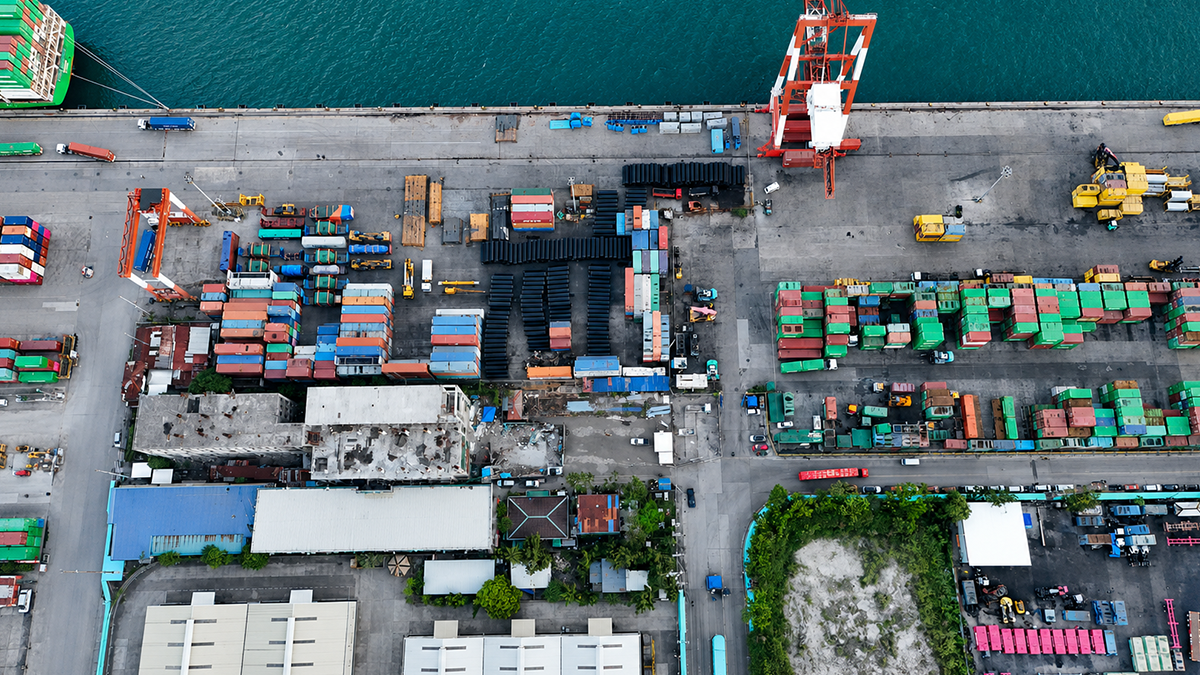
HDPE pipe price depends on diameter, SDR, pressure rating, resin grade, and order volume. This guide breaks down cost per meter, hidden expenses, MOQ and freight impact, and gives B2B buyers a clear RFQ checklist to obtain accurate, comparable HDPE pipe quotes in 2026.
For 2026, you’ll generally see HDPE pipe prices sitting anywhere between USD 0.15 and USD 280.00 per meter. The final number heavily depends on two main factors: the outer diameter (ranging from DN20 up to DN1200) and the specific pressure rating (PN6 through PN25). Now that raw material markets are finding some stability, buyers can rely on fairly predictable pricing brackets tied to standard dimensions. Thinking about upgrading your pipeline from PN10 to PN16? Plan for a 15–20% bump in the per-meter cost. That extra expense simply covers the thicker walls needed to safely manage higher internal pressures.
To give your project estimates a solid starting point, the table below breaks down typical 2026 factory-direct prices for standard PN10 (SDR17) water pipes.
| Outer Diameter (OD/DN) | Typical Price per Meter (USD, PN10) | Scaling Notes & Multipliers |
|---|---|---|
| DN20 | $0.15 – $0.25 | Base entry point for small-scale irrigation. |
| DN63 | $0.80 – $1.20 | Standard for secondary water distribution. |
| DN110 | $1.80 – $2.50 | Typically 1.8–2.2x the cost of DN63. |
| DN315 | $6.80 – $8.60 | Typically 3.0–3.5x the cost of DN110. |
| DN600 | $45.00 – $60.00 | High material volume; requires heavy-duty extrusion. |
| DN1200 | $200.00 – $280.00 | Massive municipal infrastructure applications. |
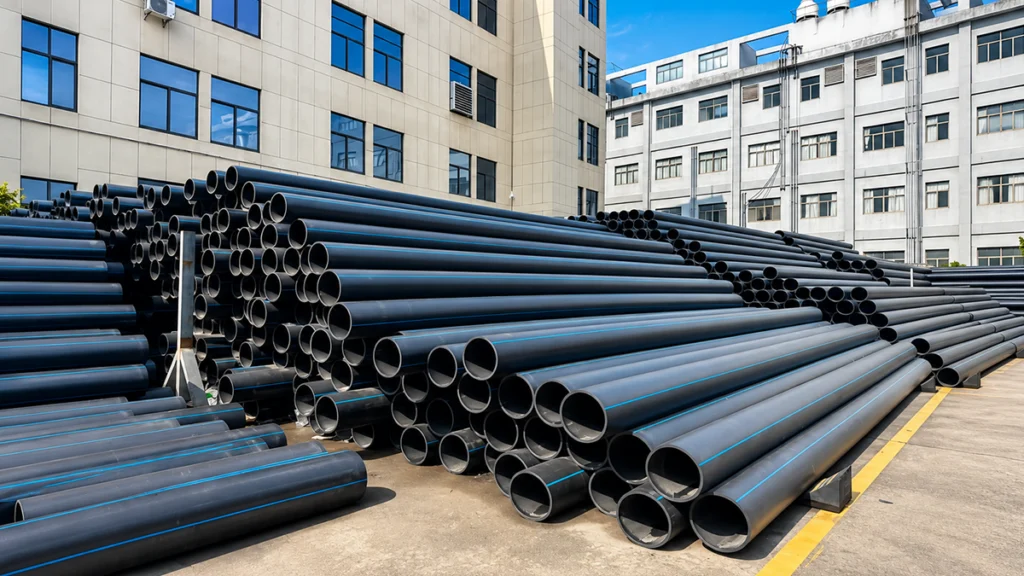
Seven distinct variables dictate the final price tag of an PE pipe. These include the grade of the raw material, outer diameter, wall thickness (SDR/PN), manufacturing overhead, broader market supply and demand, necessary certifications, and any specific custom requests. When procurement teams grasp how these elements interact, they can evaluate supplier quotes much more accurately and spot genuine opportunities to trim costs.
1. Raw Material Grade: Polyethylene pipe resin accounts for a massive 70-80% of the finished pipe’s cost. Naturally, high-purity virgin resin carries a premium compared to recycled blends.
2. Diameter (OD/DN): Pushing up the diameter doesn’t just use slightly more plastic; it requires exponentially more raw material and forces the extrusion machinery to run at slower speeds.
3. Wall Thickness (SDR/PN): A lower Standard Dimension Ratio (SDR) translates to a thicker pipe wall. This gives you a higher pressure rating (PN) but brings a proportionally higher material cost.
4. Manufacturing Costs: The baseline per-meter rate absorbs the energy needed for extrusion, compensation for skilled labor, and general factory overhead.
5. Market Dynamics: The global HDPE pipe market is massive—projected at USD 24.44 billion in 2025—and expanding at a 5-7% CAGR. Availability of resin and spot pricing directly mirror global petrochemical supply chain shifts.
6. Certifications: Meeting rigorous standards like ISO 4427, CE, AWWA, or SGS isn’t free. The testing and compliance processes add to the upfront cost, though they essentially guarantee long-term performance.
7. Customization: Need a non-standard cut length or specific color striping (like blue for water lines or yellow for gas)? Expect a slight price bump, as the factory has to recalibrate the production line to accommodate the change.
| Material Grade | Price Index Multiplier | Primary Use Case |
|---|---|---|
| PE80 | Base Price (1.0x) | Standard for low-pressure water and agricultural irrigation. |
| PE100 | 1.10x – 1.15x | Higher density, thinner walls for the same pressure; standard municipal water. |
| PE100-RC | 1.20x – 1.30x | High resistance to slow crack growth; used for trenchless installation and mining. |
Looking at the price per kilogram tells you exactly what you are paying for the raw plastic. On the flip side, the price per meter is what you actually need to calculate the total length of your project. Fortunately, you can easily bridge the gap between the two using a basic weight formula. Smart B2B buyers always check the per-kilogram rate first to confirm the manufacturer isn’t padding the resin costs. Once that checks out, they switch back to the per-meter price to map out the overall project budget.
Throughout 2025 and 2026, global wholesale prices for HDPE pipe generally hover between USD 1.10 and USD 1.40 per kg. This fluctuates slightly based on the specific resin index and broader market movements. Want to turn a factory’s per-kilogram quote into a usable per-meter figure? Grab a calculator and use this industry-standard formula (keeping your measurements in millimeters):
`Weight per meter (kg/m) = (Outer Diameter – Wall Thickness) × Wall Thickness × 0.00314`
Worked Example:
Let’s say you need a DN110 SDR17 (PN10) pipe. It has a standard wall thickness of 6.6mm, and the factory quotes the raw material at $1.20/kg.
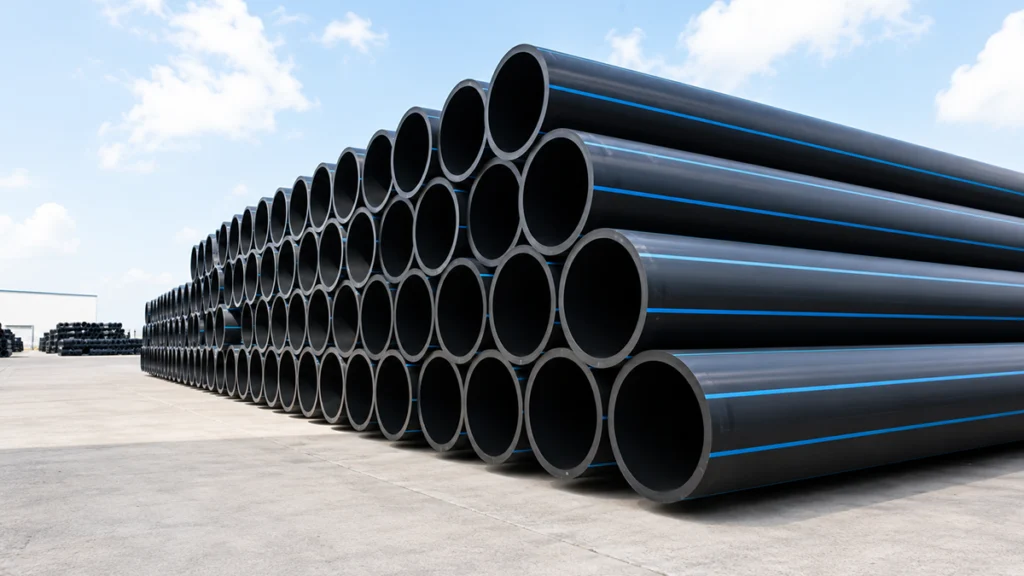
You won’t pay the same price for a HDPE drainage pipe as you would for a high-pressure gas line, even if they look similar on the outside. Gas and mining applications demand specialized resins (like PE100-RC) and must pass far stricter certification protocols than standard water pipes. Engineering a pipe to handle high-pressure gas distribution involves completely different manufacturing tolerances than producing a simple gravity drainage tube.
Water Supply Pipes
Standard municipal water networks generally call for ISO 4427 or AWWA C906 certification. The sweet spot for specifications is usually PE100 at PN10-PN16. For common sizes like DN63 through DN110, you can expect prices to range between $0.59 and $2.50/m.
Gas Distribution Pipes
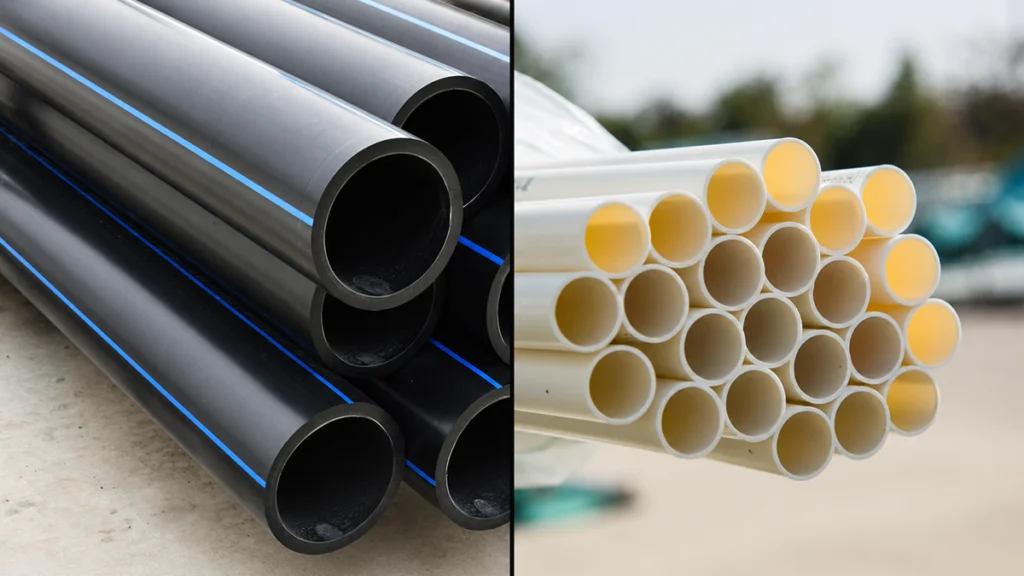
Safety is paramount here, which drives up the cost. HDPE Pipe For Natural Gas & Oil must adhere to strict standards such as ISO 4437 or EN 1555. They require distinct yellow striping and rely on premium PE100 or PE80 resin at SDR11. The intensive testing required to meet these benchmarks naturally elevates the baseline price.
Mining & Slurry Pipes
These represent the highest tier of solid-wall piping costs.HDPE pipe Mining environments are notoriously abrasive. To survive, these pipes use PE100-RC resin and feature exceptionally thick walls, usually ranging from SDR7.4 to SDR9.
Drainage & Sewage Pipes
If you are dealing with gravity-flow applications, there is a massive opportunity to slash material costs. Instead of solid walls, buyers should utilize Double-Wall Corrugated (DWC) pipe. A DN600 DWC pipe (SN4/SN8) typically costs around $15.00–$25.00/m. Compare that to a solid-wall DN600 pipe, which easily exceeds $45.00/m. The corrugated geometry provides excellent ring stiffness while consuming a fraction of the raw plastic.
| Application | Recommended Spec | Required Certification | Relative Cost Profile |
|---|---|---|---|
| Water Supply | PE100, PN10-PN16 | ISO 4427, AWWA C906 | Moderate (Baseline) |
| Gas Distribution | PE100, SDR11 | ISO 4437, EN 1555 | High |
| Mining & Slurry | PE100-RC, SDR7.4-9 | ISO 4427, specialized | Very High |
| Gravity Drainage | DWC SN4 / SN8 | EN 13476, GB/T 19472 | Low (Highly efficient) |
At first glance, the initial invoice for HDPE might look fairly similar to PVC or Ductile Iron. Look closer at a 50-year timeline, however, and HDPE consistently delivers total lifecycle costs that are 40-45% lower. This dramatic savings stems from rapid installation times and a complete lack of corrosion. Procurement teams that make decisions based entirely on the upfront purchase price often end up saddling their organizations with massive maintenance and replacement bills decades later.
When HDPE is NOT Optimal:
HDPE isn’t a magic bullet for every single project. If you are building an indoor high-temperature hot water system, polyethylene isn’t the right fit because it loses internal pressure capacity under sustained high heat. For those applications, PPR pipe (PN20/PN25) is the correct engineering choice.
| Material | Upfront Price/m | Lifespan | Installation Cost | 50-Year Total Cost |
|---|---|---|---|---|
| HDPE | Moderate | 50–100 Years | Low (Heat Fusion) | Lowest |
| PVC | Low | 25–50 Years | Low (Solvent/Gasket) | Moderate |
| Ductile Iron | High | 50–75 Years | High (Heavy machinery) | High |
| Steel | Very High | 20–50 Years | Very High (Welding/Coating) | Highest |
Looking solely at the per-meter quote is a dangerous game; it represents just a fraction of your actual landed cost. Smart buyers meticulously account for freight, customs duties, necessary fittings, and fusion equipment. If you try to compare a raw factory quote against a fully delivered local estimate without standardizing the shipping terms, you are practically guaranteeing a budget overrun.
When reviewing a quotation, break down these hidden cost layers:
Ordering less than the Minimum Order Quantity (MOQ) is a surefire way to drive up your unit price. Conversely, securing favorable payment terms and rapid lead times can significantly reduce your project’s financing costs. Manufacturers rely heavily on economies of scale. Stopping a massive, high-speed extrusion line just to run a tiny custom batch creates material waste and requires recalibration. Naturally, the factory passes those inefficiencies directly onto the buyer.
Minimum Order Quantity (MOQ)
You will typically see MOQs ranging from 100 to 500 meters, largely dictated by the plastic pipe’s diameter. Massive HDPE pipes (like DN600) require shorter minimum runs, while smaller profiles (like DN32) demand much longer minimums. Want the absolute best wholesale rate per meter? Commit to ordering full container loads.
Lead Time
For substantial orders, the standard industry wait time sits between 30 and 60 days. That said, massive operations like JINQUAN, which run upwards of 40 high-speed extrusion lines, can aggressively cut that down to 7-15 days. Getting the material to your site faster directly reduces the interest you pay on project financing.
Payment Terms
In international trade, the standard arrangement is T/T (Telegraphic Transfer) featuring a 30% deposit upfront and the remaining 70% cleared before the shipment leaves the port. However, for massive government contracts or municipal infrastructure upgrades, an L/C (Letter of Credit) is often the preferred method to guarantee the transaction safely.
Shipping Optimization
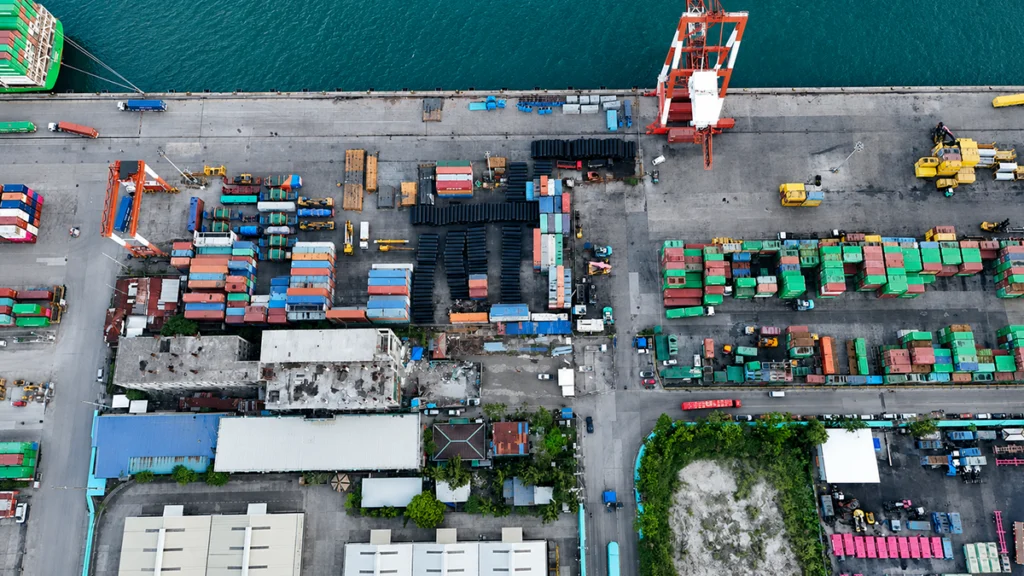
To squeeze the most value out of your freight costs and lower the landed price per meter, factories cut pe pipes strategically. They usually extrude them to exactly 5.8 meters to slide perfectly into standard 20ft containers, or 11.8 meters to maximize the space inside a 40ft High Cube (HQ) container.
Want to skip the endless email chains and avoid wildly inaccurate pricing? Submit a highly structured Request for Quotation (RFQ) right out of the gate. If you send a vague message saying, “Please send me your price list,” you’ll get a generic estimate that is entirely useless for strict project budgeting. You need to define the exact diameter, pressure rating, and shipping incoterm upfront.
Keep this 10-point checklist handy to ensure suppliers hand over an exact, binding quotation on their very first reply:
1. Outer Diameter: State the OD/DN clearly in millimeters (e.g., DN110).
2. Pressure Rating: Lock down the PN (e.g., PN10) or the SDR (e.g., SDR17).
3. Material Grade: Specify the exact resin you need (PE80, PE100, PE100-RC).
4. Application: Tell them what the plastic pipe will do (Water, Gas, Mining, Drainage).
5. Total Quantity: Provide the complete required length in meters.
6. Piece Length: Request 5.8m, 11.8m, or smaller diameter coils at 50m/100m.
7. Incoterm: Be crystal clear whether you want EXW, FOB, CIF, or DDP pricing.
8. Destination Port: Absolutely mandatory if you are asking for CIF or FOB numbers.
9. Certifications: Highlight any local standards you must meet (ISO, CE, SGS, DIN).
10. Target Lead Time: Give them your absolute deadline for delivery.
Sample RFQ Template:
“`text
Subject: RFQ – HDPE Water Pipe – [Your Company Name]
Please provide a formal CIF quote to [Destination Port] for the following:
Please include the estimated number of containers and the total gross weight in your quotation.
“`
It happens all the time: buyers needlessly inflate their own invoices by over-specifying pressure ratings, completely ignoring SDR matching, or mistakenly buying heavy solid-wall PE pipe for simple gravity drainage. These procurement missteps do more than just waste capital on the initial purchase; they can trigger catastrophic, schedule-killing delays once the material actually reaches the job site.
| Common Mistake | Consequence | How to Avoid / Fix |
|---|---|---|
| Over-specifying PN Rating | Ordering PN16 for a system running at 6 bar means paying 20% more for unnecessary plastic wall thickness. | Match the PN rating to the actual maximum operating system pressure plus a standard engineering safety factor. |
| Ignoring SDR Values | The pipe arrives, but the wall thickness does not match the internal diameter of procured fittings, causing fusion failures. | Always specify the Standard Dimension Ratio (SDR) alongside the PN rating in your RFQ. |
| Using Solid Wall for Gravity Drainage | Massive overspending on material weight for non-pressure applications. | Specify Double-Wall Corrugated (DWC) SN4 or SN8 pipe for sewage and drainage to cut costs. |
| Comparing EXW with CIF | Choosing a "cheaper" EXW quote only to be destroyed by hidden inland trucking and ocean freight costs. | Standardize all supplier RFQs to FOB or CIF to compare apples to apples. |
Forging a direct relationship with a high-capacity manufacturer—rather than dealing through a middleman trading company—is the smartest way to guarantee factory-direct pricing, rigorous quality control, and dependable delivery schedules. When global resin markets get volatile, a strong supplier acts as your financial buffer, providing logistical efficiency and stable costs.
Factory Direct vs. Trading Company
Trading companies make their money by slapping a 10-20% markup on top of the factory’s baseline price. If you want to be certain you are actually paying wholesale rates, verify the supplier’s physical manufacturing footprint. You can easily do this by requesting a live video tour of the facility or asking for their official SGS audit reports.
Production Capacity
Top-tier suppliers run massive operations to fully capitalize on economies of scale. Take JINQUAN, for instance; they operate out of a 200-acre industrial park capable of churning out over 100,000 tons annually. Operating at that sheer scale allows them to buy raw resin in massive bulk, which keeps their per-meter prices incredibly competitive even when the broader market fluctuates.
Certifications and Quality Control
Don’t compromise here. Ensure the factory holds current ISO 9001, ISO 14001, CE, and SGS certifications. These documents prove that the manufacturer relies on 100% virgin resin rather than sneaking in compromised recycled plastics. This guarantees both the extrusion quality and the long-term dimensional stability of your polyethylene pipes.
One-Stop Sourcing
Logistics can be a nightmare. You can save yourself major headaches by partnering with a supplier that manufactures the PE pipes, the corresponding fittings, and the welding machines all under one roof. Consolidating everything into a single container shipment slashes your ocean freight costs and ensures that the HDPE pipe and fittings will match up perfectly on the job site.
Q1: How much does HDPE pipe cost per meter in 2026?
Looking ahead to 2026, HDPE pipe prices span from USD 0.15 all the way up to USD 280.00 per meter. A highly standard DN63 (PN10) HDPE pipe usually runs about $0.80–$1.20 per meter. Step up to a larger DN315 (PN10) HDPE pipe, and you are looking at $6.80–$8.60 per meter. Ultimately, the exact figure shifts based on raw material availability, the PE pipe’s diameter, and your specific pressure requirements.
Q2: Is HDPE pipe cheaper than PVC or ductile iron pipe?
While the upfront invoice for HDPE is fairly comparable to PVC and generally lower than ductile iron, the real financial advantage reveals itself over a 50-year lifecycle. Because HDPE installs rapidly, requires minimal maintenance, and is immune to corrosion, it ultimately delivers a 40-45% lower total lifecycle cost compared to legacy materials.
Q3: Why are HDPE pipe prices quoted in both per meter and per kilogram?
Factories provide a per-kilogram quote to clearly demonstrate the raw material value of the polyethylene resin. This proves to the buyer that they are paying a fair, market-accurate rate for the plastic. The per-meter price is then calculated using the polyethylene pipe’s specific weight, allowing contractors to easily map out the budget for the total linear length of their trench.
Q4: What is the price difference between PE80 and PE100 pipe?
Generally speaking, PE100 pipe carries a 10% to 15% premium per kilogram over PE80. However, PE100 is significantly stronger. This means it requires less wall thickness to hit the exact same pressure rating. Because it uses less material overall to achieve the same goal, PE100 frequently ends up being the more cost-effective choice for high-pressure systems.
Q5: Does an HDPE pipe price include fittings and welding accessories?
No. A standard quote for HDPE pipe covers nothing but the linear meters of the PE pipe itself. Procurement teams must request completely separate pricing for any electrofusion or butt fusion fittings, flanges, backing rings, and the welding equipment necessary to execute the installation.
Q6: What is the typical MOQ when buying HDPE pipe directly from a factory?
When you bypass traders and buy direct from the factory floor, the Minimum Order Quantity (MOQ) usually lands between 100 and 500 meters, heavily dependent on the polyethylene pipe’s diameter. To lock in the absolute best wholesale pricing, buyers should plan to order full 20ft or 40ft shipping containers.
Q7: How long does it take to receive an HDPE pipe shipment after payment?
The industry standard for production lead time is 30 to 60 days. Yet, elite manufacturers operating dozens of extrusion lines can often push a large order through in just 7-15 days. Keep in mind that ocean freight will add another 15 to 45 days to your timeline, depending entirely on the destination port.
Q8: How can I verify that an HDPE pipe quote uses 100% virgin resin?
To confirm you are getting virgin resin, demand to see the manufacturer’s ISO 9001 and SGS testing certificates. You can take it a step further by requesting raw material batch certificates from major petrochemical brands (like Borouge or Sabic). Finally, ask them to send a physical material sample so you can run an independent third-party lab test.
Locking in a highly competitive and accurate price for HDPE pipe boils down to understanding the core cost drivers. From navigating raw material grades and SDR ratios to spotting hidden freight fees and installation expenses, knowledge is your best leverage. By sending out standardized RFQs, converting raw per-kilogram quotes into actionable per-meter costs, and dodging the trap of over-specification, procurement teams can keep their project budgets firmly under control. Finally, aligning your business directly with a proven, high-capacity manufacturer guarantees you reap the benefits of economies of scale, rigorous quality standards, and pricing stability that lasts.