Address
Zhengzhou, Henan, China
Work Hours
Monday to Friday: 7AM - 7PM
Weekend: 10AM - 5PM
Address
Zhengzhou, Henan, China
Work Hours
Monday to Friday: 7AM - 7PM
Weekend: 10AM - 5PM

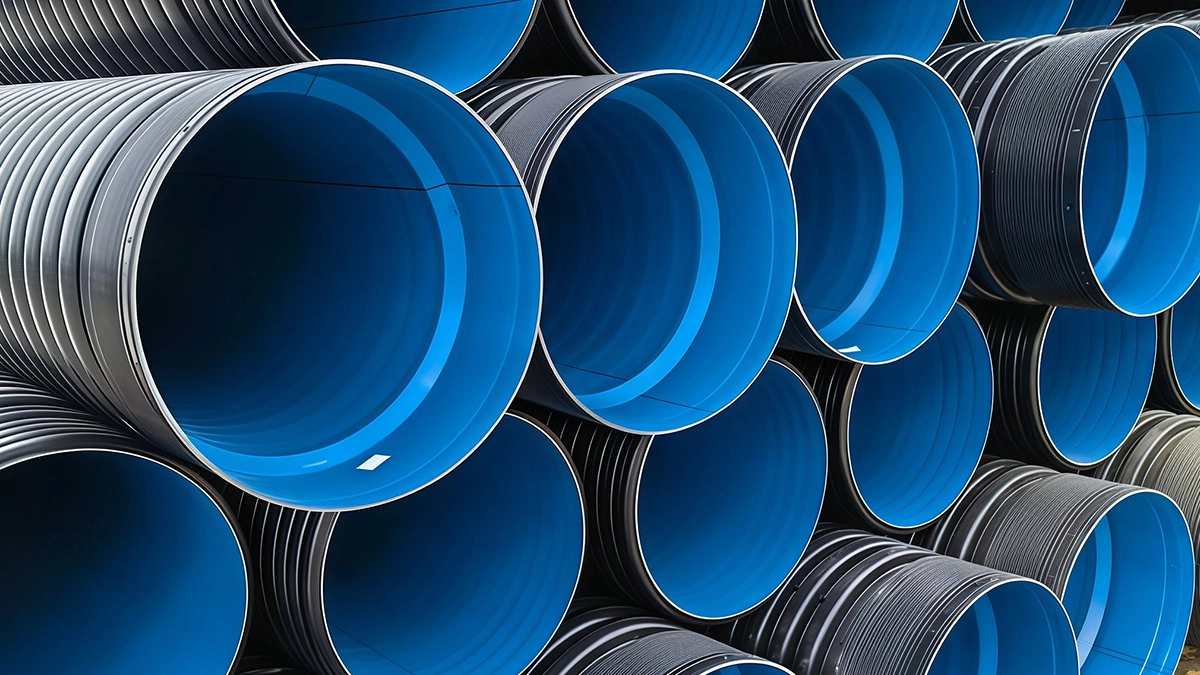
HDPE Corrugated Pipe Suppliers are compared by product quality, specifications, price, MOQ, lead time, and project support to help buyers choose reliable cable protection pipe partners.
HDPE corrugated pipe suppliers specialize in manufacturing and distributing Double-Wall Corrugated (DWC) pipes. These specialized tubes are built specifically to house and shield buried electrical and telecommunication cables. By leveraging high-density polyethylene grades like PE80 and PE100, these vendors produce robust infrastructure components. The result? Conduits that offer exceptional resistance to heavy soil loads while keeping friction to an absolute minimum during cable pulling.
The global market for these materials is on a massive upward trajectory. Valued at roughly $6.8 billion in 2025, industry forecasts suggest it will hit $11.4 billion by 2034. A worldwide push to modernize aging power grids and telecom networks fuels this surge. For B2B buyers, partnering with specialized suppliers ensures that utility trenches maintain their structural integrity—even when subjected to relentless heavy traffic and harsh environmental extremes.
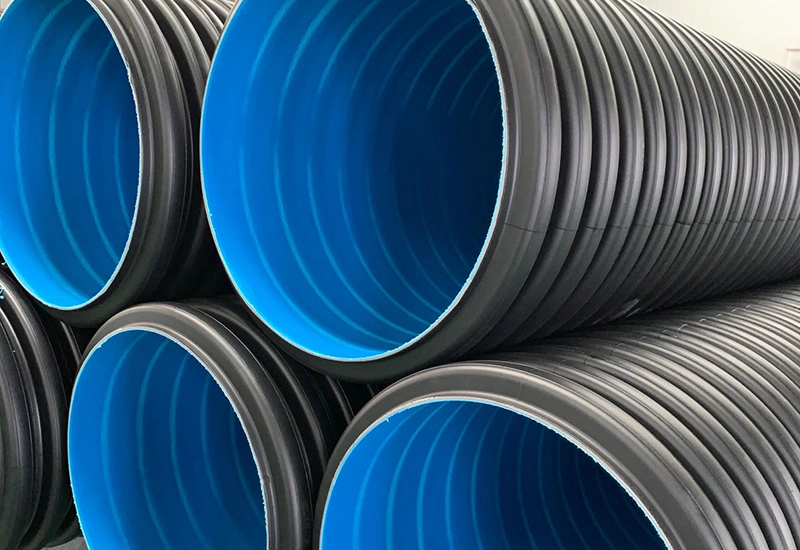
Structurally, double-wall corrugated pipes are ingenious. They feature a tough, ribbed outer layer designed to absorb intense compressive forces. Inside, a perfectly smooth wall prevents abrasion damage from ruining sensitive cable jackets. Working with a verified manufacturer gives procurement teams direct access to custom diameters, exact ring stiffness ratings (like SN4 or SN8), and the rigorous quality control protocols demanded by municipal and industrial projects.
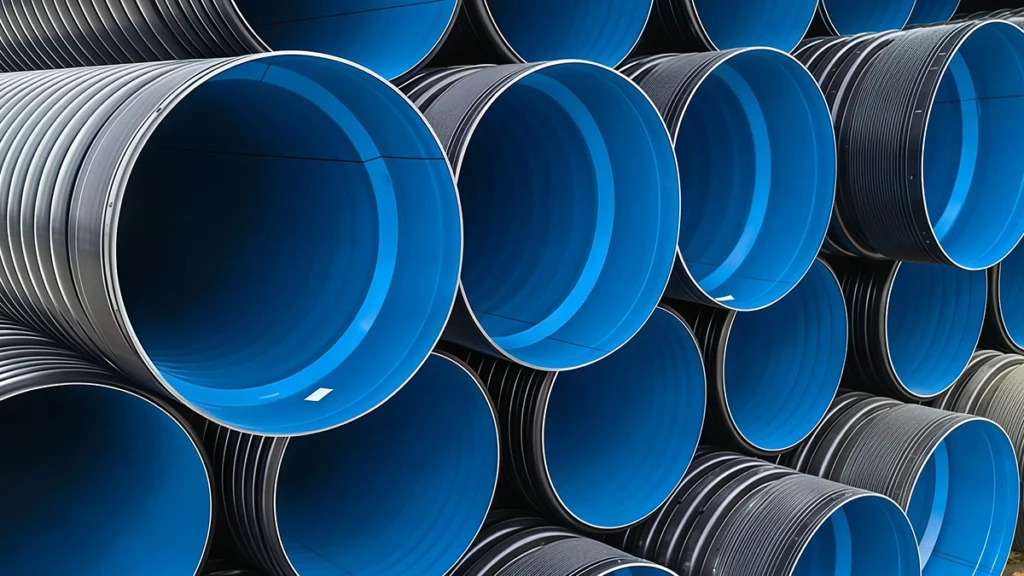
Sourcing HDPE DWC pipe for cable ducts requires a strategic approach. Buyers need to weigh global industry heavyweights against top-tier, factory-direct manufacturers. Below is a categorized breakdown of the top 10 suppliers currently shaping the global market.
| Supplier Category | Representative Companies | Core Strengths & Scale | Best Suited For |
|---|---|---|---|
| Global Industry Benchmarks | Advanced Drainage Systems (USA), Wavin (Europe), Pipelife International (Austria), Sekisui Chemical (Japan), JM Eagle (USA) | Massive global distribution networks, standardized product lines, high regional availability. | Buyers requiring localized stock in North America, Europe, or Japan, regardless of premium pricing. |
| Top Chinese Direct Manufacturers | JINQUAN Plastic Industry Co., Ltd., Shandong Haili Pipeline Technology, Hebei Chenxi Plastic Products | JINQUAN: 200-acre facility, 100,000+ tons annual output, direct OEM customization, ISO/CE/SGS certified. | Large-scale infrastructure projects requiring factory-direct pricing, custom specs, and zero middleman markups. |
| Regional Distributors | Various local wholesale importers across Southeast Asia, Middle East, and South America | Stock standard sizes (e.g., 6-inch conduits) for immediate local dispatch. | Small to medium utility repairs requiring immediate delivery without minimum order quantities. |
Pinpointing the right top HDPE corrugated pipe manufacturers demands a rigorous vetting process to keep project risks at bay. Smart buyers assess potential vendors across four core operational pillars.
1. Manufacturing Capability and Scale
Verify the supplier’s actual production footprint and annual output. Take a manufacturer like JINQUAN, which operates a massive 200-acre facility with an annual capacity topping 100,000 tons. This level of scale provides the ironclad supply chain stability required for massive infrastructure rollouts. High-speed pipe extrusion lines guarantee consistent wall thickness and incredibly fast order fulfillment.
2. Quality Control (QC) Processes
Never rely on simple visual inspections. You must require suppliers to run in-house Density Tests and Stress Crack Resistance Tests (such as the UCLS test per ASTM F3181). Uncompromising QC is the only way to guarantee a pipe won’t buckle under intense subterranean pressure.
3. International Certifications
A flawless, verifiable paper trail is absolutely non-negotiable. Only shortlist OEM HDPE corrugated pipe manufacturers holding ISO 9001:2015, ISO 14001, CE marks, and independently verified SGS testing reports.
4. Sample Policy and Export Support
Trustworthy suppliers will gladly ship physical samples. This allows buyers to physically verify ring stiffness and inner wall smoothness before greenlighting a massive bulk production run. Furthermore, closely evaluate their export packaging standards so you know the pipes will arrive on-site without any deformation.
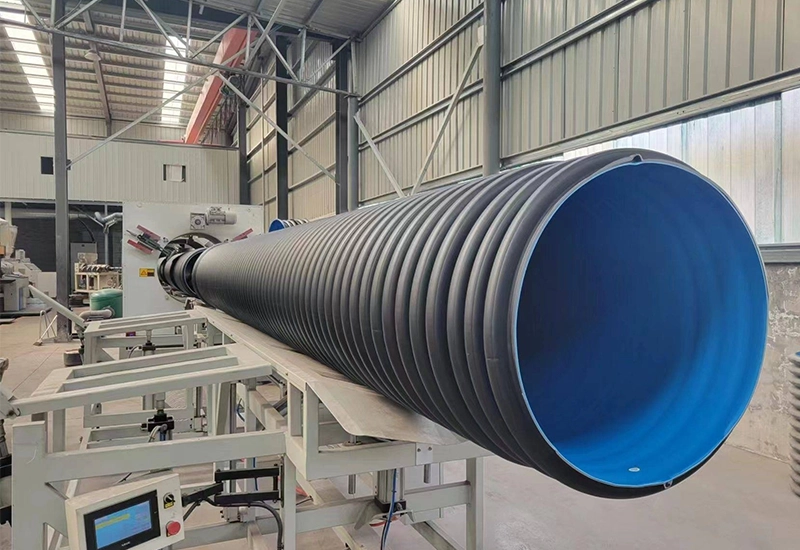
Drafting a highly accurate Request for Quotation (RFQ) starts with a crystal-clear understanding of your project’s unique parameters. Below are the standard technical specifications for power cable projects that procurement teams must define.
| Specification Parameter | Standard Range / Options | Application Notes |
|---|---|---|
| Diameter Range (DN/OD) | DN110mm to DN1200mm | Select the pipe diameter according to the cable bundle size and installation requirements. Ensure sufficient clearance for cable installation and maintenance. |
| Ring Stiffness (SN) | SN4 (4 kN/m²) SN8 (8 kN/m²) | SN4 may be suitable for applications with lighter external loads, while SN8 may be preferred for installations subject to heavier loads. Select the appropriate class according to project design requirements. |
| Material | High-Density Polyethylene (HDPE) | HDPE offers corrosion resistance, impact resistance, and flexibility, making it suitable for underground cable protection and drainage applications. |
| Working Temperature | According to material grade and applicable standards | Confirm the allowable operating temperature with the pipe manufacturer and the requirements of the intended application. |
| Connection Methods | Socket and coupler connections, sealing rings, or other compatible jointing systems | Choose the connection method based on pipe design, installation conditions, and project requirements to ensure reliable joint performance. |
| Color Options | Black, Orange, or other customized colors | Color options depend on manufacturer specifications and local project requirements. Confirm the required color before placing an order. |
Grasping the structural differences between various vendor types is vital if you want to stretch your procurement budget. This HDPE cable protection pipe supplier comparison breaks down the distinct advantages and inherent limitations of each sourcing channel.
| Supplier Type | Advantages | Limitations | Best Use Case |
|---|---|---|---|
| Direct Manufacturer (e.g., JINQUAN) | Lowest possible cost per unit (factory direct). Uncompromising QC control. Custom diameters and colors available. Massive volume capacity. | Enforces Minimum Order Quantities (MOQ). International shipping inherently requires longer transit times. | Ideal for large-scale infrastructure, municipal utility projects, and specific OEM requirements. |
| Local Distributor | Inventory is available locally. Rapid delivery for standard sizes and smaller batches. | Premium markup prices. You are limited strictly to their on-hand inventory. Custom specifications are impossible. | Perfect for urgent trench repairs or small-scale commercial landscaping jobs. |
| Trading Company | Highly capable of consolidating mixed product shipments sourced from several different factories. | Acts as a middleman, which inflates project costs. Often introduces frustrating communication delays regarding technical specs. | Best for consolidating highly diverse, low-volume orders across multiple unrelated product categories. |
Nailing down an accurate forecast for the underground cable conduit HDPE corrugated pipe price means dissecting several key cost drivers.
Procuring materials for critical infrastructure demands flawless adherence to international safety and performance benchmarks. For underground conduit systems, the core international standards include IEC 61386-24, the EN 61386 series (the European standard for electrical conduits), and AASHTO M252 / M294 (the US standards).
Before you sign off on any purchase order, demand to see specific testing data. To meet strict HDPE corrugated pipe quality standards for cable protection, you must verify:
Never authorize a production run without first reviewing the supplier’s CE certificate, official SGS test report, and ISO 9001 documentation.
Every installation environment dictates entirely different pipe parameters. Selecting the right specifications is the only way to prevent catastrophic cable failures down the line.
Sidestepping these frequent sourcing errors will safeguard both your project timeline and your bottom line.
Mistake 1: Specifying the Wrong Ring Stiffness
Burying SN4 (4 kN/m²) pipes under active roadways instead of the required SN8 (8 kN/m²) is a massive engineering failure. The lighter pipe will inevitably collapse under the weight of traffic, crushing the cables inside and triggering astronomical excavation and repair costs.
Mistake 2: Buying from Middlemen for Bulk Orders
Relying on trading companies for massive infrastructure projects needlessly inflates your budget. Worse, it cuts off your direct access to factory QC data, making it nearly impossible to trace manufacturing defects back to the source.
Mistake 3: Ignoring UV Degradation
Forgetting to mandate UV-stabilizing additives (like carbon black) is a remarkably expensive oversight if your pipes will sit outdoors in staging yards for months. Without protection, the plastic turns brittle before it ever touches the dirt.
Mistake 4: Accepting Generic Certifications
Never accept a blanket ISO certificate for a massive factory. You must verify that the ISO/CE certificates and SGS reports actually apply to the specific DWC pipe production lines handling your order.
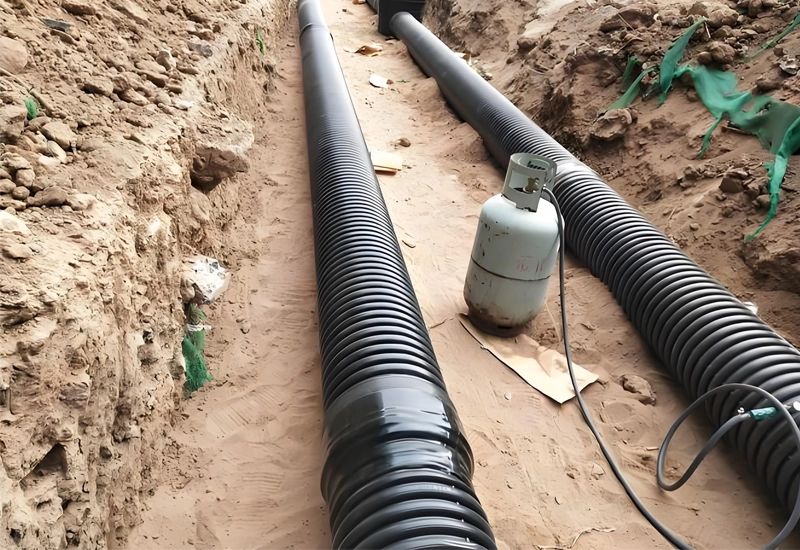
Locking down the best OEM HDPE corrugated pipe manufacturer for major infrastructure initiatives requires a highly systematic approach. Follow these five steps to guarantee a flawless procurement cycle:
Q1: What is the best HDPE corrugated pipe for underground cable protection?
The best HDPE corrugated pipe for underground cable protection is a double-wall corrugated (DWC) pipe with suitable ring stiffness, typically SN8 for installations subject to heavier external loads and SN4 for applications with lighter loads. Its corrugated outer wall provides structural strength, while the smooth inner wall facilitates cable installation. When selecting a pipe, consider the cable diameter, burial depth, soil conditions, traffic loads, and applicable local standards. Ensure the pipe diameter and connection system meet the project’s requirements for reliable, long-term cable protection.
Q2: How do I compare HDPE corrugated pipe suppliers for a large infrastructure project?
Judge suppliers strictly on manufacturing capacity, factory-direct pricing, and rigorous quality control. Shortlist real manufacturers managing massive facilities (e.g., 100,000+ tons of annual output) rather than relying on trading companies. Scrutinize their ISO 9001, CE, and SGS certifications, and confirm they run in-house density and stress crack resistance tests.
Q3: What specifications should be included in an HDPE corrugated pipe RFQ?
An airtight RFQ needs the exact outer and inner diameter (DN/OD), the required ring stiffness (SN4 or SN8), material grade (PE80/PE100), total length in meters, specific color-coding (like black with red stripes), and the preferred connection methods. Spelling out these details prevents costly procurement errors and ensures accurate pricing.
Q4: Are double-wall HDPE corrugated pipes better than single-wall pipes for cable ducts?
Absolutely. Double-wall corrugated pipes combine a ribbed exterior—delivering high compressive strength against intense soil loads—with a perfectly smooth interior wall. This smooth inner layer drastically cuts down friction, protecting delicate cable jackets from tearing during pulling. Single-wall pipes simply cannot offer this dual advantage.
Q5: What factors affect the price of HDPE corrugated pipe?
Pricing hinges primarily on the pipe’s diameter, ring stiffness (SN8 naturally requires more raw material than SN4), and resin quality (virgin versus recycled). Other major cost drivers include order volume (hitting MOQs drops the unit price), custom color-coding, specialized fittings, and complex international freight logistics.
Q6: What certifications should an HDPE corrugated pipe supplier provide?
A credible supplier must furnish an ISO 9001:2015 certificate for quality management alongside ISO 14001 for environmental standards. Product-specific paperwork should feature CE marks, proof of compliance with IEC 61386-24 or EN 61386 standards, and independent third-party testing reports from globally recognized agencies like SGS.
Q7: How can buyers verify the quality of HDPE corrugated pipe before bulk ordering?
Buyers must mandate physical samples before greenlighting bulk production. This allows you to physically inspect the inner wall’s smoothness and the outer wall’s rigidity. Additionally, demand to see the factory’s internal testing data covering compressive strength, impact resistance, and heat resistance to ensure it aligns with your engineering specs.
Q8: What is the typical lead time for HDPE corrugated cable protection pipe orders?
For factory-direct orders, industry averages sit at roughly 15 workdays. However, high-capacity manufacturers operating extensive extrusion lines can frequently expedite standard orders. Depending on the requested volume and their current factory load, they can often shrink delivery windows to just 7 to 15 days.
Choosing the right HDPE corrugated pipe suppliers for underground cable protection is much more than a routine procurement task; it is a vital engineering and financial decision. Long-term success relies entirely on matching exact pipe specifications—like choosing between SN4 and SN8 ring stiffness, or PE100 material grades—to the punishing demands of your installation environment. By cutting out intermediaries and dealing directly with high-capacity manufacturers, procurement teams secure significantly lower unit costs, enforce uncompromising quality control, and guarantee strict adherence to international standards like IEC 61386-24. Ultimately, verifying a factory’s true scale, demanding independent SGS test reports, and inspecting physical samples remain the smartest ways to neutralize supply chain risks and protect the integrity of your infrastructure.