Address
Zhengzhou, Henan, China
Work Hours
Monday to Friday: 7AM - 7PM
Weekend: 10AM - 5PM
Address
Zhengzhou, Henan, China
Work Hours
Monday to Friday: 7AM - 7PM
Weekend: 10AM - 5PM

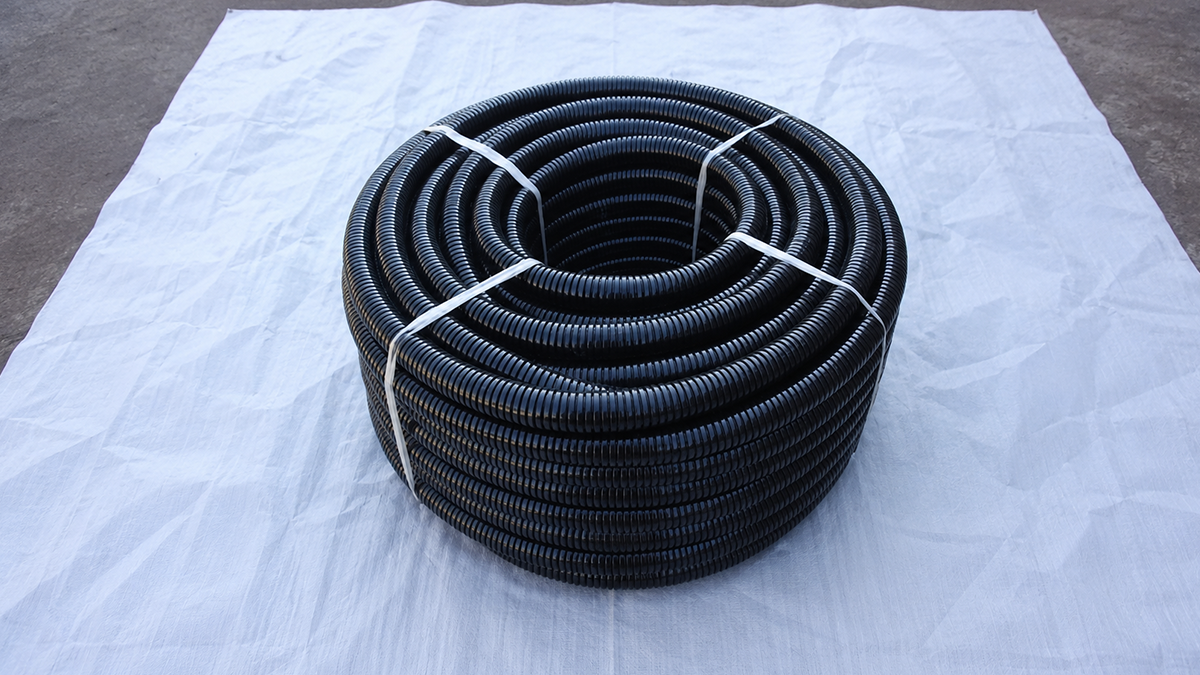
This guide explains HDPE single wall corrugated pipe for drainage: structure, benefits, specifications, application scenarios, and selection tips. Learn how to compare single wall vs double wall, choose the right SN class and diameter, and evaluate suppliers, MOQ, and lead time for reliable B2B procurement.
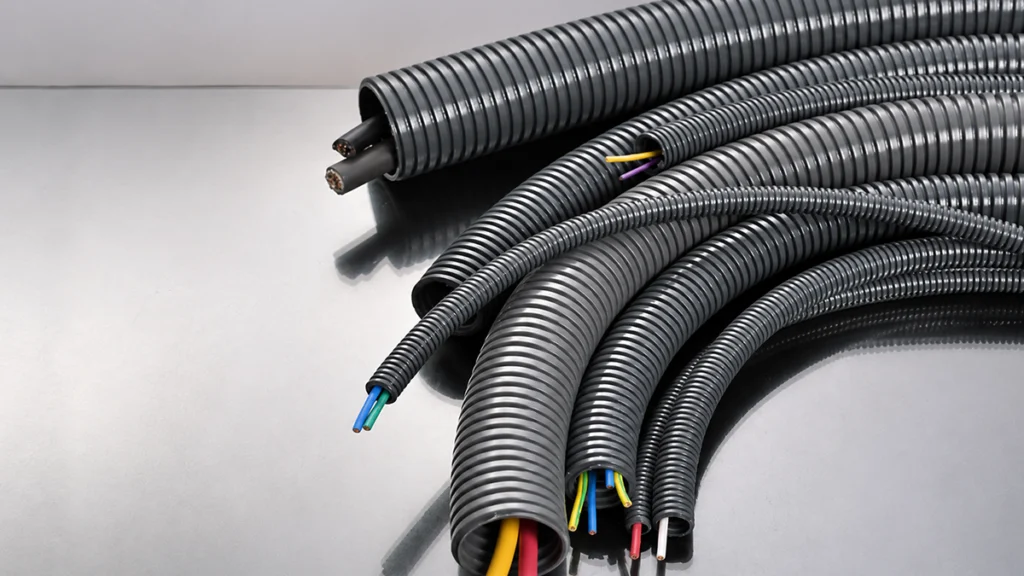
Think of an HDPE single wall corrugated pipe as a highly adaptable thermoplastic conduit. You can easily spot it by the parallel ridges running along both its inside and outside. Made entirely from High-Density Polyethylene, this specific piping thrives in non-pressure, gravity-flow setups. It’s the go-to choice when project managers need maximum flexibility and budget-friendly materials rather than heavy-duty load support.
Solid-wall pipes can sometimes crack under shifting soil. In contrast, the corrugated profile actively spreads external earth loads across the entire structure, allowing the pipe to absorb ground movement safely. Since it relies on just a single layer of HDPE, the pipe stays exceptionally pliable. That flexibility makes it perfect for surface and subsurface water management, especially when crews have to snake lines around unexpected obstacles or navigate uneven trenches.
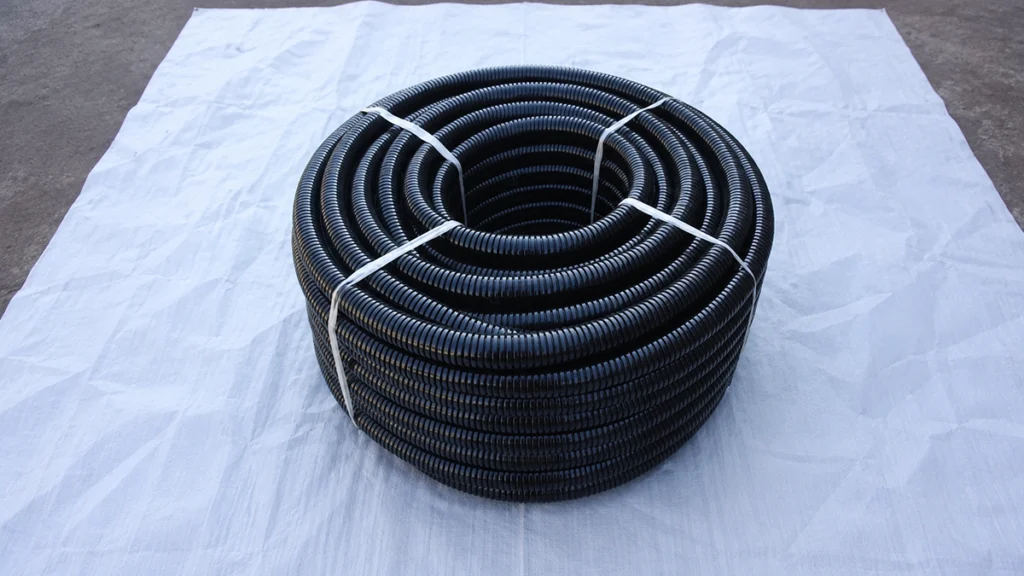
Extreme flexibility, incredibly low weight, and serious resistance to soil-borne chemicals stand out as the biggest advantages here. Together, these traits slash freight bills and cut down labor hours. They also guarantee the HDPE pipe will survive for decades in harsh underground conditions.
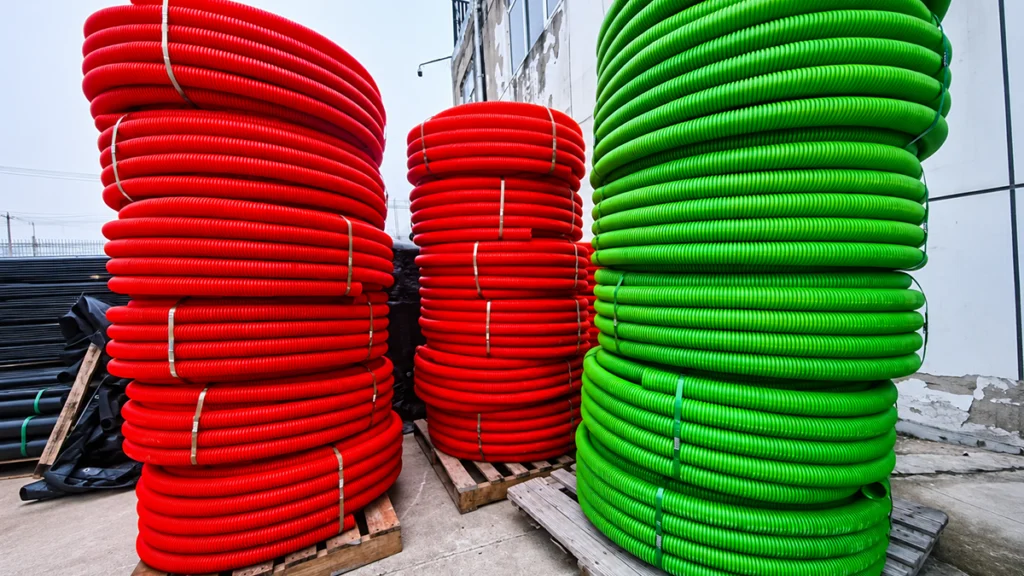
Manufacturers categorize these HDPE pipes based on permeability. You have perforated models designed to actively collect subsurface water, and non-perforated versions built strictly to move water via gravity. Depending on the diameter you need and the scope of the job, you can order them in long, continuous coils or as rigid, straight sticks.
| Pipe Type | Form Configuration | Permeability | Typical Use Cases |
|---|---|---|---|
| Perforated (Class 1 / 2) | Flexible Coils (100 ft – 250 ft) | Slotted or drilled holes in corrugation valleys | French drains, agricultural field drainage, golf course dewatering |
| Non-Perforated (Solid) | Straight Sticks (10 ft – 30 ft) or Coils | Solid wall, zero permeability | Downspout run-offs, directing water away from foundations |
| Geotextile Wrapped | Coils | Perforated pipe encased in a polyester filter sock | Subsoil drainage in sandy, silty, or fine-particle soil environments |
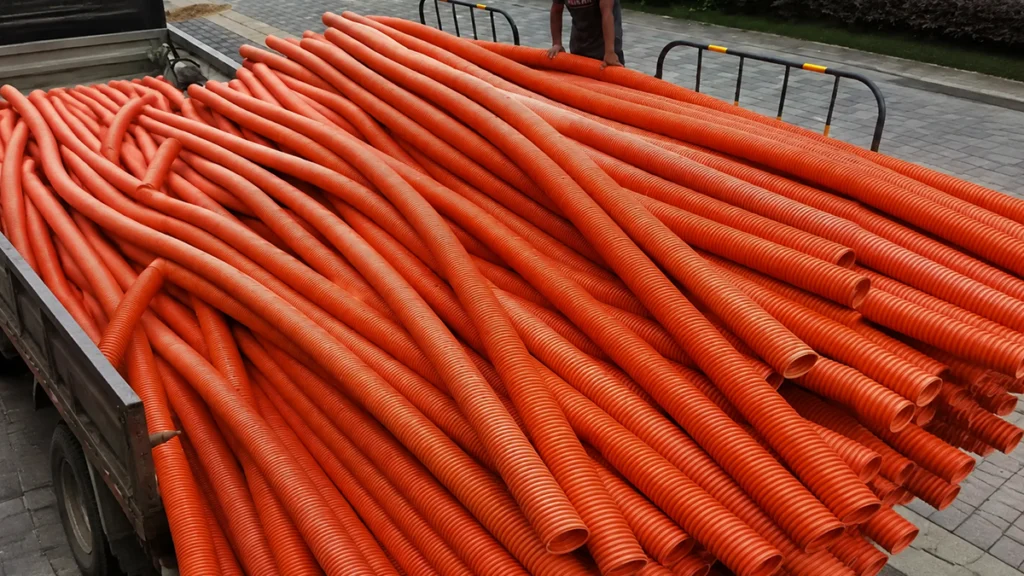
Sourcing the right materials means checking the paperwork. Buyers need to verify that the HDPE pipe meets strict industry benchmarks like ASTM F667 and AASHTO M252. To ensure optimal performance on the job, pay close attention to the nominal diameter (DN), minimum wall thickness, and the soil-tightness ratings of the joints.
| Parameter | Typical Range / Value | Applicable Standards |
|---|---|---|
| Diameter Range (DN) | 3-inch to 15-inch (75mm – 375mm standard); up to 24-inch | ASTM F667, AASHTO M252 |
| Typical Ring Stiffness | SN2 to SN4 (depending on profile and thickness) | EN 13476, ISO 9969 |
| Min. Wall Thickness | 0.025" (8" pipe) to 0.040" (15" pipe) | ASTM F667 |
| Operating Temperature | -40°C to +60°C | ISO 4427 (Material baseline) |
| Joint Performance | Soil-tight (using split/snap couplings or cleated bells) | ASTM F405, AASHTO M294 |
Across the board, this HDPE pipe acts as the industry standard for farm field drainage, residential stormwater setups, and highway edge drains. Because it bends easily and installs quickly, it remains the top choice for shallow trenches that need reliable water diversion.
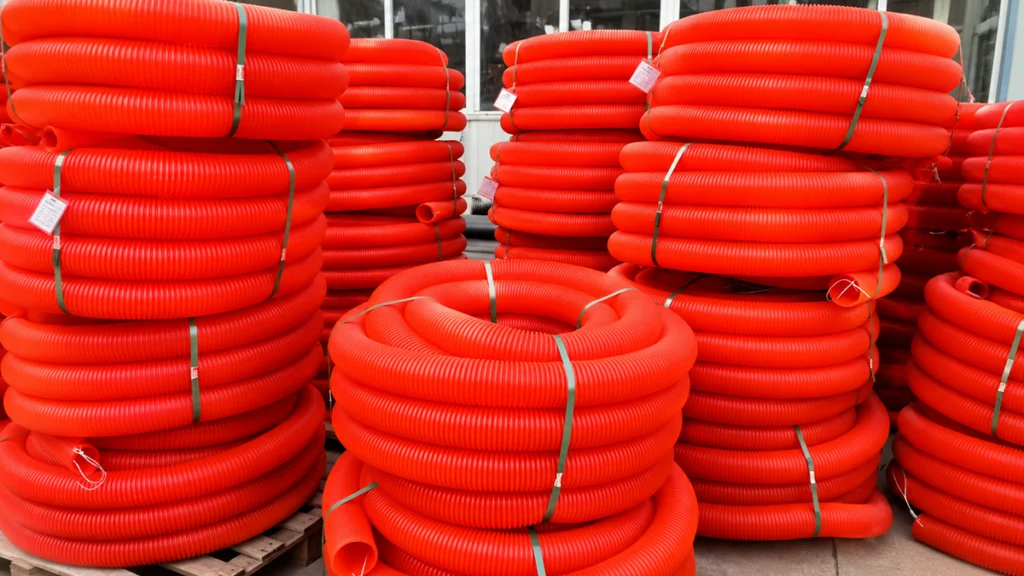
Deciding between a single or double wall structure ultimately comes down to your required stiffness, target hydraulic flow, and burial depth. Single wall variations offer a flexible, budget-friendly fix for shallow, low-flow areas. Meanwhile, double wall pipes feature a smooth interior and robust ring stiffness, making them essential for deep municipal stormwater networks.
| Feature | Single Wall Corrugated Pipe | Double Wall Corrugated Pipe (DWC) |
|---|---|---|
| Wall Structure | Corrugated interior and exterior | Corrugated exterior, smooth interior |
| Ring Stiffness | Lower (suited for shallow earth loads) | High (SN4, SN8) for heavy traffic/deep burial |
| Hydraulic Flow | Slower (corrugations create friction) | Faster (smooth interior prevents sediment buildup) |
| Flexibility | Extremely high (can be coiled) | Rigid (supplied in straight sticks only) |
| Cost | Highly economical | Higher material and shipping costs |
| Typical Applications | Agriculture, residential, landscape, edge drains | Municipal sewers, highway cross-drains, commercial storm mains |
Decision Summary: Go with single wall pipe if you want fast installation, maximum flexibility, and low costs in shallow areas without vehicle traffic. Step up to a double wall system if your site involves deep burial, heavy surface loads, or demands top-tier hydraulic flow.
Nailing down the perfect single wall pipe means looking closely at your site’s soil profile, installation environment, and expected water volume. Procurement teams should work systematically. By mapping out the right diameter, perforation style, and fabric wrapping, you guarantee the system will perform flawlessly for years.
Step 1: Determine the Primary Function (Collection vs. Conveyance)
Are you trying to gather groundwater from the surrounding dirt? If so, grab a perforated HDPE pipe for a French drain. If you just need to transport water from point A to point B without it seeping into the ground—like extending a downspout—a solid, non-perforated HDPE pipe is your answer.
Step 2: Assess the Soil Conditions
Take a hard look at the trench environment. Working in sand, silt, or fine loam? You absolutely must specify a factory-applied geotextile filter sock. Without it, tiny soil particles will infiltrate the system and clog your lines.
Step 3: Calculate Hydraulic Flow Requirements
Figure out the expected water volume so you can size the hdpe pipe correctly. A standard 4-inch (100mm) line easily handles most agricultural and residential jobs. For commercial edge drains, you’ll need to scale up to an 8-inch or even 15-inch diameter.
Step 4: Verify Fittings and Coupler Compatibility
Make sure your manufacturer supplies a full ecosystem of matching components. You need compatible split/snap couplers, wyes, tees, and elbows that conform to ASTM F667 standards to keep those joints soil-tight.
Buyer Selection Checklist:
Raw polyethylene resin costs, order volume, and HDPE pipe diameter all drive the final price of this material. But for B2B and export buyers, the per-meter price is only part of the equation. You also have to vet a manufacturer’s lead time reliability, production capacity, and quality control certifications.
Cost Breakdown Factors:
Standard Export Metrics (Reference Table):
| Metric | Typical Industry Standard for Export |
|---|---|
| Minimum Order Quantity (MOQ) | 1x20ft or 1x40ft HC Container |
| Standard Lead Time | 7 to 15 days for standard diameters |
| Customization Lead Time | 20+ days for specific fabric wraps or non-standard lengths |
| Supplier Certifications Required | ISO 9001, ISO 14001, CE, SGS |
Believe it or not, material defects rarely cause these systems to fail. The real culprit is usually a botched trench installation. When crews ignore specific soil types, misalign the HDPE pipes, or skip proper bedding preparation, the results are predictable: separated joints, crushed lines, and total hydraulic failure.
For shallow-burial, gravity-flow drainage, HDPE single wall corrugated pipe stands out as an incredibly versatile and budget-friendly option. Engineers can build infrastructure that lasts for decades simply by matching the right specs—like standards compliance, perforation type, and diameter—to the actual site conditions.
Final Decision Checklist for Procurement:
1. Is the system designed to convey water (solid) or collect it (perforated)?
2. Does the surrounding soil require a geotextile filter sock to stop clogging?
3. Are the surface loads and burial depth safe for a single wall pipe for drainage, or do you need a double wall upgrade?
4. Does this specific pipe comply with mandatory AASHTO M252 or ASTM F667 standards?
5. Can your supplier hit the project’s lead time and provide the correct soil-tight fittings?
No. This pipe is strictly meant for non-traffic zones and shallow burials, like residential yards or farm fields. If you are dealing with commercial driveways or highway cross-drains, you absolutely need double wall corrugated pipe (rated SN4 or SN8) to handle the heavy vehicular weight without crushing.
Generally, you can bury it between 2 and 4 meters deep. However, that exact number shifts depending on the trench backfill quality, wall thickness, and pipe diameter. Remember, this product is designed for shallow, gravity-flow setups. Always double-check the manufacturer’s load charts for your specific job.
When crews install it correctly with proper backfill and trench bedding, this pipe can easily survive 50 to 100 years. High-Density Polyethylene fights off biological degradation, rust, and chemical corrosion, giving it incredible staying power underground.
Yes, but only for lighter applications like landscape French drains or residential downspout run-offs. If you are building a massive municipal stormwater main that demands heavy load-bearing strength and rapid hydraulic flow, double wall corrugated pipe is the mandatory standard.
Perforated models feature tiny holes or slots cut into the corrugation valleys. This design pulls groundwater in from the surrounding dirt, making it perfect for French drains. Non-perforated (solid) models lack these holes. They exist purely to transport water from one spot to another without letting it seep into the earth.
Contractors usually link them up with manufacturer-approved cleated bell-and-spigot joints, snap couplers, or split couplers. Keep in mind that these connections are “soil-tight”—meaning they block dirt from getting in. Because this is a gravity-flow system, they aren’t engineered to be completely watertight under pressure.
Any trustworthy B2B supplier needs ISO 14001 for environmental management and ISO 9001 for quality control. Beyond that, their actual pipe should carry certifications proving it meets international manufacturing benchmarks like SGS verification, CE, AASHTO M252, or ASTM F667.
Yes, it usually costs far less than solid-wall PVC. The corrugated design requires less raw material, drastically dropping the weight. Plus, because it ships in tight coils rather than rigid sticks, you save a fortune on both transportation and on-site labor.
Building the right drainage infrastructure is a balancing act. You have to weigh hydraulic performance against material costs and environmental conditions. For shallow, gravity-flow setups—especially in light commercial, residential, or farming applications—HDPE single wall corrugated pipe delivers incredible economic value and flexibility. Project managers can easily dodge hidden risks by evaluating the soil to see if filter socks are necessary, and by holding crews to strict trench alignment and preparation standards. By verifying fitting compatibility, standard compliance (like ASTM F667), and supplier credentials, you guarantee a rugged drainage system ready to perform for decades.