Address
Zhengzhou, Henan, China
Work Hours
Monday to Friday: 7AM - 7PM
Weekend: 10AM - 5PM
Address
Zhengzhou, Henan, China
Work Hours
Monday to Friday: 7AM - 7PM
Weekend: 10AM - 5PM

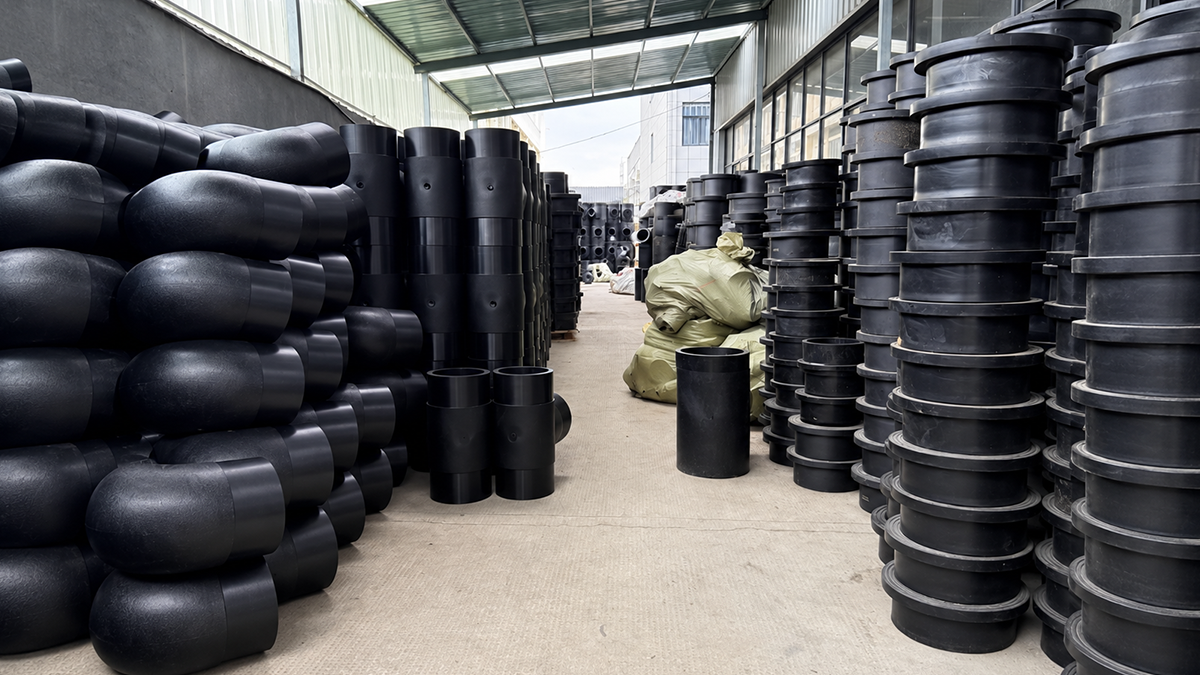
HDPE Fittings Manufacturers in China guide helps buyers compare top factories, export capabilities, certifications, pricing factors, and supplier risks before requesting quotes or technical specifications.
Global buyers increasingly turn to China for HDPE fittings, driven by the country’s unmatched production capacity and tightly integrated supply chains. Factories here fulfill roughly one-third of the world’s demand for polyethylene pipes and fittings. They provide a comprehensive pipeline ecosystem, seamlessly combining raw resin sourcing, high-tech extrusion, injection molding, and the manufacturing of welding machinery—all localized within massive industrial hubs.
Operating at such an enormous scale empowers these suppliers to keep HDPE fittings prices in China fiercely competitive while maintaining rigorous technical standards. Take industry leaders like JINQUAN. They run sprawling facilities, including a 200-acre manufacturing base that pushes out more than 100,000 tons every year. Advanced technology fuels this heavy output, with factories widely adopting 3D printing for custom mold creation alongside bimodal resin extrusion techniques.
Centralizing the production of pipes, fittings, and joining machinery yields a major advantage: it virtually eliminates compatibility issues. This streamlined procurement model is highly attractive to international pipeline contractors, municipal water authorities, and industrial engineers looking for a reliable, single-source solution.
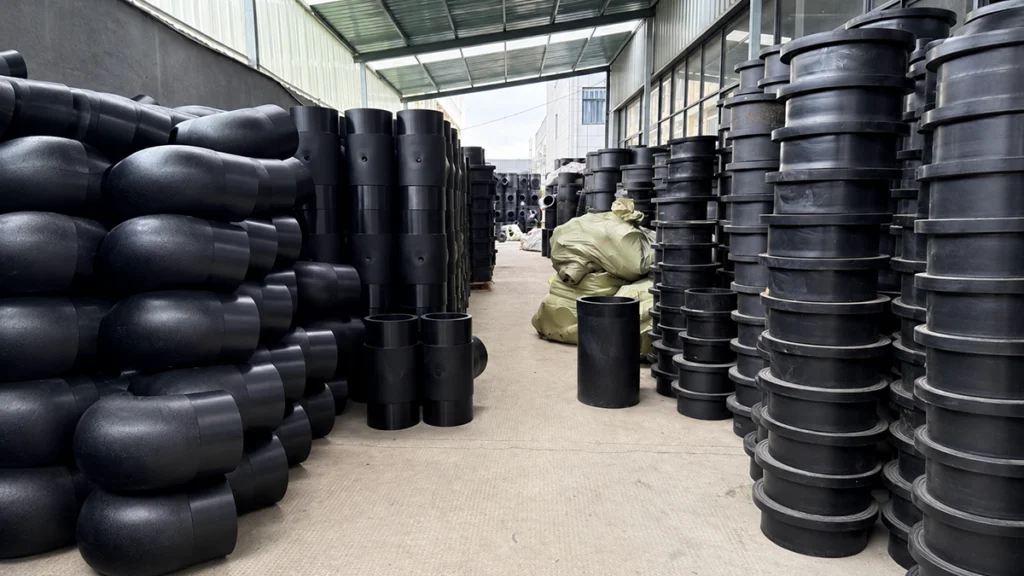
Navigating the Chinese market means sorting through a diverse mix of giant conglomerates, export-focused factories, and niche component fabricators. To properly evaluate these suppliers, you need to examine their production scale, exact product focus, and underlying export infrastructure.
We have profiled ten leading HDPE fittings manufacturers in China below, breaking down their core strengths and the types of buyers they serve best:
| Manufacturer | Main HDPE Fittings Products | Core Strengths | Best-Fit Buyer |
|---|---|---|---|
| 1. JINQUAN Plastic Industry Co., Ltd. | Butt fusion, electrofusion, fabricated fittings, welding machines | 100K+ tons/year capacity, factory-direct export, DN16-DN3000 range, full system compatibility | Large infrastructure buyers, global distributors, OEM projects |
| 2. LESSO (China Lesso Group) | Comprehensive plumbing fittings | Massive scale, high domestic and international brand visibility | Mega-project contractors requiring broad plumbing portfolios |
| 3. ERA (Yonggao Co., Ltd.) | Water supply and drainage fittings | Extensive export history, wide range of piping system materials | Wholesale importers seeking diverse catalog consolidation |
| 4. Shandong Kangyu Pipe Industry Co., Ltd. | HDPE and PPR fittings | Strong regional presence, reliable standard fittings production | Regional distributors and mid-sized contractors |
| 5. Shandong Haili Pipeline Technology Co., Ltd. | HDPE water and gas fittings | Focused on municipal pipeline infrastructure | Municipal water and sewage departments |
| 6. Hangzhou Haikuo Rubber And Plastic Products Co., Ltd. | Industrial plastic and rubber fittings | Cross-material expertise for industrial applications | Industrial plant engineers and mining operations |
| 7. Shandong Huasheng New Material Co., Ltd. | PE100 fittings and custom fabrications | Material science focus, high-pressure applications | High-pressure gas and industrial fluid transport buyers |
| 8. PNTEK | Plastic valves and fluid transport fittings | Specialized in flow control alongside standard fittings | Agricultural irrigation installers and fluid control buyers |
| 9. SUNPLAST | Butt fusion and electrofusion fittings | Export-centric operations, strong standard compliance | Overseas distributors needing standard stock quickly |
| 10. Hebei Xiong'an Ruishi Pipeline Technology Co., Ltd. | Trenchless pipeline fittings | Rapidly growing infrastructure support capabilities | Modern urban development and trenchless contractors |
Factories across China manufacture a vast array of HDPE fittings, each engineered to handle specific installation environments, pipeline diameters, and pressure ratings.
Butt Fusion Fittings
This category covers flange adapters (stub ends), 90° and 45° elbows, reducing couplers, crosses, tees, and end caps. Using a heated plate, installers weld butt fusion fittings directly to the pipe. The resulting joint is incredibly robust—often as strong as the pipe itself. Municipal water systems and heavy industrial sites rely heavily on these fittings for permanent, seamless trench installations, particularly when dealing with massive diameters up to DN3000.
Electrofusion Fittings
Tapping tees, saddles, and electrofusion couplers contain built-in resistance wire heating coils. An electrofusion welding machine sends an electrical current through these coils, melting the plastic and fusing the fitting securely to the pipe. You will want to specify electrofusion fittings for tight installation spaces, trenchless applications, or gas distribution pipelines where bulky butt fusion machinery simply cannot fit.
Compression Fittings
Made mostly from Polypropylene (PP), compression fittings target smaller diameters and flexible piping systems. They facilitate rapid mechanical assembly—no heat welding required. Installers lean heavily on compression fittings for residential plumbing, temporary water lines, and agricultural irrigation networks.
Socket Fusion Fittings
Socket fusion requires heating both the exterior of the pipe and the interior of the fitting before firmly pushing them together. This method is predominantly used for small-diameter plumbing runs and highly specialized industrial fluid lines.
Fabricated/Molded Fittings
Standard molded angles do not always cut it. For massive diameters, specific non-standard angles, or brutal industrial environments, manufacturers supply custom-welded segments. These fabricated fittings are indispensable for dredging projects, complex mining operations, and massive water treatment facilities.
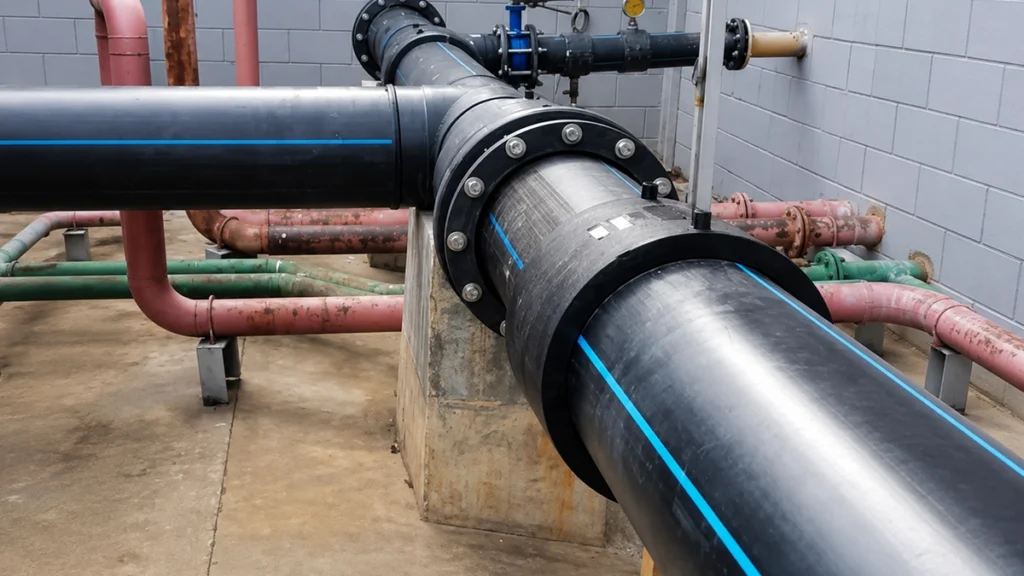
Sourcing reliable HDPE fittings demands rigid adherence to measurable parameters and international standards. You must confirm that a factory’s technical specifications perfectly align with your project’s engineering blueprints.
The parameter table below outlines the critical specifications you need to evaluate:
| Specification Category | Required Parameters & Standards |
|---|---|
| Material Grades | 100% Virgin PE80, PE100, PE100-RC. (PE100 Minimum Required Strength [MRS] = 10.0 MPa / 1450 PSI). |
| SDR & Pressure Ratings (Water) | SDR11: PN16 (1.6 MPa) <br> SDR13.6: PN12.5 (1.25 MPa) <br> SDR17: PN10 (1.0 MPa) <br> SDR21: PN8 (0.8 MPa) <br> SDR26: PN6 (0.6 MPa) |
| Size Range (OD) | Standard fittings: 20mm to 800mm+. (Advanced factories support up to DN3000). |
| International Standards | Water: ISO 4427, EN 12201, DIN 8074/8075, ASTM D3035. <br> Gas: ISO 4437, EN 1555. |
| Connection Methods | Butt fusion, electrofusion, mechanical compression, socket fusion. |
| Color Coding | Black with blue stripes (Water); Black with yellow/orange stripes (Gas). |
| Required Test Documents | Hydrostatic Strength (ISO 1167), Oxidation Induction Time (OIT), Carbon Black Dispersion. |
Separating a legitimate, high-tier factory from a trading company or a substandard producer requires a close look at their operational footprint, system capabilities, and quality control infrastructure.
Factory vs. Trader
Always verify physical footprints and business licenses. Legitimate manufacturers occupy substantial industrial space. JINQUAN, for instance, operates a massive 200-acre facility equipped with over 40 high-speed extrusion lines and 60 injection molding machines. That footprint proves primary manufacturing capability. Conversely, a small trading office outsources its production, injecting unnecessary cost and risk into your supply chain.
System Capability
Check if the HDPE fittings supplier manufactures the pipes, the HDPE pipe fittings, and the necessary welding equipment. Bundling these three components from a single source guarantees joint compatibility. It also centralizes your technical support and warranty claims.
Quality Control (QC) Testing
Insist on seeing proof of in-house testing facilities. Critical tests to look for include:
Certifications and Traceability
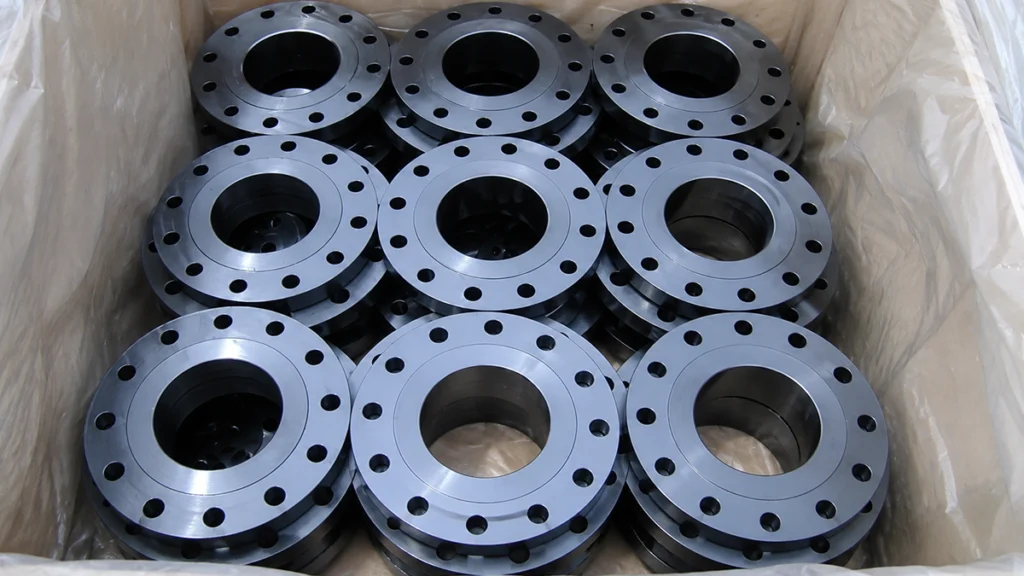
Qualified manufacturers hold ISO 9001 (Quality Management) and ISO 14001 (Environmental Management) credentials alongside CE marks. These should be backed by third-party test reports from agencies like BV or SGS. Additionally, authentic HDPE fittings will display clear, permanent laser printing. This marking must show the manufacturer’s name, the SDR rating, the PE100 grade, the standard reference, and a batch code to ensure complete traceability.
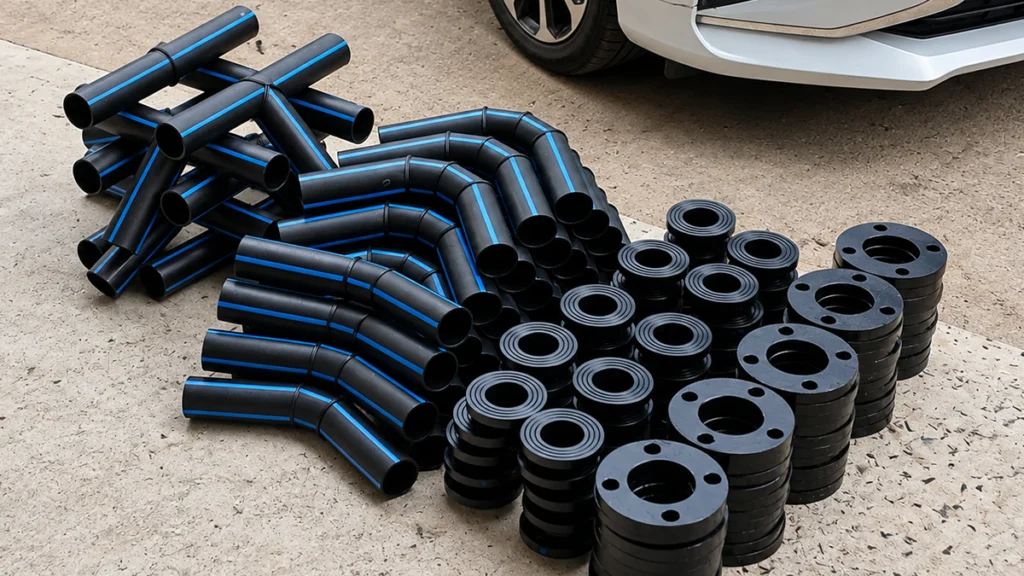
Grasping the commercial realities of sourcing HDPE fittings manufactures in China helps you manage project timelines and budget accurately.
Pricing Factors
Pricing is rarely static. It fluctuates based on a few key variables:
Lead Time
A supplier’s stock levels and overall capacity dictate their production speed.
MOQ (Minimum Order Quantity)
Policies on minimum order quantities vary drastically. Some mega-producers demand full 20ft or 40ft containers (roughly 20-40 CBM). Factory-direct HDPE fittings suppliers in China, however, tend to offer more flexible MOQs. They frequently allow buyers to consolidate mixed containers of pipes, machinery, and fittings, or to order smaller batches for initial project testing.
Payment Terms
Within the Chinese plastic pipe export sector, the standard payment structure is a 30% T/T (Telegraphic Transfer) deposit to kick off production. The remaining 70% balance is typically paid against the copy of the Bill of Lading (B/L).
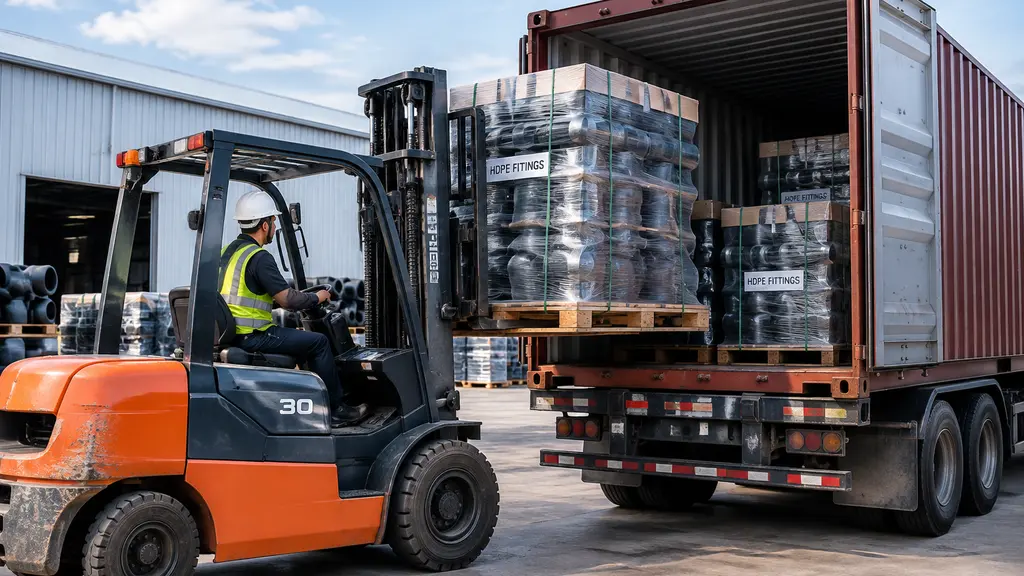
Executing proper export logistics protects the structural integrity of your HDPE pipe fittings while preventing expensive customs delays at the destination port.
Incoterms
The International Chamber of Commerce (ICC) strongly recommends using FCA, CPT, or CIP for containerized freight. These specific terms close the risk gap at the terminal. Although HDPE fittings suppliers in China frequently quote FOB and CIF, those terms technically transfer risk only once the goods are physically “on board” the vessel. If terminal handlers damage the cargo before loading, FOB and CIF can create massive liability headaches.
Packaging Standards
Export Documentation Checklist
Confirm that your supplier accurately provides the following paperwork:
HS Code
Double-check the Harmonized System (HS) code before authorizing shipment. Plastic pipe fittings generally fall under 3917.40. Using the wrong HS code guarantees unexpected tariff assessments and frustrating customs holds.
Procurement professionals need to stay highly vigilant. Hidden risks in the supply chain can easily compromise project safety and pipeline integrity.
Utilize this structured procurement process to identify and secure a reliable manufacturing partner in China:
1. Define Specs: Lock down your requirements. Clearly specify the required standard (e.g., ISO 4427), the PE grade (PE80/PE100), the SDR pressure rating, and the outside diameter (OD).
2. Request System Quotes: Ask the supplier for bundled pricing on the HDPE pipe fittings, pipes, and welding machines. This tests their actual manufacturing capabilities while guaranteeing joint compatibility.
3. Verify Credentials: Ask for current ISO 9001/14001 certificates and business licenses. Push for a live video tour of the factory floor to validate their physical production capacity.
4. Check QC Documents: Insist on seeing recent Hydrostatic Strength and Oxidation Induction Time (OIT) test reports tailored to the exact SDR class you plan to purchase.
5. Confirm Logistics: Mandate nesting packaging to cut freight costs, agree on proper Incoterms (defaulting to FCA/CIP for containers), and lock down precise lead times.
6. Secure Payment: Stick to the industry standard: a 30% deposit with the 70% balance paid against the B/L. Never pay 100% upfront for bulk commercial orders.
7. Pre-Shipment Inspection: Before the shipping container is sealed, hire a third-party inspection agency to verify permanent markings, wall thickness, and overall dimensions. If a third party isn’t feasible, demand high-resolution video and photographic evidence.
Pinpointing the right factory depends entirely on your project demands and your specific buyer profile.
For Large Infrastructure and Government Buyers
Focus your search on manufacturers boasting massive production capacities—ideally exceeding 100,000 tons annually. They must hold strict CE and ISO certifications and prove they can supply the entire pipeline system. Buying your welding machines, fittings, and pipes from a single entity ensures uniform quality across municipal networks and heavily mitigates installation risks.
For Distributors and Wholesalers
Look for factories capable of fast lead times (7-15 days) that also maintain stable inventories of standard SDR17 and SDR11 HDPE pipe fittings. Robust export packaging is non-negotiable. Consistent stock availability and reliable logistics remain critical for keeping your local market supply chains moving.
For OEM and Custom Buyers
Partner with factories that possess dedicated technical engineering support, 3D printing technology, and robust in-house mold capabilities. These attributes are required to execute complex custom fabrications with precision.
JINQUAN Match
JINQUAN aligns perfectly with all three buyer profiles. Operating a 200-acre manufacturing base, they deliver rapid 7-15 day lead times alongside a massive product catalog that includes MPP, PPR, DWC, and HDPE systems, plus proprietary welding machines. This gives JINQUAN a highly integrated, direct-to-buyer export infrastructure that currently supports demanding projects in over 50 countries.
The top manufacturers seamlessly combine extensive export experience with rigorous quality control and high production capacity. Market leaders include ERA, LESSO, and JINQUAN Plastic Industry Co., Ltd. For export orders, JINQUAN stands out thanks to its strict adherence to CE and ISO 4427 standards, a 100,000-ton annual capacity, and its ability to supply the complete system (fittings, pipes, and welding machines).
Start by requesting a live video tour of their quality control lab and production floor. You should also demand their ISO 9001/14001 certificates, business license, and third-party test reports from BV or SGS. Reliable factories operate in-house testing equipment for Oxidation Induction Time (OIT) and Hydrostatic Strength, and they ensure all fittings feature clear, permanent laser markings.
Any qualified manufacturer needs to provide ISO 14001 (environmental management) and ISO 9001 (quality management). On the product side, look for CE marks and strict compliance with international standards such as DIN 8074/8075, EN 12201, or ISO 4427. Third-party inspection reports from recognized agencies like Bureau Veritas (BV) or SGS are equally vital.
Installers join butt fusion fittings by heating the fitting ends and the pipe with a hot plate before pressing them firmly together—a method ideal for open trenches and large diameters. Electrofusion fittings, however, feature built-in electric heating coils. A specialized machine applies an electrical current to melt and fuse the joint. This makes electrofusion the preferred choice for pipeline repairs, gas networks, and tight installation spaces.
Pricing fluctuates depending on the connection type, SDR pressure rating, fitting size, and raw material grade (mixed versus 100% virgin PE100). Because they contain embedded copper coils, electrofusion fittings inherently cost more than butt fusion components. Be wary of quotes that sit 15% below the market average; this usually points to substandard wall thickness or recycled resin. Always ask for a highly detailed cost breakdown.
Minimum Order Quantities (MOQs) vary significantly by supplier. Massive conglomerates might enforce strict requirements for full 20ft or 40ft containers (roughly 20-40 CBM). Factory-direct manufacturers like JINQUAN, however, frequently offer flexible MOQs. This allows you to order smaller batches for quality verification or build mixed containers holding pipes, welding machines, and fittings.
Yes. Advanced Chinese manufacturers regularly supply molded or customized fabricated fittings for OEM projects. If a factory possesses dedicated engineering teams, 3D printing technology, and strong in-house mold capabilities, they can easily produce custom-branded fittings, heavy-duty industrial segments, or specific angles tailored to unique mining and infrastructure requirements.
The primary risks involve bait-and-switch tactics where the bulk order fails to match the approved sample, receiving products manufactured from recycled resin rather than virgin PE100, and encountering wall thicknesses that miss ISO standards. You can effectively mitigate these risks by conducting pre-shipment third-party inspections, reviewing OIT test reports, and demanding clear, permanent specification markings on all products.
Partnering with HDPE fittings manufacturers in China unlocks massive advantages in cost efficiency, supply chain integration, and sheer scale. However, securing top-tier components demands a rigorous evaluation process. You must scrutinize the factory’s material grades to ensure they exclusively use 100% virgin PE100 or PE80 resin. It is imperative to demand comprehensive in-house quality control testing—especially OIT metrics and Hydrostatic Strength—while verifying precise SDR ratings and strict adherence to international standards like ISO 4427. By focusing on manufacturers capable of delivering complete system compatibility—meaning they supply the welding machinery, fittings, and pipes as a single package—procurement teams can optimize container shipping logistics, virtually eliminate installation risks, and guarantee the long-term integrity of their entire pipeline infrastructure.