Address
Zhengzhou, Henan, China
Work Hours
Monday to Friday: 7AM - 7PM
Weekend: 10AM - 5PM
Address
Zhengzhou, Henan, China
Work Hours
Monday to Friday: 7AM - 7PM
Weekend: 10AM - 5PM

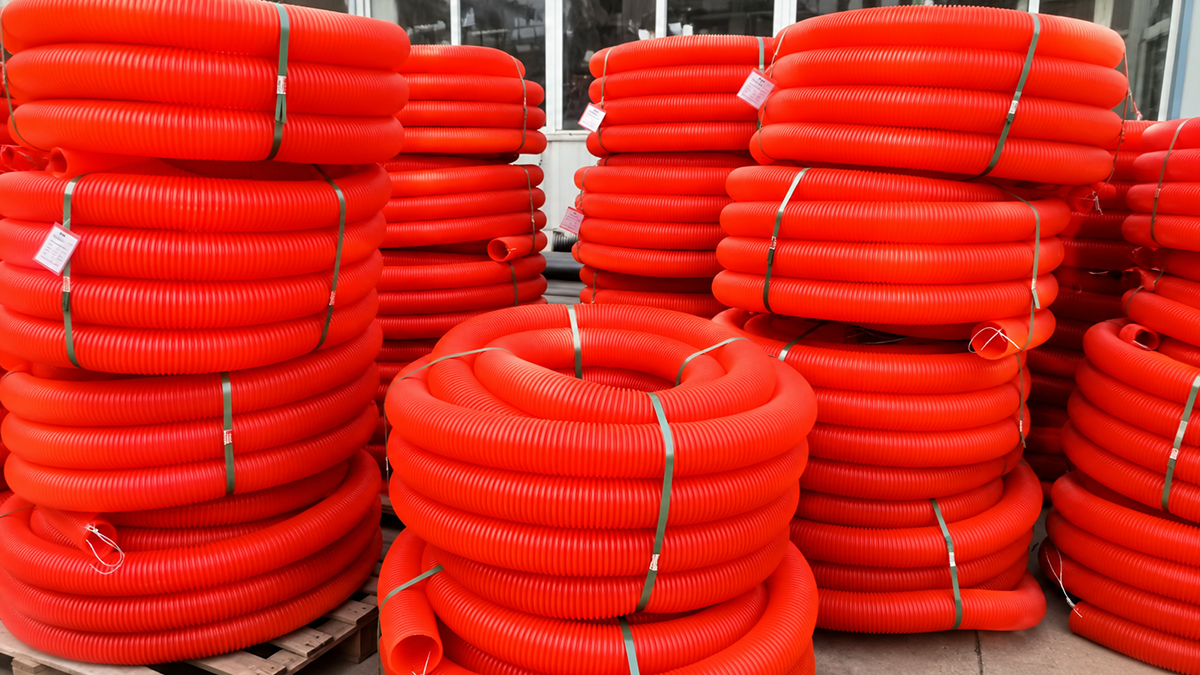
Single Wall Corrugated Pipe Manufacturer guide for B2B buyers comparing HDPE pipe quality, specifications, China export requirements, supplier evaluation, pricing factors, and safe procurement steps.
An HDPE single wall corrugated pipe manufacturer specializes in creating lightweight, highly flexible conduits from High-Density Polyethylene. You can easily spot these pipes by their distinct, uniform ridges on both the inside and outside. This unique structural profile delivers a fantastic strength-to-weight ratio. It allows the pipe to handle heavy external soil loads while bending easily around obstacles during complex installations.
Built to last, these conduits naturally resist corrosion, harsh chemicals, and heavy impacts. Rigid pipes often crack when the ground shifts, but a single wall corrugated conduit simply flexes and adapts. Hydraulically speaking, the material’s smooth flow dynamics can hit a Manning’s n value as low as 0.010, which keeps fluids or air moving efficiently. If the factory uses 100% virgin resin, you can expect these pipes to last anywhere from 50 to 100 years. That makes them a remarkably cost-effective choice for long-term underground infrastructure projects.
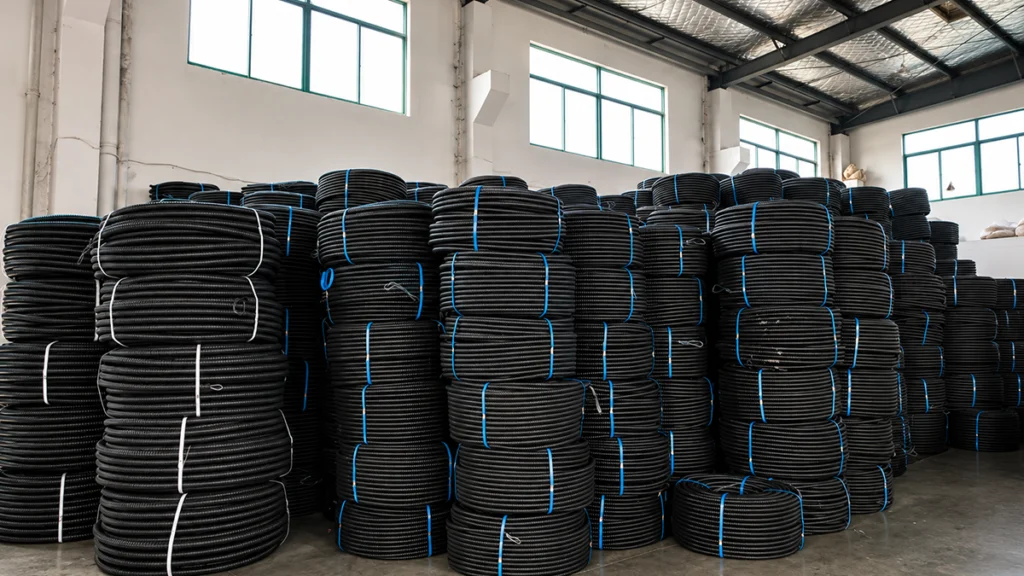
Buying from a single wall corrugated pipe manufacturer in China brings some serious advantages to the table, largely thanks to the country’s booming infrastructure needs and cutting-edge production tech. Right now, the Asia-Pacific region commands roughly 46% of the global market revenue for corrugated pipes. Massive national projects—like China’s sponge-city initiative—are driving this growth. To keep up, domestic manufacturers have had to scale their operations at breakneck speed while tightening up their quality control.
For buyers overseas, teaming up with a well-established China HDPE corrugated pipe factory like JINQUAN opens the door to massive capabilities. We’re talking about a 200-acre facility churning out over 100,000 tons of product every year. How do they keep costs down? By heavily leaning on AI-driven extrusion lines and automated vacuum corrugators. These smart systems maximize yield and slash material waste, translating directly into aggressive factory-direct pricing. On top of that, premium Chinese manufacturers know exactly how to handle exports. They offer solid OEM support, custom fabrication options, and strict compliance with major global standards like ISO, ASTM, and EN.
Industrial buyers across a wide range of sectors depend on single wall corrugated pipes because they are incredibly versatile and structurally tough. Here is a quick breakdown of where these pipes get used the most, along with the specific requirements that buyers tend to focus on.
| Application Scenario | Typical Buyer Requirements | Pipe Features & Solutions |
|---|---|---|
| Agricultural Drainage | High water collection efficiency, soil filtration, long coil lengths. | Perforated or slotted pipes (often with factory-installed geotextile fabric wrap) to relieve hydrostatic pressure and maximize crop yields. |
| Cable Protection | Flexibility, crush resistance, smooth interior for cable pulling. | Acts as a protective conduit for telecommunications, electrical wiring, and heavy machinery wiring. |
| Residential & Commercial Drainage | Lightweight handling, reliable joint connections, varied diameters. | Ideal for downspout runoff, foundation drains, French drains, and landscape sub-drainage systems. |
| Infrastructure | High ring stiffness, adherence to AASHTO/ASTM standards. | Utilized for highway edge drains, culverts, and temporary gravity-flow drainage needs. |
| Ventilation | Chemical stability, airtight jointing, continuous airflow. | Deployed as airflow systems for underground facilities, mining operations, and industrial plants. |
Before signing a purchase order, procurement teams need to verify a few technical parameters with their single wall corrugated pipe supplier for export. This guarantees the materials will actually handle the demands of the job site.
| Parameter | What to Confirm | Why It Matters | Buyer Note |
|---|---|---|---|
| Diameter Range | Available sizes, typically 3 to 15 inches (75mm to 375mm). | Determines flow capacity and suitability for specific cable sizes or water volume. | Ensure the manufacturer's tooling matches your exact nominal diameter requirements. |
| Material Grade | Cell classification 323410C or 333410C (ASTM D3350). | Guarantees environmental stress crack resistance and long-term durability. | Demand 100% virgin resin or strictly certified recycled blends. |
| Lengths & Packaging | 20 ft (6m) sticks or continuous coils (Micro 100 ft, Mini 300 ft, Maxi up to 5,300 ft). | Impacts freight efficiency and installation speed. | Longer continuous coils reduce the number of joints needed in the field. |
| Joint Performance | Soil-Tight (cleated bell/snap couplers) vs. Water-Tight (ASTM D3212 gasketed). | Prevents leakage or soil infiltration based on project needs. | Water-tight joints require closed-cell synthetic rubber gaskets (ASTM D1056 Grade 2A2). |
| Perforation Options | Solid, Class 2 slotted, or perforated with a geotextile fabric wrap (sock). | Determines drainage capability and soil filtration. | Specify fabric wrap for sandy or silty soil conditions to prevent clogging. |
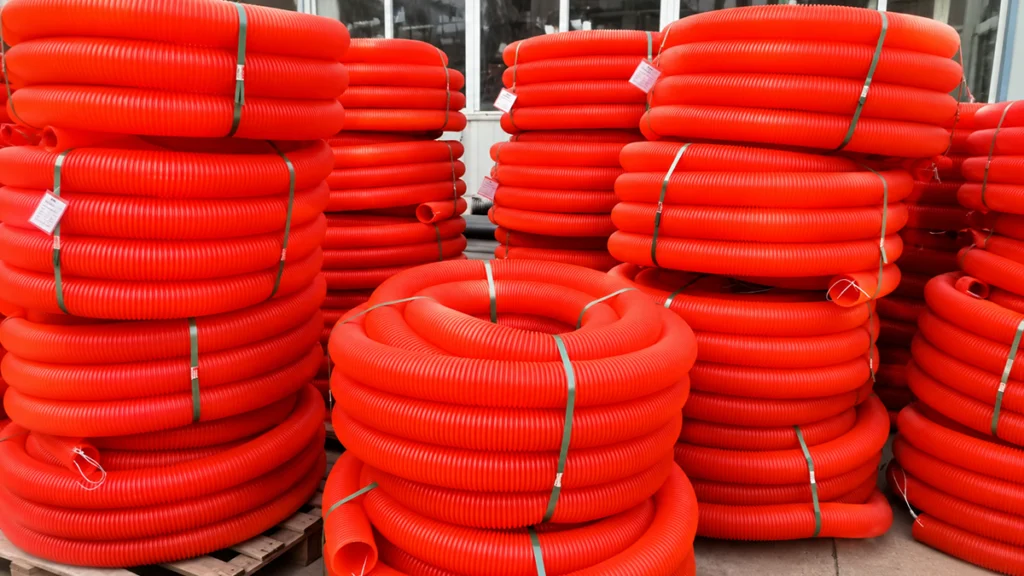
Getting a grip on the production process gives procurement teams a huge advantage when sizing up a supplier’s technical chops. Today’s manufacturing environment leans heavily on precision engineering and automated temperature controls.
1. Step 1 – Raw Material Feeding: First, workers feed premium HDPE granules—carefully matched to the required ASTM cell classification—into the extruder’s hopper. The best factories use automated gravimetric dosing systems to guarantee the material blend is absolutely perfect.
2. Step 2 – Melting & Extrusion: Inside the extruder, the HDPE resin slowly heats up and melts. A highly precise screw mechanism then forces this molten polymer through a specialized extrusion die, turning it into a continuous, glowing-hot plastic tube.
3. Step 3 – Corrugation Forming: The hot tube instantly travels into a vacuum corrugator mold system. Here, moving mold blocks clamp tightly around the pipe. A powerful vacuum pulls the soft plastic directly against the mold cavities, forming those signature corrugated profiles on both the inside and outside at the exact same time.
4. Step 4 – Cooling: Once the pipe leaves the corrugator, it runs right through a series of vacuum and water cooling baths. Cooling the plastic quickly and evenly is a critical step. It locks the polymer structure into place, ensuring the pipe maintains its dimensional accuracy and ring stiffness.
5. Step 5 – Cutting & Collection: Finally, the finished pipe gets processed for shipping. Planetary saws slice it into standard straight lengths (like 20-foot sticks), or butt fusion machine winds the continuous run onto massive industrial spools to create long coils.
Any trustworthy OEM single wall corrugated pipe manufacturer will run a tight ship when it comes to quality control. They have to, just to meet international compliance. When you place an export order, the factory should test those pipes against major industry standards like ASTM F667, AASHTO M252 (for the 3- to 10-inch varieties), AASHTO M294 (for larger 12- to 15-inch pipes), ASTM F405, and EN 13476.
When you dig into a supplier’s Quality System Manual (QSM), make sure they run these specific tests:
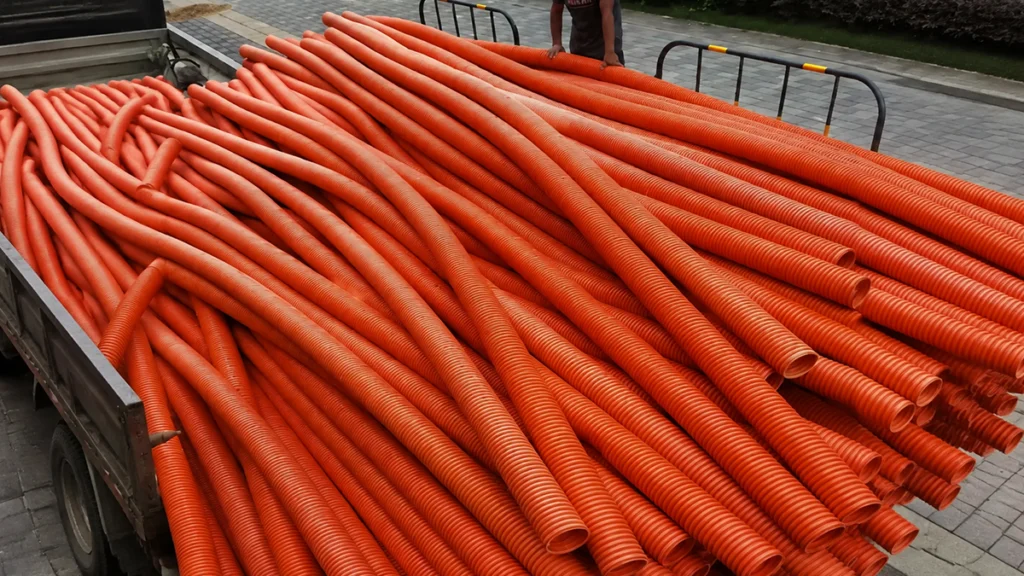
Picking the right manufacturing partner means looking way past the initial price quote. You need to verify what they can actually produce. Run potential suppliers through this evaluation framework to separate the real-deal factories from the high-risk trading companies.
Buying industrial piping from overseas brings a unique set of logistical hurdles. If you understand these export parameters upfront, you can ensure a headache-free customs clearance and a safe delivery.
Minimum Order Quantity (MOQ)
Corrugated pipes take up a lot of space relative to their weight. Because of this high volume-to-weight ratio, factories usually set their MOQs at a full 1x20ft or 1x40ft HQ container. It’s the only way to keep ocean freight costs reasonable. Sometimes, though, a manufacturer might accept a specific length minimum—like 1,000 meters—if you’re asking for a highly specialized custom run.
Lead Time
A top-tier factory like JINQUAN generally sets the benchmark with a standard lead time of 7 to 15 days for regular specs. Just keep in mind that when peak construction season hits, those lead times can easily stretch out to 30 days.
Packaging & Container Loading
If the packaging is sloppy, the pipes will deform during transit. Coils need to be locked down with heavy-duty strapping so they don’t unspool in the container. Straight sticks usually get bundled up or stacked securely on pallets. If your shipment is going to sit outside for a while at its destination, make sure you explicitly ask for UV-resistant stretch wrapping.
Export Documents
Don’t let missing paperwork hold up your shipment. Verify that your supplier can provide a flawless documentation packet. This should include your Bill of Lading (B/L), Commercial Invoice, Packing List, Certificate of Origin (CO), and fully certified Material Test Reports (MTR).
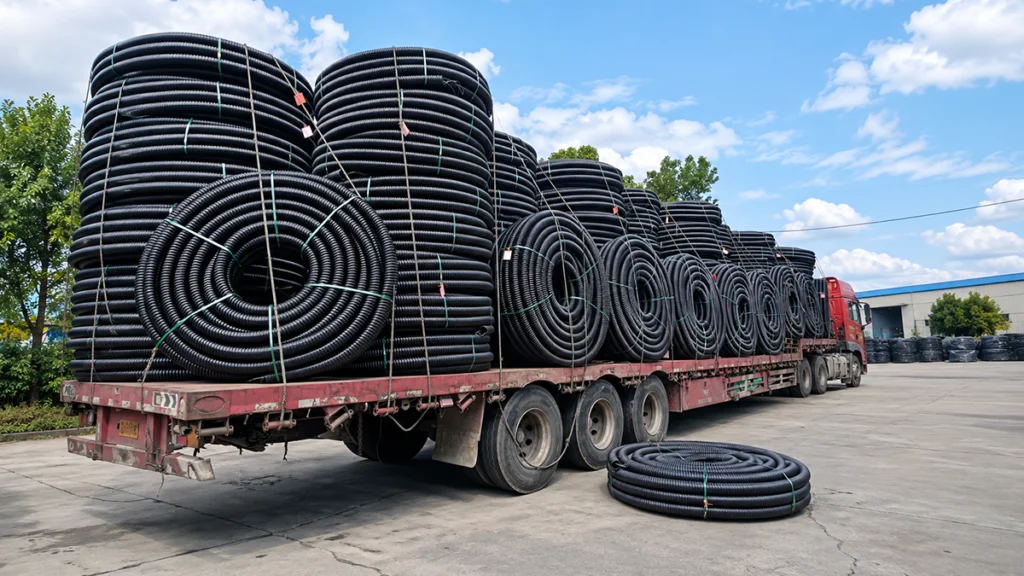
You won’t find a static, unchanging price per meter for single wall corrugated pipe. The final number bounces around based on a handful of manufacturing and logistical variables. Instead of hunting for a generic, one-size-fits-all price list, it pays to understand exactly what drives the costs:
Importing massive volumes of industrial piping isn’t without its risks. Spotting these pitfalls early in the buying cycle is the best way to protect your project timeline and your budget.
Risk: Inferior Material Grade
A few shady suppliers try to pad their margins by mixing in high amounts of cheap, unverified recycled resin. The result? Environmental stress cracking and a drastically shortened lifespan for your pipes.
*Avoidance:* Put your foot down in the contract. Explicitly write in the required ASTM D3350 cell classifications (like 323410C). Demand 100% virgin resin, or at the very least, insist on heavily certified and batch-tested recycled blends.
Risk: Crushed Packaging and Deformation
Because corrugated pipes have such a high void volume, they are mostly empty space. If the factory loads the container poorly, the bottom coils can crush under the weight of the top ones, or the whole load can shift violently at sea.
*Avoidance:* Make the supplier submit a detailed packaging method and container loading plan. Don’t let the shipment leave the dock until you’ve approved it.
Risk: Non-compliant Ring Stiffness
If a pipe fails to hit the ASTM F667 stiffness requirements, it’s going to collapse the second you put heavy soil or traffic loads over it. That means a catastrophic failure for your infrastructure project.
*Avoidance:* Bring in a third-party inspector (like SGS) before the goods ship. Also, demand to see the factory’s in-house ASTM D2412 compression test reports before you wire that final balance payment.
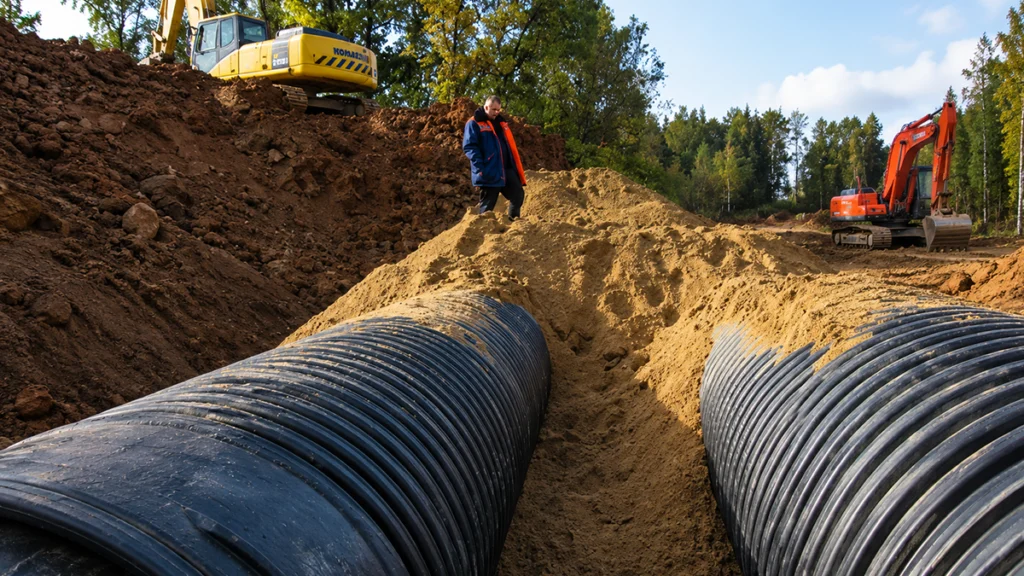
Most of the time, crews use HDPE single wall corrugated pipe for gravity-flow water management and as a protective conduit. You’ll see it everywhere—from agricultural subsurface drainage and residential foundation drains to highway edge drains. It’s also a favorite for shielding telecommunications cables and electrical wiring. Thanks to its flexibility and tough chemical resistance, it’s incredibly versatile for just about any underground infrastructure job.
You need to look hard at their production capacity, how modern their equipment is, and their ability to trace quality metrics. Stick to factories carrying ISO 9001 and ISO 14001 certifications. JINQUAN is a great example, boasting an impressive 100,000-ton annual capacity. Never skip asking for batch-specific lab test reports on ring stiffness, and always get physical samples in your hands before committing to a bulk container order.
A solid Request for Quotation (RFQ) needs to spell out the nominal diameter (usually 3 to 15 inches), the material grade (specifically the ASTM D3350 cell classification), and the length or coil size you need. Don’t forget to mention the perforation type—whether you want it solid, slotted, or wrapped in fabric—and your joint performance needs. Finally, clearly state your target order volume, the destination port, and any strict compliance standards like ASTM F667 or EN 13476.
The global cost of HDPE resin drives the baseline price per meter, heavily influenced by the pipe’s weight. Naturally, larger diameters and thicker walls weigh more and cost more. Other things that bump up the price include custom colors, UV additives, fabric wraps, and specialized export packaging. Of course, ordering a Full Container Load (FCL) will always get you a better price than a smaller LCL shipment.
Absolutely. A competent OEM manufacturer can tailor these pipes to your exact needs. You can request specific diameters, custom lengths, and distinct colors—like bright orange for telecom lines or standard black for drainage. They can also create specialized perforation patterns and even use inkjet printing to stamp your company’s branding or technical specs right onto the outside of the pipe.
If you’re exporting, you need to insist on a few critical tests. The Melt Flow Rate (ASTM D1238) checks material consistency, while Carbon Black Content (ASTM D1603) ensures the pipe can handle UV exposure. You also need Impact Resistance testing (ASTM D2444) to verify durability during handling, and Ring Stiffness testing (ASTM D2412) to prove the pipe won’t collapse under heavy soil loads.
Single wall pipe has ridges on both the inside and the outside. This design makes it incredibly lightweight and flexible, which is perfect for basic drainage and conduit runs. Double wall pipe, on the other hand, keeps the corrugated exterior for strength but adds a smooth inner wall to boost hydraulic flow. You’ll typically see double wall pipes used in heavy-duty municipal storm sewer projects.
If you’re ordering standard specs from a high-capacity factory, expect a production lead time of about 7 to 15 days for a full container load. If you hit them during peak construction season or need heavily customized pipes, that can stretch to 30 days. After it leaves the factory, ocean transit will add another 15 to 40 days, depending entirely on your destination port.
Sourcing materials from a single wall corrugated pipe manufacturer in China demands a strategic mindset. You have to focus heavily on verifiable technical specs and uncompromising quality control. Take the time to confirm material grades against ASTM D3350 standards. Make sure the ring stiffness holds up in ASTM D2412 testing. Validate the supplier’s actual production capacity and double-check their export paperwork. If you do all this, you’ll secure highly durable, cost-effective piping for your project. By carefully weighing cost factors like resin weight and container utilization—and actively dodging common procurement risks—you guarantee that your infrastructure jobs get the high-performance, fully compliant conduit they need, exactly when they need it.