Address
Zhengzhou, Henan, China
Work Hours
Monday to Friday: 7AM - 7PM
Weekend: 10AM - 5PM
Address
Zhengzhou, Henan, China
Work Hours
Monday to Friday: 7AM - 7PM
Weekend: 10AM - 5PM

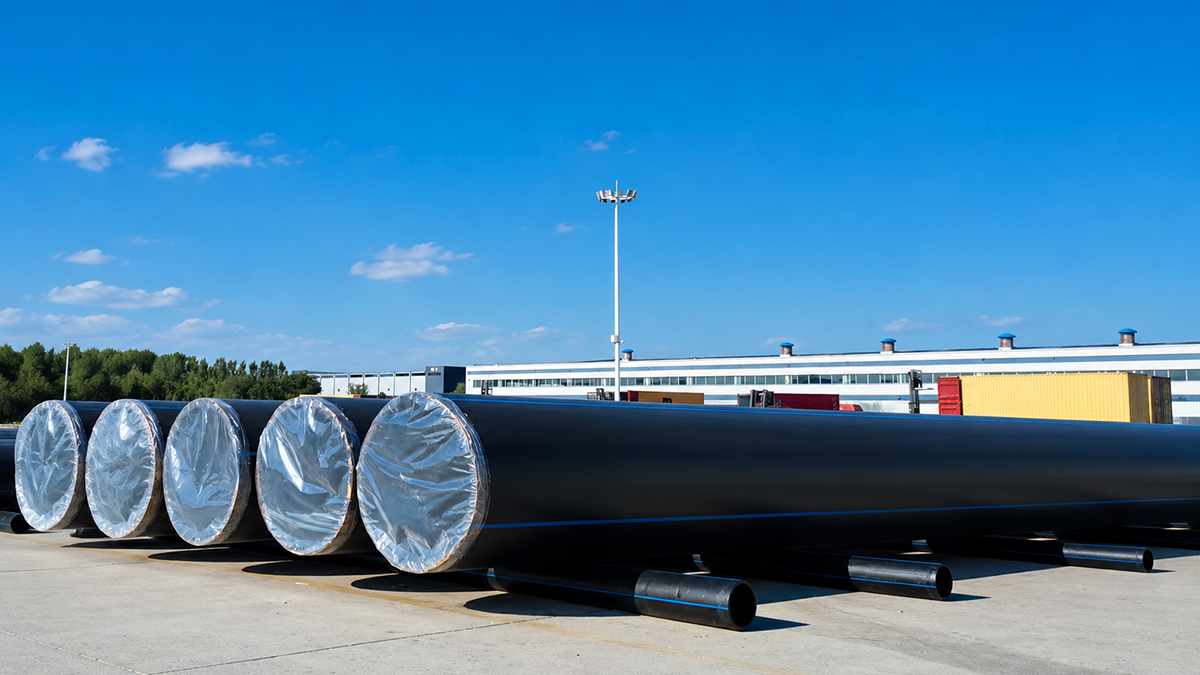
This Large Diameter HDPE Pipe guide explains standard sizes (OD 630–2000 mm+), SDR and PN ratings, key applications in water, sewage, mining, and marine projects, plus a practical pre-order checklist covering specs, certifications, MOQ, and supplier qualification for confident B2B procurement.
Engineered for massive municipal, industrial, and mining fluid networks, a large diameter HDPE pipe operates as a heavy-duty, high-density polyethylene pressure conduit. Industry standards classify any outside diameter (OD) starting at 630 mm as “large diameter.” However, top-tier manufacturing facilities push these limits much further, extruding pipes up to DN3000 mm. Manufacturers extrude these rugged pipelines using premium PE100 resin. The resulting products meet strict global infrastructure benchmarks, including ISO 4427, EN 12201, and AWWA C906.
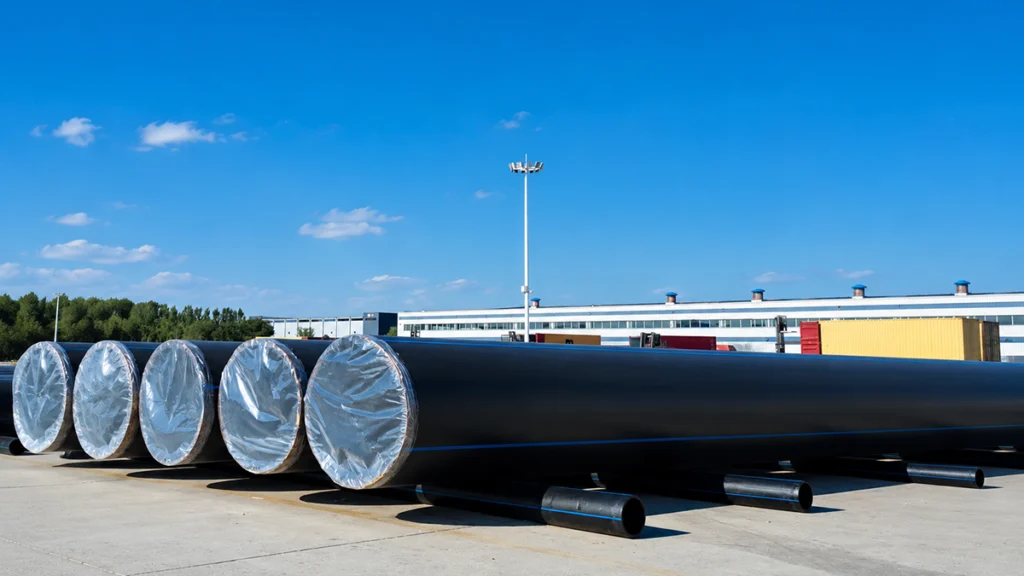
When planning modern infrastructure, engineers frequently weigh HDPE against ductile iron. High-density polyethylene wins out by offering a much longer lifespan, absolute immunity to corrosion, and seamless, monolithic joints. Unlike heavy metals or concrete, HDPE drastically slashes total lifecycle costs.
| Feature | Large Diameter HDPE Pipe | Ductile Iron Pipe | Steel Pipe | Concrete Pipe |
|---|---|---|---|---|
| Weight | ~1/8th of ductile iron | Very heavy | Heavy | Extremely heavy |
| Corrosion Resistance | 100% resistant (no coating needed) | Requires protective coating/lining | Requires cathodic protection/coating | Susceptible to chemical attack |
| Jointing Method | Thermal butt fusion (leak-proof) | Mechanical bell-and-spigot (prone to leaks) | Welding / Flanged | Bell-and-spigot with gaskets |
| Lifespan | 50 to 100+ years | 50 years (depending on soil/coating) | 40-50 years | 50 years |
| Hydraulics | Hazen-Williams C=150 (constant) | C=140 (degrades over time) | C=130-140 (tuberculation risk) | C=120-130 |
The physical dimensions of your HEPE water pipe directly influence its pressure capacity and flow rate. We use the Standard Dimension Ratio (SDR) to map the relationship between the polyethylene pipe’s outside diameter and its minimum wall thickness. A constant SDR guarantees that pressure capabilities remain identical, regardless of how large the physical pe pipe gets.
Below is an HDPE pipe pressure rating chart PN10 PN16 detailing standard parameters for large diameter infrastructure:
| Outside Diameter (OD) | SDR 17 Wall Thickness (PN10 / 1.0 MPa) | SDR 11 Wall Thickness (PN16 / 1.6 MPa) |
|---|---|---|
| 630 mm | 37.4 mm | 57.2 mm |
| 800 mm | 47.4 mm | 72.7 mm |
| 1000 mm | 58.8 mm | 90.9 mm |
| 1200 mm | 70.6 mm | 109.1 mm |
| 1400 mm | 82.4 mm | 127.3 mm |
| 1600 mm | 94.1 mm | 145.5 mm |
| 1800 mm | 105.9 mm | 163.6 mm |
| 2000 mm | 117.6 mm | 181.8 mm |
Municipal Water Supply Networks
These massive conduits serve as the primary backbone for municipal distribution grids and trunk mains. Project engineers usually specify PE100 material ranging from SDR 17 to SDR 11 (PN10 to PN16). This ensures the network safely handles continuous municipal water pressure while eliminating expensive non-revenue water loss.
Sewage and Wastewater Management
Polyethylene totally blocks groundwater infiltration and sewage exfiltration thanks to its fully fused joints. For force mains, gravity sewers, and outfalls, wastewater systems typically rely on SDR 21 to SDR 26 (PN6 to PN8). Extreme high-pressure resistance takes a back seat here. Instead, engineers prioritize the material’s natural chemical resistance to corrosive effluents and hydrogen sulfide.
Mining and Slurry Transport
Mine dewatering and slurry transport operations punish HDPE pipelines with extreme abrasion. In these harsh environments, HDPE vastly outperforms steel. Mining operators deploy thicker-walled polyethylene pipes to survive heavy mechanical wear and high particulate flow, extending the polyethylene pipeline’s operational life.
Industrial and Marine Environments
Dredging operations, desalination plant outfalls, and cooling water intake lines rely heavily on large OD HDPE pipes. The material provides inherent flexibility and natural buoyancy. This unique combination makes it the absolute best choice for tricky industrial plant routing and complex marine sinking operations.
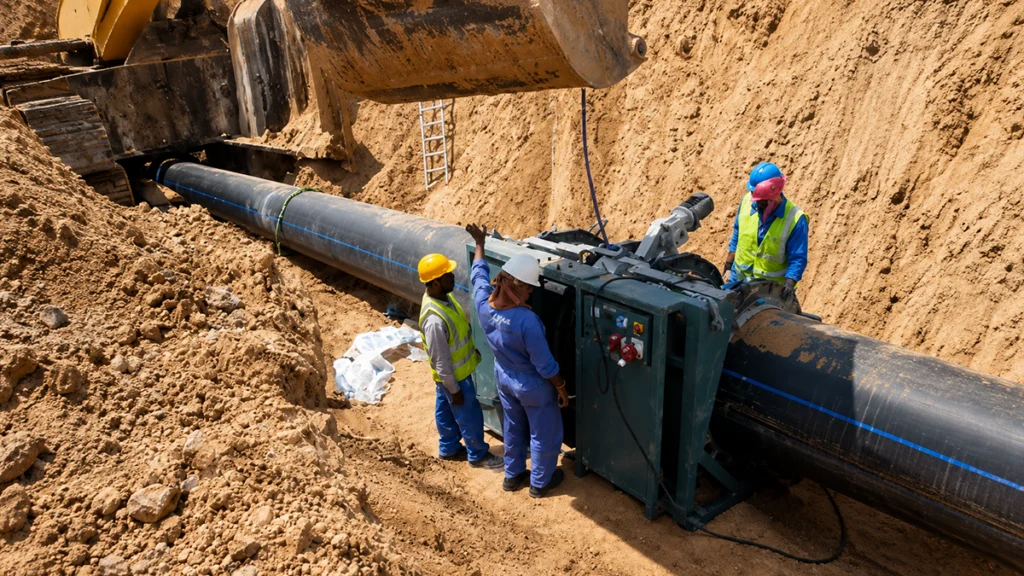
Understanding the mechanical limits of your HDPE pipe means looking closely at technical specifications. Modern third-generation high-density polyethylene compounds deliver exceptional hydrostatic strength alongside dynamic flexibility, even under heavy environmental loads.
| Technical Property | Specification / Parameter |
|---|---|
| Material Grade | PE100 (100% Virgin Resin) |
| Minimum Required Strength (MRS) | 10.0 MPa (Guarantees 50-year strength at 20°C) |
| Density | 0.955 – 0.960 g/cm³ |
| Tensile Strength at Yield | ≥ 23 MPa |
| Elongation at Break | > 600% (Provides extreme seismic resistance) |
| Operating Temperature | -40°C to 60°C |
| UV Resistance | 2.0% – 2.5% Carbon Black Compounding |
Finding the perfect HDPE tubing requires you to balance internal fluid dynamics with external environmental stressors. A systematic engineering approach helps you avoid costly over-specification while locking in long-term system integrity.
1. Determine Internal Diameter (ID): Calculate your required internal diameter based on target volumetric flow rates and acceptable velocity parameters.
2. Identify Pressure Requirements: Map out the maximum continuous working pressure. Do not forget to calculate potential transient surge pressures, such as water hammer.
3. Execute SDR Selection: Compare SDR 17 against SDR 11 based on your pressure needs. Thicker walls (SDR 11) manage higher pressures but shrink the internal flow area compared to thinner walls (SDR 17).
4. Verify External Load Capacity: Look closely at trench conditions, burial depth, and anticipated surface traffic. The large diameter HDPE pipe’s ring stiffness must withstand external deformation from soil compaction and heavy loads.
*Worked Example:* Consider a 1000 mm municipal trunk main operating at a continuous 1.0 MPa working pressure in standard trench conditions. The optimal engineering choice here is PE100 SDR 17 PN10.
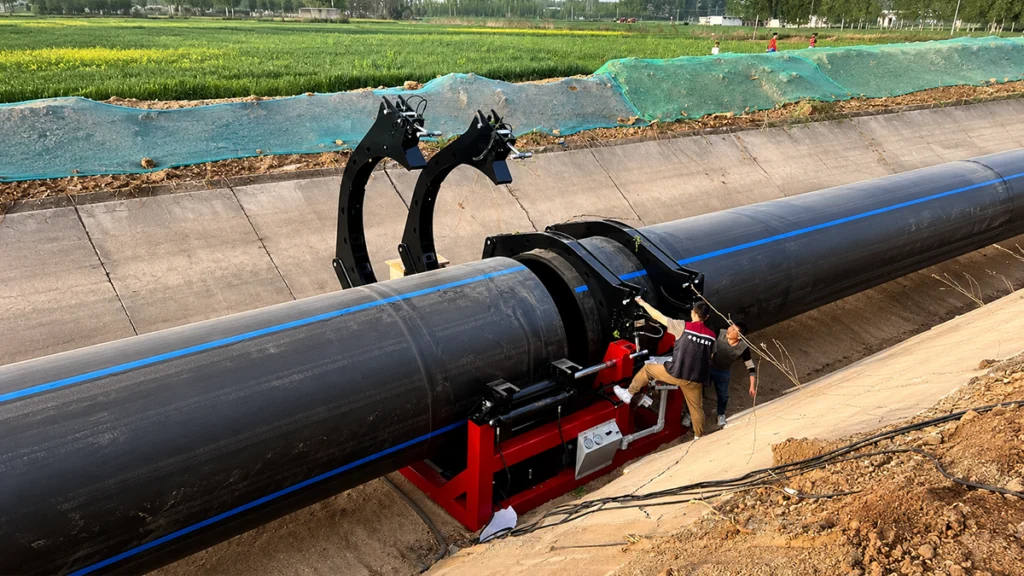
Thermal butt fusion remains the primary method for installing and joining large diameter HDPE pipes. This technique creates a continuous, monolithic HDPE pipe. By eliminating mechanical joints entirely, you neutralize the risk of root intrusion or joint leaks.
Thanks to its high tensile strength and >600% elongation at break, large diameter HDPE also dominates trenchless installation. Contractors frequently use Horizontal Directional Drilling (HDD) and sliplining to rehabilitate aging iron or concrete infrastructure.
Figuring out the price per meter for large diameter HDPE pipe requires a look at manufacturing, material, and logistical variables.
Primary Cost Drivers:
MOQ and Lead Time Dynamics:
International shipping logistics heavily influence Minimum Order Quantities (MOQ) and lead times. The volume required to maximize a 1×40’HC container or specialized open-top freight usually dictates the MOQ. While the industry average lead time sits between 15 and 45 days, high-capacity manufacturers change the math. For example, leveraging a manufacturer like JINQUAN—which operates a 200-acre facility with a 100,000+ ton annual capacity—often shrinks delivery times for standard specifications down to just 7 to 15 days.
Sourcing bulk infrastructure materials demands strict quality verification. Procurement teams should run through this 8-point checklist before authorizing any major order:
1. Resin Purity Verification: Demand hard proof of 100% virgin PE100 resin. Recycled regrind causes brittle failure and instantly voids pressure ratings.
2. Standards Compliance: Check for active ISO 4427, EN 12201, or AWWA C906 certifications based on your region’s requirements.
3. Dimensional Accuracy: Ensure the exact OD, SDR, and minimum wall thickness tolerances align perfectly with your engineering drawings.
4. Test Reports: Ask for factory hydrostatic pressure test documentation alongside melt flow rate (MFR) batch reports.
5. UV Protection Validation: Verify that the compound includes 2.0% to 2.5% uniformly dispersed carbon black. This protects polythylene pipes stored above ground.
6. Supplier Extrusion Capacity: Confirm the manufacturer actually owns the high-speed extrusion lines needed to handle ODs up to 2000mm+ without lagging production.
7. Logistics and Packaging: Review their export packaging methods. Large diameter Pipes exceeding 1200mm OD almost always require specialized open-top containers or break-bulk shipping.
8. Fittings Compatibility: Make sure the supplier can also provide precise large-diameter fabricated fittings or electrofusion solutions. You need a complete network, not just raw PE pipe.
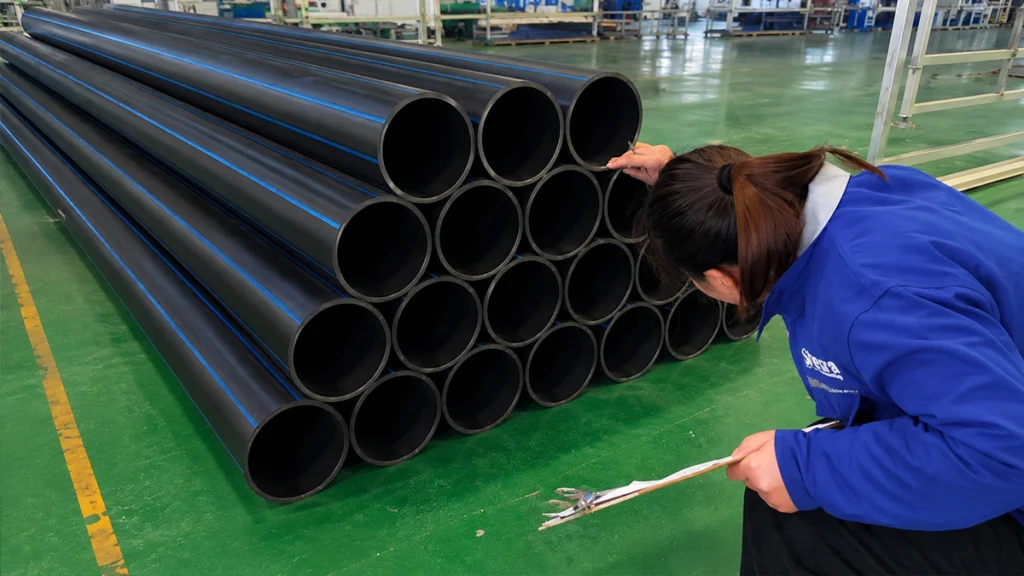
Selecting a large diameter HDPE pipeline is a multi-decade commitment. Procurement teams cannot afford to base decisions on price alone. A buried asset meant to last 50 years requires strict adherence to precise SDR and PN ratings, plus the verified use of 100% virgin PE100 material. Cutting corners with inferior materials or inaccurate wall thicknesses inevitably triggers catastrophic failures under industrial or municipal pressures. Smart B2B buyers lean on factory-direct manufacturing, robust engineering support, and aggressive quality control protocols. By vetting supplier capacity, demanding certified hydrostatic test reports, and confirming international standard compliance, project managers lock in a highly reliable, leak-proof system engineered for exact hydraulic demands.
What is the largest diameter HDPE pipe available on the market?
Standard municipal sizes typically top out around 1600 mm or 2000 mm. However, advanced manufacturers like JINQUAN possess the heavy-duty machinery required to extrude HDPE pipes up to DN3000 mm. Engineers use these massive dimensions for specialized industrial applications, high-volume cooling water intake lines, and marine outfalls. Successfully securing HDPE tubing of this magnitude requires a supplier with robust quality control, specialized extrusion lines, and deep international logistics expertise.
What is the price per meter of large diameter HDPE pipe?
Pricing fluctuates based on the outside diameter, the chosen wall thickness (SDR), and the current global market rate for virgin PE100 resin. Because thicker walls demand more raw material, they naturally increase the price. Specialized export packaging and third-party testing also influence the final quotation. Partnering with factory-direct manufacturers ensures you get competitive pricing without sacrificing material purity or essential standard certifications.
Is HDPE pipe better than ductile iron pipe for large diameter water mains?
Yes, high-density polyethylene holds a massive advantage over ductile iron for large diameter applications. HDPE weighs roughly one-eighth as much as ductile iron, utilizes leak-proof thermal butt fusion joints, and remains completely immune to rust and galvanic corrosion. While ductile iron requires external coatings and internal linings to survive, HDPE maintains a constant Hazen-Williams C-factor of 150. This guarantees optimal hydraulic flow for decades without tuberculation or degradation.
How long does a large diameter HDPE pipe last underground?
When properly specified and installed, a large diameter HDPE pipe boasts a 50 to 100-year design life underground. The PE100 material features a Minimum Required Strength (MRS) of 10.0 MPa, which guarantees structural integrity at 20°C over the long haul. Because it ignores soil corrosion, chemical degradation, and root intrusion, the HDPE pipeline remains fully operational for decades, bypassing the heavy maintenance required by concrete or metal alternatives.
What is the MOQ for ordering OD 1000 mm HDPE pipe from a manufacturer?
Factory production schedules and international shipping logistics usually dictate the Minimum Order Quantity (MOQ) and lead time. For an OD 1000 mm polyethylene pipe, the MOQ generally aligns with the volume needed to fill an open-top container or a standard 1×40’HC container. The industry average lead time runs between 15 and 45 days, though high-capacity manufacturers can frequently expedite standard specifications in just 7 to 15 days.
Can large diameter HDPE pipe be used for high-pressure applications?
Absolutely. You can safely adapt large diameter HDPE pipes for high-pressure environments simply by adjusting the Standard Dimension Ratio (SDR). Lowering the SDR increases the wall thickness relative to the outside diameter, driving up the pressure rating. For example, an SDR 11 PE100 PE pipe delivers a robust PN16 rating. This equates to a maximum working pressure of 1.6 MPa (or 232 psi), making it perfect for pressurized municipal trunk mains.
What certifications should a large diameter HDPE pipe supplier have?
A reputable manufacturer must carry stringent international certifications to prove their product’s quality. Look for ISO 4427 for water supply systems, EN 12201 for European standards, and AWWA C906 for North American markets. Beyond product standards, the supplier should readily provide melt flow rate (MFR) data, factory hydrostatic pressure test reports, and facility-level credentials like ISO 14001 and ISO 9001.
How is large diameter HDPE pipe shipped internationally in containers?
Moving massive physical dimensions across the ocean requires specialized logistical planning. Standard sizes up to 1000 mm or 1200 mm OD can often be nested inside 1×40’HC containers. However, large diameter HDPE pipes exceeding 1200 mm OD generally demand flat rack shipping, break-bulk cargo vessels, or specialized open-top containers. To prevent transit damage, manufacturers must utilize secure lashing and robust export packaging.
Securing the right large diameter piping is a foundational move that dictates the long-term success of major fluid transport projects. Whether you are building municipal water trunk mains or highly abrasive mining slurry lines, PE100 material consistently outperforms traditional metal and concrete. Its zero-corrosion properties, monolithic butt fusion joints, and constant hydraulic efficiency give it a massive edge. Ultimately, project success hinges on precise engineering calculations—specifically matching the correct Standard Dimension Ratio (SDR) and pressure rating (PN) to your system’s hydraulic needs. Verifying that your manufacturer uses 100% virgin resin, maintains strict ISO dimensional tolerances, and wields the necessary extrusion and logistical capacity remains non-negotiable for delivering a durable, 50-year asset.