Address
Zhengzhou, Henan, China
Work Hours
Monday to Friday: 7AM - 7PM
Weekend: 10AM - 5PM
Address
Zhengzhou, Henan, China
Work Hours
Monday to Friday: 7AM - 7PM
Weekend: 10AM - 5PM

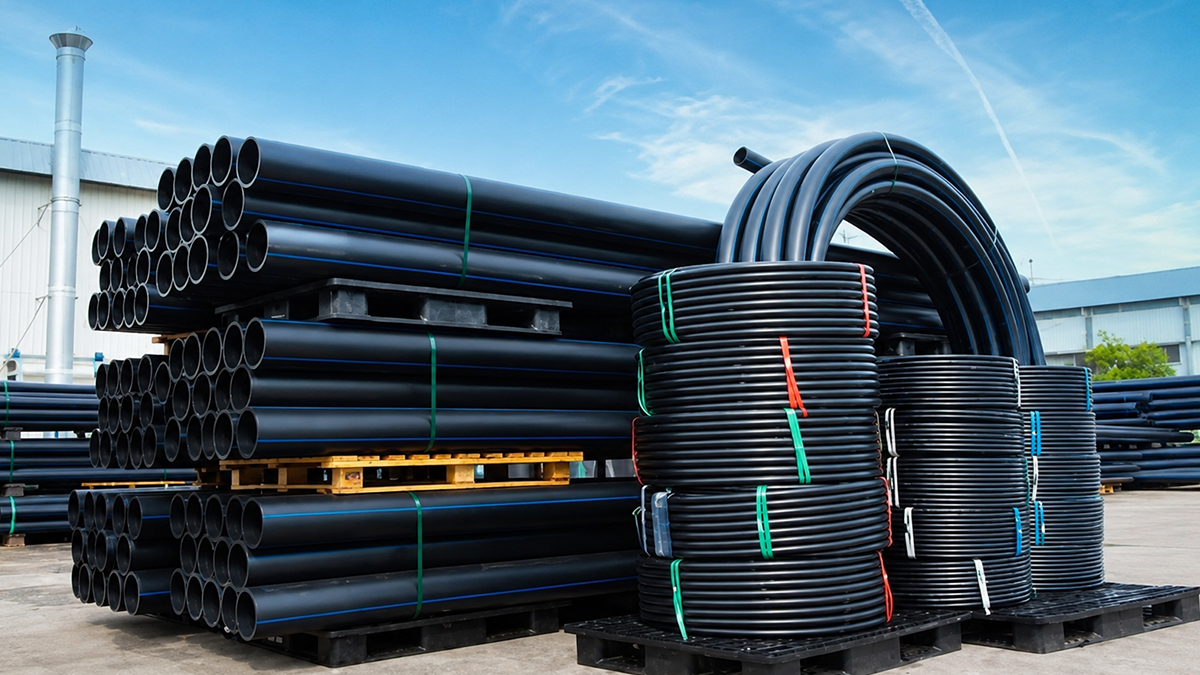
This Industrial HDPE Pipe guide explains material grades, pressure ratings, chemical resistance, and installation best practices for chemical transfer, wastewater, and cooling water systems—helping engineers and B2B buyers specify, compare, and procure the right pipe with confidence.
High-density polyethylene (HDPE) pipe serves as the backbone for demanding industrial fluid transport. Engineered to tackle high-pressure environments and corrosive materials, these heavy-duty pipes offer unmatched defense against harsh chemicals, physical wear, and sudden pressure spikes. Because of this resilience, you’ll find them operating at the core of modern process plants, cooling networks, and wastewater treatment facilities.
Three primary grades of polyethylene dominate industrial applications today:
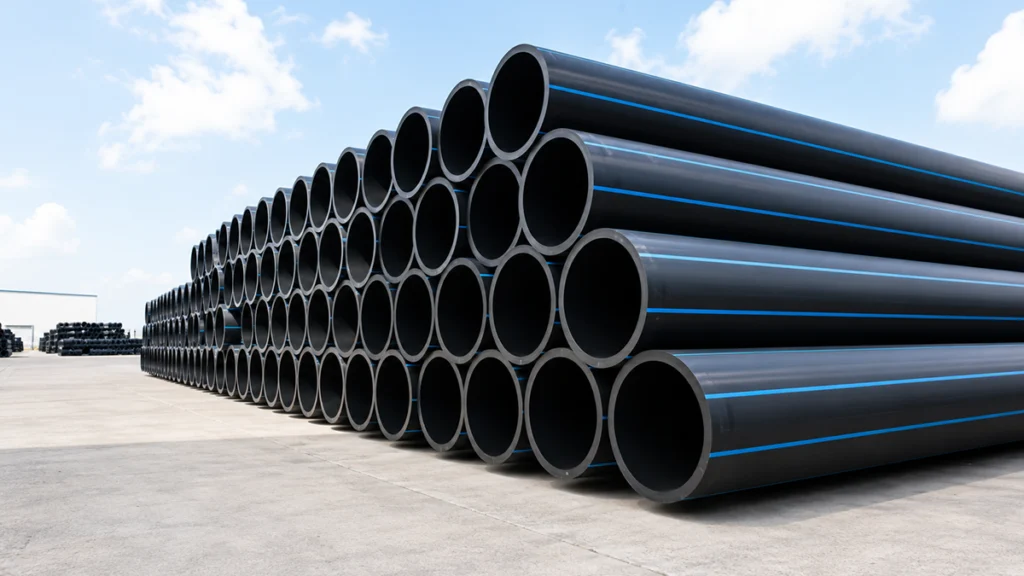
When evaluating industrial HDPE pipe, engineers look closely at three defining metrics: the Standard Dimension Ratio (SDR), the Nominal Pressure (PN), and the specific material grade. The SDR simply calculates the ratio of the pipe’s outside diameter against its minimum wall thickness. A lower SDR number translates to a thicker wall, which naturally yields a higher pressure capacity.
JINQUAN produces these pipes in a massive array of sizes, spanning from a compact DN16 all the way up to massive DN3000 dimensions. Every batch complies strictly with major global standards, including ISO 4427, EN 12201, ASTM F714, and ASTM D3035.
| SDR Rating | Typical PE100 Pressure Class at 20°C | DN110 Nominal Minimum Wall Thickness | Typical Design Considerations |
|---|---|---|---|
| SDR17 | PN10 (10 bar) | 6.6 mm | Moderate-pressure water, effluent, and cooling-water systems |
| SDR11 | PN16 (16 bar) | 10.0 mm | Higher-pressure process water and industrial transfer lines |
| SDR9 | PN20 (20 bar) | 12.3 mm | Higher operating or surge-pressure requirements |
| SDR7.4 | PN25 (25 bar) | 15.1 mm | High-pressure systems subject to project-specific engineering verification |
Pressure classes and wall thicknesses shown are typical reference values for PE100 pipe at 20°C. Final SDR selection should consider operating and surge pressure, temperature, transported medium, installation method, external loads, and the applicable project standard.
Thanks to its highly inert, non-polar polymer structure, industrial HDPE piping handles aggressive fluids with ease. It effectively transports strong alkalis, salts, and acids at ambient temperatures. However, engineers must exercise caution: the material’s chemical resistance weakens significantly when it encounters concentrated hydrocarbons or strong oxidizers.
Safe process engineering relies heavily on an accurate chemical resistance chart. The table below breaks down exactly how PE100 pipes perform when exposed to standard industrial chemicals at 20°C.
| Chemical | Concentration | Resistance Rating at 20°C |
|---|---|---|
| Hydrochloric Acid (HCl) | 30% | Excellent |
| Sulfuric Acid (H2SO4) | 50% | Excellent |
| Sulfuric Acid (H2SO4) | 70% | Good (Temperature dependent) |
| Sodium Hydroxide (NaOH) | 50% | Excellent |
| Sodium Hypochlorite (NaClO) | 15% | Excellent |
| Phosphoric Acid (H3PO4) | 50% | Excellent |
| Nitric Acid (Fuming) | 100% | Not Recommended |
| Acetone | 100% | Good / Limited |
| Diesel Oil | 100% | Limited / Not Recommended |
| Toluene | 100% | Not Recommended |
| Benzene | 100% | Not Recommended |
| Methanol | 100% | Excellent |
| Sea Water | – | Excellent |
| Ammonia, aqueous | All | Excellent |
| Hydrogen Peroxide | 30% | Good |
Limitations: You should not specify HDPE for handling liquid halogens, strong oxidizing acids like fuming nitric acid, or specific halogenated and aromatic hydrocarbons. Over time, hydrocarbons will permeate the polymer matrix. This causes the material to swell, which drastically compromises the PE pipe’s structural integrity.
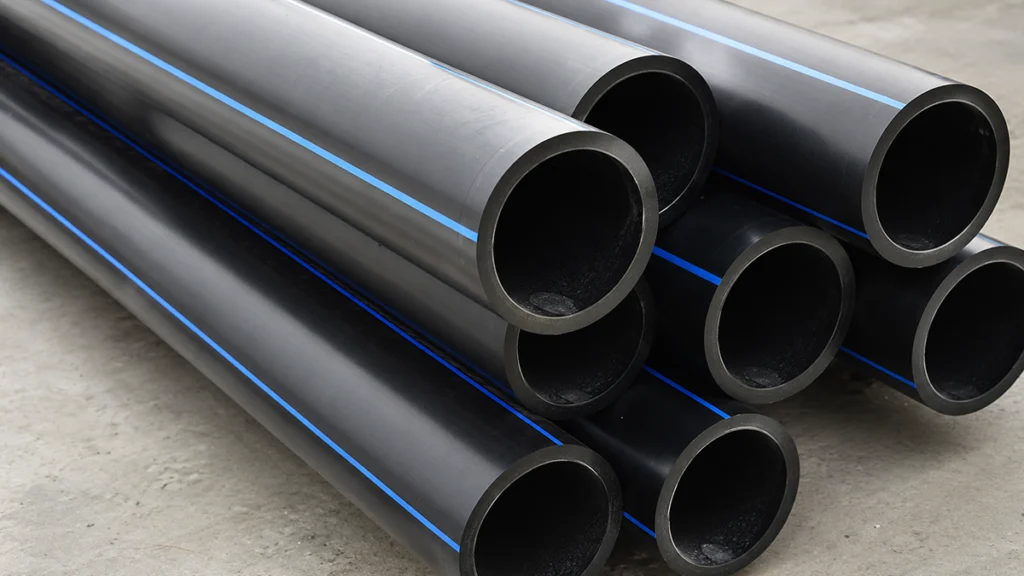
Wastewater treatment plants present uniquely hostile environments. Fortunately, HDPE piping is custom-engineered to survive abrasive suspended solids, wildly fluctuating pH levels, and highly corrosive biological activity. Concrete and steel degrade or rust under these conditions, but polyethylene easily resists scaling and degradation from harsh industrial effluents.
Imagine a massive paper mill discharging effluent through 100 gpm RO VSEP (Reverse Osmosis Vibratory Shear Enhanced Processing) units, or a sprawling municipal industrial park managing centralized wastewater. These specific operations routinely blast HDPE pipes with abrasive slurries and extreme pH swings ranging from 1 to 14. PE100 pressure pipes absorb these brutal conditions effortlessly. They maintain their full flow capacity without suffering from any internal scaling.
For gravity-flow effluent lines operating without pressure in these same plants, solid-wall pipes might be overkill. Instead, JINQUAN Double-Wall Corrugated (DWC) pipes featuring SN4 or SN8 ring stiffness serve as a highly cost-effective, perfectly optimized alternative.
Managing thermal dynamics and sudden pressure surges in both open and closed cooling loops demands precise engineering. High-density polyethylene offers exceptional corrosion resistance, yet it also carries a high thermal expansion coefficient. System designers must account for this characteristic from day one.
HDPE’s thermal expansion coefficient hovers around 0.15 to 0.20 mm/m/°C (roughly 120 × 10⁻⁶/°C). To put that into perspective, it expands about ten times more than steel. If you run a 100-meter line of HDPE pipe and the temperature jumps by 20°C, that PE pipe will grow by 300mm to 400mm (0.3 to 0.4 meters).
To safely integrate HDPE into your cooling water infrastructure, follow these critical steps:
1. Calculate Support Spacing: HDPE is inherently flexible. Above-ground cooling lines demand continuous support or tightly spaced hangers. For instance, a DN110 SDR11 pipe operating at 20°C needs structural support roughly every 1.5 meters to prevent it from sagging.
2. Design Thermal Expansion Loops: Fluctuating water temperatures cause linear expansion and contraction. You must install directional anchors or engineered thermal expansion loops to safely absorb this movement.
3. Implement Surge Protection: Pump start-up and shutdown cycles generate intense water hammer. Protect the flexible PE100 matrix by integrating pressure relief valves and air release valves throughout the system.
Pinning down the right industrial piping material means striking a balance between chemical compatibility, pressure capacity, lifecycle costs, and temperature limits. Looking at PE100 versus PE80 is merely the starting point. Smart engineering requires weighing HDPE against alternative materials like PVC pipe, Steel, GRP, and PPR.
| Material | Typical Service Temperature | Pressure Capability | Chemical Resistance | Typical Design Life | Relative Cost | Installation Considerations |
|---|---|---|---|---|---|---|
| HDPE (PE100) | Typically up to 60°C with pressure derating | Varies by SDR and diameter; commonly available up to PN25 | Broad chemical resistance; verify oxidizers, hydrocarbons, concentration, and temperature | Commonly designed for 50+ years | Moderate | Lightweight; requires butt fusion, electrofusion, or approved mechanical connections |
| PVC-U | Typically up to 60°C with pressure derating | Varies by pipe class and diameter; commonly available up to PN16 | Broad resistance to many acids, alkalis, and salts | Commonly 25–50+ years | Low to moderate | Lightweight and commonly solvent-jointed; lower impact resistance than HDPE |
| Carbon Steel | Suitable for a wide temperature range, depending on grade and design | Suitable for high pressures, depending on wall thickness and system design | Depends on the transported medium; coatings, linings, or corrosion allowance may be required | Depends on corrosion protection and operating conditions | High | Heavy; usually requires welding, lifting equipment, and corrosion protection |
| GRP | Depends on the resin system and manufacturer | Project-specific; available in different pressure classes | Generally good; resin compatibility must be confirmed for the specific chemical | Commonly designed for 50+ years | High | Lightweight but relatively rigid; requires controlled handling, jointing, and bedding |
| PPR / PP-RCT | Depends on pipe series and temperature-pressure class | Varies by SDR, temperature, diameter, and product standard | Good resistance to many aqueous chemicals | Commonly designed for up to 50 years under specified conditions | Moderate | Heat-fusion joining; generally used for small- and medium-diameter piping systems |
When deciding between HDPE and PVC for industrial use, the debate usually centers on dynamic stress. HDPE absorbs fatigue and water hammer brilliantly. PVC, being much more brittle, often falls victim to fatigue cracking under dynamic pressure loads. Stacked against steel, HDPE brings 100% corrosion resistance to the table, entirely wiping out the need for expensive cathodic protection. However, if your process involves high-temperature hot water pushing up to 95°C, PPR easily outperforms HDPE.
Fusing HDPE pipes requires absolute precision. To forge a joint as robust as the parent pipe itself, operators must strictly adhere to specific cooling, pressure, and temperature parameters. Butt fusion welding remains the most dependable and widely used method for industrial piping networks.
Step-by-Step Butt Fusion Procedure:
1. Clean & Align: Lock the polyethylene pipes firmly into the butt fusion welding machine clamps. Wipe the pipe ends down completely to strip away all moisture, grease, and dirt.
2. Face: Shave the pipe ends using a milling cutter until they sit perfectly smooth and parallel to each other.
3. Heat: Press the PTFE-coated heater plate against the ends. Depending on standards like DVS 2207 or ASTM F2620, temperatures usually range between 200–230°C. Keep the plate applied until a uniform melt bead rolls back around the entire circumference.
4. Fuse: Pull the heater plate away quickly. Immediately drive the molten HDPE pipe ends together using precisely calculated hydraulic pressure.
5. Cool: Maintain that steady pressure while the joint cools naturally. Never try to speed up the cooling process with wet cloths or water. Artificial cooling creates internal stress that severely weakens the weld.
Pre-Commissioning Pressure Testing Checklist:
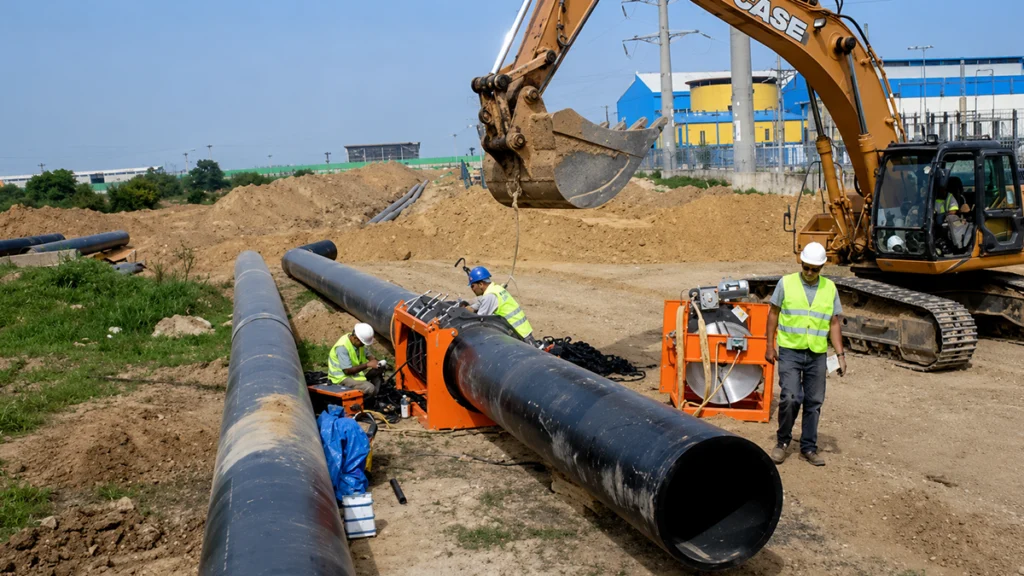
Securing a trustworthy HDPE pipe manufacturer demands a deep dive into their quality control infrastructure, resin sourcing practices, and actual production capacity. Industrial piping represents a major capital investment. Procurement teams have to look much further than the basic cost-per-meter.
Cost Breakdown Factors:
Supplier Audit Checklist:
1. Demand verified ISO 9001 (Quality) and ISO 14001 (Environmental) certifications.
2. Request raw material traceability documents proving the use of 100% virgin PE100 resin.
3. Verify their in-house laboratory testing capabilities, specifically for hydrostatic pressure, melt flow rate, and tensile strength.
4. Check extrusion capacity and ensure guaranteed lead times (for example, JINQUAN boasts a 100,000+ ton annual capacity with a rapid 7-15 day lead time).
5. Confirm strict adherence to dimensional quality control for outside diameter (OD) and wall thickness tolerances.
6. Ensure they offer matching fittings, whether fabricated, electrofusion, or butt fusion.
7. Look for a supplier capable of providing welding machines to deliver a complete, end-to-end pipeline solution.
8. Validate their track record handling export packaging and international logistics.
Specifying industrial HDPE pipe is not a simple task; it involves navigating tricky environmental variables and complex fluid dynamics. If you ignore thermal expansion, surge pressures, or chemical compatibility, you risk catastrophic system failures and bleeding money through operational downtime.
1. Ignoring thermal expansion in above-ground lines.
*Consequence:* Severe sagging, pipe buckling, or sheared joints at fixed connection points.
*Mitigation:* Engineer adequate thermal expansion loops and calculate the exact anchor spacing required.
2. Sizing pressure rating based on steady flow alone.
*Consequence:* The pipe ruptures or the system fails entirely due to unexpected water hammer and surge pressure.
*Mitigation:* Build in a reliable surge margin by stepping down one SDR class (for example, choose SDR11 instead of SDR17).
3. Incorrect butt fusion heater temperature (<200°C).
*Consequence:* The formation of cold welds that leave joints brittle and mechanically compromised.
*Mitigation:* Use data-logging welding machines and strictly monitor the temperature of the heater plates.
4. Poor trench preparation with sharp rocks.
*Consequence:* Rocks create point loading on the pipe’s exterior, eventually causing slow crack growth (SCG) over time.
*Mitigation:* Lay down proper sand bedding, or upgrade to PE100-RC pipe if the soil conditions are too harsh.
5. Using standard HDPE for concentrated hydrocarbons.
*Consequence:* Chemical permeation occurs, the polymer matrix swells, and structural integrity vanishes.
*Mitigation:* Always cross-reference detailed chemical resistance charts against your specific fluid temperatures and concentrations.
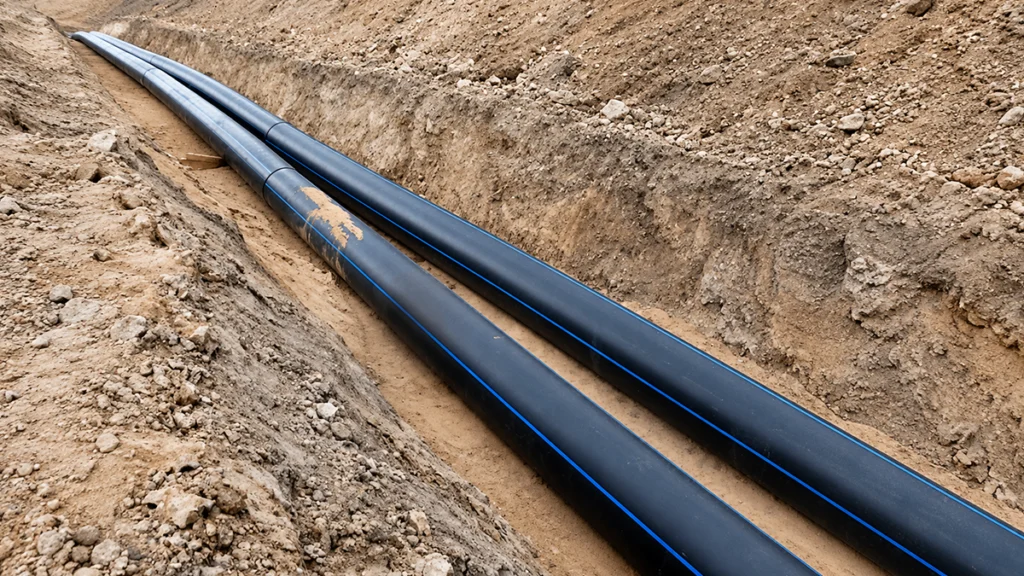
Selecting the perfect industrial HDPE pipe requires methodically evaluating your specific fluid profile, operating environment, and lifecycle expectations. Stick to a structured selection process to guarantee optimal performance and safety.
1. Define Fluid Profile: Pinpoint the exact chemical composition, concentration percentages, and pH levels of the transported medium.
2. Determine Operating Parameters: Lock in the maximum continuous operating temperature and calculate peak surge pressures.
3. Select Material Grade: Opt for standard PE100 for typical industrial pressure. Choose PE100-RC for harsh soils and trenchless installations, or pivot to PPR if your system moves high-temperature water.
4. Calculate SDR: Look at your required Nominal Pressure (PN) rating to figure out the exact Standard Dimension Ratio (SDR) and necessary wall thickness.
5. Choose Joining Method: Use butt fusion for standard long runs. Switch to electrofusion for cramped spaces, and rely on flanged connections when tying into valves and pumps.
6. Assess Environment: Factor in thermal expansion for above-ground lines and ensure the pipe has adequate carbon black compounding to survive UV exposure.
7. Evaluate Supplier: Audit your manufacturer’s extrusion capacity, lead times, and quality control processes to keep your project schedule on track.
HDPE has good resistance to many acids and alkalis. At approximately 20°C, some PE grades may be suitable for sulfuric acid or sodium hydroxide at specified concentrations. However, compatibility depends on concentration, temperature, pressure, exposure time, resin grade, and joint materials. For concentrated chemicals or elevated temperatures, obtain written confirmation from the pipe-material manufacturer before final selection.
Many HDPE pressure-pipe systems can operate at temperatures up to approximately 60°C, but allowable pressure decreases as temperature rises. The actual limit depends on the resin grade, SDR, service life, transported medium, and manufacturer’s temperature-derating data. For continuous higher-temperature service, alternative materials may need to be evaluated.
HDPE pressure pipelines are commonly designed for long-term service, often using a 50-year design basis under specified operating conditions. Actual service life depends on material grade, pressure, temperature, chemical exposure, installation quality, jointing, external loads, and maintenance. Correctly specified PE100 systems may remain in service for considerably longer, but a fixed 50–100-year lifespan should not be guaranteed for every wastewater project.
Yes. Black HDPE pipe containing properly dispersed carbon black is commonly used in above-ground outdoor applications because carbon black provides UV protection. However, above-ground design must also consider thermal expansion, supports, anchoring, operating pressure, surface temperature, and manufacturer requirements. PPI references generally identify black PE pipe containing about 2% or more carbon black as suitable for outdoor exposure
PE100 and PE100-RC both have a minimum required strength of 10 MPa. The principal advantage of PE100-RC is its enhanced resistance to slow crack growth, which can provide additional protection in demanding installation conditions such as trenchless construction, rocky ground, or areas with increased point loading. Final selection should follow the project standard, installation method, and verified material test requirements.
HDPE may offer a lower total cost of ownership in projects where its lighter weight, corrosion resistance, fusion jointing, and reduced need for coatings simplify installation and maintenance. However, lifecycle cost depends on pipe diameter, pressure, temperature, chemical service, installation method, fittings, supports, pumping requirements, repairs, and local labour costs. A project-specific lifecycle-cost comparison is more reliable than assuming HDPE is always the least expensive option.
Buyers should verify the manufacturer’s quality-management system, product test reports, raw-material traceability, dimensional inspection records, hydrostatic test documentation, and compliance with the applicable project standard. ISO 9001 and ISO 14001 relate to management systems, while standards such as ISO 4427 apply to defined water and pressure-drainage applications. Industrial chemical pipelines may require different product standards, design codes, or project-specific approvals.
HDPE is widely used for seawater intake, outfall, desalination, and cooling-water pipelines because it does not undergo the electrochemical rusting associated with metallic pipe. ISO 4427 also identifies sea outfalls and pipelines laid in water among its intended water-related applications. Final design must still consider temperature, pressure, marine growth, hydraulic surge, buoyancy, ballast, supports, joints, and external loading.
Selecting the right industrial HDPE pipe requires careful consideration of material grade, SDR, operating pressure, temperature, chemical compatibility, installation conditions, and applicable project standards. PE100 and PE100-RC can provide reliable solutions for chemical transfer, industrial wastewater, and cooling-water systems when correctly specified and installed.
Buyers should also verify fusion procedures, product test documentation, material traceability, production capability, and supplier support. A project-specific evaluation helps reduce avoidable risks and supports long-term pipeline performance.