Address
Zhengzhou, Henan, China
Work Hours
Monday to Friday: 7AM - 7PM
Weekend: 10AM - 5PM
Address
Zhengzhou, Henan, China
Work Hours
Monday to Friday: 7AM - 7PM
Weekend: 10AM - 5PM

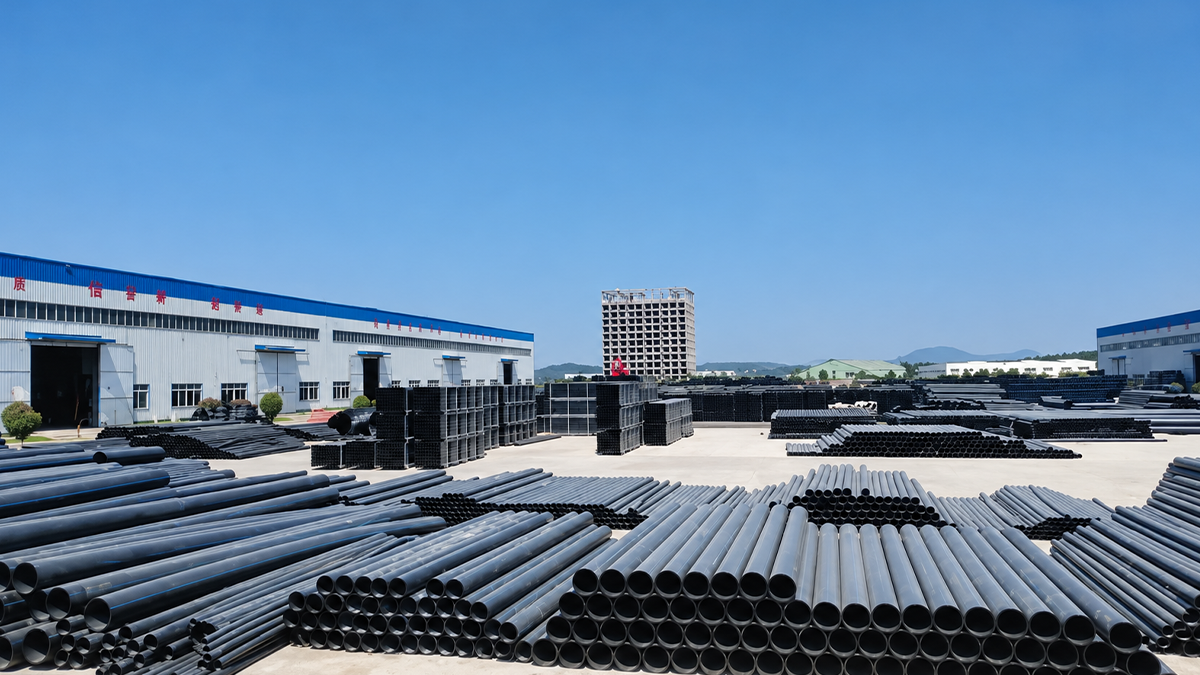
HDPE Pipes and Fittings for Slovakia helps buyers choose the right PE100 pipe system for water, sewer, gas, and industrial utilities, with guidance on standards, SDR, joining methods, costs, and supplier evaluation.
High-density polyethylene (HDPE) thermoplastic piping systems are purpose-built for municipal and industrial utility networks. By utilizing top-tier PE80 or PE100 polymer grades, these components ensure the secure, leak-proof transport of fluids and gases across tough infrastructural landscapes. For projects within the Slovak market, strict compliance with European regulatory frameworks is mandatory. Specifically, networks must meet EN 12201 standards for water supply and pressure drainage, while EN 1555 governs gaseous fuel distribution.
Modernizing Slovakia’s municipal infrastructure depends heavily on these highly durable polymer systems. A prime example is the Bratislavská vodárenská spoločnosť (BVS). They recently secured a EUR 50 million investment from the EIB to overhaul Bratislava’s water and wastewater infrastructure. To replace deteriorating legacy lines, they are turning to modern, leak-resistant piping materials like HDPE.
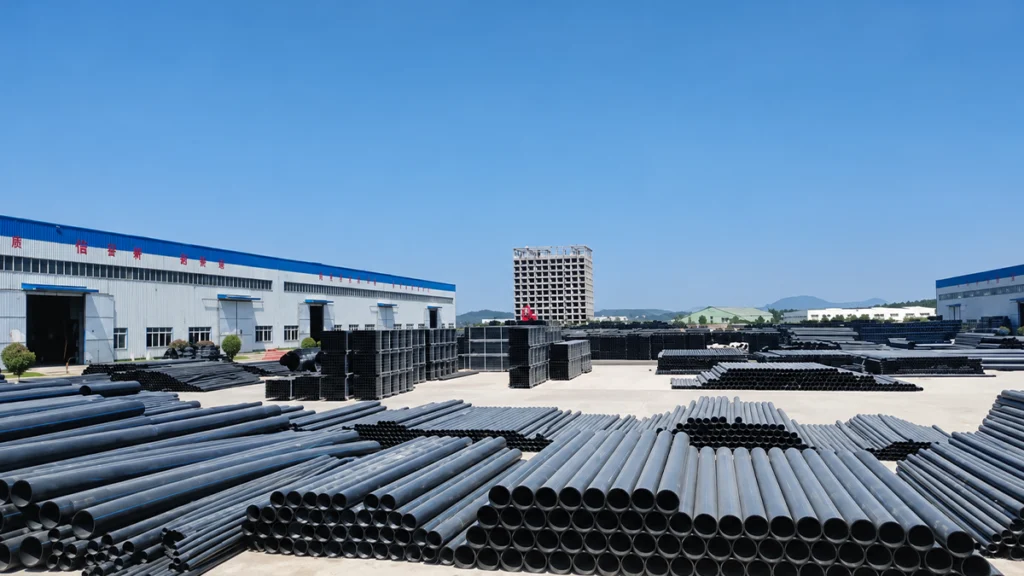
These piping systems offer outstanding hydraulic efficiency, boasting a Hazen-Williams C-Factor of 150. Because the internal surface stays perfectly smooth over its entire operational life, issues like scaling and tuberculation simply do not occur. This guarantees steady flow rates and cuts down the pumping energy needed to move water through municipal grids.
HDPE also brings serious resistance against surges and water hammer effects. In fact, the material easily handles transient surge pressures hitting up to 2.0 times its nominal pressure class. It supports flow velocities up to 14 ft/s without risking pressure ratings. Compare that to traditional choices like PVC, which cap out at just 5.5 ft/s. Beyond hydraulics, black HDPE pipes incorporate carbon black. This additive acts as a powerful shield against UV rays, making the pipes highly resilient during above-ground storage and long-term deployment.
| Feature | HDPE (PE100) | Ductile Iron (DI) | PVC |
|---|---|---|---|
| Corrosion Resistance | 100% resistant; no linings needed | Susceptible; high break rates | High resistance |
| Joint Integrity | Heat-fused, monolithic, leak-free | Mechanical joints with gaskets | Bell/spigot with cement/gaskets |
| Surge Capacity | 2.0x nominal pressure | Moderate | Low (brittle under surge) |
| Flexibility | High (bend radius 20-25x OD) | Rigid | Rigid |
A HDPE pipeline’s long-term performance hinges on two factors: the specific polymer grade and the integrity of its joints. Today’s utility projects generally call for one of two primary material grades:
To support these grades, JINQUAN produces a vast array of fitting types. The lineup covers butt fusion, electrofusion, socket fusion, fabricated fittings, and PP compression fittings. Heat fusion—specifically butt and electrofusion—serves as the primary jointing method. The process melts the polymer chains across the connecting surfaces. As it cools, the material forms a monolithic bond that is actually stronger than the pipe wall itself, completely bypassing the leak vulnerabilities found in traditional mechanical joints.
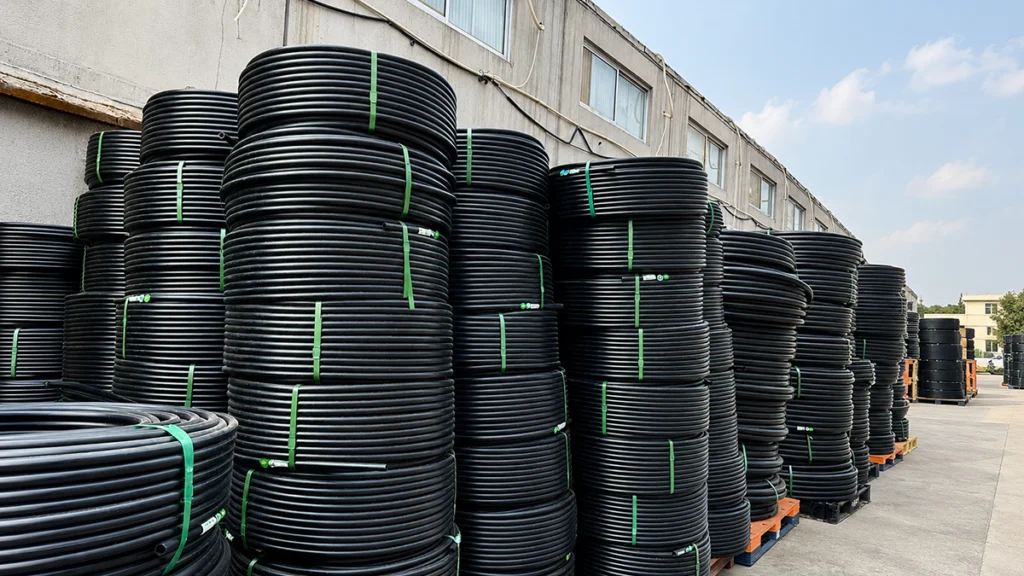
Nailing down the right technical parameters is non-negotiable if you want a safe, long-lasting system. JINQUAN’s manufacturing capabilities span an impressive diameter range, running from DN16 all the way up to DN3000. This breadth covers everything from basic residential service lines to massive municipal transmission arteries.
You also need to pay close attention to the Standard Dimension Ratio (SDR), which dictates both wall thickness and pressure rating. Lower SDR numbers mean thicker walls and a higher capacity for internal pressure. Temperature resilience is another major advantage. Because HDPE setups hold their structural integrity in environments ranging from -40°C to 60°C, they easily survive brutal, freezing Slovak winters without fracturing.
| Parameter | Specification | Details |
|---|---|---|
| SDR 11 | PN16 (16 bar / 1.6 MPa) | Standard for high-pressure water distribution. |
| SDR 17 | PN10 (10 bar / 1.0 MPa) | Cost-effective for moderate-pressure applications. |
| Wall Thickness (DN110 SDR11) | 10.0 mm | Thicker wall for heavy-duty transmission. |
| Wall Thickness (DN110 SDR17) | 6.6 mm | Thinner wall for lower pressure requirements. |
| Relevant Standards | EN 12201, EN 1555 | EU compliance for water, sewer, and gas. |
Thanks to its inherent versatility, HDPE supports a wide variety of infrastructure sectors throughout Slovakia.
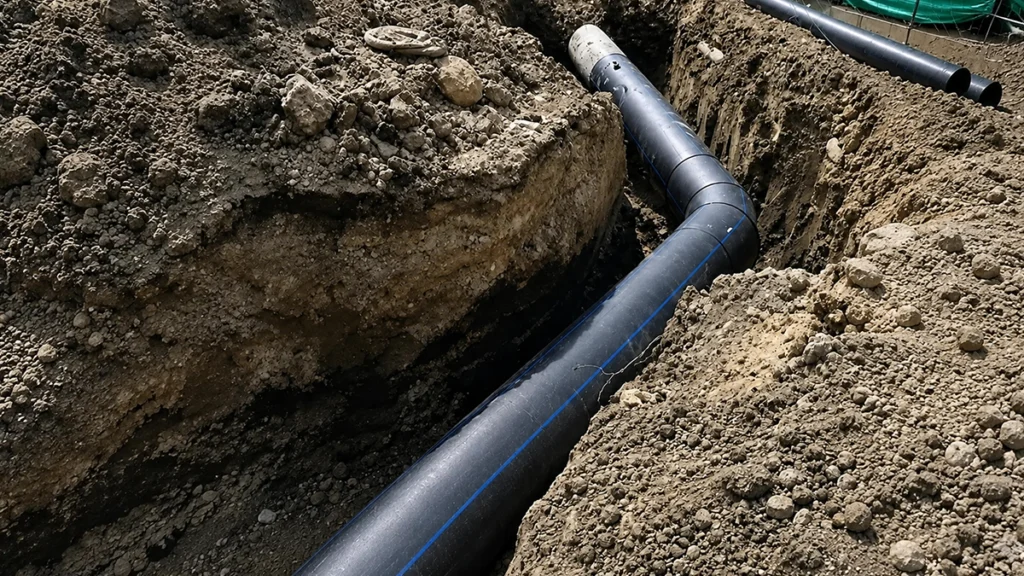
Finding the perfect HDPE system demands a systematic approach. You have to balance strict regulatory compliance with optimal hydraulic performance.
Step 1: Determine Medium & Standard
Start by identifying exactly what the HDPE pipeline will transport. You need to specify EN 12201 for water supply and pressure sewerage. If you are moving gaseous fuels, EN 1555 is the required standard.
Step 2: Calculate Pressure Class (PN)
Assess the maximum operating pressure while factoring in any potential surge events. Go with PN10 (SDR17) for basic gravity or low-pressure lines. For high-pressure mains, PN16 (SDR11) is the necessary choice.
Step 3: Size the Diameter (DN)
Base your HDPE pipe sizing on strict hydraulic calculations and required flow rates. Double-check that your selected diameter aligns properly with the chosen SDR so the wall thickness remains sufficient.
Step 4: Specify the Jointing Method
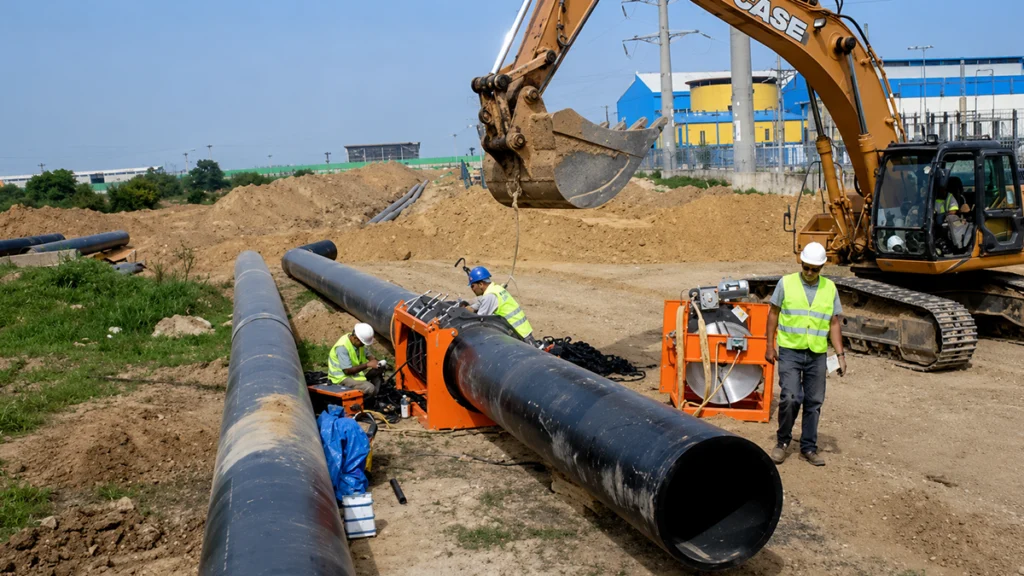
For long, straight open-trench runs where heavy butt fusion machine can easily maneuver, butt fusion is the way to go. However, if you are dealing with tight trenches, repair operations, or complex directional shifts with limited space, you should specify electrofusion.
*Case Example:* Imagine a municipal water upgrade in Bratislava that demands a 10-bar operating pressure with occasional surge spikes. To handle this safely, engineers would specify PE100, DN250, SDR11 (which carries a PN16 rating to absorb those surges). The system would need to be EN 12201 compliant and utilize butt fusion for the primary transmission lines.
Even the highest quality PE100 pipes will fail if installation crews ignore proper fusion parameters. You must perform butt fusion in ambient temperatures ranging from 5°C to 40°C. When the harsh Slovak winter drops temperatures below that 5°C threshold, contractors have to set up heated welding tents or enclosures. Failing to do so results in brittle, fundamentally compromised welds.
The temperature of the heating plate is a rigid variable. It must be calibrated exactly between 210°C and 230°C. Straying outside this window actually breaks down the polymer structure. Cooling times under pressure carry the exact same level of importance. For HDPE pipes smaller than DN110, you need to allow a minimum of 20 minutes. Diameters larger than DN110 require at least 30 minutes before you can safely release the pressure.
On the bright side, trenching requirements for HDPE are incredibly forgiving. Because the material is so flexible, crews can cold-bend it around underground obstacles. You can achieve a bend radius of 20 to 25 times the HDPE pipe’s outside diameter. This flexibility cuts down the need for manufactured HDPE pipe fittings and drastically reduces how wide the trench needs to be.
Sourcing HDPE pipes for European utility projects is a balancing act between unit costs, complex logistics, and lead times. For standard orders, JINQUAN operates on a reliable production lead time of 7 to 15 days.
When shipping to major Slovak hubs such as Bratislava or Košice, buyers typically choose from three distinct logistical routes:
Procurement isn’t without its risks. Specifying the wrong SDR is a common pitfall that can easily result in catastrophic pipe bursts when surge pressures hit. Buyers also have to navigate potential port congestion delays. Furthermore, compliance failures are a massive threat if you forget to explicitly verify EN 12201 or EN 1555 certification before signing off on an EU municipal order.
Vetting a supplier for the Slovak market means looking closely at two things: their manufacturing scale and their adherence to European compliance standards. JINQUAN runs a massive 200-acre manufacturing facility equipped with over 40 high-speed HDPE pipe extrusion lines and 60 injection molding machines. This setup pushes their annual output capacity well past the 100,000-ton mark.
Any qualified supplier absolutely must hold ISO 9001 (Quality Management) and ISO 14001 (Environmental Management) certifications. Beyond that, CE Marking is legally mandatory for the EU market, and you should always ask to see independent SGS testing reports.
To receive an accurate and actionable quotation, ensure your RFQ includes the following data points:
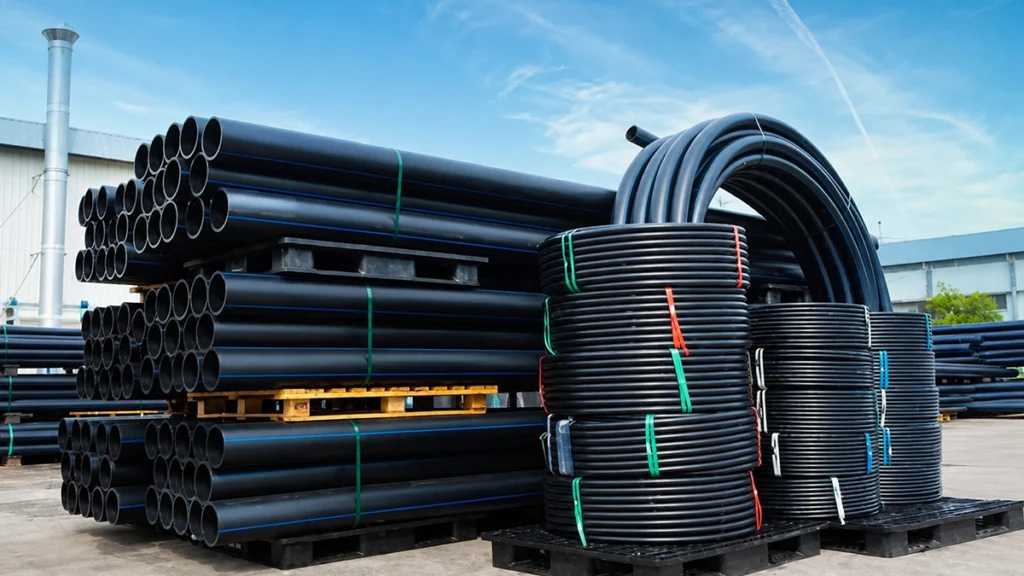
For municipal water projects across Slovakia, PE100 stands out as the superior grade. It boasts a Minimum Required Strength (MRS) of 10.0 MPa alongside fantastic resistance to rapid crack propagation. Compared to the older PE80, PE100 handles higher pressure capacities while utilizing thinner walls. That makes it the undisputed standard for modern, EN 12201 compliant drinking water systems.
Your Standard Dimension Ratio (SDR) relies entirely on your required operating pressure and the potential for system surges. SDR simply represents the ratio of the outside diameter to the wall thickness. A lower SDR equals a thicker pipe wall. Standard high-pressure water distribution usually requires SDR 11 (PN16). If you are designing a moderate-pressure or gravity-fed system, SDR 17 (PN10) offers a highly cost-effective alternative.
Q3: Are HDPE pipes suitable for cold-weather installation?
Absolutely. HDPE pipes handle an impressive operating temperature range from -40°C to 60°C, shrugging off freezing conditions without cracking. However, installation is a different story. When working in cold Slovak winters where temperatures drop below 5°C, contractors absolutely must use heated welding tents. This is the only way to ensure the heating plate stays within the strict 210°C-230°C range needed to forge a strong, monolithic fusion joint.
Slovak utility pipelines face rigorous European standards. Water supply, pressure drainage, and sewerage networks have to comply with EN 12201. Gaseous fuel distribution systems must align with EN 1555. On top of that, the actual manufacturing facility needs to hold ISO 9001 and ISO 14001 certifications. Finally, the products themselves must carry the CE Mark to be legally deployed anywhere in the EU.
Butt fusion serves as the primary method for joining long, straight runs of HDPE pipe in open trenches. It is highly cost-effective and creates a structurally monolithic joint. Electrofusion, on the other hand, relies on fittings with embedded heating coils. While it costs more, it is an absolute necessity for tight trenches, complex directional shifts, and repair jobs where bulky butt fusion machines simply cannot fit.
To get a precise quote and an accurate lead time, your RFQ needs specific details. You must include the intended application (like water or gas), the outside diameter (DN), and the necessary pressure rating (SDR or PN). Also, provide the total quantity in meters or pieces, the required European standard (such as EN 12201), and the final delivery location in Slovakia so the supplier can calculate logistics.
When they are extruded from premium PE100 resin and installed using strictly calibrated fusion parameters, HDPE utility pipelines boast a design life of 50 to 100 years. The material is 100% immune to corrosion and scaling, and its flexibility allows it to easily outlast rigid legacy materials like ductile iron or concrete in underground municipal settings.
Yes, HDPE is the industry standard for low- to medium-pressure natural gas distribution throughout Slovakia. These pipes must be manufactured to meet the strict EN 1555 standard. To ensure they are immediately recognized as hazardous gas lines during future excavations, they are either color-coded with yellow stripes or extruded entirely from yellow PE resin.
Pulling off a successful utility pipeline project in Slovakia comes down to precise material specification and rigid adherence to European regulatory standards. The foundational steps are straightforward: select the right PE100 grade, match your Standard Dimension Ratio (SDR) to the system’s pressure demands (like PN10 or PN16), and verify strict compliance with EN 12201 or EN 1555. From there, controlling installation variables—especially holding fusion temperatures right between 210°C and 230°C—ensures the system actually reaches its 50-to-100-year design life. By teaming up with a high-capacity, ISO-certified manufacturer, you can effectively neutralize major procurement risks. This ensures your technical specifications, production lead times, and complex logistics all align perfectly with your project timeline.