Address
Zhengzhou, Henan, China
Work Hours
Monday to Friday: 7AM - 7PM
Weekend: 10AM - 5PM
Address
Zhengzhou, Henan, China
Work Hours
Monday to Friday: 7AM - 7PM
Weekend: 10AM - 5PM

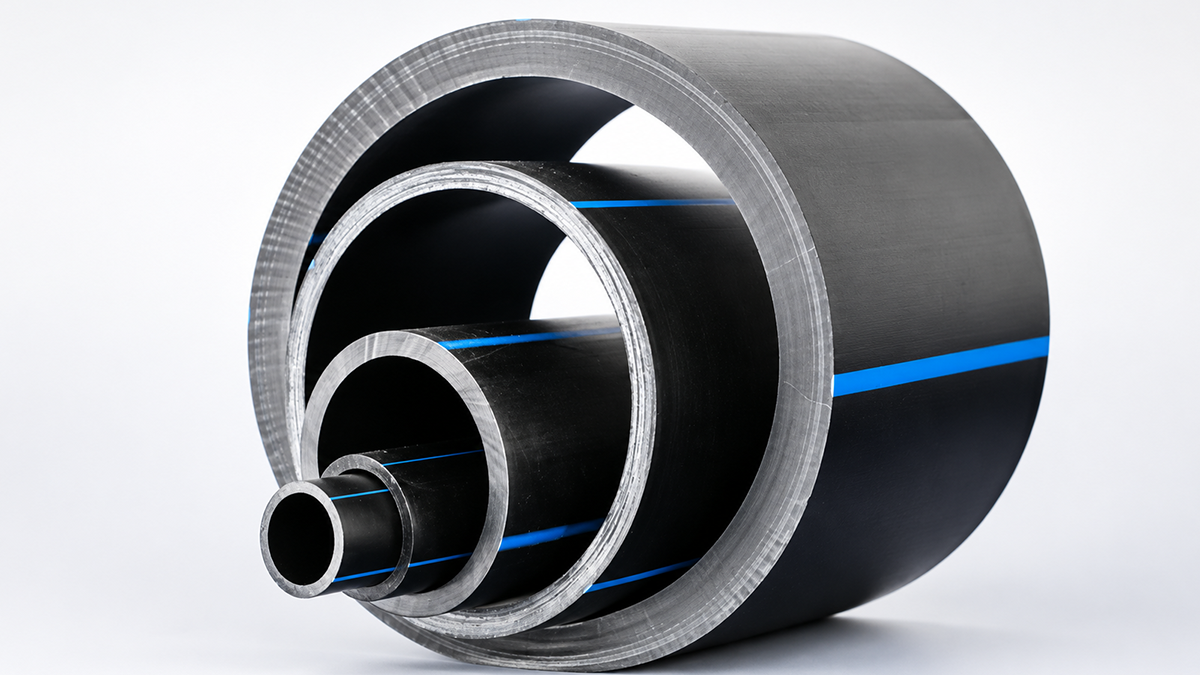
This guide explains HDPE pipe welding defects, including common problems like cold joints, misalignment, contamination, and bead irregularities, their root causes, and proven prevention tips. It helps engineers and B2B buyers improve weld quality, reduce failure risk, and select the right pipes, equipment, and suppliers.
When we talk about HDPE pipe welding defects, we’re referring to the structural voids, irregularities, or weak intermolecular bonds that can plague the fusion zone of High-Density Polyethylene (HDPE) pipes. These flaws directly attack a pipeline’s mechanical integrity. They ruin its load-bearing capacity and destroy its leak-tightness. Left unchecked, a joint that should offer flexible, ductile performance suddenly becomes a prime candidate for premature, brittle failure.
Engineers rely on strict quality control protocols to categorize these anomalies by their structural traits:
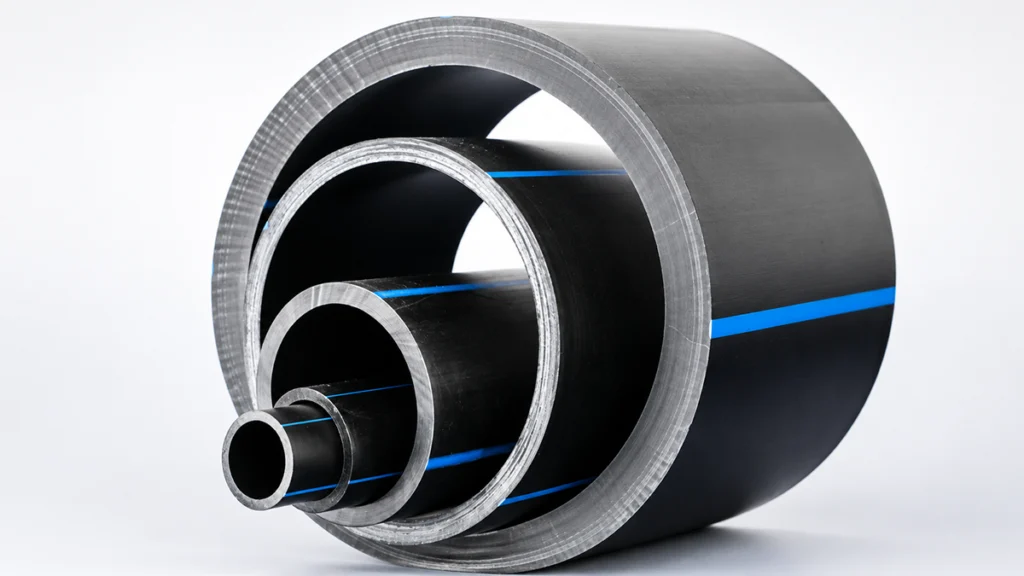
Heavy-duty municipal and industrial applications lean entirely on the strength of their pipeline joints. Destructive creep tests paint a clear picture: a defective joint—whether it lacks a solid welding bead or harbors internal stress concentrations—slashes the HDPE pipeline’s long-term creep life. In fact, under a standard 10 MPa load at 28°C, that lifespan can drop by as much as 50%.
Think about a municipal water distribution network running at a C-factor of 150. Just one weld failure triggers massive costs from lost water, deep trench excavations, and widespread service outages. The stakes climb even higher for mining slurry transport or high-pressure gas lines. Here, poor welds serve as ground zero for slow crack growth (SCG). A highly ductile PE100 pipeline suddenly morphs into a catastrophic brittle failure hazard, exposing EPC contractors to serious safety liabilities and dangerous permeation incidents.
Spotting fusion anomalies early is the absolute foundation of pipeline quality assurance. Field crews frequently run into a specific set of problems during installation. The diagnostic matrix below breaks down these common flaws.
| Defect Name | Visual Symptom | Detection Method | Severity Level |
|---|---|---|---|
| Cold Joint | Beads may roll over and appear acceptable, but lack true interfacial fusion. | Destructive testing (reverse bend/tensile) or advanced NDT (TOFD). | Critical (High risk of delayed failure) |
| Misalignment | Uneven bead heights; physical offset of pipe ends creating a V-groove appearance. | Visual inspection, digital calipers, bead gauges. | Medium to High |
| Cold Spot | Asymmetrical bead size due to uneven Melt Flow Index (MFI) or localized temperature drops. | Visual inspection of bead uniformity and width. | High |
| Contamination | Slits, voids, bubbling, or discoloration visible in the fusion bead. | Visual inspection, Ultrasonic Phased Array (UPA). | High |
When site supervisors understand exactly why welds fail, they can put highly targeted preventative measures into action. Most root causes stem from four specific areas.
| Category | Root Cause | Cause-Effect Explanation | Resulting Defect |
|---|---|---|---|
| Parameters | Incorrect Heater Plate Temperature | Temperatures outside the 220°C–260°C range prevent proper polymer chain entanglement or degrade the material. | Cold Joints, Brittle Welds |
| Equipment | Hydraulic Pressure Leaks | Pressure drops during the heat-soak phase prevent the necessary interfacial pressure from being maintained. | Lack of Fusion, Porosity |
| Environment | Wind and Moisture | Rain or high winds cause rapid, uncontrolled cooling of the heating plate or pipe ends before the joining phase. | Cold Spots, Contamination Inclusions |
| Operator | Skipping Pipe Facing/Cleaning | Failing to plane pipe ends to continuous ribbons or leaving dirt/grease prevents uniform surface contact. | Misalignment, Contamination |
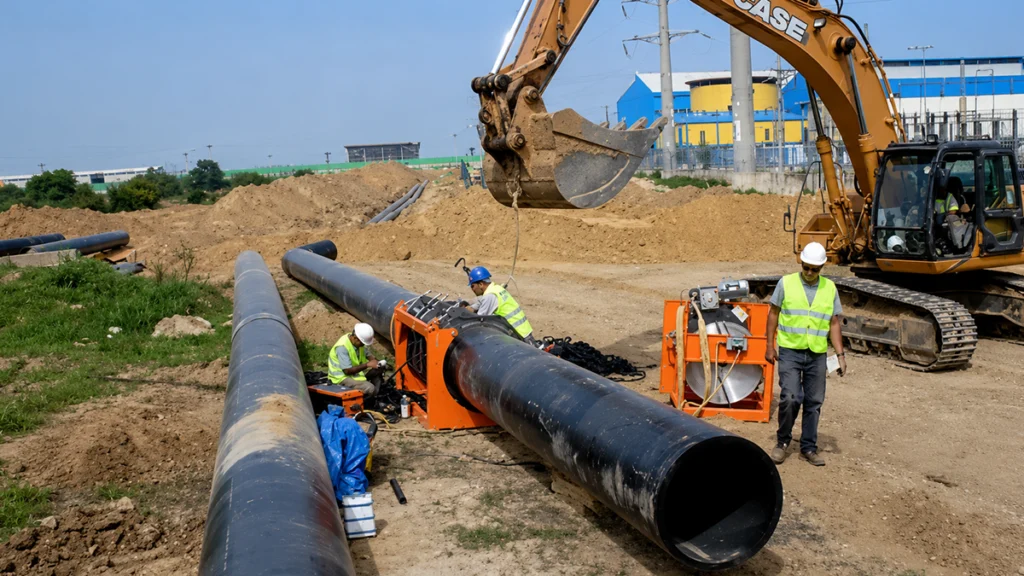
Every joining technique carries its own unique risk profile. Butt fusion remains the gold standard for large-diameter infrastructure projects. Electrofusion, on the other hand, shines when crews are working in tight trenches or executing repairs.
| Comparison Factor | Butt Fusion | Electrofusion |
|---|---|---|
| Process Mechanism | Uses a PTFE-coated heating plate followed by hydraulic pressure to fuse pipe ends. | Uses electric current to heat a resistive wire coil embedded inside the fitting. |
| Typical Applications | Ideal for large-diameter pipelines (DN16 to DN3000). | Ideal for tight trenches, repairs, and joining different pipe grades. |
| Primary Defect Risks | Misalignment, incorrect hydraulic pressure, inadequate cooling time, cold joints. | Short circuits from wire movement, failure to scrape oxidation layer, moisture voids. |
| Defect Detection | Visual bead inspection, Data logging, NDT, Destructive tensile tests. | NDT (Ultrasonic), Destructive peel tests, Visual indicator pins. |
| Equipment Cost | High (Requires hydraulic CNC machines and generators). | Lower (Requires portable electrofusion control boxes). |
Finished joints must undergo rigorous testing protocols to guarantee they meet strict international engineering specifications.
| Test Method | Applicable Standard | What It Detects | Classification |
|---|---|---|---|
| Visual & Dimensional | ISO 21307, DVS 2207-1 | Misalignment, bead width/height asymmetry, visible contamination. | Non-Destructive |
| Ultrasonic Phased Array (UPA) | ASME BPVC Section V | Internal voids, lack of fusion, cold joints, contamination. | Non-Destructive |
| Time of Flight Diffraction (TOFD) | ISO 16828 | Flaw sizing and precise location of internal weld defects. | Non-Destructive |
| High-Speed Tensile Test | ASTM F2620, ISO 13953 | Ultimate tensile strength, ductility, and true interfacial bond strength. | Destructive |
| Reverse Bend Test | ASTM F1055 (Electrofusion) | Brittleness, lack of fusion, and slow crack growth resistance. | Destructive |
Pulling off a flawless joint means following standardized procedures to the letter. Field teams can use this comprehensive checklist to strip away the variables that threaten weld integrity.
1. Pre-Weld Preparation
2. During the Welding Process
3. Post-Weld Cooling and Handling
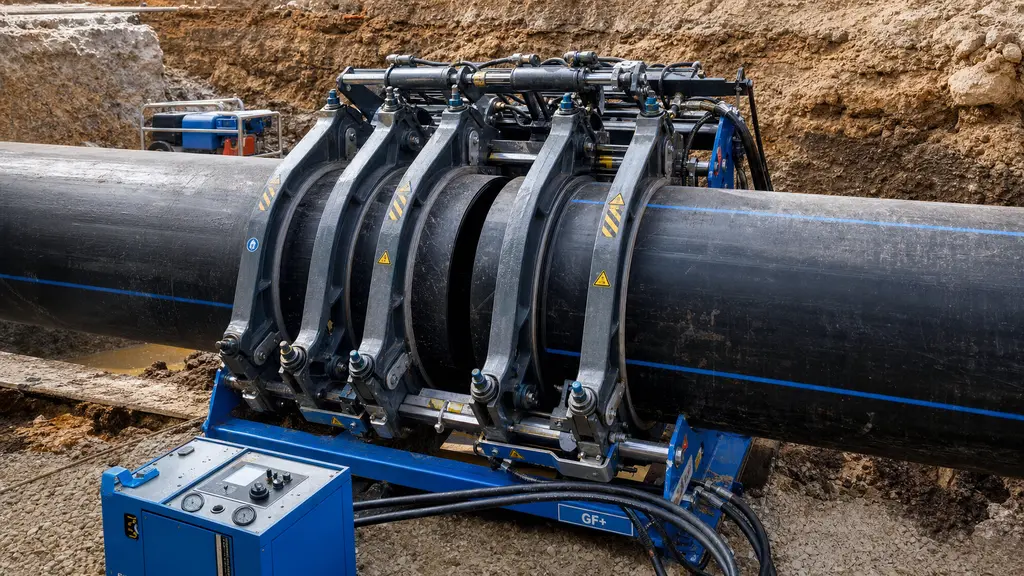
The smartest way to engineer defects completely out of a HDPE pipeline project is to procure precision equipment alongside high-grade materials. When raw materials are inconsistent, you inevitably end up with cold spots and uneven melting.
Supplier Evaluation Checklist:
| Material Grade | Melt Flow Index Consistency | Typical Defect Risk Level |
|---|---|---|
| 100% Virgin PE100 | Highly uniform across batches | Low |
| 100% Virgin PE80 | Highly uniform across batches | Low |
| Mixed / Recycled Resin | Unpredictable, uneven melting | Very High (Cold spots, porosity) |
You could buy the best materials on the market, but simple oversights during procurement or installation will still inject massive vulnerabilities into the HDPE pipeline.
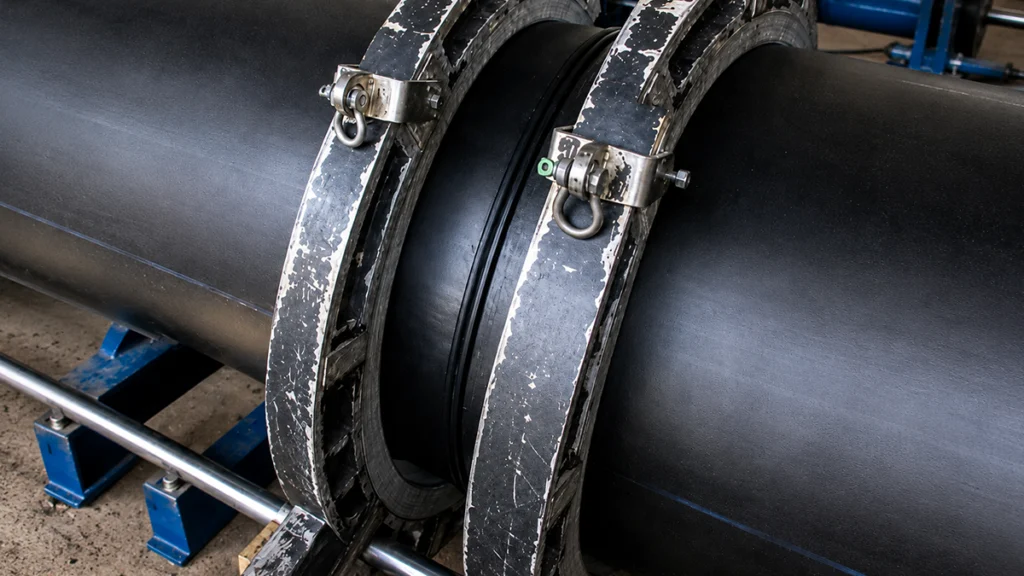
Hitting a true zero-defect rate during polymer HDPE pipeline installations isn’t an accident. It demands strategic procurement, advanced equipment, and an ironclad commitment to strict protocols.
Q1: What is the most common defect in HDPE pipe welding?
Common HDPE butt fusion defects include contamination, pipe misalignment, uneven fusion beads, insufficient heating, excessive heating, incorrect fusion pressure, and excessive changeover time. Some defects are visible from the bead shape, while incomplete fusion may remain hidden inside the joint and reduce its strength and long-term reliability.
Q2: How do you know if an HDPE weld is bad?
Visual inspection can identify visible problems such as contamination, excessive misalignment, irregular bead shape, or unequal fusion beads. However, appearance alone cannot confirm the internal quality of the joint. Where required by the project specification, internal imperfections may be evaluated using qualified non-destructive testing methods such as phased-array ultrasonic testing or time-of-flight diffraction, or through approved destructive qualification tests.
Q3: What causes cold joints in HDPE butt fusion welding?
Cold joints are generally caused by insufficient or interrupted fusion at the pipe interface. Possible causes include inadequate heater temperature, insufficient heating time, excessive changeover time, contaminated pipe ends, low fusion pressure, or movement of the joint during cooling. Operators should follow the selected welding standard, pipe manufacturer’s instructions, and approved project procedure. For example, ASTM F2620/PPI TR-33 procedures commonly use a heater surface temperature of 204°C–232°C (400°F–450°F).
Q4: Can defective HDPE welds be repaired or must they be cut out?
A defective butt fusion joint should not normally be reheated or fused over again. The accepted corrective method is usually to cut out the complete joint, re-face and clean the pipe ends, and produce a new fusion joint using the correct parameters. Where re-fusion is not practical, an approved mechanical fitting or electrofusion repair solution may be used if permitted by the project specification, pipe size, and system design.
Q5: What standards govern HDPE pipe weld quality?
HDPE butt fusion procedures are governed by the applicable project specification, local regulations, pipe manufacturer’s instructions, and selected welding standard. Commonly referenced standards include ISO 21307 for polyethylene butt fusion procedures, ASTM F2620 for heat fusion joining of PE pipe and fittings, and DVS 2207-1 for heated-tool welding of thermoplastic piping systems. The selected procedure should be followed in full, because parameters from different standards should not be mixed.
Q6: How long should an HDPE butt fusion weld cool before pressure testing?
The joint must remain clamped for the minimum cooling time required by the selected welding procedure. Cooling time depends on pipe diameter, wall thickness, ambient temperature, and the applicable standard. Pressure testing should begin only after all joints have cooled sufficiently and the pipeline temperature has stabilized.
Q7: Why do electrofusion joints fail more often than butt fusion joints?
Common causes include incomplete surface scraping, contamination, excessive pipe ovality, poor alignment, pipe movement during the fusion or cooling cycle, incorrect insertion depth, unstable power supply, and failure to follow the fitting manufacturer’s fusion parameters. The oxidized pipe surface must be removed with an approved scraping tool, and the prepared fusion area must be kept clean and dry. Where specified, the surface may be cleaned using 90% or higher isopropyl alcohol and a suitable single-use, low-lint wipe. The assembly must remain properly clamped and undisturbed throughout the complete fusion and cooling cycle.
Q8: How can buyers verify a supplier’s HDPE welding quality before purchase?
Buyers should review product certifications, raw-material certificates, batch test reports, welding procedures, operator qualifications, and machine calibration records. ISO 9001 can support confidence in the supplier’s quality system, but actual pipe and weld quality should be confirmed through relevant inspection and test results.
Securing the structural integrity of a polymer pipeline system demands a relentless approach to identifying and preventing fusion anomalies. When engineering teams strictly follow international standards like ASTM F2620 or ISO 21307, calculate drag pressures accurately, and lock in optimal heater plate temperatures, they systematically eliminate the conditions that cause misalignment and cold joints. Beyond the trench, strategically sourcing 100% virgin PE80 or PE100 materials—and pairing them with data-logging CNC welding equipment—takes the guesswork out of the operator’s hands and secures batch consistency. By prioritizing matched systems from highly capable technical manufacturers, project managers guarantee that every single joint delivers the leak-free, heavy-duty performance that critical B2B infrastructure projects demand.