Address
Zhengzhou, Henan, China
Work Hours
Monday to Friday: 7AM - 7PM
Weekend: 10AM - 5PM
Address
Zhengzhou, Henan, China
Work Hours
Monday to Friday: 7AM - 7PM
Weekend: 10AM - 5PM

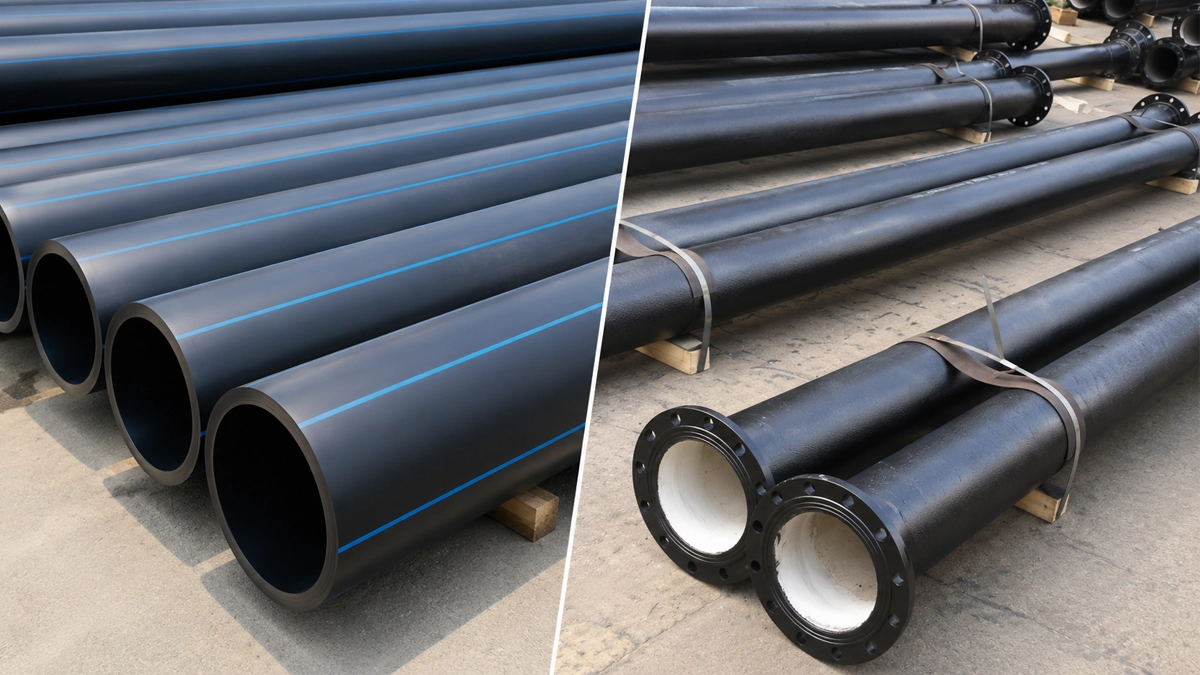
HDPE pipe vs ductile iron pipe compares lifecycle cost, corrosion resistance, installation speed, pressure performance and supplier risks to help engineers and buyers choose the right pipeline.
Engineers and procurement managers constantly juggle upfront material costs against long-term reliability when selecting pipeline materials for large infrastructure projects. Generally, HDPE pipe takes the lead thanks to its outstanding corrosion resistance, flexibility, leak-proof fused joints, and rapid installation. On the flip side, ductile iron (DI) remains a go-to choice for environments that demand intense mechanical rigidity, massive tensile strength, or strict compliance with older municipal codes.
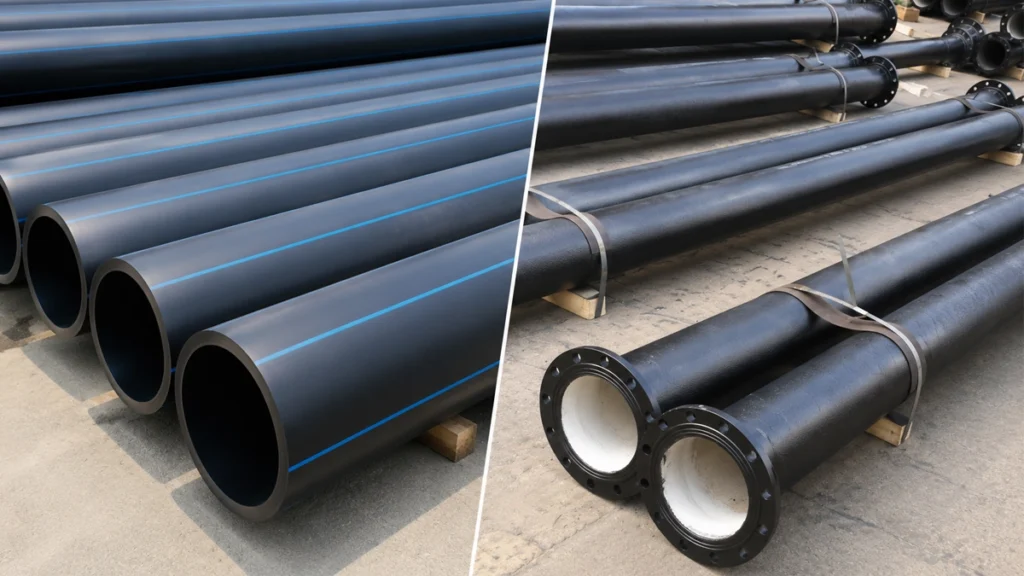
To make the decision easier, the table below breaks down the fundamental differences between these two pipeline giants.
| Comparison Factor | HDPE Pipe (PE100/PE80) | Ductile Iron Pipe (DI) | Buyer Takeaway |
|---|---|---|---|
| Weight | ~1/8th the weight of DI | Heavy, rigid metallic structure | HDPE requires less heavy lifting equipment, reducing handling costs. |
| Tensile Strength | 1,600 psi (design limit) | 42,000 psi (minimum yield) | DI is over 24 times stronger against external loads. |
| Corrosion | Immune (100% non-metallic) | Susceptible; requires linings/coatings | HDPE wins in corrosive soils without the need for extra protection. |
| Joint Type | Butt fusion / Electrofusion | Push-on / Mechanical joints | HDPE provides a monolithic, leak-free system. |
| Hydraulic Friction | C-Factor 155 (Hazen-Williams) | C-Factor 140 (cement-lined) | HDPE features a smoother bore, reducing long-term pumping friction. |
| Inside Diameter | 20.83 inches (24" DR 11) | 24.95 inches (24" PC 200) | DI offers a larger actual inside diameter for the same nominal size. |
High-Density Polyethylene pipe serves as a highly adaptable thermoplastic solution, seeing massive use across municipal water, wastewater, mining, and heavy industrial sectors. Derived from petroleum byproducts, its dense molecular structure gives the material incredible impact resistance and chemical inertness.
Modern HDPE pipelines—available in robust material grades like PE80 and PE100—are precision-engineered to satisfy tough global benchmarks, including ISO 4427, AWWA C906, and DIN 8077/8078. Top-tier manufacturing facilities, such as JINQUAN, extrude these pipes in sizes ranging from a modest DN16mm all the way up to massive DN3000mm HDPE pipes. What truly sets HDPE apart, however, is the jointing process. Crews fuse the sections together using high heat to forge a continuous, monolithic pipeline. This technique completely eliminates the dreaded risk of joint leaks and root intrusion.
Think of ductile iron pipe as the modern, rugged evolution of old-school cast iron. It consists of an iron-carbon alloy infused with magnesium during the melting phase. This critical addition forces the graphite to form into spherical nodules rather than brittle flakes. The result? A pipe that delivers significantly better flexibility and impact resistance than its legacy cast iron predecessors.
Built primarily to meet AWWA C150 and C151 standards, ductile iron remains a foundational element in high-pressure municipal water grids. Since raw iron naturally falls victim to oxidation and tuberculation, manufacturers apply a standard cement-mortar lining (AWWA C104) inside the pipe to keep water flowing smoothly. On the outside, crews often must apply zinc coatings or V-Bio polyethylene wraps (AWWA C105) to defend the metal against aggressive, highly corrosive soils.
You cannot accurately compare the cost of HDPE pipe and ductile iron by simply looking at the purchase order. Initial material prices certainly bounce around based on the global resin and iron ore markets. Even so, HDPE water pipe often rings up at nearly 50% less on the front end. But the real financial story unfolds when you calculate the total installed cost and long-term lifecycle expenditures.
Lifecycle Cost Breakdown:
| Cost Phase | HDPE Pipe Impact | Ductile Iron Pipe Impact |
|---|---|---|
| Initial Material | Lower upfront cost; up to 50% cheaper. | Higher upfront cost due to raw metal and manufacturing complexity. |
| Freight & Handling | Lower freight costs; 1/8th the weight allows more pipe per truck. | High freight costs; requires heavy machinery for unloading and stringing. |
| Installation/Labor | Enables trenchless installation (HDD), drastically reducing excavation costs. | Requires wide open-cut trenches, specific bedding, and heavy lifting. |
| Maintenance | Zero cathodic protection needed; fused joints eliminate leak repair costs. | Requires monitoring of external wraps, linings, and potential joint leak repairs. |
| Total Lifecycle | 40% to 45% lower lifecycle costs over a 50-year evaluation period. | Higher lifecycle costs due to maintenance and potential corrosion mitigation. |
Ask any utility manager: corrosion destroys pipelines faster than almost anything else. HDPE holds a massive, undeniable edge here because it contains zero metal. It will never rust, rot, or degrade, and it completely ignores galvanic or electrochemical reactions, even in the most aggressive soils. Because of this natural immunity, you do not have to worry about buying protective coatings or installing cathodic protection systems. Under normal operating parameters, a standard HDPE pipeline easily lasts anywhere from 50 to over 100 years.
Ductile iron, meanwhile, struggles heavily with localized corrosion in low-resistivity, aggressive ground conditions. Its survival depends entirely on the flawless performance of its internal cement lining and external barriers, like the V-Bio polyethylene wrap. If a rock tears that external encasement during backfill, the exposed iron will rapidly deteriorate. That said, if you protect the pipe properly and lay it in forgiving soil, a ductile iron system can also cross the century mark.
How you install these materials drastically impacts project timelines, heavy equipment rentals, and labor overhead. Because HDPE weighs roughly one-eighth of what ductile iron does, crews can string it along a trench much faster while relying on smaller, less expensive lifting machinery.
Jointing Methods:
Site Conditions and Trenchless Suitability:
When it comes to Horizontal Directional Drilling (HDD) and trenchless applications, HDPE is the undisputed industry standard. Its inherent flexibility and rock-solid fused joints mean contractors can pull it underground for miles without tearing up roads or surface infrastructure. Conversely, ductile iron largely restricts you to traditional open-cut trenches. AWWA even dictates five specific trench conditions for DI to guarantee adequate bedding. HDPE simply uses the surrounding soil for support, yet it handles seismic shifts and ground settling far better than rigid iron ever could.
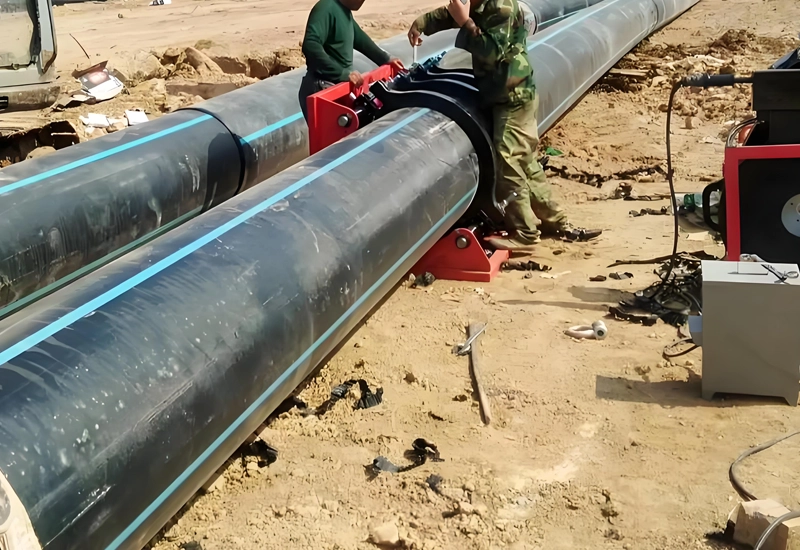
Matching the right pipeline material to a network’s specific hydraulic and structural demands is critical for engineers.
Tensile Strength and External Loads:
Ductile iron pipe brings a formidable minimum tensile yield strength of 42,000 psi to the table. This immense strength makes it the superior choice for environments punishing the pipe with high external loads—think shallow burial depths, rocky terrain, or heavy highway traffic. HDPE, with a design tensile limit hovering around 1,600 psi, absolutely requires proper soil compaction to prevent external deformation.
Pressure Ratings:
You can push ductile iron pipes up to 350 psi (covering Pressure Classes 150, 200, 250, 300, 350), backed by a built-in 2.0 safety factor that accounts for water hammer and surge. HDPE pressure ratings operate differently, relying instead on the Standard Dimension Ratio (SDR) and PN classes (such as PN10, PN16, PN20, and PN25).
Hydraulic Performance Comparison:
| Parameter | HDPE Pipe | Ductile Iron Pipe |
|---|---|---|
| Material Density | ~0.95 g/cm³ | ~7.15 g/cm³ |
| Internal Roughness | Hazen-Williams C-155 | Hazen-Williams C-140 |
| Inside Diameter (24" Nominal) | 20.83 inches (DR 11) | 24.95 inches (PC 200) |
| Flexibility | Highly flexible, absorbs surge | Rigid, requires thrust blocks |
While HDPE pipe boasts a slicker C-Factor (155 compared to 140) that cuts down on friction, ductile iron offsets this by providing a larger actual inside diameter. For instance, a 24-inch nominal DI pipe actually measures 24.95 inches inside. A 24-inch HDPE DR11 pipe measures just 20.83 inches due to its thicker wall profile. Engineers must crunch the numbers on total head loss by weighing both the friction factors and the true internal dimensions.
Picking the perfect pipe heavily depends on what you are moving and where you are moving it.
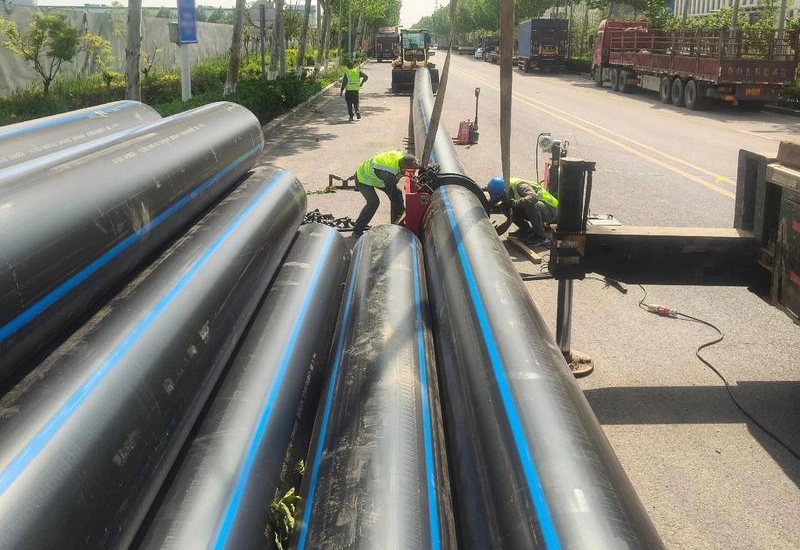
Nailing down the best pipeline material demands a strict, variable-by-variable breakdown of your project. Engineers should run through this decision checklist:
1. Soil Corrosivity: If your geotech reports reveal highly corrosive soil or stray electrical currents, go with HDPE. If municipal codes force you to use DI, make sure you specify V-Bio wraps and robust cathodic protection.
2. Installation Method: If the job demands Horizontal Directional Drilling (HDD) or pipe bursting, HDPE pipe is your only viable option.
3. External Loads: Dealing with shallow trenches under heavy truck traffic or rocky ground where perfect bedding is impossible? Ductile iron’s 42,000 psi yield strength provides a massive advantage.
4. Pumping Efficiency: Calculate your long-term energy spend by pitting HDPE’s ultra-smooth C-155 friction factor against the sheer volume capacity of ductile iron’s larger internal diameter.
5. Supplier Capability: Verify that your manufacturer can actually handle the scale of your project. Heavy-hitters like JINQUAN—running a 200-acre facility with over 100,000 tons of annual capacity, ISO 9001 certification, and rapid 7-15 day delivery windows—deliver the quality control and logistical muscle needed for massive infrastructure rollouts.
The final call ultimately rests on the unique environmental constraints of your job site.
Opt for HDPE pipe if your project demands unbeatable corrosion resistance, massive lifecycle cost savings (routinely 40% to 45% lower), zero leaks via fused joints, and the sheer speed of trenchless installation. It stands as the modern benchmark for aggressive soils and chemical handling.
Go with ductile iron pipe if your project specifications rigidly demand metallic materials, require extreme mechanical strength to combat heavy external point loads, or if local municipal standards strictly mandate its use for high-pressure distribution grids.
Is HDPE pipe cheaper than ductile iron pipe?
Yes, HDPE pipes generally cost less than ductile iron. The initial purchase price for HDPE materials can drop up to 50% below iron. Beyond the invoice, HDPE pipe slashes freight, handling, and labor costs thanks to its lightweight profile and trenchless installation capabilities. Over a 50-year span, this translates to a 40% to 45% reduction in total lifecycle costs.
Which pipe lasts longer, HDPE or ductile iron?
Both materials can easily cross the 50- to 100-year threshold. However, HDPE achieves this lifespan naturally because its non-metallic structure is entirely corrosion-proof. Ductile iron’s longevity comes with caveats; it absolutely requires uncompromised cement linings and external polyethylene wraps to survive corrosive ground conditions without failing prematurely.
Can HDPE pipe replace ductile iron pipe for water mains?
Absolutely. HDPE is rapidly taking over as the replacement material of choice for municipal water mains. Its total immunity to soil corrosion, seamless fused joints that stop water loss dead in its tracks, and trenchless versatility make it a highly cost-effective upgrade for crumbling metallic infrastructure.
Does ductile iron pipe corrode faster than HDPE pipe?
Yes. Because ductile iron is an iron-based metal, it naturally falls victim to oxidation and galvanic corrosion. HDPE is a thermoplastic, making it 100% immune to rust. To stop rapid degradation in aggressive soils, ductile iron relies entirely on protective linings and external wraps.
Which pipe is easier to install, HDPE or ductile iron?
HDPE pipe takes the win for ease and speed of installation. Weighing about one-eighth as much as ductile iron, it drastically reduces the reliance on heavy lifting gear. HDPE also supports trenchless installation (HDD) and continuous above-ground fusion welding. Ductile iron, by contrast, forces crews to dig open-cut trenches and assemble every single joint individually.
Is HDPE pipe strong enough for high-pressure applications?
Yes, as long as it is specified correctly. By choosing the right Standard Dimension Ratio (SDR) and PN class (like PN16, PN20, or PN25), engineers can design an HDPE system that easily handles typical municipal and industrial pressures. As a bonus, its flexibility absorbs pressure surges and water hammer much better than rigid metallic pipes.
What factors affect the lifecycle cost of HDPE and ductile iron pipe?
Lifecycle costs hinge on initial material prices, freight rates, installation speed, and the required excavation techniques. For ductile iron, you must also factor in long-term expenses like maintaining cathodic protection, inspecting external wraps, and fixing inevitable joint leaks. HDPE drives lifecycle costs down by completely eliminating corrosion maintenance and utilizing leak-proof fused joints.
How should engineers choose between HDPE pipe and ductile iron pipe?
Engineers need to weigh soil corrosivity, preferred installation methods, external load pressures, and hydraulic needs. HDPE pipes excel in corrosive dirt, trenchless jobs, and low-maintenance designs. Ductile iron remains the better choice for shallow trenches under heavy traffic, extreme external load conditions, or areas where municipal codes strictly demand rigid metallic pipe.
Stacking HDPE pipe against ductile iron requires a hard look at total installed costs, environmental variables, and long-term maintenance demands. HDPE clearly dominates when it comes to corrosion immunity, trenchless installation flexibility, and forging a continuous, leak-free system via heat fusion. Meanwhile, ductile iron pipe stands as a formidable contender for projects that demand extreme mechanical rigidity, high tensile strength against heavy external loads, and larger internal diameters for specific hydraulic flows. By carefully aligning the unique properties of each material with your site’s specific conditions—such as soil corrosivity, pressure demands, and installation methods—engineers can guarantee the long-term efficiency and survival of critical infrastructure.