Address
Zhengzhou, Henan, China
Work Hours
Monday to Friday: 7AM - 7PM
Weekend: 10AM - 5PM
Address
Zhengzhou, Henan, China
Work Hours
Monday to Friday: 7AM - 7PM
Weekend: 10AM - 5PM

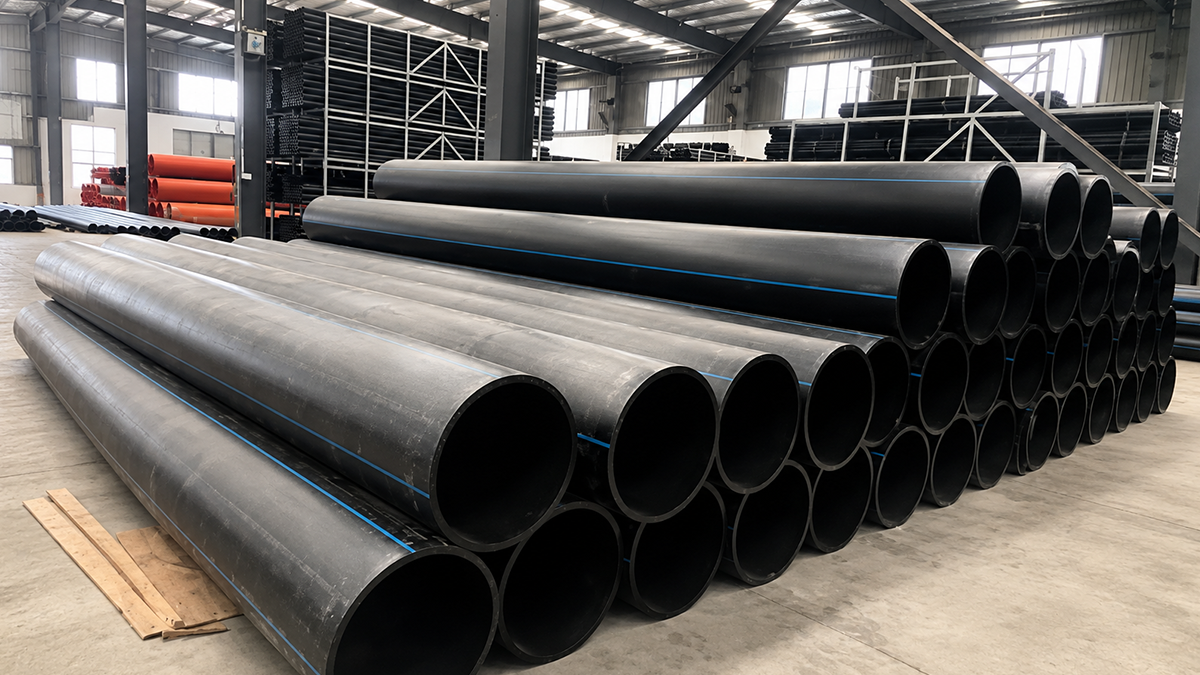
HDPE Pipe Supplier guide for buyers comparing pipe quality, pricing, delivery reliability and export support, with practical checks for specifications, certifications, supplier risk and quote evaluation.
Partnering with a top-tier HDPE pipe supplier yields much more than basic raw materials. You gain access to a comprehensive pipeline ecosystem. This covers specific material grades, precise pressure ratings, compatible fittings, advanced welding equipment, and seamless export logistics. When B2B buyers evaluate potential manufacturing partners, they have to look far beyond the initial unit price. Production capacity, quality certifications, customization options, and technical support hold equal weight.
Leading manufacturers rely on factory-direct models built specifically for high-volume project demands. Consider a premier supplier operating a 200-acre manufacturing facility with an annual output topping 100,000 tons. Their core product lineup typically features:
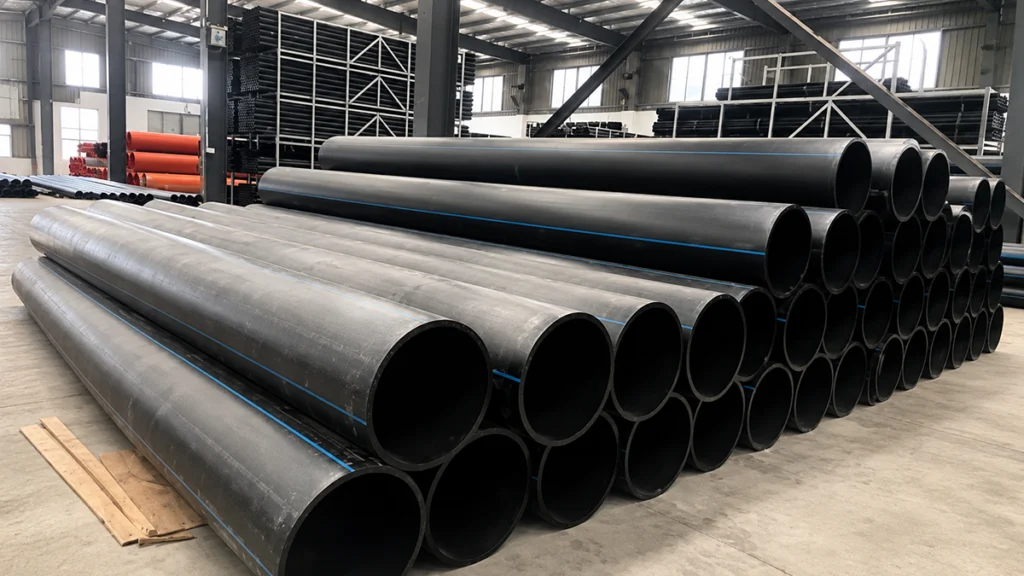
The vendor you choose directly dictates the lifecycle cost, safety profile, and installation timeline of municipal water, gas, and heavy industrial projects. Making a poor choice introduces massive risk. The most common danger? Incorrect material grade substitution. Slipping PE80 into high-pressure transmission lines instead of PE100 drastically lowers the Minimum Required Strength (MRS). This inevitably triggers system failures, sudden leaks, and budget-draining excavation rework.
System integrity plays an equally vital role. A proven supplier guarantees absolute dimensional and chemical compatibility across all HDPE pipes and fittings. Matching the SDR ratings between the HDPE pipeline and the butt fusion HDPE pipe fittings minimizes the risk of joint blowouts almost entirely.
Unreliable vendors also trigger cascading project delays. Trenching and installation schedules frequently grind to a halt because of delayed container shipments, failed third-party quality inspections, or the sudden arrival of out-of-spec materials that site managers must reject. Selecting an established manufacturer ensures your polyethylene pipeline actually meets the rigorous 50-plus year design life demanded by modern infrastructure projects.
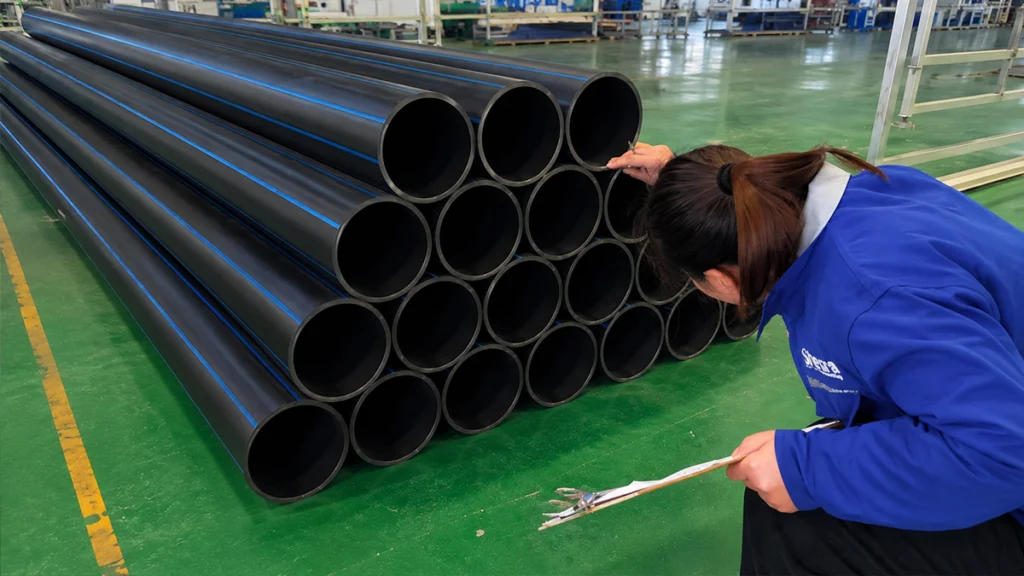
You cannot afford to issue a purchase order without verifying product quality first. This requires a strict evaluation of international standards, material properties, and internal factory testing protocols. A trustworthy supplier will gladly share proof of compliance with major standards like ISO 4427 (Water Supply), EN 12201, ASTM F714, ASTM D3035, or GB/T 13663.2-2018.
Procurement managers should use the comprehensive parameter table below to verify critical quality checks:
| Quality Parameter | Specification / Requirement to Verify |
|---|---|
| Material Grade | 100% Virgin PE100 (MRS 10.0 MPa) or PE80 (MRS 8.0 MPa). |
| Diameter Range (OD/DN) | Precise outer diameter specifications (e.g., DN16 to DN3000mm). |
| SDR & Wall Thickness | SDR11 (thicker wall, higher pressure) vs. SDR17 (thinner wall). |
| Nominal Pressure (PN) | PN4, PN6, PN8, PN10, PN12.5, PN16, PN20, PN25. |
| Standards Compliance | ISO 4427, EN 12201, ASTM F714, GB/T 13663.2-2018. |
| Factory Test Reports | Hydrostatic strength, Longitudinal Shrinkage, OIT, MFR, Density. |
| Certifications | ISO 9001, ISO 14001, CE, SGS inspection availability. |
| Pipe Markings | Clear, permanent printing of standard, SDR, PN, material, and date. |
Mandatory factory tests prove the long-term durability of the HDPE plastic pipe. For example, the Oxidation Induction Time (OIT) test confirms the material’s resistance to thermal degradation. Meanwhile, hydrostatic strength testing ensures the pe pipe handles its maximum rated nominal pressure without bursting.
When comparing HDPE pipe prices, buyers should not only look at the price per meter. The final cost is affected by pipe size, SDR, wall thickness, raw material grade, production standard, order quantity, packaging, and freight terms.
Raw material is one of the most important price factors. Virgin PE100 material is usually selected for higher-performance pressure pipe applications, while different material grades may affect pressure rating, long-term strength, and project suitability.
HDPE pipe weight also has a direct impact on price. A lower SDR means a thicker pipe wall, which requires more raw material and increases the price per meter. This is why two pipes with the same outer diameter can have very different prices.
Use the comparison factors below to check whether different supplier quotes are based on the same specifications and supply conditions.
| Quote Comparison Factor | Supplier A | Supplier B |
|---|---|---|
| Pipe Size & SDR | DN160 / SDR17 | DN160 / SDR17 |
| Material Grade | Not clearly stated | Virgin PE100 material clearly stated |
| Applicable Standard | Not specified | ISO 4427, EN 12201, or project-required standard |
| Fittings & Accessories | Pipe only | Pipe with matching fittings if required |
| Order Quantity | 1,000 meters | 5,000 meters with volume price option |
| Incoterms | EXW | FOB or CIF available |
| Packaging & Loading | Standard loading | Optimized container loading |
| Documents | Basic quotation only | Test reports and export documents if required |
| Quality Control | Not clearly explained | Material, dimension, and pressure inspection support |
| Supplier Type | Trading company or unclear source | Factory direct manufacturer |
| Technical Support | Limited support | Pipe selection and welding guidance available |
Site downtime destroys project budgets. Procurement teams must rigorously audit a supplier’s production capacity and logistics framework to prevent it. While the industry average for production lead time hovers between 15 and 45 days, high-capacity factory-direct suppliers—those pushing over 100,000 tons annually—can often slash that down to just 7 to 15 days. Processing and loading standard 20ft or 40ft HQ containers usually takes another 10 to 15 days.
Packaging formats dictate both container loading efficiency and overall freight costs. Always verify the following loading plans:
Key Buyer Verification Questions:
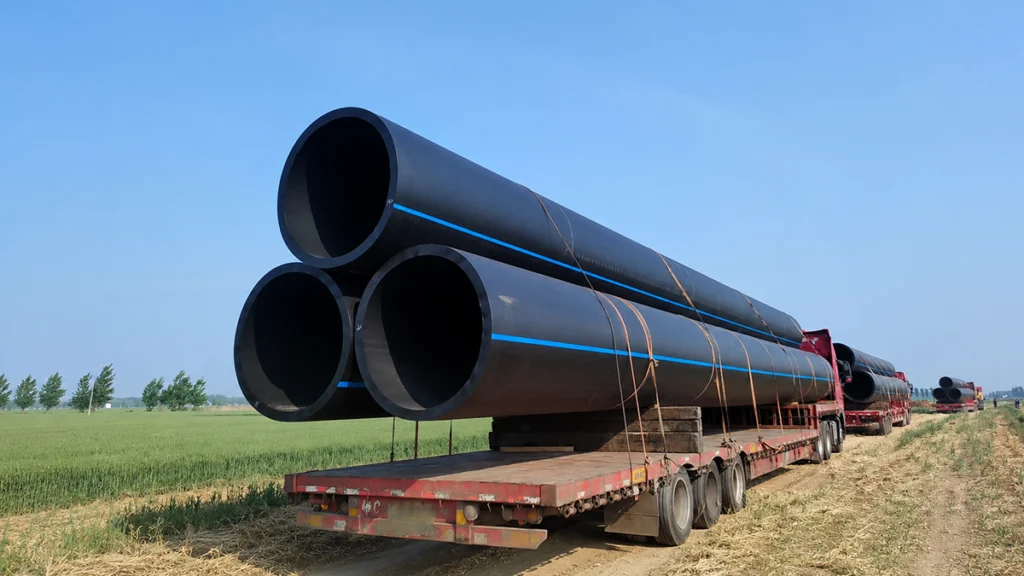
Global pipeline projects require flawless export documentation and heavy-duty packaging. Without them, goods get damaged in transit or stuck in customs. An experienced, ISO-certified export supplier employs a dedicated logistics team to handle compliance across global markets, including Southeast Asia, the Middle East, Africa, South America, and Europe.
Essential Export Documents Checklist:
Export packaging has to protect the structural integrity of the HDPE pipes during rough ocean transit. Straight HDPE plastic pipes need UV-resistant wrapping to prevent solar degradation if they end up sitting outdoors at the destination port. Coils require secure, heavy-duty strapping. The container itself must feature proper dunnage to stop the load from shifting and deforming the pipes at sea.
Knowing the structural differences between supplier types helps procurement managers align their sourcing strategy with actual project needs. Buyers generally choose from three main entities:
| Supplier Type | Strengths & Pros | Limitations & Cons | Best-Fit Scenario |
|---|---|---|---|
| Manufacturer (Factory Direct) |
More competitive pricing for bulk orders, direct technical support, custom dimensions and SDR options, stable production capacity, and better quality control. | May require higher MOQ than local stockists and longer production lead time for customized specifications. | Large-scale municipal, mining, irrigation, water supply, and infrastructure projects requiring bulk supply or custom specifications. |
| Trading Company | Can consolidate different construction materials from multiple factories and handle mixed-product sourcing or multi-vendor logistics. | Prices may include markup, technical communication can be slower, and there may be less direct control over production, material traceability, and quality inspection. | Buyers who need mixed construction materials from different suppliers in one order or one container. |
| Distributor / Wholesaler | Local stock availability, fast delivery, small order support, and convenient supply for urgent replacement or repair needs. | Usually higher unit price, limited product range, standard sizes only, and limited custom manufacturing capability. | Emergency repairs, small-scale contractors, local projects, or buyers needing immediate low-volume supply. |
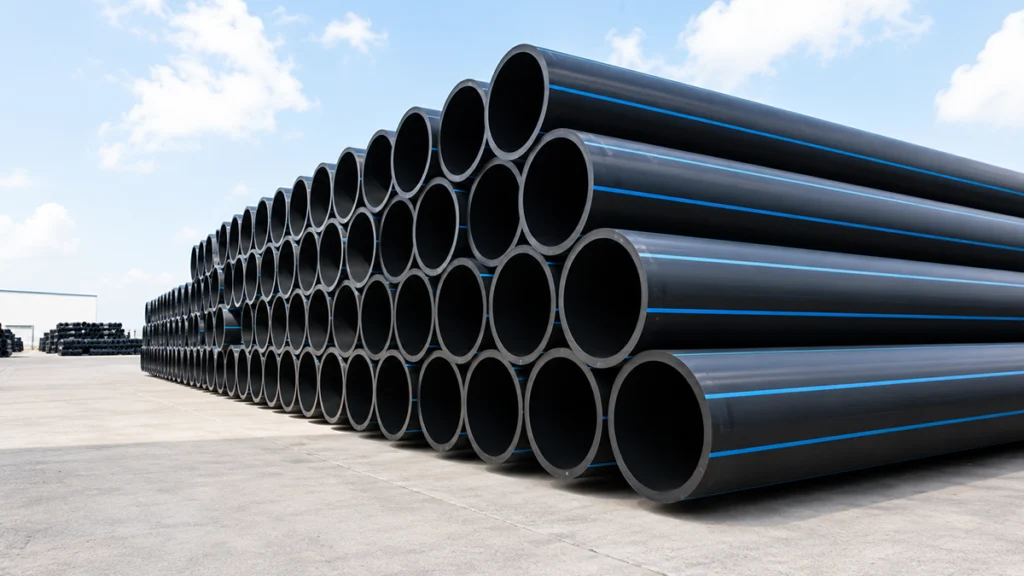
Skipping due diligence leads to expensive procurement disasters. Follow this structured evaluation process to verify a supplier’s manufacturing footprint, financial stability, and overall reliability.
1. Verify Certifications: Ask for and authenticate valid ISO 9001 (Quality Management), CE, and ISO 14001 certificates.
2. Confirm Standards: Demand written confirmation that their production adheres to ISO 4427, ASTM F714, or whatever specific standard your local municipal authority requires.
3. Request Samples: Get physical samples to check the surface finish, wall thickness consistency, and the clarity of standard markings. Run independent lab tests if you need extra assurance.
4. Audit Factory Capability: Look into the physical size of the facility (e.g., a 200-acre plant), the number of active high-speed extrusion lines, and the annual tonnage capacity. This proves they can hit your deadlines.
5. Check Export Records: Ask for sanitized Bill of Lading copies or detailed case studies relevant to your geographic market.
6. Clarify Commercial Terms: Lock in acceptable payment terms (like T/T or L/C). Make sure the supplier offers robust after-sales technical support for any on-site welding equipment.
Sourcing strictly on price while ignoring technical specifications is the single most damaging mistake in B2B procurement.
Price Obsession: Buying solely based on the lowest price per meter usually means the supplier is sneaking in recycled or regrind materials instead of pure 100% virgin PE100. This shortcuts the pipe’s pressure tolerance and slashes its lifespan.
Vague Specifications: Leaving the exact SDR or PN rating off the purchase order almost guarantees you will receive thin-walled pipes. Install those in a high-pressure water supply network, and they will burst. The result is catastrophic project failure.
Ignoring Fittings Compatibility: *B2B Case Example:* A municipal contractor bought PE100 SDR11 HDPE pipes directly from a manufacturer. To save on freight, they bought butt fusion fittings from a local distributor. The distributor handed over SDR17 fittings. During pressure testing, the mismatched wall thicknesses triggered immediate joint blowouts. Getting a complete package quote from a single supplier guarantees dimensional and resin compatibility.
Overlooking Logistics: Failing to calculate container loading efficiency acts as a massive hidden cost multiplier. Shipping unoptimized PE pipe lengths creates empty container air space, which skyrockets the landed freight cost per meter.
Accepting Verbal Lead Times: Never leave production and loading timelines (e.g., 7-15 days) out of the formal Proforma Invoice. Verbal promises leave buyers completely vulnerable to endless manufacturing delays.
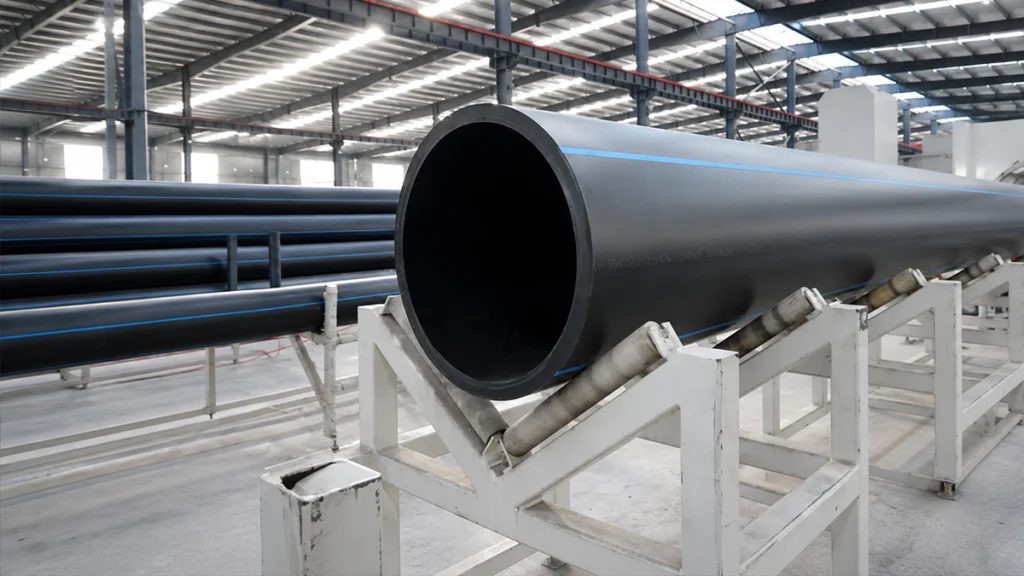
Run through this comprehensive checklist before issuing a Request for Quotation (RFQ) or signing off on a Proforma Invoice. It ensures you have covered every technical, commercial, and logistical base.
Q1: How do I know if an HDPE pipe supplier is reliable?
A reliable HDPE pipe supplier should have a verifiable manufacturing facility, stable production capacity, clear material control, and a complete quality inspection process. Buyers can check the supplier’s ISO 9001 certificate, product test reports, raw material information, project references, and export documents if available. A dependable supplier should also provide clear quotations, container loading plans, delivery schedules, and after-sales technical support.
Q2: What certificates should an HDPE pipe supplier provide?
An HDPE pipe supplier should provide quality management certificates and product-related test documents according to the project requirements. Common documents include ISO 9001, product test reports, Mill Test Certificates, raw material certificates, and compliance with standards such as ISO 4427 or EN 12201 for water supply pipe. For some markets or projects, third-party inspection reports from SGS, BV, or similar agencies may also be requested before shipment.
Q3: What affects the price of HDPE pipe?
HDPE pipe price is affected by pipe size, SDR, wall thickness, material grade, production standard, order quantity, packaging, and freight cost. Raw material is one of the most important factors. Virgin PE100 material is usually selected for higher-performance pressure pipe applications, while lower-grade or unspecified materials may affect long-term strength and project suitability. A lower SDR means a thicker wall, more material usage, and a higher price per meter.
Q4: Is it better to buy HDPE pipe from a manufacturer or distributor?
For large-scale projects requiring bulk volume, custom SDRs, strict quality control, and technical support, buying directly from an HDPE pipe manufacturer is usually more suitable. Factory-direct suppliers can often provide more competitive pricing for bulk orders, better material traceability, and customized production options. Distributors may be a better choice for urgent repairs, small local projects, or buyers who need immediate delivery with low minimum order quantities.
Q5: How long does HDPE pipe delivery usually take?
HDPE pipe delivery time depends on pipe size, SDR, order quantity, production schedule, packaging, and destination port. For standard sizes, production may take around 15 to 45 days depending on stock and factory capacity. Some high-capacity manufacturers may complete standard orders faster, while customized sizes or large-volume orders may require more time. Container loading, export documents, and sea freight should also be considered when planning the delivery schedule.
Q6: What should be included in an HDPE pipe supplier quotation?
A professional HDPE pipe quotation should clearly include the pipe outer diameter, SDR, nominal pressure, material grade, applicable standard, order quantity, unit price, total price, packaging method, and delivery terms. If fittings, valves, butt fusion welding machines, or accessories are required, they should be listed separately. The quotation should also mention Incoterms such as EXW, FOB, or CIF, estimated freight cost if applicable, delivery time, payment terms, and available test reports or export documents.
Q7: Can HDPE pipe suppliers provide fittings and welding accessories?
Yes. Premier factory-direct suppliers offer a complete pipeline ecosystem. This covers matching butt fusion, electrofusion, socket fusion, and PP compression fittings explicitly engineered to match the pipe’s SDR. They also supply calibrated pipe welding machines to guarantee dimensional and resin compatibility for a leak-free installation.
Q8: What export documents are needed for HDPE pipe shipments?
You need a Commercial Invoice (CI), a detailed Packing List (PL) outlining weights and dimensions, and a Bill of Lading (B/L). Buyers also require a Certificate of Origin (COO) to clear customs, Mill Test Certificates (MTC) to prove quality compliance, and any requested third-party inspection reports.
Securing a highly qualified HDPE pipe supplier is a strategic procurement decision. It extends far beyond simply finding the lowest price per meter. Successful HDPE pipeline infrastructure—whether for municipal water supply, gas distribution, or agricultural irrigation—demands strict adherence to material grades like virgin PE100. It requires precise SDR matching and robust factory testing protocols. By systematically evaluating a manufacturer’s production capacity, quality certifications, fittings compatibility, and export documentation capabilities, procurement managers can actively mitigate project risks. This due diligence eliminates installation delays and ensures a 50-plus year system lifespan. Ultimately, a structured evaluation process and a comprehensive quote comparison will guarantee optimal lifecycle value for complex international projects.