Address
Zhengzhou, Henan, China
Work Hours
Monday to Friday: 7AM - 7PM
Weekend: 10AM - 5PM
Address
Zhengzhou, Henan, China
Work Hours
Monday to Friday: 7AM - 7PM
Weekend: 10AM - 5PM

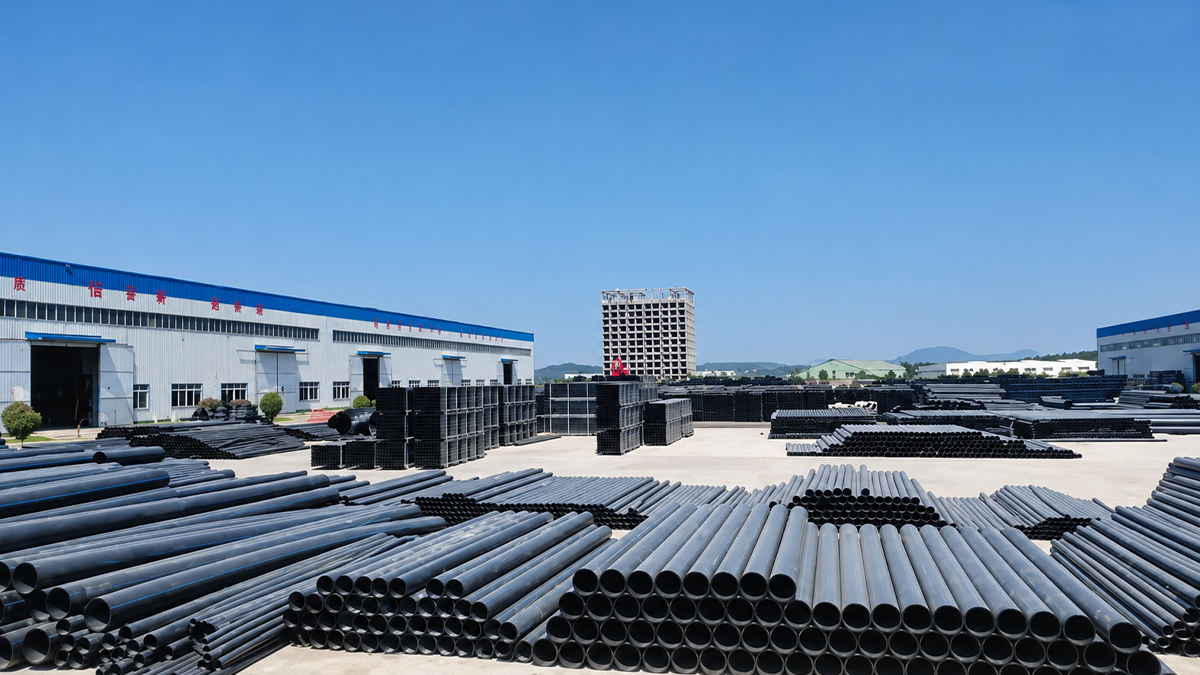
This HDPE pipe pressure rating guide explains PN6, PN10, PN16 and SDR values with charts, formulas, and material comparisons. Engineers, procurement managers, and distributors will learn how to calculate, derate, verify, and select the correct HDPE pressure class for water, gas, and industrial projects.
An HDPE pipe pressure rating tells you the absolute maximum operating pressure a pipeline can handle safely under normal conditions. We determine this metric by looking at both the material’s inherent strength and the pipe’s physical dimensions. Getting this right guarantees long-term structural integrity, whether you are building a municipal water network, an agricultural irrigation setup, or a heavy-duty industrial fluid transport system.
PN stands for Pressure Nominal. It represents the maximum allowable operating pressure (MAOP) of a pipe at a standard 20°C, measured in bar. If you see a PN16 designation, that specific pipe can sustain a continuous working pressure of exactly 16 bar.
SDR, or Standard Dimension Ratio, compares the pipe’s nominal outside diameter (OD) against its minimum wall thickness (t). Think of it as an inverse relationship. A lower SDR means you have a thicker wall relative to the overall diameter. Thicker walls naturally yield a higher pressure rating.
Formula Box:
`SDR = OD / t` (Outside Diameter ÷ Wall Thickness)
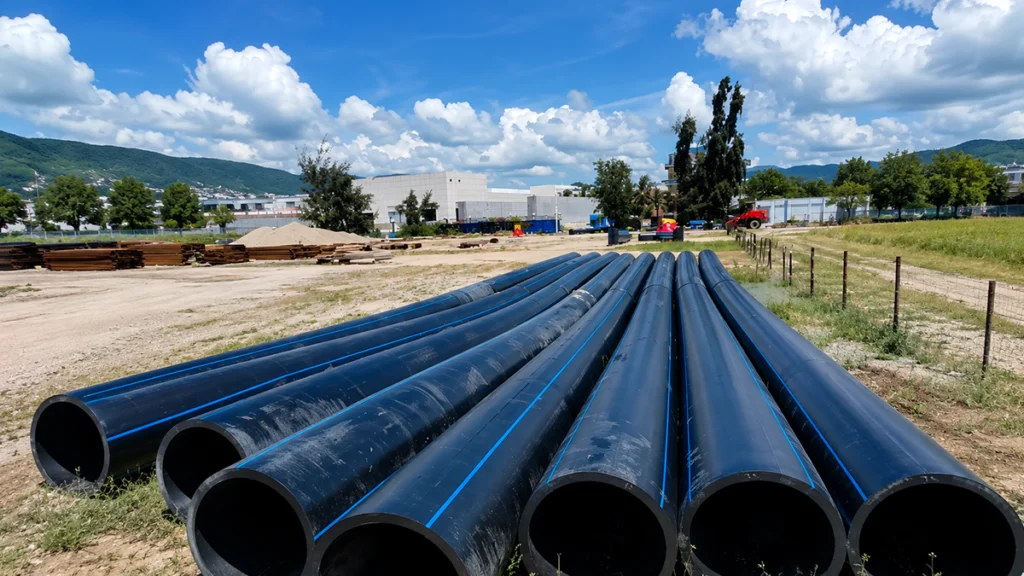
Nailing down the correct HDPE pipe pressure rating isn’t just a minor technical detail; it is a fundamental engineering decision driving both system reliability and overall project economics. Getting the specification right directly impacts three core areas:
The HDPE pipe pressure rating chart below breaks down standard pressure classes as defined by ISO 4427. Keep in mind that these specific metrics assume a PE100 material grade operating at a baseline 20°C temperature.
| PN Class | Typical SDR (PE100) | Pressure Rating at 20°C | Wall Thickness Example (DN110) | Typical Application |
|---|---|---|---|---|
| PN6 | SDR26 | 6 bar | 4.2mm | Low-pressure irrigation, gravity drainage |
| PN10 | SDR17 | 10 bar | 6.6mm | General municipal water supply, light industrial use |
| PN16 | SDR11 | 16 bar | 10.0mm | Water mains, pressure pipelines, fire protection risers |
| PN20 | SDR9 | 20 bar | 12.3mm | High-pressure water supply, industrial fluid transfer |
| PN25 | SDR7.4 | 25 bar | 15.1mm | High-pressure pipelines, special industrial applications, or thick-wall HDD projects |
Note: Pressure ratings are based on PE100 pipes used for water service at 20°C. Final pipe selection should consider pipe size, SDR, operating temperature, safety factor, installation method, and project standard.
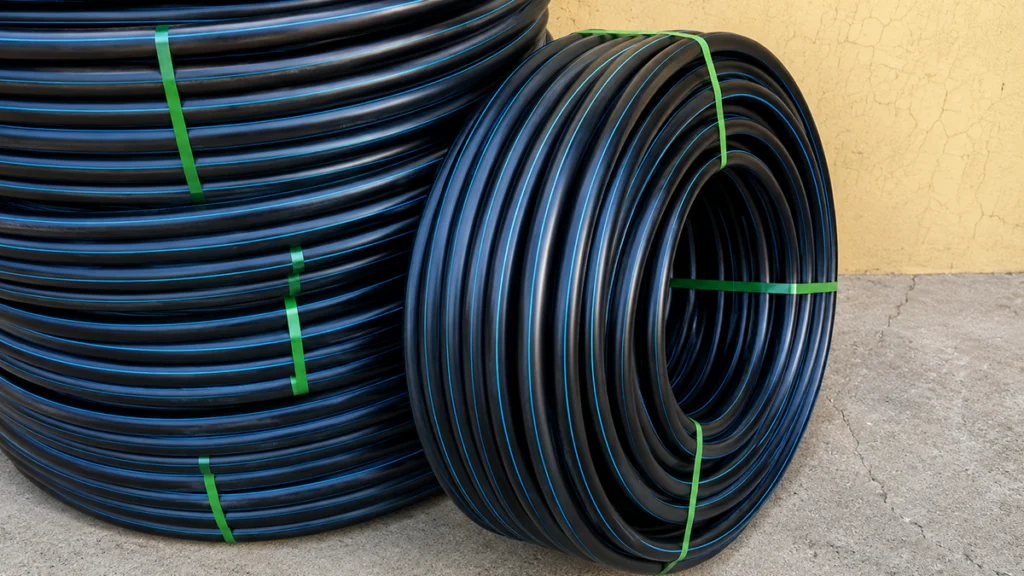
The Standard Dimension Ratio, or SDR, is an important factor for understanding HDPE pipe wall thickness and pressure capacity. SDR is calculated by dividing the pipe outside diameter by the wall thickness. A lower SDR means the pipe wall is thicker relative to the outside diameter, so the pipe usually has a higher pressure rating.
The table below shows common SDR and PN pressure ratings for PE100 and PE80 HDPE pipes under typical water service conditions at 20°C.
The Standard Dimension Ratio, or SDR, is an important factor for understanding HDPE pipe wall thickness and pressure capacity. SDR is calculated by dividing the pipe outside diameter by the wall thickness. A lower SDR means the pipe wall is thicker relative to the outside diameter, so the pipe usually has a higher pressure rating.
The table below shows common SDR and PN pressure ratings for PE100 and PE80 HDPE pipes under typical water service conditions at 20°C.
| SDR Value | PE100 Pressure Rating | PE80 Pressure Rating |
|---|---|---|
| SDR41 | PN4 | PN3.2 |
| SDR33 | PN5 | PN4 |
| SDR26 | PN6 | PN5 |
| SDR21 | PN8 | PN6.3 |
| SDR17 | PN10 | PN8 |
| SDR13.6 | PN12.5 | PN10 |
| SDR11 | PN16 | PN12.5 |
| SDR9 | PN20 | PN16 |
| SDR7.4 | PN25 | PN20 |
Note: These PN ratings are commonly used for PE100 and PE80 HDPE water pressure pipes at 20°C. Final pressure selection should consider pipe standard, operating temperature, safety factor, application, installation method, and project requirements.
To pinpoint the exact pressure capacity of polyethylene pipe, engineers rely on an adapted version of Barlow’s Formula aligned with the ISO 4427 standard.
Calculation Formula:
`PN = (20 × MRS) / (C × (SDR – 1))`
Variables:
Worked Example: Calculating PN for a PE100 pipe at SDR11
The grade of your raw material fundamentally shifts the hydrostatic design stress of the entire pipeline. When you upgrade from PE80 to PE100, the stronger resin allows for thinner walls while maintaining the exact same pressure rating. The result? A noticeable boost in internal flow capacity without sacrificing safety.
Manufacturers strictly calibrate HDPE pressure ratings (PN) for water transport at a baseline of 20°C. As fluid or environmental temperatures climb, polyethylene naturally loses some tensile strength. To compensate safely, engineers must apply a pressure derating multiplication factor (fT) based on ISO 4427 guidelines.
Temperature Derating Table (PE100):
Temperature isn’t the only variable; engineers also have to account for water hammer. PE100 pipes are highly elastic. This flexibility allows them to absorb occasional surge pressures reaching 1.5 to 2.0 times their nominal rating. However, if a system faces recurring surges, you must step up to a higher baseline PN class to guard against long-term fatigue failure.
Pinning down the optimal HDPE pipe pressure class demands a holistic look at your operating conditions. Work through this seven-point engineering checklist to secure the correct specification:
1. What is the system’s maximum continuous operating pressure (MAOP)?
2. What is the absolute peak fluid temperature? (Any temperature above 20°C requires derating).
3. Does the network face recurring pressure surges or water hammer threats from frequent pump cycles?
4. What internal flow rate is necessary? (Keep in mind that thicker walls will shrink the internal diameter).
5. Are you installing via open trench or trenchless horizontal directional drilling (HDD)? HDD installations demand a lower SDR and higher PN to handle the intense tensile pull forces.
6. What exact chemical composition will flow through the pipeline?
7. What is the target design lifespan for the entire project?
Application Recommendation Matrix:
Steer clear of these frequent specification errors. They can easily compromise your system’s integrity or unnecessarily inflate project budgets:
1. Ignoring Temperature Derating:
2. Confusing PE80 and PE100 SDRs:
3. Over-specifying Wall Thickness:
4. Neglecting Surge Pressures:
Industrial B2B buyers have to rigorously evaluate manufacturing practices to confirm that a supplier’s stated pressure ratings hold up in the real world. Use this verification checklist when auditing potential partners:
JINQUAN operates a massive 200-acre manufacturing campus equipped with strict quality control laboratories. This setup guarantees that every single batch hits precise SDR and PN benchmarks. Backed by over 100,000 tons of annual output, relentless hydrostatic testing, and robust export packaging, procurement teams consistently receive verified, high-performance piping solutions.
Q1: What is the maximum pressure of PN16 HDPE pipe?
A PN16 HDPE pipe handles a maximum allowable operating pressure of exactly 16 bar (roughly 232 psi) when moving water at standard 20°C temperatures. This specific rating assumes continuous, non-stop operation across a 50-year design lifespan. If your fluid temperatures push past the 20°C mark, the safe operating pressure drops. You will need to apply an ISO 4427 temperature derating factor to avoid premature failure.
Q2: Is SDR11 the same as PN16 in HDPE pipe?
SDR11 only matches up with a PN16 pressure rating if the manufacturer uses PE100 material grade. If the pipe relies on older PE80 resin, that same SDR11 dimension ratio tops out at a PN12.5 rating (12.5 bar). Buyers have to specify both the Standard Dimension Ratio (SDR) and the material grade to lock in the correct capacity.
Q3: How long does an HDPE pipe last at its rated pressure?
When correctly specified, installed, and run at its nominal pressure rating (PN) with 20°C water, an HDPE pipe offers a documented design lifespan of 50 to 100 years. This impressive longevity depends entirely on the Minimum Required Strength (MRS) of the chosen polyethylene. Pushing the pipeline past its rated pressure—or ignoring extreme temperatures and constant surge fatigue—will drastically shorten that lifespan.
Q4: Can I use PN10 HDPE pipe for drinking water?
Absolutely. PN10 HDPE pipe is a staple for municipal drinking water networks, as long as the system’s maximum pressure stays under 10 bar. For any potable water project, you must verify that the pipe consists of 100% virgin PE100 or PE80 resin, completely free of recycled fillers. The pipe also needs the proper health and safety certifications to prove food-grade compliance.
Q5: What is the difference between PE80 and PE100 pressure ratings?
The core difference comes down to the Minimum Required Strength (MRS) of the underlying resin. PE100 boasts an MRS of 10.0 MPa, whereas PE80 sits at 8.0 MPa. Because of this, a PE100 pipe achieves a higher pressure rating (PN) than a PE80 pipe featuring the exact same wall thickness (SDR). Upgrading to PE100 lets engineers utilize thinner walls, which expands flow capacity without sacrificing structural resistance.
Q6: How do I derate HDPE pipe pressure for hot water applications?
Derating HDPE pipe for higher temperatures requires multiplying the nominal pressure (PN) by a specific temperature derating factor (fT) laid out in ISO 4427. Take a PE100 pipe running at 40°C, for instance. It requires a 0.74 multiplier. Thus, a PN16 pipe at 40°C safely handles just 11.8 bar of continuous pressure (16 x 0.74). These ratings plunge even further as fluid temperatures inch toward 60°C.
Q7: What pressure rating do I need for an underground water main?
Underground municipal water mains generally call for a PN10 (10 bar) or PN16 (16 bar) rating. The exact choice depends heavily on local topography and the output of your pumping stations. PN16 (SDR11 in PE100) stands as the most popular standard for primary distribution lines, providing a solid buffer for surge pressures and future network expansions. Sections relying entirely on gravity drainage can safely drop to lower ratings like PN6, assuming you calculate external soil loads properly.
Q8: Which ISO standard defines HDPE pipe pressure classes?
The definitive international standard for HDPE pipe pressure classes in water supply applications is ISO 4427 (specifically, ISO 4427-2 for the pipes themselves). This document outlines everything: nominal pressure (PN) ratings, Standard Dimension Ratios (SDR), material constraints for PE80 and PE100, and precise temperature derating factors. Sticking to ISO 4427 ensures your pipeline performs flawlessly under maximum allowable operating pressures throughout its lifespan.
Getting an HDPE pipe pressure rating right demands a solid grasp of how Standard Dimension Ratios (SDR), Nominal Pressure (PN), and material grades like PE80 and PE100 interact. When engineers run the correct calculations, integrate temperature derating multipliers, and prepare for inevitable surge pressures, they secure long-term pipeline safety. Bypassing frequent specification errors—like needlessly over-engineering wall thickness or turning a blind eye to thermal impacts—protects both fluid dynamics and tight procurement budgets. In the end, verifying a supplier’s compliance with ISO 4427 and demanding proof of rigorous hydrostatic testing ensures your chosen piping infrastructure will easily fulfill its 50 to 100-year design lifespan.