Address
Zhengzhou, Henan, China
Work Hours
Monday to Friday: 7AM - 7PM
Weekend: 10AM - 5PM
Address
Zhengzhou, Henan, China
Work Hours
Monday to Friday: 7AM - 7PM
Weekend: 10AM - 5PM

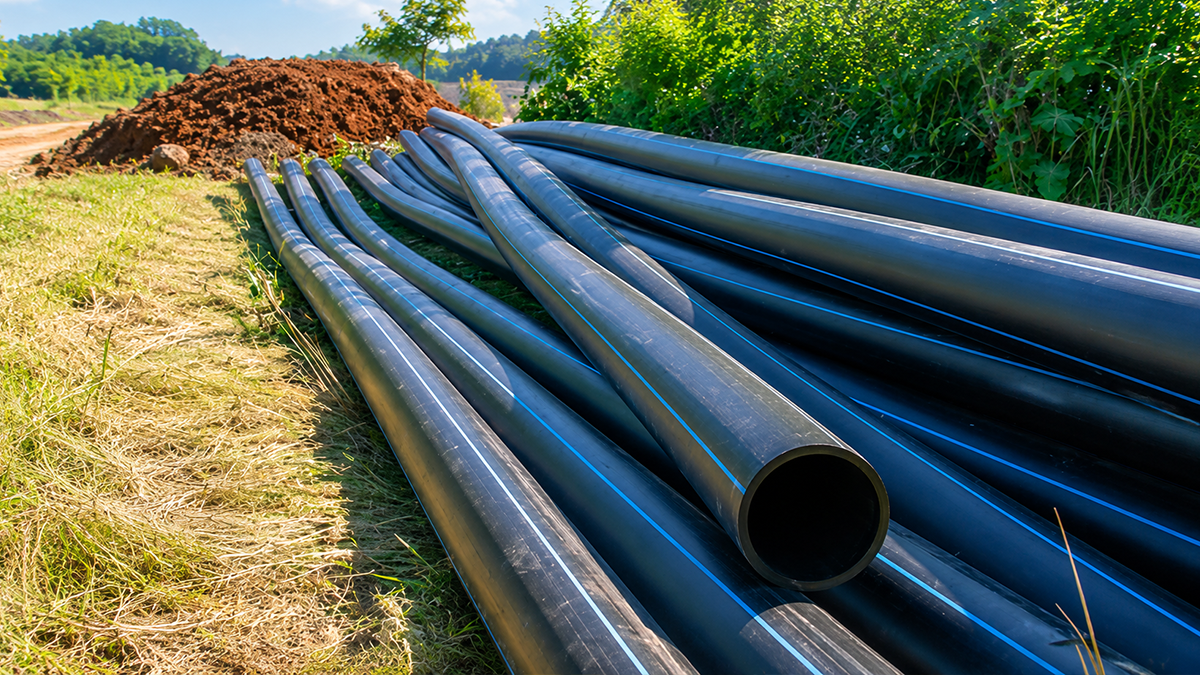
HDPE Pipe for Water Supply selection depends on three linked variables: pipe size (OD), SDR, and pressure rating (PN). This guide explains the relationship between them, references ISO 4427 / EN 12201 / AWWA standards, and gives B2B buyers a step-by-step framework to specify the right pipe for municipal, rural, and industrial water projects.
High-density polyethylene, or HDPE, pipe is widely used in municipal water distribution, transmission mains, irrigation networks, industrial water systems, and service connections. Its flexibility, corrosion resistance, lightweight construction, and fusion-jointed connections make it suitable for both buried and above-ground water projects.
When selecting an HDPE water pipe, engineers commonly evaluate the polyethylene material grade, minimum required strength, pressure rating, SDR, installation method, and project standard.
Understanding the differences between PE80, PE100, and PE100-RC helps engineers select a suitable material for the project’s pressure, installation, and service conditions.
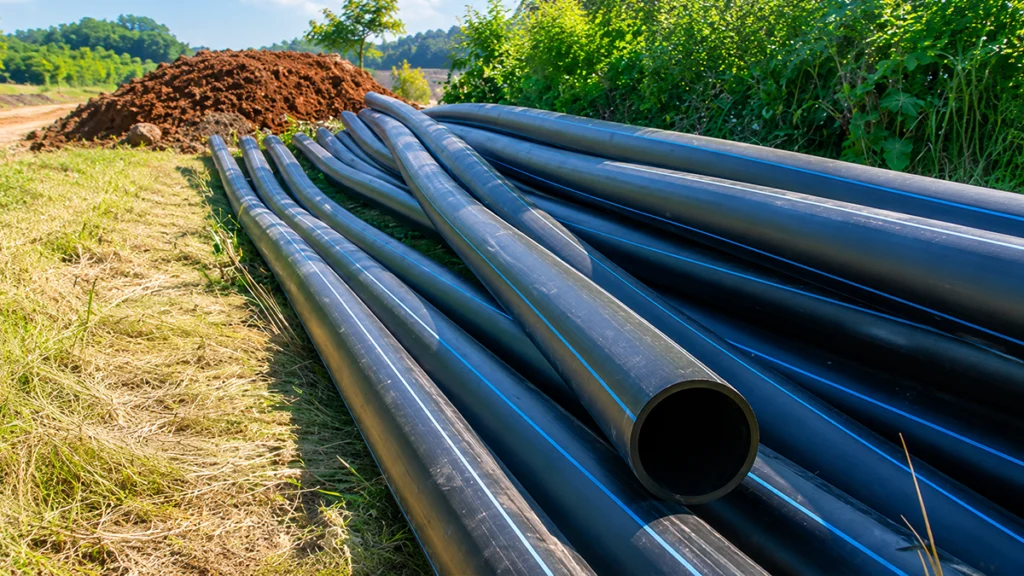
Procurement engineers cannot afford guesswork when specifying potable water piping. Strict adherence to international manufacturing and toxicological standards is non-negotiable. Before a single trench is dug, you must verify that the piping system hits strict dimensional tolerances while passing rigorous health safety tests to protect the public water supply.
The comparison table below breaks down the critical global standards governing polyethylene water pipes:
| Standard / Approval | Region / Scope | What It Covers |
|---|---|---|
| ISO 4427 Series | International | PE pressure piping systems for drinking water, raw water, pressurized drainage, and sewerage, including materials, dimensions, joints, and testing requirements. |
| EN 12201 Series | Europe | PE piping systems for water supply and for drains and sewers under pressure, covering pipes, fittings, valves, and system performance. |
| AWWA C901 | North America | PE pressure pipe, tubing, and fittings from approximately 3/4 inch to 3 inches for water-service applications. |
| AWWA C906 | North America | PE pressure pipe and fittings from 4 inches to 65 inches for waterworks and related pressure-pipeline applications. |
| GB/T 13663 Series | China | Chinese national standards for PE piping systems used in water supply, including material, dimensional, performance, pipe, and fitting requirements. |
| NSF/ANSI/CAN 61 | North America / Internationally Recognized | Evaluates the health effects of materials and components in contact with drinking water, including potential chemical contaminants that may migrate into the water. |
| WRAS Approval | United Kingdom | Demonstrates that approved plumbing products or materials meet relevant UK water-fitting regulations and drinking-water contact requirements. |
HDPE pressure pipe is commonly specified by its outside diameter, while the available internal flow area depends on the selected SDR and wall thickness. The same outside diameter can therefore have different internal diameters and hydraulic capacities.
Pipe sizing should begin with the required design flow, allowable water velocity, friction loss, operating pressure, surge pressure, elevation difference, and future demand. Engineers can then select a suitable outside diameter and SDR that meet both hydraulic and pressure requirements. The selected pipe must also be compatible with the approved fittings, valves, and fusion equipment.
| Typical OD Range | Common Water-Supply Applications |
|---|---|
| 20–63 mm | Service connections, rural water lines, and small irrigation branches |
| 75–225 mm | Local distribution mains, residential developments, and commercial water supply |
| 250–500 mm | Municipal distribution mains, industrial water networks, and pumping lines |
| 560–1000 mm | Major transmission mains, regional water-transfer systems, and raw-water pipelines |
| 1200–1600 mm | Large-scale water transmission, intake systems, and major infrastructure projects |
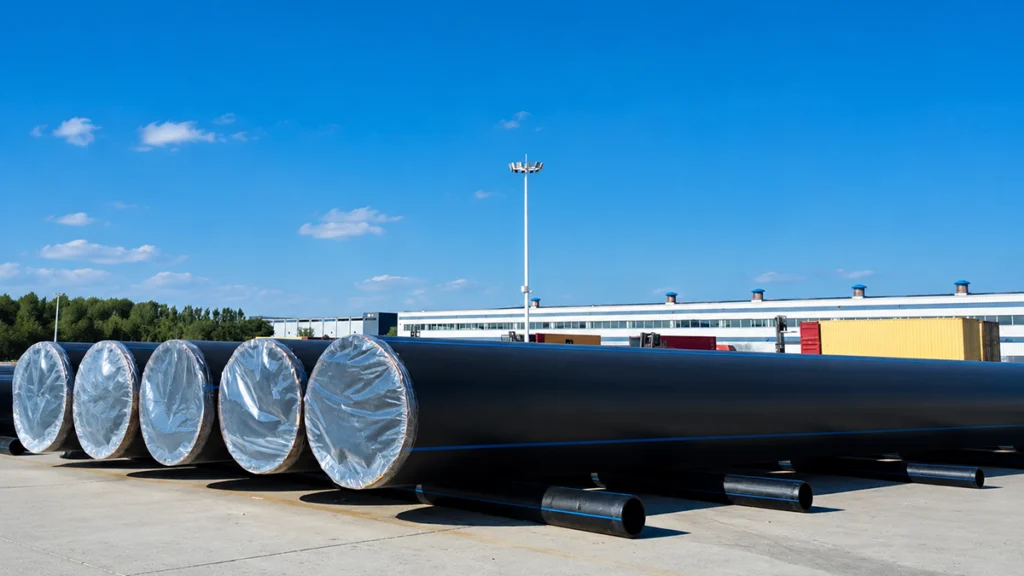
Think of SDR as the mathematical relationship between a pipe’s physical footprint and its structural muscle. SDR stands for Standard Dimension Ratio. The governing formula is straightforward: `SDR = Outside Diameter (OD) / Minimum Wall Thickness`.
The golden rule of HDPE dimensions is inverse proportionality. A lower SDR value means a thicker HDPE pipe wall relative to its overall diameter, which directly equals a higher internal pressure threshold. Let’s look at a practical example: a 63mm SDR 11 PE pipe and a massive 315mm SDR 11 pipe—assuming both are extruded from the exact same PE100 resin—will share the exact same pressure rating. The scale changes, but the structural ratio remains identical.
SDR to Wall Thickness Reference Table (ISO 4427):
| OD (mm) | SDR 17 Wall Thickness (mm) | SDR 11 Wall Thickness (mm) |
|---|---|---|
| 63 | 3.8 | 5.8 |
| 110 | 6.6 | 10.0 |
| 160 | 9.5 | 14.6 |
| 315 | 18.7 | 28.6 |
| 500 | 29.7 | 45.4 |
Nominal Pressure (PN) indicates the reference pressure class of an HDPE pipe at 20°C. The actual allowable operating pressure may need to be reduced based on water temperature, service conditions, material grade, and the applicable design standard.Choosing between PN10, PN16, or another pressure class requires consideration of operating pressure, surge pressure, elevation changes, temperature, SDR, and project safety factors.
PE100 SDR-to-PN Conversion Table:
| SDR | PN Rating (bar) | Working Pressure (psi) |
|---|---|---|
| 17 | PN10 | 145 |
| 13.6 | PN12.5 | 181 |
| 11 | PN16 | 232 |
| 9 | PN20 | 290 |
| 7.4 | PN25 | 362 |
Before finalizing your choice between an SDR 11 and SDR 17 configuration, you must factor in two hidden operational variables:
1. Surge Factor: HDPE pipe can accommodate short-duration pressure surges, but surge allowance must be evaluated as the total of sustained operating pressure and transient pressure. As a general design reference, total occasional surge pressure should not exceed 2.0 times the temperature-adjusted pressure rating, while total recurring surge pressure should not exceed 1.5 times that rating. A project-specific surge analysis is recommended for pumping mains, rapid valve operation, and long transmission pipelines.
2. Temperature Derating: PN ratings use 20°C as the reference temperature. When the operating temperature rises, the allowable pressure generally decreases. The correct temperature-reduction factor should be taken from the applicable standard or the pipe manufacturer’s verified design data. Buyers should not assume that a PN16 pipe retains a 16-bar allowable operating pressure at 40°C or higher.
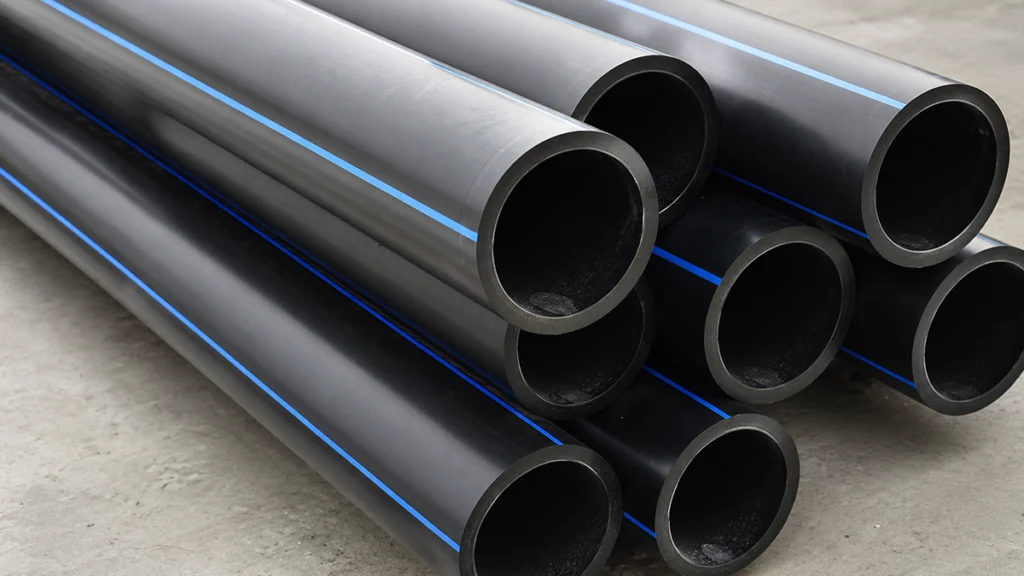
Guessing pipeline parameters is a recipe for hydraulic failure. Use this methodical technical workflow to lock in your specifications:
Step 1: Determine Flow Requirements
Start by calculating the necessary internal diameter. You need to hit your target flow rate (L/s) while keeping fluid velocity in the sweet spot—typically engineered between 1.0 and 1.5 m/s to prevent excessive friction loss and system wear.
Step 2: Establish Working Pressure
Map out the maximum steady-state system pressure generated by your pumps or gravity feeds. Next, calculate the maximum potential surge pressure (water hammer) the network will endure during sudden valve closures or power failures.
Step 3: Apply Temperature Derating
Will the ambient soil or the water itself exceed the 20°C baseline? If yes, adjust your required pressure capacity upward to compensate for the softened material.
Step 4: Select PE Grade and SDR
For modern installations, 100% virgin PE100 resin is the baseline. Take your adjusted pressure requirement and cross-reference it with the SDR conversion chart to find the right wall thickness ratio.
Step 5: Calculate Final OD
Add your calculated minimum wall thickness to the required internal diameter. Round up to the nearest standard commercial Outside Diameter (OD).
Worked Example:
Different environments punish infrastructure in different ways. Your specs need to match the reality of the installation site.
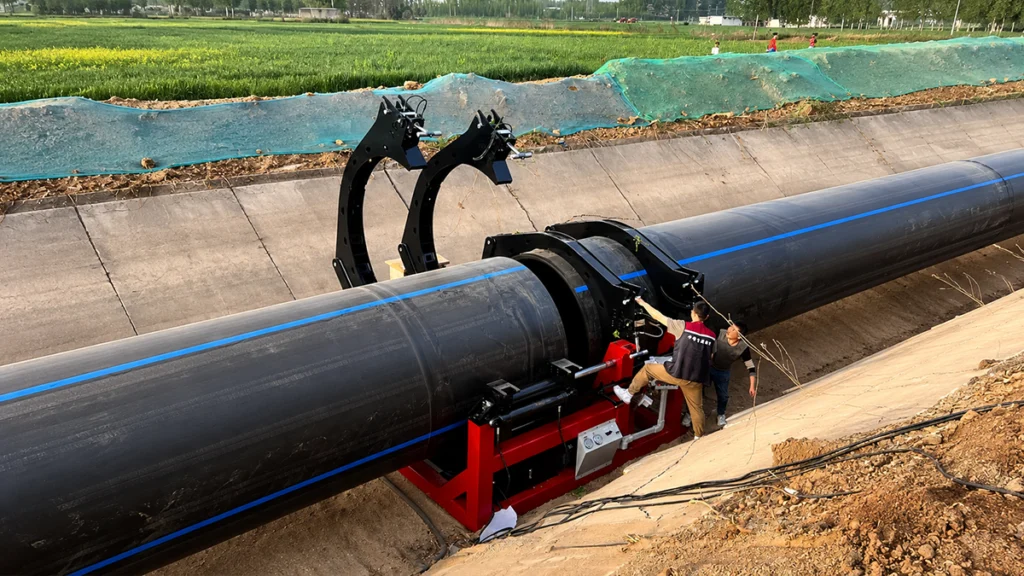
Procurement teams live in the space where technical ideals meet commercial budgets. To optimize your tender submissions, you must understand the primary levers that dictate HDPE pricing and availability.
Core Cost Drivers:
JINQUAN Factory Capabilities:
As a leading manufacturer, JINQUAN Plastic Industry Co., Ltd. operates a massive 200-acre facility capable of outputting over 100,000 tons annually. Standard production lead times hover between 7 to 15 days. Minimum Order Quantities (MOQ) are dynamic: standard 110mm runs require very low MOQs, while firing up the extruders for custom 1600mm HDPE pipes demands specific volume commitments.
Supplier Evaluation Checklist:
Before awarding a water infrastructure contract, put your HDPE supplier through this vetting process:
1. Verify active ISO 9001 (Quality) and ISO 14001 (Environmental) certifications.
2. Demand raw material batch testing reports—specifically looking for Melt Flow Rate (MFR) and Oxidation Induction Time (OIT) data.
3. Ensure they utilize advanced, high-speed extrusion lines equipped with automated ultrasonic wall-thickness monitoring.
4. Check their export packaging protocols. Pipes must be protected from UV degradation and physical gouging during maritime transit.
A single specification error on paper can trigger a catastrophic blowout in the field. Watch out for these prevalent industry missteps:
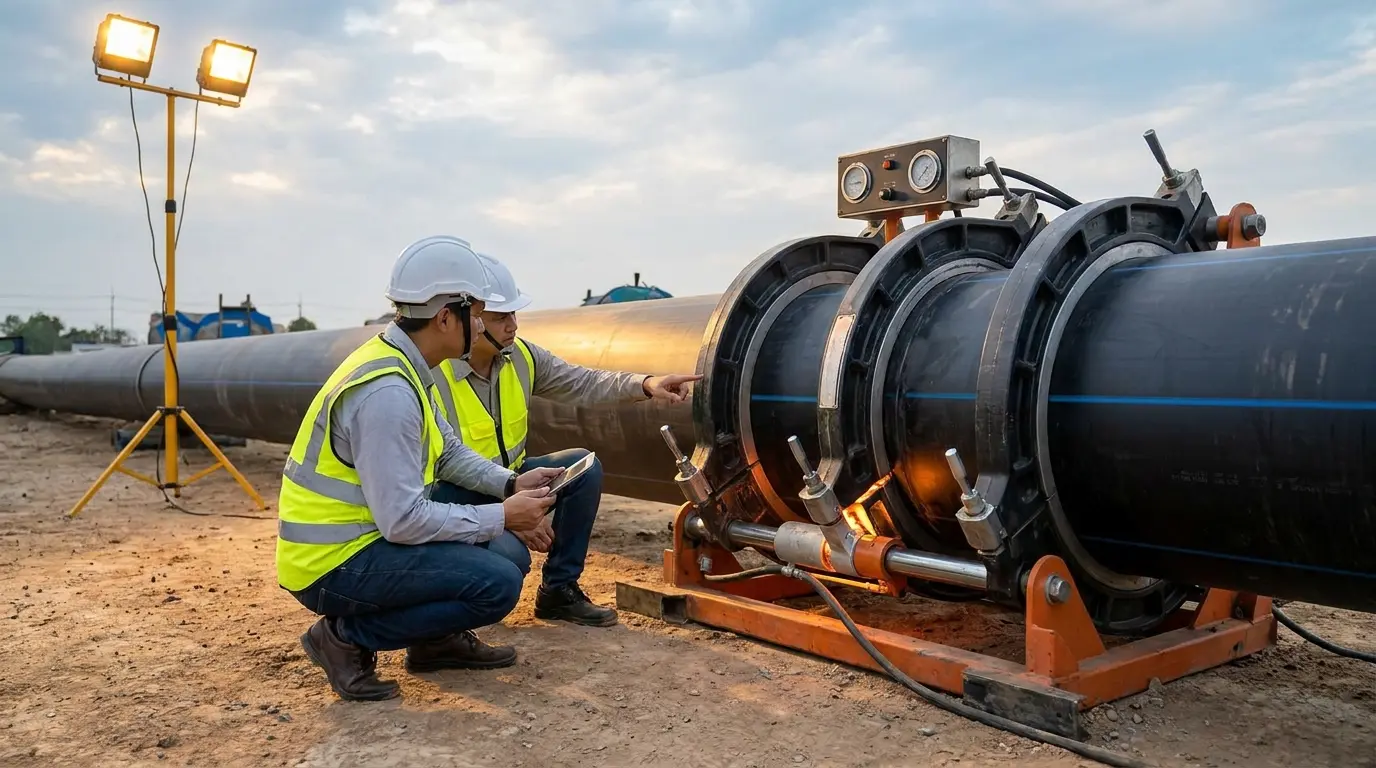
Great pipes fail under bad installation. Mastering the mechanics of jointing and burial ensures your specified SDR actually survives its 100-year design life.
Jointing Methodologies:
Burial and Bending Dynamics:
Polyethylene is inherently flexible, allowing it to shed external soil loads rather than fighting them rigidly. Standard cover depths range from 0.6m to 0.9m to bypass frost heave and traffic vibrations. Conversely, if you specify a low enough SDR (high ring stiffness), HDPE can survive burial depths exceeding 30 meters in aggressive landfill environments. Furthermore, HDPE can be cold-bent right on the job site. With a safe bend radius of 20 to 25 times the PE pipe’s OD, crews can sweep HDPE pipes around obstacles, drastically reducing the need for expensive manufactured elbows.
HDPE Pipeline configuration dictates both the hydraulic success and the financial reality of your project. Run your final blueprints through this rapid-fire checklist:
For a PE100 water pipeline operating below 10 bar at 20°C, SDR17/PN10 may be suitable under steady conditions. However, the final selection must also account for surge pressure, elevation changes, operating temperature, design life, and the applicable safety factors. Where additional pressure margin is required, engineers may select SDR13.6/PN12.5 or SDR11/PN16 after completing the hydraulic and surge analysis.
PN10 and PN16 indicate different nominal pressure classes at the 20°C reference temperature. For the same PE100 material and outside diameter, PN16 pipe generally has a lower SDR and thicker wall than PN10 pipe. For example, PE100 SDR17 is commonly associated with PN10, while SDR11 is commonly associated with PN16. The actual allowable operating pressure must still consider temperature, surge conditions, material designation, and the applicable standard.
PE100 has a higher Minimum Required Strength than PE80, allowing it to achieve a given pressure class with a thinner wall in many designs. This can provide a larger internal flow area for the same outside diameter. However, PE80 may still be suitable where permitted by the applicable standard and project specification. Potable-water suitability depends on the finished pipe’s required drinking-water approval, not only on whether the material is PE80 or PE100.
HDPE water pipelines are commonly designed using a long-term design basis, often 50 years under specified pressure and temperature conditions. Actual service life depends on resin grade, operating pressure, temperature, surge events, installation quality, jointing, external loads, soil conditions, and maintenance. Properly designed and installed systems may remain in service beyond the original design period, but a universal 50-to-100-year lifespan should not be guaranteed.
Standard HDPE pressure ratings generally use 20°C as the reference temperature. HDPE may be used at higher temperatures when permitted by the material, pipe manufacturer, and applicable standard, but its allowable pressure normally decreases as temperature rises. For continuous hot-water service, buyers should compare the verified temperature-pressure ratings of HDPE with alternatives such as PE-RT or PP-R rather than assuming one material is suitable for every high-temperature system.
The required pipe size depends on population, peak water demand, source capacity, elevation, pipeline length, allowable velocity, friction loss, operating pressure, and future expansion. Small service connections may use diameters such as 20–32 mm, while distribution and transmission lines may require substantially larger pipes. Final diameters should be selected through hydraulic calculations rather than fixed only by whether the line is a main, branch, or household connection.
Request the applicable product-standard documents, drinking-water approval, current certificate number, test reports, raw-material traceability, and manufacturer identification. For North American projects, products may need certification to NSF/ANSI/CAN 61; for UK applications, an appropriate WRAS approval or another accepted route may be required. Always verify the certificate in the issuing organization’s official directory and confirm that it covers the exact pipe material, size range, and manufacturer. NSF/ANSI/CAN 61 establishes health-effects criteria for products and materials in contact with drinking water, while WRAS approvals demonstrate compliance with relevant UK water-fitting requirements.
HDPE pipe pricing depends on outside diameter, SDR and wall thickness, PE grade, raw-material cost, product standard, certification requirements, order quantity, straight length or coil format, fittings, packaging, and delivery terms. A lower SDR means a thicker wall and greater material usage for the same outside diameter, so it normally costs more per meter. Buyers should request a current quotation based on the exact diameter, SDR or PN class, quantity, destination, and Incoterm.
Designing a reliable HDPE water supply system requires careful evaluation of flow demand, pipe diameter, SDR, operating pressure, surge pressure, temperature, installation conditions, and applicable project standards. Selecting the correct outside diameter and pressure class helps balance hydraulic performance, structural safety, and material cost.
Buyers should also verify temperature derating, pipe and fitting compatibility, approved fusion procedures, product test records, and compliance with standards such as ISO 4427 where applicable. A project-specific design and proper installation can reduce avoidable failures and support dependable long-term pipeline performance.