Address
Zhengzhou, Henan, China
Work Hours
Monday to Friday: 7AM - 7PM
Weekend: 10AM - 5PM
Address
Zhengzhou, Henan, China
Work Hours
Monday to Friday: 7AM - 7PM
Weekend: 10AM - 5PM

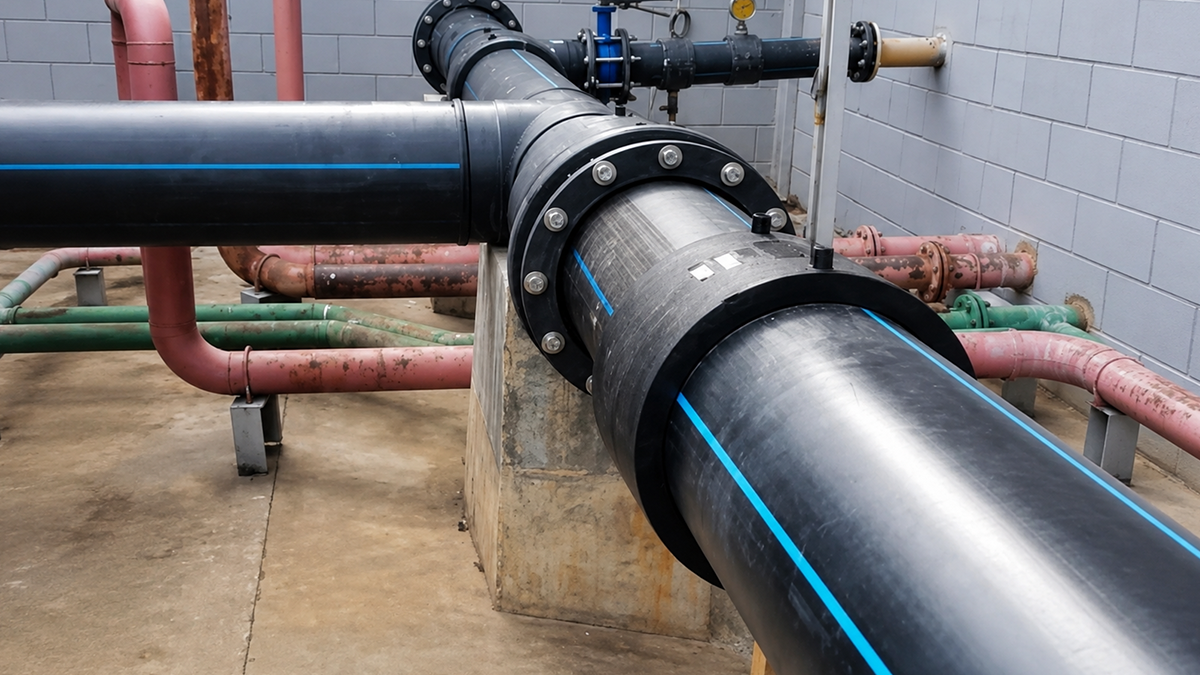
HDPE Pipe Fittings for Slovenia help municipal buyers compare fitting types, standards, specifications, and supplier criteria for water and drainage projects, so they can choose the right parts and reduce installation risk.
High-Density Polyethylene (HDPE) pipe fittings serve as engineered thermoplastic joints that connect, branch, or terminate water and drainage pipelines. Across Slovenia and the wider European Union, HDPE is rapidly replacing legacy materials for municipal infrastructure. The reason comes down to undeniable environmental and hydraulic performance.
Slovenian public works often face harsh freeze-thaw cycles and rocky subterranean environments. Under these conditions, rigid materials fail, but HDPE fittings provide the flexibility and impact resistance needed to absorb soil movement and temperature extremes without fracturing. Inside the HDPE pipe, a Manning coefficient of 0.009 guarantees a glass-smooth bore. This dramatically reduces scaling and locks in peak flow rates throughout a 50- to 100-year service life. Because the polymer is fully recyclable, integrating these components helps municipalities meet strict EU cohesion fund criteria and circular economy mandates.
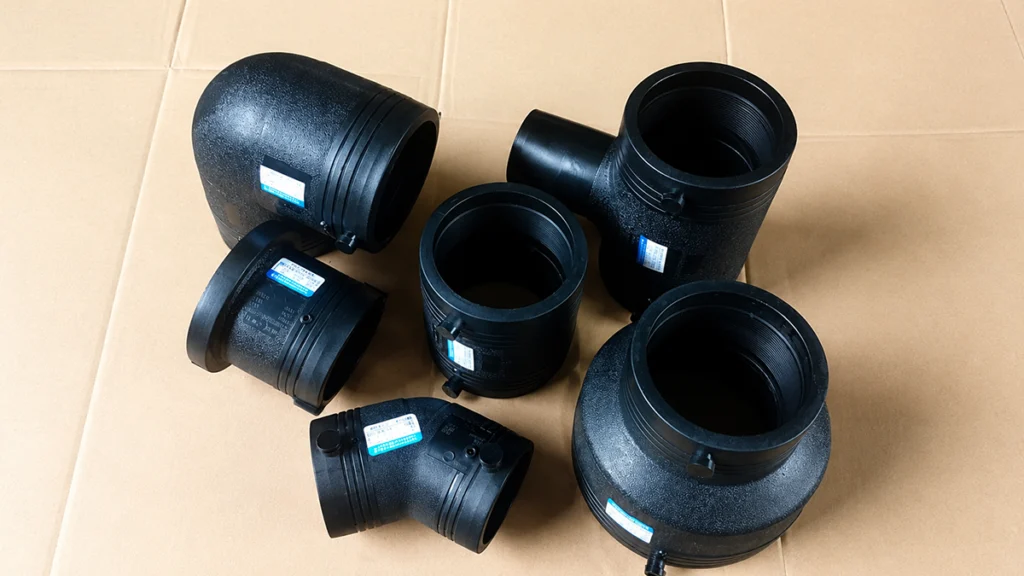
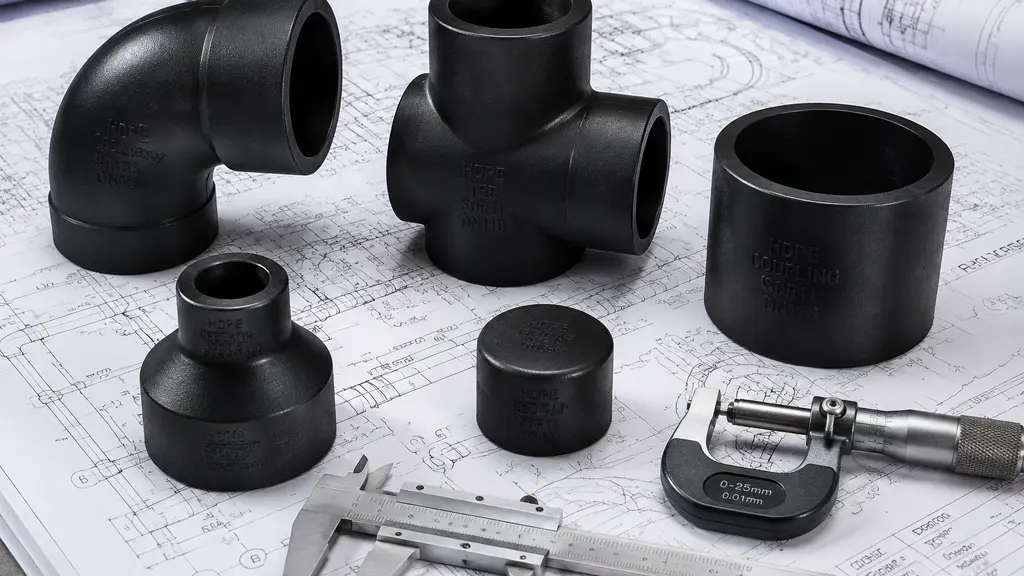
Expanding municipal networks demand specific joining techniques based on HDPE pipeline diameter, operating pressure, and the physical constraints of the trench. The industry relies heavily on five primary categories of HDPE fittings:
Slovenian public works procurement operates under stringent European and international manufacturing frameworks. Sourcing non-compliant materials isn’t just a regulatory risk—it invites catastrophic HDPE pipeline failures and disqualified municipal tenders.
Procurement teams and lead engineers must rigorously verify several core standards before signing off on an order:
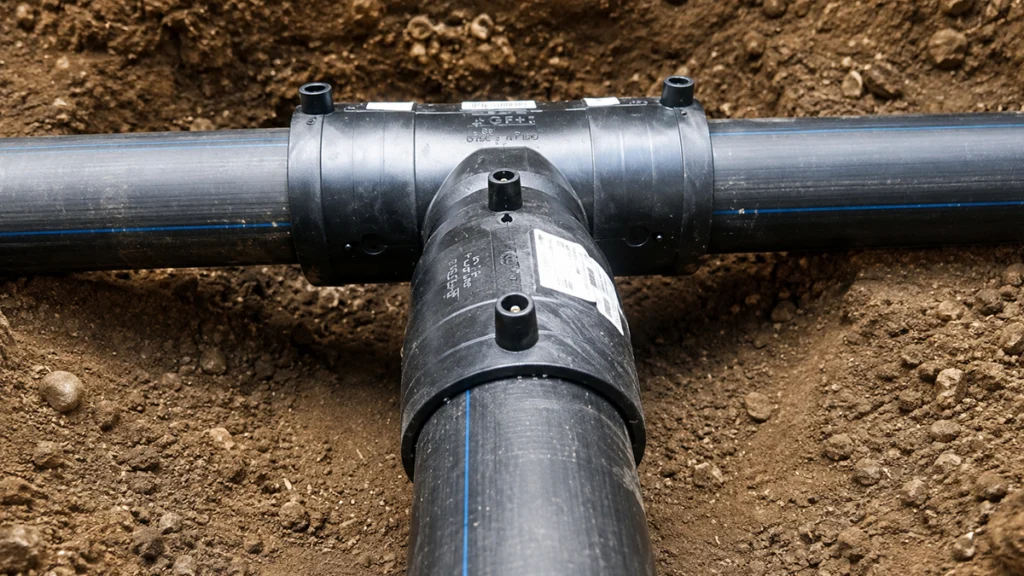
Upgrading aging subterranean infrastructure forces municipal engineers to weigh the benefits of modern thermoplastics against legacy materials like Ductile Iron (DI) and Polyvinyl Chloride (PVC).
| Feature | HDPE Pipe Fittings | Ductile Iron (DI) | PVC |
|---|---|---|---|
| Corrosion Resistance | 100% immune to rust, tuberculation, and aggressive soils. | Requires cement-mortar lining (AWWA C104) and poly-encasement. | Highly resistant to corrosion. |
| Hydraulic Efficiency | Maintains a Hazen-Williams C-factor of ~150 for its entire life. | Cement linings age; engineers design aged iron at a C-factor of 100–110. | Maintains high flow rates. |
| Joint Integrity | Heat-fused, monolithic, leak-free joints. | Mechanical or push-on joints with gaskets. | Bell-and-spigot gasketed joints prone to infiltration. |
| Installation Flexibility | Highly flexible; ideal for trenchless (HDD) and pipe-bursting. | Rigid; requires open-trench installation. | Rigid; requires open-trench installation. |
| Carbon Footprint | 40-60% lower cradle-to-gate carbon footprint compared to DI. | High energy consumption during manufacturing. | Lower than DI, but higher environmental impact than HDPE. |
Nailing down the precise technical parameters guarantees long-term system integrity while protecting municipal budgets from unnecessary over-engineering.
Key Specification Parameters:
| Parameter | Available Range / Options | Typical Municipal Application |
|---|---|---|
| Diameter (DN/OD) | DN16 to DN3000 | Small distribution (DN16-110) up to massive sewer collectors (DN3000). |
| Pressure Class (PN) | PN4, PN6, PN8, PN10, PN16, PN20, PN25 | High pressure mains (PN16), distribution (PN10), gravity flow (PN6). |
| SDR (Standard Dimension Ratio) | SDR11, SDR17, SDR26 | SDR11 (PN16) for water mains; SDR17 (PN10) for distribution. |
| Ring Stiffness (SN) | SN4, SN8 | SN4/SN8 used for Double-Wall Corrugated (DWC) gravity sewers. |
Step-by-Step Selection Logic:
1. Determine the Application: Clarify whether the network will handle pressurized potable water, vacuum-driven sewage, or standard gravity drainage.
2. Calculate Operating Pressure: Map the pressure requirements to the correct Standard Dimension Ratio (SDR). High-pressure municipal mains demand SDR 11 (PN16), whereas SDR 17 (PN10) covers general distribution. Gravity-fed lines only require SDR 26 (PN6).
3. Specify Diameter: Align the outer diameter (OD, measured in millimeters) with your project’s hydraulic flow models.
4. Select the Joining Method: Opt for butt fusion on large, open-trench installations. Pivot to electrofusion for tight urban spaces or localized repairs.
5. Assess Site Conditions: Rocky terrain poses severe risks to standard gravity sewers. In these environments, specify Double-Wall Corrugated (DWC) systems featuring an SN8 ring stiffness.
Throughout Slovenian water networks, HDPE fittings act as the backbone for raw water transportation HDPE pipelines, pump station manifolds, and potable distribution grids. Because the material is highly flexible, it is uniquely compatible with trenchless installation techniques. Methods like Horizontal Directional Drilling (HDD), slip-lining, and HDPE pipe-bursting empower contractors to rehabilitate aging infrastructure directly beneath busy urban roads, slashing traffic disruption to near zero.
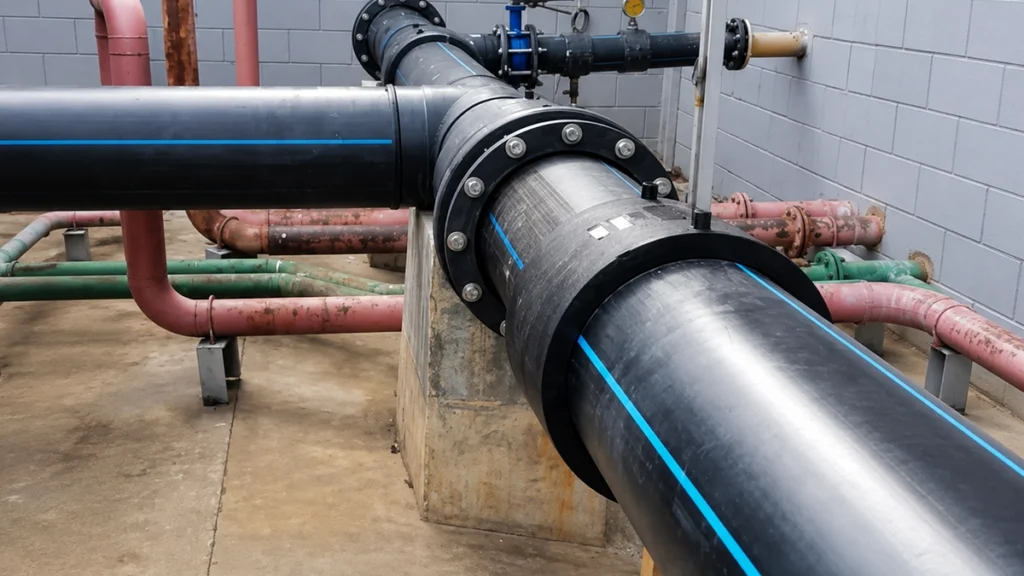
To guarantee safety and streamline future excavation work, municipal potable water lines and their associated fittings feature distinct blue striping or are molded entirely in solid blue.
Beyond clean water delivery, municipal engineers rely heavily on HDPE for sanitary and stormwater management. You will find these components anchoring vacuum sewer networks, pressure drainage systems, wastewater treatment plant collectors, and massive stormwater culverts.
*Procurement Scenario:* Consider a Slovenian municipality tasked with replacing a decaying sanitary sewer line plagued by severe hydrogen sulfide corrosion. The optimal specification pairs SN8 DWC pipes with custom-fabricated HDPE fittings. Because high-density polyethylene effortlessly resists hydrogen sulfide gas and aggressive municipal effluents, this setup completely bypasses the structural degradation that destroys metal or concrete alternatives. The result is a virtually maintenance-free operational lifecycle.
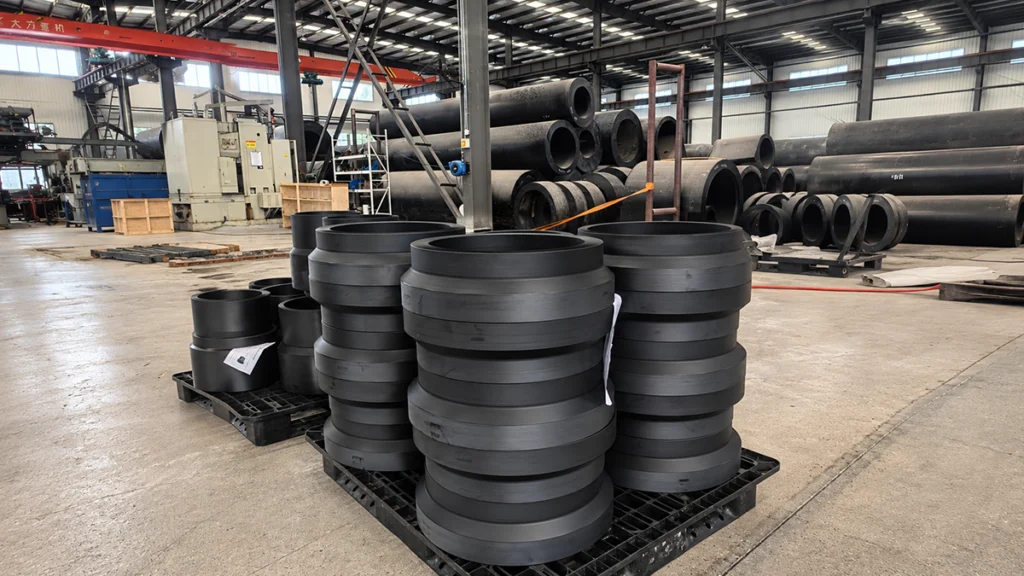
Mastering the supply chain mechanics and cost structures is vital for accurate municipal bidding and strict timeline management. Bypassing local EU plumbing distributors to source directly from a manufacturer fundamentally changes project economics. Retail suppliers routinely layer a 20% to 100% markup over base factory prices, draining public budgets.
Factory-Direct Pricing Benchmarks (USD):
Logistics and Lead Time:
Industrial-scale production facilities like JINQUAN execute rapid manufacturing cycles, generally turning orders around within 7 to 15 days. When drafting an international purchase order, procurement officers need to verify the Minimum Order Quantity (MOQ), especially for massive custom-fabricated pieces approaching DN3000. Furthermore, buyers should secure physical product samples for independent lab testing and insist on reinforced export packaging to shield the polymer fittings during their transit to Slovenia.
Partnering with the right manufacturer minimizes the risk of costly project delays and guarantees flawless compliance with EU infrastructure directives. Municipal procurement teams should run potential suppliers through this strict evaluation checklist:
Slovenian infrastructure operates under strict European regulatory frameworks. Procurement teams must mandate EN 12201, the definitive European standard governing pressurized polyethylene piping. Beyond that, all fittings require the CE mark, strict adherence to ISO 4427 global dimensions, and the use of modern PE100 material grades to guarantee sufficient hydrostatic design stress.
In almost all underground municipal scenarios, HDPE significantly outperforms PVC. HDPE relies on heat-fused joints to form a continuous, monolithic system that simply cannot leak. Conversely, PVC depends on gasketed bell-and-spigot joints that remain highly vulnerable to groundwater infiltration. Add in HDPE’s flexibility for trenchless drilling and its immunity to the hydrogen sulfide gas found in sanitary sewers, and the choice becomes clear.
Butt fusion relies on an external heating plate to melt the ends of the pipe and fitting before pressing them together under high force. Contractors use this primarily for large-diameter pipes (over 90mm) in open trenches. Electrofusion fittings, however, feature built-in electrical heating coils. When powered, they melt the polymer from the inside out. This makes electrofusion the go-to method for automated welding, rapid municipal repairs, and installations in highly confined urban spaces.
Your required Standard Dimension Ratio (SDR) hinges entirely on operating pressure. Engineers specify SDR 11 (rated for PN16) for high-pressure municipal mains. Standard distribution networks generally rely on SDR 17 (PN10). If you are laying gravity-flow drainage or low-pressure lines, a thinner-walled SDR 26 (PN6) pipe provides more than enough strength.
A credible B2B quotation must contain a full suite of compliance documentation. Always request CE marking certificates, independent SGS test reports, and the factory’s ISO 9001/14001 credentials. Furthermore, the quote should attach technical data sheets clearly stating the material grade (PE100), pressure class (PN), dimensional tolerances, and the manufacturer’s official warranty terms.
To eliminate risk on massive public tenders, procurement officers should demand physical product samples for visual inspection or third-party laboratory testing. Scrutinize the CE and SGS documentation, confirm the polymer is authentic PE100 (not legacy PE80), and audit the factory’s production capacity to ensure they won’t miss critical delivery deadlines.
Absolutely. The material offers incredible versatility. For vacuum sewers or pressurized wastewater, standard PE100 fittings provide total resistance to aggressive municipal effluents and chemicals. For gravity-fed stormwater culverts, engineers pair Double-Wall Corrugated (DWC) HDPE pipes (featuring SN4 or SN8 ring stiffness) with custom-fabricated fittings to withstand immense overhead soil loads.
Lead times fluctuate based on the specific product mix and the factory’s baseline capacity. Standard injection-molded pieces (measuring up to 315mm) usually leave tier-one factories within 7 to 15 days. However, massive custom-fabricated fittings built for sewer collectors (up to DN3000) demand specialized manual welding, extending the production window. Export customs clearance and international shipping logistics will also impact your final delivery date.
Selecting the right infrastructure materials dictates the long-term efficiency and survival of public works. For Slovenian municipalities, HDPE pipe fittings deliver a highly durable, hydraulically optimized, and completely corrosion-resistant solution that easily outlasts legacy PVC and ductile iron networks. By strictly enforcing EN 12201 standards, mandating the PE100 material grade, and calculating the precise SDR for their pressure requirements, engineers lock in a leak-proof system engineered to perform for over half a century. Ultimately, vetting suppliers based on their manufacturing scale, quality certifications, and ability to provide a complete product ecosystem allows procurement teams to capture aggressive factory-direct pricing without ever compromising on EU regulatory compliance.