Address
Zhengzhou, Henan, China
Work Hours
Monday to Friday: 7AM - 7PM
Weekend: 10AM - 5PM
Address
Zhengzhou, Henan, China
Work Hours
Monday to Friday: 7AM - 7PM
Weekend: 10AM - 5PM

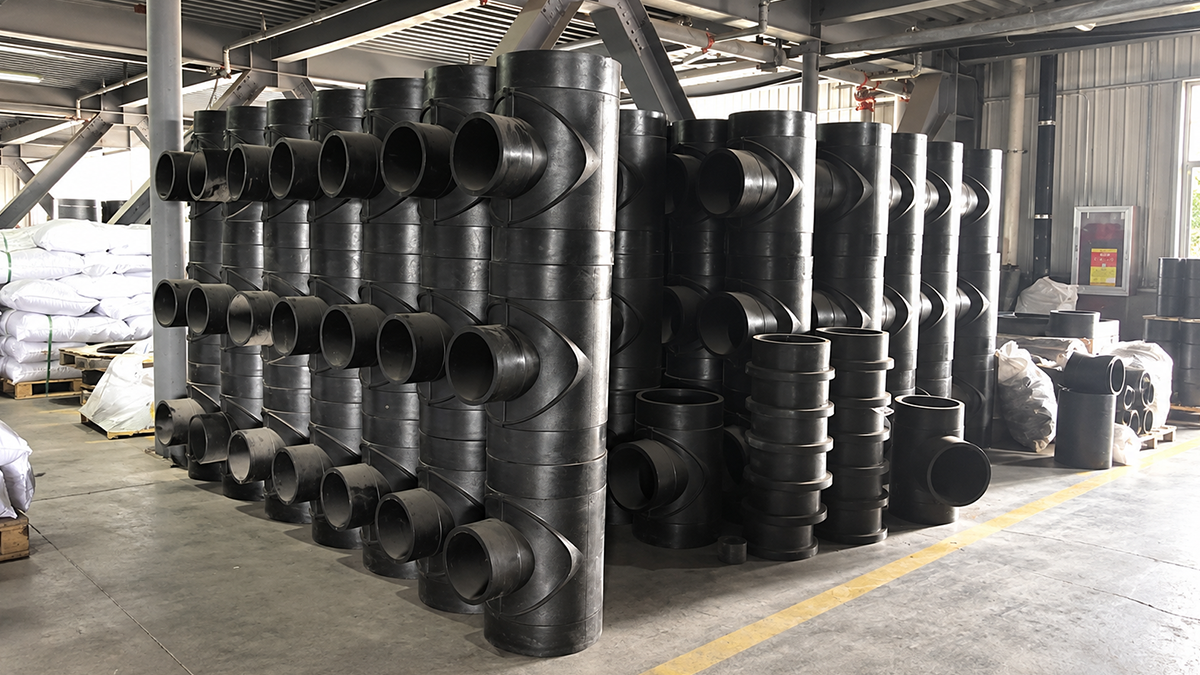
HDPE Pipe Fittings for Hungary help buyers compare water, gas, and infrastructure options, check standards and specs, and choose the right supplier based on performance, price, and delivery needs.
High-Density Polyethylene (HDPE) fittings serve as the backbone of modern utility networks. These engineered thermoplastic components connect PE pipes, boasting a material density of at least 0.945 g/cm³ and joint strengths that easily exceed 1.2 MPa. Why do they matter so much? They completely eliminate the need for cathodic protection. They do not rust, they shrug off aggressive soils, and they easily deliver a 50- to 100-year lifespan when manufactured from premium PE100 and PE100-RC grades.
Right now, Hungary is seeing a massive surge in demand for these high-performance components. EU Cohesion Funds are pouring into Central and Eastern Europe, specifically targeting wastewater expansions and drinking water upgrades. For local municipalities and EPC contractors, HDPE fittings are the go-to solution for building leak-proof, zero-maintenance infrastructure that aligns perfectly with strict European environmental standards.
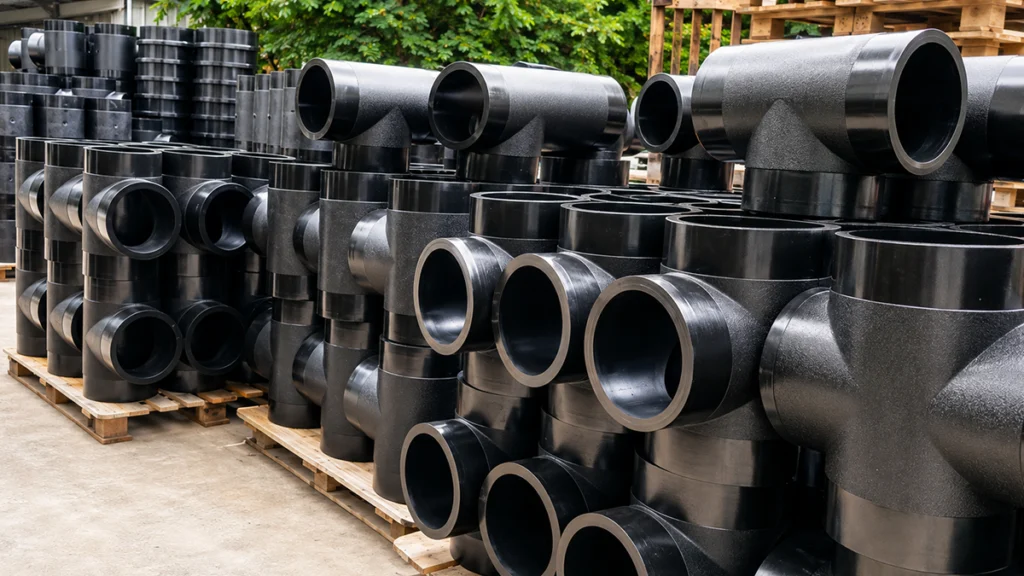
Choosing the right fitting isn’t a guessing game. It comes down to HDPE pipe diameter, working pressure, and the realities of your trench conditions. Across Hungarian infrastructure projects, contractors generally rely on three specific types of HDPE fittings to handle these diverse installation hurdles.
1. Butt Fusion Fittings
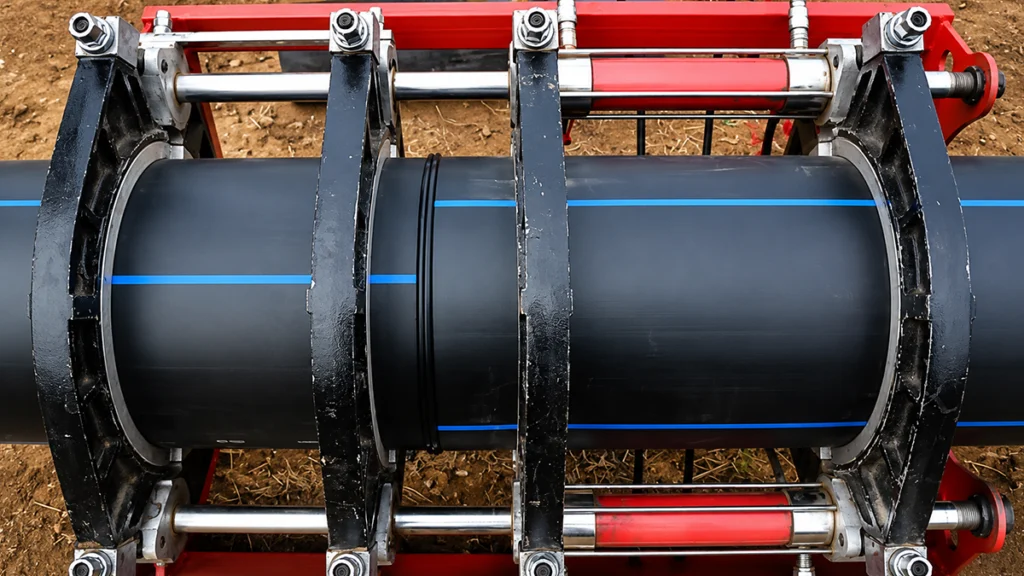
Joined by melting the HDPE pipe and fitting ends and then pressing them together under precise hydraulic pressure, butt fusion creates a seamless bond. These components are incredibly cost-effective for long, straight runs and large-diameter pipelines (typically anything over 90mm). Compared to electrofusion, the actual component costs are noticeably lower.
2. Electrofusion Fittings
These fittings feature embedded electrical resistance wires. When connected to a butt fusion machine, the wires heat up and melt both the inner fitting surface and the outer HDPE pipe wall, forging a unified, homogeneous joint. You simply cannot do without them when dealing with small-diameter pipes, tight trench spaces, complex network tie-ins, or high-security gas distribution lines.
3. Compression Fittings (PP)
Made from Polypropylene (PP), these mechanical fittings skip the heat and electricity entirely. They are perfect for smaller diameters up to 110mm. Contractors frequently use them for temporary water bypasses, agricultural irrigation layouts, or fast emergency repairs in the field.
| Feature | Butt Fusion Fittings | Electrofusion Fittings | Compression Fittings (PP) |
|---|---|---|---|
| Primary Use Case | Large-diameter water/wastewater mains | Gas distribution, tight trenches, repairs | Temporary lines, small diameter water |
| Diameter Range | >90mm to 1650mm+ | DN16 to DN630 (typically) | DN16 to DN110 |
| Jointing Equipment | Hydraulic butt fusion machine | Electrofusion welding machine | Manual wrenches (no power needed) |
| Cost Profile | Lower component cost, higher labor/equipment | Higher component cost, faster installation | Low component cost, rapid installation |
| Sealing Integrity | Excellent (homogeneous melt) | Maximum (zero-leakage tolerance) | Good (mechanical O-ring seal) |
Buying HDPE pipe fittings for Hungarian public works means playing by strict European and international rules. Cut corners here, and you risk catastrophic system failures. Worse, using non-compliant materials will instantly disqualify your firm from lucrative EU-funded tenders.
| Parameter | Specification / Standard | Application Focus |
|---|---|---|
| Water Supply Standard | EN 12201 / ISO 4427 | Municipal potable water, sewage, drainage |
| Gas Distribution Standard | EN 1555 / ISO 4437 | Natural gas, biogas distribution networks |
| Material Grades | PE100, PE100-RC | High resistance to slow crack growth |
| SDR 7.4 (PN 25) | 25 bar / 363 psi | High-pressure industrial pipelines |
| SDR 9 (PN 20) | 20 bar / 290 psi | High-pressure water and gas mains |
| SDR 11 (PN 16) | 16 bar / 232 psi | Standard municipal water and sewer mains |
| SDR 13.6 (PN 12.5) | 12.5 bar / 181 psi | Medium-pressure water distribution |
| SDR 17 (PN 10) | 10 bar / 145 psi | Low-pressure water, gravity drainage |
| Required Certifications | CE Mark, ISO 9001:2015, SGS | Mandatory for European market entry |
| Regional Approvals | DVGW | Highly regarded across Central Europe |
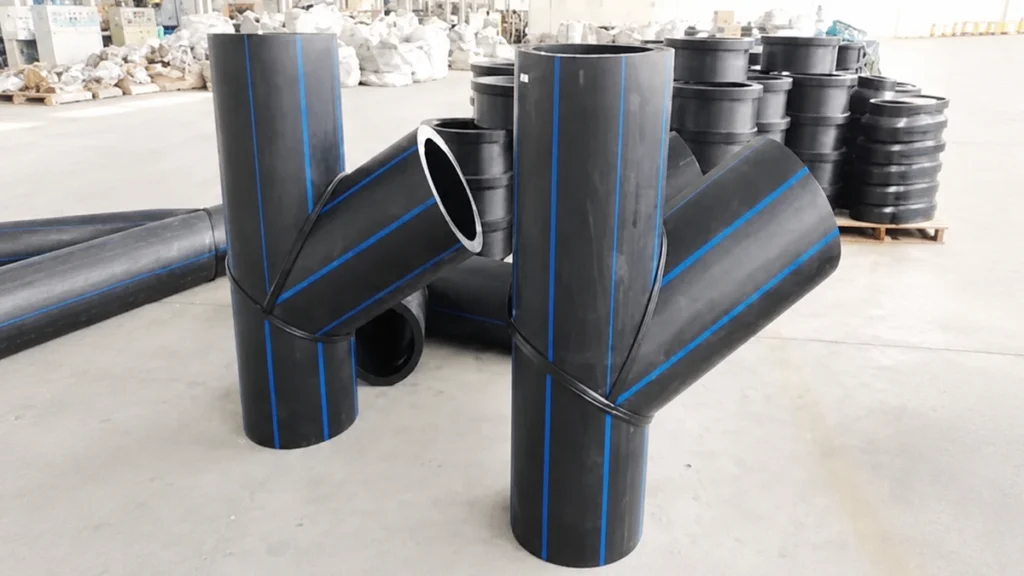
Municipal water supply lines in Hungary demand strict compliance with the EN 12201-3 standard. When engineering these networks, designers typically specify SDR 11 (PN16) and SDR 17 (PN10) dimension ratios. These ratings hit the sweet spot, balancing efficient material use with serious pressure-handling muscle.
Standard PE100 resin handles most jobs perfectly. However, PE100-RC (Resistance to Crack) is quickly becoming the material of choice for trenchless installations. Because it offers exceptional resistance to point loads and slow crack growth, PE100-RC shines during directional drilling beneath busy urban centers where proper sand bedding is impossible to guarantee.
Hungarian Project Case Example:
Take a recent drinking water upgrade in a mid-sized Hungarian city. Backed by EU Cohesion Funds, contractors set out to replace a crumbling cast-iron network. The engineering team got creative to optimize their budget and timeline. They specified EN 12201-compliant PE100-RC electrofusion fittings (SDR 11) for the congested downtown sections to keep the excavation footprint small. Meanwhile, they deployed standard PE100 butt fusion HDPE pipe fittings for the massive transmission lines running alongside the highway. This hybrid strategy saved money while accelerating the installation schedule.
Gas networks leave absolutely no room for error. Operating under strict zero-leakage tolerances, these systems require specialized fittings that meet the EN 1555-3 standard. To make them instantly recognizable in an open trench, manufacturers produce gas fittings in solid yellow or black with highly visible co-extruded yellow stripes.
For gas applications, electrofusion beats butt fusion nearly every time. The embedded heating coils guarantee a flawless joint in high-stress environments, virtually eliminating the human error inherent in manual butt fusion alignment. Even though gas networks run at lower maximum operating pressures (MOP) than water lines, engineers routinely over-spec the components. Using SDR 11 or SDR 9 fittings builds a massive safety margin against ground shifts or accidental third-party strikes.
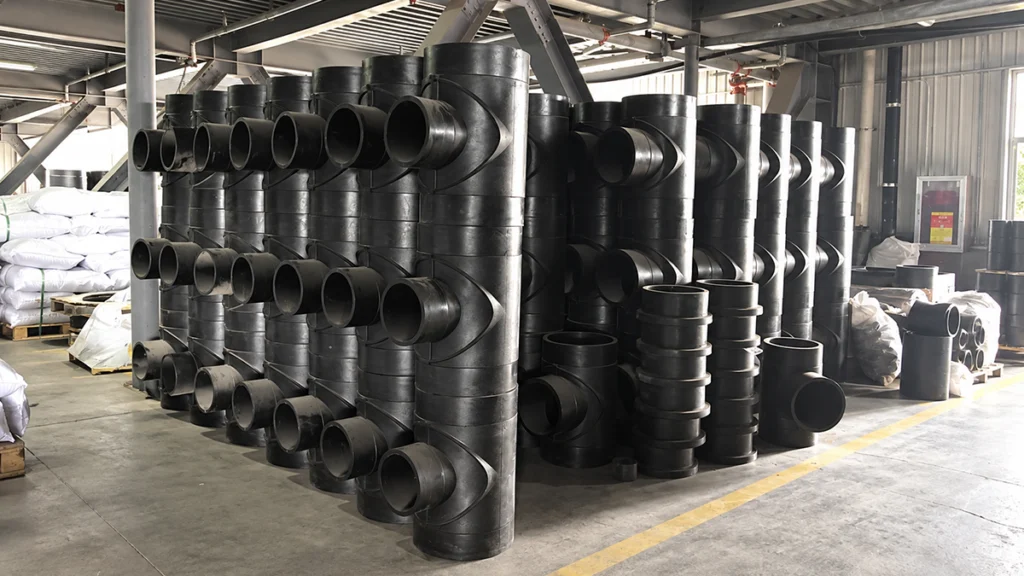
HDPE fittings do far more than just carry drinking water and gas. They are essential components in heavy infrastructure, flood control systems, and industrial processing facilities. Standard molded fittings easily cover diameters from DN16 up to DN315. But what happens when a project scales up? Massive infrastructure builds—like municipal wastewater treatment plants or regional stormwater grids—rely on custom-fabricated fittings that can span up to 65 inches (1650mm). Top-tier manufacturers like JINQUAN even have the tooling to produce compatible HDPE pipes up to DN3000.
Out in the industrial sector, these fittings handle rigorous process piping and chemical transport. High-density polyethylene is naturally inert. This chemical resistance makes the fittings impervious to acidic soils, harsh industrial effluents, and corrosive environments that would chew through traditional steel or concrete within a few short years.
Nailing the right fitting selection means matching the component’s physical traits directly to your HDPE pipeline’s engineering specs. For Hungarian projects, follow this straightforward decision tree:
1. Identify the Application and Standard: What are you moving? Use EN 12201 for water and wastewater. Switch to EN 1555 for gaseous fuels.
2. Determine the Diameter (DN/OD): Pinpoint the exact outside diameter needed for the tie-in. This could be a small DN110 distribution line or a massive DN315 main transmission header.
3. Match the SDR and Pressure Rating: Never mix and match pressure ratings carelessly. The fitting’s SDR must match or exceed the pipe’s SDR to keep the system’s pressure integrity intact. Put simply: an SDR 11 pipe demands an SDR 11 fitting. Dropping an SDR 17 fitting into that line creates an immediate weak point prone to catastrophic burst failure.
4. Select the Jointing Method: Grab electrofusion fittings for tight trenches, tricky directional changes, and all gas lines. Go with butt fusion for wide-open trenches and large-diameter, long-haul water transmission.
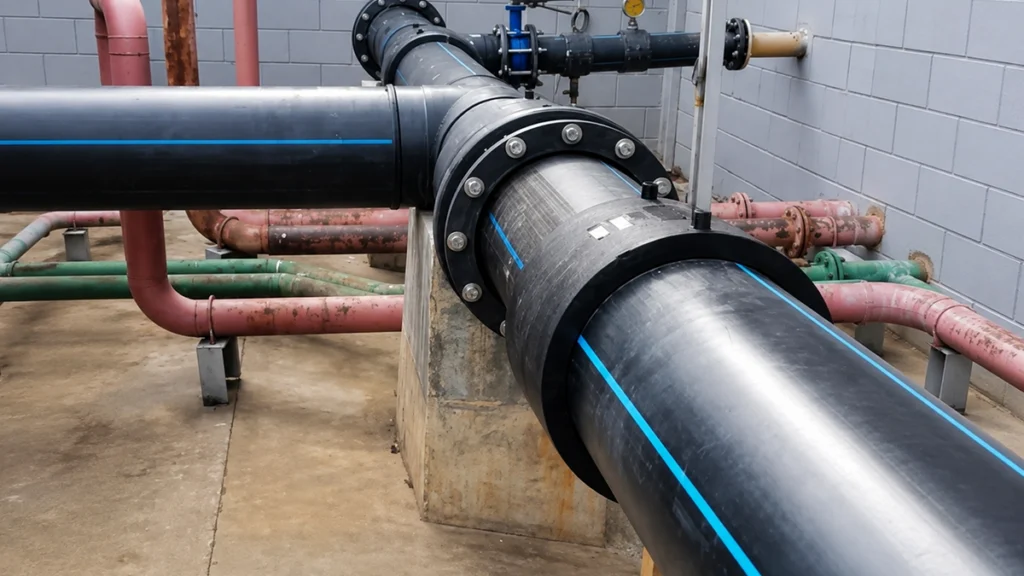
Vetting a supplier for the Hungarian market is a balancing act between unit pricing, production muscle, and logistical dependability. Teaming up with a primary manufacturer like JINQUAN—which runs a massive 200-acre facility pushing out 100,000 tons annually—secures factory-direct pricing alongside full customization options.
HDPE is notoriously tough. Experiencing an intrinsic material failure—like oxidation or crack growth—within its 50-year design life is incredibly rare. In fact, over 90% of HDPE pipeline failures stem from external factors. Excavator strikes, terrible trench bedding, or sloppy fusion joints (usually due to bad temperature control, incorrect pressure, or poor alignment) are the real culprits.
1. Alignment: Lock the pipe and fitting into the machine clamps to guarantee perfect axial alignment. Face the ends to strip away surface oxidation and create flush contact.
2. Heating: Slide the PTFE-coated heater plate between the ends. Heat the PE100 material until it reaches a molten state at the exact specified temperature.
3. Fusion: Pull the heater plate out and press the molten ends together using precisely calculated hydraulic pressure.
4. Cooling: Keep the joint fully pressurized until it cools down completely. This forms a homogeneous bond that is literally stronger than the original pipe.
You cannot commission a PE pipeline without passing a hydrostatic pressure test. Before pressurizing the system, you must purge all trapped air using a pigging system or high-point vents. Keep in mind that HDPE actually expands slightly when put under pressure. This volumetric expansion, widely known as PE creep, means you will need to add make-up water during the test. Don’t panic when you see a slight pressure drop—this is normal material behavior, not a leaking joint.
Before signing off on procurement for any utility or infrastructure build in Hungary, run through this critical checklist:
1. Standard Verification: Does the fitting bear the CE mark? Does it strictly follow EN 12201 for water or EN 1555 for gas?
2. Technical Match: Do the DN (Diameter Nominal) and SDR/PN ratings line up perfectly with your HDPE pipeline engineering schematics?
3. Supplier Capacity: Can the factory actually handle the 1x20ft MOQ and deliver within the promised 7-15 day window?
4. Documentation: Are SGS inspection reports, ISO 9001 factory certificates, and PE100/PE100-RC material data sheets readily available?
5. Equipment Compatibility: Do your local Hungarian crews have the right automated butt fusion or electrofusion machines calibrated for these specific fittings?
Hungarian projects demand strict adherence to European norms. Water supply jobs need EN 12201 or ISO 4427 compliance. Gas distribution systems fall under EN 1555 or ISO 4437. Furthermore, every component needs a CE mark, ISO 9001 factory certification, and ideally, DVGW approval to guarantee maximum credibility across Central Europe.
For municipal water, you want fittings molded from PE100 or PE100-RC resins. SDR 11 (PN16) and SDR 17 (PN10) stand as the most common pressure ratings. Use butt fusion fittings for large transmission mains, but switch to electrofusion fittings when navigating complex urban grids or tight trenches.
Yes, they are universally specified for gas applications. Gas networks have a zero-tolerance policy for leaks. The embedded electrical heating coils inside electrofusion fittings automate the melting process, delivering superior joint integrity and stripping away the human error risks linked to manual butt fusion.
The Standard Dimension Ratio (SDR) of your fitting has to match or exceed the SDR of your pipeline. If you lay an SDR 11 (PN16) pipe, you absolutely must use SDR 11 fittings. Slipping a higher SDR (which means a thinner wall) fitting into that system introduces a dangerous weak point.
To get factory-direct wholesale rates, expect a Minimum Order Quantity (MOQ) of one 20ft shipping container. That translates to roughly $10,000 to $15,000 worth of mixed components. Production usually wraps up in 7 to 15 days. Just remember to factor ocean or rail transit time to Hungary into your master schedule.
HDPE easily outperforms both PVC and steel in underground utilities. Unlike steel, it never rusts, ignores aggressive chemicals, and requires zero cathodic protection. Compared to PVC, HDPE is highly flexible and incredibly impact-resistant. Its fused joints create a monolithic, leak-free system designed to last 50 to 100 years.
A hydrostatic pressure test is non-negotiable. Before testing, crews must purge all trapped air via pigging or venting. Testers also need to factor in PE creep—the plastic’s natural tendency to expand under pressure. This expansion requires adding make-up water and should never be misdiagnosed as a failing joint.
Absolutely. They are the backbone of municipal infrastructure, especially on projects backed by EU Cohesion programs in Hungary. While standard molded fittings handle up to DN315, manufacturers can fabricate massive HDPE fittings up to 1650mm for heavy-duty flood control, stormwater grids, and wastewater treatment plants.
Sourcing the right HDPE pipe fittings for Hungarian infrastructure isn’t just about finding the lowest price—it requires strict alignment with European standards, precise engineering matches, and thorough supplier vetting. Whether you are specifying EN 12201 parts for a water grid or EN 1555 electrofusion joints for a gas network, locking in the exact SDR, PN ratings, and material grades (PE100 or PE100-RC) ensures long-term system integrity. By demanding CE marks, SGS documentation, and verified factory capacities, procurement teams can slash logistical risks and secure optimal container-load pricing. Ultimately, doing the upfront homework guarantees the 50- to 100-year design life that modern, EU-funded utility networks demand.