Address
Zhengzhou, Henan, China
Work Hours
Monday to Friday: 7AM - 7PM
Weekend: 10AM - 5PM
Address
Zhengzhou, Henan, China
Work Hours
Monday to Friday: 7AM - 7PM
Weekend: 10AM - 5PM


HDPE pipe fittings are an essential part of modern piping systems due to their excellent corrosion resistance, impact strength, lightweight ease of installation, connection reliability, etc. HDPE fittings are in many ways a key component of modern piping systems due to traditional materials such as metal or PVC, and their lightweight construction makes them easy to handle and install, reduces labor costs, and ensures a longer service life, even in harsh environments. ensure a longer service life even in harsh environments. This article focuses on the application areas of HDPE fittings, methods and considerations for installation and maintenance, and helps select the right fittings for HDPE Pipes for engineering needs.
High-density polyethylene fittings with excellent physical properties and chemical stability, widely used in various fields, HDPE fittings in a variety of complex working conditions can still maintain long-term stable operation, become an indispensable material in modern infrastructure construction and industrial production.
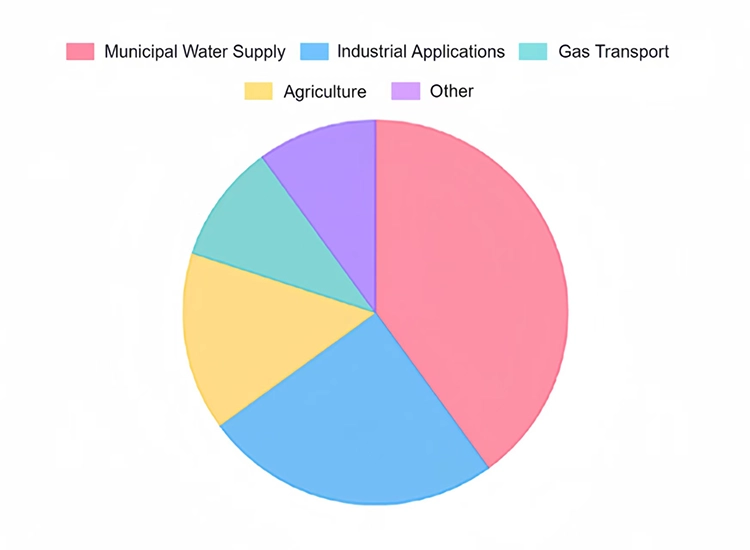
Due to the characteristics of HDPE fittings non-toxic, corrosion-resistant, non-scaling, reliable joint sealing, etc., HDPE pipe network is widely used in potable water delivery pipeline network, water transmission and distribution pipelines at all levels from water plants to users, to ensure the safety of water quality; applied in the sewage and rainwater drainage pipelines, resistance to corrosive substances in the sewage, adapting to the geological settlement, reducing leakage pollution;
HDPE pipes and fittings can also be applied in the water return system, conveying the treated recycled water, saving water resources. HDPE pipes and fittings can also be used in water recycling system to convey treated recycled water and save water resources.HDPE plumbing fittings ensure reliable connection and minimize leakage in municipal water supply and drainage systems.
HDPE fittings are ideal for low and medium pressure gas distribution systems (often with a yellow stripe to distinguish them). Their excellent sealing properties, chemical resistance (especially to sulfides in natural gas) and resistance to rapid crack propagation ensure safe gas delivery. Electrofusion welding connections are a common connection technique for gas piping.
HDPE plumbing fittings, due to its excellent chemical resistance and abrasion resistance, can be applied to chemical media transportation, conveying various acids, alkalis, salt solutions and other corrosive liquids and slurries; applied to mining transportation of ore, tailings slurry and other abrasive media; applied to electric power and communication cable sheathing pipe, to protect cables from physical damage and chemical corrosion; also can be applied to industrial water and cooling water system, conveying process water and circulating cooling water inside factories, providing strong support for conveying chemical substances in the industrial field.
HDPE pipe fittings are widely used in modern water-saving agricultural irrigation systems due to their lightweight, durable, easy-to-install and UV-resistant (with the addition of carbon black) characteristics, building efficient water transmission networks for farmland irrigation, used in drip and sprinkler systems, connecting to a variety of irrigation equipment, and adapting to complex terrain.
HDPE fusion fittings are able to resist seawater corrosion and have a certain degree of flexibility, which enables them to be applied to submarine water transmission and sewage pipelines, inlet and outlet pipes of desalination plants, netting frames and water supply and drainage networks of aquaculture farms, and sediment discharge pipelines in dredging projects. And HDPE pipe fittings have good buoyancy, which can be well used in marine engineering and dredging.
HDPE material is characterized by thermal conductivity and durability, which allows HDPE fittings to be used in ground source heat pump systems; HDPE pipes and fittings have a smooth inner wall, which improves drainage efficiency and allows them to be used in siphon rainwater drainage systems. In addition HDPE plumbing fittings can also be used in fire fighting networks under certain conditions.
The chemical resistance and bleed-through properties of HDPE make it ideal for leachate collection and transportation piping in landfills, where it resists strong corrosion, as well as for biogas collection and conduit piping.
Proper installation is the key to ensuring that your HDPE fittings system performs at its best and reaches its expected service life. At the same time, an understanding of basic maintenance will help to stabilize the system for the long term.
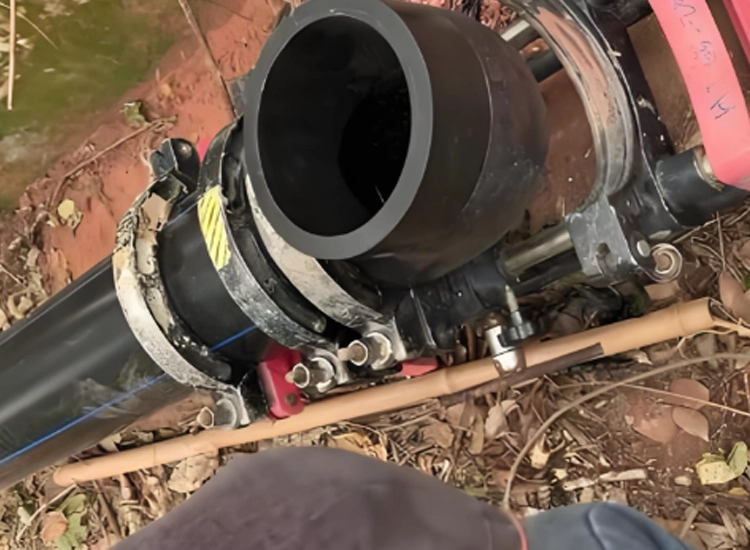
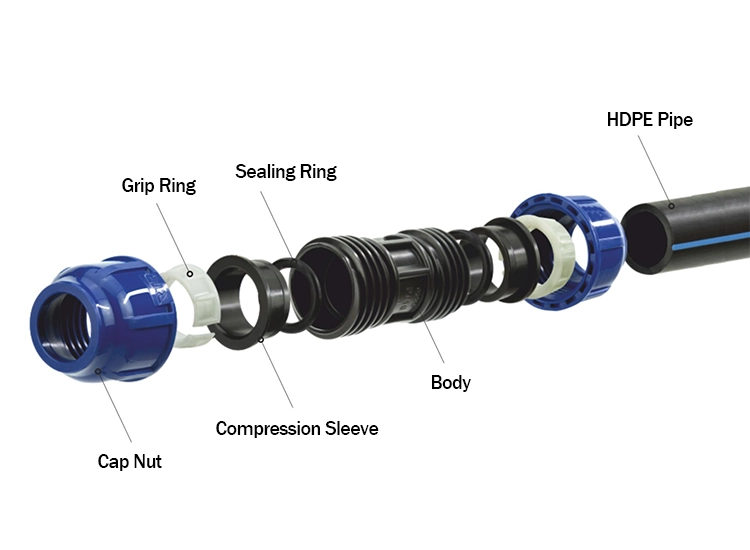
Regular inspection and maintenance of HDPE pipes and fittings is necessary to check for signs of deformation, leakage, and damage, and to maintain and repair them in a timely manner. Regular inspections help to identify problems and deal with potential issues in a timely manner, ensuring the long-term smooth operation of HDPE pipes and fittings.
Choosing the correct and appropriate HDPE fittings is critical to ensuring the efficiency, durability, and safety of a piping system, whether engaged in municipal construction, industrial fluid transfer, or agricultural irrigation, the selection of HDPE pipe fittings affects overall performance and long-term maintenance.
First of all, it is necessary to determine the specific application areas and operating conditions of HDPE pipe fittings, conveying medium, working pressure and temperature range, as well as environmental conditions, and so on, these operating conditions will affect the selection of pipe fittings.
Secondly, clarify the parameters of HDPE pipes and fittings required for the piping system, such as caliber, quantity, types of HDPE fittings (elbow/tee/reducer/flange and other fittings for HDPE pipes), SDR, and pressure level, etc., and fully understand these parameters in order to better select the The most suitable HDPE fittings can be selected by fully understanding these parameters.
Selection of HDPE pipe fittings type and connection should take into account the size of the caliber, large and medium diameter and higher pressure preferred butt fusion fittings, small and medium diameter can choose electrofusion fittings, small diameter and low pressure can choose socket fusion fittings or compression fittings, easy to operate. For small diameter and low pressure, socket fusion fittings or compression fittings are preferred for ease of operation. Factors such as the construction environment, cost budget and specific needs should also be considered. Selection is based on a comprehensive balance of specific project requirements, technical feasibility and economic applicability.
The quality of HDPE plumbing fittings is a matter of long term smooth operation of the piping system, choose HDPE plumbing fittings that comply with international and other relevant standards. High-quality HDPE plumbing fittings have excellent strength, flexibility, chemical resistance and longer service life. Working with a reputable and reliable HDPE pipe and fittings manufacturer is a better option to select the right fittings for HDPE faster for the project. pipes.
JINQUAN is an excellent choice for buying bulk HDPE pipe fittings, providing customers with high quality and compliant HDPE pipes and fittings, DWC pipes, MPP pipes, PPR pipes and fittings and more!
The cost of purchasing, installing and maintaining HDPE fittings is also a key factor affecting fittings. Drilling more cost-effective and high-quality fittings HDPE not only reduces maintenance costs and ensures reliable connections, but also guarantees the smooth operation of the piping system in the long term.
HDPE pipe fittings have become an indispensable key component of modern piping systems due to their excellent corrosion resistance, excellent flexibility, reliable connection performance, long service life and significant environmental and economic benefits. From municipal water supply and drainage to gas transmission and distribution, from industrial applications to agricultural irrigation, HDPE pipe fittings can meet the application needs.
Fill out the form and our team will contact you shortly.