Address
Zhengzhou, Henan, China
Work Hours
Monday to Friday: 7AM - 7PM
Weekend: 10AM - 5PM
Address
Zhengzhou, Henan, China
Work Hours
Monday to Friday: 7AM - 7PM
Weekend: 10AM - 5PM

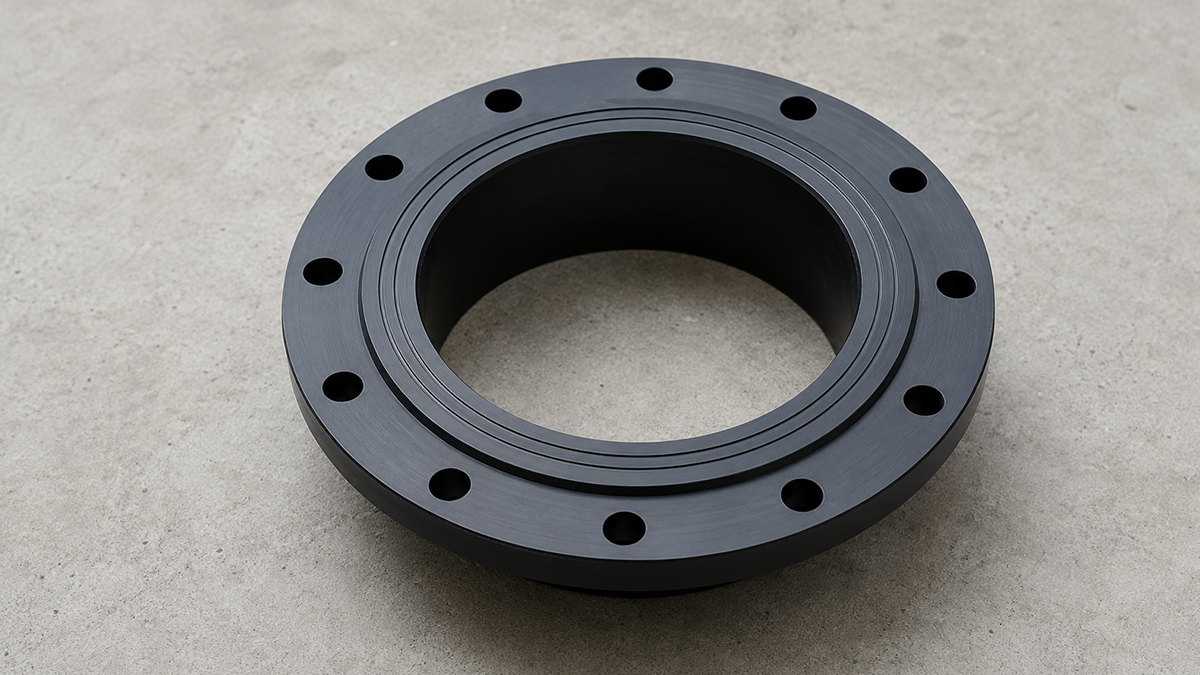
HDPE Flange Adapter guide explaining connection methods, installation steps, specifications, selection criteria, and supplier checks to help B2B buyers build reliable HDPE piping systems.
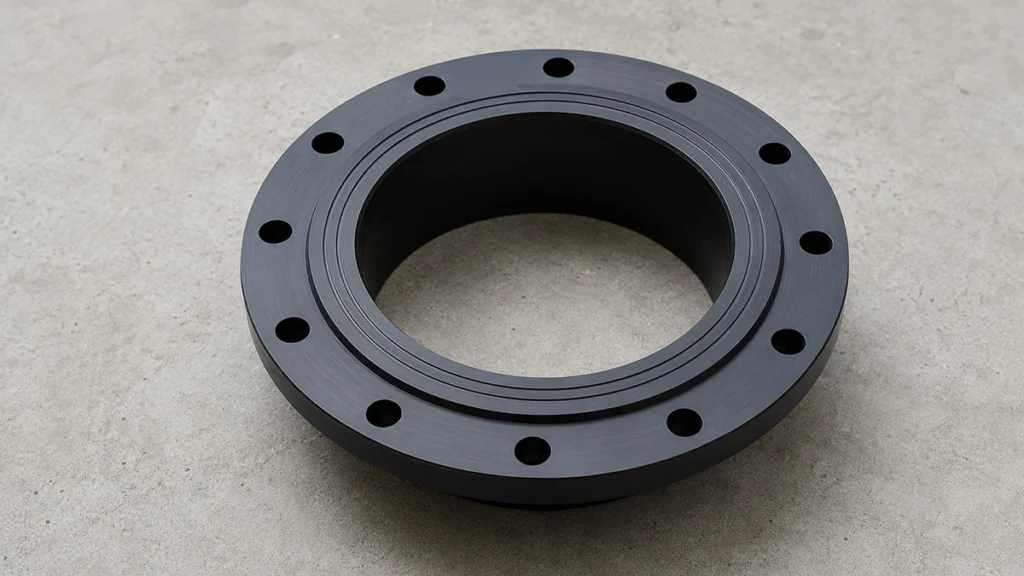
An HDPE flange adapter is a polyethylene fitting used to connect an HDPE pipeline to a compatible flanged pipe, valve, pump, fitting, or other piece of equipment. One end is joined to the HDPE pipe by butt fusion or electrofusion, while the flanged end is secured to the mating component with a metal back-up ring and bolting.
A typical flanged assembly includes the HDPE flange adapter, a back-up ring, bolts, nuts, washers, and a gasket where required. The back-up ring distributes the bolt load evenly across the polyethylene flange face and allows the bolt holes to be aligned with the mating flange. HDPE flange adapters are commonly used for transitions to steel, ductile iron, and other flanged piping components, as well as for removable valve and equipment connections.
The gasket type and need for a gasket depend on the connected materials, operating pressure, conveyed fluid, flange design, and manufacturer instructions. PE-to-PE flange connections may not always require a gasket, while connections to metal or other materials often use one to help form a reliable seal. The back-up ring, bolts, and gasket must all be compatible with the pressure rating and applicable flange standard.
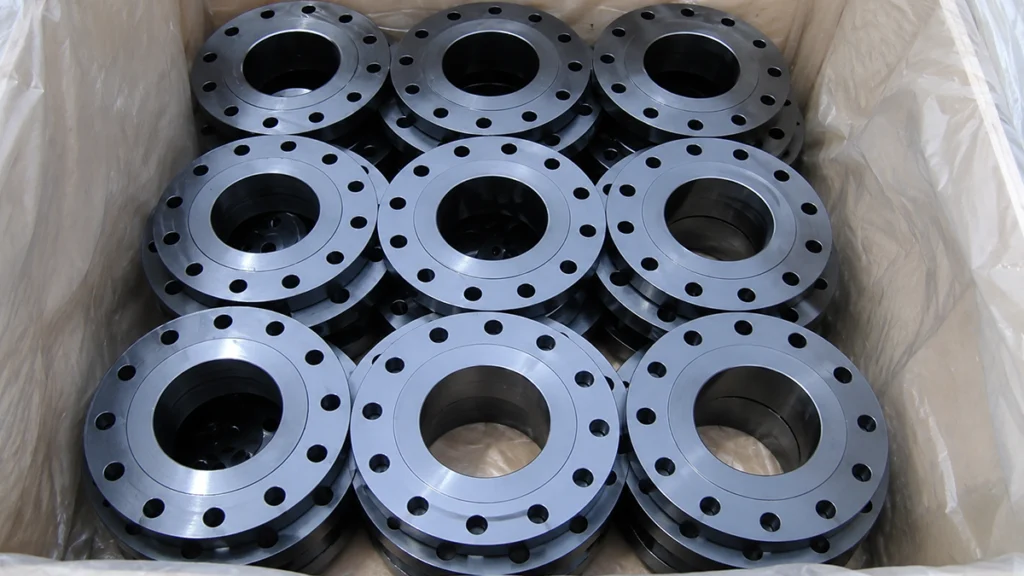
HDPE flange adapters provide a removable, bolted connection between an HDPE pipeline and compatible flanged valves, pumps, meters, vessels, or piping components. This makes equipment inspection, replacement, and maintenance more practical than cutting and rejoining the main pipeline each time service is required.
They are commonly used in water treatment, wastewater, mining, chemical-processing, and other industrial piping systems where corrosion resistance and access to equipment are important. The polyethylene adapter is fused to the pipe, while a metal back-up ring transfers the bolt load and allows alignment with the mating flange.
System performance depends on the pipe material, SDR or DR, operating temperature, pressure rating, conveyed fluid, flange standard, back-up ring, bolting, and gasket selection where required. Buyers should verify the complete flange assembly against the applicable project standard and manufacturer’s pressure-temperature recommendations rather than evaluating the HDPE adapter alone.
Specifying the right HDPE pipe flange adapter—complete with its backing ring—means navigating a landscape of material grades and pressure classifications tailored to distinct operational demands.
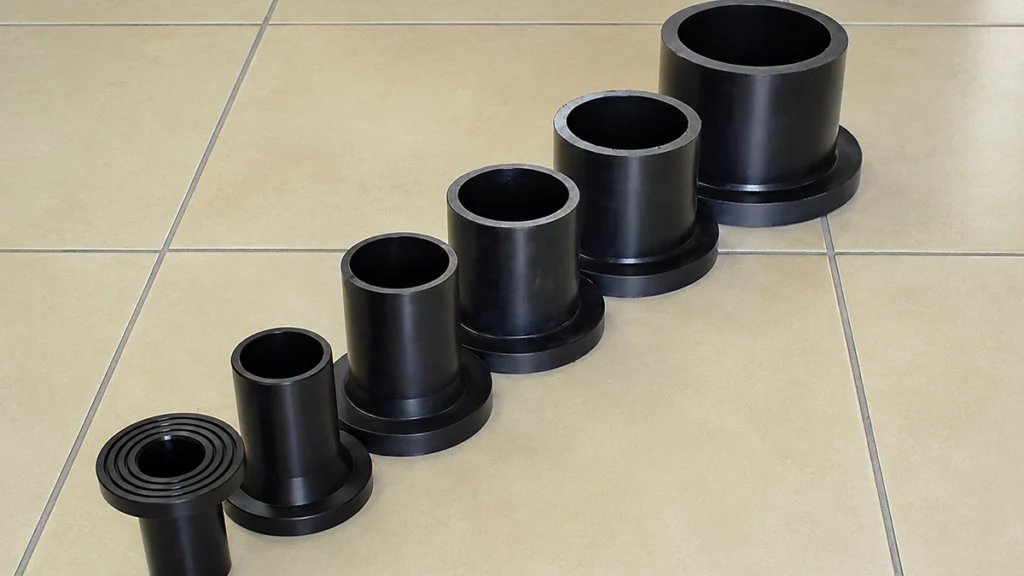
Pulling off a bulletproof HDPE flange connection demands a two-part process: thermal fusion on the polyethylene side and mechanical bolting on the opposing flange. The table below breaks down the dominant methodologies and where they work best.
| Connection Method | Best Use Case | Advantages | Limitations | Key Installation Control Point |
|---|---|---|---|---|
| Butt Fusion | Standard pipe-to-flange transitions for most diameters. | Highly reliable, seamless joint, cost-effective. | Requires specialized fusion machinery and space. | The backing ring MUST be placed on the adapter before fusion begins. |
| Electrofusion | Confined spaces or repair trenches where butt fusion is impossible. | Easy to execute in tight areas, highly automated. | Higher material cost due to the required electrofusion coupler. | Pipe scraping and alignment are critical to prevent coil shorting. |
| Bolted Connection (Non-Gasketed) | Lower pressure systems (<100 psi) mating to metal flanges. | Eliminates gasket costs; HDPE conforms to the metal face. | Not suitable for high-pressure or brittle mating flanges. | Strict adherence to specified HDPE seating torque. |
| Bolted Connection (Gasketed) | High pressure, or mating to PVC, cast iron, or fiberglass. | Protects brittle flanges; ensures sealing at lower torques. | Requires ongoing torque maintenance (compression set). | Low gasket seating bolt torque applied to elastomeric material. |
Even a premium HDPE flange adapter will fail if poorly installed. Sticking to a standardized, disciplined installation sequence prevents leaks and guarantees long-term structural integrity. Here is how to do it right:
1. Preparation and Backing Ring Placement: Start by inspecting all pipe ends for gouges or damage. *Critically important:* slide the loose metal backing ring onto the flange adapter before you even think about starting the fusion process.
2. Thermal Fusion and Cooling: Butt fuse the adapter’s stub end straight to your PE pipe segment. Once joined, let the assembly cool entirely based on standard fusion timeframes before moving or handling it.
3. Alignment Checking: Bring the flange adapter flush against the mating flange. If you are bolting up a butterfly valve, double-check that the valve disk has ample clearance to swing fully open inside the adapter without catching the edges.
4. Gasket Placement: For gasketed connections, slip the seal in carefully. Verify that it sits perfectly centered between the mating flange and the adapter’s serrated HDPE face.
5. Bolt Tightening (The 30-30 Rule): Working with pipe diameters under 18 inches? Thread the bolts finger-tight first. Grab a torque wrench and tighten them using a crisscross (star) pattern across three distinct stages: 30% of your target torque, then 60%, and finally 100%. Wrap up by moving sequentially clockwise around the flange one time to equalize the stress.
6. Mandatory Re-Torque: Both elastomeric gaskets and HDPE inherently suffer from “compression set,” meaning they relax over time. You absolutely must retighten the bolts to their final torque one hour after the initial installation. For massive adapters surpassing 12 inches, schedule a second retightening window between 4 and 24 hours later.
7. Pressure Testing: Run a hydrostatic test on the line. Notice a minor leak? Nudge the bolt torque up in 10% increments, but never push past 150% of your specified target torque.
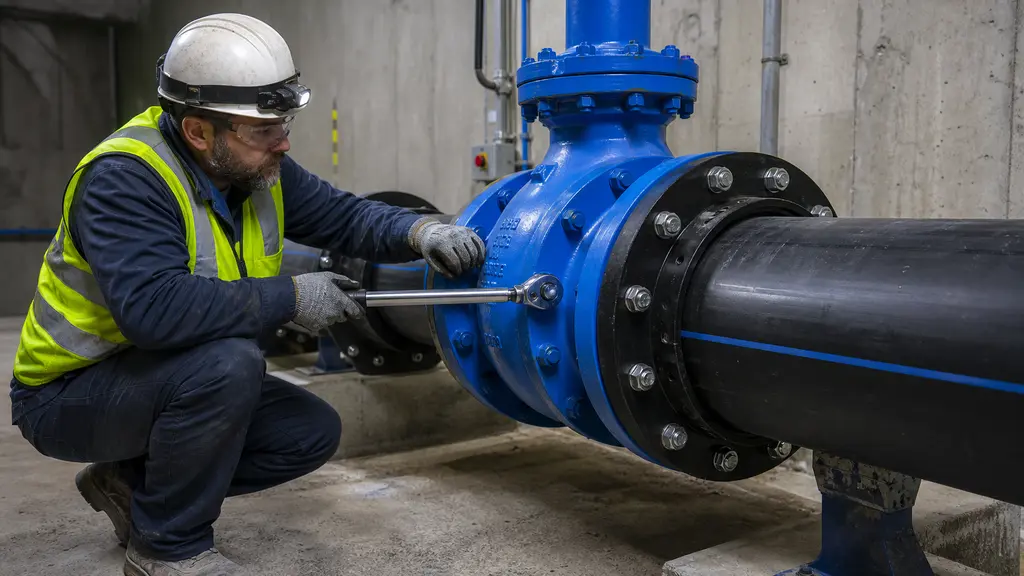
System compatibility hinges on the details. Engineers have to cross-reference the exact operational parameters and dimensions of the HDPE flange adapter against the project’s foundational requirements.
| Specification Category | Parameter Details |
|---|---|
| Pipe Dimensions (OD) | IPS/DIPS sizes from 2 inches to 63 inches; ISO metric sizes from 63mm to 315mm+ |
| Pressure Class | SDR 7.3, SDR 9 (PN20), SDR 11 (PN16), SDR 17 (PN10) |
| Flange Drilling Standards | ANSI/ASME B16.5 Class 150, AWWA C207, ANSI/ASME B16.47 (>26 inches) |
| Hardware Requirements | Min. yield strength of 55,000 psi for bolts/rods |
| Backing Ring Materials | Epoxy-coated ductile iron, 316 Stainless Steel, Carbon Steel |
| Gasket Specifications | Elastomeric, PTFE, or compressed fiber (initial target stress 1800 psi) |
| Operating Temperature | Up to 140°F (60°C) constant service |
| Manufacturing Standards | ASTM D3261, ASTM D3035, ASTM F714, ISO 4427-2, AWWA C906 |
| Health & Safety | NSF/ANSI/CAN-61-G (Potable Water Certified) |
Tracking down the perfect HDPE flange adapter variant—and the right supplier—requires a deep dive into your application medium and the surrounding environment.
Match Size and Flange Standards: Precision matters. The adapter’s outside diameter (OD) has to mirror the pipeline perfectly. Furthermore, the drilling pattern on your backing ring must correspond seamlessly with the mating flange. You cannot force an ANSI Class 150 ring onto an AWWA drilled flange and expect it to hold.
Align Pressure Classes (SDR/PN): Always match or exceed the SDR of your primary pipeline. Slapping an SDR 17 adapter onto a high-pressure SDR 11 pipeline instantly introduces a dangerous, vulnerable weak point into your infrastructure.
Select Backing Rings by Environment: Standard municipal wastewater and potable water systems do perfectly well with epoxy-coated ductile iron rings. But if you are pumping abrasive mining slurries, managing chemical processing effluents, or drawing coastal saltwater, upgrading to 316 stainless steel isn’t just an option—it’s mandatory for preventing rapid, catastrophic corrosion.
Determine Gasket Necessity: Mating HDPE pipe to brittle materials like fiberglass, cast iron, or PVC requires a delicate touch. Use an elastomeric full-face gasket. This allows the assembly to achieve a watertight seal at significantly lower torque values, protecting the brittle mating flange from pressure-induced cracking.
Consider the extremes: A municipal drinking water network thrives on an SDR 11 adapter paired with an epoxy-coated iron ring carrying NSF-61 certification. A high-velocity mining slurry operation, however, demands a thick-walled SDR 7.3 adapter backed by a 316 stainless steel ring to survive the constant barrage of abrasives and corrosive runoff.
Premium fittings mean nothing if the field execution is sloppy. Keep your HDPE flange adapter installation on track by avoiding these catastrophic errors:
Vetting an HDPE flange adapter supplier goes beyond just checking the price tag. Procurement teams should run through this checklist to guarantee both technical compliance and supply chain stability:
Selecting the right HDPE flange adapter requires careful coordination between the adapter, HDPE pipe, metal back-up ring, gasket, bolts, and mating flange. Before purchasing, confirm the pipe outside diameter, SDR or pressure rating, operating temperature, flange standard, conveyed medium, and installation conditions. The pressure capability of the complete flange assembly should meet the project requirements rather than relying on the adapter specification alone.
Proper HDPE flange adapter installation also depends on accurate alignment, suitable gasket selection where required, clean flange faces, and controlled bolt tightening. Use the recommended tightening sequence and torque values supplied by the manufacturer or project specification. Re-tightening should only be performed when required by the approved installation procedure.
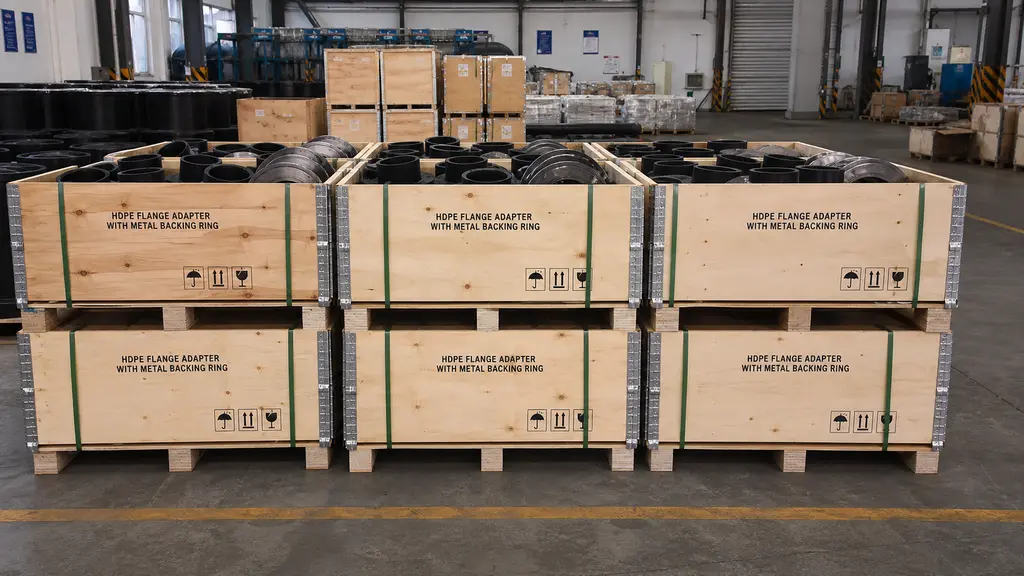
When sourcing HDPE pipe fittings and flange components, provide the supplier with the pipe OD, material grade, SDR or PN rating, working pressure, flange drilling standard, application medium, quantity, and delivery destination. Complete project information helps the manufacturer confirm compatibility, prepare accurate technical documents, and recommend the correct HDPE flange adapter configuration.
An HDPE flange adapter connects an HDPE pipeline to a compatible flanged pipe, valve, pump, meter, or other equipment. The adapter is fused to the HDPE pipe and secured to the mating flange with a metal back-up ring and bolts, creating a removable connection for maintenance or equipment replacement.
The adapter is normally joined to the HDPE pipe by butt fusion. Electrofusion may also be used with an approved fitting arrangement where site access is limited. The metal back-up ring must be placed over the adapter before fusion because it cannot be installed afterward without cutting the pipe.
The terms are often used interchangeably, but terminology varies by manufacturer and standard. Both generally describe a polyethylene fitting with a spigot end for fusion and a flared face used with a metal back-up ring. Buyers should confirm the product dimensions, pressure rating, and intended flange assembly rather than relying on the name alone.
Yes. HDPE flange adapters are commonly used to connect polyethylene pipelines to flanged steel, stainless-steel, ductile-iron, or other compatible equipment. The back-up ring drilling pattern, gasket where required, bolt size, pressure class, and mating flange standard must all match the connected valve, pump, or pipe component.
The complete flange assembly should meet or exceed the project’s required operating and surge pressure. Selection depends on the pipe material grade, SDR or DR, temperature, diameter, flange adapter design, back-up ring, bolting, and applicable standard. Do not select the adapter by SDR alone.
Common causes include poor alignment, damaged or dirty flange faces, an unsuitable gasket, uneven bolt tightening, incorrect torque, an undersized back-up ring, or incompatible flange drilling. Bolts should be tightened gradually in the specified cross-pattern, and any re-tightening should follow the manufacturer’s or project’s approved procedure.
Provide the pipe outside diameter, material grade, SDR or DR, required pressure rating, operating temperature, conveyed medium, flange drilling standard, back-up ring material, quantity, and delivery destination. Also state whether bolts, washers, and a gasket are required so the supplier can quote the complete assembly.
Applicable standards depend on the market and project. ASTM D3261 covers butt-fusion PE fittings, ASTM F2880 covers lap-joint-type flange adapters for PE pressure pipe, and AWWA C906 covers PE pressure pipe and fittings for waterworks in specified sizes. Back-up rings may need to match standards such as AWWA C207 or ASME B16.5/B16.47, depending on the mating flange. Potable-water projects may also require a recognized drinking-water approval.
An HDPE flange adapter provides a practical way to connect polyethylene piping to compatible flanged valves, pumps, meters, metal pipelines, and other equipment. Reliable performance depends on selecting the correct pipe size, material grade, SDR or DR, pressure rating, flange standard, back-up ring, bolting, and gasket where required.
Proper installation is equally important. The back-up ring should be positioned before fusion, flange faces must be clean and aligned, and bolts should be tightened gradually in the specified cross-pattern. Any re-tightening should follow the manufacturer’s instructions or the approved project procedure.
By confirming component compatibility, operating conditions, dimensional requirements, material traceability, and supplier documentation, project teams can reduce installation problems and support reliable long-term performance in municipal, industrial, mining, and water-treatment applications.