Address
Zhengzhou, Henan, China
Work Hours
Monday to Friday: 7AM - 7PM
Weekend: 10AM - 5PM
Address
Zhengzhou, Henan, China
Work Hours
Monday to Friday: 7AM - 7PM
Weekend: 10AM - 5PM

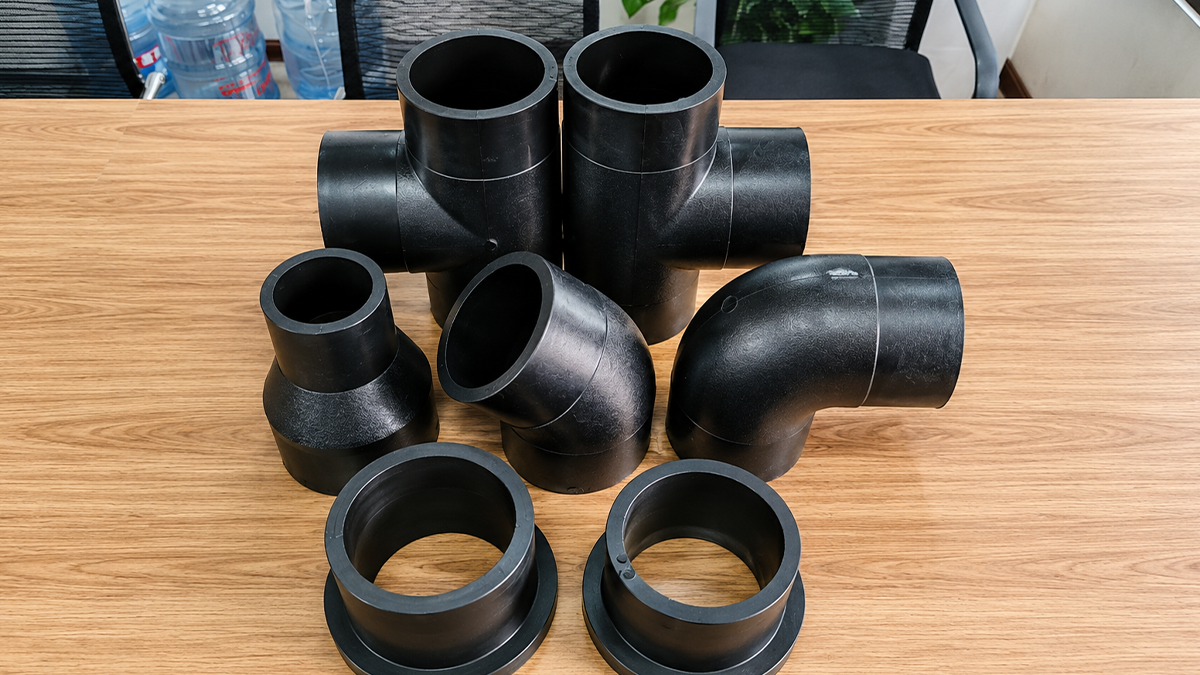
This HDPE Electrofusion Fittings guide explains couplings, tees, elbows, saddles, and their applications across water, gas, and industrial pipelines—covering specifications, standards, installation, cost factors, and how B2B buyers select the right supplier.
HDPE electrofusion fittings function as highly specialized pipe connectors equipped with built-in electrical resistance heating coils. A welding machine sends a precise electric current through these coils, generating enough heat to melt both the inner surface of the fitting and the outer wall of the pipe. The expanding polyethylene merges the two parts together. The result? A single, seamless, and entirely leak-proof joint that easily handles intense operational pressures.
Infrastructure engineers constantly weigh different jointing methods, frequently pitting the HDPE electrofusion coupling vs butt fusion and socket fusion techniques. No single approach works everywhere. Instead, the right choice depends heavily on specific trench conditions, pipe diameters, and the overall scope of the project.
| Parameter | Electrofusion | Butt Fusion | Socket Fusion |
|---|---|---|---|
| Joint Method | Internal electric heating coil | Direct heat plate (pipe-to-pipe) | Heated socket and spigot |
| Typical Size Range | 16mm – 710mm (up to 1200mm) | 50mm – 2000mm | 16mm – 110mm |
| Equipment Required | EF control box, barcode scanner, clamps | Heating plate, hydraulic clamps, facer | Handheld heating tool |
| Best-Fit Application | Tight trenches, repairs, tie-ins, gas lines | Long straight runs, large diameter mains | Small residential/indoor plumbing |
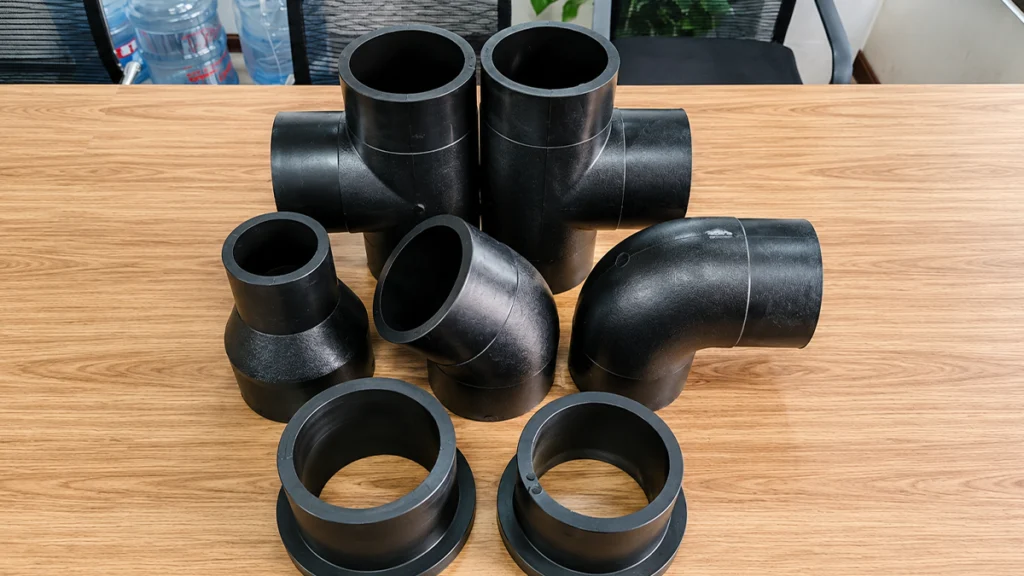
Modern infrastructure relies heavily on HDPE electrofusion fittings to deliver automated, highly consistent monolithic joints. By removing the guesswork, this technology drastically cuts down on human error. Moreover, in cramped, space-restricted environments where massive hydraulic butt fusion machines simply cannot fit, electrofusion often steps in as the only practical way to join pipes safely.
Here are the core advantages of integrating electrofusion into pipeline networks:
Certain high-stakes tasks leave contractors with no other choice. Think about in-situ pipeline repairs, tapping saddles used for live main tie-ins, or threading lines through packed underground utility corridors. Butt fusion rigs are too bulky for these spaces. Under these constraints, electrofusion delivers a secure, permanent fix without the need to tear up half the street.
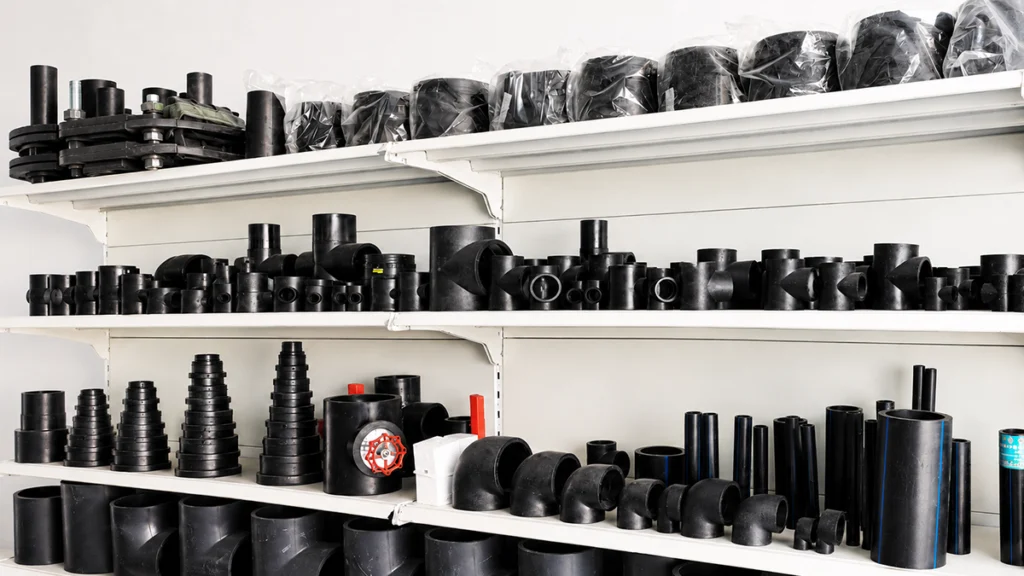
The ecosystem for these fittings covers a broad spectrum of components built for straight runs, sharp directional changes, branching, and total system integration. Walk onto any municipal or industrial job site, and you will primarily see couplers, tees, elbows, and saddles in action.
Grasping the standard HDPE electrofusion tee and elbow sizes, along with specific coupling dimensions, gives engineers the data they need to draft highly efficient, low-loss piping layouts.
| Fitting Type | Typical Size Range | Primary Use Case | Notes |
|---|---|---|---|
| Couplings / Reducing Couplings | 20mm – 1200mm | Joining straight pipes or different diameters | The most frequently used EF fitting. |
| Equal Tees / Reducing Tees | 20mm – 315mm+ | Creating 90-degree branch lines | Available in molded or fabricated options. |
| 45° / 90° Elbows | 20mm – 315mm+ | Changing pipeline direction | Maintains full system pressure rating. |
| End Caps | 20mm – 315mm | Permanently sealing pipe ends | Used for dead-ends or future expansion points. |
| Flange Adapters / Stub Ends | 50mm – 1200mm | Connecting HDPE to valves or metal pipes | Requires a metal backing ring. |
| Tapping / Branch Saddles | 63mm – 315mm+ | Adding branches to live mains | Essential for gas and water tie-ins. |
The mechanics behind these fittings rely on controlled electrical voltage—usually 39.5V or 40V. This current travels through a precision-engineered resistance wire coil hidden inside the fitting. As electrical resistance spikes, it generates fierce heat that melts the surrounding polyethylene surfaces. The liquid plastic swells to fill any internal voids. Meanwhile, unheated “cold zones” at the fitting’s edges trap the melt pressure. This forces the polymers to mix and lock together into a rock-solid, permanent bond.
Achieving that flawless monolithic bond demands strict obedience to the electrofusion fitting installation procedure.
1. Cut & Measure: Slice the pipe perfectly square. Mark the stab depth (insertion depth) visibly on the pipe’s exterior.
2. Scrape: Grab a mechanical rotational scraper to peel away the oxidized surface layer (roughly 0.2mm to 0.3mm) from the pipe ends.
3. Clean: Wipe the freshly scraped zone using lint-free cloths and an approved PE cleaner, like 90%+ isopropyl alcohol.
4. Align & Clamp: Slide the pipe into the fitting right up to your stab mark. Lock the entire assembly down with rigid alignment clamps so nothing shifts.
5. Scan Barcode: Hook the EF machine leads to the fitting’s terminals. Scan the barcode to instantly upload the precise heating and cooling parameters.
6. Weld: Fire up the fusion cycle. The machine takes over, applying the exact voltage for the required time.
7. Cool: Do not touch those alignment clamps until the specific cooling time—printed right on the barcode—has completely elapsed.
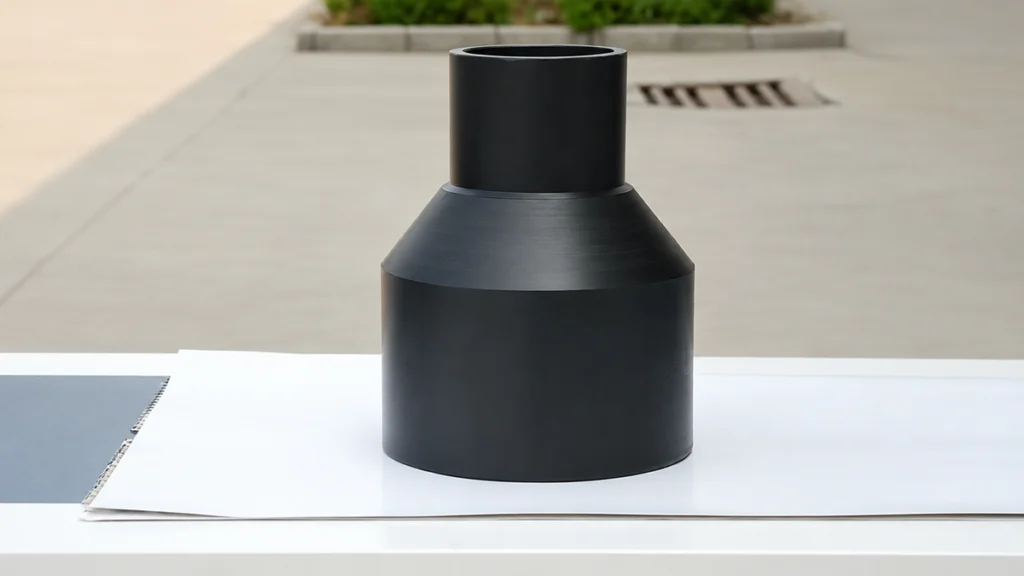
Manufacturers mold industrial HDPE electrofusion fittings from virgin PE100 resin, engineering them to survive intense dimensional, thermal, and pressure demands. Standard specs cover pipe diameters from dn20 all the way to dn800. These components deliver pressure ratings up to PN16 for water lines and 10 bar for gas networks.
Teaming up with a certified PE100 electrofusion fittings manufacturer ensures your components hit the exact geometric tolerances necessary for automated welding. Take a look at the standard HDPE electrofusion fittings specifications most commonly used in industrial procurement.
| Parameter | Specification Range |
|---|---|
| Size Range (OD) | dn20 – dn800 (Custom up to 1200mm) |
| SDR Ratings | SDR11, SDR17 (Compatible with +/- 1 SDR) |
| Pressure Class (Water) | PN10 (145 psi), PN16 (232 psi) |
| Voltage | 39.5V, 40V, or 48V |
| Fusion Time | Varies by size (e.g., 30s to 500s+), set via barcode |
| Material Grade | PE100 (High-Density Polyethylene) |
To guarantee safety and compliance worldwide, these fittings must pass rigorous international standards:
Thanks to their incredible pressure tolerance, structural strength, and chemical resistance, HDPE electrofusion fittings show up across dozens of critical infrastructure sectors. They serve as the default joining choice whenever a project demands zero-leakage performance over a 50-year lifespan.
Municipal Water
Electrofusion fittings secure WRAS and NSF-certified, leak-proof connections across potable water grids. By forming monolithic joints that refuse to degrade, cities drastically slash non-revenue water loss compared to older mechanical joints. This keeps urban water distribution highly efficient.
Gas Distribution
Deploying SDR11 electrofusion fittings in gas networks guarantees top-tier safety in packed urban areas. These heavy-wall components easily manage 10 to 16 bar of pressure. They offer zero-leak performance, an absolute non-negotiable for volatile natural gas systems.
Mining Slurry
Out in punishing mining environments, rugged electrofusion fittings transport highly abrasive slurries and harsh chemical wash fluids. The PE100 material stands up to severe abrasion and corrosion, keeping maintenance downtime to a bare minimum at remote extraction sites.
Trenchless Rehabilitation
Electrofusion shines in slip-lining and horizontal directional drilling (HDD). The low-profile design of the fittings makes seamless tie-ins possible in cramped underground spaces where traditional open-cut digging is either too expensive or physically impossible.
Industrial Effluent
Chemical plants rely on specialized electrofusion fittings for pipelines moving corrosive acids and industrial wastewater. These seamless, chemically inert joints block hazardous leaks, helping facilities stay fully compliant with tight environmental regulations.
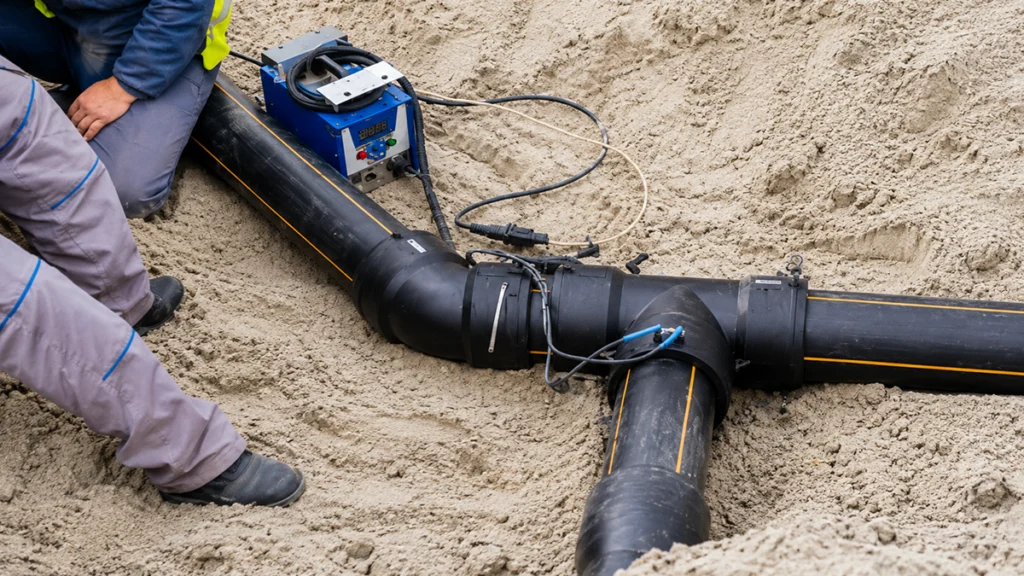
Picking the perfect electrofusion fitting means carefully matching the component’s specifications to both the existing pipe network and the system’s daily operational stress. The Outside Diameter (OD) and the Standard Dimension Ratio (SDR) act as the two most critical factors dictating whether a weld succeeds or fails.
Run through this decision checklist to confirm compatibility before you start buying:
The price tag on HDPE electrofusion fittings generally runs 2 to 5 times higher than standard butt fusion fittings. This stems from the precision engineering and those embedded copper heating coils. Yet, this initial material expense is heavily offset by slashed installation labor, quicker trench turnaround, and fewer equipment rental fees.
Getting a handle on the HDPE electrofusion fittings price per piece lets procurement managers build accurate budgets. Buying directly from a high-capacity manufacturer guarantees you secure competitive B2B wholesale rates.
Indicative Price Ranges (B2B Wholesale):
Figuring out how to choose HDPE electrofusion fittings supplier partners will make or break your project. Grade potential manufacturing partners against these tough benchmarks:
The overwhelming majority of electrofusion joint failures do not happen because of defective fittings. They happen because of sloppy pipe preparation. You absolutely must follow scraping, cleaning, and clamping protocols to the letter if you want a weld that lasts.
Recognizing the common defects in electrofusion welding gives contractors the insight needed to train their crews properly and avoid brutal rework costs.
Top 5 Weld Failure Causes & Prevention:
1. Inadequate Scraping: Leaving the oxidized layer in place stops molecular fusion dead in its tracks. *Prevention*: Grab a mechanical rotational scraper to evenly peel off 0.2-0.3mm of the pipe surface. Never use sandpaper or manual hand scrapers.
2. Contamination: Dirt, oil, or even a drop of moisture in the weld zone triggers rapid porosity and terrible bonds. *Prevention*: Wipe down the scraped area using only 90%+ isopropyl alcohol wipes. Keep the joint bone dry.
3. Pipe Movement: Any shifting during the melt phase will short out the internal heating coils. *Prevention*: Lock the joint down with rigid alignment clamps until the cooling cycle finishes completely.
4. Premature Unclamping: Pulling the clamps off before the plastic fully solidifies causes nasty stress cracks. *Prevention*: Wait out the exact cooling time printed on the fitting’s barcode. No exceptions.
5. Power Fluctuations: Shaky voltage results in cold welds or totally fried coils. *Prevention*: Run the EF machine on a dedicated, properly sized, and well-maintained generator.
Machine Compatibility Checklist:
HDPE electrofusion fittings stand as the most dependable, space-saving method for connecting polyethylene pressure pipes across critical infrastructure. Once buyers grasp the technical specs, application boundaries, and strict installation rules, they can guarantee decades of leak-free operation.
Before kicking off your next pipeline project, take a hard look at your trench constraints and operating pressures. This will tell you exactly where electrofusion fittings can shave off installation hours and labor costs. Teaming up with a factory-direct supplier gives you a direct pipeline to deep technical support and fully traceable, certified components.
Electrofusion relies on embedded heating coils inside a fitting to melt the joint. It works beautifully in tight spaces and during quick repairs. Butt fusion, on the other hand, uses a hot plate to melt the pipe ends directly together without any extra fittings, making it ideal for long, straight pipeline runs. When weighing an HDPE electrofusion coupling vs butt fusion, remember that electrofusion needs far less clearance and delivers automated precision. Butt fusion remains more budget-friendly for massive open-trench projects.
Industrial-grade HDPE electrofusion fittings generally handle pressure ratings up to PN16 (232 psi) for water networks and up to 10 bar (145 psi) for natural gas lines. The true pressure limit hinges on the Standard Dimension Ratio (SDR) of both the fitting and the pipe. SDR11 fittings act as the heavy-duty standard for high-pressure gas and water mains, while crews deploy SDR17 fittings for lower-pressure gravity or wastewater lines.
Yes, top-tier electrofusion fittings for water and gas pipelines are molded from the exact same tough PE100 virgin resin. However, gas applications absolutely demand SDR11 fittings to manage volatile pressures without risk. Additionally, gas fittings must hold specific certifications like DVGW or ISO 8085. Water fittings require potable water approvals, such as WRAS or NSF/ANSI 61, to guarantee zero chemical leaching.
The standard size spectrum for HDPE electrofusion couplings, tees, and elbows ranges from a compact 20mm up to a massive 800mm in outside diameter (OD). For unique mega-projects, manufacturers can custom-build electrofusion couplings up to 1200mm. When checking out HDPE electrofusion tee and elbow sizes, keep in mind that molded branching fittings usually max out at 315mm. Anything larger generally requires custom fabrication or branch saddles.
Cooling times fluctuate depending on the fitting’s diameter and the ambient temperature. A small coupling might need just 10 minutes, while a large-diameter joint could require over an hour. You will find this exact duration printed directly on the fitting’s barcode, and the welding machine tracks it automatically. Clamps must stay tightly secured for this entire window. Unclamping too early triggers stress cracks and guarantees a failed joint.
Exporting components means they must hit globally recognized benchmarks. A trusted PE100 electrofusion fittings manufacturer will supply CE marking, ISO 9001 quality management paperwork, and ISO 4427-3 compliance for water systems. For gas grids, ISO 8085 or EN 1555-3 is non-negotiable. Regional stamps of approval like WRAS (UK), DVGW (Germany), or NSF (USA) are also vital to prove material safety in municipal drinking water setups.
The bulk of electrofusion defects trace back to bad pipe preparation—specifically lazy scraping and dirty joints. If you fail to mechanically strip away that 0.2-0.3mm oxidized layer, the polymers simply will not fuse. Any dirt or moisture trapped in the weld zone leads to rapid porosity. To stop these failures, crews must use rotational mechanical scrapers, clean the surface with 90% isopropyl alcohol, and lock the joint in rigid alignment clamps until it cools completely.
When buying straight from a massive factory like JINQUAN, standard lead times usually hover between 7 and 15 days, depending on your order size and the specific fittings required. Minimum Order Quantities (MOQs) tend to be quite flexible for B2B wholesale clients, often kicking off around $1,000 to $3,000 per shipment. Keep in mind that fabricated or custom large-diameter pieces might need a slightly longer production runway and specific volume commitments based on raw material supplies.
HDPE electrofusion fittings play an important role in modern water, gas, and industrial pipeline systems. Their ability to create reliable, leak-resistant joints makes them an effective solution for projects where installation space is limited or high connection accuracy is required.
By selecting the correct SDR rating, following proper installation procedures, and using fittings that meet international standards, contractors can achieve long-term pipeline performance with reduced maintenance risks. Working with an experienced HDPE electrofusion fittings manufacturer ensures consistent product quality, technical support, and reliable supply for different project requirements.