Address
Zhengzhou, Henan, China
Work Hours
Monday to Friday: 7AM - 7PM
Weekend: 10AM - 5PM
Address
Zhengzhou, Henan, China
Work Hours
Monday to Friday: 7AM - 7PM
Weekend: 10AM - 5PM

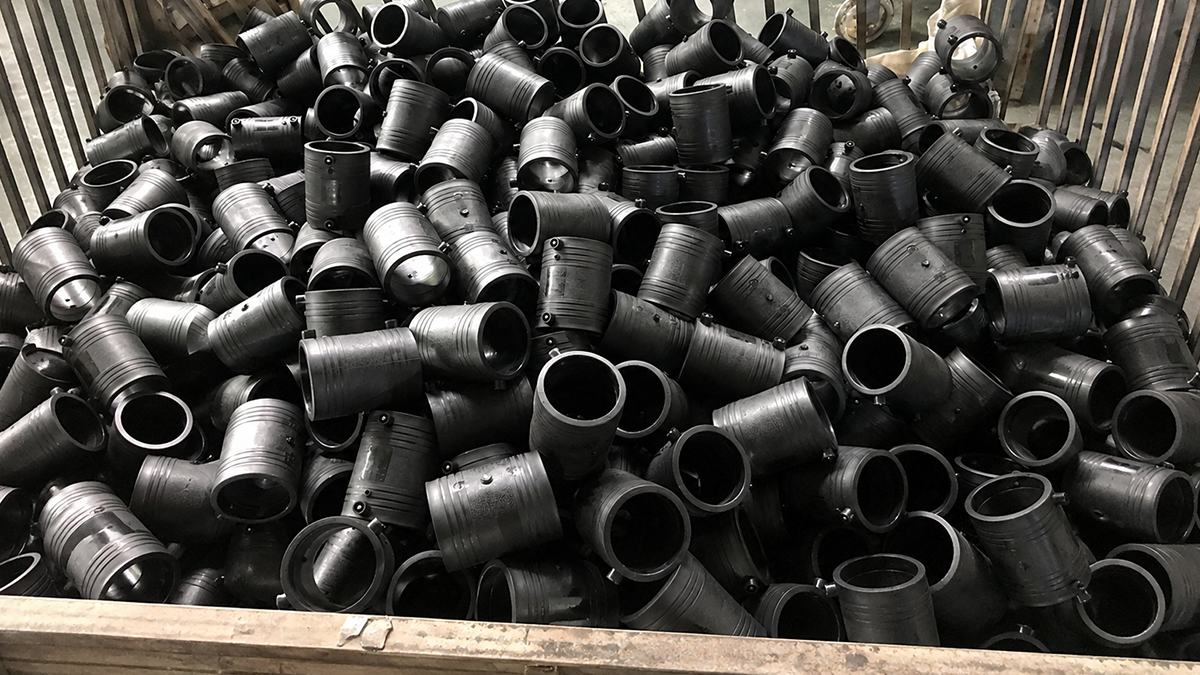
HDPE Electrofusion Fittings for gas pipelines help engineers and buyers specify leak-tight PE joints with the right standards, installation steps, and selection criteria. This guide covers safety, compliance, and procurement decisions.
High-density polyethylene (HDPE) electrofusion fittings act as specialized connectors engineered with embedded electrical resistance wires. Their primary job? Joining PE pipes securely across gas distribution networks. Operators hook these fittings up to an Electrofusion Control Unit (ECU), which triggers the internal heating coils to produce highly controlled thermal energy. This melts the surrounding polyethylene at roughly 200–220°C, merging the fitting and the pipe surface into one seamless, leak-proof joint.
Manufacturers rely on 100% virgin bimodal resin—usually PE100 or PE80 from top-tier petrochemical suppliers like Borouge or Sinopec—to ensure these components safely contain volatile gaseous fuels. Gas-specific fittings feature solid yellow coloring or a black base with permanent yellow stripes, making them instantly recognizable and distinct from standard water infrastructure.
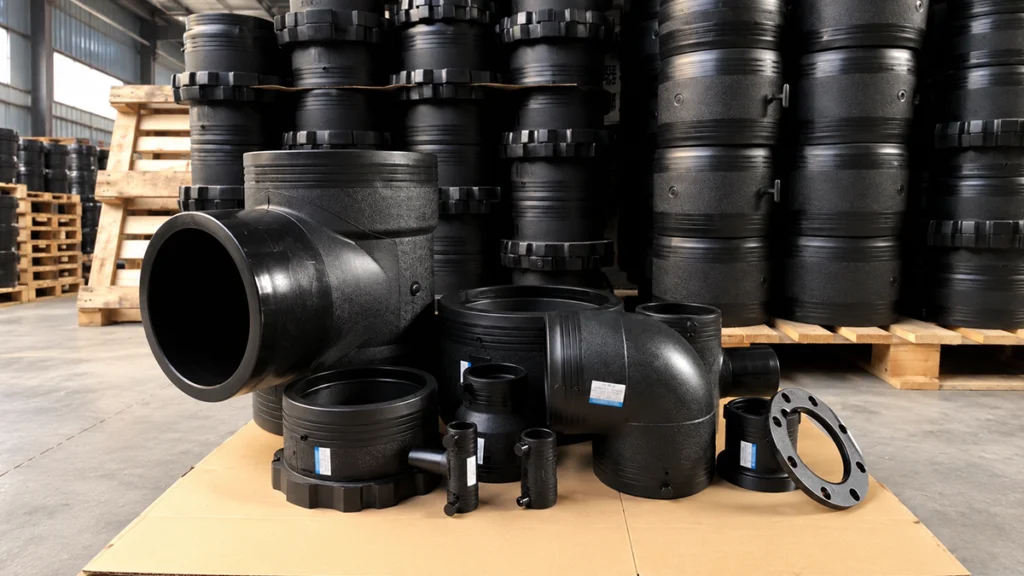
Joint integrity is absolutely critical when dealing with pressurized gas distribution. Electrofusion stands out because it yields a structurally and chemically unified bond. The resulting connection boasts tensile and pressure strength matching—or even exceeding—the pipe itself, effectively stripping away the common weak points found in traditional mechanical joints.
Working space often dictates pipeline construction methods. Butt fusion demands heavy hydraulic butt fusion machine and wide trenches. Electrofusion, on the other hand, thrives in tight environments. Contractors can easily execute these welds in narrow trenches, congested urban utility corridors, or tight vertical shafts.
Safety protocols for gas networks also mandate rigorous pressure derating. For instance, an SDR 11 (PE100) system might carry a PN16 (16 bar / 232 PSI) rating for water transport. However, natural gas applications strictly cap that maximum operating pressure at 10 bar (125 PSI) at 73°F. Components rated at SDR 17 see similar reductions, dropping to a 100 PSI limit for gas. Executed properly, these fused joints deliver half a century of maintenance-free performance and remarkable resistance to environmental stress cracking (ESCR).
Pipeline engineers and procurement teams need a firm grasp of how these HDPE pipe fittings are built. A reliable joint depends entirely on a series of highly engineered parts working together seamlessly.
Core Components:
Main Fitting Types:
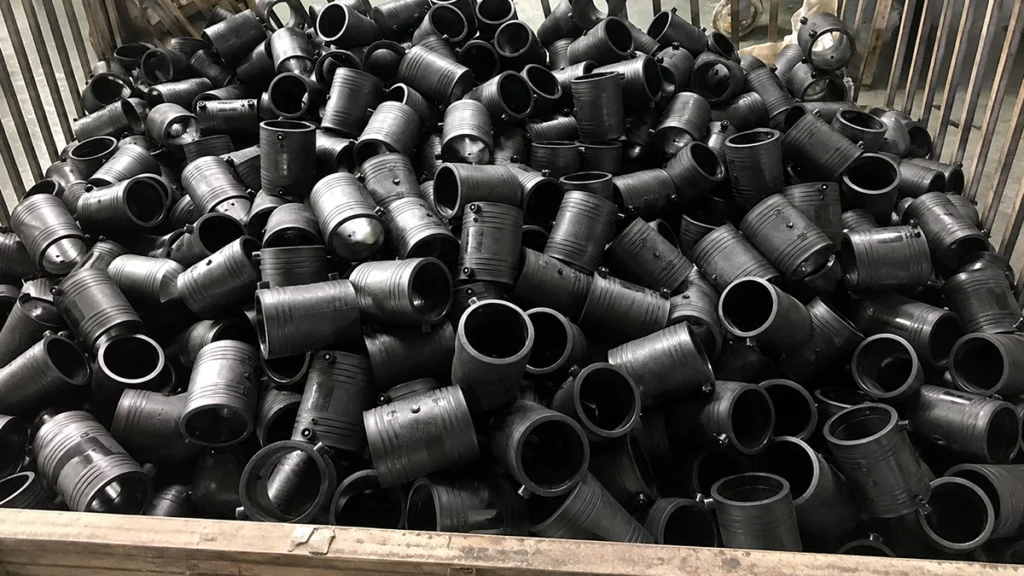
Building gas infrastructure demands absolute compliance with international safety and manufacturing benchmarks. Introducing non-compliant materials into municipal or industrial gas networks invites catastrophic failure.
Every HDPE pipe fitting must pass strict dimensional, thermal, and pressure testing criteria before hitting the job site. The specification table below outlines the primary parameters and standards governing HDPE electrofusion fittings designed for gas applications.
| Parameter / Category | Specification / Standard Requirement |
|---|---|
| International Gas Standards | ISO 4437-3, EN 1555-3 |
| North American Standards | ASTM D2513, ASTM F1055 |
| Equipment & Traceability | ISO 12176-2 (ECU), ISO 12176-4 (Barcodes) |
| Material Grades | 100% Virgin PE100 or PE80 |
| Size Range (OD) | DN16mm to DN800mm+ |
| Pressure Rating (Gas) | SDR 11 (up to 10 bar), SDR 17 (up to 100 PSI) |
| Manufacturing Certifications | ISO 9001, ISO 14001, CE, SGS Verified |
JINQUAN guarantees that all manufactured gas fittings align with these rigorous global frameworks. The company provides complete batch traceability alongside certified pressure test reports, ensuring utility providers have everything they need for smooth compliance audits.
Nailing the installation process is the best defense against gas leaks. Even a perfectly manufactured fitting will fail if pipeline contractors cut corners on standard operating procedures. Stick to these exact steps to achieve a secure, long-lasting electrofusion weld.
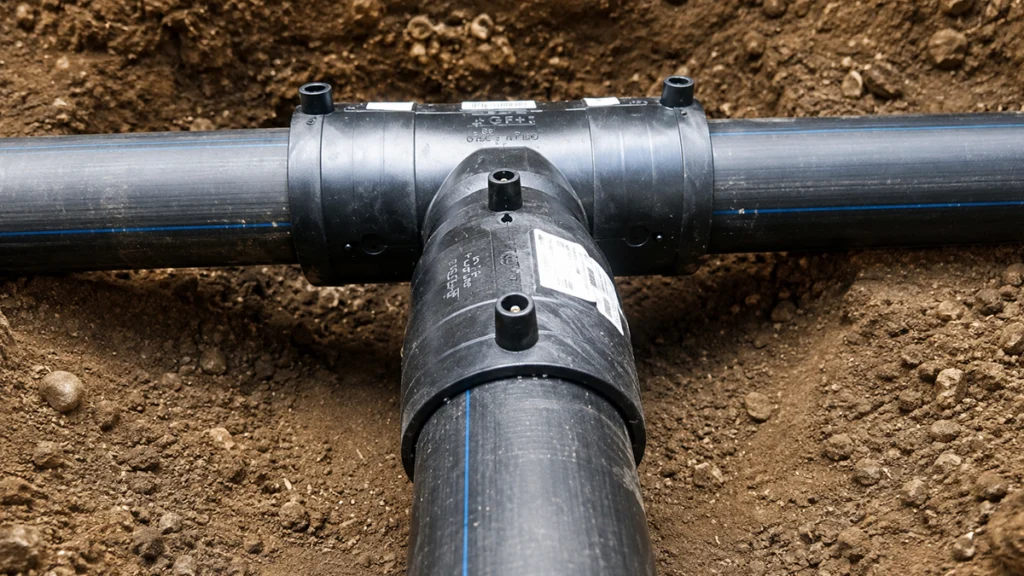
Sourcing electrofusion HDPE pipe fittings means perfectly aligning the existing pipeline’s technical specifications with the gas network’s daily operational demands. Engineers and procurement managers must weigh three primary criteria during this process.
First, always verify SDR Compatibility. While these HDPE pipe fittings are categorized by their Outside Diameter (OD), the wall thickness dictates the actual pressure capacity. A standard SDR 11 fitting can usually fuse to pipes ranging between SDR 9 and SDR 17. However, gas applications demand a strict rule: the HDPE Pipe fitting’s SDR rating must match or exceed the pipe’s pressure rating. Installing an SDR 17 fitting onto an SDR 11 high-pressure gas line is a dangerous mistake.
Second, focus on Resin Matching. Confirm that the HDPE pipe fitting uses 100% virgin PE100 or PE100-RC (Resistance to Crack) material. Sourcing recycled resins or uncertified PE grades violates ISO 4437 standards and opens the door to severe stress-cracking vulnerabilities.
Finally, demand strict Traceability. Today’s gas distribution networks rely heavily on digital asset tracking. Buyers need to verify that all HDPE pipe fittings carry ISO 12176-4 compliant 24-digit barcodes. This enables seamless, automated ECU programming and establishes permanent digital records for future audits.
Pipeline engineers face a constant choice between different joining methods depending on site realities, overall project scope, and budget constraints. The table below breaks down the three primary techniques deployed across gas distribution systems.
| Feature | Electrofusion | Butt Fusion | Mechanical Joints |
|---|---|---|---|
| Best Application | Tight spaces, tie-ins, repairs, SDR mismatches | Long, straight runs of new pipeline in open trenches | Transitioning to metal valves, emergency repairs in wet conditions |
| Equipment Footprint | Small (portable ECU) | Large (heavy hydraulic machinery) | Minimal (hand tools) |
| SDR Tolerance | High (can join differing wall thicknesses) | Zero (pipes must have identical SDRs) | Moderate |
| Leak Risk (50 Years) | Extremely Low (fused monolithic joint) | Extremely Low (fused monolithic joint) | Moderate to High (relies on rubber gaskets) |
| Cost Profile | Higher per-unit material cost, lower labor/excavation cost | Lower material cost, higher equipment/labor cost | High unit cost, high long-term maintenance cost |
Premium materials cannot compensate for poor installation practices. By understanding exactly how and why joints fail, contractors can enforce much tighter quality control on the job site.
Failure to Scrape: If a crew leaves the oxidized outer layer intact on the PE pipe, the molten plastic cannot properly fuse with the underlying surface. The result is a deceptive “cold weld.” It might look visually sound, but it will blow out immediately during hydrostatic or pneumatic pressure tests.
Contamination: Any trace of moisture, dust, or oil left on the scraped pipe—or lurking inside the fitting—will create microscopic voids in the melt pool. To prevent this, keep all HDPE pipe fittings sealed in their original bags until the very moment you are ready to install them.
Misalignment: Shoving the pipe in at an angle generates uneven melt pressure. This imbalance forces hot, molten polyethylene out through the HDPE pipe fitting’s cold zones. Not only does this ruin the joint, but it can also short-circuit the internal heating wires and instantly abort the ECU cycle.
Movement During Cooling: Taking the alignment clamps off before the cooling cycle wraps up completely wrecks the polymer chain entanglement. The joined assembly must stay entirely immobilized until the plastic cools down to ambient temperature.
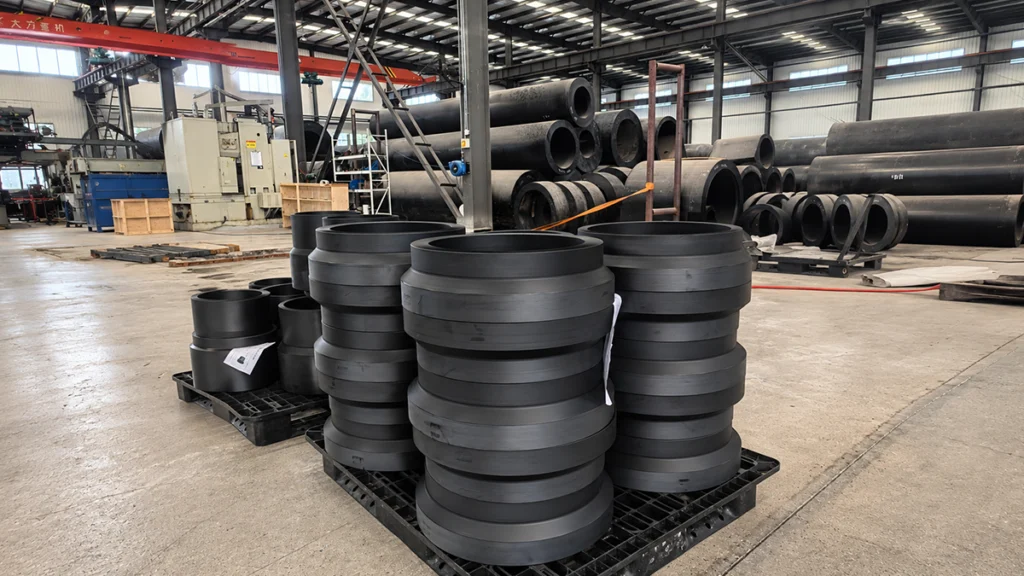
Procuring components for major gas infrastructure means teaming up with a manufacturer that delivers scale, uncompromising quality, and flawless documentation. Going factory-direct strips away bloated middleman margins and guarantees direct lines to high-level technical support.
JINQUAN runs a massive 200-acre manufacturing facility, pushing out more than 100,000 tons annually. Backed by over 60 injection molding machines, the factory maintains rapid 7–15 day turnarounds for standard orders while offering highly flexible Minimum Order Quantities (MOQs). Furthermore, standardized export packaging ensures every HDPE pipe fitting arrives fully protected against UV exposure and moisture degradation during long international transits.
Buying Checklist (RFQ) for Gas Pipeline Fittings:
Electrofusion remains the undisputed choice for gas pipeline tie-ins, complex in-trench repairs, and sprawling urban distribution networks where bulky butt fusion rigs simply will not fit. Yes, the upfront unit cost of an electrofusion HDPE pipe fitting outpaces a standard butt fusion joint. However, contractors quickly recoup that expense through drastically reduced excavation needs, cheaper equipment rentals, and accelerated installation timelines. Factor in the automated quality control driven by ECU barcode scanning, and electrofusion easily stands out as the safest, most verifiable investment for modern pressurized gas infrastructure.
Q1: What standards should HDPE electrofusion fittings meet for gas pipelines?
Gas pipeline fittings must strictly align with ISO 4437-3 or EN 1555-3 on the global stage, and ASTM D2513 or ASTM F1055 across North America. Beyond basic dimensions, these HDPE pipe fittings need ISO 12176-4 compliant barcodes to guarantee traceability. The production facilities themselves should carry ISO 9001 and ISO 14001 certifications to prove their commitment to consistent quality control.
Q2: How do I choose the right SDR and pressure rating for a gas project?
The fundamental rule is simple: the HDPE pipe fitting’s SDR (Standard Dimension Ratio) must equal or outpace the pipe’s pressure rating. For natural gas networks, an SDR 11 PE100 fitting is generally de-rated to a 10 bar (125 PSI) maximum, while an SDR 17 component drops to 100 PSI. Always sync the fitting’s capabilities with the pipeline’s absolute maximum operating pressure.
Q3: Can electrofusion fittings be used for gas service lines and repairs?
Absolutely. Electrofusion tapping saddles and valve tees are perfect for branching directly off live mains without shutting down local service. Additionally, electrofusion repair saddles and couplers serve as the industry benchmark for permanently fixing punctures or tying fresh sections together inside cramped trenches.
Q4: How long should an electrofusion joint cool before pressure testing?
The mandatory cooling time is hardcoded into the HDPE pipe fitting’s barcode and flashes on the ECU screen. Alignment clamps must stay locked in place for that entire window. As a general practice, the joint needs to reach ambient temperature before you attempt any rough handling or pressure testing. Depending on the pipe’s diameter, this process takes anywhere from 10 to over 30 minutes.
Q5: What causes electrofusion joint failure in gas pipelines?
The most frequent culprits include failing to scrape the pipe’s oxidized layer properly, allowing moisture or dirt to contaminate the fusion zone, misaligning the pipe inside the HDPE pipe fitting, and stripping off the mechanical clamps before the plastic finishes cooling. Comprehensive contractor training easily prevents all these issues.
Q6: Is electrofusion better than butt fusion for gas distribution systems?
Neither method is universally superior; they just tackle different challenges. Butt fusion is highly cost-effective and efficient for long, straight pipeline runs laid out in wide open trenches. Electrofusion, conversely, dominates in tight spaces, vertical shafts, repair scenarios, tie-ins, and whenever crews need to join pipes with mismatched wall thicknesses (SDR mismatches).
Q7: What documents should a supplier provide for a gas pipeline order?
A trustworthy supplier will gladly hand over ISO 4437-3 / EN 1555-3 compliance certificates, documented proof of 100% virgin PE100 resin usage, detailed batch traceability records, and certified hydrostatic pressure test reports. You should also ask for paperwork verifying the factory’s ISO 9001 quality management status.
Building a secure gas distribution network hinges on precision engineering, uncompromising safety standards, and flawless installation habits. HDPE electrofusion fittings provide incredible joint integrity, boasting a 50-year operational lifespan that easily shrugs off environmental stress cracking and structural wear. When pipeline operators prioritize ISO 4437 compliance, insist on virgin PE100 resin, and enforce rigorous on-site scraping and cooling rules, they effectively neutralize leak risks. Ultimately, whether a crew is handling a complicated urban tie-in or executing a live-main branch, pairing the right technical specifications with a highly certified manufacturing partner lays the groundwork for a truly resilient gas infrastructure project.