Address
Zhengzhou, Henan, China
Work Hours
Monday to Friday: 7AM - 7PM
Weekend: 10AM - 5PM
Address
Zhengzhou, Henan, China
Work Hours
Monday to Friday: 7AM - 7PM
Weekend: 10AM - 5PM

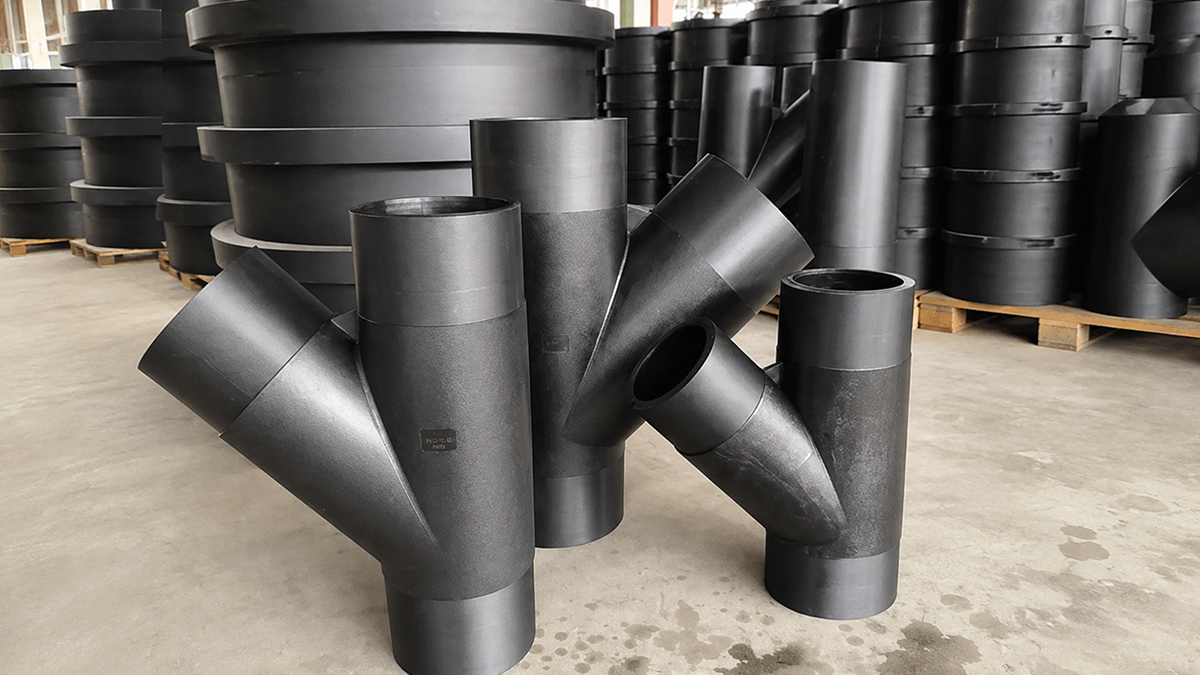
HDPE Y fittings help route flow through complex pipeline layouts with reliable branch connections. This guide covers custom fabrication, sizing, pressure ratings, applications, and supplier selection for B2B projects.
HDPE pipe fittings—frequently referred to as wyes or lateral branches—are specialized pipeline connectors designed to merge or divide fluid flow at an acute angle. This distinct geometry plays a crucial role in minimizing turbulence. It sustains system flow velocity far more effectively than a standard perpendicular joint ever could. While off-the-shelf options exist, custom fabrication becomes essential when standard angles fail to meet the rigorous spatial constraints or hydraulic requirements of intricate industrial and underground layouts.
Evaluating their performance across specific hydraulic parameters reveals exactly why engineers prefer wyes over alternative branch configurations.
Comparison Table: Y Fitting vs. Tee vs. Elbow
| Parameter | HDPE Y Fitting | Standard Equal Tee | 45° / 90° Elbow |
|---|---|---|---|
| Flow Path & Turbulence | Streamlined flow path (typically 45° or 60°), minimal disruption. | Forces a harsh 90° directional change, creating high turbulence. | Changes direction smoothly but cannot integrate a branch line. |
| Pressure Loss | Low localized pressure loss. | Creates 3 to 4 times more localized pressure loss than a 45° Y fitting. | Moderate pressure loss depending on the radius. |
| Installation Fit | Integrates branches efficiently in tight parallel pipe runs. | Requires perpendicular space, often impractical in narrow trenches. | Only redirects a single pipe run; does not split flow. |
| Typical Use Case | High-flow, gravity-fed, or high-capacity systems (wastewater, slurry). | Standard distribution networks where pressure loss is acceptable. | Navigating corners and elevation changes. |
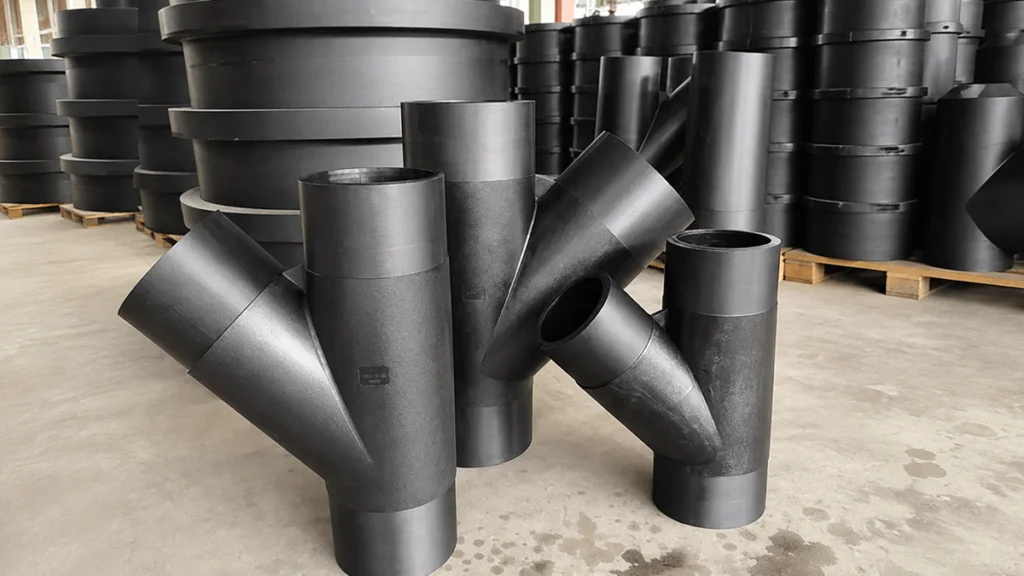
Balancing structural integrity with hydraulic efficiency drives the decision to specify HDPE Y fittings in demanding HDPE pipe layouts. High-density polyethylene features a remarkably smooth inner surface, boasting a Hazen-Williams C-factor of 150. Pair that slick interior with the acute angle of a Y-branch, and you drastically cut down pumping energy costs by minimizing the Length/Diameter (L/D) resistance ratio.
Structurally speaking, HDPE systems rely on monolithic joints. During the butt-fusion process, the weld seam actually becomes stronger than the parent HDPE pipe. This eliminates the notorious leak points that plague mechanical PVC or metal joints, a vital advantage for intricate layouts exposed to heavy environmental stress. The material effortlessly handles ground shifting, seismic tremors, and fatigue events up to 1.5 times the system’s rated working pressure.
Beyond physical durability, these fittings deliver outstanding chemical and corrosion resistance. They simply do not rust, rot, or support biological growth. Bury them in highly aggressive soils or use them to transport harsh industrial chemicals; they remain incredibly reliable over the long haul.
Depending on project scale and spatial limitations, HDPE pipe engineers generally weigh two main options: standard molded fittings and custom fabricated solutions.
Standard Molded Y Fittings
Manufacturers injection-mold these units as a single, continuous piece. Because molds carry a hefty price tag and injection presses have physical size limits, molded wyes typically max out at smaller diameters—usually up to 8 inches (DN200). They serve as excellent, off-the-shelf solutions for standard utility runs.
Custom Fabricated Y Fittings
Instead of using a mold, fabricators construct these wyes from segments of extruded HDPE pipe, cutting and fusing them to exact project specifications. This technique completely bypasses molding limitations. It opens the door to massive diameters and highly specialized configurations.
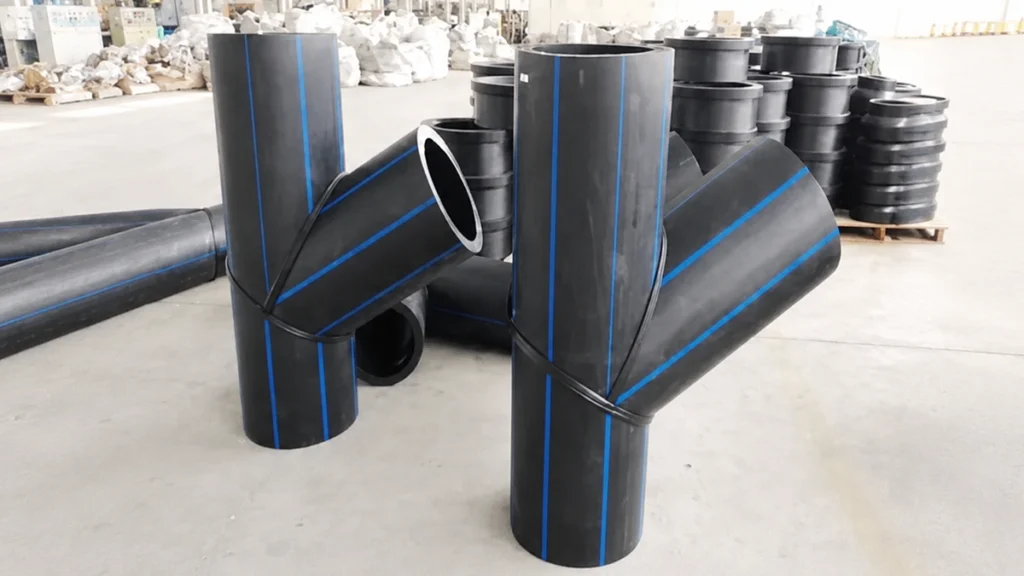
Pipeline reliability starts with pinpoint specification accuracy. Because the weld seam introduces localized geometric stress, fabricated fittings usually require a pressure derating factor. To compensate for this stress, engineers often step up the wall thickness, specifying a HDPE pipe one SDR class thicker. For instance, they might use SDR 9 HDPE pipe to fabricate a fitting destined for an SDR 11 system.
Technical Parameter Table: HDPE Y Fittings
| Specification | Details |
|---|---|
| Diameter Range | DN16 to DN3000 (JINQUAN factory capability) |
| Material Grades | PE80, PE100, PE4710 |
| SDR & Pressure (at 20°C) | SDR 17 (PN10 / 145 psi)<br>SDR 13.6 (PN12.5 / 181 psi)<br>SDR 11 (PN16 / 232 psi)<br>SDR 9 (PN20 / 290 psi)<br>SDR 7.4 (PN25 / 363 psi) |
| Temperature Range | Base ratings at 20°C (68°F). Maximum continuous service up to 60°C (140°F) with applied derating factors. |
| Standards Compliance | ISO 4427, EN 12201, ASTM F714, ASTM D3035, ASTM F2206 |
Manufacturing an HDPE Y fitting is an intensely controlled process. It demands absolute precision in machining alongside strict thermal management.
1. Drawing Review & Material Prep: Engineers cross-check the OD, SDR, and branch angle against the provided isometric drawings before selecting the correct PE100 pipe stock.
2. Cutting: High-precision industrial band saws slice the polyethylene pipe segments to the exact required angles. Joining two 22.5° cuts, for example, creates a perfect 45° branch.
3. Alignment & Facing: Technicians securely clamp the polyethylene pipe ends into a fabrication machine. They then plane (face) the edges to expose a smooth, clean, virgin surface ready for welding.
4. Heating (Fusion): A PTFE-coated heater plate presses against the faced ends. Operators must rigorously maintain temperatures between 210°C and 240°C to achieve the correct polymer melt.
5. Joining & Cooling: After removing the heater plate, the butt fusion machine presses the segments together under precise hydraulic pressure. The outside diameter and wall thickness strictly dictate the required cooling time.
6. Inspection & Traceability: Quality control teams conduct thorough visual bead inspections. Finally, they heat-stamp a unique serial number onto the fitting, ensuring full ISO 9001 traceability.
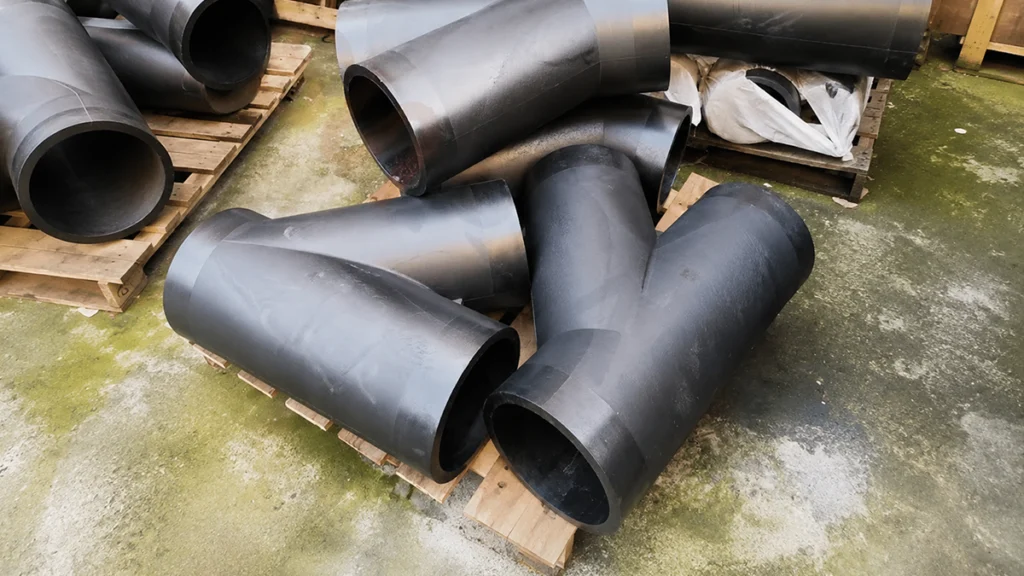
When a sector handles challenging media or massive flow volumes, the hydraulic benefits of Y fittings quickly become indispensable.
Mini Case Example:
A recent municipal wastewater expansion required tying a new line into a heavily congested underground utility corridor. Using a standard 45° molded wye would have routed the new pipeline directly into an existing concrete electrical vault. By designing and installing a custom fabricated 22.5° reducing Y fitting, the engineering team smoothly bypassed the vault. More importantly, they maintained the critical flow velocity needed to keep sludge from settling.
Successfully sourcing fabricated fittings means teaming up with a manufacturer that consistently hits strict dimensional tolerances and material standards. JINQUAN runs a massive 200-acre facility boasting a production capacity exceeding 100,000 tons annually. This scale guarantees steady raw material availability alongside rigorous quality control, all fully backed by CE, ISO 9001, SGS, and ISO 14001 certifications.
Buyer RFQ Checklist
To guarantee accurate engineering and precise pricing, buyers should prepare the following data:
1. Pipe Outside Diameter (OD / DN)
2. Wall Thickness (SDR) or Pressure Rating (PN)
3. Branch Angle (e.g., 45°, 60°, or custom specification)
4. Media type, operating pressure, and the maximum temperature of the system
5. Isometric drawings (absolutely essential for custom layouts)
6. Total order quantity and the required delivery timeline
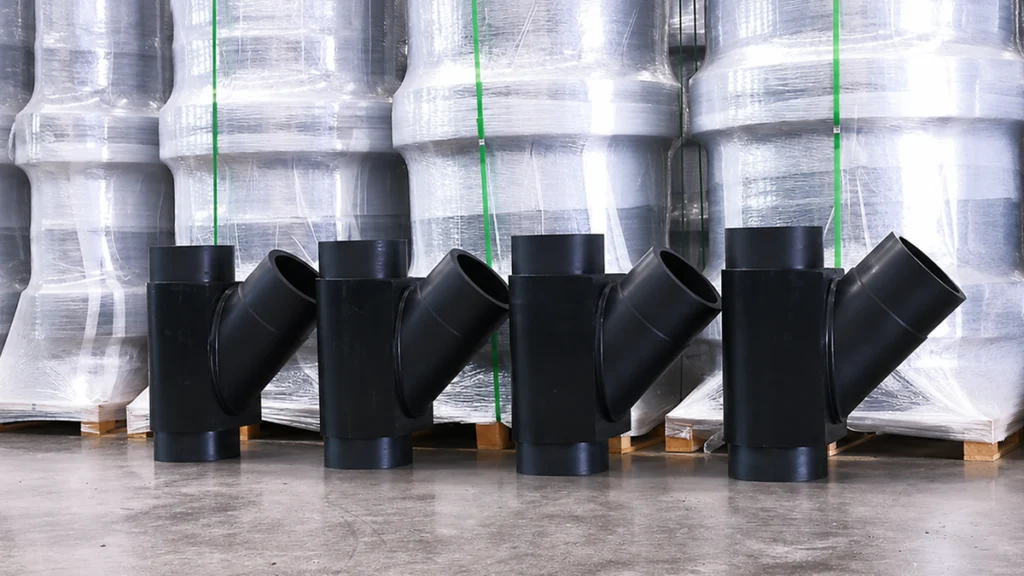
System longevity hinges entirely on proper installation. In butt-fused HDPE systems, contamination stands out as the leading cause of joint failure. Before applying any heat, crews must meticulously clean the hdpe pipe ends using 90%+ Isopropyl Alcohol (IPA) wipes.
Once the fusion process wraps up, technicians need to perform a Visual Bead Inspection in strict accordance with PPI (Plastics Pipe Institute) guidelines. Look closely at the V-groove sitting between the two rolled-back melt beads; it should never drop deeper than half the bead’s height above the pipe surface. If that valley extends all the way down to the pipe wall, you are likely looking at severe misalignment or over-pressurization during the joining phase. In that scenario, the joint must be completely cut out and redone.
Final validation goes beyond a simple visual check. It involves data-logging every fusion parameter (time, temperature, and pressure), running hydrostatic pressure tests on the finished line, and performing destructive testing—like a guided side-bend test—on sample welds to definitively prove structural integrity.
Accurately budgeting for custom fabricated fittings requires a solid grasp of the primary cost and schedule drivers.
Cost Drivers: Three main factors influence pricing: resin market volatility, SDR thickness, and geometric complexity. A lower SDR equates to a thicker HDPE pipe wall. Thicker walls demand more raw PE100 resin, which naturally drives up material costs. Furthermore, custom angles that require multiple fusion steps and intricate cutting will inevitably increase machining and labor expenses.
Lead Time: Suppliers generally stock standard molded fittings up to 8 inches. Custom fabricated fittings, however, require dedicated machining and engineering time. To support aggressive project schedules, JINQUAN offers a highly competitive 7 to 15-day lead time on custom orders, complete with robust, export-ready packaging.
Project Risks: Cutting corners by substituting standard tees for Y fittings in high-flow environments often triggers excessive head loss. Over time, this leads directly to pump burnout and total system failure. Additionally, failing to disclose maximum operating temperatures for industrial fluids exceeding 20°C is a critical mistake. It results in omitted temperature derating factors, which can cause the fitting to rupture prematurely.
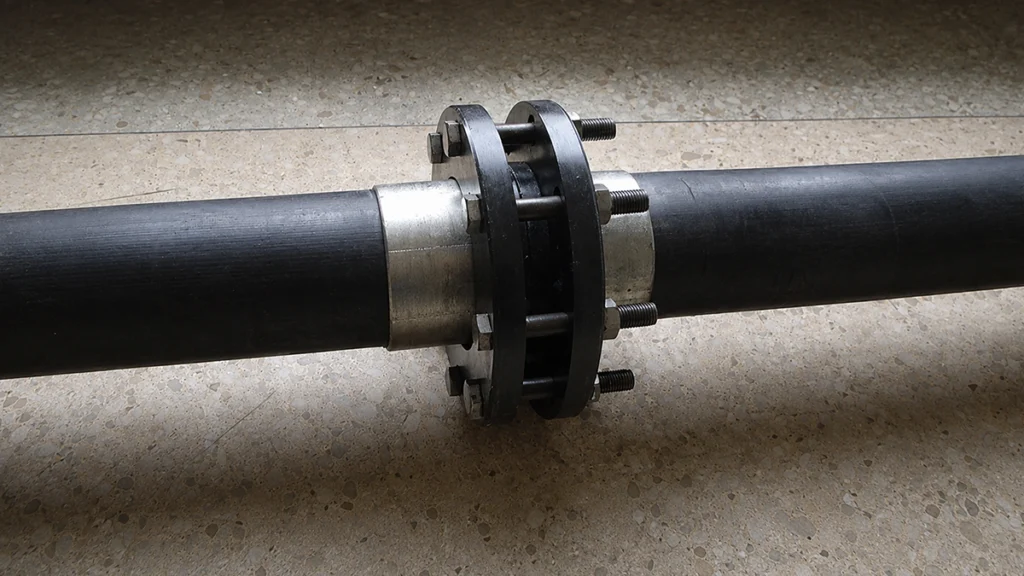
Choosing between custom fabricated wyes and standard molded options generally comes down to a straightforward operational rule. Stick with standard injection-molded fittings for everyday utility lines under 8 inches (DN200), provided the standard 45° angles easily fit within your trench layout.
Pivot to custom fabrication when the HDPE pipeline diameter exceeds 8 inches. You should also take the custom route when navigating existing underground infrastructure demands non-standard angles, when the design requires a highly specific reducing branch setup, or when minimizing hydraulic friction is absolutely vital to slashing the overall pumping energy costs of the system.
HDPE Y fittings merge or split fluid flow within a pipeline at an acute angle (usually 45 or 60 degrees). They prove critical in systems where minimizing hydraulic turbulence and maintaining flow velocity are non-negotiable—think mining slurry transport, wastewater gravity mains, and high-volume industrial fluid distribution.
A Y fitting blends flow at a smooth, acute angle, which drastically cuts down on pressure loss and turbulence. A standard tee, on the other hand, forces a harsh 90-degree directional shift. Because of this abrupt angle, a standard tee generates three to four times more localized pressure loss than a comparable 45-degree Y fitting.
Absolutely. While physical mold sizes limit standard injection-molded Y fittings, custom fabricated versions are cut and butt-fused directly from extruded pipe segments. This process empowers manufacturers to build wyes for massive pipe diameters and engineer highly specific angles to maneuver around existing infrastructure or tight underground constraints.
Standard molded wyes generally feature 45-degree and 60-degree angles. Through custom fabrication, however, manufacturers can achieve virtually any angle dictated by an isometric drawing. This includes highly specialized angles like 11.5, 22.5, 30, and 75 degrees to satisfy complex routing requirements.
Always match the outside diameter (DN) to your mainline pipe. For the pressure rating, choose the Standard Dimension Ratio (SDR) that aligns with your system’s peak operating pressure. Because the fabrication process introduces localized geometric stress, engineers frequently specify fabricated fittings one SDR class thicker than the mainline pipe to guarantee sufficient pressure capacity.
A trustworthy supplier will deliver fittings compliant with ASTM F2206, EN 12201, or ISO 4427. They should also hand over raw material batch certificates, ISO 9001 traceability records, data-logged fusion parameters for the welds, and documented results from destructive sample testing or hydrostatic pressure tests.
Crews install them using the butt fusion method. First, they clean the pipe ends with isopropyl alcohol and face them to a smooth finish. Next, a PTFE-coated plate heats the ends to between 210°C and 240°C. Finally, the melted ends are pressed together under strict hydraulic pressure and allowed to cool, forming a monolithic joint that is stronger than the pipe itself.
Pricing heavily depends on the raw polyethylene resin market, the complexity of the custom angle, and the SDR thickness (thicker walls require more material and thus cost more). Lead times hinge on machining requirements, but a highly efficient manufacturer can typically produce, package, and ship custom fabricated Y fittings within 7 to 15 days.
Successfully mapping out complex pipeline layouts demands components that offer both uncompromised hydraulic performance and geometric adaptability. By drastically reducing localized pressure loss and sustaining critical flow velocities in high-capacity systems, HDPE Y fittings deliver a massive advantage over standard perpendicular tees. Standard injection-molded wyes certainly hold their own in smaller, conventional utility lines. Yet, when a project involves demanding industrial media, non-standard angles, or large diameters, custom fabricated Y branches shift from being an option to an absolute necessity.
Engineers can secure long-term, leak-free pipeline integrity by accurately specifying the branch angle, Standard Dimension Ratio, and Outside Diameter, while also factoring in the necessary derating calculations for elevated temperatures and fabricated joints. Ultimately, teaming up with a manufacturer equipped for large-scale, precision fabrication ensures these specialized fittings hit project deadlines while satisfying the most rigorous international standards.