Address
Zhengzhou, Henan, China
Work Hours
Monday to Friday: 7AM - 7PM
Weekend: 10AM - 5PM
Address
Zhengzhou, Henan, China
Work Hours
Monday to Friday: 7AM - 7PM
Weekend: 10AM - 5PM

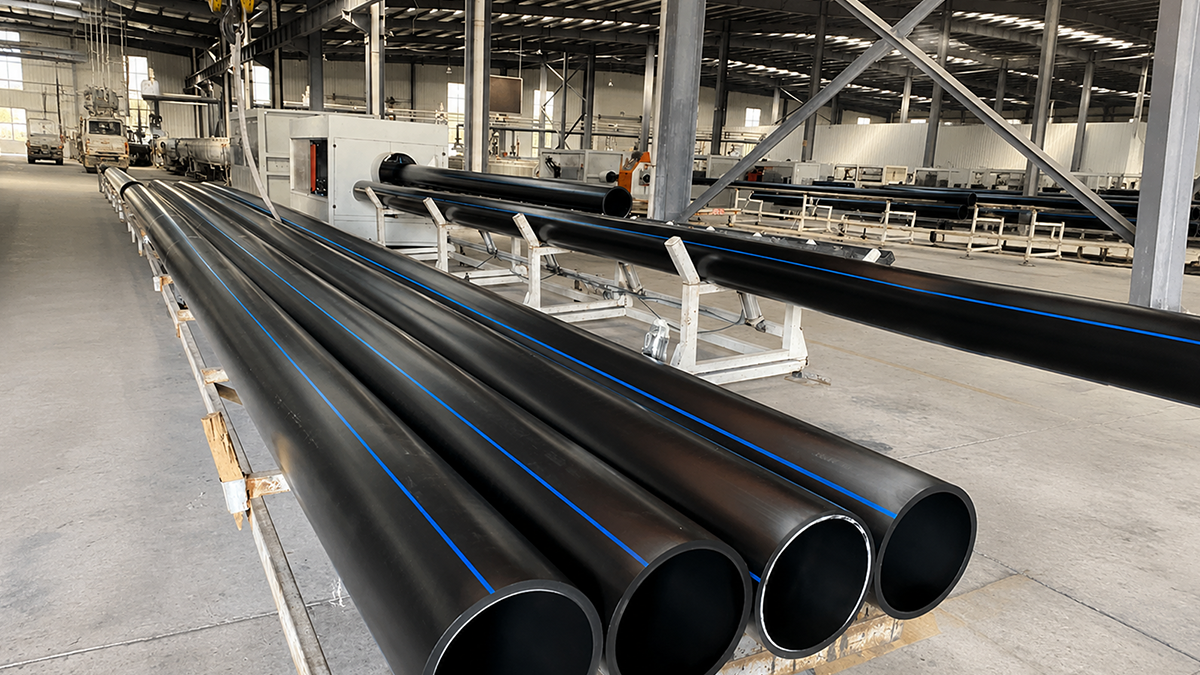
Butt fusion vs electrofusion is the core jointing decision for every HDPE pipe project. This guide compares cost per joint, joint strength, equipment, installation speed, and best-fit applications so engineers, contractors, and procurement teams can choose the right method with confidence.
Butt fusion relies on a heated plate paired with hydraulic pressure to melt and fuse HDPE pipe ends directly. This approach shines when you need a highly cost-effective solution for long, uninterrupted stretches of piping. On the flip side, electrofusion depends on specialized fittings packed with embedded resistance wires. Once an electric current runs through these wires, the joint melts from the inside out. This makes it the go-to choice for cramped trenches, emergency repairs, and intricate tie-ins.
Ultimately, when weighing butt fusion vs electrofusion, project engineers have to balance the hefty upfront capital required for machinery against the recurring expense of consumable fittings.
| Method | Strength | Cost per Joint | Speed | Best For |
|---|---|---|---|---|
| Butt Fusion | Equal to or greater than pipe | Low (No fittings required) | Slower setup, fast continuous welding | Long straight runs, large diameters (>DN315) |
| Electrofusion | Equal to or greater than pipe | High (Requires E/F fittings) | Fast setup, slower cooling time | Tight trenches, repairs, tie-ins, small diameters |
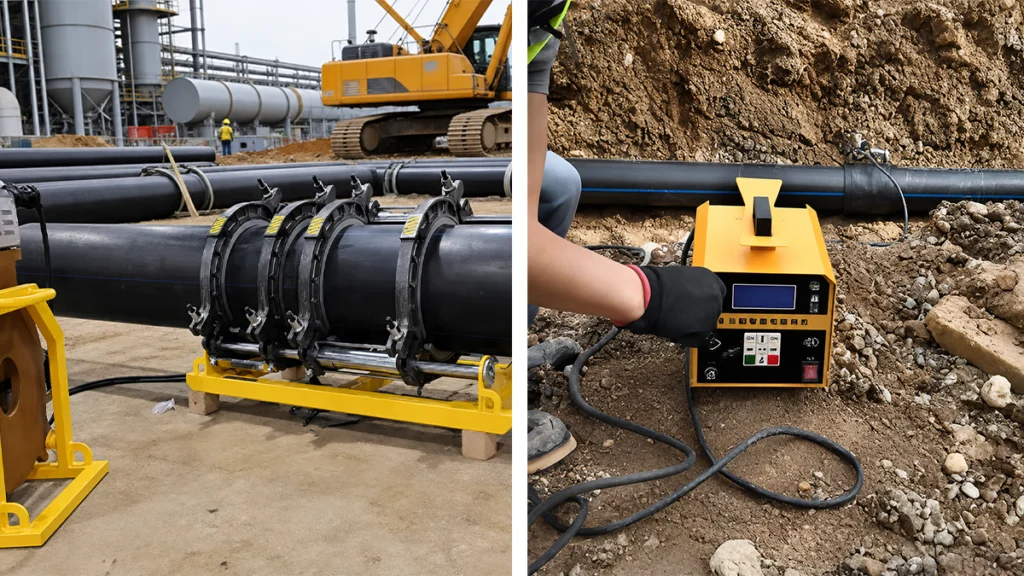
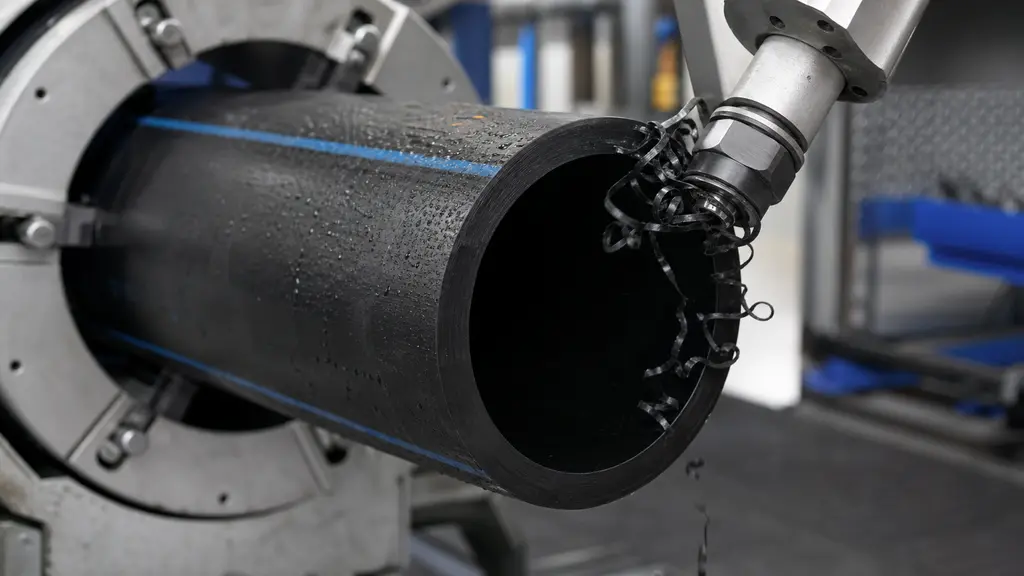
Creating a permanent, monolithic joint, butt fusion welding involves heating two HDPE pipe ends and driving them together under carefully controlled hydraulic pressure. Industry standards like ISO 21307 and ASTM F2620 govern the procedure. To achieve the perfect molecular bond, operators must strictly follow a five-stage sequence.
1. Preparation & Facing: First, the crew secures the HDPE pipe ends in alignment clamps. A rotating cutting tool then planes (or faces) the edges to guarantee 100% parallel contact.
2. Heating: Next, a PTFE-coated heater plate—usually calibrated to 215±15°C—slips between the ends. The machine applies initial pressure until a uniform melt bead forms around the entire circumference.
3. Changeover: Operators must rapidly extract the heater plate. They have a maximum window of just 5 to 7 seconds to complete this step; otherwise, the molten HDPE might cool prematurely.
4. Fusion/Joining: The machine immediately drives the molten ends together at a precise fusion pressure, which typically hovers around 0.52±0.1 MPa.
5. Cooling: Finally, the joint remains under constant pressure. The crew waits until the core temperature drops enough for the polymer matrix to solidify completely.
Standard Butt Fusion Parameters (per ISO 21307 / DVS 2207-1):
| Pipe SDR | Heating Time | Fusion Pressure | Cooling Time |
|---|---|---|---|
| SDR 11 (Thick Wall) | ~10 sec per mm of wall thickness | 0.52±0.1 MPa | 11 mins per inch of wall thickness |
| SDR 17 (Thin Wall) | ~10 sec per mm of wall thickness | 0.52±0.1 MPa | 11 mins per inch of wall thickness |
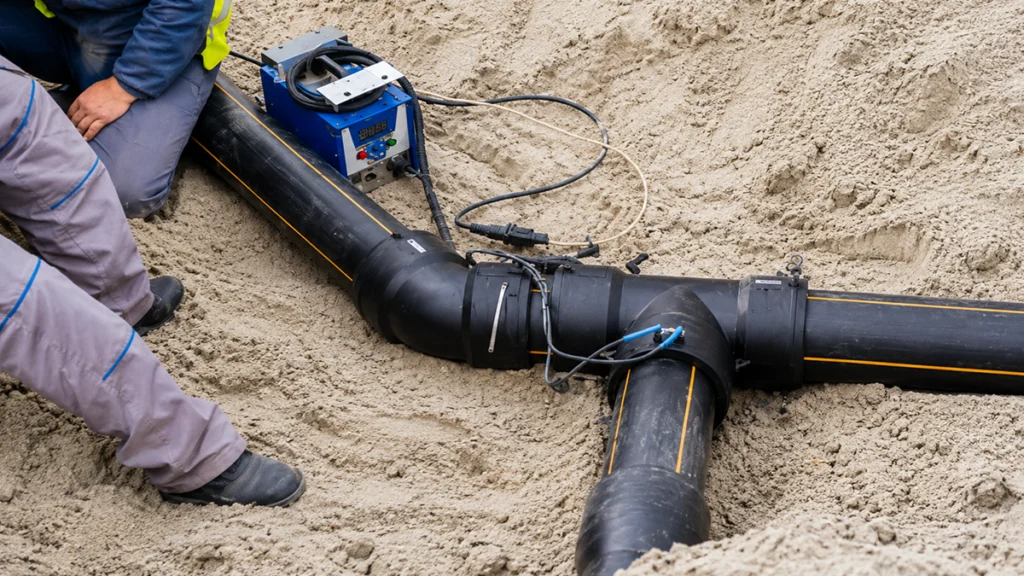
Rather than applying external heat, electrofusion (EF) leverages embedded resistance wires inside a specialized fitting to fuse HDPE pipe ends from the inside out. An electrical current delivers the exact thermal energy needed to melt the polymer interface.
A standard electrofusion setup requires the following components:
What truly sets electrofusion apart is its barcode-driven parameter control. By simply scanning the fitting, the ECU automatically tweaks the power output based on ambient temperature and the specific requirements of that coupler. This clever automation effectively wipes out human error when calculating heating times.
When pipeline engineers evaluate butt fusion vs electrofusion, the long-term structural integrity of the joint remains a top priority. As long as crews execute the welds correctly according to ISO and ASTM standards, both techniques yield a connection that is just as strong as—if not stronger than—the parent HDPE pipe.
Test Results Comparison:
| Test Type | Standard | Butt Fusion Result | Electrofusion Result |
|---|---|---|---|
| Tensile Test | ISO 13953 / EN 12814-2 | High energy to break; failure occurs in pipe, not joint | High energy to break; failure occurs in pipe |
| Peel Decohesion Test | ISO 13954 | N/A (Not applicable for butt joints) | Assesses ductility of the fusion joint interface; high resistance to peeling |
| Hydrostatic Pressure | ISO 1167 | Passes long-term pressure rating (e.g., PN16) | Passes long-term pressure rating (e.g., PN16) |
Looking at long-term benchmarks, the whole HDPE pipe tensile creep rupture test (EN 12814-3) proves that both jointing styles comfortably secure a 50+ year design life. Because they both demonstrate phenomenal resistance to slow crack growth, pipeline networks stay protected even during unexpected pressure surges or ground shifts.
To truly grasp the financial dynamics of HDPE pipe jointing, you need to frame the conversation around CAPEX (Capital Expenditure) versus OPEX (Operational Expenditure).
Butt fusion demands a hefty CAPEX because heavy hydraulic butt fusion machines don’t come cheap. Yet, it counters this with an exceptionally low OPEX. Since the process requires zero fittings, your only ongoing expenses boil down to labor and electricity. Electrofusion flips this script. It boasts a low CAPEX—ECU machines are relatively affordable and highly portable. However, the OPEX is substantial because every single joint requires an expensive, consumable electrofusion HDPE pipe fitting.
Estimated Total Cost per Joint by Diameter (USD):
| Diameter | Butt Fusion Cost per Joint (Labor/Power) | Electrofusion Cost per Joint (Fitting + Labor) |
|---|---|---|
| DN63 | $3 – $5 | $10 – $15 |
| DN110 | $5 – $10 | $25 – $35 |
| DN200 | $10 – $15 | $70 – $100 |
| DN315 | $15 – $25 | $150 – $250 |
| DN500 | $30 – $45 | $400 – $600 |
| DN630 | $40 – $60 | $800 – $1,200+ |
As HDPE pipe diameters increase, electrofusion HDPE pipe fitting costs scale exponentially. For any project dealing with pipes larger than DN315, butt fusion emerges as the vastly superior economic choice. If you rely on large-diameter E/F couplers, you can quickly blow through a project’s materials budget.
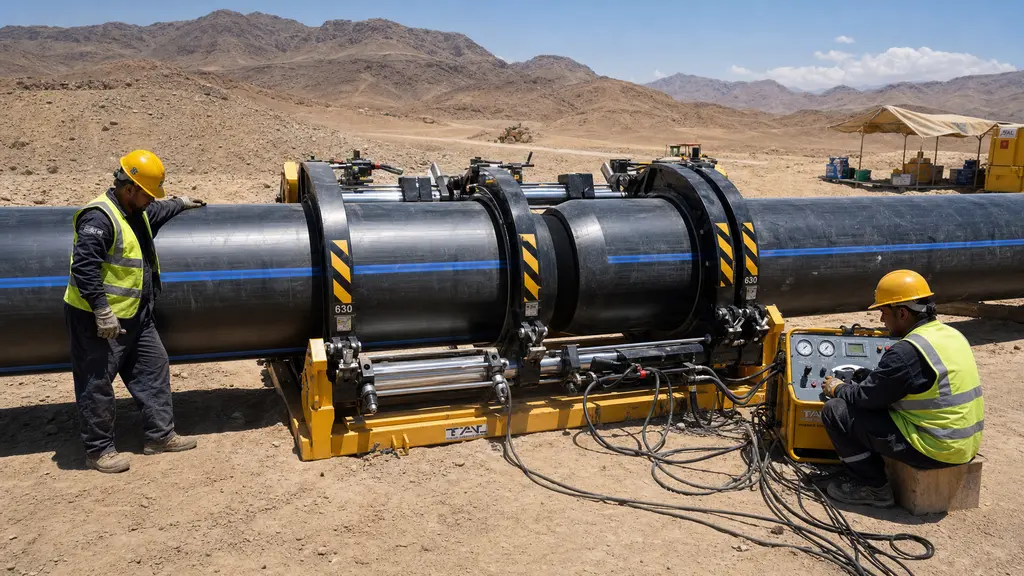
Picking the right PE pipe jointing method depends almost entirely on the installation environment, the total pipeline length, and whatever spatial constraints you might face on site.
Where Butt Fusion Wins:
Butt fusion reigns supreme for long-distance water transmission, mining slurry lines, dredging pipelines, and standard open-trench installations.
Where Electrofusion Wins:
Electrofusion truly shines during urban gas distribution tie-ins, trenchless or directional drilling connections, vertical shaft work, and emergency pipeline repairs.
Procurement officers and EPC contractors can significantly boost project efficiency by adopting a standardized decision matrix to figure out exactly when to swap butt fusion for electrofusion.
Top-tier equipment won’t save you if the installation procedures are sloppy. Improper techniques can easily trigger catastrophic joint failures, making it critical for quality control teams to recognize these common pitfalls.
Top Installation Mistakes:
1. Improper Cleaning: Leaving behind moisture, dirt, or grease on HDPE pipe ends wrecks the molecular bonding process for both methods, ultimately producing brittle joints.
2. Inadequate Scraping (Electrofusion): Forgetting to strip the oxidation layer with a dedicated rotary scraper is a massive error. Relying on sandpaper or a basic hand blade usually leaves an uneven surface, which practically guarantees E/F joint failure down the line.
3. Misalignment (Butt Fusion): A high-low mismatch between the two polyethylene pipe ends introduces stress concentrators. This drastically weakens the joint’s capacity to handle hydrostatic pressure.
4. Rushed Cooling: Popping the clamps off before the specified cooling time elapses (for example, 11 minutes per inch of wall thickness) interrupts polymer crystallization.
Hidden Risks for Buyers:
The market is flooded with counterfeit electrofusion fittings. Cheap E/F components built with substandard copper resistance wires cause uneven heating, which inevitably leads to cold joints or dangerous blowouts. On the other hand, running uncalibrated butt fusion machines with sketchy hydraulics means the operator has no chance of maintaining that critical 0.52 MPa fusion pressure. To dodge these liabilities, modern equipment featuring ASTM F3124 data logging is highly recommended for rock-solid, traceable quality assurance.
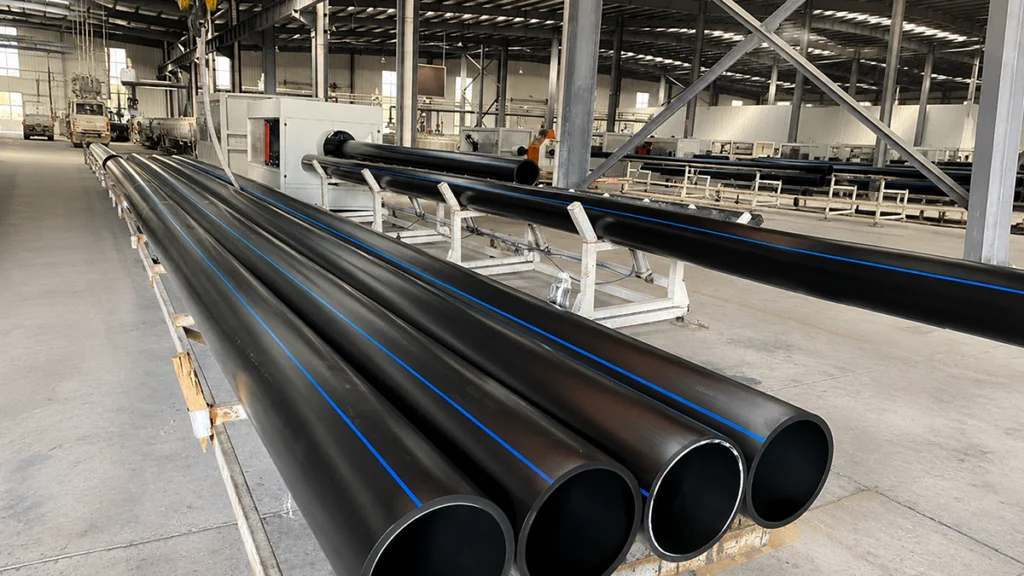
Sourcing dependable HDPE pipes, HDPE pipe fittings, and welding gear demands a rigorous vetting process. B2B buyers must critically evaluate suppliers based on their technical capabilities, quality control protocols, and overall production scale.
For EPC contractors and utility planners, choosing between butt fusion and electrofusion is rarely a black-and-white decision. Instead, it’s an ongoing exercise in project optimization. Specifying butt fusion as your primary method for new, long-distance runs and large-diameter (>DN315) pipelines remains the smartest way to slash OPEX and ditch unnecessary fitting costs.
On the flip side, you should deliberately specify electrofusion for in-trench tie-ins, emergency repair work, cramped urban environments, and any scenario where you must join HDPE pipes with dissimilar SDRs. Its compact footprint and automated heating cycles make it absolutely indispensable for complex, tight-space operations.
The most lucrative B2B strategy is undoubtedly a hybrid approach. Savvy project managers lean on butt fusion for 90% of their straight-line pipe stringing above ground, fully leveraging the speed and zero-fitting cost. They then deploy electrofusion for that final 10%—tackling in-trench connections, tying into existing infrastructure, and executing complex directional changes. This perfectly balances capital efficiency with real-world installation flexibility.
Is butt fusion stronger than electrofusion for HDPE pipe?
Not at all; neither method is inherently stronger than the other. When crews follow ISO 21307 and ISO 13954 standards to the letter, both butt fusion and electrofusion forge a monolithic joint equal to—or stronger than—the parent HDPE pipe. Both secure a 50+ year design life and will breeze through rigorous tensile and hydrostatic pressure testing without a hint of failure at the fusion interface.
What is the cost difference per joint between butt fusion and electrofusion?
Butt fusion boasts a dramatically lower cost per joint simply because it uses zero fittings. Your expenses are strictly capped at labor and electricity (running roughly $15-$25 for a DN315 joint). Electrofusion, however, demands a consumable fitting for every single connection. That cost scales exponentially as the HDPE pipe grows, easily hitting $150-$250 for a DN315 connection, which makes it incredibly pricey for large diameters.
Can you use electrofusion on large diameter HDPE pipes above DN500?
Yes, you can use electrofusion on pipes larger than DN500, but it rarely makes financial sense. Massive electrofusion couplers cost a fortune and require heavy-duty, high-output ECUs to run properly. While it might be technically feasible—and occasionally necessary for very specific repairs or tight tie-ins—butt fusion remains the standard, economically sound choice for large-diameter HDPE pipelines.
Which method is faster to install on a typical water pipeline project?
For long, straight water pipelines, butt fusion takes the crown for speed. Even though setting up the heavy machinery takes a bit of time upfront, the continuous, pipe-to-pipe welding rhythm above ground is incredibly efficient. Electrofusion offers a faster machine setup, but it drags during execution due to the meticulous pipe scraping, clamping, and longer cooling times required for each joint.
Do butt fusion and electrofusion require different operator certifications?
Yes, they usually require separate training modules, even if certification bodies bundle them together. A butt fusion operator must master hydraulic pressures, facing techniques, and heater plate temperature management. An electrofusion operator, meanwhile, must strictly adhere to pipe preparation protocols, rotary scraping, and barcode scanning. Both roles require a deep understanding of cooling times and how environmental contamination ruins a weld.
Why do gas utilities often prefer electrofusion over butt fusion?
Gas utilities spend a lot of time working in congested, urban underground environments featuring narrow trenches and severely limited space. Electrofusion gear is highly compact, allowing crews to safely weld inside a trench where a massive butt fusion machine simply wouldn’t fit. Plus, electrofusion easily joins pipes of different SDRs while providing highly traceable, barcode-logged joint data—a crucial requirement for strict gas safety compliance.
Can butt fusion and electrofusion be used on the same project?
Absolutely. In fact, a hybrid approach is the gold standard for major infrastructure projects. Smart contractors use butt fusion to rapidly and cheaply join long strings of pipe above ground. Later, they drop electrofusion couplers into the trench to tie those long strings together, navigate tricky junctions, or hook into existing municipal valves.
What standards govern HDPE butt fusion and electrofusion welding quality?
The heavy hitters for international standards include ISO 21307 and ASTM F2620, which govern butt fusion parameters and procedures. For electrofusion fittings and peel decohesion tests, look to ISO 13954 and ASTM F1055. Overall, the HDPE pipes and fittings must align with ISO 4427 (for water) or ISO 4437 (for gas) to guarantee the materials meet rigid hydrostatic and tensile strength requirements.
Nailing down the optimal HDPE pipe jointing method requires a strategic look at project scale, spatial constraints, and material budgets. At its core, the butt fusion vs electrofusion debate comes down to a balancing act. You have to weigh the high capital equipment costs and rock-bottom joint costs of butt fusion against the cheap equipment and pricey consumables of electrofusion. By carefully matching your chosen method to specific diameter thresholds, SDR compatibility, and real-world site conditions, pipeline engineers can guarantee structural integrity while maximizing procurement efficiency. Ultimately, embracing a hybrid strategy delivers the highest reliability and the lowest total installed cost for modern infrastructure developments.