Address
Zhengzhou, Henan, China
Work Hours
Monday to Friday: 7AM - 7PM
Weekend: 10AM - 5PM
Address
Zhengzhou, Henan, China
Work Hours
Monday to Friday: 7AM - 7PM
Weekend: 10AM - 5PM

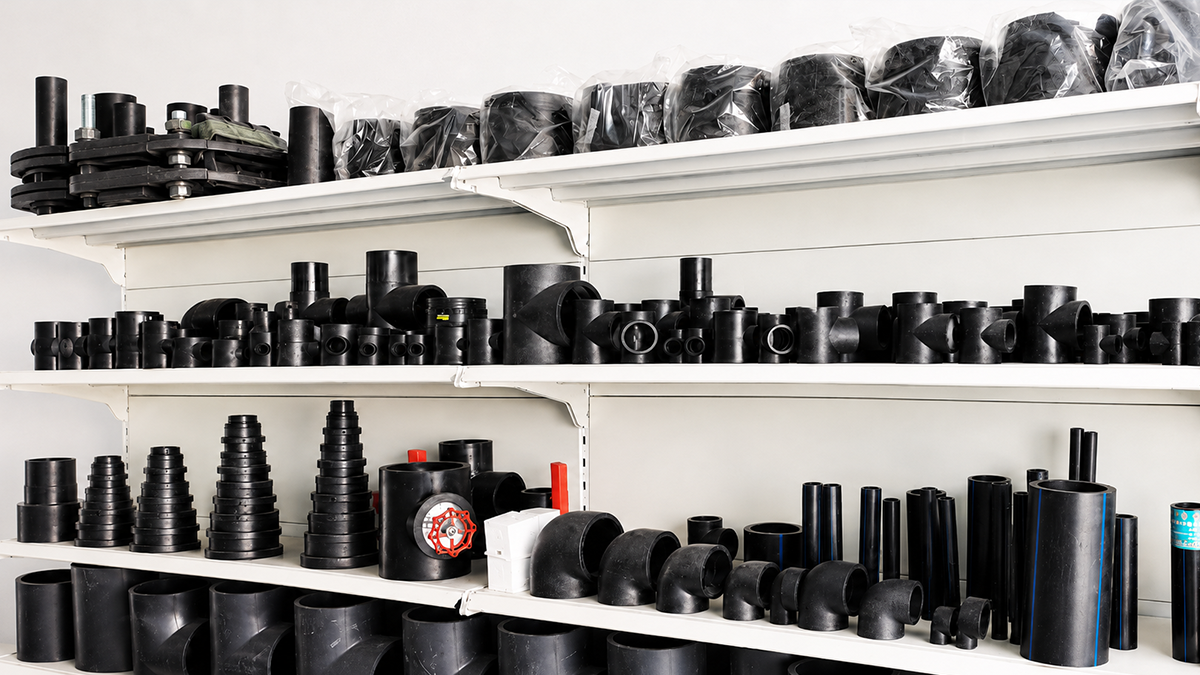
Butt Fusion Fittings vs Electrofusion Fittings: this guide compares HDPE joint strength, cost per joint, installation conditions, equipment needs, and application fit, helping engineers and procurement teams choose the right method for water, gas, mining, and trenchless pipeline projects.
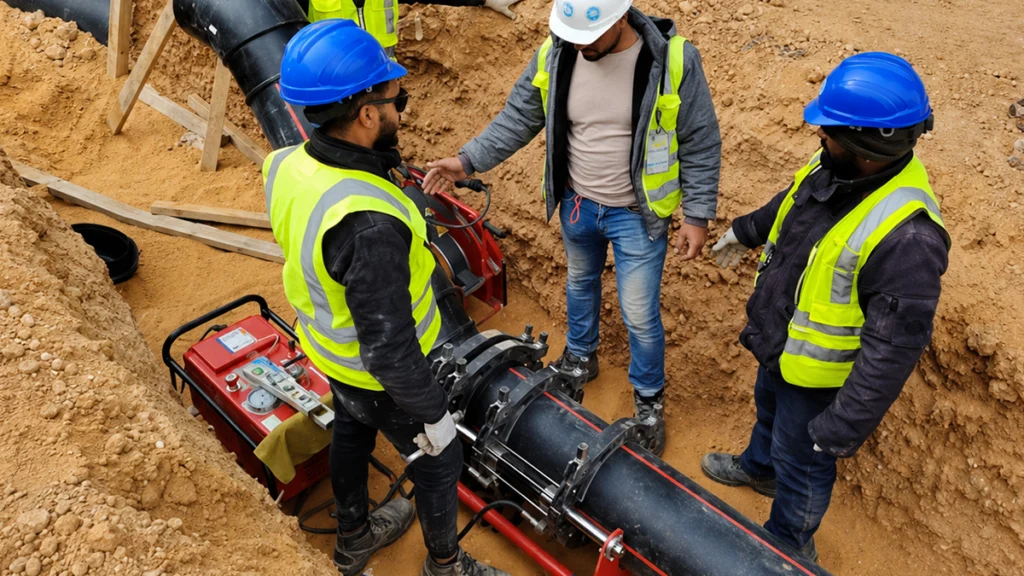
When it comes to joining long, straight runs of large-diameter HDPE pipe (90mm to 2250mm), butt fusion stands as the undisputed industry standard. Why? The fitting costs are exceptionally low. Electrofusion, on the other hand, dominates when working with smaller diameters (16mm to 710mm), navigating confined spaces, executing trenchless installations, or handling emergency repairs. Both techniques yield monolithic, leak-proof joints designed to last anywhere from 50 to 100 years. Ultimately, the decision boils down to economics. Butt fusion demands a hefty initial capital expenditure (CAPEX) for equipment but saves you money on the fittings. Electrofusion flips that equation: the equipment is cheap, but the fittings carry a premium price tag.
HDPE butt fusion fittings are fabricated or injection-molded HDPE components built to join directly to your pipes. You don’t need any extra couplers. Instead, the process relies on thermofusion. By heating the ends and pressing them together, the molecular structures of the pipe and the fitting melt, entangle, and cool into a single, continuous joint.
Engineered from virgin PE80, PE100, or PE4710 resin, these robust fittings handle high-stress applications with ease. They span a massive diameter range—from DN90 all the way up to DN2250—and support pressure ratings of PN10, PN16, PN20, and PN25. There is one critical rule, though: your butt fusion fittings must match the exact Standard Dimension Ratio (SDR) of the pipe you are joining. For example, SDR11 must pair with SDR11. This guarantees identical wall thicknesses when the heating phase begins.
The standard butt fusion welding process breaks down into four precise steps:
1. Alignment: Operators clamp the pipes and fittings securely into a heavy-duty hydraulic fusion machine to guarantee perfect concentricity.
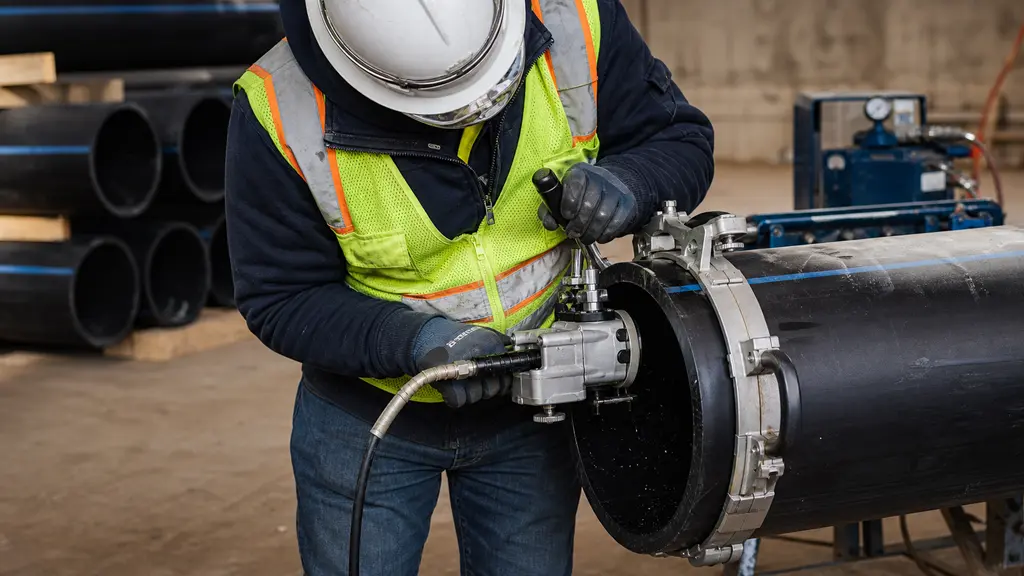
2. Facing: A mechanical planer trims the pipe ends, leaving behind perfectly parallel, clean, and unoxidized surfaces.
3. Heating: A PTFE-coated heating plate drops between the ends, melting the plastic to a target temperature (usually 200°C to 220°C).
4. Fusion: Once the heater plate is removed, hydraulic pressure forces the molten ends together. The joint remains stationary until completely cooled.
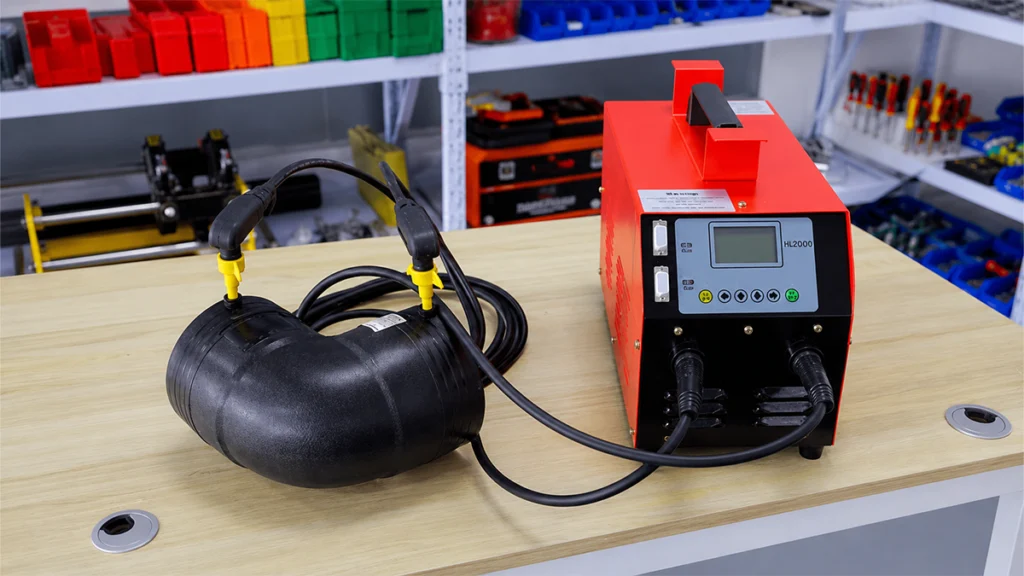
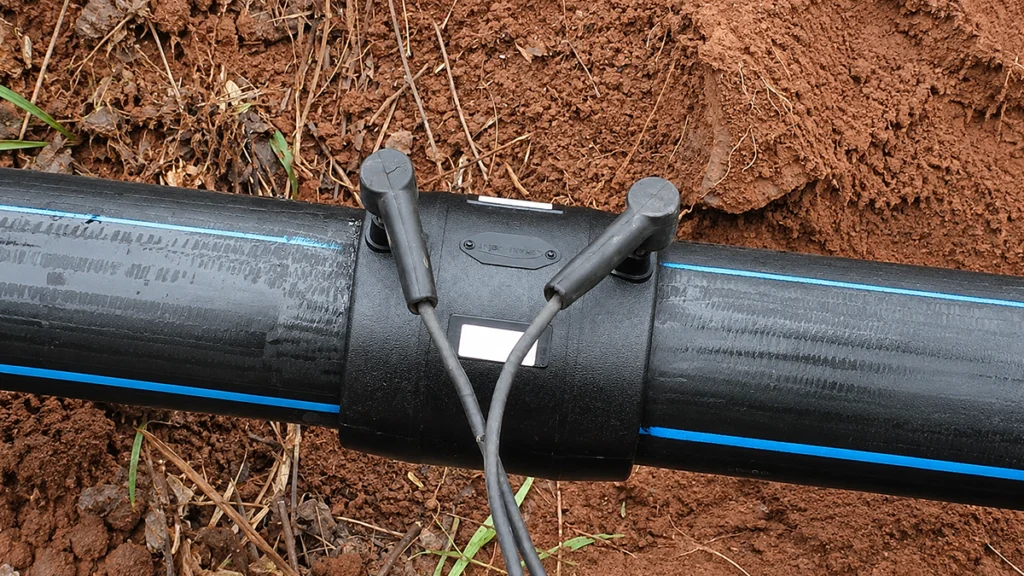
HDPE electrofusion fittings are highly specialized HDPE couplers. Inside each one, you’ll find embedded electrical heating coils. When an electric current runs through these coils, it melts the fitting and pipe surfaces together. Unlike butt fusion’s end-to-end approach, electrofusion relies on a socket-style connection where the pipe ends slide directly into the fitting.
Manufacturers primarily use high-grade PE100 resin to craft these fittings, implanting metal resistance wires right into the plastic. This design provides incredible precision and ease of use, especially in challenging environments. Standard sizes range from DN16 up to DN710. One massive technical advantage here is SDR compatibility. A single electrofusion coupler can frequently join pipes with different SDRs (like tying SDR11 to SDR17) while easily accommodating slight variations in outer diameters.
Executing an electrofusion weld requires strict adherence to preparation and assembly steps:
1. Preparation: You must mechanically scrape away the oxidized outer layer of the pipe ends, then thoroughly clean the exposed surfaces with 90%+ isopropyl alcohol.
2. Alignment: The prepared pipe slides into the fitting. Mechanical alignment clamps secure the setup to stop any movement during the melt cycle.
3. Heating: An Electrofusion Control Unit (ECU) scans the barcode on the fitting. The machine then automatically calculates and delivers the exact voltage and heating time required.
4. Cooling: The joint stays clamped and entirely undisturbed so the plastic can solidify. The barcode data dictates the exact duration of this cooling phase.
Engineers need to evaluate the technical parameters of both systems to select the right HDPE pipe jointing method for gas and water networks.
| Feature | Butt Fusion Fittings | Electrofusion Fittings |
|---|---|---|
| Typical Pipe Size Range | DN90–DN2250, depending on manufacturer and equipment capacity | DN16–DN710, depending on fitting type and manufacturer |
| SDR Compatibility | Pipe and spigot fitting dimensions must be compatible with the approved fusion procedure | Compatible with specified SDR ranges only; pipe wall thickness and fitting suitability must be verified |
| Pressure Rating | Project-specific; depends on material grade, diameter, SDR, and operating temperature | Project-specific; depends on fitting series, diameter, material grade, and operating temperature |
| Joint Testing | ISO 13953 tensile strength and failure-mode testing | ISO 13954 peel-decohesion testing, where applicable |
| Equipment Required | Manual or hydraulic fusion machine, facer, heater, clamps, and pipe supports | Electrofusion control unit, scraper, alignment clamps, and cleaning tools |
| Operator Requirements | Training required for facing, alignment, heating, pressure control, and cooling | Training required for scraping, cleaning, alignment, parameter entry, and cooling |
| Installation Time | Efficient for repeated joints on long, open pipeline sections | Convenient for tie-ins and confined spaces; total time includes preparation, fusion, and cooling |
| Typical Applications | Long water and gas mains, mining pipelines, and industrial installations | Repairs, tie-ins, branch connections, confined spaces, and trenchless work |
Note: Available size range, pressure class, SDR compatibility, equipment requirements, and installation procedures vary by manufacturer, fitting design, material grade, temperature, and applicable project standard.
Figuring out the true cost per joint means looking past the initial sticker price of the fitting itself. The real economic impact comes from balancing equipment capital expenditure (CAPEX), the price of individual fittings, and overall labor efficiency.
Because they are simple, injection-molded pieces of plastic, butt fusion fittings cost significantly less to manufacture. However, the machines required to install them demand a steep initial CAPEX. Depending on the diameter capacity, a butt fusion machine can run anywhere from $5,000 to well over $50,000. You also have to factor in the heavy lifting equipment needed just to move the machinery around the site. Electrofusion fittings, meanwhile, carry a high price tag due to the complex manufacturing required to embed those copper coils. But the tradeoff is the equipment: an Electrofusion Control Unit (ECU) is lightweight, highly portable, and relatively cheap, usually costing between $1,000 and $5,000.
Total Cost per Joint Breakdown
| Diameter Category | Fitting Cost | Equipment CAPEX | Total Cost Efficiency Winner |
|---|---|---|---|
| Small (<90mm) | Low to Moderate (EF) / Very Low (BF) | Low (EF) / High (BF) | Electrofusion. The high cost of small EF fittings is easily offset by rapid installation and low equipment costs. |
| Medium (90mm – 315mm) | High (EF) / Low (BF) | Low (EF) / Moderate (BF) | Break-even zone. High joint volume favors butt fusion; low joint volume favors electrofusion. |
| Large (>315mm) | Prohibitively High (EF) / Moderate (BF) | Low (EF) / Very High (BF) | Butt Fusion. Large EF couplers become exceptionally expensive, making butt fusion the only economically viable choice. |
Choosing the best jointing method relies heavily on the physical constraints and overall scale of your job site.
Long-Distance Gas and Water Networks
Trenchless Installation & Confined Spaces
Pipeline Repairs and Tie-ins
Mining and Heavy Industrial
While both fusion methods boast incredible reliability, they require strict adherence to specific installation protocols. If your pipeline crew wants zero-defect installations, understanding how and why joints fail is absolutely critical.
Butt Fusion Critical Parameters & Defect Prevention
Electrofusion Critical Parameters & Defect Prevention
Procurement managers and piping engineers can use this sequential 8-question framework to streamline the specification process and eliminate guesswork.
1. Is the pipe diameter larger than 315mm?
*(If yes → Butt Fusion is generally required for cost control)*
2. Are you working in a confined trench or tight urban space?
*(If yes → Electrofusion is necessary due to equipment size)*
3. Are you joining pipes with different wall thicknesses (SDRs)?
*(If yes → Electrofusion is required to bridge the SDR gap)*
4. Is this a new long-distance installation or a localized repair?
*(New runs → Butt Fusion; Localized repairs → Electrofusion)*
5. Does the project budget allow for high initial equipment CAPEX?
*(If no → Electrofusion lowers the barrier to entry)*
6. Do you have access to heavy lifting equipment on-site?
*(Required for moving large Butt Fusion machinery)*
7. Are there strict automated data-logging requirements for the utility?
*(Electrofusion ECUs excel at digital weld traceability)*
8. Is the pipe material PE100 or PE80?
*(Both methods are fully compatible with both resin grades)*
Securing top-tier HDPE pipe fittings means heavily vetting your suppliers against rigid international standards to prevent catastrophic field failures. Supply chain risks are very real. They range from manufacturers sneaking in mixed regrind resin (which destroys joint strength) to sloppy coil placement in HDPE electrofusion fittings. Even minor inaccuracies in the wall thickness of HDPE butt fusion fittings can trigger total pressure rating failures.
Essential Certifications for HDPE Fittings
| Standard | Relevance |
|---|---|
| ISO 4427 / EN 12201 | Plastics piping systems for water supply |
| DIN 8077/8078 | Polypropylene and Polyethylene pipe dimensions and testing |
| ISO 9001 & ISO 14001 | Quality and environmental management systems |
| CE / SGS | European conformity and independent third-party verification |
JINQUAN Plastic Industry Co., Ltd. actively neutralizes these supply chain risks through a massive, highly controlled manufacturing infrastructure. Operating out of a 200-acre facility with an annual output topping 100,000 tons, JINQUAN guarantees a rock-solid supply chain for even the largest mega-projects. Standard orders typically ship with a brisk 7-15 day lead time. Because JINQUAN manufactures both HDPE butt fusion and electrofusion fittings—and supplies the exact pipe welding machines needed to install them—buyers get a unified, factory-direct procurement solution. This totally eliminates the frustrating compatibility issues that plague contractors when mixing pipes, fittings, and welding gear from different vendors.
The reality of modern HDPE pipeline construction is simple: both methods are absolutely essential.
Trying to rely exclusively on a single jointing method just isn’t practical for complex infrastructure. Industry best practice dictates specifying butt fusion for your primary, long-distance pipeline runs. This maximizes cost-efficiency and structural continuity. On the flip side, engineers should always spec electrofusion for the final tie-ins, tricky manifold connections, localized repairs, and transition zones where bulky butt fusion machine simply won’t fit.
Best-Fit Summary Table
| Project Phase | Primary Recommendation | Core Justification |
|---|---|---|
| Mainline Trenching | Butt Fusion | Lowest cost per joint at scale |
| Directional Drilling | Electrofusion | No trench space required for machinery |
| System Maintenance | Electrofusion | Fast, localized repairs without moving pipes |
| High-Volume Industrial | Butt Fusion | Maximum durability for large diameters |
Neither method is always stronger. When properly installed, both can produce reliable joints that meet pipeline requirements. Butt fusion may be tested under ISO 13953, while electrofusion assemblies may be evaluated under ISO 13954. Joint quality mainly depends on preparation, alignment, parameters, cooling, and operator skill.
The maximum size depends on the manufacturer, fitting type, and pressure class. Standard electrofusion fittings are commonly available up to DN630 or DN710, while larger sizes may be available as specialized products. Butt fusion is often more economical for repeated large-diameter joints.
Electrofusion fittings contain resistance wires, electrical terminals, and controlled fusion zones, making them more complex to manufacture. Butt fusion fittings usually have a simpler solid-wall structure. However, total installed cost should also include equipment, labor, preparation, and cooling time.
Yes. Butt fusion is commonly used for long, accessible pipeline sections, while electrofusion is useful for repairs, tie-ins, branches, valve connections, and confined spaces. All components must be compatible in material, diameter, SDR or DR, and pressure rating.
A correctly made butt-fusion joint normally matches the pressure classification of the compatible pipe and fitting system. The actual rating depends on material grade, SDR or DR, diameter, temperature, and product standard. PN25 is available only for selected PE100 sizes and configurations.
Cooling time depends on fitting size, design, ambient temperature, and manufacturer instructions. Operators should follow the time shown on the fitting, barcode, control unit, or technical document. Do not move, test, or pressurize the joint before cooling is complete.
Both methods can be used when permitted by the applicable gas code and utility specification. Electrofusion is useful for repairs and confined spaces, while butt fusion suits long pipeline sections. Safety depends on approved components, trained operators, correct preparation, traceability, and inspection.
Water fittings may need to comply with ISO 4427-3, EN 12201, and relevant potable-water approvals. Gas fittings may follow ISO 4437-3, EN 1555, or local utility requirements. Buyers should also request product test reports, material traceability, and dimensional and pressure-performance documentation.
Choosing between butt fusion and electrofusion depends on project scale, pipe diameter, site access, installation conditions, and total installed cost. Butt fusion is generally well suited to long, accessible pipeline sections and repeated large-diameter joints, while electrofusion is often preferred for repairs, tie-ins, branch connections, and confined spaces.
The final decision should also consider equipment requirements, operator training, preparation procedures, cooling time, fitting compatibility, and applicable project standards. In many projects, using both methods provides the most practical solution. Engineering and procurement teams should evaluate each connection point separately to achieve reliable installation performance and appropriate lifecycle cost.