Address
Zhengzhou, Henan, China
Work Hours
Monday to Friday: 7AM - 7PM
Weekend: 10AM - 5PM
Address
Zhengzhou, Henan, China
Work Hours
Monday to Friday: 7AM - 7PM
Weekend: 10AM - 5PM

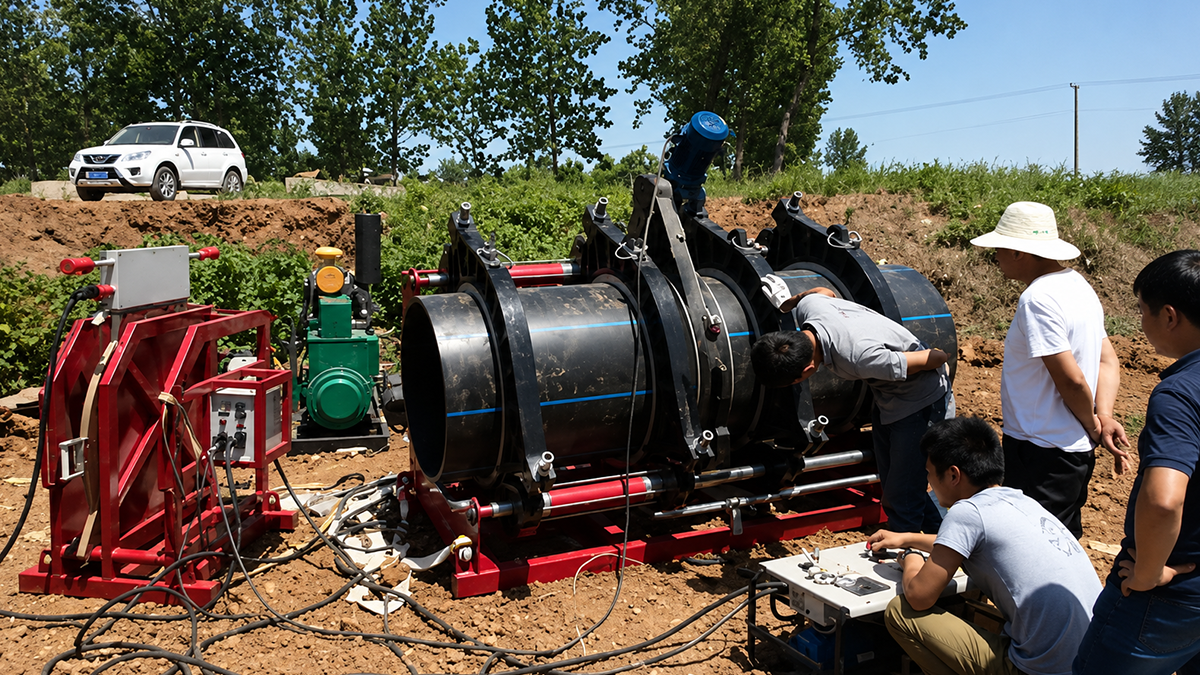
HDPE Pipe and Fittings for Thailand helps buyers compare pipe grades, fittings, joining methods, and supplier options for irrigation, water supply, and industrial projects, with practical guidance on specs, cost, installation, and quality checks.
High-Density Polyethylene (HDPE) isn’t just another plastic. It’s a highly engineered thermoplastic polymer built specifically for heavy-duty infrastructure. In Thailand, where industrial, municipal, and agricultural demands are intense, engineers primarily specify PE80 and PE100 material grades. You’ll find these HDPE pipes—and their matching fittings—in sizes ranging from a modest DN16 all the way up to massive DN3000 setups. Together, they form the crucial backbone of modern fluid transport networks across the country.
When choosing piping for large-scale developments, project managers have to balance flexibility, long-term durability, and resilience against the environment. Compared to old-school rigid plastics or heavy metal alternatives, HDPE pipe and fittings deliver exceptional tensile strength. They also handle pressure surges with ease.
Material Comparison Matrix: HDPE vs. PVC vs. Steel
| Feature | HDPE (PE100) | Rigid PVC | Carbon Steel |
|---|---|---|---|
| Corrosion Resistance | 100% Resistant | 100% Resistant | Requires coating/cathodic protection |
| Flexibility / Surge Handling | High (Absorbs water hammer) | Low (Prone to brittleness) | Low (Rigid) |
| Weight | Lightweight | Lightweight | Heavy (Requires lifting equipment) |
| Thermal Expansion | High (~0.13–0.20 mm/m/°C) | Moderate | Low |
| Joining Method | Heat Fusion (Leak-free monolithic) | Solvent Cement / Gasket | Welding / Flanging |
Thanks to a unique molecular structure, HDPE can actually absorb transient pressure surges and sudden soil shifts without cracking. Yes, its higher coefficient of thermal expansion means installation crews must leave room for movement. However, the material’s absolute immunity to rust and chemical breakdown makes it the undisputed champion for underground infrastructure today.
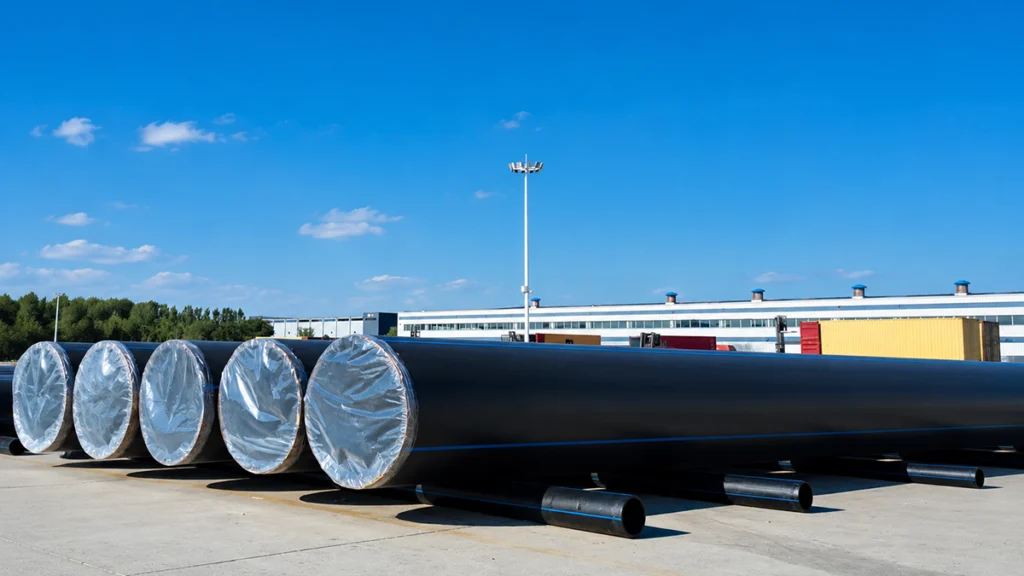
Thailand’s tropical weather throws some serious curveballs at engineering projects. We’re talking about intense year-round UV radiation, scorching ambient temperatures, and heavy monsoon rains. Standard commercial plastics fall apart quickly under this kind of stress. Industrial-grade HDPE, on the other hand, is built to last.
To fight off UV damage during prolonged outdoor exposure, premium black HDPE is manufactured with 2.0% to 2.5% carbon black pigment. This specific additive acts like a shield. It absorbs incoming ultraviolet rays, keeping the HDPE pipe structurally sound for decades even when left completely exposed in agricultural fields or above-ground industrial sites.
Heat resistance is just as crucial. Manufacturers calculate standard Nominal Pressure (PN) ratings based on a baseline fluid temperature of 20°C. But let’s be realistic—ambient and fluid temperatures in Thailand frequently hit 40°C. If you don’t derate PE100 pipes in these conditions, you risk premature system failure. At 40°C, the standard temperature derating factor for PE100 sits right around 0.83. Practically speaking, a HDPE pipe rated for PN16 at 20°C will safely operate as a PN13.2 pipe during a hot Thai summer.
On top of that, exposed HDPE pipelines go through significant thermal swings between day and night. HDPE expands and contracts noticeably (0.13–0.20 mm/m/°C). Trench burial is the standard engineering fix here, mitigating both thermal shifting and potential surface impacts. Once buried, HDPE thrives. It easily resists Thailand’s high humidity and monsoon-soaked soils, meaning it won’t rust, rot, or act as a host for biological growth.
Southeast Asia’s appetite for durable thermoplastic piping is surging. Look at the numbers: in 2023, Thailand imported roughly $210 million worth of plastic pipes from China alone. This massive volume is largely driven by three core sectors that desperately need reliable HDPE networks.
Agricultural Irrigation
During the dry season, Thai farmers lean heavily on extensive drip irrigation networks and main laterals to stretch their water supply. HDPE is incredibly flexible. Crews can unroll it right across uneven terrain without having to dig deep, expensive trenches.
Water Supply Networks
From high-pressure transmission mains to neighborhood tap distribution, municipalities and rural development agencies rely on HDPE. Fused joints create a completely leak-free system, which aggressively cuts down on non-revenue water loss.
Industrial and Mining Applications
Factories and mining sites push piping systems to their limits with harsh, corrosive fluids. Because of its outstanding chemical resistance, HDPE easily handles runoff from chemical processing, wastewater from food factories, and highly abrasive mining slurries.
Procurement managers have to make smart choices about physical forms and connection types. You have to base these decisions on the project’s scale, required diameters, and the specific installation environment.
Manufacturers produce these HDPE pipes in two main formats. Straight lengths are standard for larger diameters (usually DN110 and up). For smaller diameters, you’ll want coiled HDPE pipes. Coils drastically cut down the number of joints you have to weld over long stretches, which saves massive amounts of installation time on irrigation and rural water jobs.
Fitting and Equipment Categories
| Component Type | Description | Best Application |
|---|---|---|
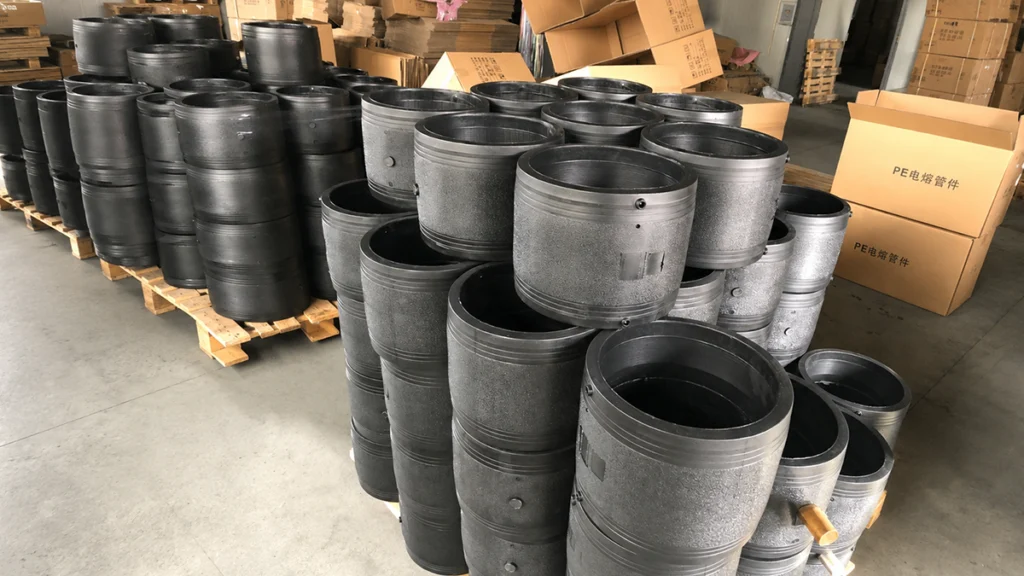
| Butt Fusion Fittings | Spigot fittings joined by melting pipe ends together under pressure. | Large diameter mains, straight runs. |
| Electrofusion Fittings | Couplers with embedded heating coils activated by an electrical current. | Confined trenches, repair work, gas lines. |
| Socket Fusion Fittings | Pipe is inserted into a heated socket fitting. | Small diameter indoor/industrial plumbing. |
| Fabricated Fittings | Custom-welded angles, tees, and branches made from pipe segments. | Complex industrial layouts, large diameters. |
| PP Compression Fittings | Mechanical joints using threaded nuts and O-rings. | Temporary lines, small agricultural irrigation. |
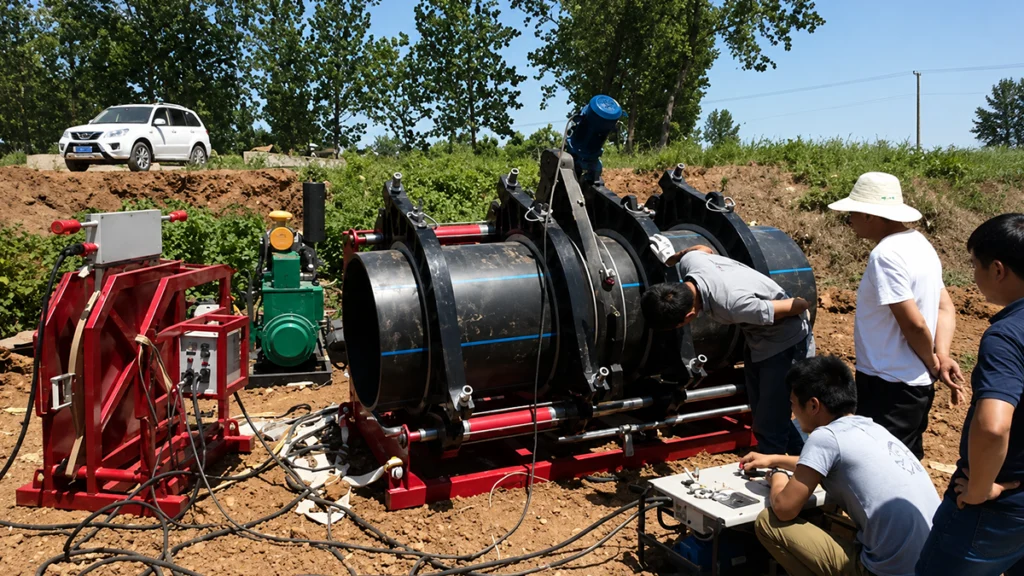
To guarantee that a joint won’t fail, EPC contractors frequently buy their welding machines—both butt fusion and electrofusion rigs—straight from the HDPE pipe manufacturer. Doing this ensures absolute compatibility between the HDPE pipe polymer, the fitting tolerances, and the heating equipment itself.
Nailing down the exact technical parameters is how you prevent catastrophic blowouts and ruined budgets. Before signing off on a purchase order, buyers need to explicitly define the material grade, the dimensional ratio, and the necessary certifications.
The industry relies on two standard material grades: PE80 and PE100. Today, PE100 is the go-to standard for high-pressure jobs. It boasts a Minimum Required Strength (MRS) of 10.0 MPa. This allows engineers to specify thinner walls while achieving higher flow capacities compared to PE80 (which has an MRS of just 8.0 MPa) at the exact same pressure rating.
Parameter Table: SDR to PN Mapping (PE100 at 20°C, Safety Factor 1.25)
| Standard Dimension Ratio (SDR) | Nominal Pressure (PN) | Typical Application |
|---|---|---|
| SDR 41 | PN 4 | Gravity flow, very low-pressure drainage |
| SDR 26 | PN 6.3 | Low-pressure agricultural mains |
| SDR 17 | PN 10 | Standard distribution water mains |
| SDR 11 | PN 16 | High-pressure trunk mains, industrial |
| SDR 9 | PN 20 | Pumped lines, heavy industrial |
| SDR 7.4 | PN 25 | Mining slurry, high static head systems |
Checking a factory’s manufacturing standards is just as vital as picking the right SDR. Always demand documentation proving the products comply with ISO 4427 (Plastics piping systems for water supply). You should also ask for facility certifications like ISO 9001 and independent SGS testing reports.
Turning raw project requirements into a tight, procurement-ready specification takes a systematic approach. Walk through this selection sequence to hit the sweet spot between performance and cost.
1. Define Core Parameters: Pinpoint your maximum system flow rate, the peak operating pressure, and exactly where the HDPE pipe will live (buried in a trench versus exposed to the sun).
2. Apply Temperature Derating: Adjust your baseline pressure rating to account for Thailand’s brutal peak temperatures. If your system runs near 40°C, apply that ~0.83 derating factor.
3. Select the Correct SDR/PN: Take your newly adjusted pressure requirement and map it to the right SDR class. Say your setup needs 12 bars of pressure during the hottest part of the day. You should specify SDR 11 (PN 16) to guarantee a solid safety margin.
4. Choose the Joining Method: Go with butt fusion for long, wide-diameter mains. Switch to electrofusion if you’re working in cramped trenches or navigating tricky angles. For smaller agricultural lines that might need adjusting later, PP compression fittings are your best bet.
5. Verify Standards and Certifications: Don’t just take a supplier’s word for it. Demand ISO 4427 compliance docs and material test reports to prove they are actually using 100% virgin PE100 resin.
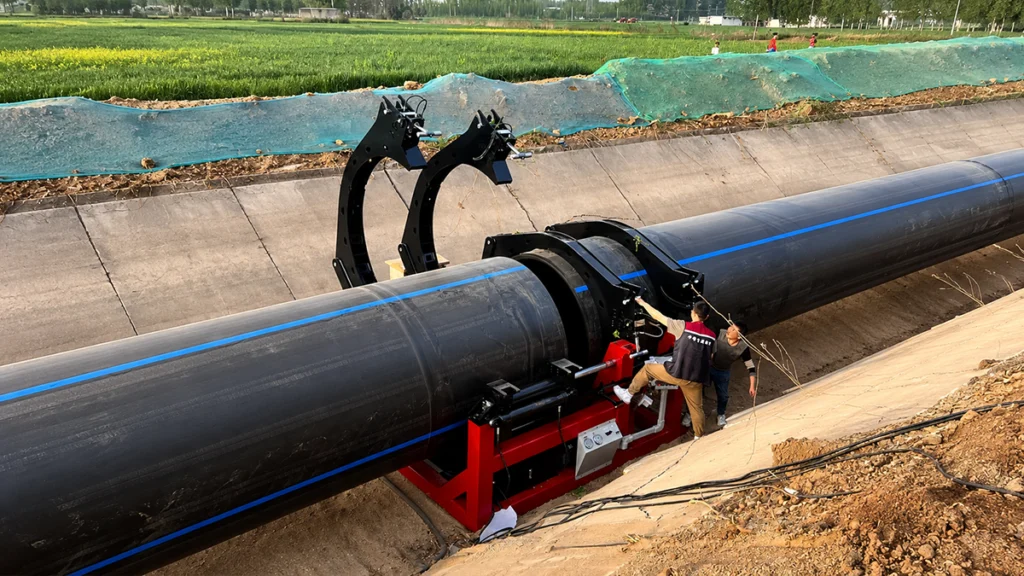
An HDPE pipeline will only last as long as its weakest joint. Butt fusion welding remains the most popular joining technique because it creates a monolithic system. When done right, the fused joint is just as strong—often stronger—than the actual HDPE pipe wall.
That said, failures absolutely happen when crews ignore standard installation protocols. The most frequent fusion errors include:
Once properly fused, HDPE requires almost zero maintenance. During the actual installation, inspectors must visually check the fusion bead—it needs to be perfectly uniform, symmetrical, and rolled back correctly. After assembly, but before anyone backfills the trench, the crew must run a full hydrostatic pressure test to confirm the system is entirely leak-free.
A pipe’s technical specs don’t matter if the economics don’t make sense. When buying HDPE pipe and fittings for Thai projects, procurement teams need to grasp the variables driving the total landed cost.
Cost Breakdown and Pricing Drivers
Supplier Capabilities and Logistics
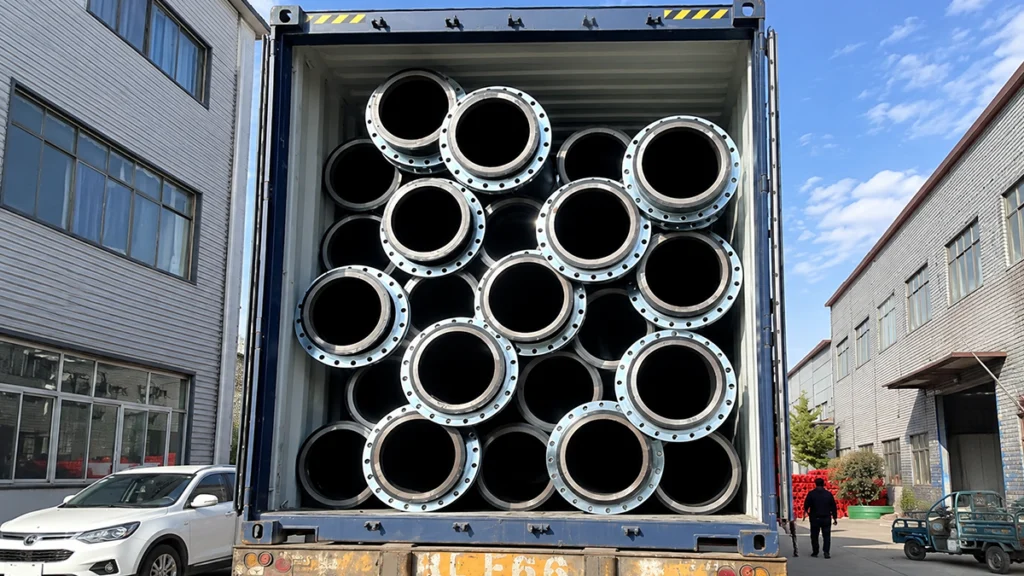
Teaming up with a massive, established manufacturer like JINQUAN strips a lot of supply chain risk out of heavy EPC projects.
A vast majority of procurement disasters in the plastics world happen because of sloppy specifications. A classic error is ordering PE80 when the system actually demands PE100 to manage higher pressures at a specific wall thickness. Another massive oversight? Forgetting to run the temperature derating math for HDPE pipes baking in the Thai sun. That simple mistake leads directly to pipe swelling or catastrophic bursts during peak summer heat. Finally, piecing together pipes and HDPE pipe fittings from different factories often results in mismatched SDRs or tiny dimensional flaws that ruin weld quality.
Final Buying Checklist
For most agricultural setups in Thailand, SDR 26 (PN 6.3) or SDR 21 (PN 8) hit the sweet spot. They handle the pressure demands of drip networks and main laterals perfectly while keeping project costs down. Just make sure you specify black PE100 resin packed with carbon black so the pipes survive heavy UV exposure out in the fields.
Absolutely. HDPE is fantastic for drinking water because it never corrodes, doesn’t leach harmful chemicals, and won’t support biological growth. However, to guarantee safety and hit regulatory compliance, you must ensure your manufacturer uses 100% virgin PE100 resin and carries valid ISO 4427 and ISO 9001 certifications.
HDPE brings flexibility and massive impact resistance to the table, and you join it via heat fusion—perfect for underground mains. PVC is rigid and cheap, but it turns brittle as it ages. PP-R is a specialized plastic designed for high-temperature indoor plumbing (like hot and cold tap water). HDPE, meanwhile, dominates ambient or cold fluid transport in heavy infrastructure.
Neither is universally “better”—they just do different jobs. Butt fusion is fast and highly cost-effective when you’re running long, straight lines of large-diameter pipe. Electrofusion saves the day in tight trenches, during repairs, or anytime you physically cannot maneuver heavy butt fusion gear into place. Both methods yield permanent, leak-free joints if the crew knows what they’re doing.
Start by defining your system’s absolute maximum operating pressure. Next, apply a temperature derating factor (like 0.83 for 40°C environments in Thailand). Finally, pick an SDR (Standard Dimension Ratio) that comfortably meets or exceeds that new, adjusted pressure target. Remember: a lower SDR number means a thicker wall and a stronger pressure rating.
The biggest variable is the global commodity price of raw PE100 resin. After that, pricing comes down to the pipe’s SDR (thicker walls use more plastic, costing more), the diameter, how complex the fittings are, and the logistics of shipping the freight from the factory to Thai ports like Laem Chabang.
Demand hard paperwork upfront. Ask the supplier for ISO 4427 compliance certificates, independent SGS test reports, and documented proof they use 100% virgin resin. You should also vet their production capacity and internal quality control routines to make sure they can actually hit strict dimensional tolerances on a consistent basis.
Sourcing the right HDPE pipe and fittings for Thai projects doesn’t have to be a guessing game, provided you understand material grades, local environmental hurdles, and proper installation techniques. By factoring in high ambient temperatures with accurate pressure derating, demanding UV-resistant PE100 black resin, and pairing the correct SDR with your flow requirements, you can build infrastructure designed to last for decades. Taking the time to evaluate a supplier’s true production capacity, lead times, and strict adherence to ISO 4427 standards guarantees that the materials arriving on site will easily handle the intense demands of Thailand’s agricultural, municipal, and industrial sectors.