Address
Zhengzhou, Henan, China
Work Hours
Monday to Friday: 7AM - 7PM
Weekend: 10AM - 5PM
Address
Zhengzhou, Henan, China
Work Hours
Monday to Friday: 7AM - 7PM
Weekend: 10AM - 5PM

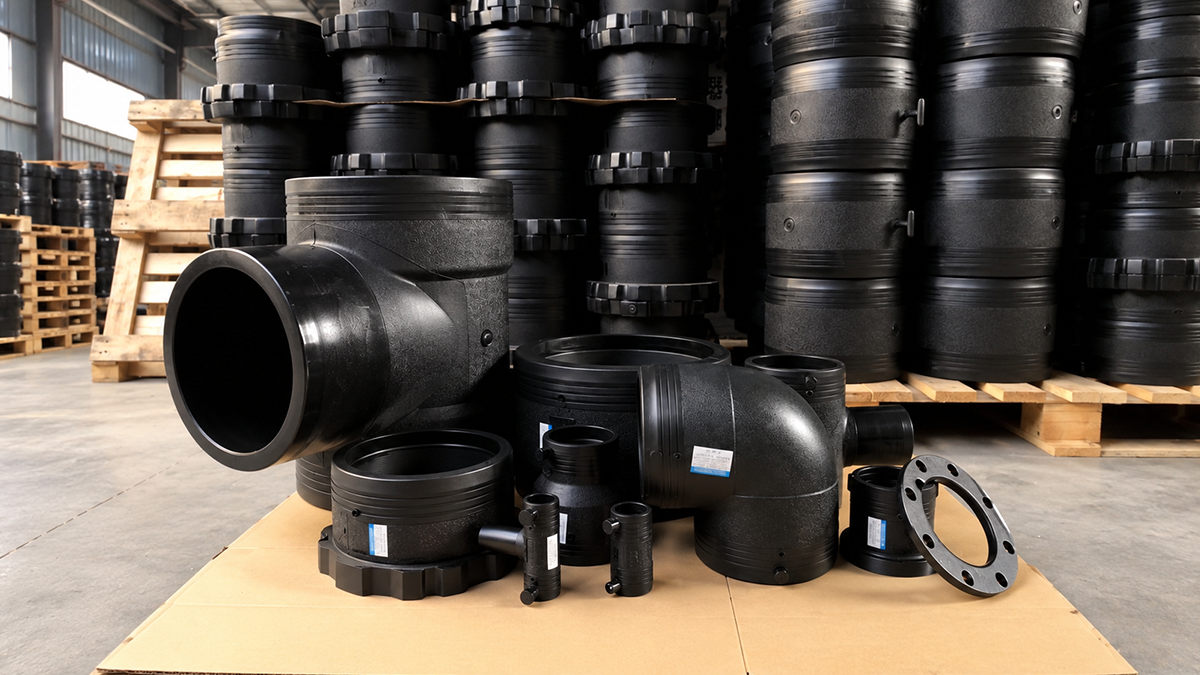
HDPE Pipe Fittings for Kenya Projects explains the main fitting types, applications, standards, pricing factors, and supplier checks so buyers can choose the right solution and reduce project risk.
High-Density Polyethylene (HDPE) pipe fittings serve as the specialized thermoplastic joints that hold modern fluid networks together. Engineers rely on these components to safely connect, branch, reduce, or terminate pipelines. Manufactured from premium PE80 or PE100 resins, they fuse into a continuous, leak-proof system that mirrors the inherent strength of the pipes.
Securing the right HDPE Pipe Fittings for Kenya Projects makes or breaks the country’s booming infrastructure developments. Think of the massive municipal water networks stretching across Nairobi or the sprawling irrigation grids feeding farms in Nakuru and Eldoret. These environments punish inferior materials. High-grade HDPE components fight back with a 50 to 100-year lifespan, total immunity to rust, and enough flexibility to absorb shifting soils. Crucially, their heavy UV resistance protects exposed surface lines baking under the intense Kenyan sun.
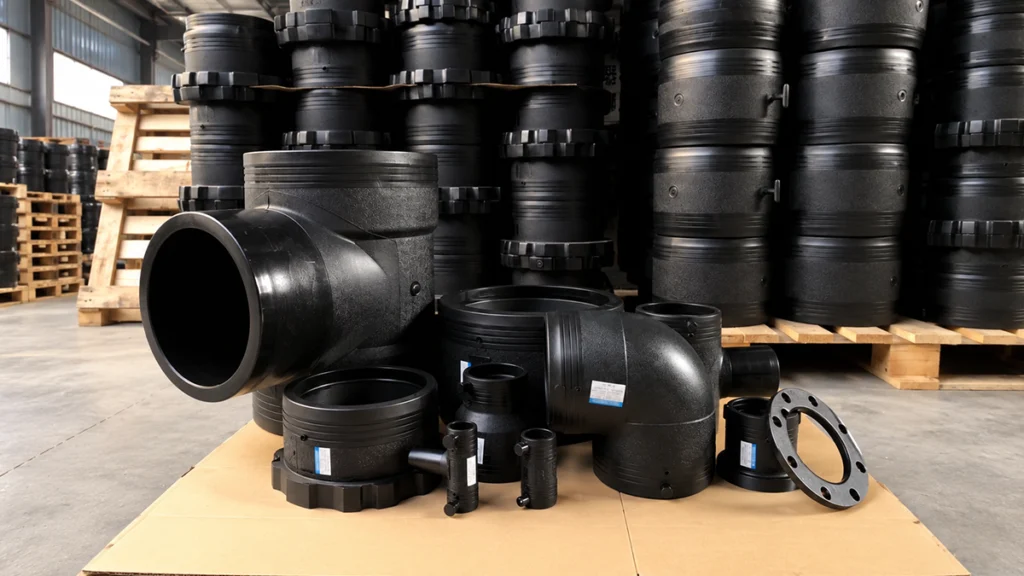
Grasping the mechanical distinctions between various HDPE pipe fitting styles forms the foundation of smart project planning. Contractors across the Kenyan market generally rely on four main categories. Each design targets specific pressure ratings and distinct installation environments.
| Fitting Type | Jointing Method | Best Use Case | Limitations |
|---|---|---|---|
| Butt Fusion Fittings | Heat plate welding | Permanent, large-diameter municipal water and sewer lines. | Requires bulky welding machines and matching SDRs. |
| Electrofusion Fittings | Embedded electrical heating coils | Confined trench repairs, tie-ins, and joining different SDR pipes. | Higher unit cost; highly sensitive to dirt and moisture. |
| Compression Fittings | Mechanical compression ring and nut | Low-pressure agricultural irrigation and temporary water lines. | Limited to smaller diameters (20mm – 110mm). |
| Socket Fusion Fittings | Heated socket and spigot | Small diameter indoor plumbing or localized distribution. | Not suitable for large-scale municipal infrastructure. |
HDPE materials bring unmatched versatility to both civil engineering and private developments. To guarantee a system lasts for decades, engineers must pair the exact HDPE pipe fitting style with its intended application.
Water Supply and Boreholes
Tapping into deep groundwater resources requires robust borehole and pumping setups. Contractors rely on rugged HDPE male adaptors—usually 32mm or larger—to safely connect submersible pumps. Directional routing needs 90-degree elbows, while heavy-duty end caps keep the overall system pressure locked in.
Agricultural Irrigation
Commercial farms running extensive drip and sprinkler networks depend heavily on HDPE pipe fittings for irrigation systems in Kenya. Field workers use compression saddles, reducing tees, and couplers to step the heavy flow down from massive mainlines into 16mm or 20mm sub-mains. Because compression styles require no specialized tools, crews can assemble these grids rapidly right in the mud.
Municipal Infrastructure
Expanding urban zones run on butt fusion joints. Massive water and sewer networks demand heavy-duty components ranging from 315mm up to 800mm to handle bulk distribution and drainage. The resulting fused joints are entirely leak-proof, effectively shielding local groundwater from raw sewage contamination.
Industrial and Mining
Processing plants and mining sites push pipelines to their absolute limits by moving abrasive slurries and aggressive chemicals. Safe fluid handling in these brutal environments requires thick-walled components and highly chemical-resistant PE100 flange adapters.
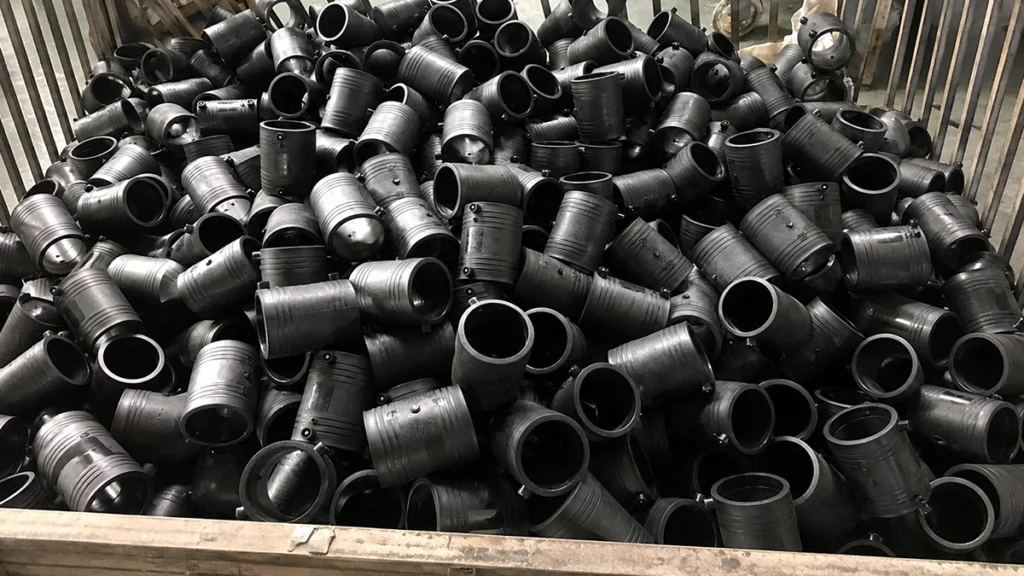
Smart procurement means cross-referencing technical parameters directly against the engineer’s blueprints. Global manufacturers like JINQUAN build their components to meet strict international codes, guaranteeing both site safety and seamless integration.
| Technical Parameter | Specification Range / Standard | Importance |
|---|---|---|
| Diameter Range (OD) | DN16 to DN3000 | Determines flow capacity; must match pipe outer diameter perfectly. |
| Pressure Rating (PN) | PN6, PN8, PN10, PN12.5, PN16, PN20, PN25 | Indicates maximum operating pressure in bars. |
| Standard Dimension Ratio (SDR) | SDR11, SDR13.6, SDR17, SDR21, SDR26 | Defines wall thickness. *Rule:* Fitting SDR must be equal to or lower (thicker) than the pipe. |
| Global Manufacturing Standards | ISO 4427-3, ISO 4437-3, ASTM D3035 | Guarantees dimensional accuracy and material quality. |
| Material Properties | Carbon Black: 2.0%–2.5%; OIT: ≥20 minutes | Ensures maximum UV protection and thermal stability during welding. |
Before purchasing ISO 4427 HDPE butt fusion fittings Kenya contractors need to demand hard proof of the carbon black content and Oxidation Induction Time (OIT) test results. Without this data, buyers risk installing a pipeline that will rapidly degrade under constant UV exposure.
Pinpointing the exact jointing hardware requires a careful look at your network’s operational stresses. Use this straightforward decision path to map out your component needs:
1. Size Matching: Base every specification on the Nominal Outer Diameter (OD). A 63mm pipe takes a 63mm fitting—it is that simple. Avoid mixing metric and imperial dimensions unless you have the proper transition adapters ready.
2. Pressure Matching: Calculate the absolute peak pressure your system will face, factoring in sudden water hammer surges. Deep borehole pumps and high-pressure drip setups normally dictate PN16-rated hardware to eliminate the risk of a blowout.
3. Jointing Method Selection:
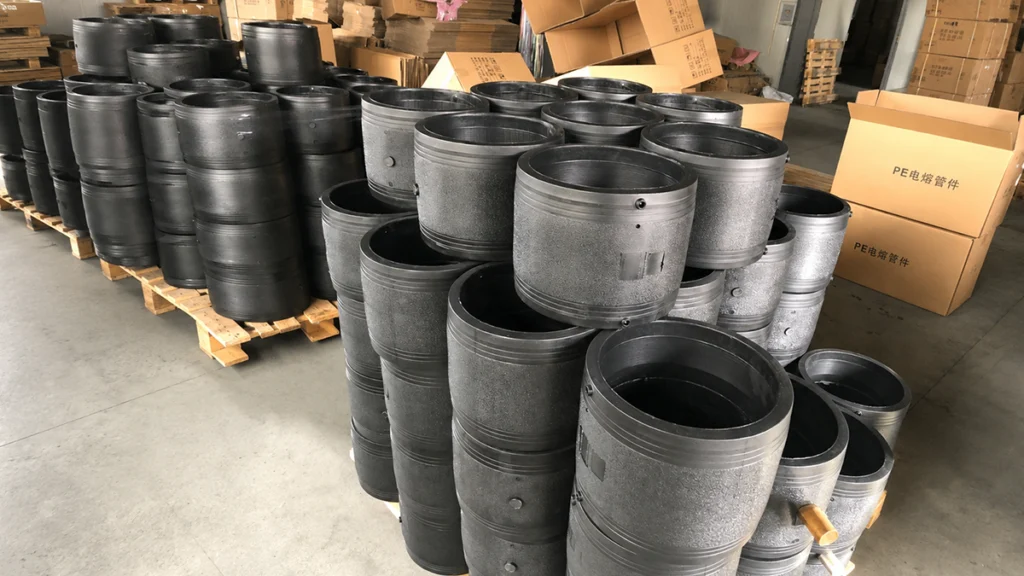
Premium hardware still fails if the installation crew cuts corners. Creating a flawless joint demands surgical cleanliness, precise alignment, and strict adherence to mandatory cooling windows.
Butt Fusion Process
Start by wiping down the pipe ends. Shave them with a facing tool until they sit perfectly flush and square. Once aligned inside the machine clamps, insert the heating plate. Wait for the exact melt bead to form, extract the plate, and drive the melted ends together under a highly specific calculated pressure. Leave the assembly clamped tight until the plastic cools entirely.
Electrofusion Process
Dirt and moisture kill electrofusion joints faster than anything else. Scrub the pipe ends with isopropyl alcohol to strip away ambient oils. Next, scrape off the outer oxidation layer. Slide the prepared pipe into the fitting collar and trigger the correct electrical current using a specialized fusion control box.
Compression Process
When utilizing HDPE pipe fittings for Kenyan projects, the primary rule is to cut the pipe perfectly straight. Diagonal cuts cause immediate leaks. Always deburr the rough plastic edges before insertion; otherwise, sharp shards will slice right through the fitting’s internal rubber O-ring.
Breaking down the hidden variables behind the HDPE pipe fittings price in Kenya helps procurement teams lock in accurate budgets and weigh competing quotes objectively.
Cost Drivers
Global crude oil shifts and raw polymer demand drive daily unit prices. Beyond that, the physical mass of the product—determined by its diameter and PN rating—sets the baseline material cost. Thicker walls naturally consume more resin. The production method (injection molded vs. custom fabricated) also plays a role, while sea freight rates to the Port of Mombasa and local import duties dictate the final landed figure.
Estimated Kenya Market Pricing
The Manufacturer Advantage
Bypassing trading companies to source directly from a factory like JINQUAN strips away heavy distributor markups. Direct manufacturers support complex project procurement through flexible Minimum Order Quantities (MOQs) and rapid 7-15 day production cycles. Buyers also gain access to pre-shipment quality samples and heavy-duty export packaging designed to survive rough ocean freight.
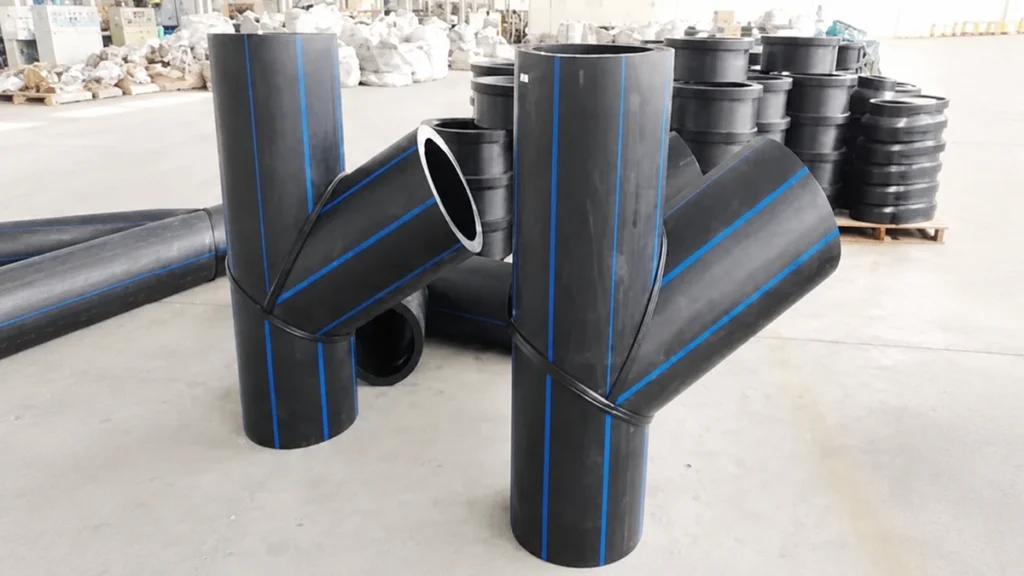
Teaming up with a proven Kenya HDPE pipe fittings distributor or factory direct source eliminates costly site delays while locking in quality compliance. Vet every potential supplier using these core benchmarks:
Dodging basic specification and installation errors safeguards your network’s lifespan. It also saves contractors from the nightmare of digging up a newly buried line to fix a blowout.
Run through this checklist to lock down every technical and logistical detail before handing over a purchase order.
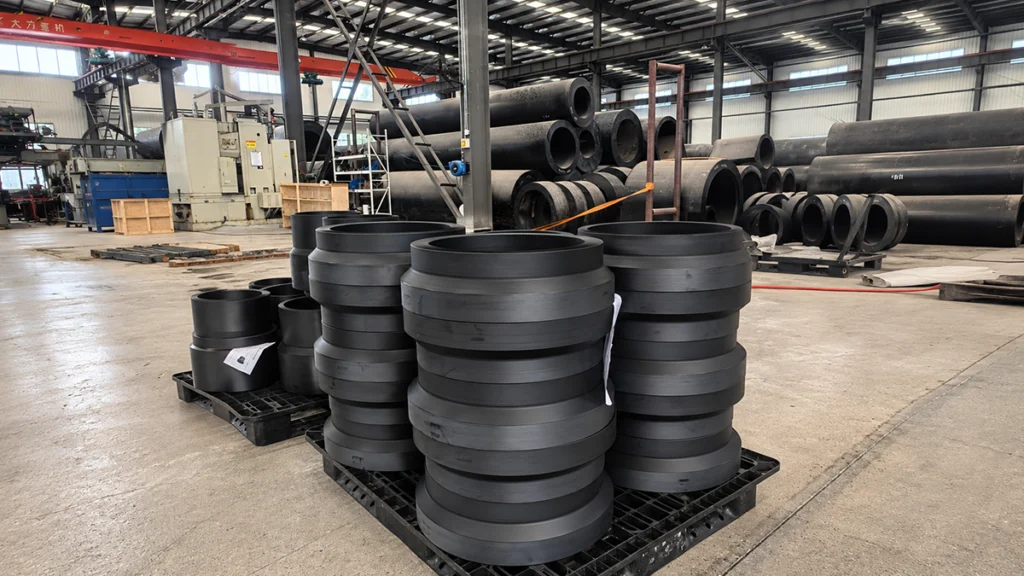
Butt fusion takes the crown for massive municipal water grids because it delivers permanent, seamless joints that refuse to leak. If you are laying out smaller community lines or temporary surface routes, compression styles win out by allowing rapid, tool-free assembly right in the dirt.
Start by calculating the network’s maximum operating pressure, adding a buffer for sudden water hammer surges. Pick a Pressure Nominal (PN) rating safely above that peak number. Crucially, the fitting’s Standard Dimension Ratio (SDR) must sit equal to or lower than the adjoining pipe to guarantee a sufficiently thick wall.
Absolutely. They are the established industry standard. Borehole operators use heavy male adaptors and elbows to secure submersible pumps deep underground. Meanwhile, irrigation setups lean on compression saddles and reducing tees to cleanly step massive mainline flows down into delicate drip tapes.
Do not buy without seeing ISO 4427 Technical Datasheets and material declarations proving the use of pure PE100 or PE80 resin. You also need Oxidation Induction Time (OIT) test results alongside active ISO 9001, CE, and SGS certificates to clear KEBS customs without a headache.
Pricing swings widely based on diameter, pressure demands, and production methods. A small 20mm to 50mm compression piece usually runs from $0.80 up to $6.00 (KES 104 – 780). Stepping up to a massive 315mm butt fusion elbow pushes the price to between $120 and $280 (KES 15,600 – 36,400). Buying factory-direct is the easiest way to slash these baseline numbers.
You can mix brands, provided both the pipe and the joint follow identical international standards (like ISO 4427) and share the exact same Nominal Outer Diameter. That said, buying your pipes and joints from a single manufacturer remains the smartest way to guarantee perfect material compatibility.
Contaminated welds destroy systems faster than anything else—never fuse plastic without wiping away dirt, oil, and moisture first. Other major culprits include misaligning the pipes in the clamps, rushing the cooling process, or foolishly installing a fitting with a higher SDR (thinner wall) than the trench pipe.
Assuming they are molded from premium PE100 resin packed with 2.0% to 2.5% carbon black for UV shielding, these components easily boast a 50 to 100-year design life. Installed correctly, they simply refuse to rust, corrode, or break down beneath the harsh Kenyan sun.
Securing the exact HDPE Pipe Fittings for Kenya Projects directly dictates the safety, efficiency, and ultimate lifespan of the country’s critical water, farming, and industrial networks. Engineers eliminate catastrophic joint failures by carefully matching the hardware—be it butt fusion, electrofusion, or compression—to the brutal realities of the job site. Long-term success demands strict verification of technical specs like SDR, PN ratings, and ISO 4427 standards, backed up by surgically clean installation habits. Taking the extra step to partner with a high-capacity, established manufacturer secures more than just factory-direct pricing. It delivers the reliable lead times and heavy documentation necessary to clear port customs and keep the trench moving forward.