Address
Zhengzhou, Henan, China
Work Hours
Monday to Friday: 7AM - 7PM
Weekend: 10AM - 5PM
Address
Zhengzhou, Henan, China
Work Hours
Monday to Friday: 7AM - 7PM
Weekend: 10AM - 5PM

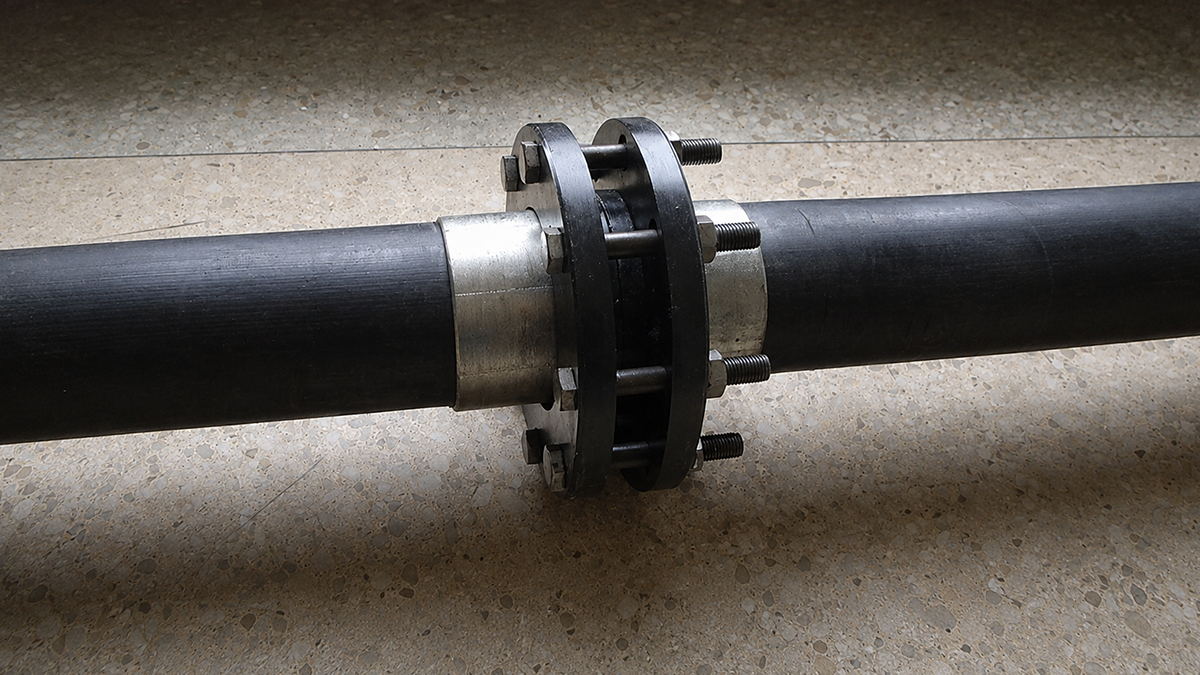
HDPE Flange Fittings help create detachable, leak-resistant joints in PE pipelines. This guide explains fitting types, connection principles, selection criteria, installation, and sourcing checks for B2B buyers.
Engineered from High-Density Polyethylene, HDPE flange fittings act as a crucial mechanical bridge. They seamlessly connect PE pipelines to flanged valves, heavy-duty pumps, and alternative piping materials such as ductile iron, steel, or PVC. While fusion methods offer permanence, flange fittings deliver something equally valuable: a fully restrained, leak-proof joint that crews can easily detach when needed, all without the hassle of external thrust blocks.
For pipeline contractors and industrial buyers, these components unlock true system modularity. Sourcing factory-direct HDPE pipe fittings molded from premium PE80 or PE100 resins guarantees long-term structural integrity across demanding networks. High-capacity manufacturers like JINQUAN—capable of pushing out over 100,000 tons annually—step in to meet the massive volume and strict regulatory compliance demanded by large-scale industrial and municipal infrastructure builds.
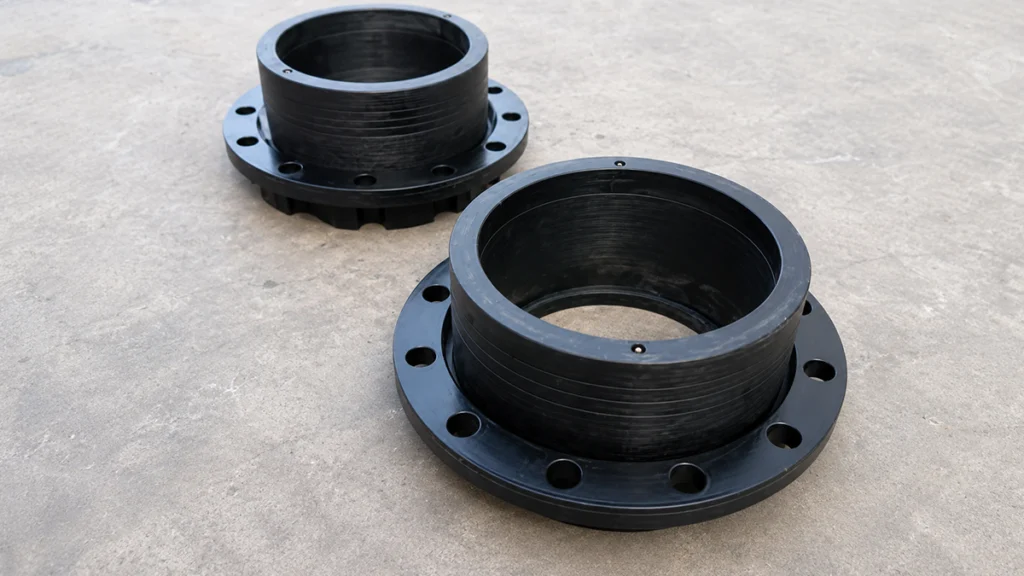
Think of a PE pipeline flange connection as a specialized, two-part mechanical defense system. Its primary job? Isolating vulnerable thermoplastic from extreme mechanical stress. The plastic half of the assembly fuses permanently to the pipe itself, while a free-floating metal ring takes over the heavy lifting of fastening to the mating equipment.
The flared face of the HDPE stub end serves as the main sealing surface. Once crews bolt the connection together, the loose metal backing ring absorbs 100% of the compressive bolt load. Distributing this load properly is non-negotiable. It shields the HDPE pipe from direct stress and completely eliminates the risk of the plastic cracking under high torque.
However, HDPE remains a thermoplastic. Subject it to constant compressive force, and it undergoes “creep-relaxation.” The polymer yields just a fraction under that initial clamping pressure, causing the bolts to loosen over a short period. To lock in a reliable seal, installation crews must re-torque those bolts 4 to 24 hours after the initial setup.
Building a complete, secure flanged joint requires several distinct pieces working in perfect harmony. Mastering this component list makes accurate procurement and technical specification much easier.
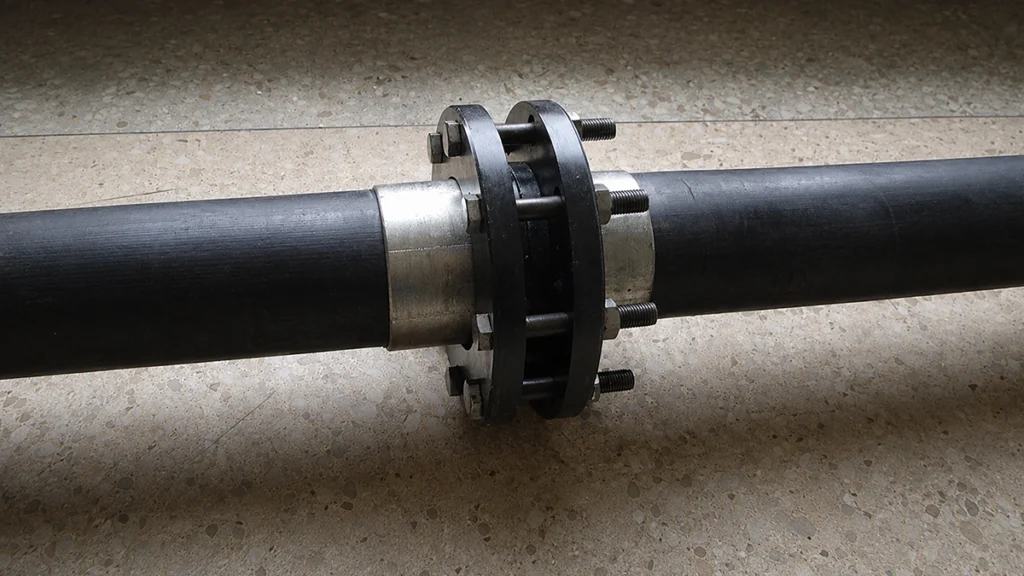
You will find HDPE flange connections heavily deployed across industries that demand pipeline modularity, absolute corrosion resistance, and robust high-pressure tolerance.
Whether the application involves marine aquaculture, dredging, natural gas, or heavy industry, specialized manufacturers engineer these mechanical connections to withstand brutal, diverse operational environments.
Nailing the right flange specification requires precision. You must perfectly match the material grades, pressure ratings, and physical dimensions to the pipeline’s exact operational demands.
| Parameter | Specification & Selection Criteria |
|---|---|
| Size Range | DN20 to DN1600 (Metric) / 2 inches to 63 inches OD (IPS). |
| Material Grades | PE100 (MRS 10 MPa), PE80 (MRS 8 MPa), and PE4710. |
| SDR to PN Mapping | SDR 17 = PN10 (10 bar); SDR 11 = PN16 (16 bar); SDR 9 = PN20 (20 bar); SDR 7.4 = PN25 (25 bar). *Based on PE100 at 20°C.* |
| Gasket Selection | EPDM for potable water and wastewater; Nitrile for oil and gas applications. |
Temperature Derating Rule: As ambient or fluid temperatures climb, HDPE pressure ratings drop. Hit 100°F (38°C), and the pipe’s pressure rating falls to roughly 80% of its baseline. Push that to 120°F (49°C), and capacity plummets to about 63%. For instance, an SDR11 pipe rated for 16 bar at a standard 20°C will only safely handle 12 to 13 bar once system temperatures creep up to 30°C.
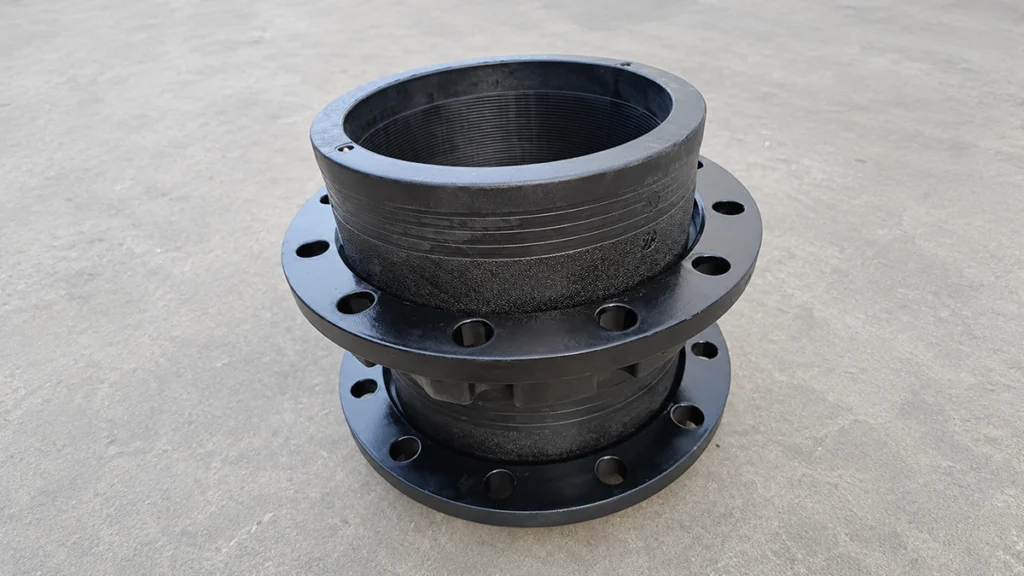
Flawless installation is your best defense against leaks. Sticking to a standardized assembly sequence guarantees a rugged, reliable mechanical joint.
Step 1: Pre-Installation Inspection
Carefully inspect the stub end face for radial gouges. Should a scratch cut across more than one-third of the sealing path’s width, discard the fitting. It will inevitably leak.
Step 2: Alignment
Slide the metal backing ring onto the HDPE pipe *before* you fuse the stub end. Missing this simple step forces you to cut off a perfectly good, newly fused stub end and start over.
Step 3: Fusion
Using properly calibrated welding equipment, butt-fuse or electrofuse the stub end directly to the main pipeline.
Step 4: Mating & Gasket Insertion
Line up the backing ring with the pipe or valve’s mating flange. Carefully slide the correct gasket right between the two sealing faces.
Step 5: Bolting (Star Pattern)
Drop the bolts into place. Always verify that flat washers sit neatly between the backing ring and the nut. Tighten everything down using a strict star or crisscross pattern to ensure perfectly uniform compression across the plastic face.
Step 6: Re-Torquing (Critical Checklist Item)
Pause for 4 to 24 hours. This wait time accommodates natural polymer relaxation. Once the window passes, re-torque every single bolt to the manufacturer’s exact foot-pound specifications to lock down the seal permanently.
Engineering a robust PE pipeline forces procurement teams to weigh joining methods carefully, balancing cost, spatial constraints, and long-term serviceability.
| Feature | Flange Connection | Butt Fusion | Electrofusion |
|---|---|---|---|
| Serviceability | Detachable (ideal for valves, pumps, and maintenance access) | Permanent | Permanent |
| Speed & Ease | Fast mechanical assembly, but requires mandatory re-torquing | Slower, requires large welding machine and cooling time | Fast, ideal for tight, constrained, or vertical spaces |
| Cost | Moderate (requires additional metal rings, gaskets, and bolts) | Lowest cost for long, straight pipe runs | Highest fitting cost (typically 2x-5x more than butt fusion) |
| Maintenance | Requires periodic bolt inspection and tightening | Zero maintenance required | Zero maintenance required |
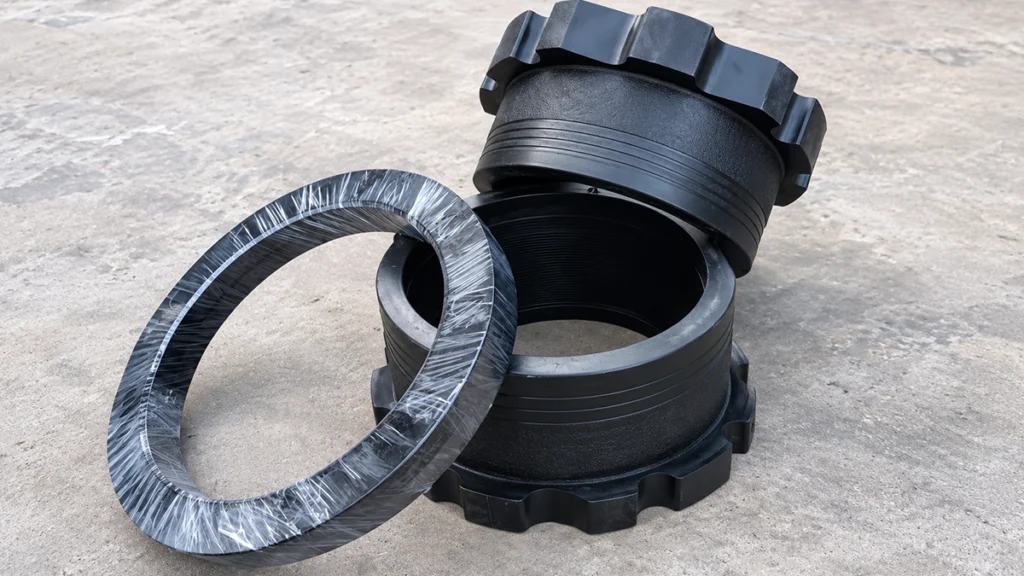
A flange joint spraying or dripping under pressure demands immediate, systematic troubleshooting. Identifying the root cause quickly prevents collateral pipeline damage.
Buying HDPE pipeline components at scale means mastering the variables behind supplier capabilities and pricing drivers. Ultimately, unit prices for these HDPE pipe fittings hinge on global ethylene feedstock and crude oil markets, which heavily dictate raw PE100 resin costs.
Benchmark Ex-Factory Pricing (Estimates):
Supplier Evaluation Criteria:
Savvy B2B buyers vet manufacturing partners by scrutinizing their large-diameter production capacity, demanding verifiable resin quality (insisting on 100% virgin PE4710 or PE100), and checking for rigid compliance with global standards like ASTM D3261, EN 12201, and ISO 4427.
Heavyweight manufacturers like JINQUAN bring major logistical advantages to the table for international procurement. Buyers generally secure 7 to 15-day lead times for standard runs, alongside highly flexible Minimum Order Quantities (MOQs) that include sample units for hands-on quality testing. Top-tier suppliers also fabricate custom HDPE flange fittings to navigate complex, non-standard pipeline geometries. Just as importantly, they deploy standardized export packaging to shield the vulnerable stub end faces from catastrophic damage during transcontinental transit.
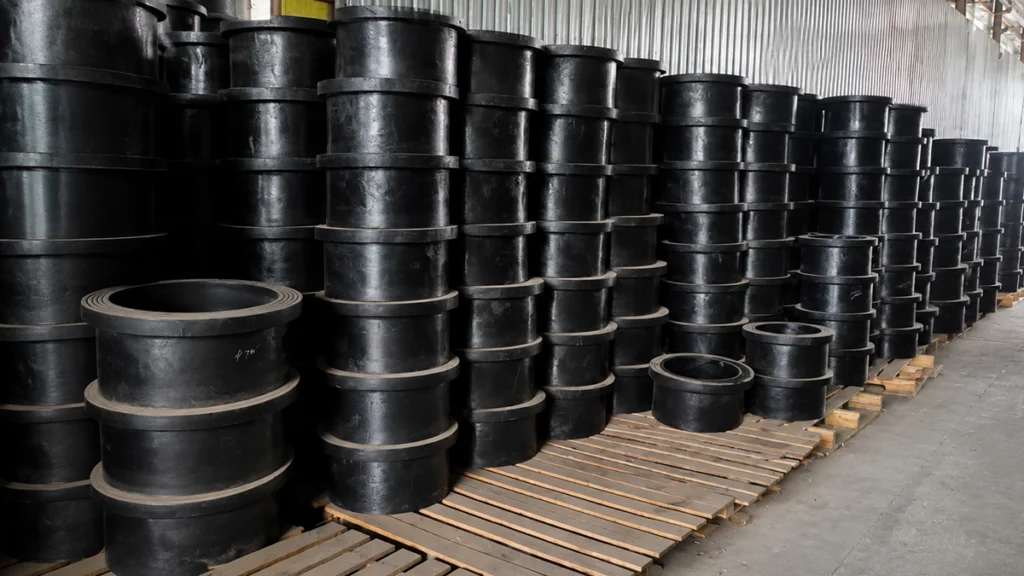
HDPE flange fittings act as a secure mechanical bridge between a high-density polyethylene pipeline and flanged equipment—think pumps, flow meters, valves, or transitions to steel and ductile iron pipes. They deliver a fully restrained, leak-proof joint that crews can easily unbolt for routine maintenance.
The flange adaptor (or stub end) is the plastic piece fused permanently to the HDPE pipe, acting as the fluid sealing face. Conversely, the backing ring is the free-floating metal component that slides over the pipe. It provides the necessary bolt holes and mechanical strength to clamp the assembly to the mating equipment.
Absolutely. Fittings molded from virgin PE100 or PE80 resins are non-toxic, highly corrosion-resistant, and actively resist biological growth, making them perfect for drinking water. Just ensure you pair the fitting with a potable-water-approved EPDM gasket.
Start by matching the fitting’s size to the outside diameter (OD) of your existing pipeline. Next, align the fitting’s Standard Dimension Ratio (SDR) with your system’s maximum operating pressure (for example, SDR11 maps to PN16). Always remember to apply a temperature derating factor if your fluid runs hotter than 20°C (68°F).
Polymer creep is the usual culprit. The plastic naturally relaxes under compressive pressure, causing the bolts to lose their initial tension. Re-torquing the hardware 4 to 24 hours after installation effectively solves this. Other common triggers include missing flat washers, deep radial scratches on the stub end face, or uneven bolt tightening.
Neither method is universally superior; they just tackle different problems. Butt fusion yields a highly cost-effective, permanent, and maintenance-free joint perfect for long, uninterrupted pipe runs. Flange connections become mandatory when you need a detachable access point to install pumps, valves, or transition to non-PE materials.
To lock down a precise quote, supply the manufacturer with the pipe’s outside diameter (OD in inches or mm), the pressure rating (PN) or Standard Dimension Ratio (SDR), and the exact material grade (like PE100). You should also detail your preferred gasket type, backing ring material, total order volume, and the final shipping destination.
Proper specification and installation of HDPE flange connections are essential for reliable agricultural, municipal, and industrial piping systems. Engineers should consider the roles of backing rings, stub ends, SDR, pressure ratings, temperature conditions, and bolt tightening requirements when designing flange assemblies.
During installation, correct alignment, suitable washers, even bolt tightening, and appropriate re-tightening procedures can help reduce the risk of leakage caused by joint relaxation or polymer creep. For procurement teams, consistent material quality, dimensional compliance with relevant ISO or ASTM standards, reliable manufacturing, and secure export packaging are also important factors when selecting a supplier.
By matching the flange connection design to actual operating conditions and following proper installation practices, project teams can improve connection reliability and long-term pipeline performance.