Address
Zhengzhou, Henan, China
Work Hours
Monday to Friday: 7AM - 7PM
Weekend: 10AM - 5PM
Address
Zhengzhou, Henan, China
Work Hours
Monday to Friday: 7AM - 7PM
Weekend: 10AM - 5PM

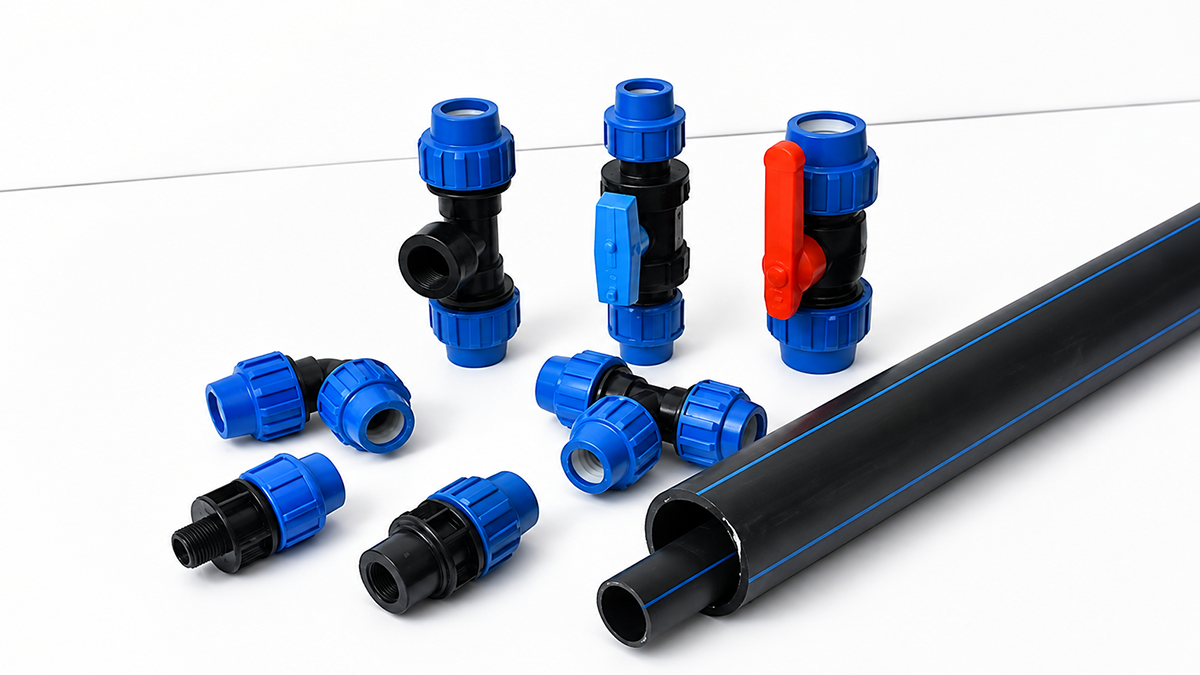
HDPE Coupling Fittings enable leak-tight, long-service HDPE pipe connections. This guide compares butt fusion and electrofusion couplings by principle, specs, cost, and application, helping B2B buyers, engineers, and procurement teams select the right solution and supplier with confidence.
High-Density Polyethylene (HDPE) coupling fittings function as specialized mechanical or thermofusion connectors. They link lengths of HDPE pipe together, forming a seamless, leak-proof pipeline. The magic usually happens through heat fusion—either butt or electrofusion—which literally melts the polymer chains right at the joint interfaces. Once everything cools down, you get a single, monolithic piece. Surprisingly, this new joint often boasts greater structural strength than the parent pipe itself. While thermofusion is the heavy hitter for industrial jobs, mechanical compression fittings step in nicely for smaller pipe diameters or temporary installations.
When you’re dealing with massive infrastructure, grasping the technical differences between electrofusion and butt fusion is crucial. Both approaches ultimately deliver a flawless thermoplastic weld. However, they rely on completely different gear, heat delivery mechanisms, and on-site procedures to get there.
We’re seeing a massive shift away from legacy materials like PVC and ductile iron, largely because fusion-welded HDPE joints simply perform better. Older piping networks depend heavily on bell-and-spigot joints or mechanical gaskets. Naturally, these components degrade over time, causing massive systemic leaks and inefficiencies. Engineered HDPE couplings eliminate these built-in weak points.
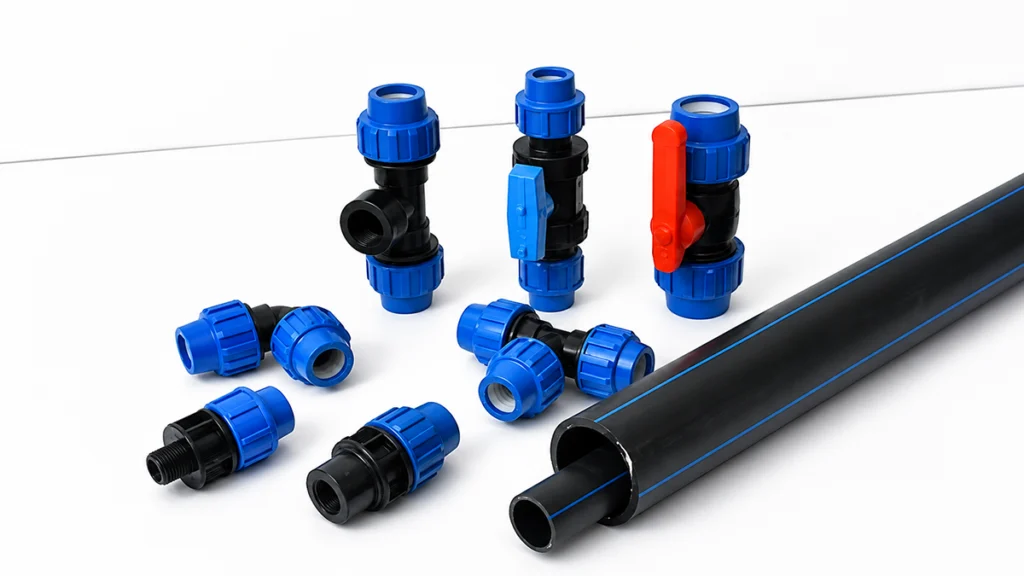
Picking the right coupling dictates your machinery needs, how you prepare the site, and how well the joint ultimately performs. The industry generally leans on three main connection strategies. Each one is tailored for specific pipe diameters and working environments.
| Coupling Type | Connection Method | Typical Size Range | Best-Use Scenario |
|---|---|---|---|
| Butt Fusion Couplings | Heated plate melts pipe/fitting ends; joined under hydraulic pressure. | DN90 to DN3000 | Large-diameter transmission mains, long straight runs, open-trench installations. |
| Electrofusion (EF) Couplings | Built-in electrical resistance coils melt the interface via applied voltage. | DN20 to DN630 | Tight spatial constraints, vertical shafts, pipeline repairs, connecting different wall thicknesses. |
| Mechanical Compression | Tool-free, mechanical clamping utilizing internal O-rings and locking nuts. | < DN63 | Small bore distribution, temporary water lines, remote sites lacking electrical power. |
Butt fusion relies on a thermomechanical reaction. Crews heat both the coupling fitting and the pipe ends to a molten state using a PTFE-coated plate. Next, they press the ends together under strictly monitored hydraulic pressure. This action forces the melted polymer chains to mix and bind, eventually cooling into a uniform, solid joint.
| Parameter | Specification Requirement |
|---|---|
| Heater Surface Temperature | 400°F – 450°F (204°C – 232°C) |
| Interfacial Pressure | 60 – 90 psi (4.14 – 6.21 bar) |
| Heat Soak Time | Minimum 4.5 minutes per inch (25.4mm) of wall thickness |
| Cooling Time (Under Pressure) | Minimum 11 minutes per inch of wall thickness |
| Post-Cooling Handling | 30 minutes rest before pulling or pressure testing |
1. Preparation and Alignment: Clear away any dirt from the fitting and pipe ends. Lock them into the clamps of the hydraulic butt fusion machine to guarantee flawless axial alignment.
2. Facing: Drop the mechanical facer between the two ends. Plane the surfaces until you see continuous polyethylene ribbons shaving off both sides. This step guarantees the faces are clean and perfectly parallel.
3. Heating: Bring in the heater plate. Push the pipe and fitting against the plate using initial pressure to establish full contact, then ease off to drag pressure while the heat soaks in.
4. Fusion: Once you see the correct melt bead size, pull the heater plate out swiftly—staying within the maximum allowable changeover window. Immediately push the molten ends together at the required interfacial fusion pressure.
5. Cooling and Inspection: Keep the joint clamped under hydraulic pressure until the calculated cooling time elapses. A proper final inspection should reveal a double bead that rolls over to the surface, looks uniformly rounded, and maintains a consistent size all the way around.
Electrofusion takes a different route, relying on specialized couplings outfitted with embedded copper electrical resistance coils. An electrofusion processor sends a specific voltage through these coils, generating precise thermal energy. This melts the outer layer of the pipe and the inner face of the HDPE pipe fittings. As the polymer heats up and expands, it auto-pressurizes against the cold zones of the fitting to forge an incredibly tough, monolithic weld.
When you’re dealing with live pipeline tie-ins, restricted spaces, or joining pipes with different Standard Dimension Ratios (SDR), electrofusion easily outshines butt fusion. Most standard EF processors push out 39.5V to 40V, hooking up via universal 4.0 mm or 4.7 mm terminal pins. Fusion times vary wildly depending on the pipe diameter. A DN450 coupling, for example, needs roughly 1,380 seconds to fuse, whereas a massive DN630 takes about 1,620 seconds.
1. Square Cut and Clean: Slice the pipe ends so they are perfectly square. Clear out any dirt or debris from the insertion zone.
2. Mechanical Peeling (Critical): You must mechanically peel or scrape the pipe ends down to a minimum depth of 0.007 inches. This strips away the natural oxidized layer on the polyethylene. Skip this, and you’ll block the molecular fusion process entirely.
3. Solvent Cleaning: Wipe down the scraped pipe and the interior of the EF coupling with acetone or 90%+ isopropyl alcohol. Never use water. Avoid standard industrial wipes, too, as they often contain lanolin.
4. Marking and Assembly: Use a permanent marker to indicate the exact stab depth on the pipe. Push the pipe into the fitting right up to that mark, then lock the whole assembly into an alignment clamp so nothing shifts during the melt.
5. Barcode Scanning: Attach the processor leads to the fitting’s terminal pins. Scan the barcode on the coupling; the machine will automatically pull the precise voltage, cooling time, and fusion duration.
6. Fusion and Cooling: Start the cycle. Do not touch the alignment clamps until the barcode-specified cooling time is completely finished. Removing them early ruins the integrity of the cooling polymer matrix.
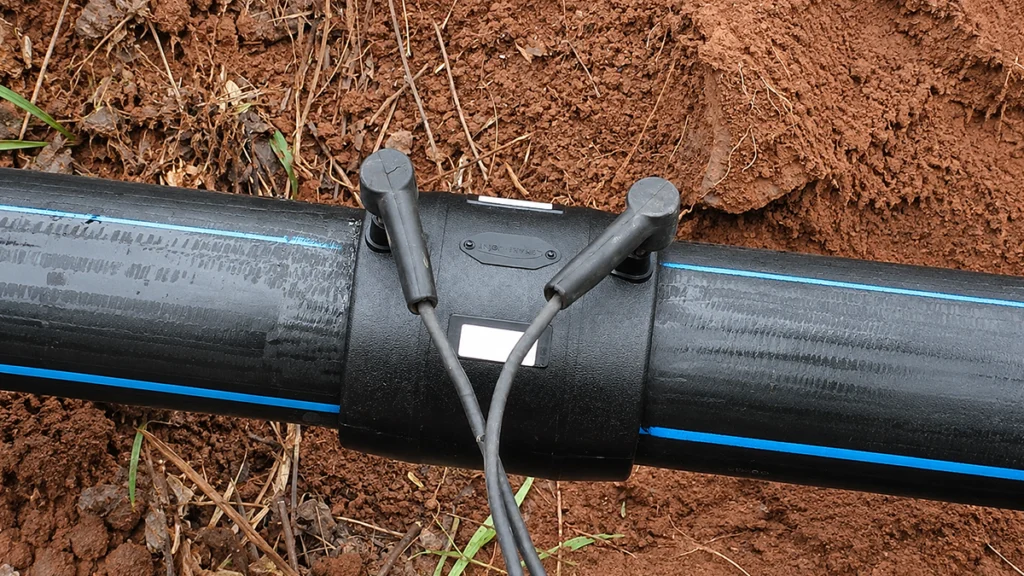
Choosing the right HDPE coupling means aligning your connection strategy with the realities of your job site, the pipe diameters in play, and your budget for installation gear.
| Evaluation Metric | Butt Fusion Couplings | Electrofusion (EF) Couplings |
|---|---|---|
| Cost per Joint | Lower (fittings are simple molded plastic). | Higher (fittings contain embedded copper coils). |
| Equipment Cost | Capital-intensive; requires bulky hydraulic machines. | Lower; requires a compact, portable processor box. |
| Installation Speed | Faster per joint in long, continuous open-trench runs. | Faster in complex, restricted environments or shafts. |
| Pipe Size Range | Ideal for large diameters (DN90 to DN3000). | Typically utilized for DN20 to DN630 and tie-ins. |
| Skill Requirement | Requires certified operators to manually calculate pressures. | Relies heavily on automated barcode scanning parameters. |
| Ideal Application | Municipal transmission mains, long-distance slurry lines. | Urban repairs, trenchless tie-ins, differing SDR connections. |
The smartest project executions often blend both methods. Crews use butt fusion for those long, straight transmission runs to keep material costs down. Meanwhile, they save electrofusion for the tricky stuff—repairs, complex tie-ins, and tight spaces where dragging in heavy hydraulic machinery just isn’t physically possible.
Buying industrial-grade HDPE couplings means demanding strict compliance with international material and dimensional standards. Top-tier fittings are molded from high-performance polyethylene resins. You’ll mostly see PE100 (which boasts a Minimum Required Strength of 10.0 MPa or 1450 PSI) or PE4710 (featuring a Hydrostatic Design Basis of 1600 PSI at 23°C).
Crucially, the fitting’s pressure rating (PN) has to match—or beat—the rating of the pipeline itself. This rating hinges on the Standard Dimension Ratio (SDR), a simple calculation comparing the pipe’s outside diameter to its wall thickness.
| SDR Rating | Wall Thickness Profile | Nominal Pressure (PN) | PSI Equivalent |
|---|---|---|---|
| SDR 11 | Thicker Wall | PN 16 | 232 PSI |
| SDR 13.6 | Medium-Thick Wall | PN 12.5 | 180 PSI |
| SDR 17 | Standard Wall | PN 10 | 145 PSI |
| SDR 21 | Thinner Wall | PN 8 | 116 PSI |
If you are sourcing fittings for potable water, structural standards aren’t enough. Engineers need to verify that components carry specific health and safety approvals like WRAS (UK), NSF/ANSI 61 (US), or DVGW (Germany). Passing ISO 4427 proves mechanical strength, but it certainly doesn’t guarantee the plastic is safe for drinking water.
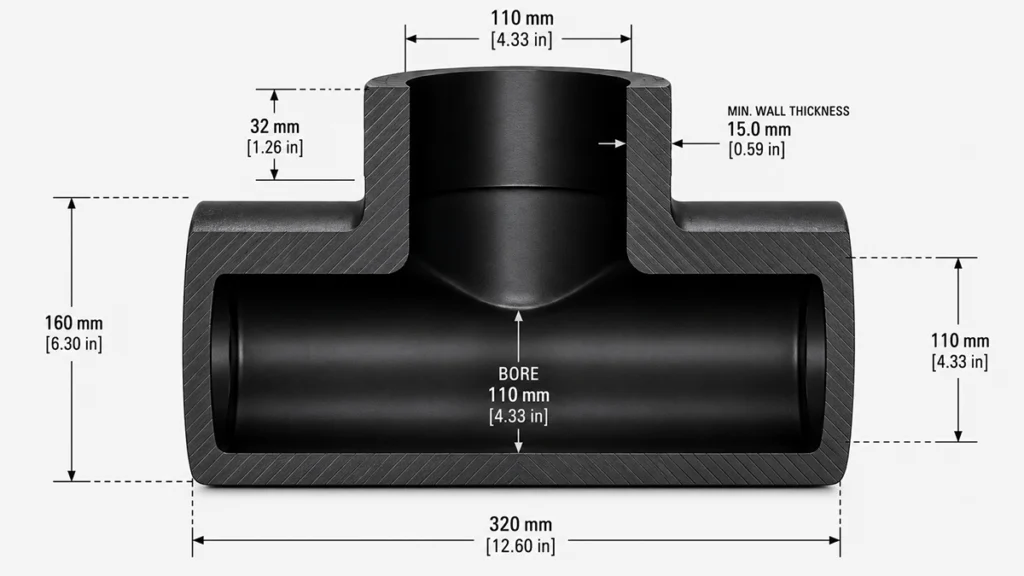
Thanks to their incredible versatility, HDPE coupling fittings pop up across wildly different industrial sectors. The tough fusion welds, combined with the plastic’s natural chemical resistance, solve unique operational headaches in almost any environment.
High-pressure potable water lines lean heavily on PE100 SDR11 (PN16) fittings. Take a DN315 municipal main, for instance. Joining it with butt fusion creates a totally leak-free network that easily absorbs soil settlement and dynamic pressure surges without ever separating at the joints.
Low-pressure natural gas systems generally rely on black or yellow PE100 fittings that meet ASTM D2513 guidelines. Electrofusion absolutely dominates this space. Why? Because gas lines require zero-leak guarantees, and crews constantly have to perform live tie-ins while crammed into congested urban utility trenches.
Aggressive wastewater treatment plants, chemical processing facilities, and slurry lines demand extreme resistance to abrasion and chemicals. Massive butt fusion couplings (think DN630 SDR17) routinely transport highly corrosive effluents and abrasive mine tailings. In these brutal conditions, HDPE outlasts traditional steel by decades.
Vetting a manufacturer requires digging into their quality control, production capacity, and raw material sourcing. As a B2B buyer, you need to know if a supplier can maintain strict dimensional accuracy across massive production runs.
Consider a major player like JINQUAN Plastic Industry Co., Ltd. They run a 200-acre facility pushing out over 100,000 tons of product every year. That kind of footprint handles high-volume molded fittings right alongside custom-fabricated, large-diameter pieces. Generally, standard runs take about 7 to 15 days to turn around. If you need custom specifications or full international shipping containers, expect a 25 to 35-day lead time. Minimum Order Quantities (MOQs) make practical sense based on size: smaller pipes (DN20-DN63) usually demand around 1,000+ meters, while you can secure large diameters (DN315+) for as little as 100 meters.
1. Resin Sourcing: Make sure the factory uses 100% virgin bimodal PE100 resin, entirely free of recycled impurities.
2. Oxidation Induction Time (OIT): Check the batch tests. OIT should exceed 20 minutes at 200°C to guarantee long-term thermal stability.
3. Dimensional Consistency: Ensure the Standard Dimension Ratio (SDR) holds tight to ISO tolerances across multiple production batches.
4. Electrofusion Compatibility: Verify that all EF fittings have universal ISO-compliant barcodes and standard 4.0/4.7mm pins.
5. Testing Infrastructure: The facility must perform its own in-house tensile strength and hydrostatic pressure tests on fused joints.
6. International Certification: Ask to see up-to-date paperwork for CE, ISO 14001, ISO 9001, and whatever water safety approvals apply to your region (NSF, WRAS, etc.).
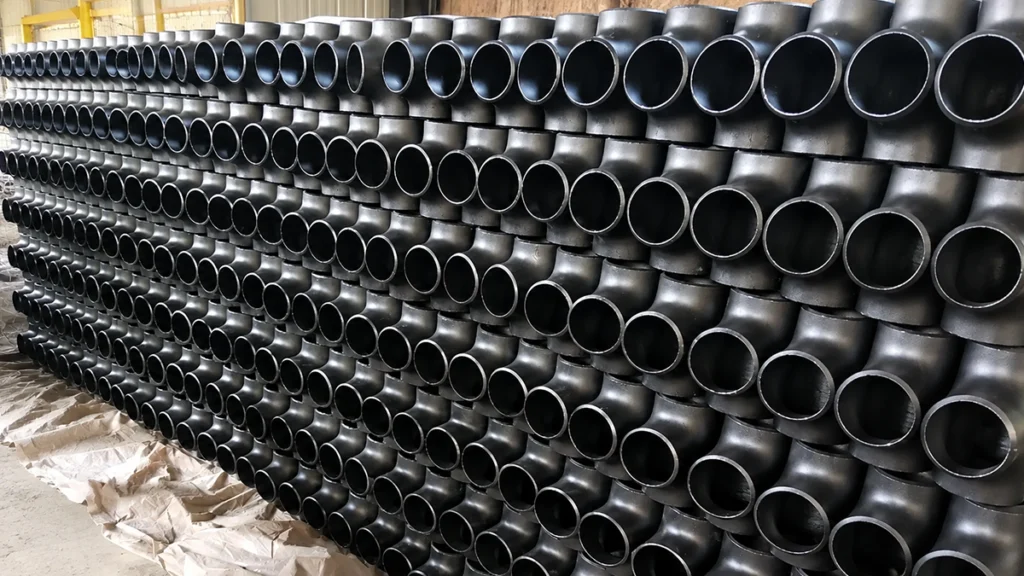
Even top-tier HDPE couplings will fail if your field crews ignore technical specifications. The vast majority of joint blowouts trace directly back to human error during the fusion and prep phases.
Nailing the perfect HDPE connection strategy means looking objectively at your project variables. You have to weigh long-term operational efficiency against upfront equipment costs.
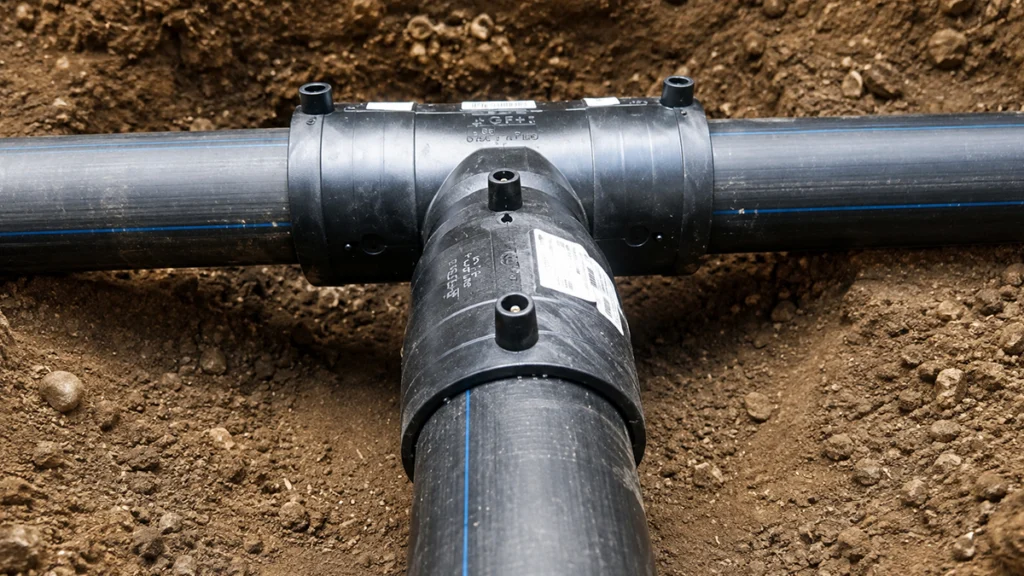
Butt fusion uses a heated PTFE plate to melt the pipe and fitting ends, which are then mechanically forced together. Electrofusion, on the other hand, relies on a coupling with built-in copper coils. Pushing an electrical current through those coils generates internal heat, melting the pieces together from the inside out.
Absolutely. HDPE is the gold standard for both. Just keep in mind that gas networks usually demand yellow or black PE100 resin and strict adherence to specific standards like ASTM D2513. Water systems follow ISO 4427 and need dedicated potable water health certifications.
That depends entirely on the material grade and the Standard Dimension Ratio (SDR). A standard PE100 SDR11 fitting handles PN16 (232 psi or 16 bar). Step down to an SDR17 fitting, and you’re looking at PN10 (145 psi or 10 bar). Always ensure your fitting’s rating meets or exceeds the pipeline’s maximum operating pressure.
When crews follow the exact temperature, pressure, and cooling specs, the joint becomes a solid, monolithic block. Under normal conditions, you can expect a proven, maintenance-free service life of 50 to 100 years.
For anything under DN90, electrofusion is usually the smarter play. It’s highly dependable and much less of a hassle than wrangling small-scale hydraulic butt fusion machines. Plus, it prevents the internal bead buildup that can choke off flow rates in tiny pipes.
Drinking water fittings require third-party health and safety testing to prove they won’t leach chemicals. Look for DVGW in Germany, WRAS in the UK, and NSF/ANSI 61 in the United States.
Factory direct MOQs usually scale with the physical size of the pipe. Small diameters (DN20-DN63) require orders around 1,000+ meters, while massive pipes (DN315+) might only require 100 meters. Standard runs take 7 to 15 days. If you’re ordering custom batches or massive international containers, expect a 25 to 35-day wait.
Yes, but you have to use specialized mechanical fittings or electrofusion. You cannot use butt fusion to join pipes with different SDR ratings (wall thicknesses). The mismatched surface areas won’t heat or bond evenly, which completely ruins the structural integrity of the weld.
Guaranteeing a 100-year lifespan for your pipeline infrastructure comes down to specifying the right HDPE coupling fittings and installing them flawlessly. Whether you leverage the high-volume, open-trench efficiency of butt fusion or the surgical, tight-space precision of electrofusion, the goal is identical: a perfect monolithic weld. Success in procurement and execution requires zero compromises on international standards like ISO 4427 and PE100 material grades. By rigorously vetting supplier manufacturing standards, enforcing strict field prep rules (especially proper cooling times and mechanical peeling), and matching your connection strategy to the realities of the job site, engineering teams can completely eradicate the joint failures that plague legacy piping networks.