Address
Zhengzhou, Henan, China
Work Hours
Monday to Friday: 7AM - 7PM
Weekend: 10AM - 5PM
Address
Zhengzhou, Henan, China
Work Hours
Monday to Friday: 7AM - 7PM
Weekend: 10AM - 5PM

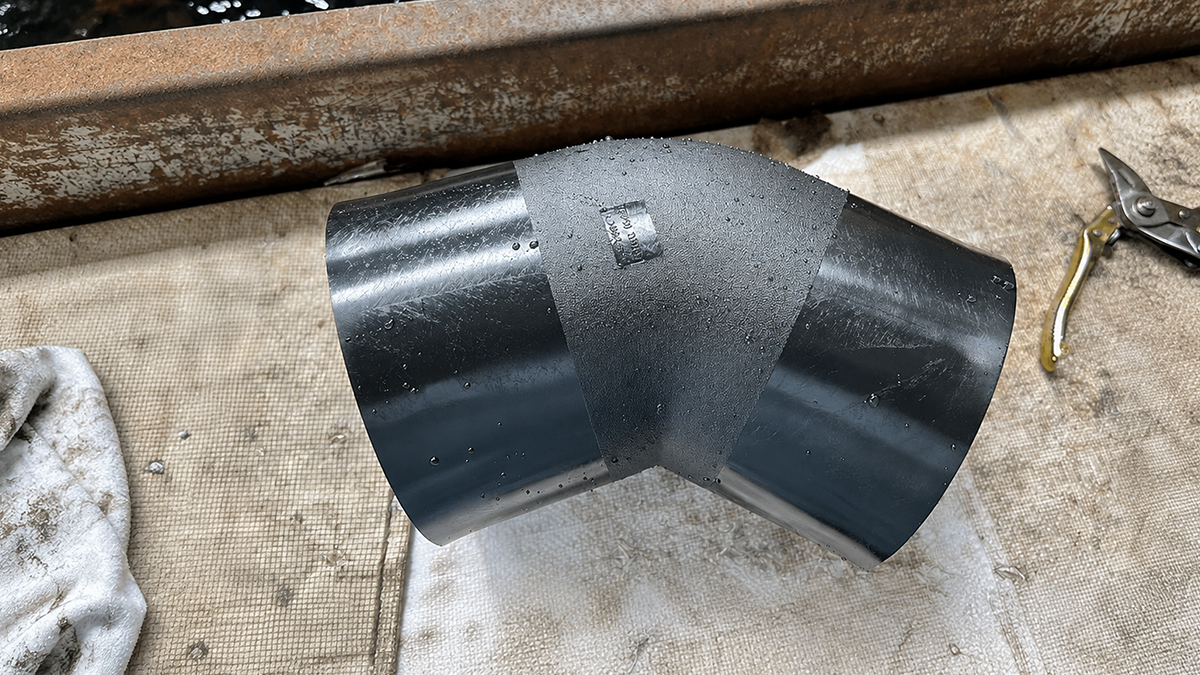
HDPE Reducer Fittings help connect different pipe sizes in PE piping systems. This guide explains reducer types, sizing, SDR and pressure selection, installation methods, quality checks, and buyer questions for safer, more accurate procurement.
HDPE reducer fittings serve as tapered transition components designed to join two HDPE pipes with different nominal outside diameters (OD). Bridging lines of distinct sizes allows operators to safely redirect fluid or gas flows without sacrificing pressure integrity.
Manufacturers forge these durable parts from premium high-density polyethylene virgin resins, most notably PE100, PE80, and PE4710, equipping them for the most punishing industrial conditions. Standard sizes generally rely on high-precision injection molding to achieve flawless structural consistency and uniform wall thickness. Conversely, custom-fabricated reducers step in to handle the unique demands of large-diameter projects.
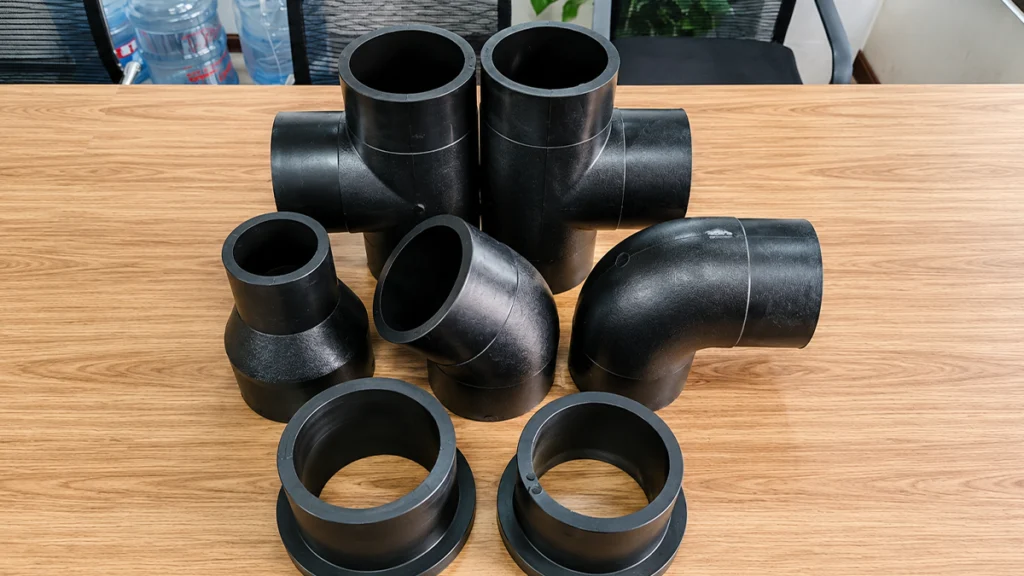
Forcing a fluid through a sudden change in pipe diameter creates chaotic flow dynamics. Relying on purpose-built HDPE reducer fittings rather than abrupt, non-tapered alternatives delivers massive engineering benefits.
First, the gradual taper drives exceptional hydraulic efficiency. It slashes pressure loss and minimizes internal turbulence, shielding downstream pumps and valves from the destructive effects of cavitation. Also, fusing these HDPE pipe fittings using butt fusion or electrofusion creates a genuinely leak-free network. The resulting bonded joint rivals or even exceeds the strength of the original pipe, effectively erasing traditional mechanical failure points.
Beyond structural strength, HDPE brings phenomenal chemical and corrosion resistance to the table. The plastic simply does not rust, rot, or support biological growth, shrugging off aggressive chemicals and highly acidic soils. Polyethylene’s natural flexibility even lets pipelines flex under the stress of soil settlement, seismic shifts, and intense thermal expansion without fracturing.
Picking the right structural layout and connection method heavily influences long-term pipeline performance. Engineers typically categorize reducers based on their geometric profile and the specific fusion technique required.
| Reducer Type | Design Characteristics | Primary Use Case |
|---|---|---|
| Concentric Reducer | Cone-shaped with matched center lines; reduces pipe in the direct center. | Standard vertical installations or horizontal lines where fluid flow must remain centered. |
| Eccentric Reducer | Reduces pipe to one side with mis-matched center lines; one side remains flat. | Horizontal liquid lines. Installed flat on top to prevent air entrapment, or flat on bottom for complete drainage. |
| Butt Fusion Reducer | Features plain ends designed for direct heat-plate melting. | High-pressure municipal water and industrial slurry lines requiring homogeneous joints. |
| Electrofusion Reducer | Contains embedded heating coils that melt the plastic via electrical current. | Gas distribution networks and tight-trench repairs where butt fusion machines cannot fit. |
| Transition Reducer | Combines an HDPE end with a metal end (e.g., 304SS/316SS NPT threads or flanges). | Connecting modern polyethylene networks to legacy steel systems, pumps, or mechanical valves. |
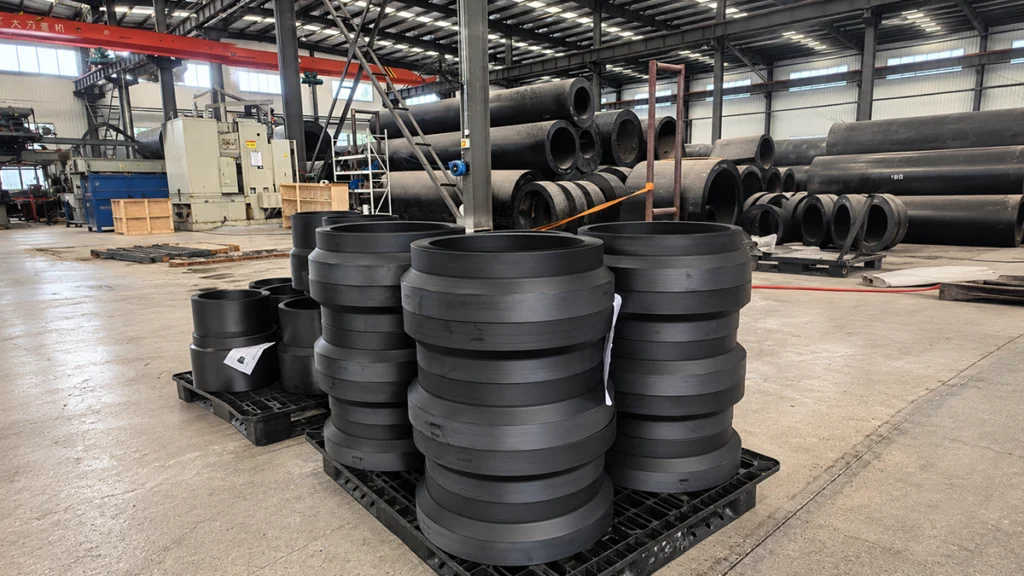
Nailing down the right size means matching the outside diameter (OD) of the connecting HDPE pipes while verifying the wall thickness can withstand peak operating pressures. The Standard Dimension Ratio (SDR) acts as the crucial metric here. It defines the ratio between the pipe’s outer diameter and its wall thickness. A lower SDR number translates to a thicker wall and, consequently, a higher pressure rating.
| Parameter | Specification / Details | Application Notes |
|---|---|---|
| SDR 17 | PN 10 (10 Bar / 145 PSI) at 20°C | Low-pressure irrigation and gravity drainage systems. |
| SDR 11 | PN 16 (16 Bar / 232 PSI) at 20°C | Standard municipal water distribution and industrial cooling. |
| SDR 9 | PN 20 (20 Bar / 290 PSI) at 20°C | Dual-rated applications (e.g., Water at 250 PSI, Natural Gas at 125 PSI). |
| SDR 7.4 | PN 25 (25 Bar / 362 PSI) at 20°C | High-pressure mining slurries and heavy industrial transport. |
| PE Grade | PE100 or PE80 | PE100 offers higher pressure resistance with thinner walls compared to PE80. |
Temperature Derating: The nominal pressure (PN) figures shown above apply to fluids at 20°C (68°F). As fluid temperatures climb, polyethylene’s pressure-handling capacity drops. If a system pushes fluids at 40°C (104°F), for instance, engineers must apply a 0.74 derating factor to the maximum allowable pressure to avoid structural deformation.
Because they adapt seamlessly to rigorous industrial environments, HDPE reducer fittings provide specialized advantages across a variety of sectors.
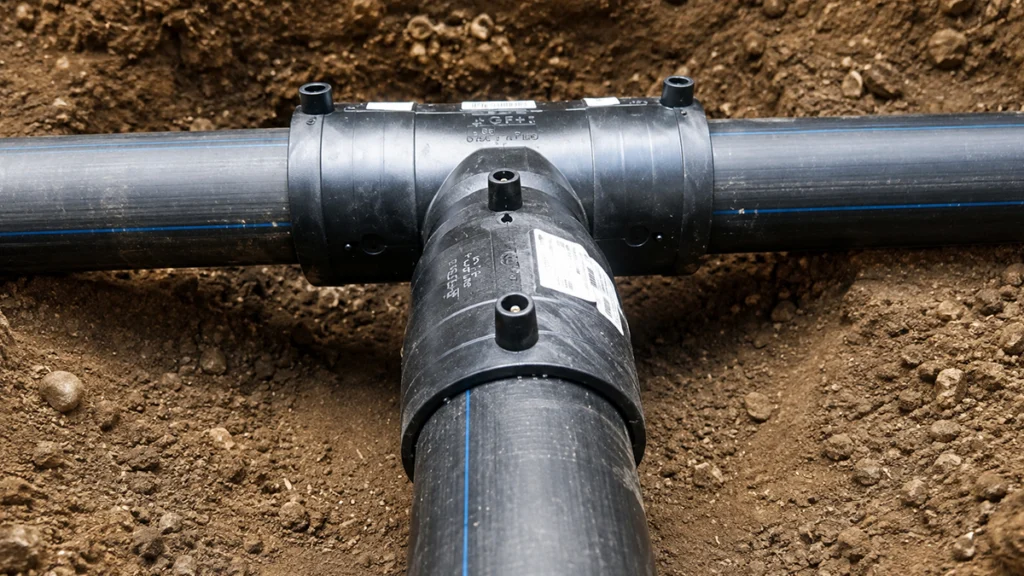
Pulling off a permanent, leak-free transition demands absolute adherence to fusion protocols. Whether you rely on butt fusion or electrofusion, your installation crew must prioritize precise alignment and strict temperature control.
Step-by-Step Butt Fusion Workflow:
1. Preparation: Keep both the HDPE pipe ends and the reducer completely clean and dry. Use a mechanical planer to properly face (shave) the edges so they align perfectly flush.
2. Alignment: Lock the HDPE pipes and the reducer firmly into the butt fusion machine clamps. Even slight misalignment between the varied diameters creates severe internal stress, ultimately compromising the joint.
3. Heating: Insert the heater plate. When working with PE100 materials, you must hold the surface temperature strictly between 195°C and 200°C.
4. Fusion and Cooling: Pull the heater plate out and press the melted faces together at the specified pressure. Never rush the cooling phase. The joint has to cool under pressure within the clamps for the exact time specified by the manufacturer to reach maximum tensile strength.
5. Trenching: As you lower the joined assembly into the trench, lay down uniform, stable bedding—typically sand or fine gravel. Clear out any sharp rocks to avoid point-loading stress along the reducer’s tapered body.
Sourcing compliant fittings guards your HDPE pipeline against premature failure and hefty regulatory fines. Top-tier HDPE reducer fittings always meet stringent international manufacturing standards.
For water-centric projects, the defining benchmarks are ISO 4427-3 (Plastics piping systems for water supply) and EN 12201-3 (Europe’s standard for potable water). Meanwhile, gas distribution networks must satisfy ISO 4437-3.
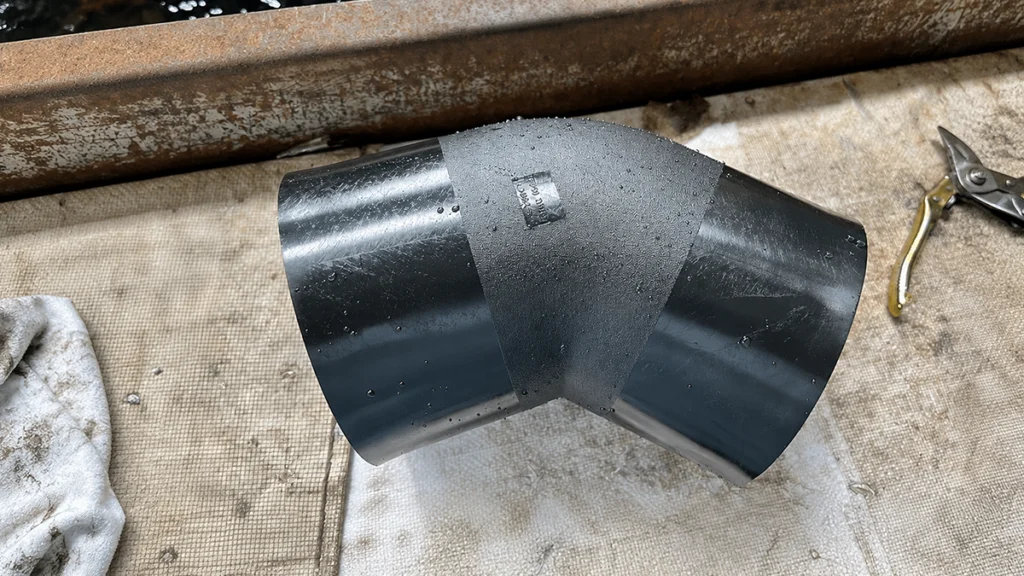
Material purity acts as another crucial checkpoint. Virgin PE100 resin has to clear intense migration testing to guarantee that toxic compounds and heavy metal stabilizers never leach into drinking water. Pipeline inspectors will also check for permanent traceability stamps on every single fitting. These markings should clearly display the production date, material grade (like PE100), SDR value, and the manufacturer’s unique identification code.
Grasping the commercial variables behind HDPE reducer fittings empowers procurement teams to streamline their supply chains. The main cost drivers include global resin market fluctuations, SDR thickness (a lower SDR consumes noticeably more raw material), and the specific manufacturing technique. At scale, injection-molded HDPE pipe fittings usually cost less than custom-fabricated units.
Teaming up with an established manufacturer like JINQUAN offers a sharp competitive edge. Running a massive 200-acre facility capable of churning out over 100,000 tons annually guarantees factory-direct pricing and massive economies of scale. Strong inventory management practices also fuel fast turnarounds, allowing standard deliveries to ship within 7 to 15 days.
Supplier Evaluation Criteria for Procurement Teams:
System blowouts rarely happen due to material flaws. More often than not, specification blunders or sloppy installation practices take the blame.
Common Mistakes:
Quick Selection Checklist:
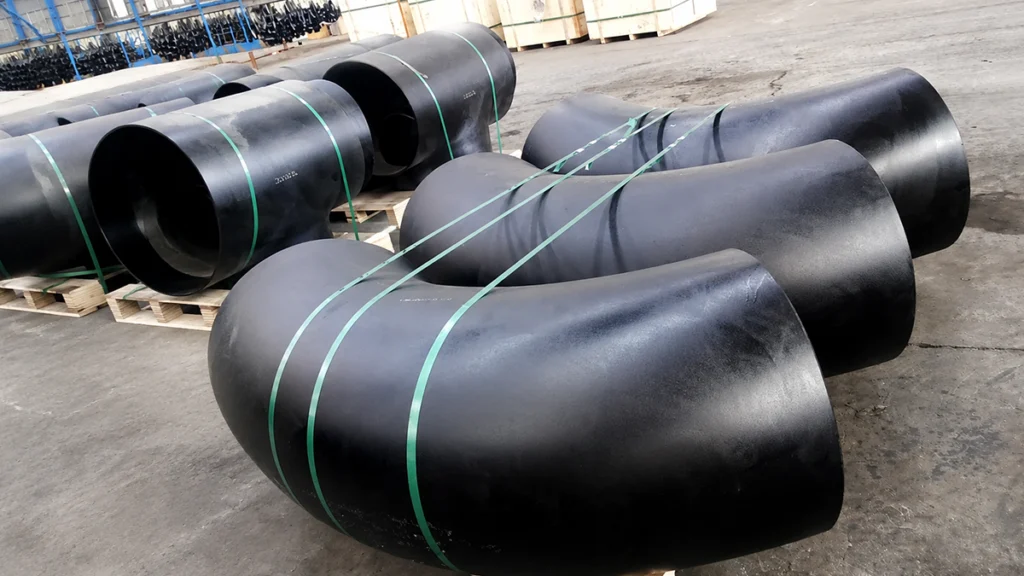
An HDPE reducer fitting connects two HDPE pipes with different outer diameters in a continuous pipeline. Its tapered body creates a smooth flow transition for fluids or gases, cutting down on turbulence and pressure drops while keeping the system completely leak-proof.
Start by measuring the nominal outside diameter (OD) of both connecting pipes in millimeters. You also need to match the Standard Dimension Ratio (SDR) of the reducer to the HDPE pipeline, ensuring the wall thickness can withstand your network’s maximum operating pressure and temperature.
Concentric reducers feature a uniform cone shape that steps down the diameter in the exact center, making them perfect for vertical installations. Eccentric reducers step down the diameter on an angle, leaving one side entirely flat. This flat edge prevents trapped air or allows full drainage in horizontal setups.
Absolutely. PE100 fittings built to ISO 4427-3 standards are perfect for wastewater and potable drinking water. Meanwhile, fittings manufactured to ISO 4437-3 handle natural gas distribution, typically relying on electrofusion to guarantee maximum safety in volatile environments.
Your required SDR hinges entirely on system pressure. SDR 11 (PN16) acts as the baseline for municipal water up to 232 PSI. High-pressure applications like mining slurries demand SDR 9 (PN20) or SDR 7.4 (PN25). The rule of thumb is to always ensure the reducer’s SDR matches or exceeds the pressure rating of the connecting pipes.
Crews usually install them via butt fusion or electrofusion. Butt fusion requires a heater plate to melt the plain ends of the HDPE pipe and reducer before pressing them together under force. Electrofusion relies on built-in electrical coils to melt the plastic from the inside, forming a homogeneous, leak-free seal once cooled.
Procurement teams need to ask for detailed technical data sheets showing exact dimensions and SDR ratings. You should also request material purity test reports, migration test results (for drinking water safety), and verified facility certifications like ISO 9001, CE, and SGS.
Securing the optimal HDPE reducer fitting requires a careful balance of material strength, hydraulic efficiency, and site-specific installation needs. When engineers evaluate the nuances of concentric versus eccentric designs, align the SDR with system pressure requirements, and enforce strict fusion protocols, they lock in long-term pipeline reliability. Ultimately, buying these components from a manufacturer backed by massive production capacity, tight quality control, and a proven track record guarantees that transitions across water, gas, mining, and irrigation networks will stay durable and entirely leak-free for decades.