Address
Zhengzhou, Henan, China
Work Hours
Monday to Friday: 7AM - 7PM
Weekend: 10AM - 5PM
Address
Zhengzhou, Henan, China
Work Hours
Monday to Friday: 7AM - 7PM
Weekend: 10AM - 5PM

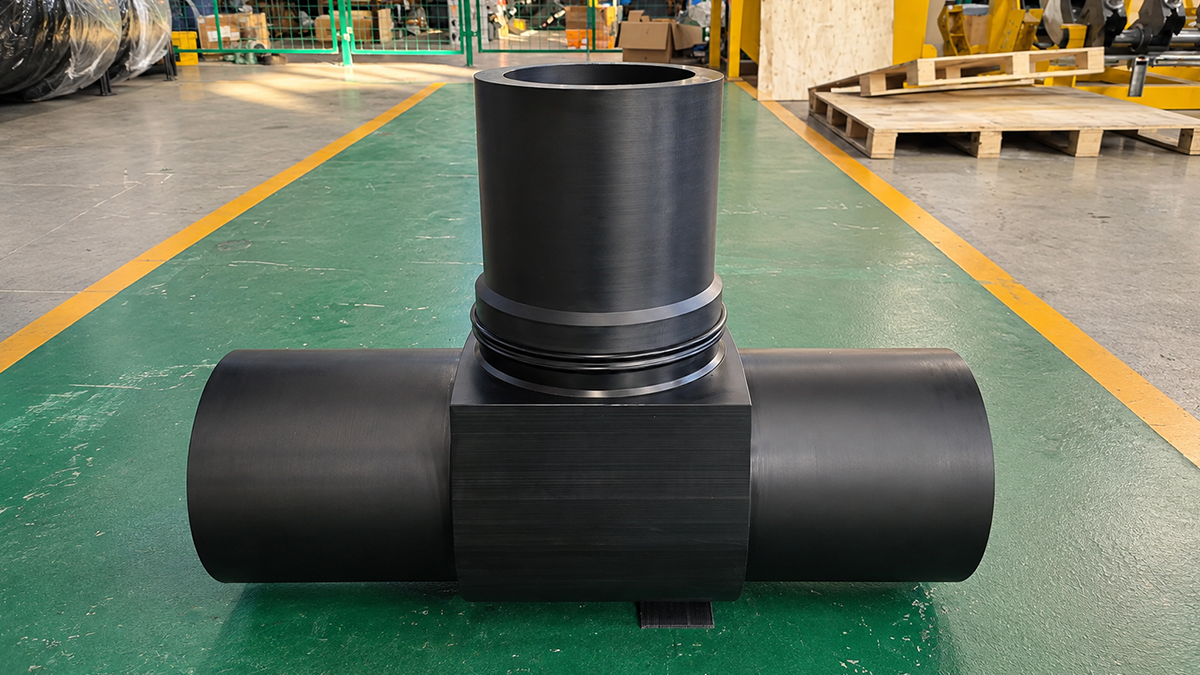
HDPE Tee Fittings guide explains equal tee, reducing tee, and branch connection options, plus sizing, SDR, pressure rating, joining methods, applications, and supplier checks so buyers can specify the right part with less risk.
Think of HDPE tee fittings as the critical intersections of any modern piping network. These T-shaped components are purpose-built to divide, combine, or seamlessly redirect fluid flow across high-density polyethylene (HDPE) systems. Forged primarily from premium PE100 and PE100-RC (Resistance to Crack) bimodal resins, they serve as the backbone for municipal, industrial, and agricultural pipelines.
The structural integrity of these HDPE pipe fittings hinges on a Minimum Required Strength (MRS) of 10.0 MPa (1450 PSI) for PE100 materials. When engineered and installed correctly, HDPE tee fittings easily deliver a 50 to 100-year design life under standard operating conditions. Their most notable advantages include immense tensile strength, total immunity to galvanic corrosion, broad chemical resistance, and the ability to forge leak-free monolithic joints through thermal fusion.
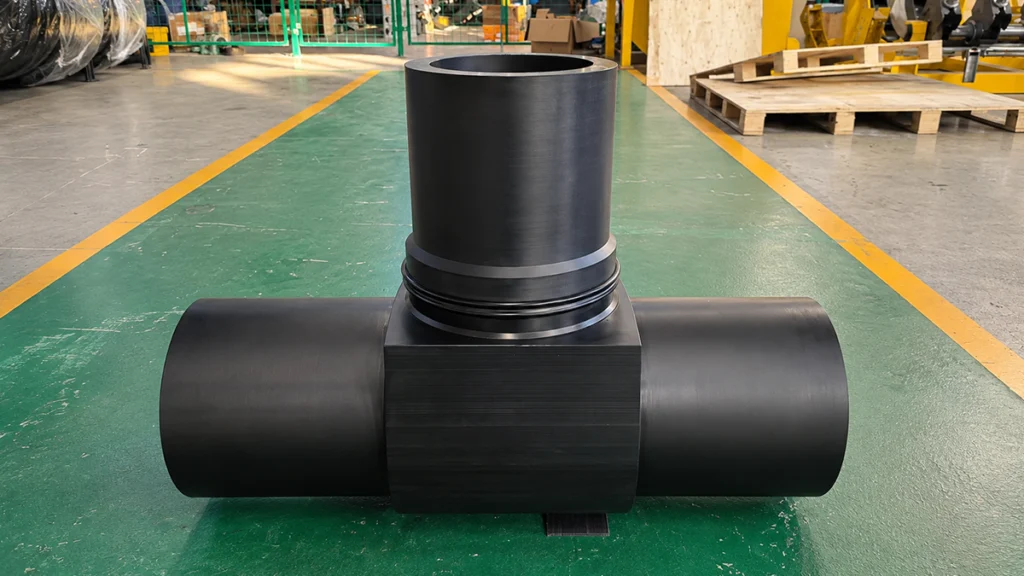
HDPE pipe engineers don’t just pick fittings at random. The right tee configuration requires balancing hydraulic demands, spatial limits, and existing infrastructure. Let’s break down the structural and functional differences between the three main options.
| Feature | Equal Tee | Reducing Tee | Branch Connection (Saddle) |
|---|---|---|---|
| Geometry | All three outlets share the identical nominal outside diameter (OD). | Two in-line run outlets match; the perpendicular branch is smaller. | A sidewall-fused saddle placed directly on top of the main pipe. |
| Notation Example | 110mm × 110mm × 110mm (4" × 4" × 4") | 110mm × 110mm × 90mm (4" × 4" × 3") | 110mm × 63mm Saddle |
| Primary Function | Splits fluid flow evenly (50/50). | Tailors flow rates and velocities for smaller branch lines. | Adds new service lines to existing mains without cutting the pipe. |
| Best Used For | Water mains, HVAC loops, balanced pressure distribution networks. | Stepping down volume to prevent backflow and feed lower-inlet equipment. | Tapping live lines, confined trench spaces, retrofitting systems. |
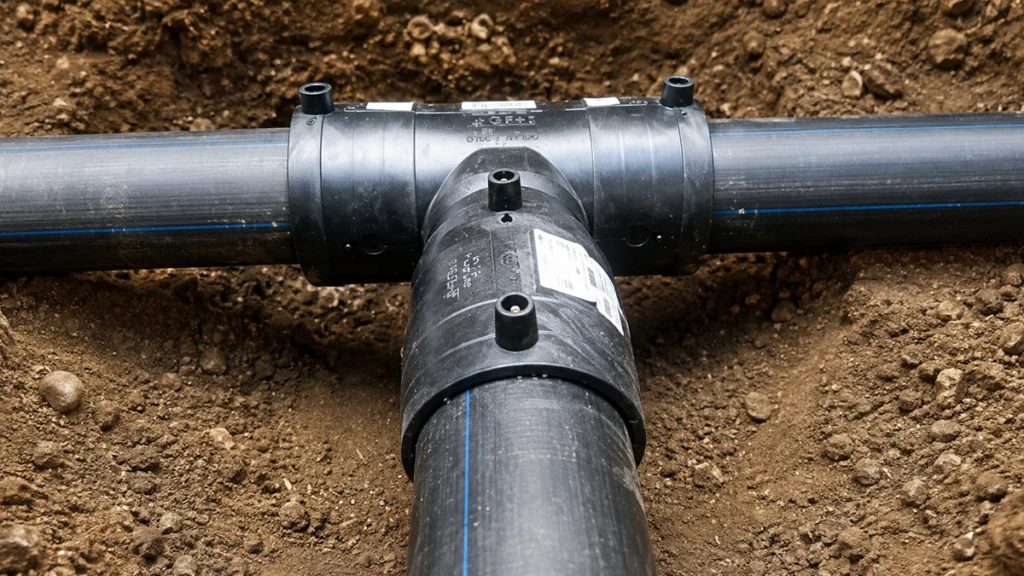
HDPE tee fittings create a branch connection that divides or combines flow within a piping system. An equal tee has three outlets of the same nominal size, while a reducing tee uses a smaller branch outlet to connect a secondary pipeline. The actual flow rate and pressure distribution depend on the pipe sizes, system layout, pump conditions, and hydraulic design.
For pressure applications, the selected tee must be compatible with the HDPE pipe material, outside diameter, SDR or DR, operating temperature, and required pressure rating. The complete piping system should also be checked for surge pressure and other project-specific loads rather than relying only on the fitting’s nominal PN classification.
Heat-fused HDPE tees form a restrained connection with the adjoining pipe, but support and anchoring requirements depend on installation conditions. Above-ground systems, mechanical transitions, valves, equipment connections, and some fabricated reducing tees may require additional restraint, support pads, or engineered anchoring.
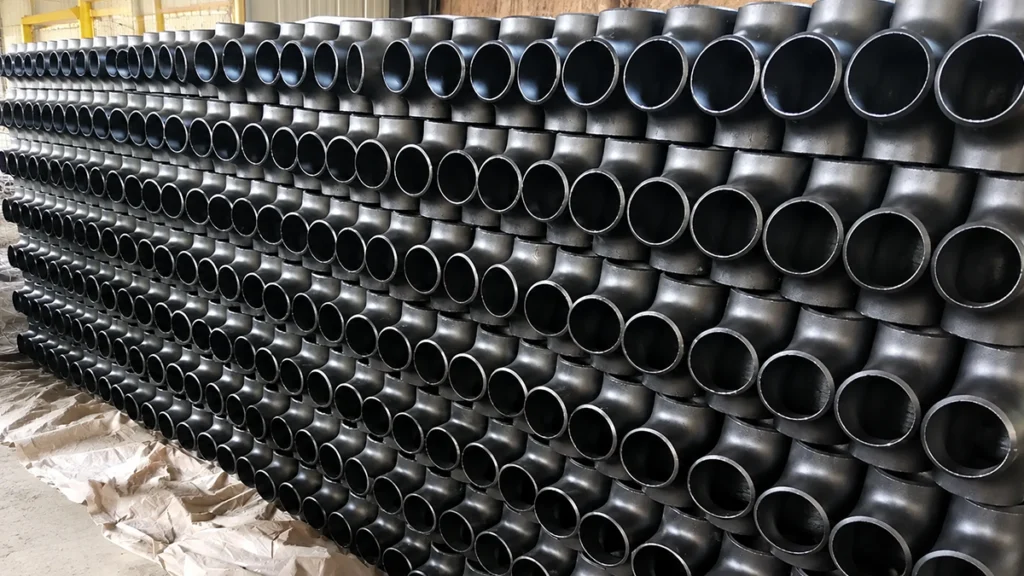
Getting the specifications right means matching physical parameters directly to your HDPE pipeline’s operational demands. The table below outlines standard sizes, pressure ratings (calculated at 20°C for PE100), and the governing international standards.
| Specification Parameter | Technical Data |
|---|---|
| Metric Size Range (ISO) | DN20 to DN1600+ |
| Imperial Size Range (ASTM) | IPS 3 inch to 65 inch |
| SDR 7.4 Pressure Rating | PN 25 (25.0 Bar / 362.5 PSI) |
| SDR 9.0 Pressure Rating | PN 20 (20.0 Bar / 290.0 PSI) |
| SDR 11.0 Pressure Rating | PN 16 (16.0 Bar / 232.0 PSI) |
| SDR 13.6 Pressure Rating | PN 12.5 (12.5 Bar / 181.3 PSI) |
| SDR 17.0 Pressure Rating | PN 10 (10.0 Bar / 145.0 PSI) |
| Governing Standards | ISO 4427, EN 12201-2, ASTM F714, ASTM D3350, ASTM 2206 |
Every industry brings its own set of environmental challenges and pressure demands.
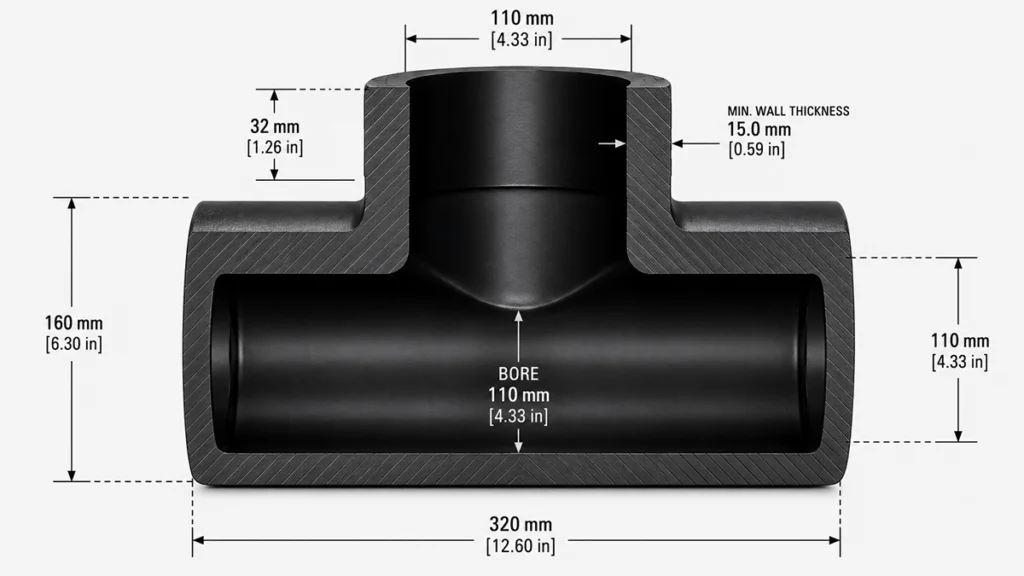
Making the right choice comes down to strict engineering logic. You need to evaluate three primary factors:
1. Flow & Branch Ratio: Opt for a reducing tee if the branch line is one or two nominal sizes smaller than the header HDPE pipe. If the reduction drops by more than two sizes, standard molded reducing tees usually won’t cut it. Instead, you’ll need a saddle tee or a fabricated branch connection.
2. Pressure Matching: The fitting’s Standard Dimension Ratio (SDR) must match—or exceed—the pipeline’s SDR. A PN16 pipe demands a PN16 (or higher) tee. Downgrading the fitting creates an immediate weak point, compromising the entire network.
3. Manufacturing Type:
That promised 100-year lifespan? It depends entirely on the quality of your thermal fusion joints.
Method 1: Butt Fusion (The standard for open trenches and large diameters)
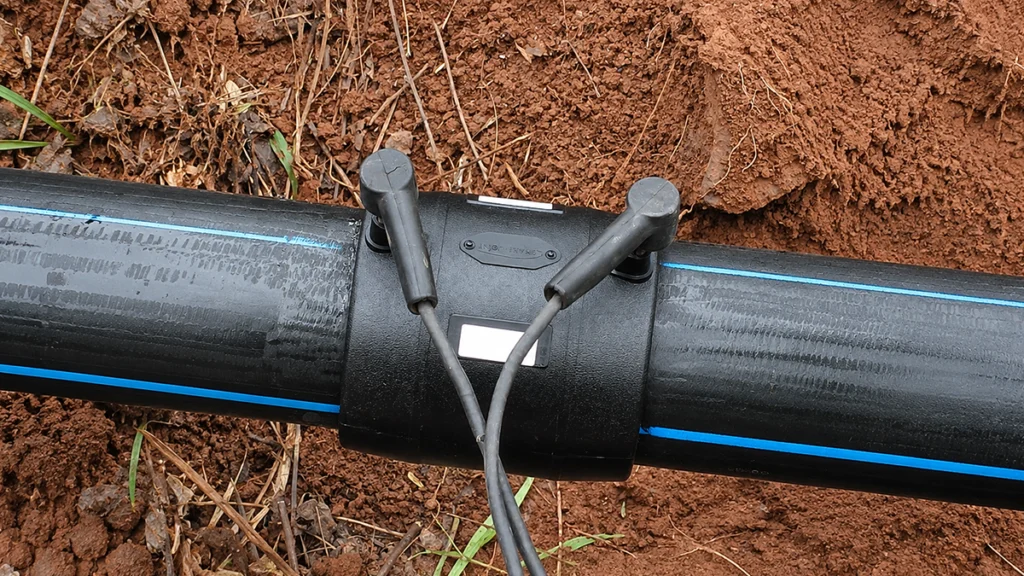
Method 2: Electrofusion (The go-to for tight spaces, repairs, and saddle tees)
Navigating a global market valued at $18.8 billion (as of 2025) means dealing with highly variable pricing driven by size, manufacturing methods, and raw material quality. Buying factory-direct offers massive commercial leverage.
Estimated Factory-Direct Pricing Breakdown (USD per piece):
| Size Category | Diameter Range | Estimated Price Range |
|---|---|---|
| Small | 20mm – 32mm | $0.30 – $1.20 |
| Medium | 50mm – 110mm | $1.20 – $35.00 |
| Large | 160mm – 315mm | $35.00 – $800.00+ |
Lead Times & Supply Chain:
Industry average lead times for bulk orders hover around 25 to 35 days. However, top-tier manufacturers backed by extensive facilities (think 200-acre plants pushing 100,000+ tons annually) can often expedite factory-direct orders down to just 7 to 15 days.
Supplier Evaluation Checklist:
Here is a stark reality: modern PE100 pipe almost never fails on its own. Upwards of 90% of pipeline failures stem from external factors or installation errors.
Picking the optimal tee fitting streamlines your installation and secures long-term network reliability.
When drafting an RFQ, give the manufacturer exact specifications to lock in accurate pricing and production timelines. Always list the Outside Diameter (OD), the required SDR or PN rating, the Material Grade (PE100 or PE100-RC), and your planned joining method (Butt Fusion vs. Electrofusion).
An equal tee has three outlets of the same nominal outside diameter. A reducing tee has two matching run outlets and a smaller branch outlet. The correct type depends on the required branch size, flow distribution, pressure conditions, and overall pipeline design.
A saddle or branch connection is useful when adding a smaller service or branch line to an existing main, especially where cutting out and installing a full tee is impractical. The final choice should consider pipe size, operating condition, installation access, approved joining method, and project specification.
Yes, depending on the fitting design. Spigot tees are commonly joined by butt fusion or with electrofusion couplers, while electrofusion saddles use an approved saddle-fusion procedure. All components must be compatible in material, diameter, SDR or DR, pressure rating, and joining standard.
Select a tee with a pressure rating suitable for the pipeline’s operating pressure, surge pressure, temperature, material grade, and applicable standard. For compatible PE systems, the fitting should generally have an equal or higher pressure capability than the connected pipe. A lower SDR usually indicates a thicker wall and higher pressure capacity.
Yes, when the tee is designed and rated for the required service conditions. Suitability depends on material grade, diameter, SDR or DR, operating temperature, fitting design, and applicable standard. PN25 may be available for selected PE100 fittings, but it should not be treated as a universal rating for all tee sizes.
Start by requesting ISO 9001 and CE certifications from the supplier. Ask for batch-specific destructive test reports, like decohesion testing (ISO 13956). Make sure the raw material is 100% virgin PE100 resin with a Minimum Required Strength (MRS) of 10.0 MPa, and check their dimensional accuracy against ISO 4427 standards.
For water applications, ISO 4427-3 specifies requirements for PE fittings. In the United States, ASTM D3261 applies to molded butt-fusion PE fittings, while ASTM F2206 covers fabricated fittings made by heat-fusion joining PE components. The applicable standard should match the fitting type, application, market, and project specification..
Provide the main-run and branch outside diameters, material grade, SDR or DR, required pressure rating, application, operating temperature, joining method, applicable standard, quantity, and delivery destination. Also state whether you need an equal tee, reducing tee, molded fitting, fabricated fitting, or electrofusion branch connection.
Selecting the right HDPE tee fitting requires careful consideration of the main and branch pipe sizes, material grade, SDR or DR, operating and surge pressure, temperature, joining method, and applicable standard. Equal tees, reducing tees, and saddle branch connections each suit different pipeline layouts and installation conditions.
Reliable performance also depends on correct fusion procedures, accurate alignment, compatible components, and proper quality inspection. Buyers should evaluate material traceability, dimensional reports, pressure-test documentation, production capability, lead time, and technical support before selecting a supplier.
By matching the fitting design and pressure capability to the actual project requirements, engineers and procurement teams can reduce installation risks and support reliable long-term performance in water, irrigation, mining, and industrial piping systems.