Address
Zhengzhou, Henan, China
Work Hours
Monday to Friday: 7AM - 7PM
Weekend: 10AM - 5PM
Address
Zhengzhou, Henan, China
Work Hours
Monday to Friday: 7AM - 7PM
Weekend: 10AM - 5PM

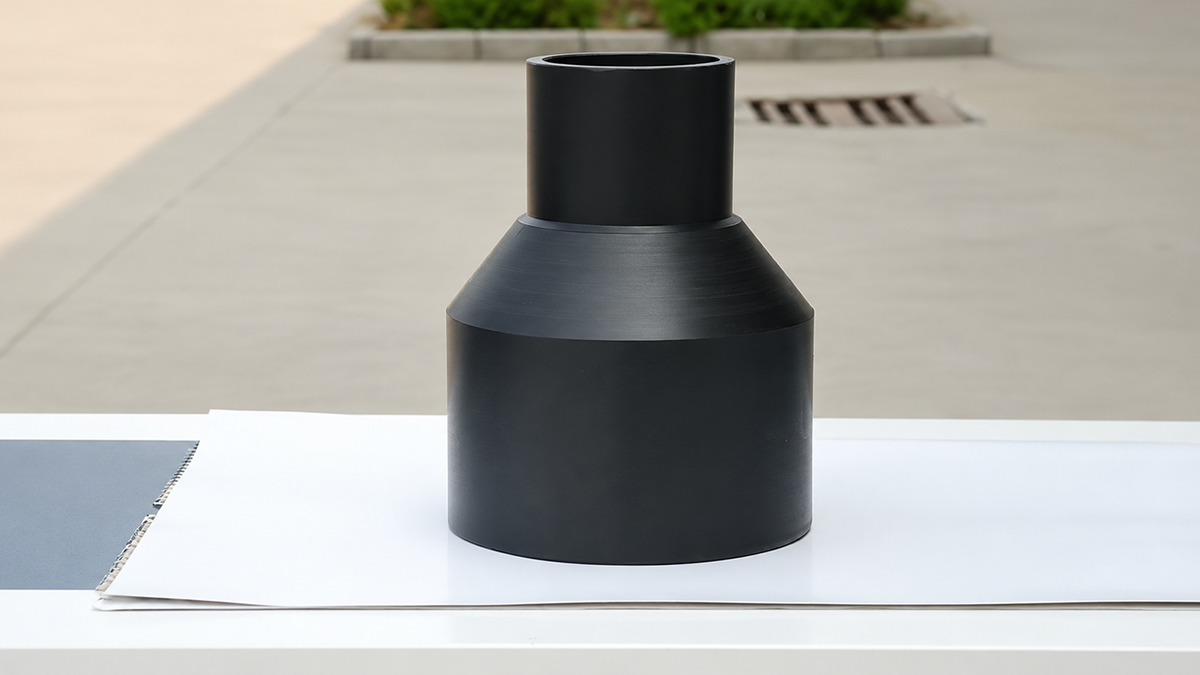
HDPE Pipe Fittings for Water Supply come in butt fusion, electrofusion, compression, and flanged types. This guide explains fitting classifications, PE100 specifications, pressure ratings, certifications, and selection criteria to help engineers and buyers specify the right fittings for municipal and industrial water projects.
High-density polyethylene (HDPE) pipe fittings are used to connect, branch, reduce, redirect, or terminate pipelines carrying potable or non-potable water. Common connection methods include butt fusion, electrofusion, socket fusion, and mechanical compression, depending on the pipe size, pressure rating, installation conditions, and project requirements.
HDPE pipe fittings are manufactured from polyethylene materials such as PE80, PE100, or PE4710, depending on the applicable market and standard. For potable-water systems, the fitting material and finished product should comply with the required health, performance, and traceability requirements. Applicable standards may include ISO 4427, EN 12201, AWWA C906, or ASTM specifications, while drinking-water approvals may include NSF/ANSI 61 or WRAS where required.
Available fitting sizes and configurations vary by manufacturing method and product type. Buyers should confirm the outside diameter, SDR, pressure rating, connection method, material grade, and required certification before ordering.
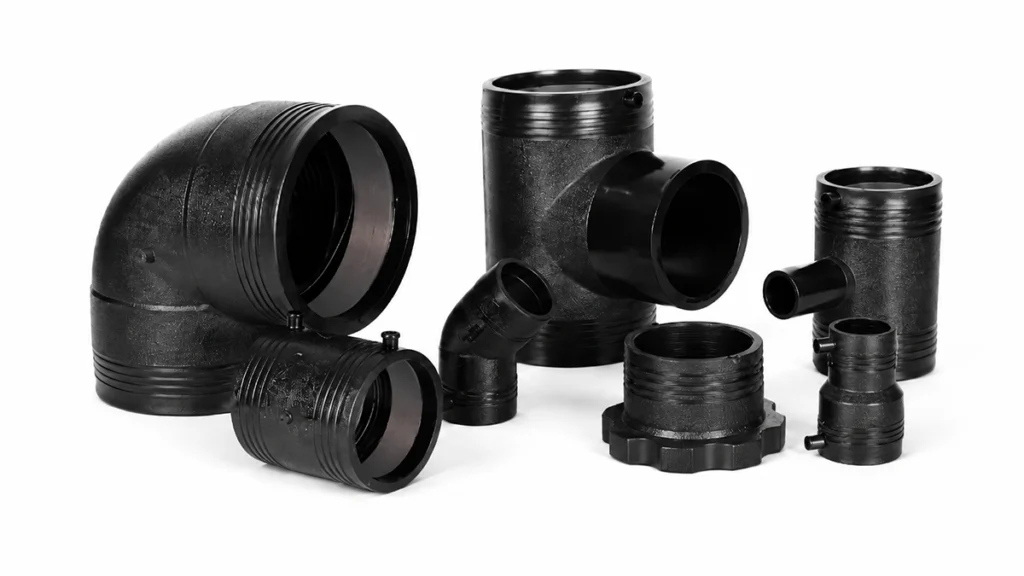
Modern water infrastructure relies on HDPE fittings to create continuous, corrosion-resistant pipeline systems. Butt fusion and electrofusion joints can provide strong, leak-resistant connections while reducing the number of mechanical joint interfaces in the network. When properly designed and installed, these fittings support reliable water distribution from the source to the end user.
HDPE fittings also offer several long-term performance advantages. Their smooth internal surfaces help maintain hydraulic efficiency and reduce the risk of scaling and biological buildup. Depending on design, operating conditions, installation quality, and maintenance, HDPE pipeline systems can provide a service life of 50 years or more.
The flexibility of polyethylene helps the pipeline accommodate ground movement and pressure fluctuations more effectively than many rigid materials. HDPE fittings are also resistant to rust, rot, and galvanic corrosion. In many buried applications, this can reduce the need for additional corrosion-protection measures and lower long-term maintenance requirements.
Engineers categorize HDPE pipe fittings primarily by their installation method. Butt fusion and electrofusion dominate municipal water mains, whereas socket and compression fittings handle the lighter duties of small distribution lines. Grasping the distinct HDPE pipe fittings types for potable water supply is a fundamental step when specifying components for any pipeline build.
Here is a breakdown of the primary categories driving modern water infrastructure:
| Type | Jointing Method | Diameter Range | Typical Application | Pros | Cons |
|---|---|---|---|---|---|
| Butt Fusion | Heat fusion (plate) | DN50 – DN3000 | Municipal mains, long-distance | High strength, cost-effective | Requires large equipment/space |
| Electrofusion | Internal heating coils | DN20 – DN1200 | Repairs, confined spaces | Easy in tight spots, precise | Higher unit cost for fittings |
| Socket Fusion | Heat fusion (socket) | DN16 – DN110 | Small distribution lines | Fast installation, cheap | Limited to small diameters |
| Compression | Mechanical (threaded) | DN16 – DN110 | Temporary lines, irrigation | No power/welding needed | Lower pressure rating |
When weighing electrofusion vs butt fusion HDPE fittings for water pipelines, project engineers usually lean toward butt fusion for long, open-trench runs. The component costs are simply lower. Electrofusion, on the other hand, shines during tie-ins, repairs, and operations within tight spaces where bulky butt fusion machines just won’t fit.
Meanwhile, HDPE compression fittings for water distribution networks hit the mark for rapid, temporary setups or agricultural irrigation where dragging thermal welding gear into the field isn’t practical.
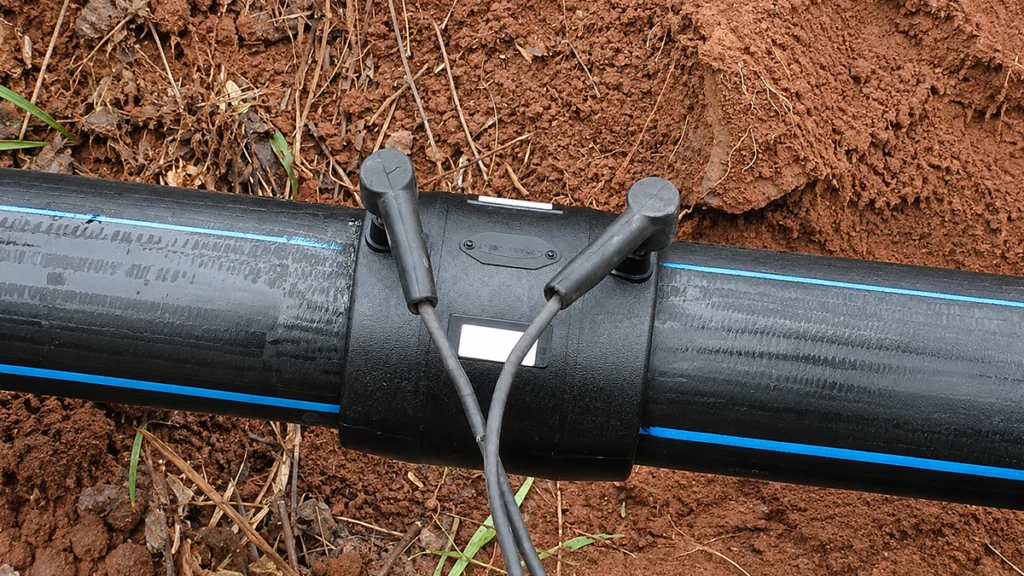
Manufacturers produce HDPE fittings in a wide array of shapes to manipulate flow direction, step down HDPE pipe diameters, and execute seamless transitions to other materials. Every shape tackles a specific hydraulic job, keeping fluid moving efficiently while minimizing pressure drops.
The core configurations include:
A fitting’s Standard Dimension Ratio (SDR) dictates its pressure capacity. This metric represents the ratio between the fitting’s outer diameter and its minimum wall thickness. A lower SDR means a thicker wall, which translates directly to a higher pressure rating.
Mastering the PE100 HDPE fittings pressure rating for water supply is an absolute must for system safety. Here is a standard HDPE pipe fittings dimensions and SDR chart based on PE100 material operating at a baseline of 20°C:
| SDR Value | PE100 PN Rating at 20°C | Equivalent Pressure | Matching PE100 Pipe Wall Thickness (OD110 mm) | Reference Standards |
|---|---|---|---|---|
| SDR 7.4 | PN25 | 362.6 psi | 15.1 mm | ISO 4427 / EN 12201 |
| SDR 9 | PN20 | 290.1 psi | 12.3 mm | ISO 4427 / EN 12201 |
| SDR 11 | PN16 | 232.1 psi | 10.0 mm | ISO 4427 / EN 12201 |
| SDR 13.6 | PN12.5 | 181.3 psi | 8.1 mm | ISO 4427 / EN 12201 |
| SDR 17 | PN10 | 145.0 psi | 6.6 mm | ISO 4427 / EN 12201 |
| SDR 21 | PN8 | 116.0 psi | 5.3 mm | ISO 4427 / EN 12201 |
| SDR 26 | PN6.3 | 91.4 psi | 4.2 mm | ISO 4427 / EN 12201 |
Note: PN ratings shown are typical values for PE100 pressure pipe at 20°C. Actual pressure capacity may require temperature derating and should be confirmed against the applicable standard and manufacturer’s specifications.
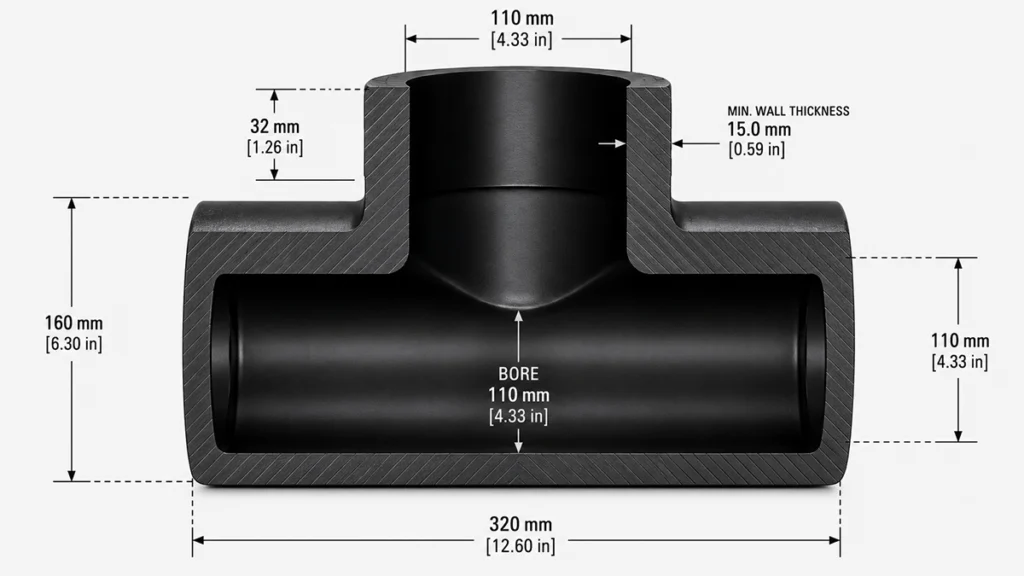
Getting your HDPE fittings right means perfectly matching the material grade, pressure rating, and jointing method to the HDPE pipeline’s unique hydraulic and environmental stresses. Make the wrong call, and you risk joint failure, severe pressure bottlenecks, or even supply contamination.
Follow this 4-step HDPE water supply fittings selection guide to keep your project fully compliant:
1. Determine Operating Pressure & SDR: Always verify that your fitting’s SDR matches or exceeds the pipe’s SDR. If you lay down an SDR11 (PN16) pipeline, you need SDR11 fittings. Slapping an SDR17 fitting onto an SDR11 pipe introduces an immediate, dangerous weak point.
2. Select Jointing Method: Go with butt fusion for open trenches and extended continuous runs. Pivot to electrofusion for quick repairs, confined spaces, or when you need to connect HDPE pipes with slightly mismatched wall thicknesses.
3. Verify Material Grade: Demand virgin PE100 resin for municipal potable water. PE100 delivers superior crack resistance and a much longer lifespan than older PE80 grades.
4. Check Certifications: Insist on strict health certifications like NSF-61, WRAS, or equivalent local approvals. This guarantees zero chemical leaching into the drinking water.
*Application Example:* Take a standard municipal main upgrade. An engineer will likely specify a DN400 PE100 SDR17 HDPE pipeline, leaning on electrofusion couplers to safely navigate around existing underground utilities without tearing up the entire street.
HDPE fittings offer strong corrosion resistance, flexibility, and fused-joint performance for water supply systems. Unlike conventional mechanical connections, HDPE fittings commonly use butt fusion or electrofusion equipment to create continuous, leak-resistant joints.
When comparing HDPE with PVC, ductile iron, and steel fittings, buyers should evaluate operating pressure, pipe diameter, installation conditions, corrosion exposure, jointing requirements, maintenance, and total lifecycle cost. No single material is best for every project, but HDPE is often selected where flexibility, corrosion resistance, and reduced joint interfaces are priorities.
| Feature | HDPE (PE100) | PVC | Ductile Iron | Steel |
|---|---|---|---|---|
| Pressure Capability | Selected by SDR, diameter, material grade, and operating temperature | Selected by pressure class, diameter, and applicable standard | High-pressure classes available for municipal systems | Can be designed for demanding high-pressure service |
| Corrosion Resistance | Excellent; resistant to rust and galvanic corrosion | Excellent for many water supply applications | Good with suitable internal lining and external protection | Requires suitable coating, lining, or other corrosion protection |
| Typical Service Life | 50+ years under suitable design and operating conditions | 50+ years under suitable installation and operating conditions | 50+ years with appropriate protection and maintenance | Varies with coating, environment, design, and maintenance |
| Jointing Method | Butt fusion, electrofusion, or mechanical connections | Solvent cement, gasketed, or mechanical connections | Push-on, mechanical, or flanged connections | Welded, flanged, or mechanical connections |
| Weight | Lightweight | Lightweight | Heavy | Heavy |
| Flexibility | High; accommodates ground movement and curved alignment | Low to moderate, depending on pipe type and diameter | Low compared with HDPE | Low compared with HDPE |
| Lifecycle Cost | Often competitive where fused joints and corrosion resistance reduce maintenance | Often economical for smaller-diameter and conventional water systems | Affected by handling, installation, corrosion protection, and maintenance | Affected by fabrication, welding, coating, installation, and maintenance |
| Typical Applications | Buried water mains, trenchless projects, unstable soils, and corrosive environments | Building services, municipal water lines, and smaller-diameter distribution systems | Municipal water transmission, high-pressure systems, and exposed installations | Industrial pipelines, above-ground systems, and high-pressure applications |
Note: Pressure capability, service life, and lifecycle cost vary by material grade, diameter, wall thickness, temperature, installation quality, operating conditions, maintenance, and applicable project standards.
Ductile iron and steel fittings can provide high pressure capability, but their long-term performance may depend on suitable internal linings, external coatings, and corrosion-control measures. PVC fittings remain lightweight and economical for many water supply applications, although they are less flexible than HDPE and may be more sensitive to ground movement or low-temperature impact.
HDPE fittings offer a useful combination of flexibility, corrosion resistance, lightweight handling, and fused-joint performance. The best material choice should still be based on operating pressure, installation conditions, water chemistry, project standards, and lifecycle cost.
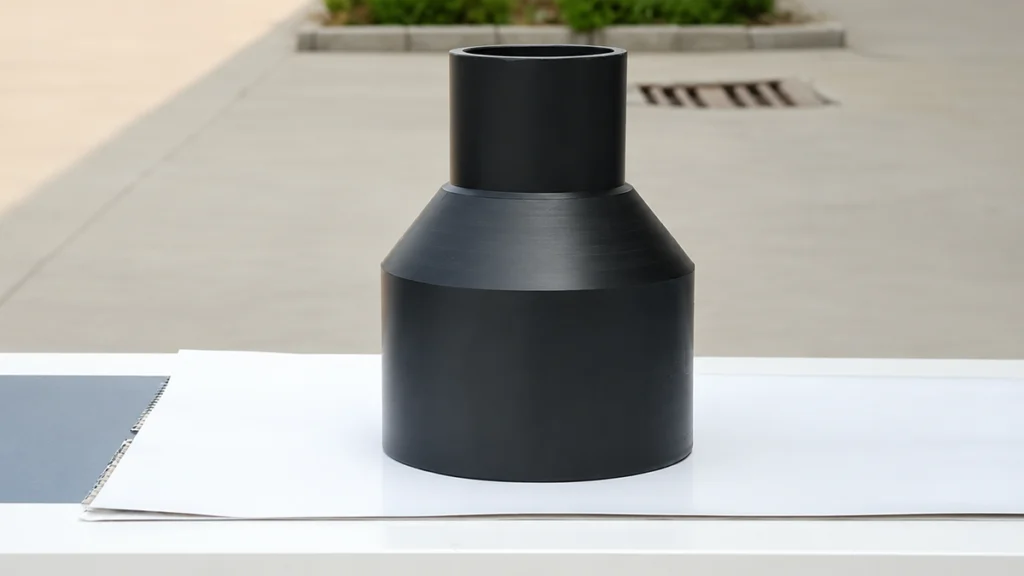
Pricing for HDPE fittings scales exponentially based on diameter and wall thickness (SDR). The raw PE100 pipe fittings resin alone eats up 40% to 70% of the final factory price tag. Grasping these supply chain realities helps procurement managers nail their budgets for massive municipal bids.
Indicative Ex-Factory Price Breakdown by Diameter Class:
Standard Logistics Data:
Procurement blunders with HDPE fittings usually trace back to mismatched specifications, sub-par resin quality, or a blatant disregard for thermal fusion parameters. Ignore these variables, and you invite catastrophic pipeline blowouts or instant failures during municipal inspections.
Buyer Risk Checklist:
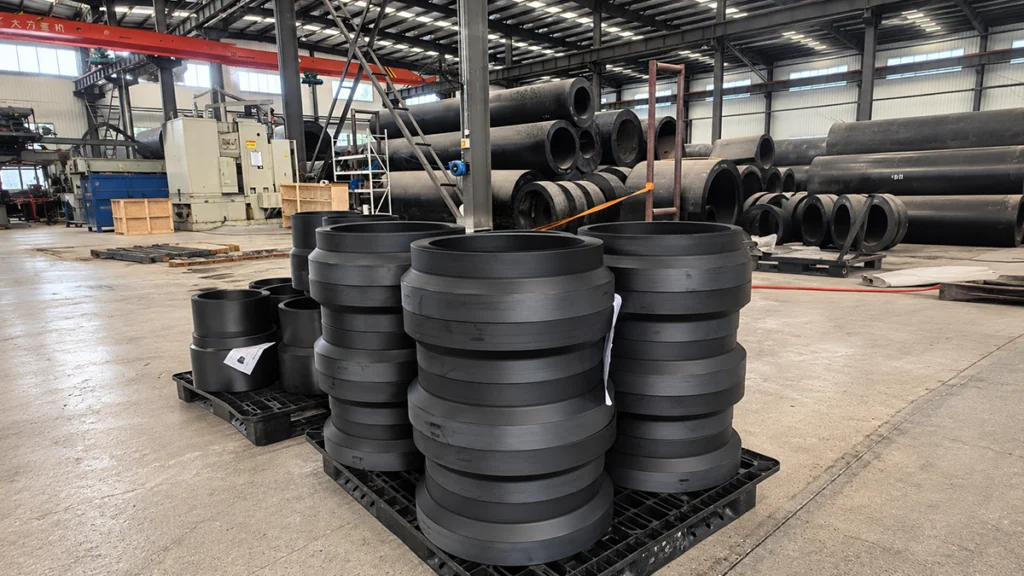
A dependable HDPE fittings manufacturer needs to prove strict raw material traceability, showcase in-house hydrostatic testing, and hold verifiable international quality certifications. Teaming up with a fully vetted factory drops the risk of receiving junk components that could easily derail a multi-million-dollar water project.
When choosing an HDPE fittings manufacturer for municipal water projects, utilize this supplier audit checklist:
Yes, provided the fittings are manufactured from approved materials and comply with the potable-water requirements of the destination market. Buyers should confirm the material grade, product standard, test reports, and health approvals such as NSF/ANSI 61 or WRAS where required.
PE100 has a higher Minimum Required Strength than PE80, allowing it to achieve the same pressure rating with a thinner wall in many applications. PE100 is now widely used for municipal and high-pressure water systems, while PE80 may still be specified for lower-pressure or existing pipeline systems.
Neither method is best for every project. Butt fusion is commonly used for long, straight pipeline sections and larger diameters, while electrofusion is useful for repairs, branch connections, tie-ins, and confined spaces. The correct method depends on pipe size, access, project standards, and installation conditions.
The required rating depends on the pipeline’s maximum operating pressure, surge pressure, temperature, and applicable design standard. Municipal systems often use PN10 or PN16 components, but the fitting’s own pressure rating must be confirmed and should meet or exceed the project requirement.
Properly selected and installed HDPE fittings can provide a service life of 50 years or more. Actual service life depends on material quality, operating pressure, temperature, jointing quality, installation conditions, and maintenance.
Yes. HDPE systems can be connected to ductile iron or steel pipelines using flange adaptors, backing rings, mechanical transition couplings, or other approved transition fittings. The connection design should match the pipe dimensions, pressure rating, flange standard, and project requirements.
HDPE fittings should comply with the applicable product and pipeline standards, such as ISO 4427, EN 12201, AWWA requirements, or relevant ASTM standards. Potable-water projects may also require health approvals such as NSF/ANSI 61, WRAS, or another locally recognized certification.
MOQ and lead time depend on fitting type, diameter, pressure rating, manufacturing method, quantity, and customization requirements. Standard fittings may be available faster, while fabricated bends, tees, reducers, and other large custom fittings normally require additional production time. Buyers should request a project-specific quotation and delivery schedule.
Selecting the right HDPE pipe fittings for water supply projects requires careful evaluation of material grade, pressure rating, pipe size, joining method, and applicable standards. Buyers should confirm that the fittings are compatible with the pipeline system and meet the required product, performance, and potable-water approvals, such as NSF/ANSI 61 or WRAS where applicable.
Choosing between butt fusion, electrofusion, socket fusion, and mechanical connections should be based on pipe diameter, site access, installation conditions, and project requirements. Working with an experienced HDPE fittings manufacturer that provides material traceability, technical documentation, quality inspection, and project support can help reduce compatibility issues, limit installation delays, and improve long-term pipeline reliability.