Address
Zhengzhou, Henan, China
Work Hours
Monday to Friday: 7AM - 7PM
Weekend: 10AM - 5PM
Address
Zhengzhou, Henan, China
Work Hours
Monday to Friday: 7AM - 7PM
Weekend: 10AM - 5PM

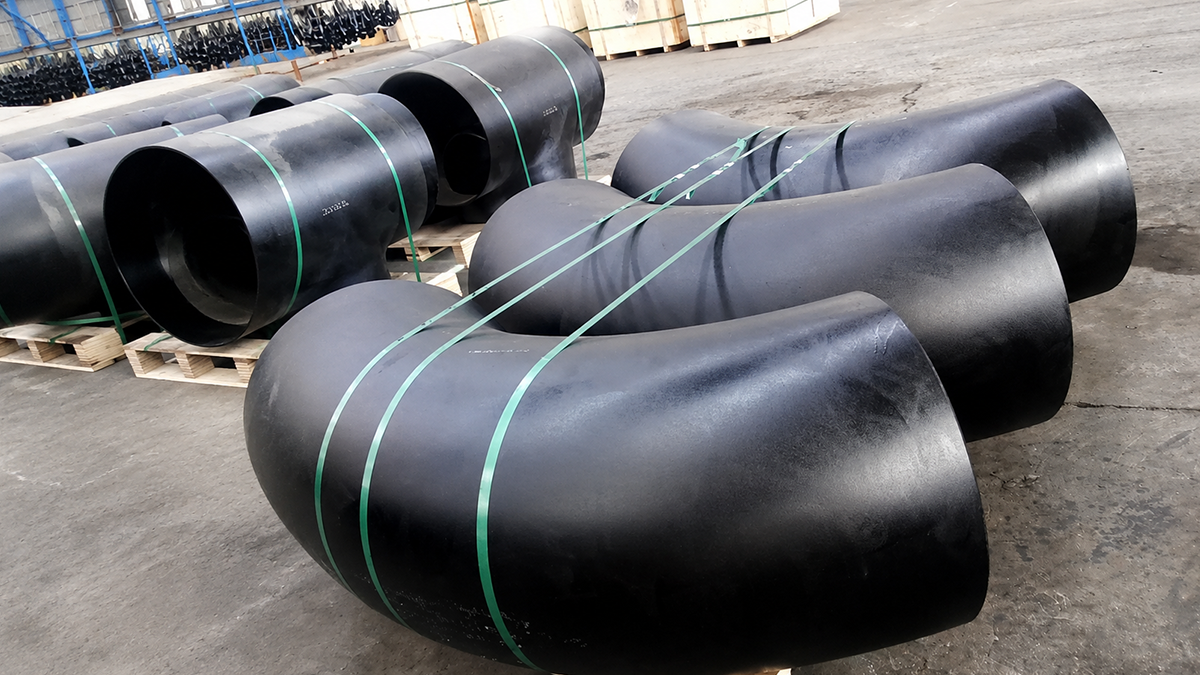
HDPE pipe fittings types include butt fusion, electrofusion, and compression fittings, each suited to different pipeline applications. This guide explains how each type works, compares specifications and costs, and helps engineers and buyers choose the right fittings for water, gas, and industrial projects.
High-Density Polyethylene (HDPE) pipe fittings serve as the essential building blocks for modern pipeline infrastructure. Engineers rely on these specialized components to connect, branch, terminate, or reroute piping systems while maintaining a continuous, leak-proof seal. You’ll find them at work across demanding environments, from municipal water mains and gas distribution networks to heavy-duty industrial fluid transport.
Ultimately, the raw material grade dictates how well these components perform in the field. Industrial applications typically utilize two primary grades: PE80 and PE100.
What makes PE100 stand out? It can safely manage 25% more pressure than PE80 at the exact same wall thickness. Consequently, manufacturers can produce thinner-walled fittings that maximize the internal bore and significantly boost flow capacity. Today’s production facilities leverage both of these material grades to supply an enormous range of sizes, spanning from compact DN16 lines right up to massive DN3000 infrastructure.
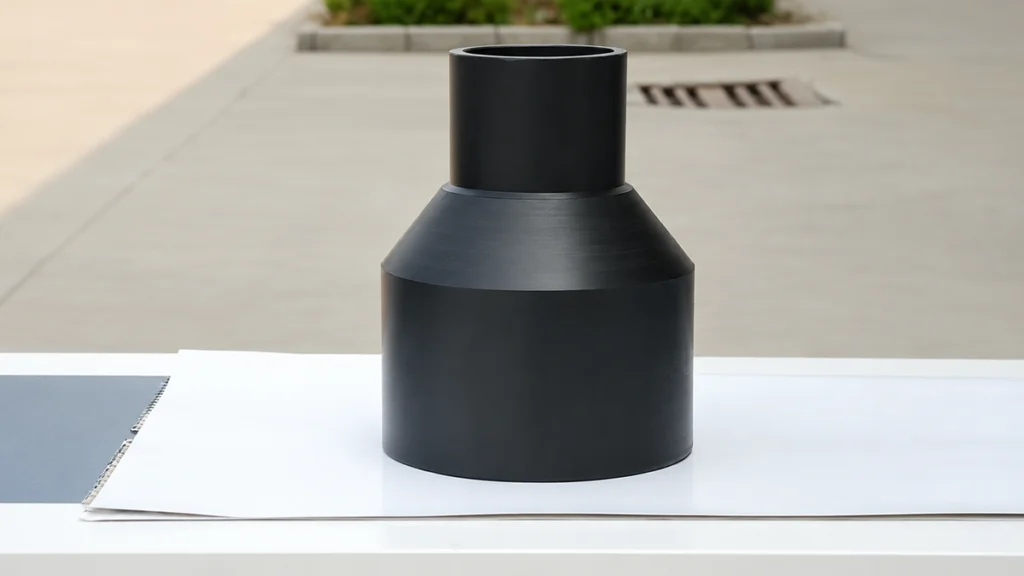
The jointing method serves as the core differentiator when categorizing HDPE pipe fittings. Your choice of connection technique directly impacts installation speed, the type of equipment needed on-site, and the ultimate pressure capacity of the finished network.
For large-scale pipeline infrastructure, butt fusion remains the go-to connection strategy. The technique hinges on a precise heat fusion mechanism. Crews use a specialized heater plate to bring the pipe and fitting ends to an exact temperature window of 195°C–200°C. Once the polymer hits that perfect molten state, hydraulic butt fusion machine presses the components together under strictly controlled pressure. The result? A monolithic, homogenous joint that frequently outlasts and outperforms the pipe itself.
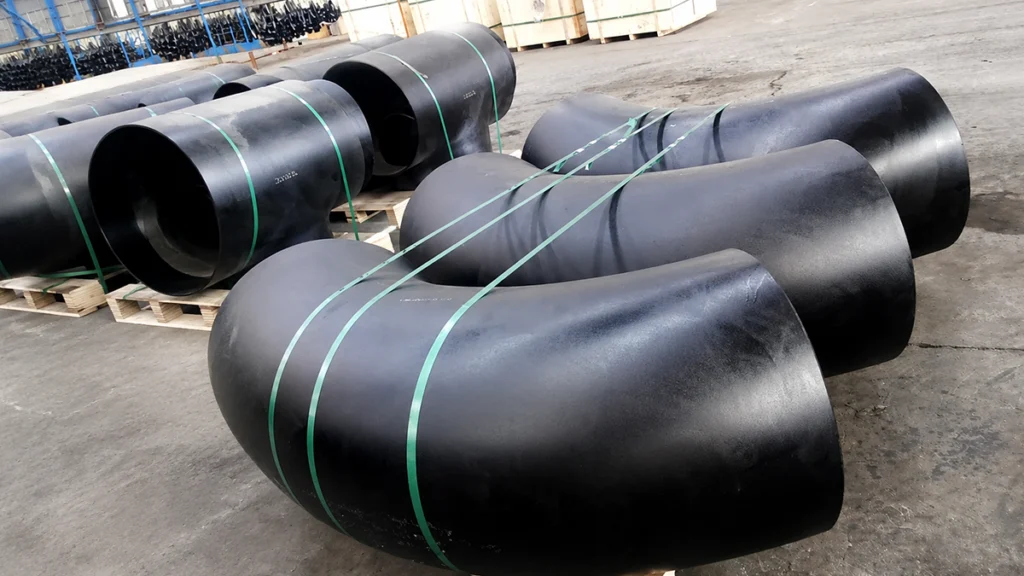
When trench space gets tight and traditional butt fusion machinery simply won’t fit, electrofusion steps in. This highly controlled, automated welding process solves complex installation challenges. Inside the polymer socket of every electrofusion fitting sits a network of precision-wound copper resistance wires.
To initiate the weld, operators connect an electrofusion control unit—usually running at 39.5V or 80V alongside a 3 to 7 kVA generator—directly to the fitting’s terminal pins. As electrical current surges through the embedded wires, the intense localized heat melts both the fitting’s interior and the pipe’s exterior. The two surfaces fuse together into a flawless, permanent seal.
Sometimes, speed and simplicity take priority. HDPE compression fittings deliver a purely mechanical connection for water supply systems, completely bypassing the need for heavy welding gear, generators, or lengthy cooling periods. The genius lies in the internal mechanics: a compression nut, a clinching grip ring, and a heavy-duty O-ring seal. As an installer torques down the nut, these internal parts compress tightly against the pipe’s exterior shell. This fast action forms an exceptionally robust, watertight barrier.
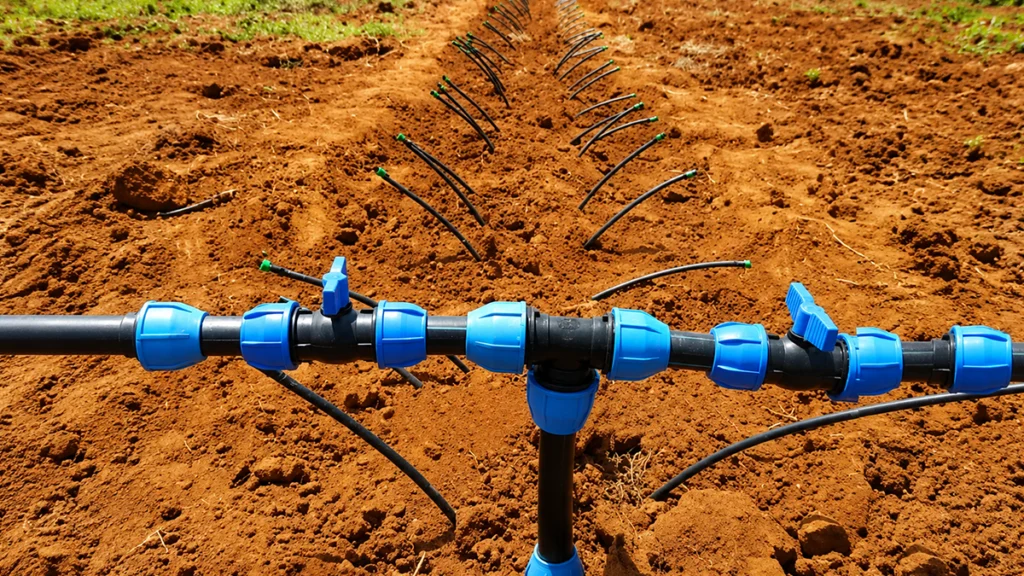
Selecting the most efficient, cost-effective jointing strategy requires careful analysis. Project engineers have to balance strict pressure demands against installation speed and equipment availability. The following breakdown highlights the core operational differences between butt fusion, electrofusion, and mechanical compression methodologies.
| Fitting Type | Size Range | Pressure Rating | Installation Speed | Equipment Required | Skill Level | Typical Cost | Best Application |
|---|---|---|---|---|---|---|---|
| Butt Fusion | DN60 – DN3000 | Up to PN16 | Medium | Butt fusion machine | High | Low (Fittings) | Large-scale water/gas mains |
| Electrofusion | DN20 – DN1000 | PN16 (Water) / PN10 (Gas) | Fast | Electrofusion control unit | Medium | High (Fittings) | Complex layouts, gas, repairs |
| Compression | DN20 – DN110 | Up to PN16 | Very Fast | Wrenches only | Low | Low-Medium | Irrigation, temporary lines |
Cost and Installation Summary:
Pipeline integrity isn’t left to chance. It requires rigorous adherence to international manufacturing standards and exact dimensional tolerances. Procurement teams and B2B buyers have a responsibility to verify that their chosen electrofusion specifications and butt fusion dimensions perfectly match regional regulatory frameworks.
Global Manufacturing Standards:
Understanding SDR and PN Parameters:
You cannot specify piping components without understanding the Standard Dimension Ratio (SDR). This critical metric defines the ratio between the pipe’s outside diameter (OD) and its minimum wall thickness. Ultimately, the SDR governs the system’s safe Nominal Pressure (PN) rating.
Specifying the right pipeline components goes far beyond simply matching up diameters. To guarantee site safety, hydraulic efficiency, and strict regulatory compliance, follow this pragmatic four-step selection process.
1. Determine Working Pressure: Always evaluate the absolute maximum operating pressure your system will face. For pressures hitting ≥10 bar, SDR11 fittings are mandatory. Conversely, if your system operates at ≤10 bar, SDR17 becomes the smarter, more economical choice. As a bonus, its larger internal diameter noticeably improves hydraulic flow.
2. Select Material Grade: Make PE100 your default standard for any new municipal, industrial, or gas distribution build. The robust 10.0 MPa MRS delivers an exceptional safety factor and vastly outlasts older PE80 resin formulations.
3. Match the Jointing Method to the Site: Deploy butt fusion for wide-open, cross-country stretches. Pivot to electrofusion when dealing with cramped urban trenches, volatile gas lines, or awkward vertical shafts. Keep compression fittings on hand for quick irrigation fixes or temporary bypass lines under 110mm.
4. Verify SDR Compatibility: Treat this as an unbreakable engineering law. You must never attempt to directly butt-fuse components with dissimilar wall thicknesses—like an SDR11 pipe to an SDR17 fitting. Bridging that dimensional gap safely requires a specialized electrofusion coupler or a custom-machined transition fitting.
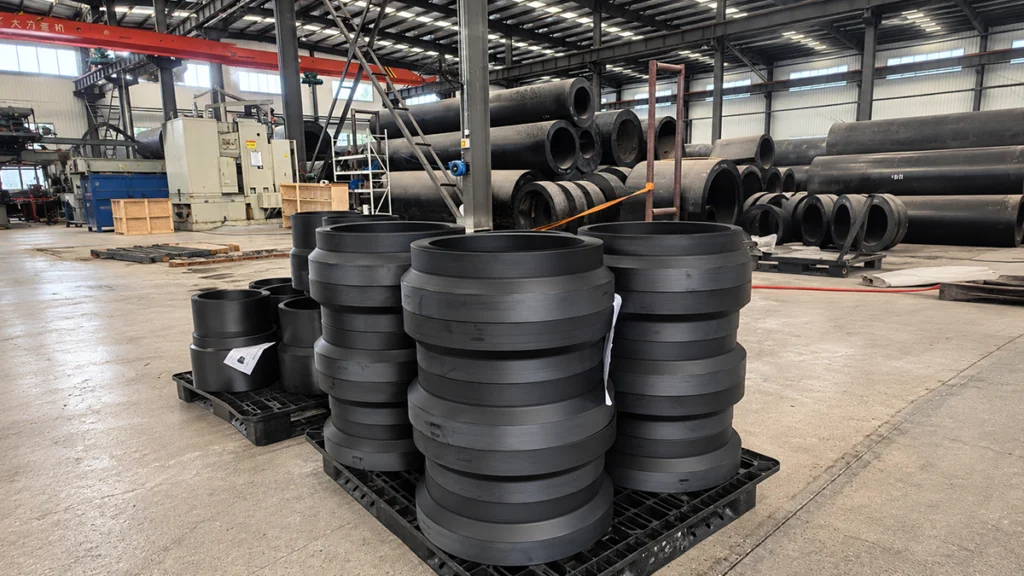
Even the most premium fittings on the market will fail catastrophically if they are poorly specified or improperly installed. Recognizing the hidden pitfalls of HDPE installation is the best way to prevent severe pipeline ruptures and expensive project delays.
Risk Checklist and Red Flags:
Technical specs only tell half the story. For EPC contractors and procurement officers, commercial viability carries equal weight. To keep massive infrastructure projects running on schedule, you have to thoroughly evaluate a supplier’s raw manufacturing capacity, internal quality control, and global logistics network.
Lead Times and MOQ:
When ordering bulk fittings, industry average lead times generally hover between 25 and 35 days. This fluctuates based on raw material availability and factory backlog. However, tier-one manufacturers operating massive facilities—think 200-acre plants pushing 100,000+ tons of annual capacity—can frequently compress those timelines down to a rapid 7-15 days. Minimum Order Quantities (MOQ) shift depending on the product. Standard injection-molded pieces usually feature very forgiving MOQs, while large-diameter molds or custom OEM fabricated units demand much higher volume commitments.
Supplier Audit Checklist:
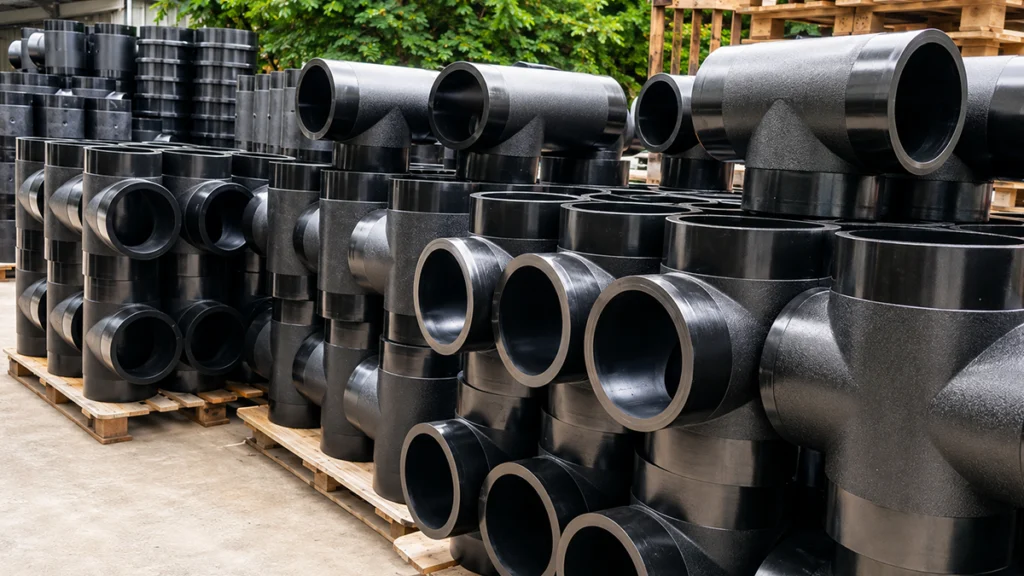
The industry relies on three primary categories: butt fusion, electrofusion, and compression fittings. Butt fusion utilizes a heavy heated plate to melt and bind components end-to-end. Electrofusion takes a different route, using built-in electrical wires to melt the joint from the inside out. Finally, compression fittings rely on mechanical nuts and internal grip rings to lock the pipe in place without a single drop of heat.
It’s not about one being inherently better; it’s about context. Butt fusion shines as a highly cost-effective solution for long, straight pipeline runs where you have plenty of trench space to maneuver equipment. Electrofusion, on the other hand, is the undisputed winner for cramped spaces, complex directional shifts, natural gas networks, and live pipeline repairs where bulky machinery just won’t fit.
They are highly effective for moderate pressure environments. Standard sizes between 20mm and 63mm comfortably hold up to PN16 (16 bar), which handles the demands of most municipal water lines perfectly well. However, if you’re dealing with massive diameters or extreme high-pressure municipal infrastructure, engineers strongly advise upgrading to butt fusion or electrofusion to guarantee absolute joint integrity.
Under specific, heavy-wall configurations like SDR7.4, premium PE100 fittings can hit an impressive maximum rating of PN25 (25 bar). That being said, the vast majority of industrial and municipal water applications rely on the SDR11 standard, which provides an exceptionally robust and reliable PN16 (16 bar) rating.
Absolutely. If you are using butt fusion, the SDR (which dictates wall thickness) of your fitting must perfectly match the pipe’s SDR to avoid creating hazardous internal stress concentrations. If you find yourself forced to join two mismatched SDRs, you cannot butt-fuse them directly. Instead, you must bridge the gap using an electrofusion coupler or a purpose-built mechanical transition fitting.
Engineers universally specify electrofusion fittings for gas distribution. Because the welding process is entirely automated, it essentially eliminates the risk of human error. The embedded copper coils forge a highly secure, leak-proof seal that easily satisfies strict ISO 4437 regulations for combustible gas transport.
Q7: How long do HDPE pipe fittings last in underground installations?
When properly manufactured from top-tier PE100 resin and installed strictly by the book (adhering to ISO standards), these fittings boast a design life of 50 to 100 years underground. They naturally resist soil chemicals, root intrusion, biological growth, and even aggressive seismic shifting.
Before signing any import contracts, request the supplier’s ISO 9001 and ISO 14001 certificates. For the products themselves, demand independent test reports validating ISO 4427 (for water) or ISO 4437 (for gas) compliance. If your project involves drinking water, do not proceed without explicit health safety certifications like WRAS, CE, or NSF/ANSI 61.
Pinpointing the exact HDPE pipe fittings for a project goes far beyond basic procurement—it’s a fundamental engineering decision that dictates the safety, lifespan, and financial success of your pipeline infrastructure. Once project managers grasp the distinct mechanical strengths of butt fusion, electrofusion, and mechanical compression, they can perfectly align their purchasing strategy with the realities of the job site. By insisting on PE100 material grades, refusing to compromise on SDR compatibility rules, and heavily auditing supplier capabilities, contractors can effectively eliminate installation risks. The ultimate reward is a highly resilient water or gas network engineered to deliver decades of flawless, leak-proof service.