Address
Zhengzhou, Henan, China
Work Hours
Monday to Friday: 7AM - 7PM
Weekend: 10AM - 5PM
Address
Zhengzhou, Henan, China
Work Hours
Monday to Friday: 7AM - 7PM
Weekend: 10AM - 5PM

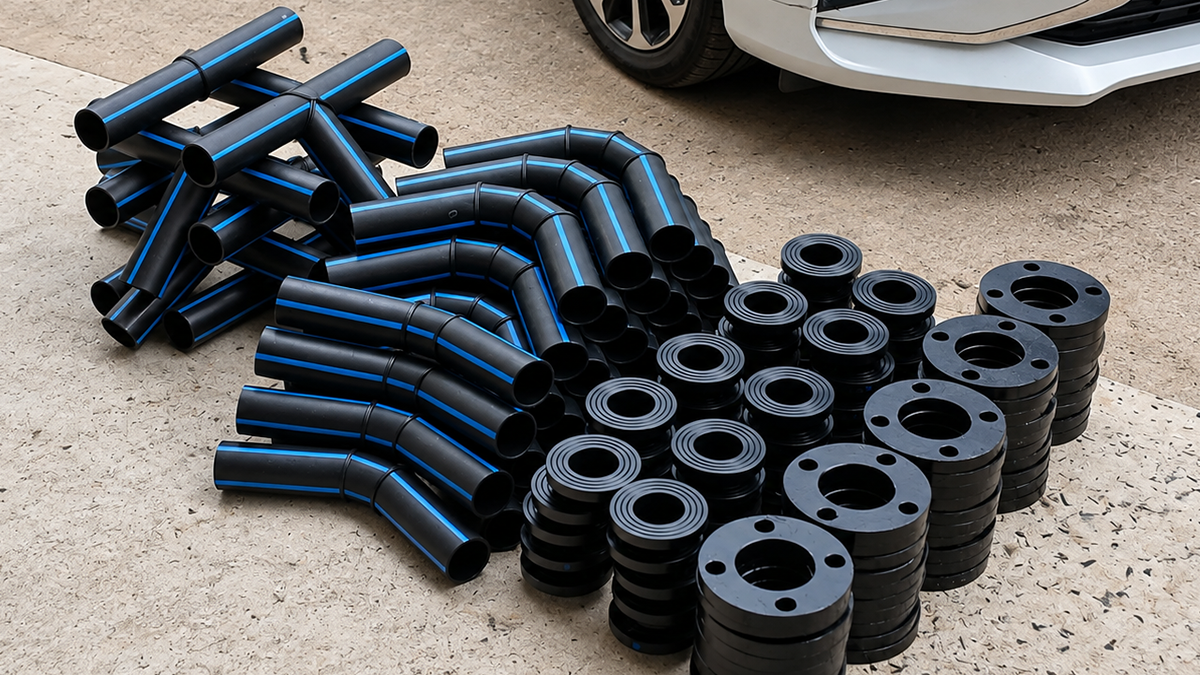
This HDPE pipe fittings guide explains the main types, connection methods, pressure ratings, and applications, and shows engineers and B2B buyers how to select the right fittings, evaluate suppliers, and avoid costly installation mistakes.
Engineered from High-Density Polyethylene (specifically PE80 or PE100), HDPE pipe fittings serve as the critical joints that connect, route, branch, and cap piping systems. You will find them at work in everything from municipal water mains to industrial gas lines. Their primary job? Keeping pipeline networks structurally sound and completely leak-free, even when subjected to intense pressure fluctuations and harsh environmental conditions.
A fitting’s real-world performance comes down to its manufacturing material grade:
Premium HDPE fittings must hit strict international benchmarks to ensure both safety and seamless interoperability. Keep an eye out for these core industry standards:
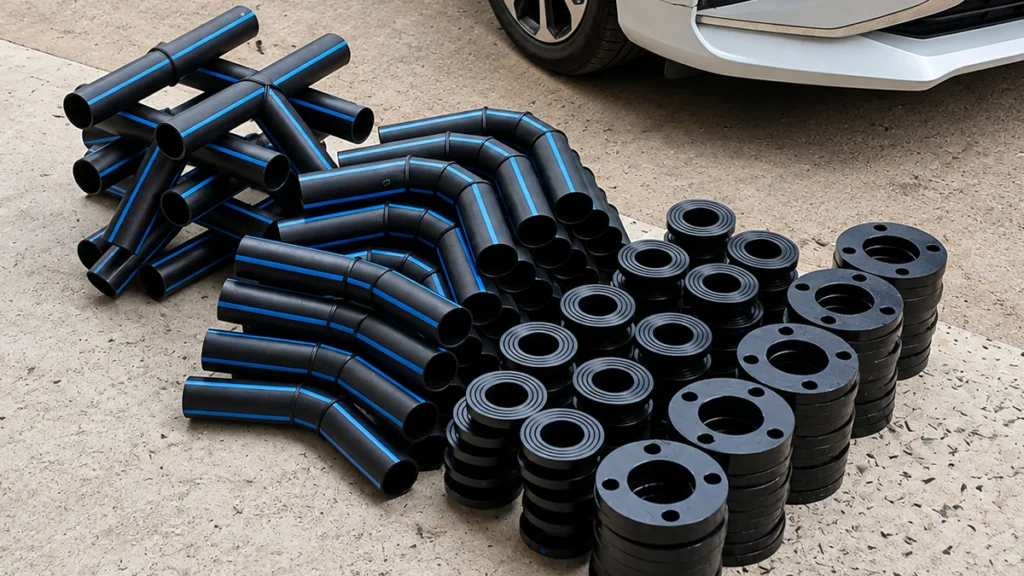
The market generally categorizes HDPE pipe fittings into four distinct groups: butt fusion, electrofusion, socket fusion, and compression. Manufacturers design each variant to handle specific diameter ranges and pressure thresholds. Nailing down the right type for your project boils down to three factors: the pipeline’s operating pressure, the physical installation environment, and the joining equipment you have on hand.
Engineers typically map out their options using classifications like these:
| Fitting Type | Manufacturing Method | Typical Diameter Range | Best Use Case |
|---|---|---|---|
| Butt Fusion Fittings | Injection Molded | DN20 – DN1200 | Long-distance straight pipelines, main water distribution networks. |
| Electrofusion Fittings | Injection Molded (w/ embedded copper coils) | DN20 – DN1200 | Tight trench spaces, pipeline repairs, high-pressure natural gas lines. |
| Compression Fittings | Mechanical Assembly | DN16 – DN110 | Temporary surface lines, agricultural irrigation, small plumbing systems. |
| Fabricated/Mitered Fittings | Welded from pipe segments | DN315 – DN3000 | Large diameter municipal infrastructure where injection molding is impossible. |
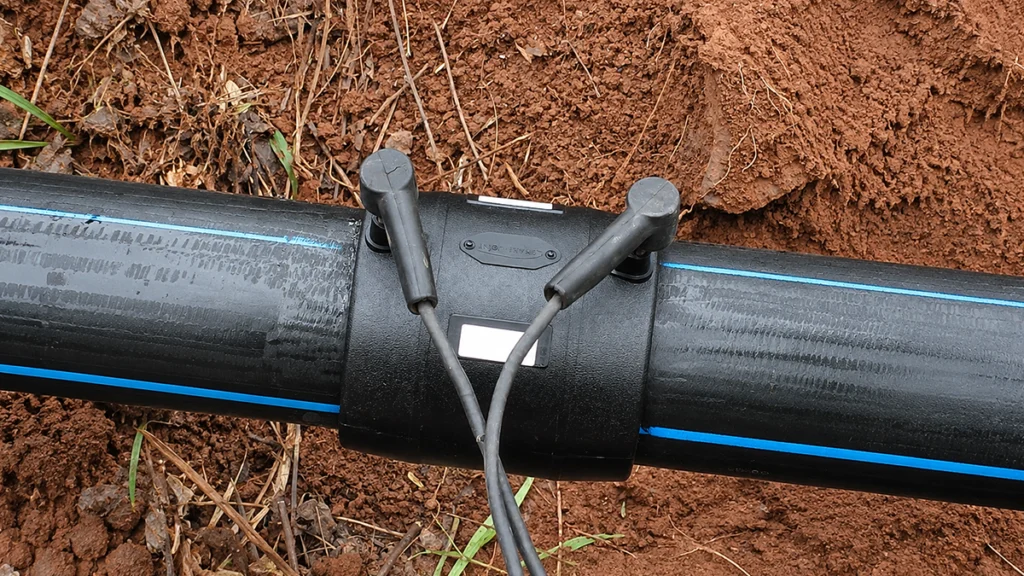
When it comes to reliability, butt fusion and electrofusion dominate the field. Butt fusion bonds pipes together via a heated plate, whereas electrofusion relies on fittings packed with embedded electrical heating coils. Execute either method correctly, and you get a monolithic joint that matches—or even exceeds—the strength of the original pipe. The result is a genuinely zero-leak system.
Butt Fusion Process:
1. Align your pipes and lock them securely into the butt fusion welding machine’s clamps.
2. Face the pipe ends with a mechanical planer. They need to be perfectly square and clean.
3. Apply a PTFE-coated heating plate to bring the pipe ends to a molten state (usually between 200°C and 220°C).
4. Swiftly remove the heating plate. Press the molten ends together under carefully controlled hydraulic pressure, holding them steady until the joint cools completely.
Electrofusion Process:
1. Clean the pipe ends thoroughly. Use a mechanical scraper to strip away the oxidized polyethylene layer.
2. Slide the prepared pipe ends directly into the electrofusion fitting.
3. Hook up your electrofusion welding machine to the metal terminals located on the fitting.
4. Run an electric current through the setup. This heats the internal copper coils, melts the surrounding plastic, and permanently fuses the fitting to the pipe wall.
Pitting HDPE electrofusion fittings against butt fusion alternatives requires project managers to balance upfront equipment costs with on-site installation constraints:
| Method | Equipment Needed | Diameter Range | Pros | Cons |
|---|---|---|---|---|
| Butt Fusion | Butt fusion welding machine | DN50 – DN3000 | Lower fitting cost, weld strength equals pipe strength. | Requires large trench space and heavy hydraulic equipment. |
| Electrofusion | Electrofusion welding machine | DN20 – DN1200 | Ideal for confined spaces, highly precise, automated welding process. | Higher per-fitting cost, requires strict scraping and cleaning protocols. |
You will spot HDPE pipe fittings across a massive range of sectors—from municipal water supply and natural gas distribution to industrial fluid transport and agricultural irrigation. Naturally, each sector demands its own specific pressure ratings and material grades. Polyethylene’s inherent versatility means these components can handle incredibly aggressive environments without falling victim to corrosion or chemical breakdown.
Municipal Water Supply
HDPE pipe fittings for water and gas networks make up the lion’s share of global infrastructure demand. For water systems, contractors rely heavily on PE100 fittings, usually rated somewhere between PN10 and PN16 (SDR17 down to SDR11). You can spot these easily: they are black with distinct blue identification stripes. When laying open-trench water mains, butt fusion tees, elbows, and flange adapters are the standard go-to.
Natural Gas Distribution
Gas networks leave absolutely no room for error. They demand the highest possible safety margins, utilizing PE80 or PE100 fittings rated from PN2 up to PN16. To meet ISO 4437 requirements, these components sport yellow stripes over a black base. Because they offer automated welding precision and top-tier leak prevention, electrofusion couplers, tapping tees, and saddles dominate this space.
Industrial and Mining Operations
Mining sites and chemical processing plants are brutal on infrastructure. They require extreme abrasion and chemical resistance. To handle abrasive slurries, acidic wastewater, and high-velocity fluid transfers, industrial pipelines frequently step up to high-pressure ratings of up to PN25 (SDR7.4).
Agricultural Irrigation Systems
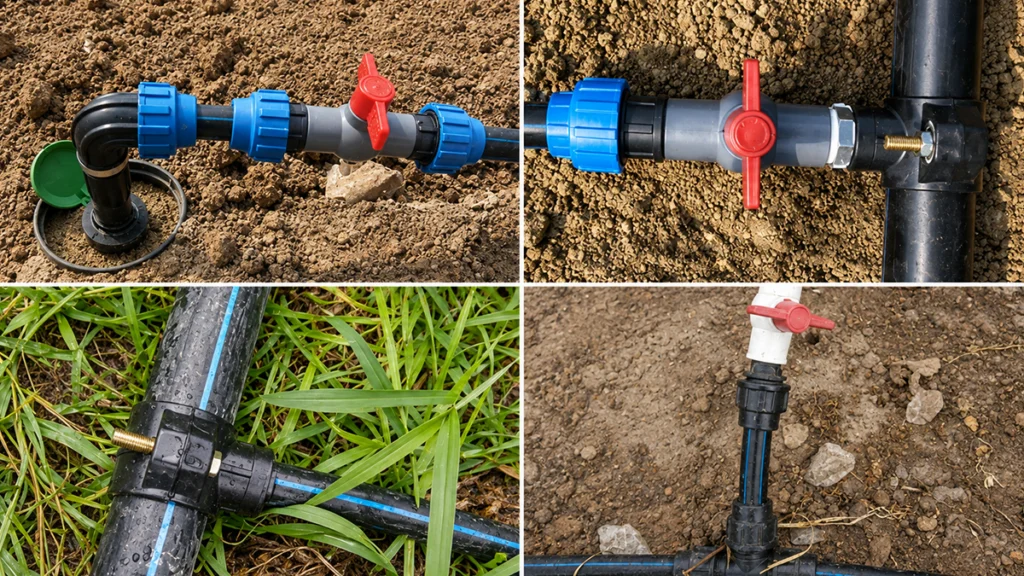
Farm infrastructure operates under much lower stress, generally sitting between PN4 and PN8. Here, HDPE compression fittings rule the roost. They allow crews to rapidly assemble and tear down mechanical joints without hauling specialized welding gear into the field. This makes seasonal system tweaks incredibly efficient.
Engineers specify HDPE pipe fittings using two primary metrics: Standard Dimension Ratio (SDR) and Nominal Pressure (PN). The rule of thumb is simple. A lower SDR means a thicker wall, which translates to a higher pressure capacity. Grasping the exact dimensions and specifications of your HDPE pipe fittings isn’t just good practice—it’s absolutely critical for dodging system over-pressurization and preventing catastrophic blowouts.
To calculate the SDR, you divide the pipe’s outside diameter (OD) by its minimum wall thickness. Take an SDR11 fitting, for instance: its outside diameter is exactly 11 times as thick as its wall. The parameter table below breaks down PE100 pipe fittings pressure ratings based on ISO 4427 standards:
| SDR (Standard Dimension Ratio) | PN (Nominal Pressure) | Wall Thickness (DN110) | Wall Thickness (DN315) |
|---|---|---|---|
| SDR 17 | PN 10 (10 Bar) | 6.6 mm | 18.7 mm |
| SDR 13.6 | PN 12.5 (12.5 Bar) | 8.1 mm | 23.2 mm |
| SDR 11 | PN 16 (16 Bar) | 10.0 mm | 28.6 mm |
| SDR 9 | PN 20 (20 Bar) | 12.3 mm | 35.2 mm |
| SDR 7.4 | PN 25 (25 Bar) | 15.1 mm | 43.1 mm |
*Engineering Note:* ASTM F2206 guidelines dictate that fabricated mitered fittings naturally carry a lower pressure rating than their injection-molded counterparts. To compensate, engineers must specify a fabricated fitting with a Dimension Ratio (DR) one step lower than the main pipe. If you are running a DR11 pipeline, you will need a DR9 fabricated fitting to safely match that pressure capacity.
Choosing the correct HDPE pipe fittings requires a methodical approach. Engineers have to perfectly match the fitting’s SDR to the main pipe, double-check fluid compatibility, and pick a connection method that actually makes sense for the physical job site. Sticking to a strict specification framework is the best way to avoid expensive installation bottlenecks and future maintenance nightmares.
Step-by-Step Selection Framework:
1. Identify the Fluid and Standard: Figure out exactly what the pipeline will transport. Potable water requires ISO 4427 compliance and blue stripes. Gaseous fuels demand ISO 4437 compliance and yellow stripes.
2. Determine Pressure Requirements: Crunch the numbers on the network’s maximum operating pressure. Factor in potential surge pressures, then lock in the appropriate PN/SDR rating.
3. Match Dimensions: Verify that the fitting’s outside diameter (OD) and wall thickness align perfectly with the adjoining pipe. If you are using fabricated mitered fittings, don’t forget to apply the necessary pressure derating calculations.
4. Select Connection Method: Go with butt fusion for wide-open trenches that can accommodate heavy machinery. Pivot to electrofusion for tight spaces, repair work, and high-risk gas lines.
Buyer Selection Checklist:
What actually drives the cost of HDPE pipe fittings? It usually comes down to PE100 resin market prices, the chosen manufacturing method, and shipping logistics. Notably, electrofusion fittings carry a much steeper price tag than butt fusion variants. Smart procurement managers know they have to balance these upfront component costs against rapid installation speeds and lifetime reliability.
Cost Breakdown:
Indicative Pricing & Procurement Specifics:
When sizing up HDPE pipe fittings prices and Minimum Order Quantities (MOQs), buyers quickly realize that standard ex-factory rates shift dramatically based on diameter. For instance, 50mm components generally float between $1 and $3, 110mm parts run from $8 to $15, and 200mm fittings sit in the $30 to $80 range. MOQs operate inversely to size. Small residential pieces demand high volume commitments, whereas you can order massive infrastructure fittings in single-digit batches. Established heavyweights like JINQUAN leverage massive production capabilities to offer factory-direct lead times of just 7 to 15 days, complete with robust export-grade packaging.
Vetting an HDPE pipe fittings supplier isn’t something you can rush. It requires a hard look at their factory capacity, strict verification of ISO and CE certifications, and absolute proof that they use 100% traceable virgin PE100 resin. Securing a reliable manufacturing partner is the single best way to eliminate the risk of catastrophic pipeline failures linked to cheap, substandard materials.
Before signing any contracts, procurement teams should run potential HDPE pipe fittings manufacturers through this rigorous audit checklist:
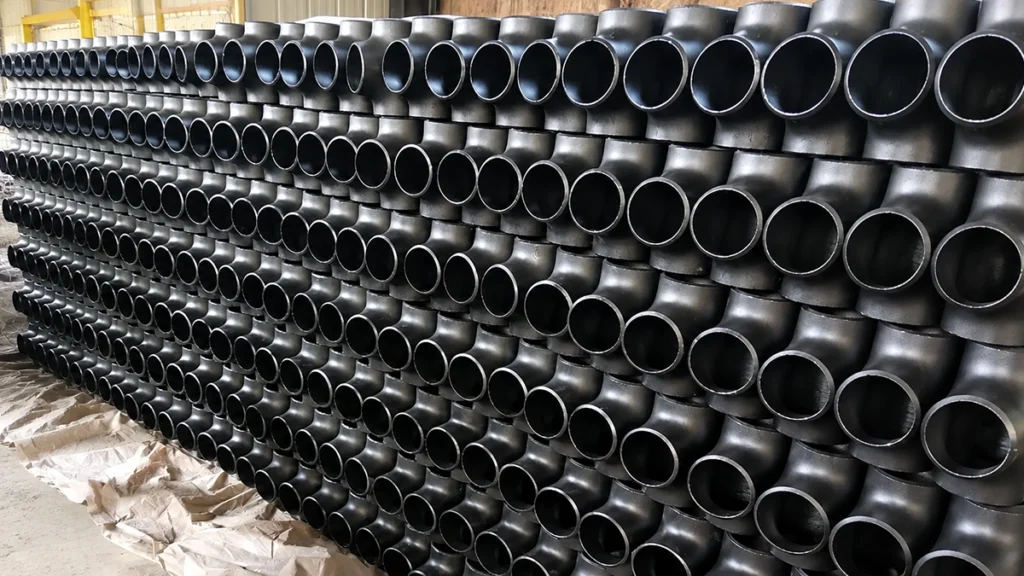
Field execution is everything. Even top-tier fittings will fail if the installation crew cuts corners. The most frequent installation blunders include failing to scrape the pipe properly, misaligning the joint during fusion, and mixing up SDR ratings. Every single one of these errors practically guarantees a catastrophic joint failure down the line.
Installation Risk List:
Achieving optimal performance requires a bit of foresight. Engineers need to map their specific application directly to the appropriate fitting type and connection method. Crucially, every component in the system must share the exact same pressure rating and material grade. Ultimately, a pipeline network only succeeds when the physical hardware perfectly matches the environmental realities of the job site.
Summary Mapping Table:
| Application Environment | Recommended Fitting Type | Preferred Connection Method |
|---|---|---|
| Municipal Water Main (Open Trench) | Injection Molded PE100 | Butt Fusion |
| Urban Gas Distribution (Confined Space) | Electrofusion PE100 | Electrofusion |
| Temporary Agricultural Irrigation | PP/PE Compression | Mechanical Assembly |
| Large Infrastructure (>DN1000) | Fabricated/Mitered PE100 | Butt Fusion |
HDPE (High-Density Polyethylene) acts as the broad umbrella term for the material, whereas PE100 refers to a specific, premium grade within that category. PE100 fittings boast a Minimum Required Strength (MRS) of 10 MPa, stepping up from the 8 MPa offered by older PE80 grades. Because of this higher density, PE100 components can achieve impressive pressure ratings while maintaining thinner walls, which ultimately boosts the system’s overall flow capacity.
For large-diameter pipelines—typically anything over DN315—butt fusion is almost always the preferred method. It creates a robust, monolithic joint that mirrors the inherent strength of the pipe itself. In massive infrastructure projects where injection molding simply isn’t feasible, crews rely on heavy-duty hydraulic butt fusion machines to weld fabricated mitered fittings.
Absolutely. Global regulatory bodies widely approve HDPE pipe fittings for potable water networks. The material won’t rust, corrode, or leach harmful toxins into the water supply. Just ensure that the fittings designated for drinking water are molded from 100% virgin PE100 resin and carry certifications verifying compliance with standards like ISO 4427 or EN 12201.
Standard injection-molded PE100 HDPE fittings generally max out at PN25 (25 Bar), which aligns with a Standard Dimension Ratio of SDR7.4. These ultra-thick-walled fittings are built tough, primarily serving high-stress industrial operations, mining environments, and high-head water transport systems.
Assuming they are specified correctly and installed strictly by ISO or ASTM guidelines, underground HDPE pipe fittings boast a design life of 50 to 100 years. Their exceptional resistance to soil chemicals, stray electrical currents, and biological growth makes them the ultimate choice for permanent underground infrastructure.
It isn’t about one being universally better; it’s about picking the right tool for the job. Electrofusion shines in confined trench spaces, gas distribution setups, and pipeline repairs because the automated process is highly precise and easy to execute in cramped quarters. On the flip side, butt fusion is incredibly cost-effective and highly efficient when you’re laying long, straight runs of pipe in an open trench.
If you are exporting globally, your HDPE pipe fittings need to originate from a factory holding ISO 9001 (Quality Management) and ISO 14001 (Environmental Management) certifications. On the product side, look for the CE mark for European markets, strict compliance with ISO 4427/4437 or ASTM standards, and backing from independent testing labs like SGS.
Nailing down exact quantities requires a meticulous review of the pipeline’s isometric drawings. Engineers need to tally up every single directional change (elbows), branch off (tees or saddles), diameter transition (reducers), and termination point (end caps or flange adapters). Pro tip: Always order a 5% to 10% surplus of your most common fittings to cover unexpected field modifications.
Getting the specification right on HDPE pipe fittings dictates the ultimate safety and lifespan of your piping infrastructure. When engineers clearly grasp the nuances between PE80 and PE100 materials, perfectly align their SDR and PN ratings, and deploy the smartest connection method for the site, they lay the groundwork for a truly leak-free system. Taking the extra time to thoroughly vet suppliers—demanding virgin resin traceability, auditing factory capacity, and verifying ISO and ASTM compliance—secures the project’s success while drastically cutting down on future maintenance headaches.