Address
Zhengzhou, Henan, China
Work Hours
Monday to Friday: 7AM - 7PM
Weekend: 10AM - 5PM
Address
Zhengzhou, Henan, China
Work Hours
Monday to Friday: 7AM - 7PM
Weekend: 10AM - 5PM

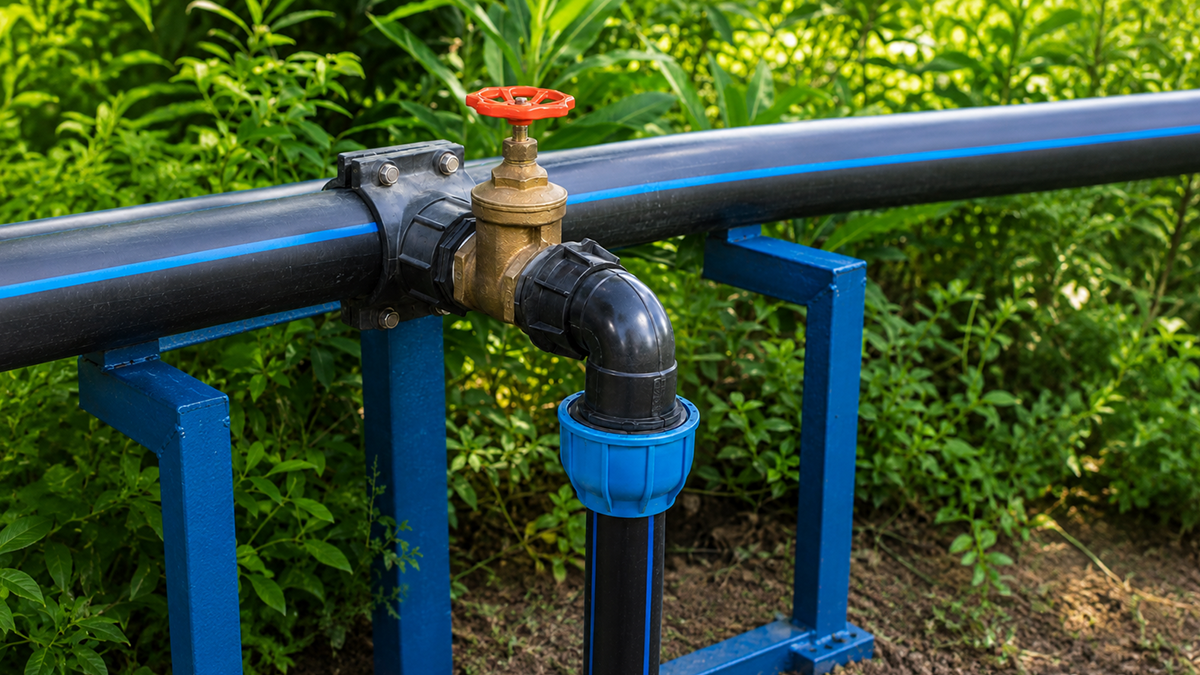
This HDPE irrigation pipe guide explains how to choose the correct pipe size and pressure rating (PN/SDR) for agricultural use. Learn sizing by flow rate, irrigation method, and field conditions, plus B2B procurement criteria, cost factors, and supplier evaluation tips.
Think of High-Density Polyethylene (HDPE) irrigation pipe as the circulatory system of a modern farm. Extruded from petroleum-based synthetic polymers, this flexible thermoplastic conduit is purpose-built to handle the grueling demands of agricultural water delivery. It withstands intense pressure, shrugs off environmental stress, and creates a completely leak-free network for moving water from source pumps directly to field emitters.
When you are designing agricultural infrastructure, the material grade of your piping dictates its long-term survival. You will typically encounter two primary grades: PE100 and PE80. PE100 pipe boasts a Minimum Required Strength (MRS) of 10.0 MPa. This makes it the undisputed heavyweight for high-pressure mainline applications, allowing engineers to optimize wall thickness without compromising structural integrity. On the flip side, PE80 carries an MRS of 8.0 MPa, stepping in as a reliable, medium-strength alternative for lower-pressure drainage and irrigation layouts.
Why does specifying the exact right agricultural HDPE pipe matter so much? Because it heavily dictates the Total Cost of Ownership (TCO) of your farming operation. A properly manufactured and expertly installed HDPE line easily delivers a 50 to 100-year service life. It won’t degrade when exposed to harsh agricultural chemicals, liquid fertilizers, or aggressive pesticides used during fertigation. Better yet, when manufacturers compound the resin with the precise amount of carbon black stabilizers, the pipe becomes fully UV resistant for above-ground use. Add in its natural flexibility—which drastically cuts down the need for directional fittings across rugged, uneven terrain—and you have an incredibly efficient water delivery solution.
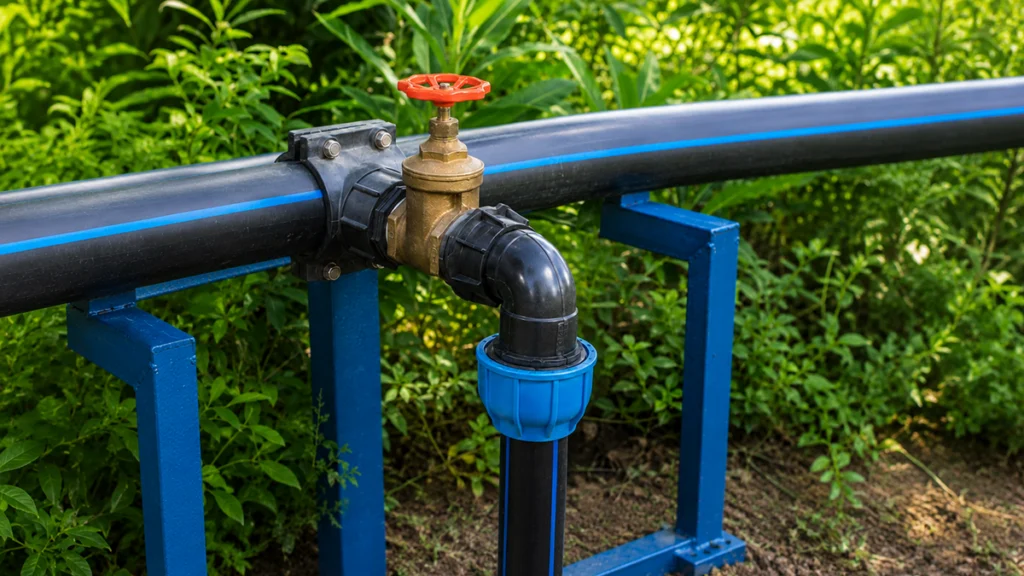
Moving water across hundreds of acres isn’t a one-size-fits-all operation. You need a tiered piping strategy that steps down both diameter and pressure as water travels from the primary source to the individual plant. Grasping these categories is a foundational step in proper system design.
| Pipe Category | Typical OD Range | Pressure Class | Primary Agricultural Application |
|---|---|---|---|
| HDPE Mainline Pipes | DN90–DN1200+ |
PN10–PN16 (SDR11–SDR17) |
Transporting large volumes of water from pumps, reservoirs, or water sources to agricultural fields. |
| HDPE Sub-main Pipes | DN40–DN200 |
PN6–PN10 (SDR17–SDR26) |
Distributing water from main pipelines to different irrigation zones and field networks. |
| HDPE Lateral Pipes | DN20–DN63 |
PN4–PN10 (SDR17–SDR33) |
Connecting sprinklers, drip irrigation systems, and field water outlets. |
| HDPE Coiled Pipes | DN20–DN110 | PN6–PN16 | Flexible installation for farm irrigation networks and long-distance field connections. |
| HDPE Fittings & Connections | DN20–DN1200+ | Depends on pipe rating | Creating reliable pipeline connections with butt fusion, electrofusion, or mechanical joints. |
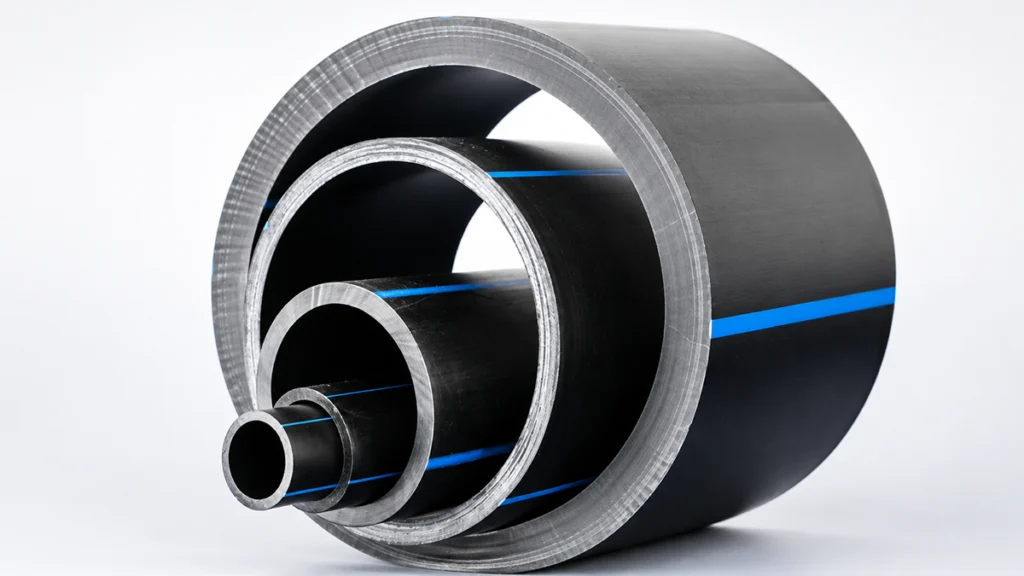
If you want to understand how much pressure a polyethylene pipe can safely handle, look at its Standard Dimension Ratio (SDR). This metric defines the relationship between the HDPE pipe’s outside diameter (OD) and its minimum wall thickness. Ultimately, the SDR dictates the Nominal Pressure (PN) rating. It sounds counterintuitive at first, but a lower SDR value actually means a thicker HDPE pipe wall, which gives you a higher pressure capacity. The PN rating itself tells you the maximum allowable operating pressure (in bar) at a standard 20°C.
When engineers specify PE100 irrigation pipes, they map the SDR directly to the necessary PN rating to guarantee the infrastructure can survive daily operational stress.
PE100 SDR to PN Mapping Table:
Matching the right PN rating to your specific pump head and field elevation requires a systematic approach. Start by identifying the absolute maximum output pressure of your irrigation pump. Next, calculate your static head by measuring the elevation change from the pump station to the highest point in your field. Finally, always bake in a 20% safety margin to absorb sudden pressure surges or water hammer. For example, if your total calculated system pressure hits 8 bar, stepping up to an SDR 17 (PN10) pipe gives you the structural integrity and safety buffer you need to sleep soundly.
Guesswork has no place in hydraulic design. Picking the correct HDPE mainline size for sprinkler networks or drip systems demands precise calculations. Squeeze water through an undersized pipe, and you will battle massive friction loss and dangerously high water velocities. Oversize the pipe, and you just inflated your project budget for zero added benefit.
Step-by-Step Sizing Methodology:
1. Calculate Total Flow Rate: Figure out the total volume of water your irrigation zone demands, measured in Gallons Per Minute (GPM) or cubic meters per hour (m³/h).
2. Select a Safe Water Velocity: Keep your water velocity strictly under 1.5 m/s (5 ft/s). Push past this limit, and you drastically increase the risk of hydraulic shock (water hammer), which can violently rupture valves and fittings.
3. Check Friction Loss: Pull up the friction loss charts (usually measured in PSI or meters of head per 100m) for your specific SDR rating.
4. Confirm Internal Diameter: Pick an outside diameter (OD) that yields a large enough internal diameter to handle your flow rate while staying safely under the velocity threshold.
HDPE Pipe Size Chart (Approximate Flow at Safe Velocity < 1.5 m/s):
| Pipe OD (Metric/Imperial) | Max Safe Flow Rate (GPM) | Max Safe Flow Rate (m³/h) | Typical Application |
|---|---|---|---|
| 16mm (1/2") | ~4 GPM | 0.9 m³/h | Drip laterals, greenhouse lines |
| 20mm (3/4") | ~8 GPM | 1.8 m³/h | Micro-sprinkler laterals |
| 32mm (1") | ~16 GPM | 3.6 m³/h | Small sub-mains |
| 63mm (2") | ~60 GPM | 13.6 m³/h | Medium sub-mains, small farm mains |
| 110mm (4") | ~200 GPM | 45.0 m³/h | Large agricultural mainlines |
Different farming setups place wildly different hydraulic stresses on piping infrastructure. Here are a few scenario-based guidelines to help you select the optimal HDPE pipe for everything from delicate drip systems to high-powered sprinkler arrays.
10-Hectare Drip Orchard
Drip systems run on low pressure but demand flawless flow distribution across the entire block.
50-Hectare Sprinkler Field
Sprinkler heads need serious pressure to hit their target spray radius, which means your mainline infrastructure has to be rock solid.
Greenhouse Vegetable Farm
Greenhouses pack intense, precise flow control into a much smaller physical footprint.
Never procure agricultural piping on a handshake or a slick brochure. You need to strictly verify international manufacturing standards to guarantee long-term field reliability. Smart buyers force suppliers to hand over testing reports and compliance certificates long before signing off on a bulk order.
Procurement Verification Checklist:
When weighing HDPE against PVC for farming—or stacking it up against legacy materials like galvanized steel—you have to look past the upfront cost per meter. The real metric that matters is your 20-year Total Cost of Ownership (TCO).
| Feature | HDPE Pipe | PVC Pipe | LDPE Pipe | Galvanized Steel |
|---|---|---|---|---|
| Service Life | Often 50+ years | Long when properly installed | Depends on UV and pressure | Depends on corrosion conditions |
| Flexibility | High | Low | Very high | Low |
| Pressure Use | Mainlines and pressure systems | Pressure irrigation systems | Low-pressure laterals | High-strength applications |
| Jointing | Fusion or mechanical fittings | Solvent, gasketed, or mechanical | Compression or barbed fittings | Threaded, flanged, or welded |
| Corrosion Resistance | High | High | High | May corrode |
| Typical Use | Mainlines and sub-mains | Rigid distribution lines | Drip and lateral lines | Pump stations and exposed sections |
| Cost Consideration | Low maintenance | Competitive installation cost | Low initial cost | Higher maintenance potential |
Actual performance depends on pressure class, installation, water quality, temperature, and project conditions.
HDPE easily dominates mainline and sub-main infrastructure because of its incredible surge tolerance and monolithic fusion joints. Sure, PVC might tempt you with a cheaper initial price tag, but its rigid nature drives up installation labor, and those gasketed joints are notorious for springing leaks over time. Galvanized steel used to be the gold standard, but it falls victim to internal rust and aggressive corrosion the minute you introduce liquid fertilizers into the line.
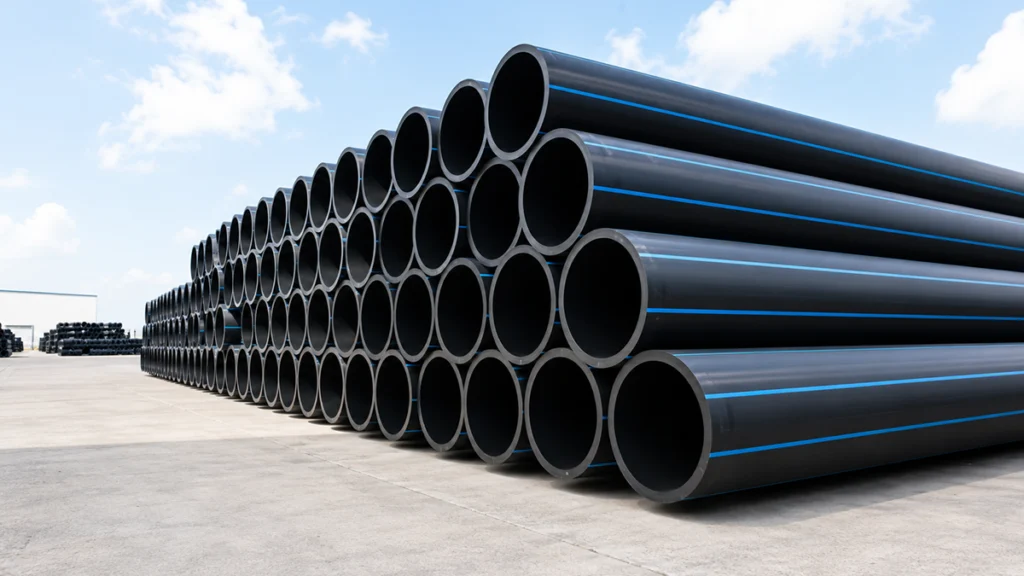
Accurate project budgeting and timeline management require a solid grasp of pricing and logistics. Here is a breakdown of what to expect when sourcing B2B agricultural piping.
B2B Price Ranges (Estimated USD):
Minimum Order Quantities (MOQ):
Most factory MOQs sit between 1,000 and 3,000 meters, though this heavily depends on the diameter. Because massive HDPE pipes eat up more raw resin per meter, manufacturers often lower the length-based MOQ for larger sizes.
Container Loading Efficiency:
Lead Times:
The industry standard for bulk production usually hovers around 10 to 30 days. That said, elite manufacturers with massive extrusion capacity—such as JINQUAN—can often push out expedited 7-15 day delivery schedules to keep urgent agricultural projects on track.
Even veteran agricultural engineers can trigger catastrophic system failures if their procurement specs ignore basic hydraulic realities. Keep your project safe by avoiding these frequent traps:
1. Ignoring Water Hammer: Cramming water through undersized HDPE pipes pushes velocities past 1.5 m/s. When a valve snaps shut, the resulting hydraulic shock wave will easily blow out mechanical fittings.
2. Confusing SDR and PN: Assuming a bigger SDR number means a stronger HDPE pipe is a dangerous rookie mistake. It’s exactly the opposite: a higher SDR means a thinner wall, which drastically lowers your pressure capacity.
3. Skipping UV Protection: Deploying non-black HDPE pipes—or cheap pipes lacking 2-2.5% carbon black stabilizers—above ground is a recipe for disaster. They will turn brittle and crack after just a few seasons in the sun.
4. Using PE80 for High-Pressure Mains: Forcing PE80 into high-pressure roles requires incredibly thick walls. This chokes off your internal flow area, restricts water volume, and drives up your total material costs.
5. Poor Fusion Welding: If your crew fails to maintain precise temperature and pressure parameters during butt fusion, you will end up with brittle, weak joints that are guaranteed to leak underground.
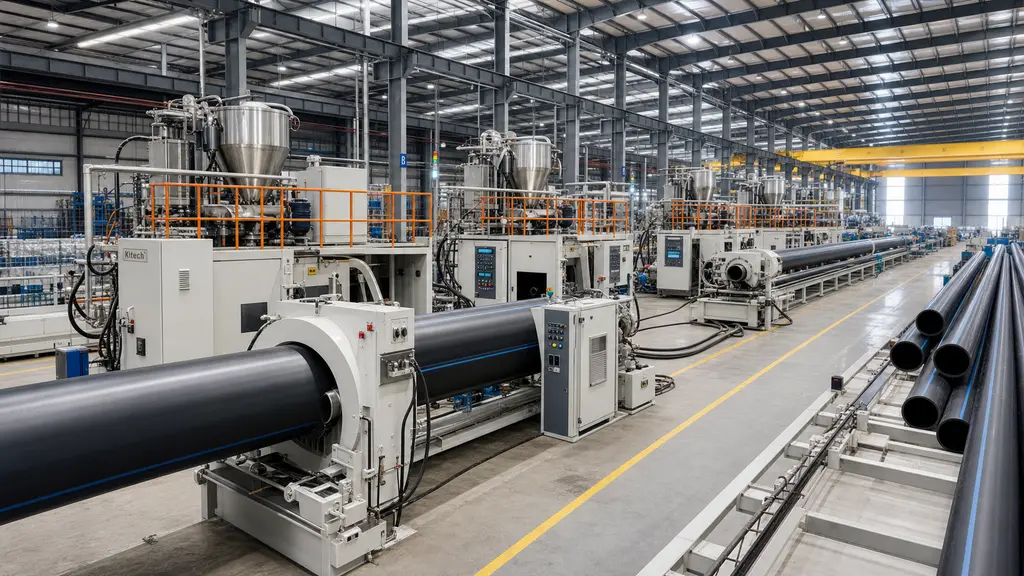
Your piping network is only as reliable as the factory that extruded it. Vetting your manufacturing partner is just as critical as dialing in your HDPE pipe specifications. A top-tier supplier guarantees material integrity, nail-on-the-head dimensional accuracy, and strict adherence to your delivery schedule.
Supplier Qualification Checklist:
The suitable pressure rating depends on the system design, pump pressure, elevation changes, flow rate, and potential surge conditions. Low-pressure drip irrigation may use lower PN classes, while sprinkler systems and main water lines often require higher ratings such as PN10 to PN16. The final selection should follow hydraulic calculations and project requirements.
Start by determining the required flow rate, pipeline length, elevation difference, and operating pressure. Then select a pipe diameter that keeps water velocity and friction loss within acceptable limits. A hydraulic calculation should confirm that sufficient pressure reaches the furthest sprinklers, drippers, or field outlets.
HDPE and PVC can both be suitable for irrigation, but they perform differently. HDPE is more flexible, adapts well to uneven terrain, and can use heat-fused joints. PVC is rigid and may be cost-effective for straight, fixed installations. The better option depends on pressure, layout, installation method, climate, and project budget.
A properly designed, manufactured, installed, and operated HDPE irrigation pipe may provide a service life of 50 years or more. Actual performance depends on material quality, pressure, temperature, UV exposure, soil conditions, joining quality, and maintenance.
Yes. HDPE irrigation pipe is suitable for underground installation because it is flexible, corrosion-resistant, and able to accommodate limited ground movement. However, trench depth, bedding, backfill, traffic loads, soil conditions, and installation procedures should still follow the project specification and applicable local standards.
PE100 has a higher Minimum Required Strength of 10 MPa, compared with 8 MPa for PE80. Under comparable design conditions, PE100 can provide the same pressure rating with a thinner wall or support a higher pressure class at a similar wall thickness. The final choice should consider pressure, SDR, diameter, temperature, and project requirements.
The price depends on pipe diameter, SDR, material grade, order quantity, pipe length, markings, packaging, resin cost, and freight. Because prices vary by specification and market conditions, buyers should request a quotation based on the exact diameter, pressure rating, quantity, and delivery destination.
HDPE irrigation pipes can be connected using butt fusion, socket fusion, electrofusion, compression fittings, flange adaptors, and other mechanical connections. Fusion methods are commonly used for permanent pipeline systems, while compression fittings are practical for smaller diameters, field connections, and installations requiring easier assembly or disassembly.
Selecting the right HDPE irrigation pipe requires careful consideration of flow rate, pipe diameter, operating pressure, SDR, material grade, installation conditions, and pump performance. A properly designed system can improve water-delivery efficiency and support reliable long-term operation.
Buyers should also review the applicable product standard, material traceability, UV requirements, test documentation, and the supplier’s manufacturing and quality-control capabilities. Working with an experienced manufacturer that can provide compatible pipes, fittings, technical support, and export coordination can simplify procurement and reduce project risks.