Address
Zhengzhou, Henan, China
Work Hours
Monday to Friday: 7AM - 7PM
Weekend: 10AM - 5PM
Address
Zhengzhou, Henan, China
Work Hours
Monday to Friday: 7AM - 7PM
Weekend: 10AM - 5PM

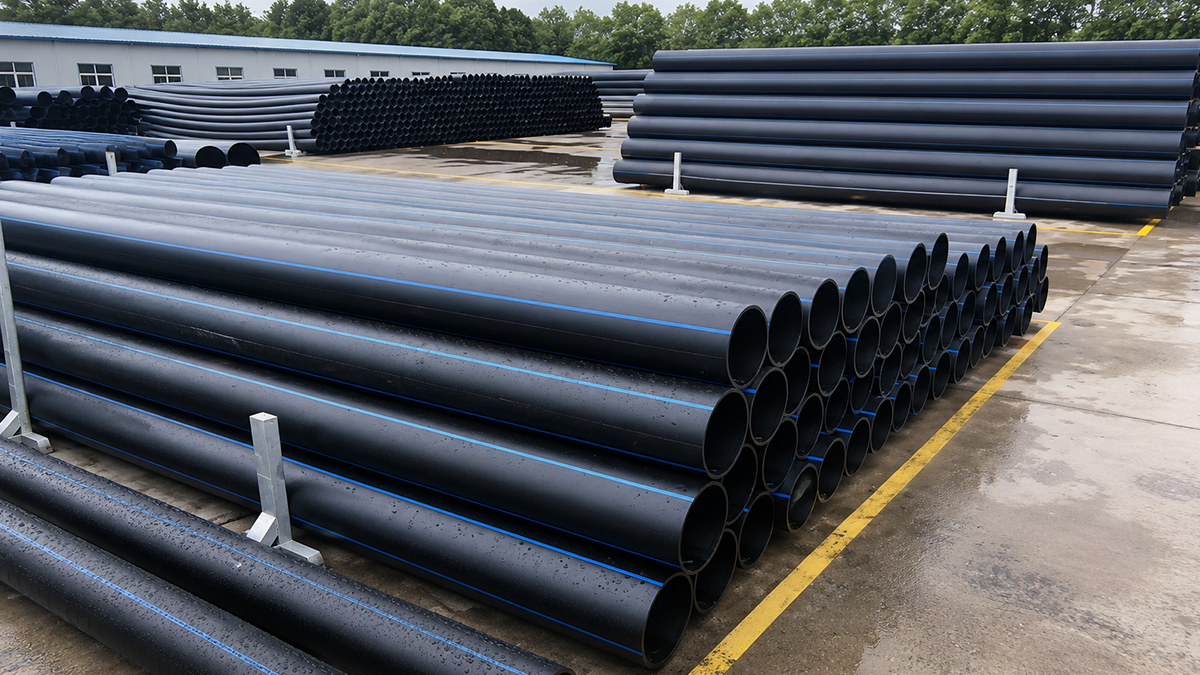
This HDPE mining pipe guide explains material grades, specifications, and key applications in slurry, tailings, and abrasive media transport, helping engineers and procurement teams select the right pipe, compare alternatives, and avoid costly sourcing mistakes.
An HDPE mining pipe is a heavy-duty, high-density polyethylene pipeline built specifically to handle abrasive slurries, mineral tailings, and highly aggressive mine water. Manufacturers typically extrude these pipes from high-performance PE100 and PE4710 resin grades, with diameters ranging anywhere from a compact DN16 up to a massive DN3000 mm. To protect against the elements, the resin is formulated with well-dispersed carbon black. This gives the pipe a minimum of 10 years of UV resistance, which is absolutely essential for above-ground mining installations and long-term outdoor storage.
Standard commercial piping simply cannot survive in a mine. Mining-grade HDPE, on the other hand, is engineered to withstand severe internal sliding-bed abrasion alongside relentless external environmental stress. Thanks to its unique molecular structure, high-density polyethylene naturally absorbs impact and resists crack propagation. That makes it a non-negotiable infrastructure component for open-pit dewatering, mineral processing facilities, and heavy dredging operations.
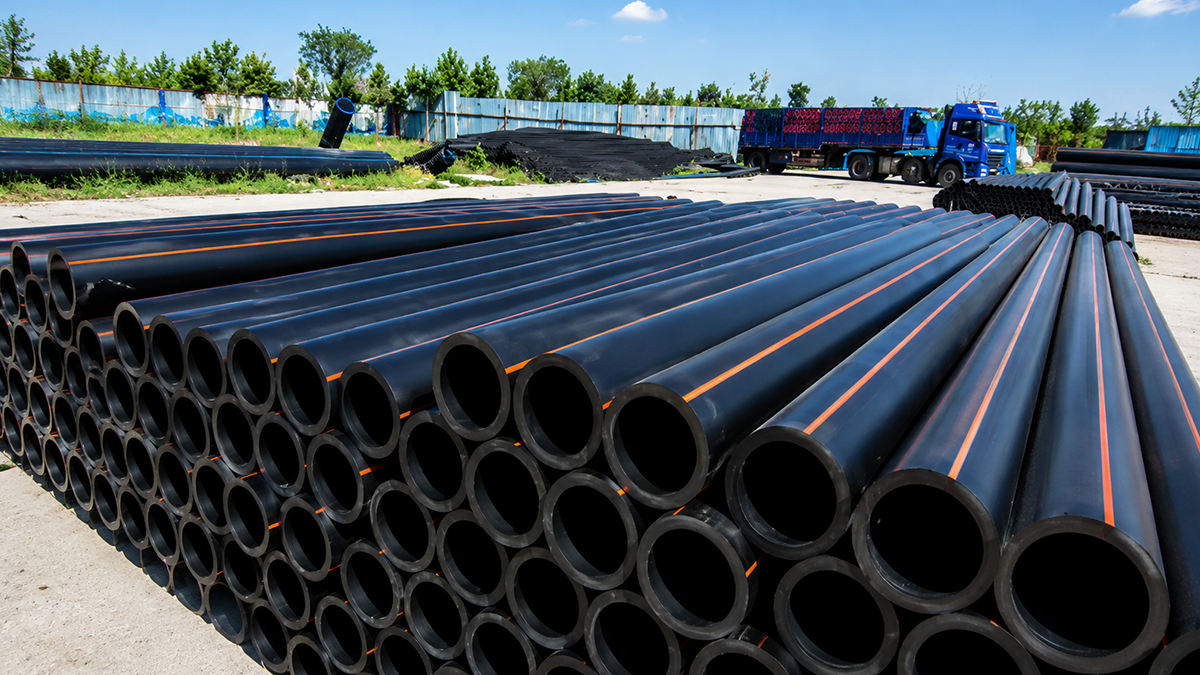
HDPE pipe dominates the mining sector primarily because it delivers a remarkable 4:1 abrasion resistance ratio over standard steel pipe in controlled sliding-bed wear scenarios. This exceptional wear life fundamentally changes pipeline economics. It drastically reduces replacement cycles and minimizes maintenance downtime in high-volume slurry transport systems.
Beyond just abrasion resistance, HDPE is 100% immune to galvanic corrosion. Mining environments routinely expose equipment to acidic chemistry, whether that means heap leaching solutions or highly corrosive runoff. HDPE maintains its structural integrity perfectly without requiring protective coatings or expensive cathodic protection systems. The material’s inherent flexibility is another massive advantage. It allows the HDPE pipeline to bend and conform to uneven, rugged mine terrain, which significantly cuts down on the need for fabricated directional fittings. When joined using thermofusion, HDPE creates a continuous, leak-proof system. This completely eliminates the mechanical weak points you typically find in flanged or threaded metal pipelines.
You will generally encounter three main grades of HDPE pipe for mining: PE80, PE100, and PE4710. While all three have their place in industrial applications, PE100 serves as the current global standard. Meanwhile, PE4710 steps in to offer advanced pressure ratings and superior crack resistance for the most extreme environments.
| Pipe Grade | Structure / Material | Typical Mining Use | Key Advantage / Wear Life |
|---|---|---|---|
| PE80 | Legacy medium-density polyethylene | Low-pressure gravity flow, minor drainage | Sufficient for basic water transport; lower tensile strength than modern grades. |
| PE100 | Standard high-density polyethylene | Tailings disposal, slurry transport, dredging | Excellent baseline for abrasion resistance and hydrostatic strength. |
| PE4710 | Advanced high-density polyethylene | High-pressure pit dewatering, severe slurry lines | Higher tensile strength; superior resistance to Rapid Crack Propagation (RCP); allows higher operating pressures for a given wall thickness. |
Engineers define HDPE mining pipe specifications using three primary metrics: Standard Dimension Ratio (SDR), Nominal Pressure (PN), and exact outer diameters (OD). SDR is a critical calculation derived by dividing the outer diameter by the wall thickness (OD ÷ Wall Thickness = SDR). Take a DN110 pipe with a 10mm wall thickness, for example. That HDPE pipe is classified as SDR 11. Remember this rule of thumb: a lower SDR indicates a thicker wall, which translates to a higher pressure rating.
| Parameter | Specification Range |
|---|---|
| Diameter Range (DN/OD) | DN16 to DN3000 mm |
| Standard Dimension Ratio (SDR) | SDR 7, SDR 9, SDR 11, SDR 13.5, SDR 17, SDR 21, SDR 26, SDR 32.5 |
| Pressure Class Ratings (PN) | PN4, PN6, PN8, PN10, PN12.5, PN16, PN20, PN25 |
| Operating Temperature | -40°C to 60°C (Derating required above 20°C) |
| Manufacturing Standards | ISO 4427, ASTM F714, AS/NZS 4130 |
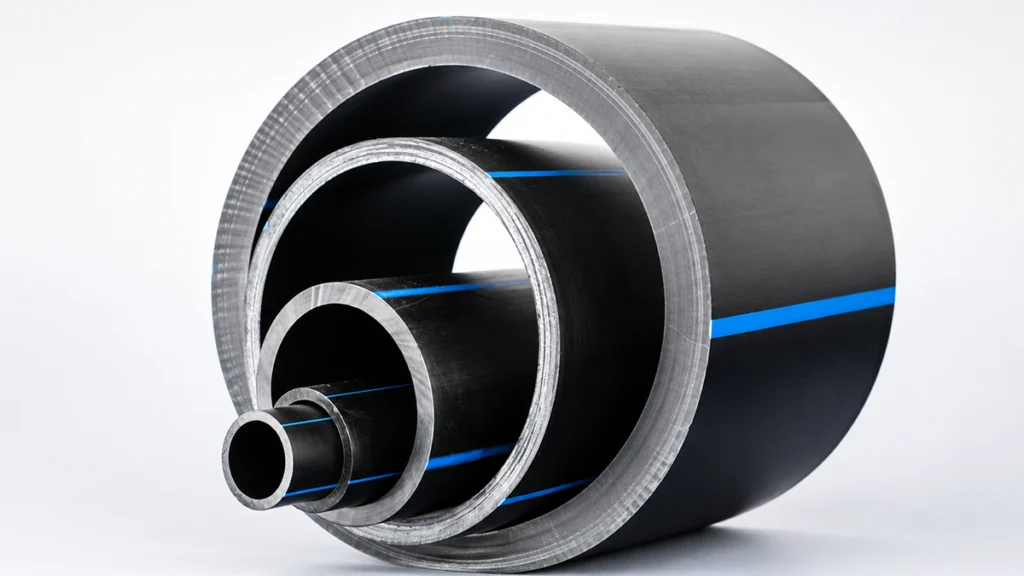
Mining operations deploy HDPE pipe across multiple extraction and processing stages. Because flow conditions and media types vary wildly across a site, each application demands specific PE pipe configurations.
Tailings and Slurry Transport
Pit Dewatering
Heap Leaching
Dredging and Tailings Ponds
Specifying the correct mining pipeline parameters isn’t guesswork. It requires a systematic evaluation of your operating pressure, environmental conditions, and the physical characteristics of whatever media you are transporting. Follow this step-by-step decision framework to get it right.
1. Determine Flow Pressure and Temperature: Start by calculating the maximum internal hydrostatic pressure of your system. You must then adjust this requirement based on your operating temperature. HDPE pressure ratings (PN) are standardized at 20°C, so higher temperatures will require specific derating factors.
2. Calculate the Required PN Rating: Using your adjusted pressure requirements, select the appropriate Nominal Pressure class (e.g., PN10, PN16).
3. Add a Sacrificial Wear Allowance: If you are moving slurry and tailings, you have to account for sliding-bed abrasion. Calculate the expected wear rate over your target lifespan—say, 20 years—and add that thickness to the baseline HDPE pipe wall. Practically speaking, this usually means upgrading to a lower SDR (like moving from SDR 11 down to SDR 9) just to provide that extra sacrificial material.
4. Specify the Resin Grade: Decide between PE100 and PE4710. Base this choice on the required tensile strength and the potential risk of rapid crack propagation within your specific mine environment.
5. Determine Installation Constraints: Look closely at the terrain. You need to decide if the natural flexibility of standard HDPE is enough, or if you will require fabricated fittings and specialized on-site welding equipment to navigate the landscape.
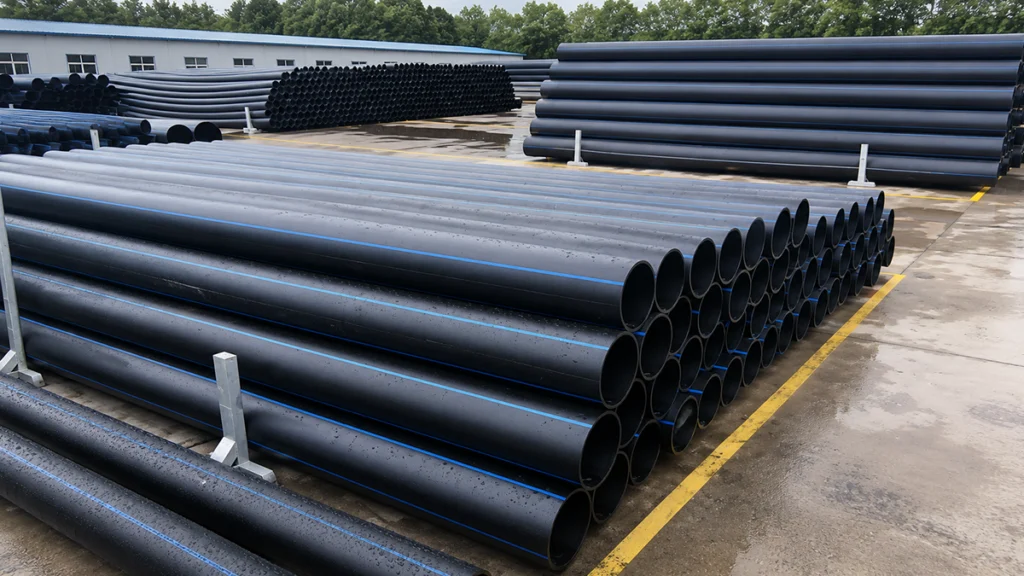
Material selection completely dictates your total cost of ownership (TCO) and maintenance frequency when engineering a slurry or tailings line. HDPE mining pipe consistently hits the sweet spot, offering an optimal balance of sliding abrasion resistance, cost-efficiency, and joint integrity.
| Material | Wear Life (Sliding Abrasion) | Weight & Installation | Maintenance Requirements | 10-Year TCO |
|---|---|---|---|---|
| HDPE Pipe | 4x longer than standard steel | Lightweight, highly flexible; fused leak-proof joints | Near zero; no corrosion management needed | Lowest |
| Steel Pipe | Base baseline (1x) | Heavy, rigid; requires mechanical joints or complex welding | High; prone to rapid corrosion and sliding-bed wear | High |
| Rubber-Lined Steel | Excellent for impact/erosive wear | Very heavy; requires specialized handling and flanging | Moderate; lining can delaminate under certain conditions | Very High |
| UHMWPE Pipe | 4-7x better wear than steel | Lightweight, but rigid | Low; however, butt fusion is highly complex | High |
Rubber-lined steel still holds its ground as the industry standard for high-impact drops, and UHMWPE is phenomenal for extreme abrasion. However, HDPE is far more cost-effective, readily available, and significantly easier to butt-fuse for general slurry and tailings lines.
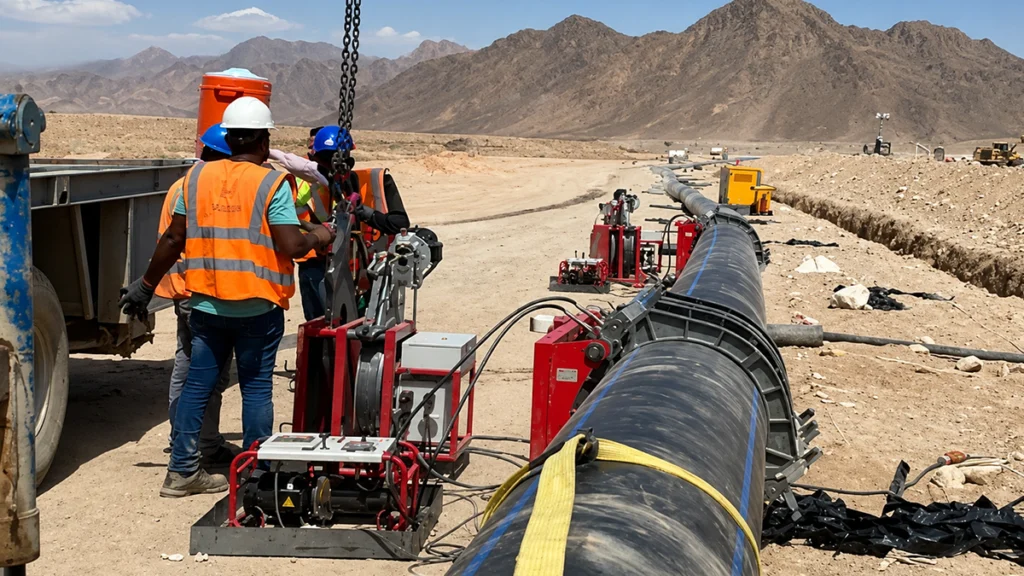
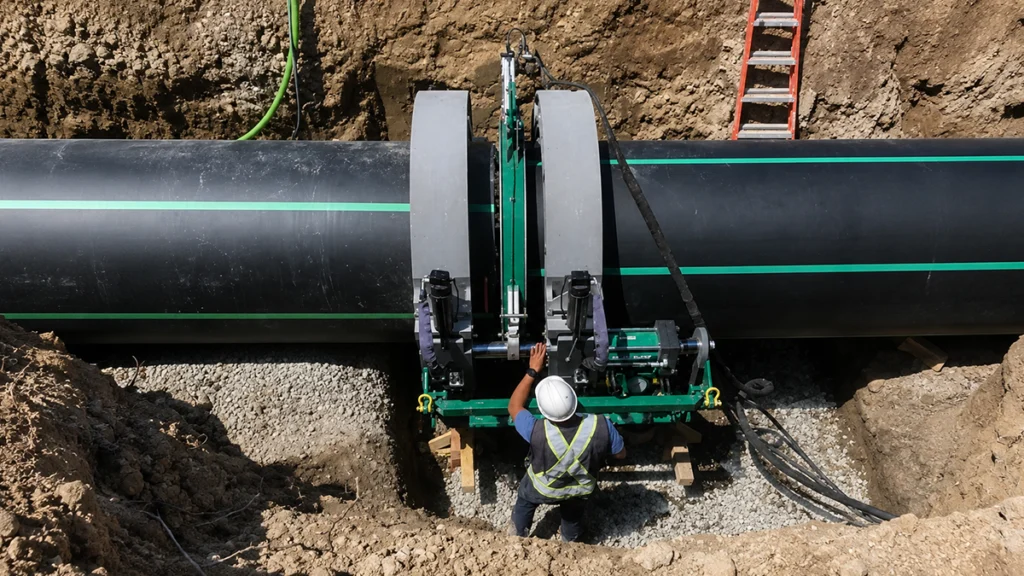
You only get the full lifespan out of an HDPE mining pipe if it is installed correctly. That means strictly adhering to international butt fusion standards, specifically ISO 21307 and ASTM F2620. When done right, thermofusion creates a monolithic system. The resulting joint is actually as strong as—or even stronger than—the pipe itself.
Jointing Best Practices:
Maintenance Best Practices:
Pipeline failures rarely happen by accident. In the mining sector, procurement and installation failures usually trace back to sourcing substandard materials or executing sloppy jointing procedures.
Evaluating an HDPE mining pipe supplier requires a hard look at their production capacity, lead times, and manufacturing transparency. Keep in mind that raw material—specifically virgin HDPE resin—makes up 75% to 85% of the total manufacturing operating expense (OpEx). If a supplier hands you pricing that seems unusually low, there is a very high probability they are blending in recycled scrap material. That practice severely compromises both the HDPE pipe’s pressure rating and its abrasion resistance.
Procurement Checklist:
The service life of HDPE mining pipe depends on slurry concentration, particle size, flow velocity, operating pressure, and wear allowance design. With proper SDR selection and sufficient wall thickness, HDPE slurry pipelines can provide reliable long-term service in abrasive mining applications and often achieve 15–20 years or more depending on site conditions.
Yes. HDPE pipe is widely used for abrasive tailings and slurry transportation because of its excellent wear resistance, corrosion resistance, and low friction characteristics. For highly concentrated slurry or sharp mineral particles, engineers usually select thicker wall pipes with a suitable SDR to improve durability and extend service life.
The required pressure rating depends on the pipeline design, operating pressure, pipe diameter, and application conditions. Low-pressure gravity tailings systems may use lower pressure classes, while pumped slurry pipelines typically require higher pressure ratings such as PN16 or above to handle dynamic loads and continuous operation
HDPE pipe offers several advantages over steel pipe in mining tailings applications, including excellent corrosion resistance, lighter weight, easier installation, and better flexibility on uneven terrain. These advantages can reduce maintenance requirements and improve overall project economics, especially in harsh mining environments.
HDPE mining pipe is commonly joined through butt fusion or electrofusion depending on pipe size, project requirements, and installation conditions. Butt fusion creates a seamless joint by heating and pressing pipe ends together, producing a connection with strength comparable to the pipe itself.
Large HDPE pipe manufacturers can produce mining pipes with diameters up to DN3000 mm for large-scale slurry transport, dredging, and industrial applications. The suitable diameter depends on flow requirements, project capacity, installation conditions, and pipeline design parameters.
HDPE mining pipe wall thickness is determined by operating pressure, pipe diameter, SDR selection, slurry characteristics, and required wear allowance. Engineers typically consider both pressure requirements and additional wall thickness needed to withstand long-term abrasive wear.
A reliable HDPE mining pipe supplier should provide quality management certifications such as ISO 9001, environmental certification such as ISO 14001, product inspection reports, and relevant testing documentation. Depending on the application, suppliers may also provide compliance with standards such as ASTM F714 or ISO 4427 for pressure HDPE pipes.
Selecting the right piping system is a critical engineering decision that directly affects mining operation efficiency, maintenance requirements, and long-term project costs. HDPE mining pipe has become a widely adopted solution for slurry transport, tailings disposal, and mine dewatering applications due to its excellent corrosion resistance, abrasion resistance, flexibility, and reliable fusion joints.
By accurately evaluating operating pressure, slurry characteristics, pipe diameter, and wear allowance, engineers can select the appropriate SDR and pipe structure for demanding mining environments. Using high-performance polyethylene materials such as PE100 and PE4710, together with strict quality control and advanced manufacturing processes, helps ensure reliable pipeline performance and reduce maintenance risks.
Working with an experienced HDPE pipe manufacturer provides additional support in material selection, pipe specifications, welding guidance, and project requirements.