Address
Zhengzhou, Henan, China
Work Hours
Monday to Friday: 7AM - 7PM
Weekend: 10AM - 5PM
Address
Zhengzhou, Henan, China
Work Hours
Monday to Friday: 7AM - 7PM
Weekend: 10AM - 5PM

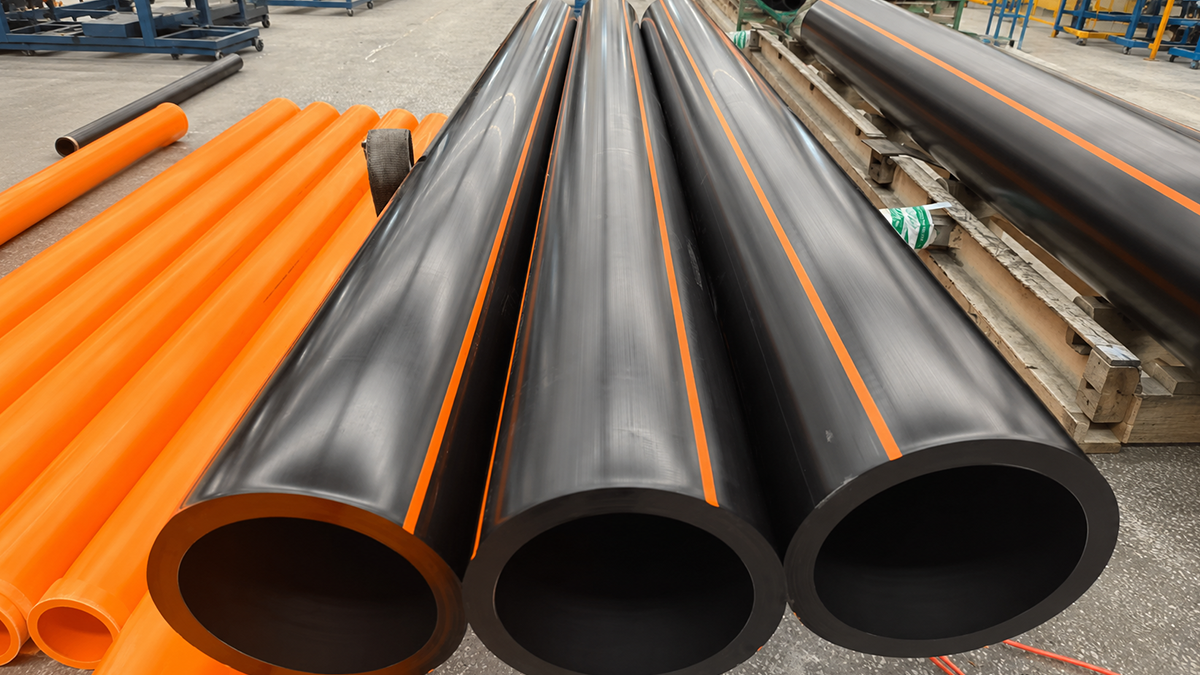
HDPE Gas Pipe guide explains PE100 pipe performance, SDR selection, joining, standards, testing, and supplier checks for safer natural gas distribution project planning and procurement.
High-Density Polyethylene (HDPE) gas pipe serves as a purpose-built thermoplastic conduit designed strictly for underground natural gas, propane, and liquid petroleum gas (LPG) distribution. You can’t just use standard water pipes for this. Gas-grade HDPE requires 100% virgin bimodal PE4710 or PE100 resin to satisfy intense safety and pressure thresholds.
At its core, this piping framework ensures gaseous fuels move safely and without leaks across medium and low-pressure networks. JINQUAN produces these pipes in sizes from DN16 all the way up to DN3000. That massive range offers the exact scalability needed, whether you’re laying down a tight municipal grid or a sprawling regional distribution line. Thanks to those premium bimodal resins, the HDPE pipes fiercely resist both slow crack growth and rapid crack propagation—two absolute non-negotiables when transporting combustible fuels.
As the third generation of pipe-grade polyethylene, PE100 delivers a massive upgrade in hydrostatic strength and environmental stress-cracking resistance compared to older PE80 materials. Engineering consultants and municipal utility boards consistently specify PE100 HDPE gas pipe for natural gas distribution. The operational advantages simply make sense.
First off, PE100 completely ignores electrochemical soil corrosion. Metallic polyethylene pipelines demand pricey cathodic protection systems and thick external coatings. HDPE doesn’t. This natural immunity slashes long-term maintenance budgets. The material also happens to pack the highest abrasion resistance among standard pressure PE pipes, with baseline performance metrics reliably tested at 20°C or 23°C.
Flexibility is another major win. Pipeline contractors can easily route PE100 around unforeseen underground hurdles. This flexibility also unlocks trenchless installation methods, like horizontal directional drilling (HDD). When you skip the massive open trenches, you cut labor hours, reduce excavation expenses, and keep urban surface disruption to an absolute minimum.
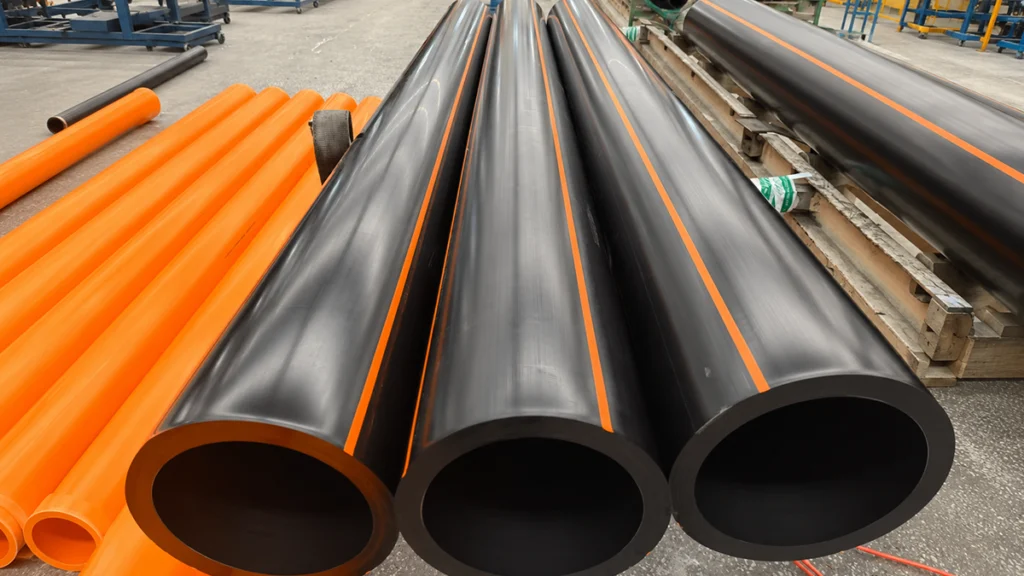
Engineers lean on hard, measurable data when mapping out a natural gas network. The Standard Dimension Ratio (SDR) stands out as the most vital metric here. Essentially, SDR is the mathematical ratio you get when dividing the polyethylene pipe’s Outside Diameter (OD) by its Wall Thickness.
Grasping the distinction between HDPE gas pipe SDR 11 vs SDR 17 is critical for accurate pressure ratings. SDR 11 packs thicker walls built to handle higher pressure loads. Meanwhile, SDR 17 runs a bit thinner, making it perfectly suited for moderate-pressure setups. Since SDR operates as a constant ratio, a 63mm SDR 11 HDPE pipe and a 315mm SDR 11 pipe—assuming both use the same PE100 grade—will safely handle the exact same working pressure.
Below are the standard specifications for JINQUAN HDPE gas pipelines:
| Parameter | Specification Details |
|---|---|
| Material Grade | 100% Virgin Bimodal PE100 or PE80 (PE4710 equivalent) |
| Diameter Range | DN16 mm to DN3000 mm |
| SDR Options | SDR 11 (High Pressure), SDR 17 (Moderate Pressure), SDR 21 |
| Pressure Rating | Customizable equivalent to PN4 through PN25 |
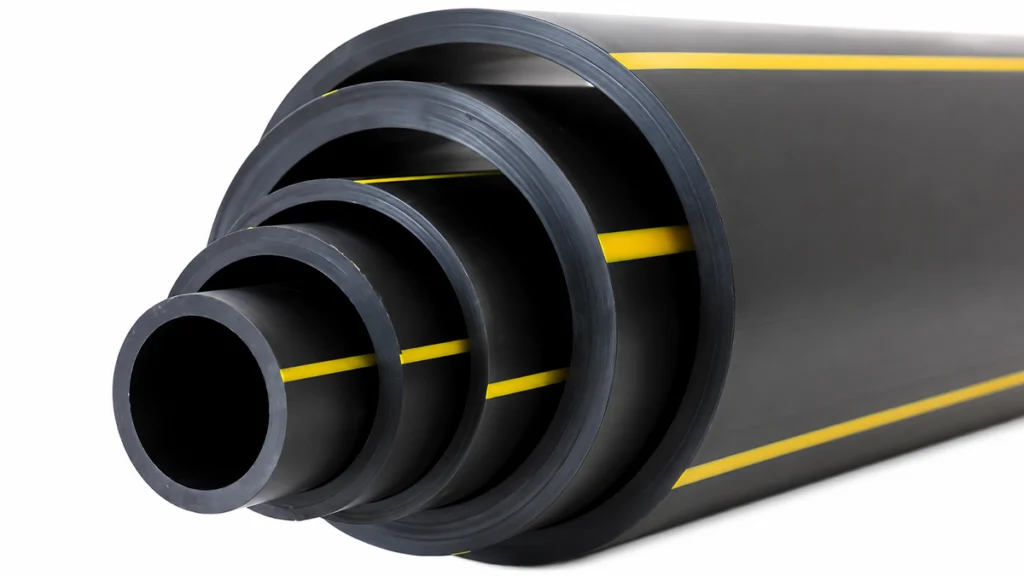
| Color Coding | Black with co-extruded yellow stripes, or solid yellow |
| Length Options | 5.8m, 11.8m straight lengths, or 50m/100m coils (for smaller diameters) |
| Operating Temp | -20°C to 40°C (Standard benchmarking at 20°C) |
The natural gas sector doesn’t play around with regulations. Every piece of piping must align perfectly with strict regional and international safety codes. These exact standards shift depending on your jurisdiction, meaning project owners have to verify every piece of compliance paperwork before signing a purchase order.
For global projects, polyethylene gas pipe standards for natural gas projects demand strict adherence to ISO 4437 (Plastics piping systems for the supply of gaseous fuels) and EN 1555. If you’re operating in North America or following US engineering protocols, the pipes have to hit the marks set by ASTM D2513 (Standard Specification for Thermoplastic Gas Pressure Pipe, Tubing, and Fittings).
One rule bridges all these standards: the Material Purity Rule. Federal and international codes outright ban the use of rework or regrind plastics in gas pipe manufacturing. You must use 100% virgin resin. Anything less risks microscopic defects that eventually trigger gas leaks. JINQUAN locks down this requirement by manufacturing under ISO 9001, ISO 14001, CE, and SGS certifications. That guarantees every batch is traceable, pure, and built to code.
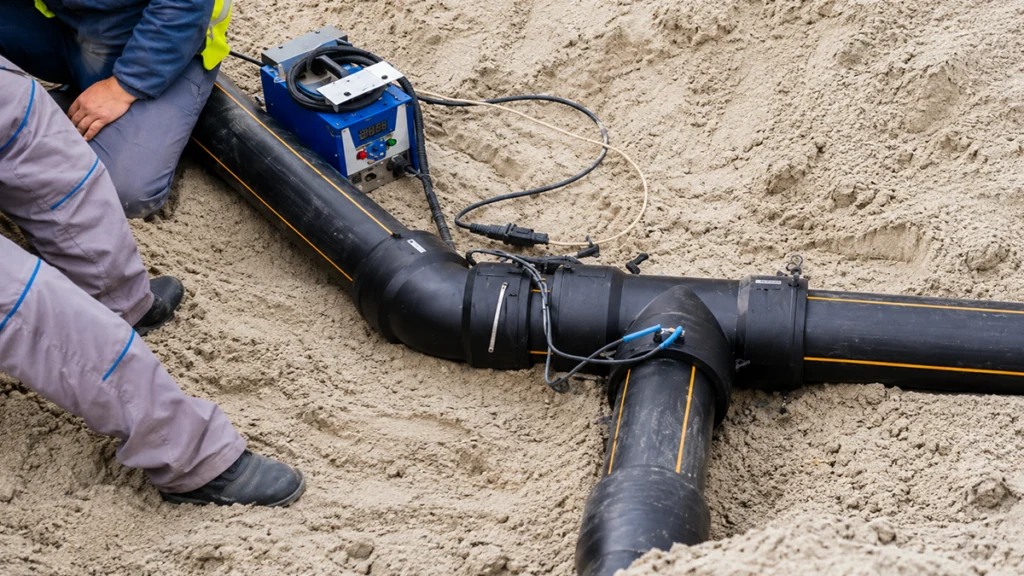
Building a seamless, leak-proof pipeline all comes down to precise thermal fusion. Out in the field, crews generally rely on two primary techniques: HDPE gas pipeline electrofusion and butt fusion. Each approach fits a very specific installation scenario. JINQUAN backs both methods by providing a full lineup of compatible HDPE pipe fittings alongside their own proprietary welding machines.
| Joining Method | Process Description | Best Use Case | Advantages & Limitations |
|---|---|---|---|
| Butt Fusion | Heating the ends of two PE pipes to their melting point using a heating plate, then pressing them together under controlled force. | Long, straight pipeline runs; factory pre-fabrication; open trenching. | Highly cost-effective for large diameters. Requires space for the welding machine. |
| Electrofusion | Utilizing an electric current to heat a resistive wire coil embedded inside the fitting, melting the pipe and fitting together. | Tight field trenches; repairs; tie-ins; areas with limited operational space. | Extremely reliable in confined spaces. Fittings represent a higher initial material cost. |
| Mechanical Fittings | Compressing a specialized ring or gasket around the pipe using threaded components (e.g., PP compression fittings). | Temporary connections or low-pressure transition points. | Fast installation without power tools. Not recommended for primary buried gas mains. |
| Transition Fittings | Factory-assembled joints combining a PE end and a steel/brass end. | Connecting the HDPE gas network to steel mains or residential gas meters. | Crucial for system integration. Requires precise torque and installation alignment. |
Getting the installation right dictates how long your gas network will survive. HDPE is incredibly tough, but burying natural gas lines demands rigid safety protocols—especially when it comes to locating the line years down the road.
Since HDPE doesn’t contain metal, standard magnetic locators won’t detect it. To fix this, crews must run a tracer wire right alongside the pipe. Usually, this is a #12 or #14 copper-clad steel wire wrapped in a yellow HDPE jacket. With a properly installed tracer wire, utility workers can easily pinpoint the gas main using low-frequency (512 Hz) line tracing gear. Just remember that industry best practices require leaving a 2-inch to 6-inch gap between the tracer wire and the PE pipe. That separation prevents a rogue lightning strike from melting the gas main.
Step-by-Step Installation Process:
1. Route Planning & Excavation: Map out the exact path using open trenching, plowing, or horizontal directional drilling (HDD).
2. Trench Bedding: Put down a smooth foundation of fine, rock-free sand. This stops sharp points from pressing into the polyethylene pipe’s exterior.
3. Pipe Laying & Tracer Wire Placement: Carefully drop the fused pipeline into the trench, making sure to keep that 2-to-6-inch gap for the tracer wire.
4. Joining & Tie-ins: Finish up the final electrofusion or butt fusion welds at the junction points.
5. Backfilling: Dump in selected backfill (absolutely no sharp rocks or jagged debris) for the first 12 inches above the HDPE pipe. Compact it in layers.
6. Marking & As-Built Documentation: Bury underground warning tape roughly 12 to 18 inches above the pipe. Finally, log the exact GPS coordinates for the local utility grid.
You cannot commission a natural gas pipeline without putting it through brutal testing first. Zero leakage and flawless structural integrity are mandatory. Depending on local gas authority rules, you’ll need to run either hydrostatic or pneumatic pressure tests.
Quality Inspection and Testing Checklist:
Go back a few decades, and steel was the undisputed king of gas pipelines. Things have changed. A direct HDPE pipe for natural gas vs steel pipe for natural gas distribution comparison quickly highlights exactly why polyethylene now dominates the medium and low-pressure markets.
| Feature | HDPE Gas Pipe (PE100) | Steel Gas Pipe |
|---|---|---|
| Pressure Limits | Restricted to medium and low-pressure distribution networks. | Mandatory for sub-high pressure and high-pressure transmission lines. |
| Corrosion Resistance | Immune to electrochemical soil corrosion; zero cathodic protection needed. | Highly susceptible to rust and soil corrosion; requires expensive cathodic protection. |
| Flexibility | High flexibility; accommodates soil settlement and seismic activity. | Rigid; vulnerable to stress fractures during ground shifts. |
| Installation Speed | Lightweight; can be fused rapidly in long continuous lengths or coils. | Heavy; requires specialized welding crews, x-ray weld testing, and heavy lifting equipment. |
| Maintenance Costs | Extremely low over a 50+ year lifespan. | High; requires ongoing monitoring of anti-corrosion coatings and electrical protection systems. |
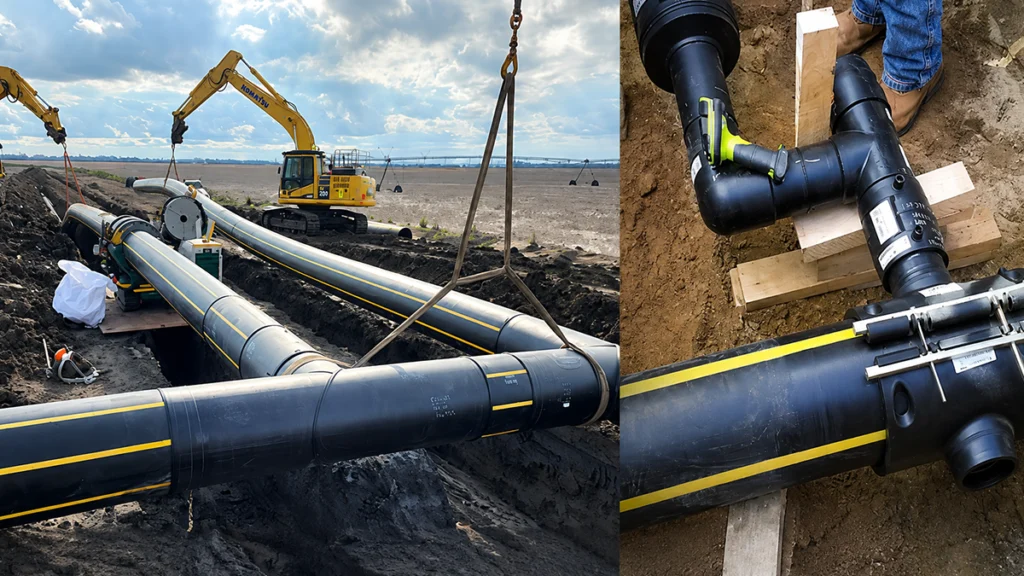
Picking an HDPE gas pipe supplier for municipal gas networks isn’t just about comparing price sheets. You need to audit their technical chops, quality control systems, and logistics network. A solid supplier keeps your project on schedule, kills compliance headaches, and drastically lowers your overall risk.
Supplier Evaluation Checklist:
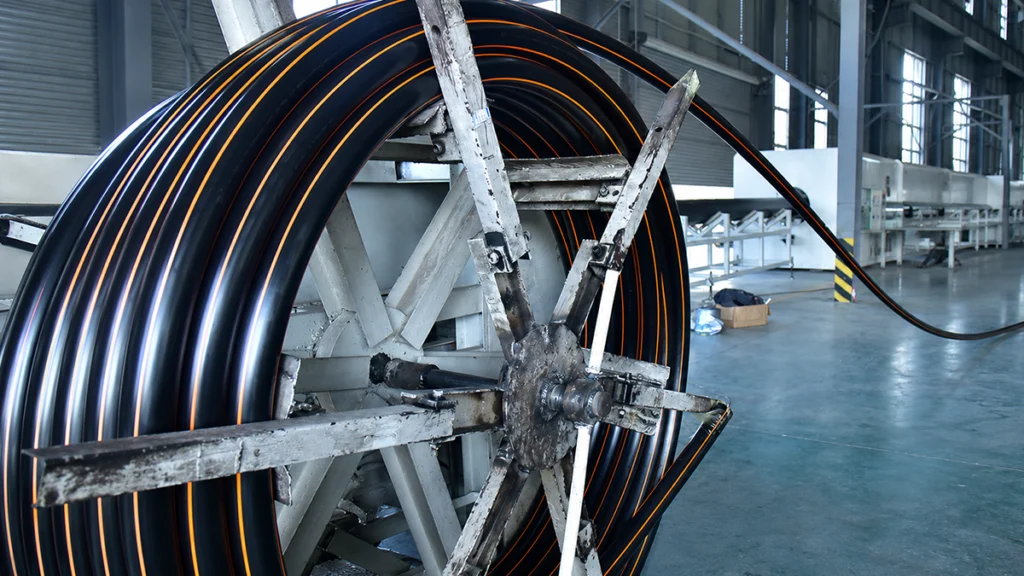
Buying materials for natural gas infrastructure based on vague descriptions or the cheapest bid is a recipe for disaster. If a gas system fails, the safety risks are catastrophic. Engineering accuracy has to drive every purchasing decision.
Buyers need to define their specs using hard engineering data. Sending out a request for a quote that just says “gas pipe” won’t cut it. Your procurement docs must clearly state the exact Outside Diameter (OD), the Standard Dimension Ratio (SDR 11 or 17), and the specific material grade (PE100). On top of that, never cut a purchase order until the supplier hands over their ISO 4437 or ASTM D2513 compliance certificates.
To secure a fast, accurate, factory-direct quotation, project managers should have these details ready to go:
1. Pipe Specifications: The exact diameter and SDR.
2. Project Scope: The total length of the HDPE pipeline and your hard deadlines.
3. Regulatory Requirements: Which local or international codes the PE pipe has to meet.
4. Fittings & Machinery: A complete breakdown of the electrofusion or butt fusion fittings you need, plus any required welding equipment.
5. Logistics: The final drop-off location so the supplier can accurately quote export packaging and freight costs.
By matching these strict technical parameters with a seasoned manufacturing partner, contractors lock in a gas distribution network that is safe, fully compliant, and budget-friendly.
Q1: What type of HDPE pipe is used for natural gas distribution?
Natural gas distribution systems usually use gas-grade HDPE pipe made from virgin PE100 or PE4710 polyethylene resin. Recycled or reprocessed materials are generally not used for gas pressure pipe applications. These pipes are commonly black with co-extruded yellow stripes, or sometimes fully yellow, to identify them for gas service. The material, dimensions, pressure rating, and installation method should meet applicable standards such as ISO 4437, ASTM D2513, or local gas pipeline regulations.
Q2: Is PE100 pipe suitable for underground gas pipelines?
Yes. PE100 pipe is widely used for underground natural gas distribution because it offers good flexibility, corrosion resistance, and long-term pressure performance. Compared with metal pipes, PE100 does not rust in soil and does not require cathodic protection. Its flexibility also helps the pipeline adapt to ground movement, settlement, and trench conditions. However, the final pipe selection should be based on the gas pressure, SDR, pipe size, installation environment, and local project standards.
Q3: What SDR is commonly used for HDPE gas pipe?
SDR 11 and SDR 17 are commonly used in many HDPE gas pipe projects. SDR 11 has a thicker wall and is often selected for higher-pressure gas distribution lines. SDR 17 has a thinner wall and may be used for lower-pressure applications where allowed by the project standard. The correct SDR depends on the operating pressure, safety factor, pipe material grade, local gas regulations, and engineering design requirements.
Q4: How are HDPE gas pipes joined safely?
HDPE gas pipes are usually joined by butt fusion or electrofusion. Butt fusion heats the prepared pipe ends and joins them under controlled pressure to form a continuous fusion joint. Electrofusion uses fittings with built-in heating wires and is often used for branch connections, repairs, or confined installation areas. For gas pipeline projects, welding should be performed by trained operators using approved equipment, correct parameters, and proper inspection procedures.
Q5: What standards should HDPE gas pipe comply with?
HDPE gas pipe should comply with the required gas pipeline standards in the target market. Common standards include ISO 4437, EN 1555, and ASTM D2513 for polyethylene gas pressure pipe systems. These standards help verify material performance, pipe dimensions, pressure rating, thermal stability, and long-term hydrostatic strength. Buyers should confirm the applicable standard according to the project country, gas pressure level, installation method, and local utility requirements.
Q6: How long does HDPE gas pipe last in buried applications?
When properly designed, manufactured, installed, and operated within its rated pressure and temperature limits, HDPE gas pipe can provide long service life in buried applications. It does not rust like metal pipe and has good resistance to soil corrosion and ground movement. In many underground gas distribution projects, HDPE pipe is designed for long-term service, commonly 50 years or more, depending on the pipe material, SDR, operating pressure, soil conditions, and installation quality.
Q7: What is the difference between HDPE gas pipe and HDPE water pipe?
HDPE gas pipe and HDPE water pipe differ in material requirements, color coding, testing standards, and application safety requirements. HDPE gas pipe is usually made from gas-grade polyethylene resin and is commonly black with yellow stripes or fully yellow for gas identification. It must meet gas pipeline standards such as ISO 4437, EN 1555, ASTM D2513, or local gas regulations. HDPE water pipe is designed for water supply systems and usually follows standards such as ISO 4427 or other potable water requirements.
Q8: How do I choose a reliable HDPE gas pipe supplier?
Choose a supplier with stable manufacturing capacity, gas-grade material control, strict quality testing, and experience in pipeline project supply. A reliable HDPE gas pipe supplier should provide pipe size options, SDR selections, test reports, standard compliance documents, and matching fittings when required. It is also helpful to choose a manufacturer that can support bulk orders, customized lengths, export packaging, and technical guidance for butt fusion or electrofusion connections.
Pulling off a flawless natural gas distribution project ultimately comes down to material purity, structural integrity, and dead-on engineering. It’s easy to see why PE100 HDPE gas pipe sets the global benchmark for underground fuel transport. The material shrugs off soil corrosion, bends without breaking, and fuses together into an impenetrable, leak-free system. Nailing down the right specs—whether that means choosing SDR 11 over SDR 17, locking in ISO 4437 or ASTM D2513 compliance, or running proper tracer wires—drastically cuts down project risks.
Furthermore, aligning with a manufacturer that delivers a complete ecosystem makes all the difference. When you source virgin-grade pipes, electrofusion fittings, and automated welding machinery from a single partner, you guarantee system compatibility, smooth out your supply chain, and secure the long-term safety of the entire gas infrastructure.