Address
Zhengzhou, Henan, China
Work Hours
Monday to Friday: 7AM - 7PM
Weekend: 10AM - 5PM
Address
Zhengzhou, Henan, China
Work Hours
Monday to Friday: 7AM - 7PM
Weekend: 10AM - 5PM


HDPE pipe systems have become the preferred choice for modern plastic piping projects due to their exceptional corrosion resistance, flexibility, long service life, and low maintenance costs. They are widely used in water supply, gas distribution, sewage systems, and agricultural irrigation projects. The integrity and durability of connections between HDPE pipes and fittings are central to creating a complete and reliable piping system. Among various connection methods and fitting types, butt fusion HDPE pipe fittings and butt fusion welding machines are widely recognized as the most reliable and highest-strength method for joining HDPE materials. The strength of the joint can even match that of the pipe itself.
Through the precise heating, melting, and joining process of the butt fusion welding machine, butt fusion HDPE pipe fittings are fused seamlessly with HDPE pipes to form a leak-free pipeline system. Engineers must thoroughly understand its internal structure and mechanical properties, master key parameters affecting weld quality (such as temperature, pressure, time, heat absorption, and cooling processes), and adhere to strict welding procedures and quality inspection standards to ensure the long-term stable operation of the entire HDPE pipeline system. This article focuses primarily on butt fusion HDPE pipe fittings, providing professional and comprehensive reference for engineering applications.
Butt fusion HDPE pipe fittings refer to prefabricated fittings specifically designed for high-density polyethylene (HDPE) piping systems. They connect to HDPE pipes through the specialized process of butt fusion welding. This involves heating the joint interfaces to a molten state, then applying pressure to fuse them into a seamless, complete, molecular-level continuum. Unlike electrofusion HDPE pipe fittings, butt fusion fittings lack built-in heating elements and require specialized butt fusion welding machines for installation. These fittings facilitate directional changes, branch connections, convergence points, and diameter transitions within piping systems, serving as the foundational components for constructing comprehensive and complex pipeline networks.
Butt Fusion HDPE fittings come in a wide variety, primarily serving to redirect, branch, change diameter, and seal off pipelines. Common types include:
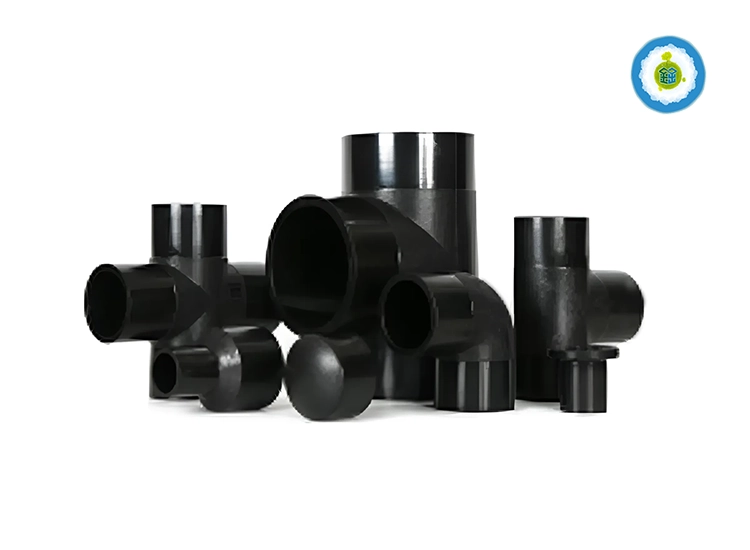
The specifications and parameters of HDPE butt fusion fittings are core technical indicators ensuring perfect compatibility between fittings and piping systems while meeting design pressure requirements.
The advantages of HDPE butt fusion fittings stem from the perfect integration of their material (HDPE) with the connection technology, delivering outstanding performance in reliability, durability, and cost-effectiveness.
Butt fusion polyethylene pipe fittings have become the preferred connection solution for numerous critical pipeline projects due to their exceptional reliability, corrosion resistance, and long service life.
Butt Fusion HDPE pipe fittings find applications across multiple sectors including municipal, industrial, and agricultural. Butt fusion provides absolute reliability and long-term stability for pipeline system connections, making it the preferred choice for numerous projects.
Through the re-fusing of molecular chains, butt fusion technology creates high-strength, pressure-resistant, seamless joints that are integral to the pipe itself. This ensures the system maintains integrity when subjected to environmental stresses such as foundation settlement, earthquakes, or soil movement. This zero-leakage characteristic fundamentally eliminates the risk of seepage and environmental contamination, making fusion welding the connection method with the lowest maintenance costs. It significantly reduces long-term operational and maintenance expenses over the pipeline’s 50-year design lifespan. Leveraging HDPE’s resistance to corrosive media and extreme temperatures (both high and low), heat fusion joints reliably serve demanding applications including underground, subsea, and industrial chemical environments. They represent a practical connection solution ensuring the long-term safety and stable operation of modern fluid conveyance systems.
Butt fusion welding is a joining process that involves heating, melting, and applying pressure to facilitate molecular diffusion and fusion between two HDPE pipe ends or fittings, which then cool to form a strong, sealed, and integral connection. It is the core technology for achieving the integrity of HDPE piping systems.
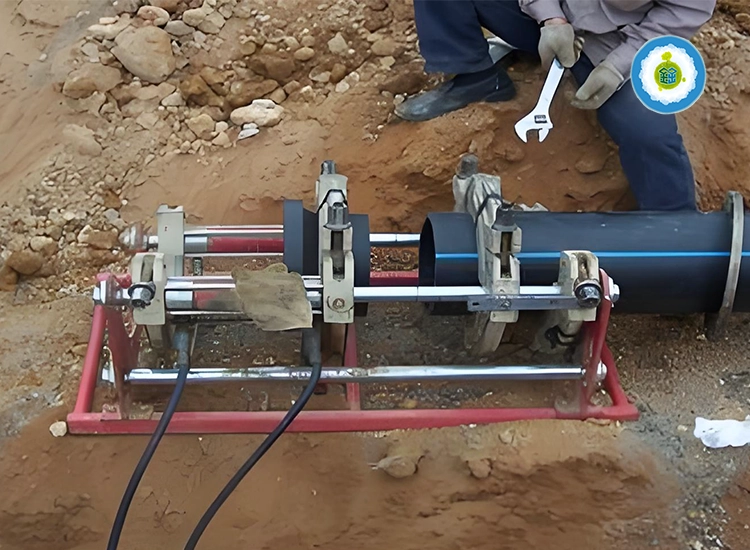
The working principle of butt fusion welding is a standardized process that achieves fusion of polymer materials by precisely controlling thermal, mechanical, and time parameters. Precision-controlled heating plates raise the end faces of HDPE pipes and fittings to their melting state. The heating plates are then rapidly removed, and the butt fusion welding machine applies precise butt pressure, enabling full molecular fusion between the two end faces. Under sustained pressure, the joint cools naturally, ultimately forming a seamless, permanent connection matching the strength of the pipe material itself.
The following parameters collectively form the core of butt fusion welding and influence the final weld quality.
Butt fusion welding machines are the core equipment for achieving precise hot melt connections, requiring accurate control of the aforementioned critical parameters. Jinquan provides hydraulic HDPE pipe welding machine, automatic CNC pipe welding machine, and HDPE pipe jointing machine manual to global customers. Specifically designed for connecting HDPE pipes and fittings, these machines ensure reliable joint quality through exceptional reliability, precise control performance, and robust durability. They are the trusted choice for numerous critical infrastructure projects worldwide.
Selecting the right HDPE fusion-welded pipe fittings is fundamental to ensuring the long-term reliable operation of the entire piping system. The selection process must be based on a comprehensive understanding of the project requirements and consideration of the fittings’ key technical parameters.
When selecting HDPE fittings, first determine the matching diameter, pressure rating (SDR & PN), and material grade (PE80, PE100, PE4710) for the pipeline. Different grades exhibit significant variations in pressure resistance and resistance to slow crack growth. Additionally, consider the medium type, operating temperature, and minimum design life of the HDPE pipe. These factors collectively determine the required wall thickness and dimensions of the fittings, ensuring they withstand anticipated internal and external loads throughout their service life.
The material of HDPE pipe fittings must be fully compatible with and of the same grade as the pipe material to be connected, which is essential for achieving molecular-level fusion. For example, PE 100 pipes must be paired exclusively with PE 100-grade fusion fittings. Fusion bonding of dissimilar grades is strictly prohibited, as it severely compromises joint strength and long-term performance. For special operating conditions or high-demand projects, prioritize higher-grade HDPE fittings with enhanced resistance to slow crack growth.
All selected butt fusion pipe fittings must strictly comply with relevant international or industry standards, such as ISO 4427, SGS, or ASTM standards. Compliance with standards is the fundamental guarantee for product performance, dimensional tolerances, and safety. Standard-compliant butt fusion HDPE pipe fittings signify that their dimensional tolerances, material quality, pressure-bearing capacity, and long-term hydraulic performance have been certified and guaranteed, ensuring the reliability of the connection.
When selecting suppliers, evaluate the professional capabilities and production capacity of pipe fitting manufacturers. An excellent HDPE pipe fittings manufacturer should not only possess the capability for mass production of standard molded fittings but also have the specialized expertise and equipment to produce large-diameter or HDPE fabricated fittings, ensuring welding processes adhere to stringent quality control systems. A manufacturer with robust production and R&D capabilities provides reliable assurance for product consistency, reliability, and long-term technical support.
Jinquan is a reliable butt fusion HDPE pipe fittings manufacturer in China, capable of providing various types and sizes of HDPE fittings.
Butt fusion welding of HDPE pipes and fittings is a connection method requiring precise control of time and pressure. Strict adherence to the following steps is essential to achieve a secure, leak-free weld.
Butt fusion HDPE pipe fittings play an indispensable role in modern fluid conveyance engineering, serving as the foundation for achieving long-term safety, integrity, reliability, and cost-effectiveness in contemporary pipeline projects. Through a unique molecular-level fusion principle, they fully realize the design life of over 50 years and zero-leakage objectives for HDPE pipeline systems. HDPE butt fusion fittings deliver exceptional weld strength, corrosion resistance, and low maintenance costs, positioning them as the mainstream solution for future urban water supply, natural gas, industrial conveyance, and agricultural irrigation systems. Jinquan supplies butt fusion HDPE pipe fittings and fusion welding machines globally, ensuring the long-term safety and stable operation of critical infrastructure.
Fill out the form and our team will contact you shortly.